Floating nuclear power plants to be evaluated for Mediterranean (World Nuclear News)

Grey Havoc

ACCESS: USAP
Joined
9 October 2009
Messages
24,500
Reaction score
18,175
https://www.world-nuclear-news.org/articles/fnpps-to-be-evaluated-for-use-in-the-mediterranean
The American Bureau of Shipping, Core Power and Athlos Energy are to collaborate on the evaluation of the potential of deploying floating nuclear power plants to meet the energy demands of islands, ports and coastal communities in the Mediterranean Sea.

The partners will research how floating nuclear power plants (FNPPs) can unlock a wide range of applications, including the provision of grid-scale electricity to remote locations, decarbonising ports by providing emission-free energy and providing reliable clean energy to desalination plants that will provide potable water to drought-affected coastal communities.
 
Hrm. The D2G reactors weighed 1400 tons each (I hope including shielding) and were good for 150MW thermal (IIRC that's ~50MW electrical, maybe more). I suspect that civilian plants are heavier for the same electrical generation capacity due to using LEU instead of HEU.

So a 5000ton barge could carry such a plant.

But how useful is ~50 megawatts?
Depends on location. I don't think that Mediterranian is good market - it' will be more useful to build as proper NPP. But bumfuck nowhere like northern Russia or Alaska to provide power? Mighty useful.
 
Well, this idea received a lot of discussion in 2022 when the Ukraine was invaded and needed options to augment their power suppy.
But they would be within firing range of Russian ships and missiles so this ddn't work out.
Anyhow, fact is rented shore power have been a thing for a while. They could be used for areas hit by natural catastrophy given they are close to the coast or there's a river nearby.
Ultimately, I think small compact reactors are going to be more convenient (not necessarily more economic).
For example DOD's "Project Pele" program.
 
Well, this idea received a lot of discussion in 2022 when the Ukraine was invaded and needed options to augment their power suppy.
But they would be within firing range of Russian ships and missiles so this ddn't work out.
You can't augument Ukrainian power supply with such puny reactors. That's essentially a pocket change for such a big country.
At best you can power some small city in case of line damage.
 
What could possibly - never mind...
Engineers, there's one in every crowd ...
;)
But, yes, one of my first thoughts on seeing this thread was thankfully the Med doesn't have full blown hurricanes and typhoons like the Atlantic and Pacific do.
However ...
It does have its own severe storms though, and they can be plenty severe,

https://earthobservatory.nasa.gov/images/89034/cyclonic-storm-in-the-mediterranean
https://user.eumetsat.int/resources/case-studies/storm-of-the-century-in-the-eastern-mediterranean
 
Depends on location. I don't think that Mediterranian is good market - it' will be more useful to build as proper NPP. But bumfuck nowhere like northern Russia or Alaska to provide power? Mighty useful.
Siberia and Alaska have plenty of fossil fuel reserves. The real obvious market would be Hawaii, which gets almost all of its power from fuel oil that is shipped all the way from the mainland. And Hawaii already has many floating reactors... sitting aboard the submarines and aircraft carriers docked at Pearl Harbor
 
Siberia and Alaska have plenty of fossil fuel reserves. The real obvious market would be Hawaii, which gets almost all of its power from fuel oil that is shipped all the way from the mainland. And Hawaii already has many floating reactors... sitting aboard the submarines and aircraft carriers docked at Pearl Harbor
Disagree on Sibearia (IDK about Alasakan fossil reserves palcement). Example - Chukotka (and existing Bilibino NPP). Too far away from grid, known or easily acessable fossil fuels. Thus either classical heat powerplant with additional logistic chain to supply it (and it's kinda hard in winter due to ice, nuclear icebreakers nonwithstanding), or movable nuclear reactor. If ore-rich region is exhausted, you can simply move it to another place.
Hawaii - well, I didn't though about it, but I can agree.
 
Hrm. The D2G reactors weighed 1400 tons each (I hope including shielding) and were good for 150MW thermal (IIRC that's ~50MW electrical, maybe more). I suspect that civilian plants are heavier for the same electrical generation capacity due to using LEU instead of HEU.

So a 5000ton barge could carry such a plant.

But how useful is ~50 megawatts?
Ship conversion efficiency is tad lower than commercial plant both because size and priorities.
150 MW thermal translate to ships D2G 60,000 hp or conversion efficiency 22% wjere as 1000 MW plant converts from 3400 MW thermal at 33% All electricity.

50MW at 95% capacity factor produce 52 million dollars in electricity. Since its not question size but practical costs vs powering a city? A remote installation or base that has import fuel?
 
Ship conversion efficiency is tad lower than commercial plant both because size and priorities.
150 MW thermal translate to ships D2G 60,000 hp or conversion efficiency 22% wjere as 1000 MW plant converts from 3400 MW thermal at 33% All electricity.

50MW at 95% capacity factor produce 52 million dollars in electricity. Since its not question size but practical costs vs powering a city? A remote installation or base that has import fuel?
Not sure about a base off the water, but I can see a global use for a couple dozen of these. Mostly for disaster recovery.

A nuclear plant, even one optimized around electrical power production, can also put out a whole lot of potable water at the same time.
 
Not sure about a base off the water, but I can see a global use for a couple dozen of these. Mostly for disaster recovery.

A nuclear plant, even one optimized around electrical power production, can also put out a whole lot of potable water at the same time.
Guessing that O2 for medical use in disaster areas too. Not easy to get bottled O2 for medical use in a lot of locations.
 
Guessing that O2 for medical use in disaster areas too. Not easy to get bottled O2 for medical use in a lot of locations.
You'd need to add an oxygen plant to the barge, a reactor proper won't make O2. And you'd have a choice between EOGs and cold-gas separation.
 
Got it, I know the vanilla plant cannot do it but, it's doable and hardly a waste of resources when this sort of setup is on the cards.
On the negative side, it does make for a juicier target for unstable actors or terrorist groups. It would certainly wake up a few people around the world.
 
Got it, I know the vanilla plant cannot do it but, it's doable and hardly a waste of resources when this sort of setup is on the cards.
On the negative side, it does make for a juicier target for unstable actors or terrorist groups. It would certainly wake up a few people around the world.
Yes, it'd need all sorts of protections in service. Probably too many protections to have an NGO or private investor operate it. Which would make it a tool of the US (or whoever ends up making them).
 
What protects?
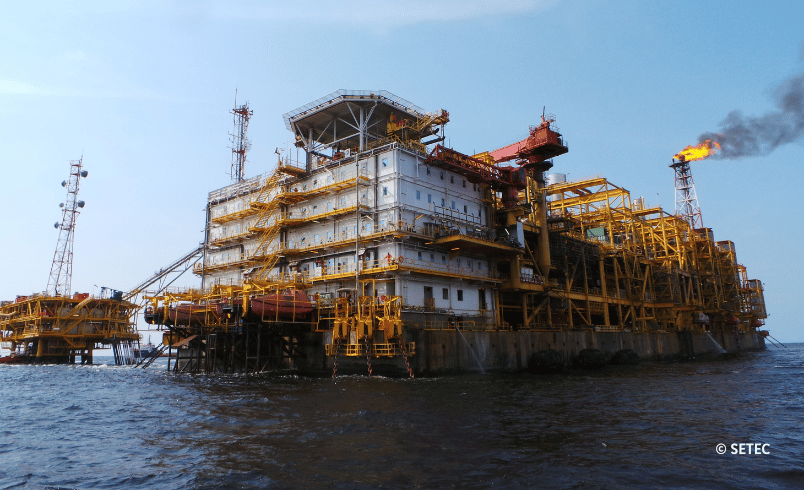
Off shore nuclear works more succinct in permanent conditions.
The N'Kossa was largest concrete barge ever at 220 meters long.
US built concrete barges during World war II.
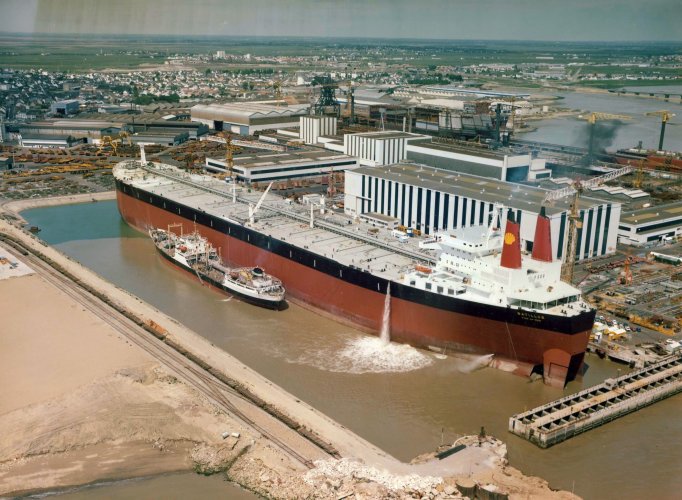
Just buy used super tanker, fill it with concrete and sink it. Build your nuclear plant over it with permanent seawater cooling supply higher than the reactor.
1000041247.jpg

1000041246.png
 
Back
Top Bottom