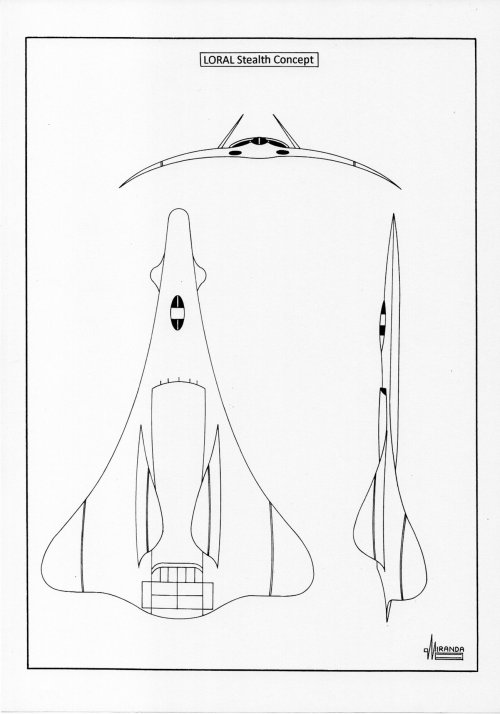
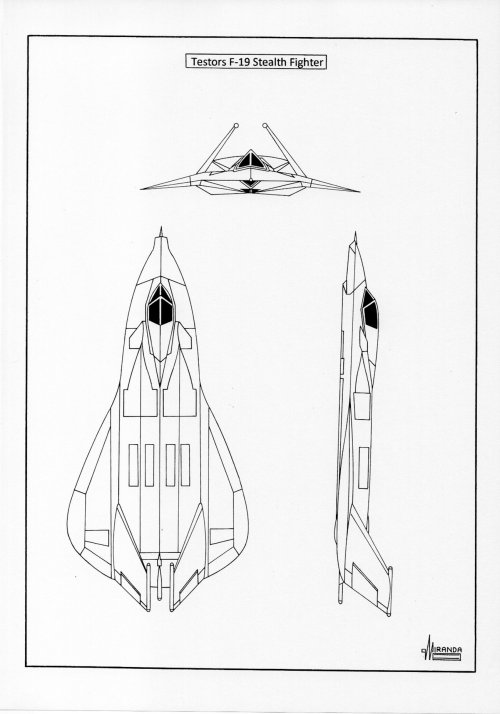
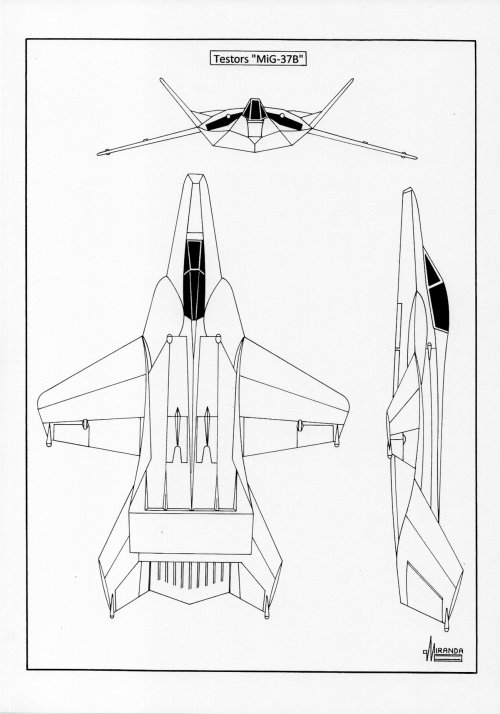
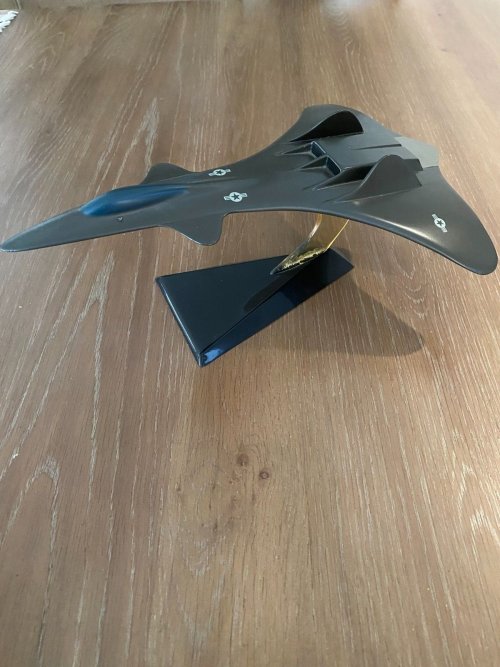
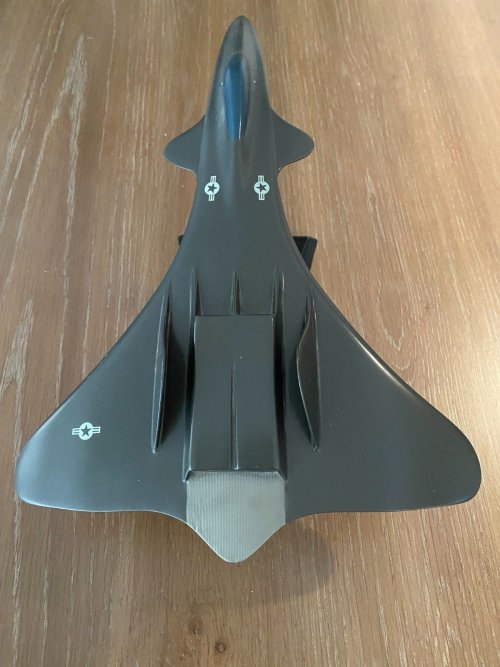
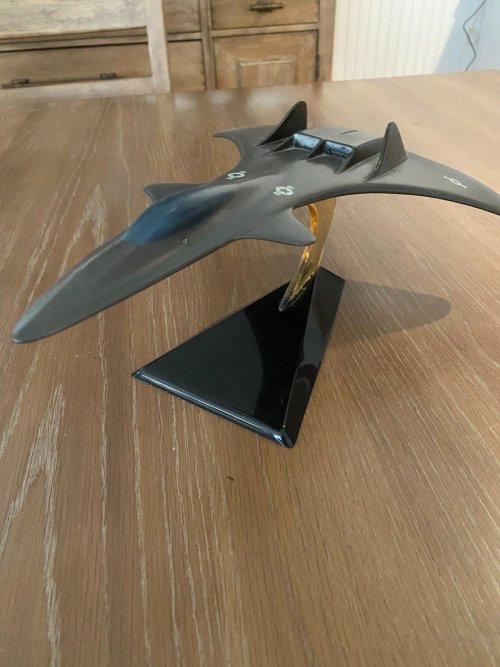
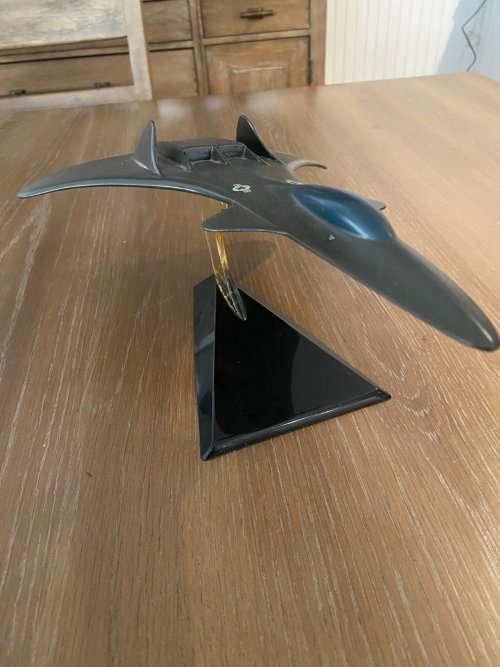
F-117A prior to unveiling: artists impressions and kits of the 'F-19 Stealth Fighter' in mass culture

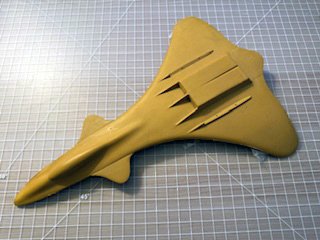
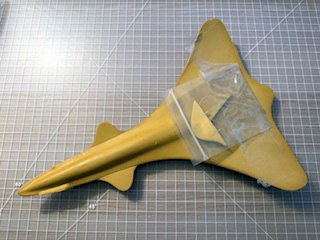
Scale of Testor's F-19 compared to Lockheed F-117A, and Have Blue compared to F-117A. The smaller F-19 model looks more like a demonstrator in size than an operational concept with two F404s and two AGMs buried inside its airframe with fuel, cockpit and equipment. The F-19 is similar in dimensions to an F-16 Fighting Falcon.
I had no idea Have Blue was so dinky!
 
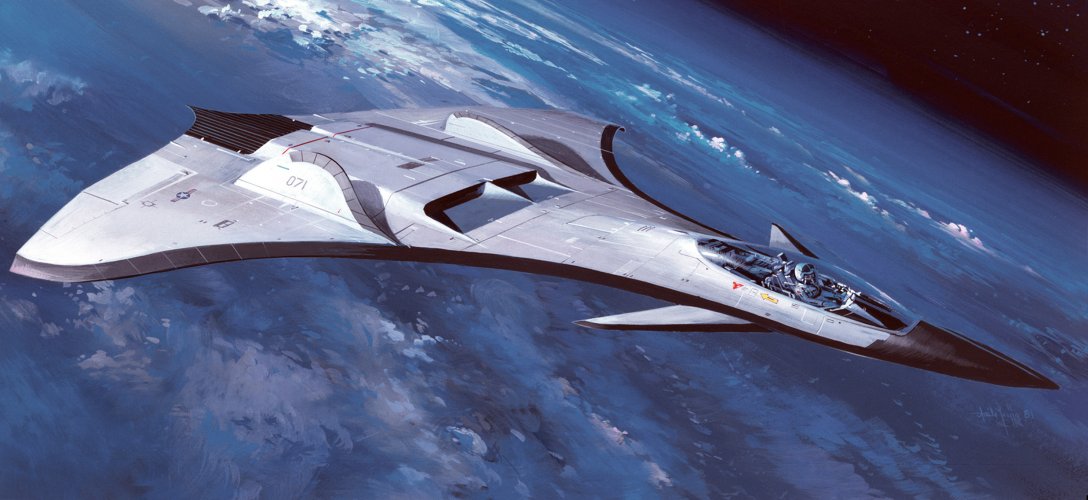
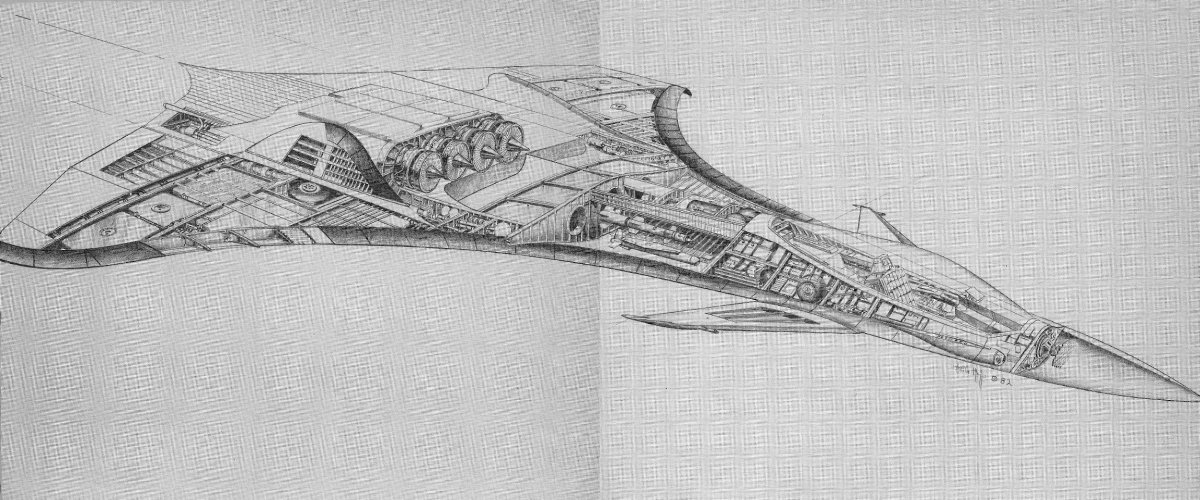
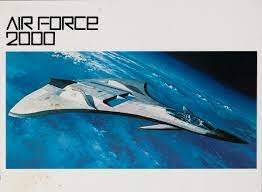
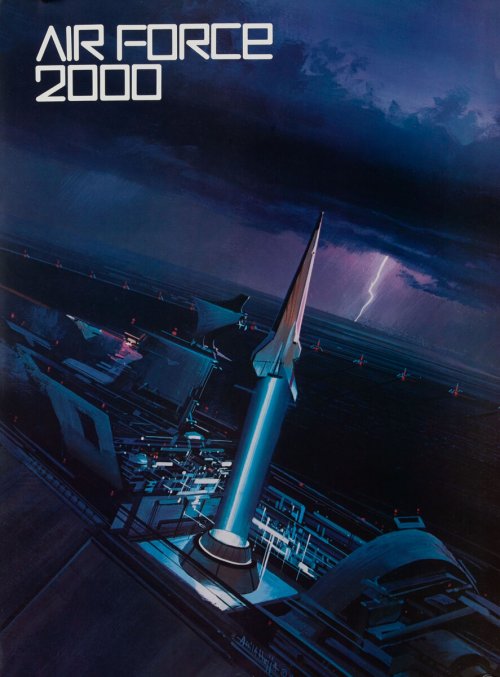
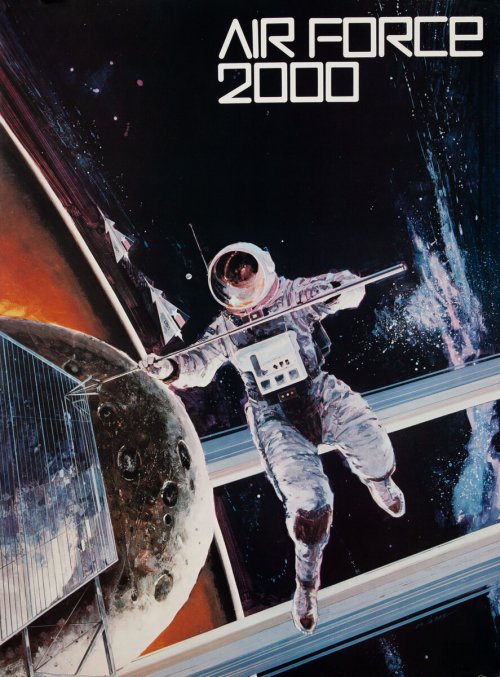
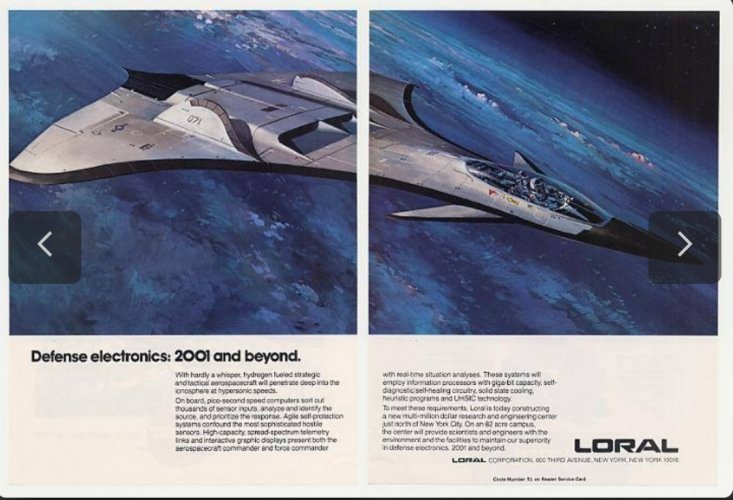
Umm, @Stargazer, I don't think so. My recollection is that your so-called would-be "Loral Stealth Fighter" was first depicted in the painting commissioned by the USAF for the "Air Force 2000" series of posters. It was designed and painted by Attila Hejja circa 1982 (or earlier). (Note the hard-to-see signature below the nose of the cutaway drawing.) It was entitled "2001 and Beyond".


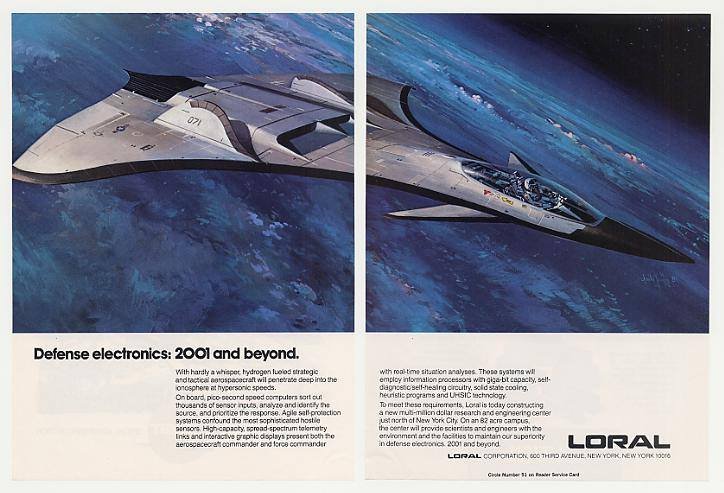
Loral saw the art and later used it (being public domain) to great effect in their very atmospheric and impressive advertisement. Loral was not in the aircraft design business other than some very obscure teaming arrangements.

1753993785325.jpeg Some other AF2K poster art: 1753993807982.jpeg 1753993845936.jpeg
 
Last edited:
Based on a theoretical study published in 1962 by the Russian mathematician Pyotr Ufimtsev, Lockheed scientist William Schroeder concluded that a surface cut into facets such as diamonds could be used to reflect radar waves in all directions... except for the receiver. If the use of right-angle junctions was avoided, it would be possible to disperse 99 per cent of the incident electromagnetic energy.

In theory this physical principle could be useful to camouflage land vehicles and even warships, but its use in airplanes seemed impossible, it would have been necessary to re-write everything that was known about aerodynamics.

In 1975 a team of computer scientists from Lockheed, under the direction of Denys Overholser, created the "Echo-1" program capable of automatically determining the radar signature of any aircraft model.

Thanks to "Echo-1" Lockheed designers were able to create an aircraft, with sharply swept wings, capable of flying at high subsonic speed despite being fully covered with polygonal facets that avoided 90-degree corners.

The first prototype code named "Have Blue" made its first flight in the Area 51 test site on December 1, 1977.

Both the development and flight tests of the "Have Blue" were carried out under Special Access Programs (SAF) restrictions that override normal chains of command.

Adding a layer of disinformation to the Black Project, false reports about future stealth configurations were leaked to the press in the early eighties.

On January 1981, National Geographic published the article “They’re Redesigning the Airplane” by Micheal E. Long and James A. Sugar.

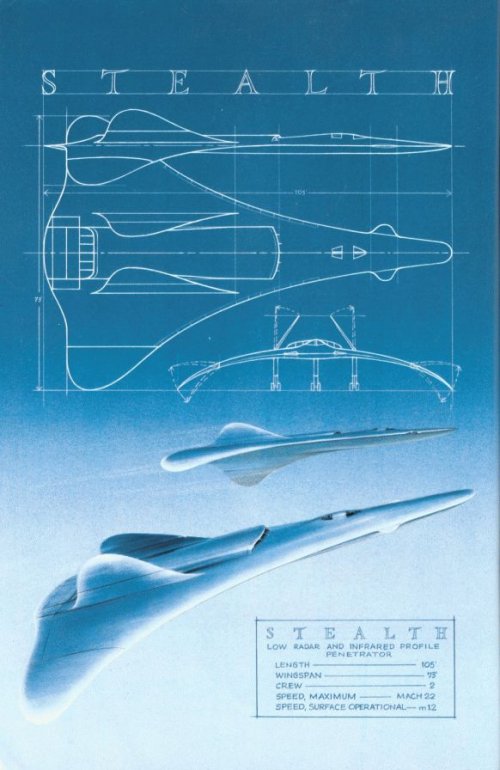
The article included two illustrations painting by NGS artist William H. Bond and a three-view scale drawing of a stealth aircraft with ojival delta wings, downturned wingtips and two tailfins with variable cant angle.


The article included the following text: "Stealth low radar and infrared profile penetrator, length 105 ft., wingspan 73 ft., crew 2, maximum speed Mach 2.2, speed surface operational Mach 1.2”.

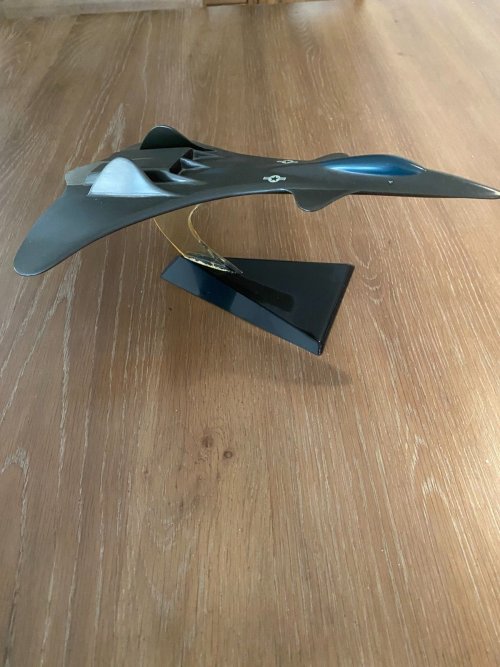
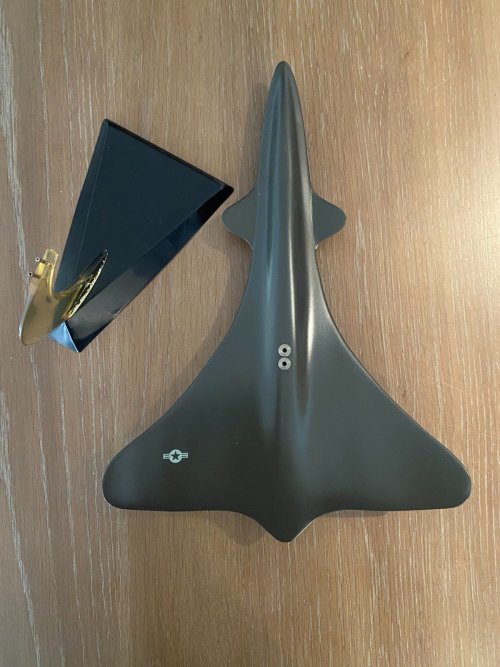
In 1981 the artist Atilla Hejja created the eye-catching illustration of the William H. Bond aircraft and Loral Corporation used it in its advertising between 1981 and 1987 to promote its passive digital electronics. Also commissioned the construction of several dozen of desk models (15” x 10”) to Wesco Models, a company specialized in the construction of mock-up models and prototypes for the aerospace industry.

In 1982 the CIA became interested in the commercialization of Loral models in an interview with Wesco owner Dick Nyland.

In June the Italian magazine Aerospazio Mese published the National Geographic three view drawing with the caption “Northrop ATB stealth”.

In October 11, Loral Corporation published in AW&ST a cutaway of the Atilla Hejja artwork.

In 1983 the model maker Revell Germany announced the next appearance of a 1/32 scale model of the Loral concept, called “F-19”, but according to some rumors the project was canceled at the request of US government.

In June 1985, artist John Andrews was working on the design of a futuristic aircraft with SR-71 style nose, oval wings, canted tailfins and boundary layer suction air intakes, for the advertising of an electronic products company.

It is possible that Andrews was inspired by a series of designs (P.1224 to P.1243) of an unmanned interceptor developed by the British company Hawker Siddeley Dynamics between 1970 and 1988.

Gary Cadish, the marketing director of model maker Testors, was impressed by Andrews' work when he casually saw his drawings.

At the time people knew a stealth fighter was flying but didn’t know its shape yet, Cadish understood that this was a huge commercial opportunity for Testors and persuaded company director Chuck Miller to authorize the production of 75,000 plastic kits based on Andrews' design.

In January 1986 the new plastic kit was publicly revealed as Testors No. 595 "F-19 stealth fighter 1/48 scale” at the annual Chicago Modeling Exhibition.

When journalist Tim Gaffney saw one of these models, he wrote the article "Stealth Fighter Is a Secret, Model Is Not" that was published on the front page of the Dayton Journal Herald and was later widely disseminated by the Associated Press (Los Angeles Times, October 1986, Ciotti, P., “Tempest in a toy box: The Stealth Fighter Is So Secret the Pentagon Won’t Admit It Exists. John Andrews Shocked Everyone by Building a Model of It. To Tell the Truth, He Says, It Wasn’t All That Much Trouble”) giving rise to a national scandal with repercussions in Congress.

The publicity obtained was very beneficial for Testors, the sales of the "F-19" grew by 600 per cent making it the best-selling model kit of all time.

According to an urban legend several members of the Soviet embassy in Washington D.C. were seen buying the kit. In any case the hedging operation worked and the world believed that the stealth configuration consisted of rounded shapes.

On April 27, 1986 a Loral model was exhibited at the Las Vegas Convention Center during the Air Force convention “Gathering of Eagles”.

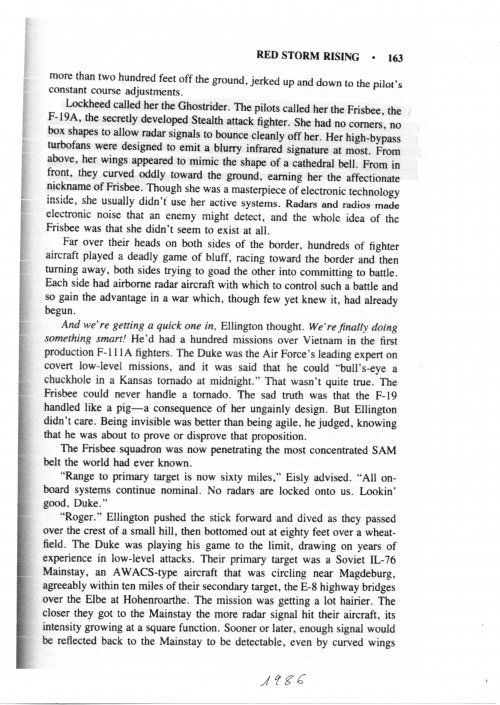
That same year Putnam’s published the novel “Red Storm Rising”. In the episode titled "The Frisbees of Dreamland" author Tom Clancy wrote: “Lockheed called her the Gostrider. The pilots called her Frisbee, the F-19A, the secretly developed stealth attack fighter. She had no corners, no box shapes to allow radar signals to bounce cleanly off her. Her high-bypass turbofans were designed to emit a blurry infrared signature at most. From above, her wings appeared to mimic the shape of a cathedral bell. From in front, they curved oddly toward the ground, earning her the affectionate nickname of Frisbee”.

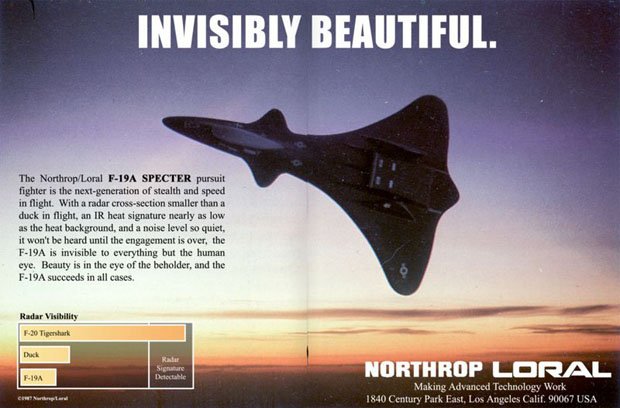
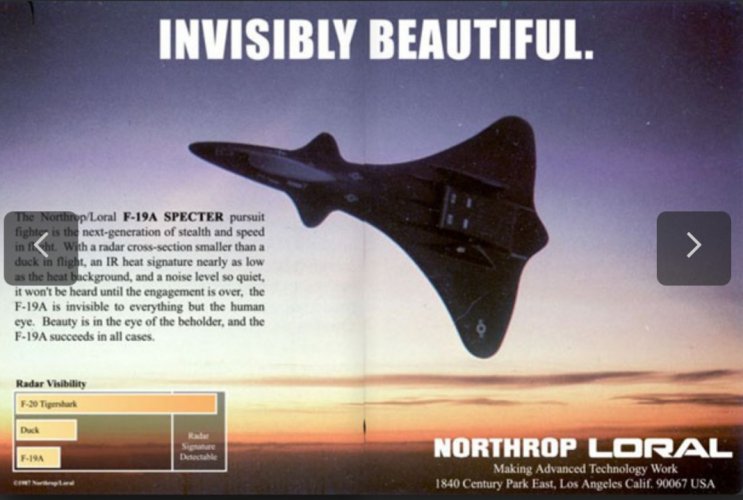
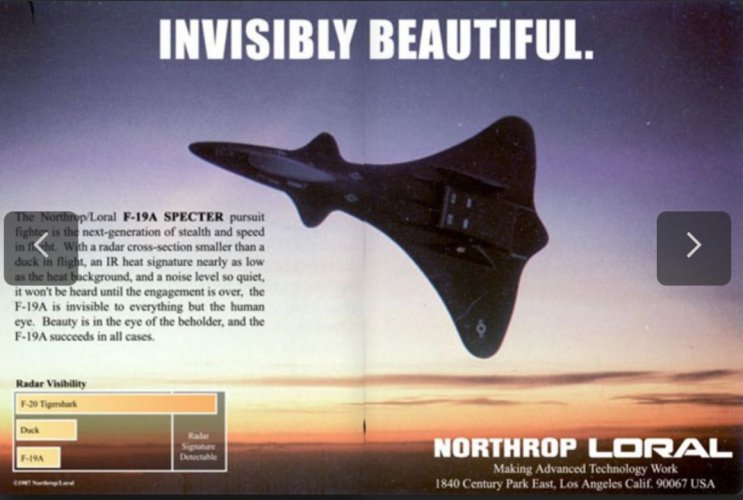
In 1984 the Northrop/Loral Corporation still used in its advertising a silhouetted artwork by Erik Simonsen (based at the National Geographic three view drawing) with the caption: “Northrop/Loral F-19A SPECTER pursuit fighter is the next-generation of stealth and speed in flight. With a radar cross-section smaller than a duck in flight, an IR heat signature nearly as low as the heat background, and a noise level so quiet, it won’t be heard until the engagement is over, the F-19A is invisible to everything but the human eye. Beauty is in the eye of the beholder, and the F-19A succeeds in all cases”.

That same year the model maker Monogram released a 1/48 scale plastic kit based in the Loral concept under the denomination “F-19 stealth fighter”.

"Have Blue" continued to be a secret project until November 10, 1988 when a photo of the real aircraft was shown at a press briefing by Assistant Secretary of Defense for Public Affairs, J. Daniel Howard.

In December 1988 and January 1989 several illustrations were published in Interavia magazine and the first photograph of the authentic F-117 appeared in the cover of Aviation Week on May 14, 1990.

When the highly angular, facetted F-117 Nighthawk was unveiled, new generation of drawings and scale model kits appeared: in 1990 Revell produced two F-117 plastic kits at 1/72 and 1/144 scale and the “F-19” was featured in the computer game “Operation Stealth”.

In 1997 Flight International magazine revealed that the Germans had been working on two stealth projects between 1981 and 1987.

Dornier GmbH had designed the La-2000, a subsonic ground attack aircraft with a very low radar signature and the shape of a perfect triangle.

Messerschmitt-Bolkow-Blohm also conducted some research into stealth technology with the Lampyridae demonstrator (Das Polyeder-Konzept Stealth Jäger).

It was the project of a stealth light fighter with rhomboidal wings, rhomboidal front view and angular canopy very similar to that of the Nighthawk.

The enormous success of the “F-19” kit prompted Testors to release in 1989 the “Soviet” counterpart, under the denomination “MiG-37B (Ferret-E) Soviet Stealth Fighter”.

This fictional airplane, based in the Northrop ATF concept of 1987, has outward canted tailfins, facetted cladding, straight wings, boundary layer suction intakes and cooled exhausts.

According with Testors the MiG-37 B had 10.2 m wingspan, 13.5 m length, 16,000 kg take-off weight and Mach 5 maximum speed, but the drawings patented by the manufacturer on April 3, 1990, had different proportions.

 

Attachments

  • x900.jpg
    x900.jpg
    536.7 KB · Views: 50
  • x901.jpg
    x901.jpg
    995.6 KB · Views: 74
  • x1000.jpg
    x1000.jpg
    342.1 KB · Views: 85
  • x1001.jpg
    x1001.jpg
    364 KB · Views: 91
  • x1002.jpg
    x1002.jpg
    384.8 KB · Views: 93
  • early stealth for web.jpg
    early stealth for web.jpg
    73 KB · Views: 94
Last edited:
Based on a theoretical study published in 1962 by the Russian mathematician Pyotr Ufimtsev, Lockheed scientist William Schroeder concluded that a surface cut into facets such as diamonds could be used to reflect radar waves in all directions... except for the receiver. If the use of right-angle junctions was avoided, it would be possible to disperse 99 per cent of the incident electromagnetic energy.

In theory this physical principle could be useful to camouflage land vehicles and even warships, but its use in airplanes seemed impossible, it would have been necessary to re-write everything that was known about aerodynamics.

In 1975 a team of computer scientists from Lockheed, under the direction of Denys Overholser, created the "Echo-1" program capable of automatically determining the radar signature of any aircraft model.

Thanks to "Echo-1" Lockheed designers were able to create an aircraft, with sharply swept wings, capable of flying at high subsonic speed despite being fully covered with polygonal facets that avoided 90-degree corners.

The idea to use flat planes ("faceting") originated with several people within the Skunk Works. The principal that it was possible to compute the RCS of an infinite flat plane was well known and published in many textbooks at the time. For the XST contract DARPA specified an aggressively low RCS specification which lead to Lockheed exploring this approach. Denys Overholser and others wrote the ECHO software to predict the RCS of objects comprised of flat planes.

To validate their approach and the results of ECHO, the engineers needed to build a model and test it on an actual RCS range. Skuink Works management was opposed to this and would not fund the model and tests. It wasn't until the ECHO results were shown to management outside the Skunk Works that the engineers got their funding. The tests validated that ECHO results were very close to the values of the model test.

ECHO was written using only Physical Optics approaches to computing RCS. As a result it did not predict the RCS contributions of edges. At this point the Lockheed engineers incorporated Ufimtsev's Physical Theory of Diffraction which allowed them to calculate the RCS contribution of edges. This version became ECHO I.

Andrews designed his F-19 model around the theory that the "F-19" would be carried by a C-5 for deployment overseas. It was well known that C-5s had been transporting the stealth fighter from Burbank and Andrews (and others) theorized that the fighter was short ranged and required the C-5 to deploy. This influenced much of his design. The RCS features of the F-19 model came largely from radar textbooks.

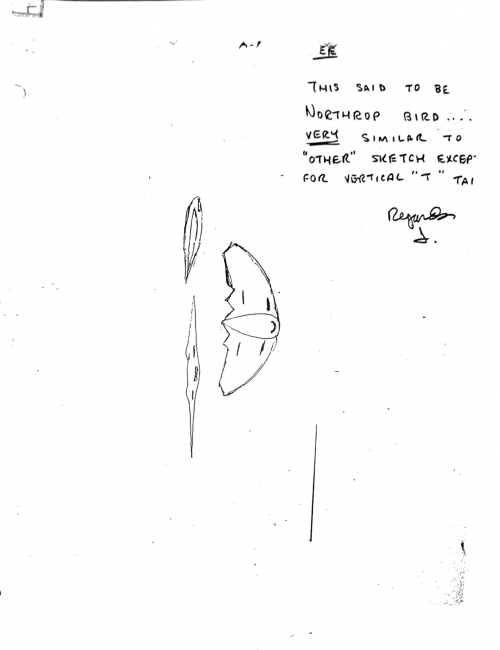
By 1987 Andrews was aware of the name and designation of the F-117, as well as it's use of the general principal of faceting. By 1986 Andews was aware of the general configuration of the ATB - here is one of his sketches

burd.png
 
In 1987 the Northrop/Loral Corporation still used in its advertising a silhouetted artwork by Erik Simonsen (based at the National Geographic three view drawing) with the caption: “Northrop/Loral F-19A SPECTER pursuit fighter is the next-generation of stealth and speed in flight. With a radar cross-section smaller than a duck in flight, an IR heat signature nearly as low as the heat background, and a noise level so quiet, it won’t be heard until the engagement is over, the F-19A is invisible to everything but the human eye. Beauty is in the eye of the beholder, and the F-19A succeeds in all cases”.
There was no advertisement such as this in the real world. There is not, nor has there ever been a "Northrop/Loral". This art was created for the internet by a very talented artist (and, I believe, a member of this very forum).
 
Last edited:
There was no advertisement such as this in the real world. There is not, nor has there ever been a "Northrop/Loral". This art was created for the internet by a very talented artist (and, I believe, a member of this very forum).
This ad?
Erik Simonsen Copyright 1984?
 

Attachments

  • 2331030387_db3968995e_o.jpg
    2331030387_db3968995e_o.jpg
    76.9 KB · Views: 84
Last edited:
The idea to use flat planes ("faceting") originated with several people within the Skunk Works. The principal that it was possible to compute the RCS of an infinite flat plane was well known and published in many textbooks at the time. For the XST contract DARPA specified an aggressively low RCS specification which lead to Lockheed exploring this approach. Denys Overholser and others wrote the ECHO software to predict the RCS of objects comprised of flat planes.

To validate their approach and the results of ECHO, the engineers needed to build a model and test it on an actual RCS range. Skuink Works management was opposed to this and would not fund the model and tests. It wasn't until the ECHO results were shown to management outside the Skunk Works that the engineers got their funding. The tests validated that ECHO results were very close to the values of the model test.

ECHO was written using only Physical Optics approaches to computing RCS. As a result it did not predict the RCS contributions of edges. At this point the Lockheed engineers incorporated Ufimtsev's Physical Theory of Diffraction which allowed them to calculate the RCS contribution of edges. This version became ECHO I.

Andrews designed his F-19 model around the theory that the "F-19" would be carried by a C-5 for deployment overseas. It was well known that C-5s had been transporting the stealth fighter from Burbank and Andrews (and others) theorized that the fighter was short ranged and required the C-5 to deploy. This influenced much of his design. The RCS features of the F-19 model came largely from radar textbooks.

By 1987 Andrews was aware of the name and designation of the F-117, as well as it's use of the general principal of faceting. By 1986 Andews was aware of the general configuration of the ATB - here is one of his sketches

View attachment 779883
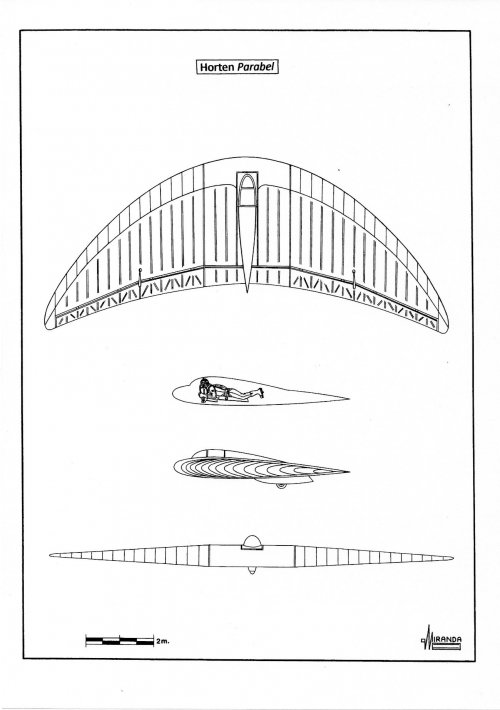
Would the Horten Parabel have worked?
 

Attachments

  • x3456.jpg
    x3456.jpg
    244.8 KB · Views: 91
One problem that's bothered me with the F-19 is its lack of internal volume. Looking at the Revell kit, the engines, main gear and weapons bay all interfere with each other. Of course I'm spoiled by the Microprose F-19, which could carry tons of ordnance in 4 weapons bays (something like 12 Mavericks, where the Revell example can carry 2).
Hobbes you bring back fond memories of Libyan raids, crushing the subpens at Murmansk and annihilating an OTH Radar installation…
 
Hobbes you bring back fond memories of Libyan raids, crushing the subpens at Murmansk and annihilating an OTH Radar installation…
I remember the gun was super glitched, a super short burst in the general direction of a fighter target was a shootdown. Air Force Cross after something like a triple ace mission with ground targets on the side.
 
I remember the gun was super glitched, a super short burst in the general direction of a fighter target was a shootdown. Air Force Cross after something like a triple ace mission with ground targets on the side.
You call that a glitch, I call that a feature!
 
Hobbes you bring back fond memories of Libyan raids, crushing the subpens at Murmansk and annihilating an OTH Radar installation…
I can never read the name 'Cottbus' without thinking of 'F-19.

That's bogus as well.
Do you mean the design is bogus or the entire advertising campaign is bogus?

Chris
 
Hobbes you bring back fond memories of Libyan raids, crushing the subpens at Murmansk and annihilating an OTH Radar installation…
I've yet to find a youtube playthrough showing it but one of the Libyan recon missions was to photograph a secret aircraft in a hanger (presumably at Tripoli?).

Imagine to my pleasant surprise that the mystery aircraft was a B-2 lookalike. I think I'll have to play it again to prove to myself I didn't imagine it.
 
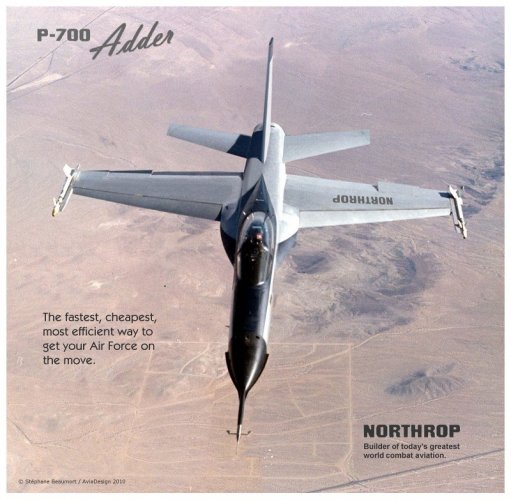
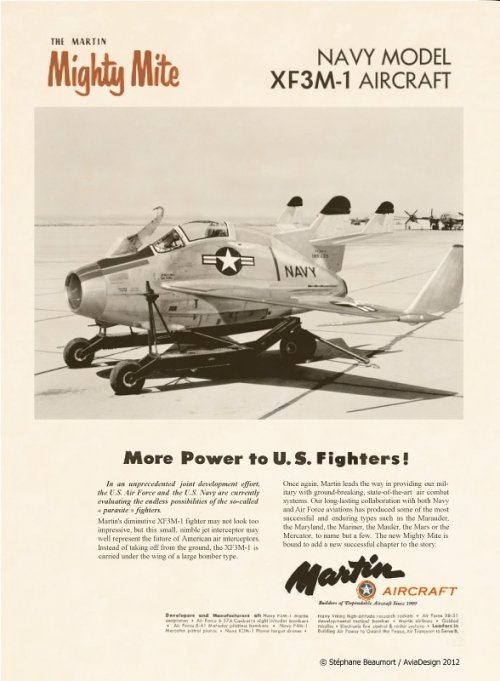
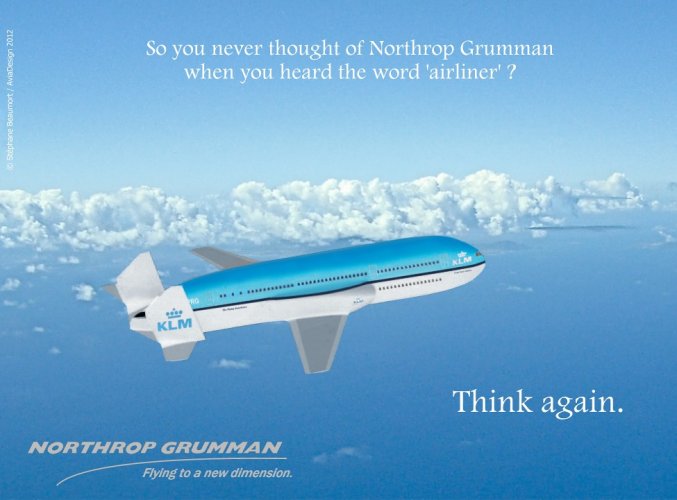
The entire "advertising campaign".
Am I being thick here? Are you saying that this advertising campaign and specificly this advert, didn't appear in aviation magazines in the 80s/90s and was only conjured up as 'fake news' in recent years?

Chris
 
Yes. I am contending that that this is a "fake" ad and as far as I know, did not appear in any of the mags that I subscribed to (specifically Av Week) or passed across my desk at the time. (Well, alright, here I am trying to prove a negative assertion.)

Northrop corporate advertising had a completely different style (one-page ads, with highly stylized black & white photography). F-20 ads were generally one or two page, with color photography. Again - generalizations.
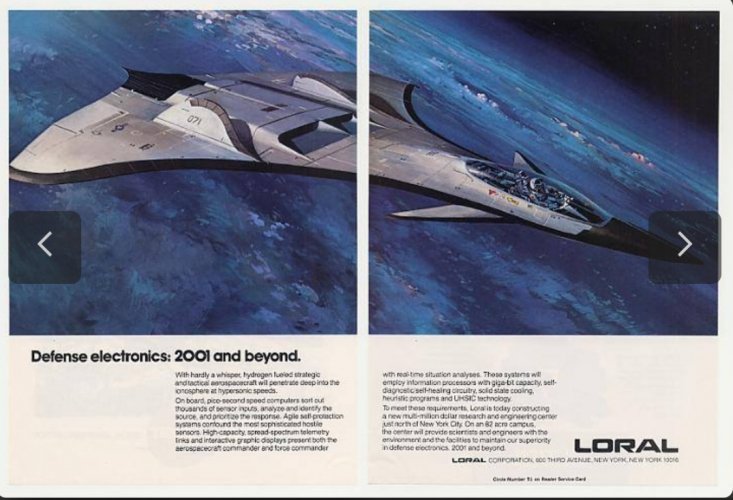
I realize that I am undercutting my case a bit, but I want to give you some uncertainty error bars.
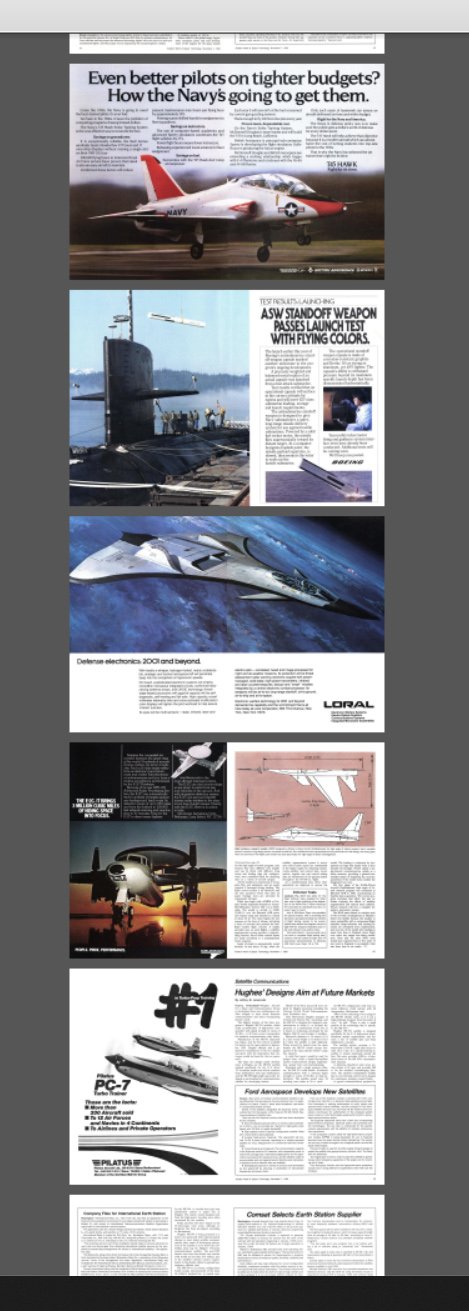
IMHO, this looks like the sort of thing that Stephane Beaumort used to enjoy doing (exercises in Photoshop creation) and recently eschewed since they have escaped into the wild and unfortunately become disinformation. See: Reddit thread and Page 9 of his Flickr account.

Unfortunately, his hard work and imagination in creating these images as pieces of "what if" art has been obsoleted by the current generation of "credible" AI slop images. /rant
 
Last edited:
This one ran as an advertisement:
1761256235724.jpeg

I strenuously believe this did not:
1761256308209.jpeg

"I strenuously object?" Is that how it works? Hm?
"Objection."
"Overruled."
"Oh, no, no, no. No, I STRENUOUSLY object."
"Oh. Well, if you strenuously object then I should take some time to reconsider."
 
LORAL for real (fictitious) concept. Just when I thought first world pseudo problems/solutions couldn't get any more esoteric...
 

Attachments

  • 1_63ffbb485a86de254addca472de0722f.jpg
    1_63ffbb485a86de254addca472de0722f.jpg
    280.7 KB · Views: 34
  • 1_63ffbb485a86de254addca472de0722f (1).jpg
    1_63ffbb485a86de254addca472de0722f (1).jpg
    291.1 KB · Views: 33
  • 1_63ffbb485a86de254addca472de0722f (2).jpg
    1_63ffbb485a86de254addca472de0722f (2).jpg
    248.9 KB · Views: 29
  • 1_63ffbb485a86de254addca472de0722f (3).jpg
    1_63ffbb485a86de254addca472de0722f (3).jpg
    250.8 KB · Views: 28
  • 1_63ffbb485a86de254addca472de0722f (4).jpg
    1_63ffbb485a86de254addca472de0722f (4).jpg
    264.5 KB · Views: 23
  • 1_63ffbb485a86de254addca472de0722f (5).jpg
    1_63ffbb485a86de254addca472de0722f (5).jpg
    297.3 KB · Views: 20

Similar threads

Back
Top Bottom