In the 1960s, European NATO countries did not have air-to-air missiles with a range beyond the visual range.
The most used fighter, the F-104, had only the AlM-9 Sidewinder. The Italian Air Force in 1965 made the decision to develop the F-104S armed with the AIM-7E Sparrow. The missile, unfortunately, was not free of defects. In Vietnam he had proven to be unreliable and with little chance of hitting. Alenia Defense thought of improving the weapon, starting the Aspide project.
Development began in 1969, with the first flight tests in
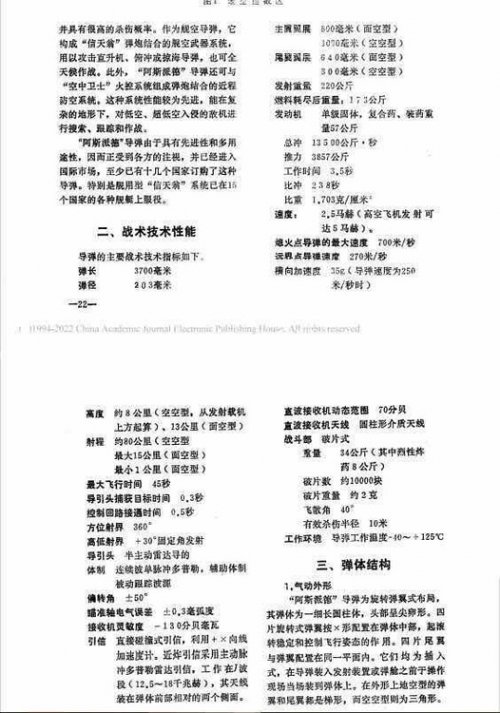
1974. The first launch dates back to 1975 in the Salto di Quirra polygon. The tests ended two years later and production began in 1978. Several integration problems have delayed the use on the F-104S, made compatible with the missile only in 1986 with the ASA program. But for full operational capacity we had to wait until 1990 The Aspide has the same configuration as the AIM-7 and similar dimensions. 3.7 meters long, it has a diameter of 203 mm, a wingspan of 1 meter and a pitch weight of 220 kg. The missile was advertised as superior to the AIM-7F, with a range of 50-100 km and superior performance in all sectors, questionable claims. The 3500 kg/sp single-stage SNIA-Viscose solid propellant engine with 57 kg of propellant, burns for 3.5 seconds. The declared maximum speed (Mach 4.4) is not realistic. The missile reaches Mach 4 with a high-altitude supersonic speed launch. If the kinematic range is more than 50 km, the effective one does not exceed 30-40 km, 15 at low altitude. The minimum is 750 meters. It can hit targets with a significant difference in altitude (snap down). The maneuvering fins are all independent, unlike the Sparrow and Sky Flash and allow 35g in maneuver. The autopilot has been modified, has fewer integrated circuits and longer operating time.
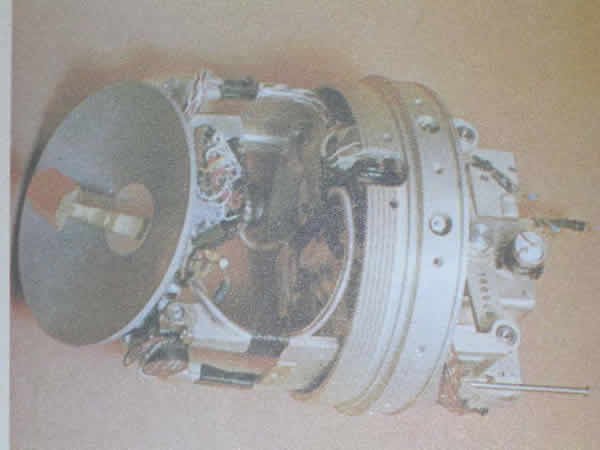
Ahead of the competitors, the Aspide was equipped with single-pulse semi-active radar guidance. The Selenia sensor in band | (8-10 GHz) has a 14.5 cm Cassegrain antenna, has excellent ECCM and excellent coupling capabilities of multiple low-altitude targets confused in the clutter. In case of an intense electronic attack, it can self-guide on the source of interference (Home On Jam).
The head is a 33 kg BPD (Snia-Viscose) of fragmentation, in front of the wings, operated by an active radar Doppler proximity fuse with antennas around the missile body. It also works at just 15 meters above sea level and in the presence of ECM. The declared price, in 1980, was $100,000.
Effectiveness: the missile, comparable to the Skyflash, was powerful but the firing direction on the F-104S, the only carrier, always left something to be desired. The limited coupling range, 15-30 km, did not allow the range of the weapon to be exploited.
Unnecessarily proposed for the Tornado IDS, it was then offered to Sweden to arm the Ja-37 Viggen, but the Skyflash was preferred. China, after purchasing 100 copies, intended to start production under license. But in 1989 the events of Tiananmen Square and the subsequent embargo, caused the interruption of relations with Selenia. China continued its development on its own, creating after many years the PL-11, a copy of the Aspide, to arm the interceptor J-8 ll Finback, of which it is the main weapon BVR.
The Selenia IDRA, developed in 1985, should have replaced the previous one from the 1990s. 3.65 meters long, it had an increased diameter to 212 mm, a reduced wingspan to 68 cm and a weight between 210 and 220 kg. With controls in the rear wings, it would have used a different motor, able to restart in the vicinity of the target, to increase the terminal maneuvering capabilities. The intermediate guide was inertial. 6-8 km from the target, the active Doppler pulse radar AS-3 in the J-band, a single-pulse planar antenna, would have taken over.
The project was discontinued and, after a few years, resumed as Aspide Mk-2 (also as the IDRA project) to obtain a missile similar to the AlM-120, in case the acquisition of this was unsuccessful. Cheaper, it would have used the same engine and the head of the Aspide 1A, combined with an inertial guidance system with mid-course upgrade and terminal active radar self-guidance, probably always the AS-3. The maneuverina performance was superior, with a maximum of 40g. range was 40-50 km. In 1996, with the arrival of AIM-120. the definitive suspension was decided