
You are using an out of date browser. It may not display this or other websites correctly.
You should upgrade or use an alternative browser.
You should upgrade or use an alternative browser.
Electric vehicle discussion
- Thread starter edwest4
- Start date
Scott Kenny
ACCESS: USAP
- Joined
- 15 May 2023
- Messages
- 19,533
- Reaction score
- 27,980
The more important point is that the Red Diesel is marked so that you're not paying excise taxes on it for roads.You should also note that off-road diesel powered heavy machinery like mining trucks, etc., also burn "off-road" diesel fuel that is much cheaper (eg., doesn't have to meet the standard for #2 diesel used by road vehicles).
In the US, this has a red tinge to it to mark it as unsuitable for highway use. I used to buy this stuff regularly when I had a backhoe.
That companies are voiding warranties for red diesel in the pump is a separate issue.
The Swedish military is trialing plug-in hybrid Scania trucks and three such vehicles has been ordered with the delivery of the first last month. One of the things they will be used for are as power supplies. In future they want to use the hybrid powerpacks from these trucks in other heavy military vehicles
https://www.scania.com/group/en/hom...rid-truck-to-fmv-in-joint-development-project
https://www.fmv.se/aktuellt--press/aktuella-handelser/fmv-tar-emot-hybridlastbil/
Some specs from the Scania press release: 70-80 km fully electric range, 208 kWh storage, 60 kW electric power available in 400V or 230V AC, 220 kW mechanical PTO.
https://www.scania.com/group/en/hom...rid-truck-to-fmv-in-joint-development-project
https://www.fmv.se/aktuellt--press/aktuella-handelser/fmv-tar-emot-hybridlastbil/
Some specs from the Scania press release: 70-80 km fully electric range, 208 kWh storage, 60 kW electric power available in 400V or 230V AC, 220 kW mechanical PTO.

Brett Davidson
ACCESS: Top Secret
- Joined
- 26 September 2006
- Messages
- 4,442
- Reaction score
- 12,826
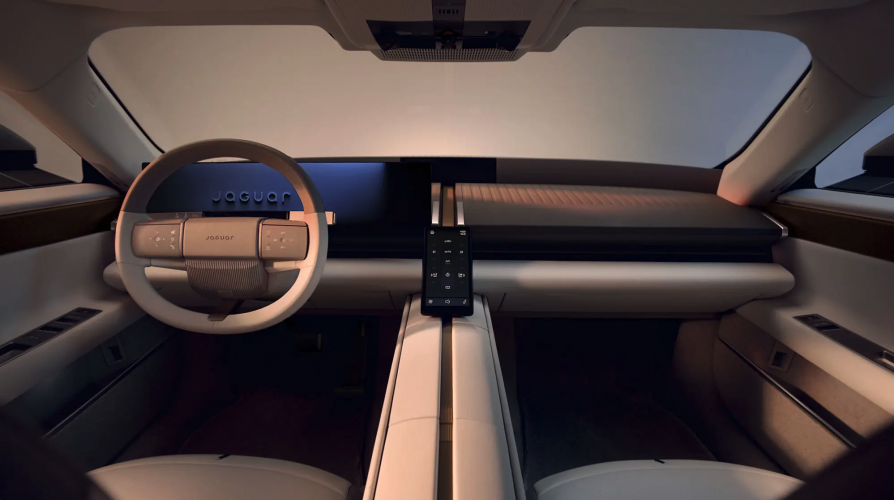
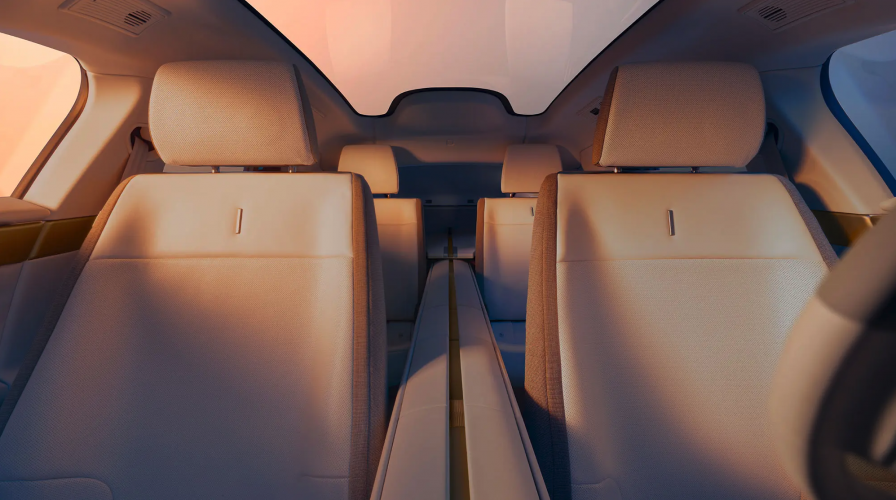
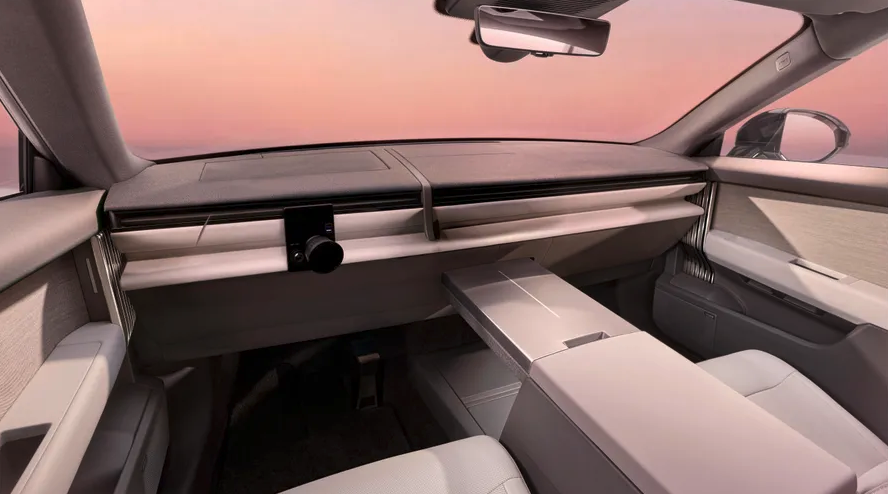
Jaguar has released pictures of the interior of the Type 01. A lightly disguised version will be on show at Monterey Car Week this weekend and a full reveal in New York on October 6.
https://www.carscoops.com/2026/08/jaguar-type-01-interior/
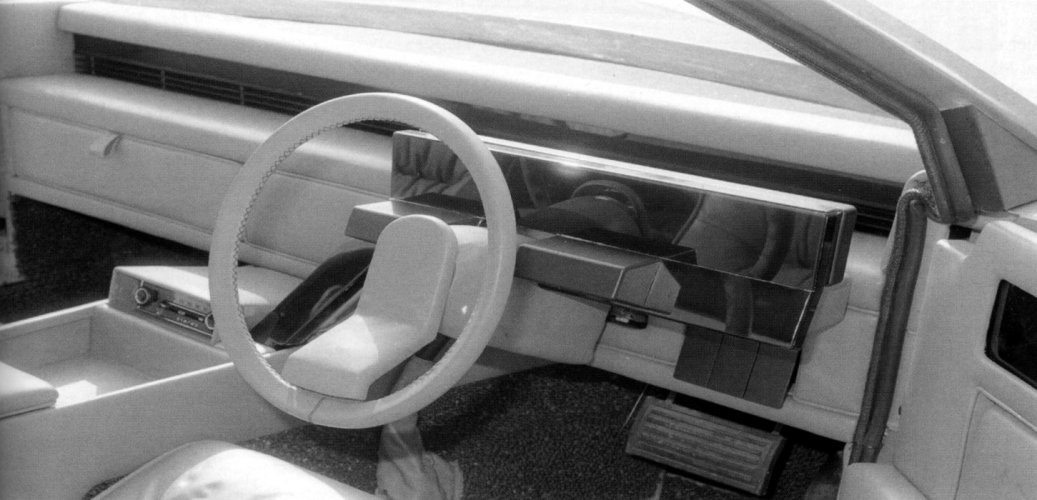
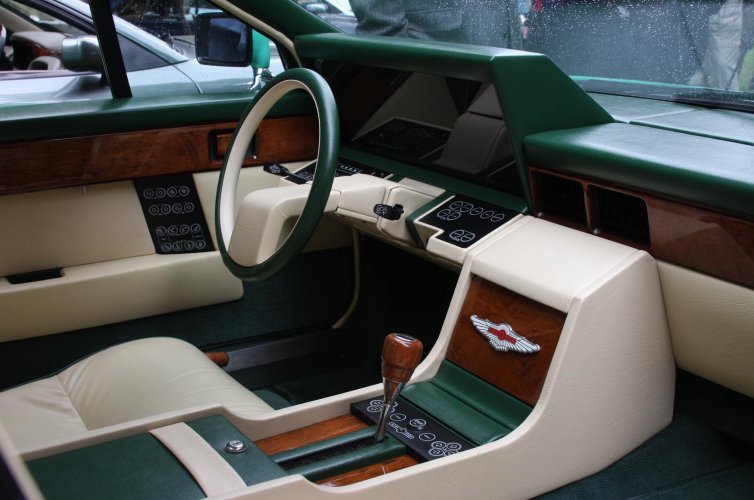
The headline says that it looks like a 70s concept that reached production. Indeed - William Towns' original 1976 design for the Lagonda is an obvious ancestor (b&w image). At the time, the electronics wouldn't work, so a somewhat different but still allied design (green over cream upholstery) was put into production - which also proved unreliable.
I have my opinions about screens and haptics versus analogue, physical controls...
Anyway, Jaguar's rationale is that everything's hidden if you're not using it, with the intent to reduce distraction. The car has no rear window, so a combination of camera and wing mirrors are used for rear view. The screen for the camera is the black rectangle at the base of the windscreen (where is the mirror used to be in some older cars). It looks like the instrument screen partly obscures it but the photo's taken from below the sightline of the driver, so it would be clearly visible normally. Jaguar says it's deliberately placed on the same level as the wing mirrors to make it easier for the driver to look from one to the other while still looking at the same level as the road ahead.
It's strictly a four-seater, as that centre spine runs the full length - so there's not going to be any hanky-panky in the back seats.
https://www.carscoops.com/2026/08/jaguar-type-01-interior/
The headline says that it looks like a 70s concept that reached production. Indeed - William Towns' original 1976 design for the Lagonda is an obvious ancestor (b&w image). At the time, the electronics wouldn't work, so a somewhat different but still allied design (green over cream upholstery) was put into production - which also proved unreliable.
I have my opinions about screens and haptics versus analogue, physical controls...
Anyway, Jaguar's rationale is that everything's hidden if you're not using it, with the intent to reduce distraction. The car has no rear window, so a combination of camera and wing mirrors are used for rear view. The screen for the camera is the black rectangle at the base of the windscreen (where is the mirror used to be in some older cars). It looks like the instrument screen partly obscures it but the photo's taken from below the sightline of the driver, so it would be clearly visible normally. Jaguar says it's deliberately placed on the same level as the wing mirrors to make it easier for the driver to look from one to the other while still looking at the same level as the road ahead.
It's strictly a four-seater, as that centre spine runs the full length - so there's not going to be any hanky-panky in the back seats.
Attachments
Last edited:

T. A. Gardner
ACCESS: Top Secret
- Joined
- 18 February 2021
- Messages
- 2,006
- Reaction score
- 3,558
In my opinion...Jaguar has released pictures of the interior of the Type 01. A lightly disguised version will be on show at Monterey Car Week this weekend and a full reveal in New York on October 6.
https://www.carscoops.com/2026/08/jaguar-type-01-interior/
The headline says that it looks like a 70s concept that reached production. Indeed - William Towns' original 1976 design for the Lagonda is an obvious ancestor (b&w image). At the time, the electronics wouldn't work, so a somewhat different but still allied design (green over cream upholstery) was put into production - which also proved unreliable.
I have my opinions about screens and haptics versus analogue, physical controls...
Anyway, Jaguar's rationale is that everything's hidden if you're not using it, with the intent to reduce distraction. The car has no rear window, so a combination of camera and wing mirrors are used for rear view. The screen for the camera is the black rectangle at the base of the windscreen (where is the mirror used to be in some older cars). It looks like the instrument screen partly obscures it but the photo's taken from below the sightline of the driver, so it would be clearly visible normally. Jaguar says it's deliberately placed on the same level as the wing mirrors to make it easier for the driver to look from one to the other while still looking at the same level as the road ahead.
It's strictly a four-seater, as that centre spine runs the full length - so there's not going to be any hanky-panky in the back seats.

For what you're paying for a Jag or other upscale luxury car, I'd expect far more.
Brett Davidson
ACCESS: Top Secret
- Joined
- 26 September 2006
- Messages
- 4,442
- Reaction score
- 12,826
You'll love this thenIn my opinion...

For what you're paying for a Jag or other upscale luxury car, I'd expect far more.
https://www.topgear.com/car-news/sa...e-all-buttons-and-screens-future-cabins-vibes
T. A. Gardner
ACCESS: Top Secret
- Joined
- 18 February 2021
- Messages
- 2,006
- Reaction score
- 3,558
Well, as long as that knob looking thing is a steering column specifically designed to impale the driver and put them out of their misery in an accident it might work...

Halcyon66
ACCESS: Top Secret
- Joined
- 9 July 2022
- Messages
- 1,523
- Reaction score
- 3,262
Ferrari's first ever electric car sold for record $40m at auction
https://www.bbc.com/news/articles/c77ggpgrp2do
Regards,
https://www.bbc.com/news/articles/c77ggpgrp2do
Regards,
Halcyon66
ACCESS: Top Secret
- Joined
- 9 July 2022
- Messages
- 1,523
- Reaction score
- 3,262
Europe EV market share tops 25% in July as France, Germany drive growth
https://www.reuters.com/business/au...-july-france-germany-drive-growth-2026-08-23/
Regards,
https://www.reuters.com/business/au...-july-france-germany-drive-growth-2026-08-23/
Regards,

- Joined
- 21 January 2015
- Messages
- 14,995
- Reaction score
- 24,210
Nearly three million Teslas recalled in China over hidden door handles
https://www.bbc.co.uk/news/articles/c4g6ggdg030o

Some interesting videos - note there are some annoying elements, but if you are interested in this sector, I urge you to watch them out:
View: https://www.youtube.com/watch?v=a46Xp8FtWOg
View: https://www.youtube.com/watch?v=sovr-Lxslhc
View: https://www.youtube.com/watch?v=zdKn05xS5GA

- Joined
- 18 June 2009
- Messages
- 1,591
- Reaction score
- 2,930
T. A. Gardner
ACCESS: Top Secret
- Joined
- 18 February 2021
- Messages
- 2,006
- Reaction score
- 3,558
With reasonably good reason:Some interesting videos - note there are some annoying elements, but if you are interested in this sector, I urge you to watch them out:
View: https://www.youtube.com/watch?v=a46Xp8FtWOg
View: https://www.youtube.com/watch?v=sovr-Lxslhc
View: https://www.youtube.com/watch?v=zdKn05xS5GA
https://driveauthority.com/common-problems-with-chinese-evs/
https://autopostglobal.com/car-news-industry/article/73962/

TwoTribes
ACCESS: Secret
- Joined
- 3 July 2025
- Messages
- 437
- Reaction score
- 1,635
The first article is filled with AI images. The second article—oh, a recall? Is there any carmaker that doesn't do recalls? And the video? Emmmm, can't comment now. Freedom speech? Just look at the old comments and you will know the video about what. Don't waste your time.
The problem mentioned in the first article does exist, but the author is extremely lazy—he wouldn't even bother to find real images from Chinese-language sources himself. I even suspect the whole article was AI-generated. What useful information can a lazy author give you?
The problem mentioned in the first article does exist, but the author is extremely lazy—he wouldn't even bother to find real images from Chinese-language sources himself. I even suspect the whole article was AI-generated. What useful information can a lazy author give you?
Brett Davidson
ACCESS: Top Secret
- Joined
- 26 September 2006
- Messages
- 4,442
- Reaction score
- 12,826
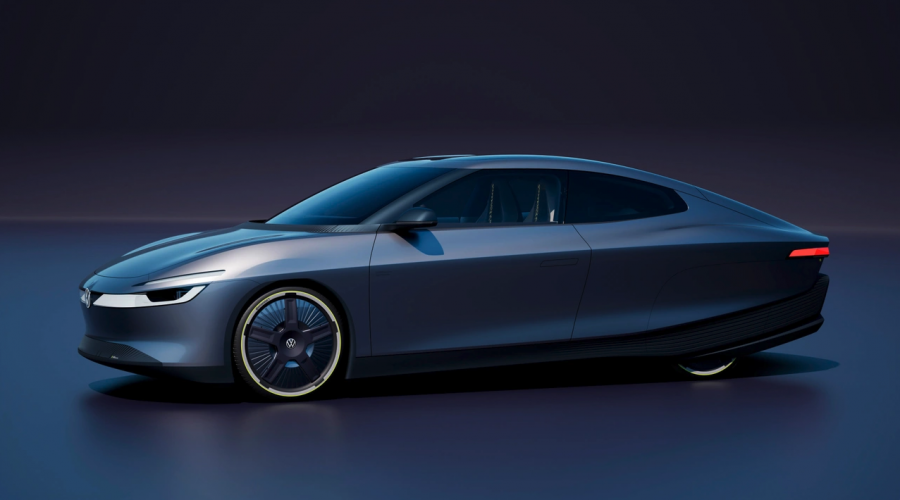
Volkswagen has unveiled the 'Mission Efficiency', the successor to the XL1 of 2013.
View: https://www.youtube.com/watch?v=JwahuTiZWM8&t=4s&pp=ygUSbWlzc2lvbiBlZmZpY2llbmN5
https://www.topgear.com/car-news/el...urned-id-polo-based-hatch-thatll-do-500-miles
The original XL1 was a two-cylinder diesel while the new car uses equipment from the new ID. Polo, so close to real-world. It also has four seats, as opposed to two.
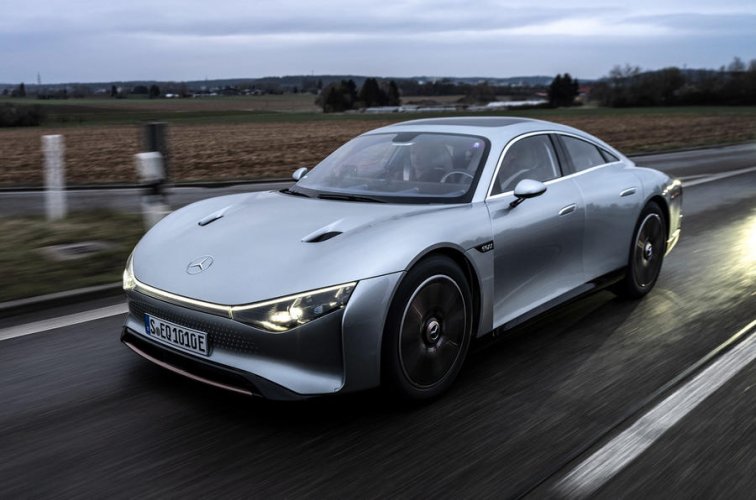
Mercedes-Benz's equivalent is 2022's Vision EQXX. Both aimed at achieving long range between recharges with relatively small batteries through light weight and clean aerodynamics.
https://www.topgear.com/car-news/el...urned-id-polo-based-hatch-thatll-do-500-miles
The original XL1 was a two-cylinder diesel while the new car uses equipment from the new ID. Polo, so close to real-world. It also has four seats, as opposed to two.
Mercedes-Benz's equivalent is 2022's Vision EQXX. Both aimed at achieving long range between recharges with relatively small batteries through light weight and clean aerodynamics.
Attachments

1635yankee
Recovering aeronautical engineer
- Joined
- 18 August 2020
- Messages
- 674
- Reaction score
- 1,030
Tesla's door handles aren't a problem because the cars are electric, but because the design team was trying to be cool. It's the same with the various cars' self-driving features: the software would still have a fuel-burning car run past stopped school buses, through stop signs, and over pedestrians at marked crosswalks (which people do a lot anyway)
The fact that electric SUVs and puckups are idiotically heavy is a problem. So is the fact the current pickups seem designed to kill pedestrians is another. (Light trucks should be designed so a 50% ten year old is easily visible when standing immediately in front of the hood)
The fact that electric SUVs and puckups are idiotically heavy is a problem. So is the fact the current pickups seem designed to kill pedestrians is another. (Light trucks should be designed so a 50% ten year old is easily visible when standing immediately in front of the hood)
Brett Davidson
ACCESS: Top Secret
- Joined
- 26 September 2006
- Messages
- 4,442
- Reaction score
- 12,826
Car design is a field that has seriously gone off the rails across the industry - from classical to baroque to downright Albert Speer. Granted, safety and environmental requirements have required increasing weight and complexity, but instead of finding creative, efficient solutions, manufacturers have instead taken the easy and crudely gratifying route of compounding mass and power. Simply making something electric doesn't make it better. Even if an EV is powered by a grid that's shifted to renewable energy, if it's an overweight vehicle, it's resource extraction and manufacturing footprint is so oversized so that savings won't be amortised for a dozen years and yet a replacement gets bought annually. The efficiencies of green tech have to be calculated over a whole life cycle, otherwise it's just greenwash.Tesla's door handles aren't a problem because the cars are electric, but because the design team was trying to be cool. It's the same with the various cars' self-driving features: the software would still have a fuel-burning car run past stopped school buses, through stop signs, and over pedestrians at marked crosswalks (which people do a lot anyway)
The fact that electric SUVs and puckups are idiotically heavy is a problem. So is the fact the current pickups seem designed to kill pedestrians is another. (Light trucks should be designed so a 50% ten year old is easily visible when standing immediately in front of the hood)
OK, I'm ranting, but I'm one of those people who prefers an old coat that's served over decades with patches and three new linings over something fashionable. It's not a statement; it just does its job and its familiar. Get off my lawn, where's my cocoa?
T. A. Gardner
ACCESS: Top Secret
- Joined
- 18 February 2021
- Messages
- 2,006
- Reaction score
- 3,558
A lot of that is due to Musk putting his engineers on a schedule and then "Or elseing" them. Musk wanted the retractable door handles and his staff complied. Self-driving? Make it work today, or else...Tesla's door handles aren't a problem because the cars are electric, but because the design team was trying to be cool. It's the same with the various cars' self-driving features: the software would still have a fuel-burning car run past stopped school buses, through stop signs, and over pedestrians at marked crosswalks (which people do a lot anyway)
The fact that electric SUVs and puckups are idiotically heavy is a problem. So is the fact the current pickups seem designed to kill pedestrians is another. (Light trucks should be designed so a 50% ten year old is easily visible when standing immediately in front of the hood)
T. A. Gardner
ACCESS: Top Secret
- Joined
- 18 February 2021
- Messages
- 2,006
- Reaction score
- 3,558
This is due to government interference more than anything else. It isn't just in cars, it is creeping into everything. Toss in an insanely litigious society and you get a perfect storm of complexity, insane costs, and unending attempts to make something work.Car design is a field that has seriously gone off the rails across the industry - from classical to baroque to downright Albert Speer. Granted, safety and environmental requirements have required increasing weight and complexity, but instead of finding creative, efficient solutions, manufacturers have instead taken the easy and crudely gratifying route of compounding mass and power. Simply making something electric doesn't make it better. Even if an EV is powered by a grid that's shifted to renewable energy, if it's an overweight vehicle, it's resource extraction and manufacturing footprint is so oversized so that savings won't be amortised for a dozen years and yet a replacement gets bought annually. The efficiencies of green tech have to be calculated over a whole life cycle, otherwise it's just greenwash.
OK, I'm ranting, but I'm one of those people who prefers an old coat that's served over decades with patches and three new linings over something fashionable. It's not a statement; it just does its job and its familiar. Get off my lawn, where's my cocoa?
Scott Kenny
ACCESS: USAP
- Joined
- 15 May 2023
- Messages
- 19,533
- Reaction score
- 27,980
So run it the other direction.This is due to government interference more than anything else. It isn't just in cars, it is creeping into everything. Toss in an insanely litigious society and you get a perfect storm of complexity, insane costs, and unending attempts to make something work.
"Why can't a 50% 10yo be seen when standing at the bumper of any current truck?" Because the regulations allow it? Then you change the regulations regarding hood height.
Or massive class-action lawsuits, but those are usually more expensive than leaning on a lawmaker.
T. A. Gardner
ACCESS: Top Secret
- Joined
- 18 February 2021
- Messages
- 2,006
- Reaction score
- 3,558
There is, it is 28,000 lbs. That's the heaviest vehicle you can operate without a CDL. So, if you go rent the largest U-Haul truck, for example, that's what you get without a CDL.The light truck loophole needs to be abolished, and there should be a max weight limit on non-commercial vehicles.
Scott Kenny
ACCESS: USAP
- Joined
- 15 May 2023
- Messages
- 19,533
- Reaction score
- 27,980
Which light truck loophole?The light truck loophole needs to be abolished, and there should be a max weight limit on non-commercial vehicles.
The one that kept them out of the Corporate Average Fuel Economy calculations? (Which is actually utility vehicles, like crossovers)
Light trucks got a separate CAFE standard in 1979. "Crossovers" happen to meet a specific footprint criteria (written into the law in 2006, taking effect in 2008 model year) which puts them into a different, lower MPG-average-target than "passenger cars."
T. A. Gardner
ACCESS: Top Secret
- Joined
- 18 February 2021
- Messages
- 2,006
- Reaction score
- 3,558
It's called the "Chicken Tax" in the US.Which light truck loophole?
The one that kept them out of the Corporate Average Fuel Economy calculations? (Which is actually utility vehicles, like crossovers)
Light trucks got a separate CAFE standard in 1979. "Crossovers" happen to meet a specific footprint criteria (written into the law in 2006, taking effect in 2008 model year) which puts them into a different, lower MPG-average-target than "passenger cars."
https://www.gearpatrol.com/cars/a44373090/chicken-tax-trucks/
https://www.investopedia.com/terms/c/chicken-tax.asp
Scott Kenny
ACCESS: USAP
- Joined
- 15 May 2023
- Messages
- 19,533
- Reaction score
- 27,980
That wouldn't necessarily fix the issue. Nobody buys small trucks anymore.It's called the "Chicken Tax" in the US.
It definitely would not help the issue with how big modern trucks have gotten.
1635yankee
Recovering aeronautical engineer
- Joined
- 18 August 2020
- Messages
- 674
- Reaction score
- 1,030
US fuel economy standards are also biased in favor of vehicles with a larger footprint, so a Miata-sized vehicle has to meet a stricter requirement than one the size of a Corvette. When pickups started being popular as personal cars vs. work vehicles, they didn't need to meet the same US crashworthiness requirements as cars. I remember a report of a full-sized pickup T-boned, on the passenger side, by a compact car doing about 45 mph. At the time, pickups didn't need the structure in doors to prevent the cab from collapsing. The pickup truck driver lost his leg. There were enough other similar accidents for the legislators to notice and vote to include light trucks in safety regs.
Similar threads
-

-
 Sikorsky Long-Range Hybrid-Electric VTOL Demonstrator (HEX)
- Started by VTOLicious
- Replies: 5
-
Tesla to get new million-mile battery ready for production at CATL
- Started by edwest4
- Replies: 6
-
Electric and Hydrogen aeroplanes - feasibility and issues
- Started by Grey Havoc
- Replies: 619
-
 NA/R - Solar Electric Spacecraft for Asteroid Belt Exploration (1970)
- Started by Graham1973
- Replies: 3