Electric vehicle discussion

There is no “400kw diesel-electric generator” that is EPA certified for on highway use.
That is a failure of the current rules system.

Also, what is the actual difference between the emissions of a stationary generator and an equal-power road-going diesel? I'm talking grams of CO2 per unit power, not the fact that US EPA insists on grams CO2 per mile.


Caterpillar left the highway diesel market back in 2008, so I can’t imagine why the weight of the C13 is relevant?
Because it's an engine that I could find a current weight for that makes a fairly typical road-going diesel power. Else we're talking something in the 600-800hp power class.


Moreover, hooking up a diesel to a generator results in much greater weight and power losses than mechanical transmission. This is precisely why small diesel shunter locomotives are often diesel hydraulic while the larger mainline locomotives are diesel electric. Diesel electric drive doesn’t scale down very well. It certainly doesn’t scale down to Class 8 trucks.
Potentially valid, but hydraulic motors don't like freeway speeds.


Class 8 trucks, aside from Tatras, invariably use live axles which makes a differential mounted electric motor a problem in terms of unsprung weight, making an electric Class 8 truck much harder on the road surface than a direct drive diesel with the same maximum weight.
Wrong, the current e-axles are LIGHTER than a mechanical differential.
 
Actually, this is a huge problem with semi-tractor commercial trucks. The gross weight limit on interstate trucking is 80,000 lbs. Roads are designed to accommodate that weight limit.
Not all transportation tasks are weight limited.

Some are volume limited

Others are limited by addressable demand per unit of time and max capacity is not needed

Others are more sensitive to fuel cost than crew cost and trip count

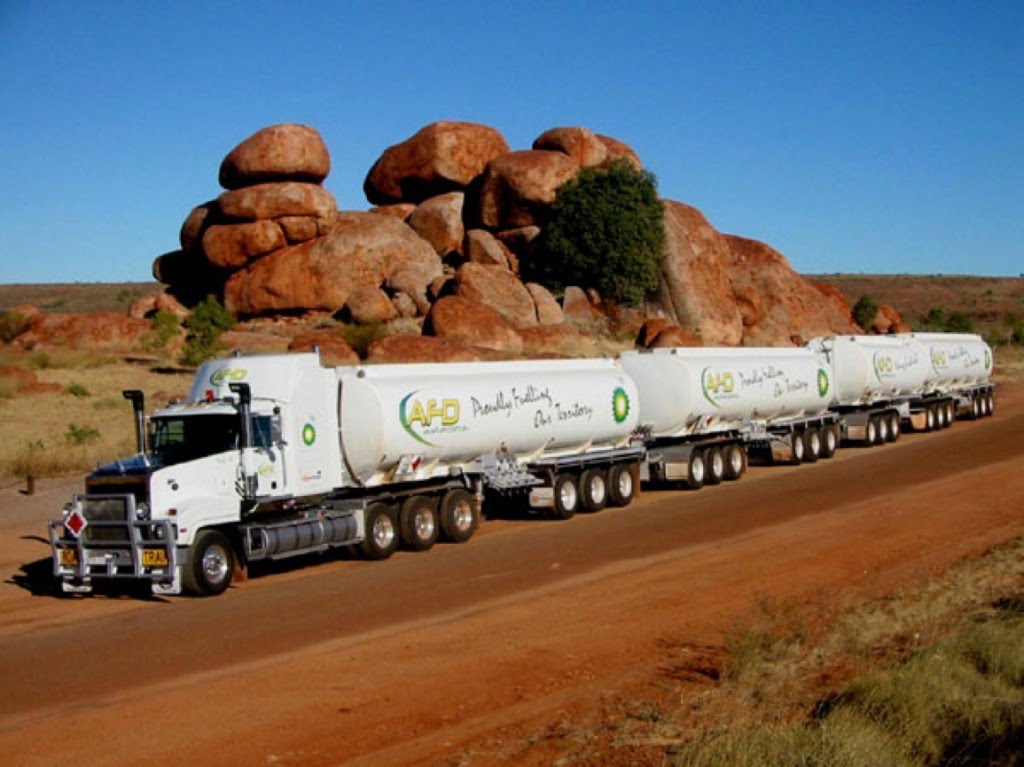
While in some places you can just add trailers:

road-train-australia.jpg


Different vehicles have different trade offs. The fact that electric trucks exist on the market and get some sales means that they have some niche. (same is true for ICE vehicles) They'd gain more use if performance and cost improves.

Niches like electric delivery vans is growing quickly, as stop and go urban traffic with many time consuming destinations means payload and range requirements are low, mechanical wear and tear is high and a lot of fuel is wasted in braking or idling. Other transport tasks with similar structure is likely to convert to electric first.

The tesla semi is the only electric design that seeks to challenge ICE in traditional long haul tasks, but it'd at minimum take megawatt charging networks to get built before it is even remotely a realistic option for most use cases.

And actually, what is the point of using a “zero emissions” vehicle to strip mine coal? Using “green” technology to enable the extraction of coal would seem to defeat the original environment purpose?
Running a vehicle off coal (powered electricity) is much cheaper than running a vehicle off oil for a non-oil producing country, currently getting huge chunk of the fuel supply blockaded by two belligerents to boot. (and would get blockaded for god knows how long when the shooting happens)

People care about payload per trip because drivers are too expensive. For a middle income country with still significant underdeveloped areas with low wages, it is cheap to hire more drivers and fuel/maintenance costs is far more important.

*of course there is also the theory of government overreach in forcing electrification because dear leaders thinks it is high tech*
 
If this is the price for the basic bare bones version, they are going to have problems. Ford is launching their own full size 4 person cabin electric pickup starting at 30k. Keep in mind the basic version of the Slate truck will not have a radio or power windows.

https://www.theautopian.com/the-slate-truck-will-cost-24950/

https://www.thedrive.com/news/fords-30000-electric-truck-is-real-and-heres-proof-of-life

https://www.autoevolution.com/news/...late-and-ford-going-neck-and-neck-271785.html
 
Last edited:
The Grauniad on European EV strategy/trends in the face of Chinese competition.

https://www.theguardian.com/environment/2026/jun/21/europe-ev-shrank-challenge-suv-smaller-china

Battery technology has improved and Europe’s carmakers have cut manufacturing costs enough that they can now sell cars that might have a chance of fitting down a medieval lane or two.

“The world is not going to be saved by big SUVs that are electric,” says Renault’s chief design officer, Laurens van den Acker, who led development on the Twingo. “The world is going to be saved by small electric cars. We need more of them and not less. We need them to become as popular as other cars.”

Smaller cars had started to disappear because it became harder for manufacturers to make money on them. Safety regulations meant extra kit, which was tricky to package into smaller spaces. And when the shift to electric came, batteries were initially too expensive for cars that had traditionally been the most affordable.

Demand for smaller cars has always been there in Europe, he says, but the key to making them financially viable was the falling cost of batteries.

To clamp down further on costs, Renault pushed to design the Twingo in two years rather than four, and did some of the engineering work in China. It also cut the number of parts from between 1,500 and 2,000 found in other cars to only 750.
 
Further to the above on European EVs, Citroën's upcoming new 2CV.

https://www.topgear.com/car-news/el...ill-be-a-small-sub-eu15k-e-car-thatll-come-uk

“More and more Chinese cars are coming. And if you look at the pitch of my competitors, there’s one car, then the successor is bigger, bringing more horsepower, more computing power, more screens, and I believe it’s time for a brand like Citroen to go for a different path.

“To put people on wheels, to electrify the wheels, and make the offer accessible, affordable and enjoyable. Obviously, there’s clear inspiration from the original model, but beyond the design it’s an inspiration of keeping something that’s essential, affordable.

“If you want to make burnouts at the traffic lights, this is not the brand to do it with,” he said with a laugh.
 
Further to the above on European EVs, Citroën's upcoming new 2CV.

https://www.topgear.com/car-news/el...ill-be-a-small-sub-eu15k-e-car-thatll-come-uk

“More and more Chinese cars are coming. And if you look at the pitch of my competitors, there’s one car, then the successor is bigger, bringing more horsepower, more computing power, more screens, and I believe it’s time for a brand like Citroen to go for a different path.

“To put people on wheels, to electrify the wheels, and make the offer accessible, affordable and enjoyable. Obviously, there’s clear inspiration from the original model, but beyond the design it’s an inspiration of keeping something that’s essential, affordable.

“If you want to make burnouts at the traffic lights, this is not the brand to do it with,” he said with a laugh.
Just think, you too can own a Lada or Yugo that is battery powered! How good for you!

As for the 2CV, it wasn't built just to be affordable. It was also built to be able to be fixed by some farmer in the middle of a muddy field a hundred kilometers from the nearest human settlement using an odd assortment of hand tools in a cardboard box. I doubt the modern one will come anywhere close to that description.
 
Further to above post,

Tesla faces federal probe after Model 3 slams into Texas home, killing 76-year-old

https://www.cnbc.com/2026/06/22/tesla-nhtsa-model-3-crash-autopilot-katy-texas.html

The Washington Post previously reported that Tesla has a history of losing, withholding or making it difficult for attorneys and other interested parties to obtain the comprehensive, electronic data that is generated and stored in its cars when they were involved in severe collisions.

Regards,
 
As for the 2CV, it wasn't built just to be affordable. It was also built to be able to be fixed by some farmer in the middle of a muddy field a hundred kilometers from the nearest human settlement using an odd assortment of hand tools in a cardboard box. I doubt the modern one will come anywhere close to that description.
If you minimize computerized controls, basically the only thing that can go wrong on an electric car is blowing the fuse on the traction lines to the motor. Or the low-voltage fuse to the motor controller.

Anything else is a physical break in structure which will require a welder to patch to limp you home.
 
If you minimize computerized controls, basically the only thing that can go wrong on an electric car is blowing the fuse on the traction lines to the motor. Or the low-voltage fuse to the motor controller.

Anything else is a physical break in structure which will require a welder to patch to limp you home.
The problem is that, in reality, electric cars are incredibly maintenance intensive, with problems that lighter weight gas sedans don’t seem to have, like failed driveshaft and wheel bearings, not to mention huge battery packs that require replacement before the 80,000 mile warranty expires. Electric cars should run forever but according to one study there is only a 4.6% chance a Tesla will make it to 250,000 miles.

Most EVs require a separate 12 volt battery for the in car electronics to unlock the door and to even charge the main battery pack. I can’t believe the problems that EVs have with those simple 12 volt batteries disabling the entire car, often and repeatedly, when a sealed 12 volt Delco battery in a GM car will reliably last for decades. (My guess is that EV makers have cut price 12 volt batteries and voltage leaks in cut price wiring harnesses designed by industry amateurs.) And if an EV maker can’t get a simple 12 volt electrical system right, just image the issues with arcing and shorts the 48 volt interior electrical system of a certain EV truck will have as it ages.
 
The problem is that, in reality, electric cars are incredibly maintenance intensive, with problems that lighter weight gas sedans don’t seem to have, like failed driveshaft and wheel bearings, not to mention huge battery packs that require replacement before the 80,000 mile warranty expires. Electric cars should run forever but according to one study there is only a 4.6% chance a Tesla will make it to 250,000 miles.
So, cheap components where they should have spent money.

Wheel bearings/grease type not rated for a 6800lb GVRW truck. Batteries made by the lowest bidder in China (remember the Samsung batteries catching on fire in airplanes?)


Most EVs require a separate 12 volt battery for the in car electronics to unlock the door and to even charge the main battery pack. I can’t believe the problems that EVs have with those simple 12 volt batteries disabling the entire car, often and repeatedly, when a sealed 12 volt Delco battery in a GM car will reliably last for decades. (My guess is that EV makers have cut price 12 volt batteries and voltage leaks in cut price wiring harnesses designed by industry amateurs.) And if an EV maker can’t get a simple 12 volt electrical system right, just image the issues with arcing and shorts the 48 volt interior electrical system of a certain EV truck will have as it ages.
And even more cheap components.
 
In a word, China.

View: https://www.youtube.com/watch?v=Q0rBGfn-LyU


Paraphrase:

One factor: 'China speed.' They develop cars very quickly and sell them like software - ship it when it works, let the customers test it for you and fix problems over the air. Unthinkable to a traditional manufacturer, and as a result, Chinese EVs are vastly outselling European ones because their cheaper and more up to date (notably in charging speeds).

Another factor: 'China Shock 2.' China entered the WTO in 2001 (?) immediately exploiting outsourcing driven by their low costs. Then, now that China is a hi-tech economy, it's got the expertise that was outsourced and its selling products back in Europe where

In a stable world with open trade, it made sense to extend supply lines worldwide, which gave advantage or opportunity for China. Now that the world might be likely to break into more restricted trading blocs, that distribution of supply doesn't look like a good idea any more. The trouble, once you've lost know-how, it's hard to get it back. Bean counters understand quantities and short-term gains, but they have no concept of qualities, as is proven time and again.

And time and again too, idiots vote for politicians who say 'I'm a businessman and I'm going to run this country like a business!' Countries are countries, not businesses and most businesses go out of business. It's like the joke about the mechanic who tells the surgeon that there's no essential difference between their jobs, to which the surgeon replies that they have to keep the engine running while they're fixing it.

So, treating manufacturing purely as a matter of spreadsheets has come back to bite the European car industry in the arse.

Before Americans get complacent, Boyle points out that tariffs and protectionist policies often backfire and come with more loopholes than a thing with a lot of loopholes. I remember that when the American car market was in its last phase of heavy protectionism, it's car exports crashed because protected in their greenhouse, they simply couldn't compete and companies such as Ford and GM had to set up satellites selling local European or Australian products.

Boyle sees a future of more localism, focus on creating strategically stable relationships with dependable partners, higher premiums paid by all (and prices for the buyers) and narrower margins.

No wonder than that JLR has made it clear that they're pursuing lower volume and higher margins.
 
Last edited:
Another harbinger of the new order:

Audi has established a China-only brand, called AUDI (sic). It's struggling to sell product, so it's adapting rapidly to local conditions.

https://www.carscoops.com/2026/07/audi-global-car-strategy/

European buyers want buttons, Chinese buyers want screens, and Audi has decided to stop trying to please both at once

  • Audi says the one-size-fits-all global car is no longer the way forward.
  • Its SAIC China brand now builds models tailored only for local buyers.
  • This approach also lets the company bring new models to market faster.
No longer focusing on global cars is also allowing Audi to speed up the development of its cars. The automaker says it’s now developing vehicles at “China speed” by establishing “project houses” where development teams have direct access to the board, making approvals much quicker.

'Project house' sounds like a translation of 'Skunk Works.' :)
 
Additional:

Boyle, like most economists, stresses efficiency. Liberalism - in the economic sense of free movement of goods, labour, and capital - greatly aids that. However, efficient systems are 'brittle' - if one component fails, the system is endangered because redundancy has been stripped away. 'Resilience' is something you'll start hearing about more and that's what he describes in his closing scenario. To be clear though, it's not entirely an opposite: a resilient system may have greater redundancy but it will have a flexible architecture that the economic liberal strives for too.
 
In a word, China.
Boyle
Very midwit take. Complete ignores dynamics of things going on in China and the larger technological landscape.

Ultimately though, Germany industry do not have know how for either batteries or software that is the enabling technology and are little more than horse buggy builders at the start of ICE. Industry that do not reinvent itself under conditions of change would either have to go out of business or get propped up by protectionism.

"Job losses" is precisely why Europe isn't competitive, union driven strategy based on labor logic have no maneuverability when the right play could be to fire all the people with obsolete skills and have early pain instead of late pain. The Chinese competitiveness certainly does not come from conditions for the worker.

Stuff like update cycle is also self inflicted, if ship-it-first and over-the-air-update works for some market segment and is strategically decisive, it plain works, and creating sub-brand to with this strategy would be the logical play. This is just typical culture and strategy failure killed many companies.
---
Given the new technology resets the landscape, it is not clear if pursuing the same industry is the right idea either, however that is a problem that people on the ground (as opposed to bureacrats or random people far from the action) can figure out best. No medium scale country can escape specialization and figuring the right one is a problem worth billions for the person that figures it out.
 
union driven strategy based on labor logic have no maneuverability
A recurring theme.
With a hammer in your hand, all the world looks like a nail.
The gist, in my view: runaway outsourcing. Then again, that might be the hammer in my own hand.
 
Last edited:
Boyle sees a future of more localism, focus on creating strategically stable relationships with dependable partners, higher premiums paid by all (and prices for the buyers) and narrower margins.
Pay one way or another. Choose.
 
In a word, China.

View: https://www.youtube.com/watch?v=Q0rBGfn-LyU


Paraphrase:

One factor: 'China speed.' They develop cars very quickly and sell them like software - ship it when it works, let the customers test it for you and fix problems over the air. Unthinkable to a traditional manufacturer, and as a result, Chinese EVs are vastly outselling European ones because their cheaper and more up to date (notably in charging speeds).

Another factor: 'China Shock 2.' China entered the WTO in 2001 (?) immediately exploiting outsourcing driven by their low costs. Then, now that China is a hi-tech economy, it's got the expertise that was outsourced and its selling products back in Europe where

In a stable world with open trade, it made sense to extend supply lines worldwide, which gave advantage or opportunity for China. Now that the world might be likely to break into more restricted trading blocs, that distribution of supply doesn't look like a good idea any more. The trouble, once you've lost know-how, it's hard to get it back. Bean counters understand quantities and short-term gains, but they have no concept of qualities, as is proven time and again.

And time and again too, idiots vote for politicians who say 'I'm a businessman and I'm going to run this country like a business!' Countries are countries, not businesses and most businesses go out of business. It's like the joke about the mechanic who tells the surgeon that there's no essential difference between their jobs, to which the surgeon replies that they have to keep the engine running while they're fixing it.

So, treating manufacturing purely as a matter of spreadsheets has come back to bite the European car industry in the arse.

Before Americans get complacent, Boyle points out that tariffs and protectionist policies often backfire and come with more loopholes than a thing with a lot of loopholes. I remember that when the American car market was in its last phase of heavy protectionism, it's car exports crashed because protected in their greenhouse, they simply couldn't compete and companies such as Ford and GM had to set up satellites selling local European or Australian products.

Boyle sees a future of more localism, focus on creating strategically stable relationships with dependable partners, higher premiums paid by all (and prices for the buyers) and narrower margins.

No wonder than that JLR has made it clear that they're pursuing lower volume and higher margins.

The current woes of VW, as well as the overall European automotive sector, are largely inflicted by the Eurocrats in Brussels. Environmental dictates tend to run contrary to economic and consumer interests but “Dieselgate” provided a convenient opportunity for bureaucratic elites to demonstrate their authority. Elites always need to exercise authority to maintain it and every “crisis” is merely an opportunity. Diesel particulates are carcinogens on par with asbestos fibers, so there is a truthful and practical basis, but in reality elites always act to assert their own interests, with the Dieselgate regulators acting on the basis of self aggrandizement. I’d argue that curtailing the use of diesel was in the (vaguely) broader interest of public health but the beginning of the end for the European Auto industry.
In a word, China.

View: https://www.youtube.com/watch?v=Q0rBGfn-LyU


Paraphrase:

One factor: 'China speed.' They develop cars very quickly and sell them like software - ship it when it works, let the customers test it for you and fix problems over the air. Unthinkable to a traditional manufacturer, and as a result, Chinese EVs are vastly outselling European ones because their cheaper and more up to date (notably in charging speeds).

Another factor: 'China Shock 2.' China entered the WTO in 2001 (?) immediately exploiting outsourcing driven by their low costs. Then, now that China is a hi-tech economy, it's got the expertise that was outsourced and its selling products back in Europe where

In a stable world with open trade, it made sense to extend supply lines worldwide, which gave advantage or opportunity for China. Now that the world might be likely to break into more restricted trading blocs, that distribution of supply doesn't look like a good idea any more. The trouble, once you've lost know-how, it's hard to get it back. Bean counters understand quantities and short-term gains, but they have no concept of qualities, as is proven time and again.

And time and again too, idiots vote for politicians who say 'I'm a businessman and I'm going to run this country like a business!' Countries are countries, not businesses and most businesses go out of business. It's like the joke about the mechanic who tells the surgeon that there's no essential difference between their jobs, to which the surgeon replies that they have to keep the engine running while they're fixing it.

So, treating manufacturing purely as a matter of spreadsheets has come back to bite the European car industry in the arse.

Before Americans get complacent, Boyle points out that tariffs and protectionist policies often backfire and come with more loopholes than a thing with a lot of loopholes. I remember that when the American car market was in its last phase of heavy protectionism, it's car exports crashed because protected in their greenhouse, they simply couldn't compete and companies such as Ford and GM had to set up satellites selling local European or Australian products.

Boyle sees a future of more localism, focus on creating strategically stable relationships with dependable partners, higher premiums paid by all (and prices for the buyers) and narrower margins.

No wonder than that JLR has made it clear that they're pursuing lower volume and higher margins.
The real lesson here is demonstrated by the Dacia Sandero, the best selling car in Europe, which is built in Morocco, a country that offers the most cost effect labor for automotive assembly in the world. Even the Chinese can’t compete with Moroccan autoworkers. I’d argue that with birth rates well below replacement, the most developed Western European countries need to exit the mainstream automotive assembly in favor of developing market labor.

A more specific lesson can be learned from the Renault Clio, which is the second best selling car in Europe. With only a single but focused downmarket brand, Dacia, Renault has succeeded where the former PSA has brought all of Stellantis down. Meanwhile, VW is a German imitation of pre-bailout General Motors, and is the last European car company with both a full product spectrum and global reach. The real solution is to other follow the Australian model and to end all auto assembly in entire Western European counties, as Slovakian labor is on par with German and the Moroccans and Romanians exceed the French, regardless of wage scales. The VW Golf is leaving Wolfsburg for Mexico and the petrol VW Polo has been built exclusively in South Africa for years. Meanwhile, the Land Rover Defender for the American market will soon be built by the UAW alongside Jeeps in Toledo. I suspect, the move is to make room at the JLR Slovakian plant to move all Range Rover/Sport production out of the UK. And the quite frankly, in a world where the “Temu Range Rover” Jaecoo 7 is the best selling car in Britain, who really wants a British build Evoque for twice the price? The very fact that British consumers are so willing to hazard a visually derivative product from an unknown Chinese brand tells you all you need to know about consumer trust in “the home team.”
 
Last edited:
Re: the Sandero and Clio , the 'secret sauce' is that the Sandero is just a Clio with different skin panels , and the expensive options and fancy gadgets not avaialable . The platform and mechanical bits are common to both cars , as well as the Nissan Micra and Juke , the Renault Captur , and I believe , the Dacia Duster . For the price , Sanderos are decent cars , I'm on my second one . . .
British car buyers are brand snobs , hence they will risk penury by buying BMWs , Mercedes , Audis and Range Rovers on finance . Thus , they will buy a Jaecoo 7 because it looks like a Range Rover , rather than because it's any good . . .

cheers ,
Robin.
 
[deepdrive in-wheel motors]
I don't really like how they're planning on (not) using mechanical brakes, but I follow the logic in doing so.

Is it wrong that I want to install these into trailer axles?
 
I've read that US farmers/ranchers are often importing used Japanese kei pickups ('utes' as we call them in New Zealandese). They're very small but practical, cheap appliances for day-to-day use (inspecting and repairing fences for example). It's easier to get a smaller vehicle onto a crowded, uneven building site too. It may be that Ford's market research has shown that many customers in agriculture and trades won't pay for unnecessary size if it makes a vehicle too costly to buy and run while being less practical.
 
I've owned at least one pick up now for decades and I can tell you that for me that short bed length is a deal breaker. It looks like a 4 or 5 foot--say 1.5 meter--bed length. Can't carry plywood in that. It'd be full just with the crew box and generator in it. No room for materials.

The Kei trucks work because they're all about load, not cab. Sure, a crew cab is nice, almost totally necessary in the US to most truck buyers, but you have to have a reasonably sized bed for load or it's a no-go for sales. Honda's Ridgeline was that way when it first came out, and Honda learned PDQ that buyers wanted more bed space for cargo. Guess Ford didn't get the memo...
 
I've owned at least one pick up now for decades and I can tell you that for me that short bed length is a deal breaker. It looks like a 4 or 5 foot--say 1.5 meter--bed length. Can't carry plywood in that. It'd be full just with the crew box and generator in it. No room for materials.

The Kei trucks work because they're all about load, not cab. Sure, a crew cab is nice, almost totally necessary in the US to most truck buyers, but you have to have a reasonably sized bed for load or it's a no-go for sales. Honda's Ridgeline was that way when it first came out, and Honda learned PDQ that buyers wanted more bed space for cargo. Guess Ford didn't get the memo...
They make trailers for hauling supplies.
 
Do old trucks no longer get their frames cut to make trailers out of truck beds?
That can be done, but you don't see it as much anymore. The cost in time and materials to do it is as much or more than buying some utility trailer that is mass manufactured today.
 
This gives you an idea of turning a truck bed into a trailer and why you don't see it often anymore.

 
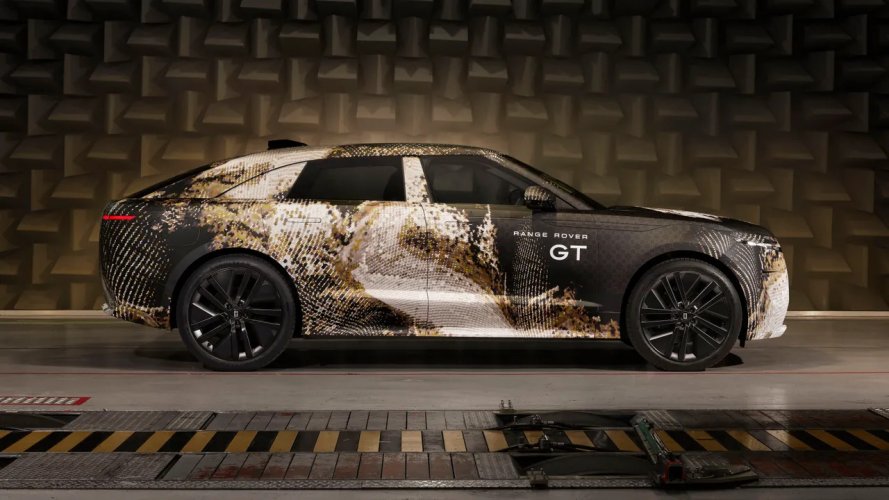
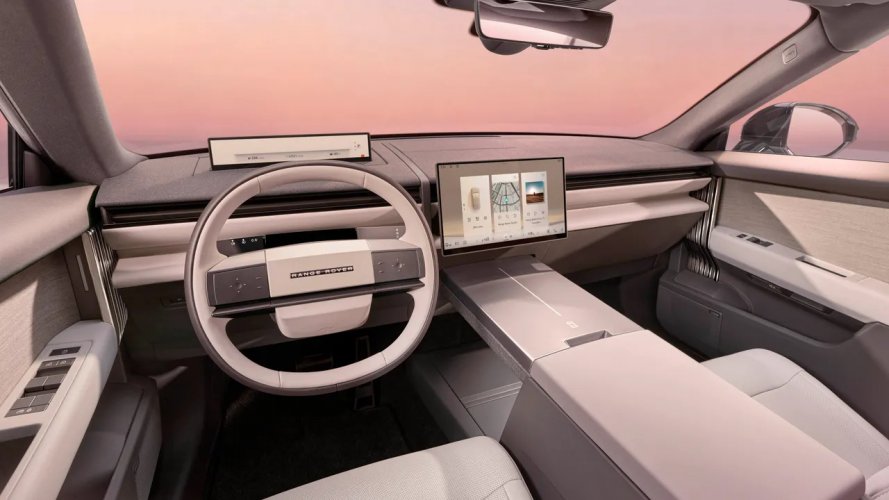
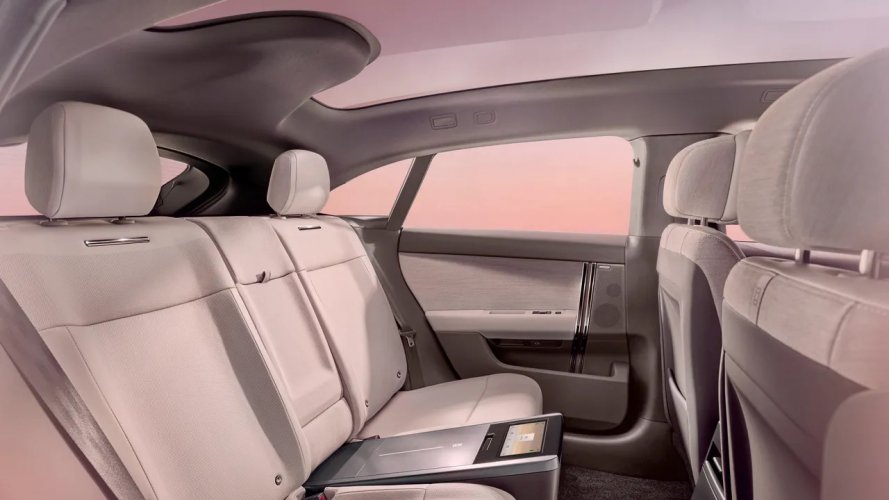
The new Range Rover is not a replacement for the Velar after all, but a new model called the GT. I guess it does what it says on the tin, a descendent of the cancelled Road Rover of yore. It's the first new JLR in years and the last before Gerry McGovern left, though it was probably penned (moused?) by Massimo Frascella, who did the Velar and a number of JLR designs including the Jaguar Type 00 concept and its production version, the Type 01 (McGovern was director of design, not the guy stained with ink/toner). Frascella has since gone on to Audi and you can see his hand in the Concept C and the Nuvolari supercar.

Contrary to some rumours, it does have a rear window.

As for the Type 01, that's due to be launched in late September, though as with the GT here, we may see pictures beforehand.

https://www.topgear.com/car-news/electric/surprise-range-rover-gt-a-new-all-electric-grand-tourer

Very sleek and minimalist, reminds me of William Towns' original designs for the Lagonda interior. Rather too minimal with its dependence on the touchscreen. Quothe Einstein, 'an hypothesis should be as simple as possible, not simpler than possible.' Same for ergonomics IMO (because touchscreens, with all their nested menus, can end up being too complicated to be practical or safe).
 

Attachments

  • RR_GT_Anechoic-Chamber_SIDE-PROFILE_220726 copy.jpg
    RR_GT_Anechoic-Chamber_SIDE-PROFILE_220726 copy.jpg
    251.2 KB · Views: 2
  • RR_GT_INTERIOR_DRIVERS-POV_220726.jpg
    RR_GT_INTERIOR_DRIVERS-POV_220726.jpg
    184.2 KB · Views: 2
  • RR_GT_INTERIOR_REAR-SEATS_.jpg
    RR_GT_INTERIOR_REAR-SEATS_.jpg
    167.5 KB · Views: 2
Last edited:
Meanwhile, the major manufacturers' plans for EVs are in flux (couldn't resist). Lotus is making hybrid versions of its Electre and Emeya, Porsche's EV 918 replacement has been on-again, off again, and now apparently on-again, while the internal combustion version might be the one for the chop (that might be because it's to share a platform with the Audi Concept C production version, and Audi is pushing that). The Taycan appears not likely to be replaced. Volkswagen is going through a tremendous shake up with plans to cut its model range in half and its workforce by an incredible 100,000, though whether that gets past the board is an open question.

China's forging ahead happily though. Jaguar and Bentley insist that their next models will be electric only, but Bentley, like many, has pushed its plans to go all-electric back to 2035 at the earliest.
 
Last edited:
Speaking of Bentley, their 'Urban SUV' is to be called the Torcal (people were guessing that it would be named after one of the Bentley Boys, Wolf Barnato in particular).

https://www.topgear.com/car-news/electric/bentleys-first-electric-car-and-its-called-torcal

Not a reference to the pursuit of looking at fish through a pair of leaky goggles, it instead continues Bentley’s recent tradition of naming cars after ‘extraordinary landscapes’. Streatham High Road was already taken, so it went with Torcal instead – taking its name from El Torcal de Antequera in Andalusia, Spain. A “dramatic limestone landscape of stacked rock formations, cliffs and labyrinths”, says Bentley.

Some EVs have synthetic soundtracks (and even 'gears') - Hans Zimmer was even hired by one company to compose one. The Torcal will have one created by an orchestra, because of course it would. Percussion will dominate and the tempo even increases as you accelerate. My preference would be bagpipes.

View: https://www.youtube.com/watch?v=7ZIrk2gp41I
 
Last edited:
There is no “400kw diesel-electric generator” that is EPA certified for on highway use. Caterpillar left the highway diesel market back in 2008, so I can’t imagine why the weight of the C13 is relevant? Moreover, hooking up a diesel to a generator results in much greater weight and power losses than mechanical transmission. This is precisely why small diesel shunter locomotives are often diesel hydraulic while the larger mainline locomotives are diesel electric. Diesel electric drive doesn’t scale down very well. It certainly doesn’t scale down to Class 8 trucks.

Class 8 trucks, aside from Tatras, invariably use live axles which makes a differential mounted electric motor a problem in terms of unsprung weight, making an electric Class 8 truck much harder on the road surface than a direct drive diesel with the same maximum weight.

The entire diesel electric debate is predicated on ludicrous claims from a group of bearded hipsters with a YouTube channel. The British Colombia iteration of the unfortunately named “Edison Motors” should be considered solely on basis of entertainment value.
You should also note that off-road diesel powered heavy machinery like mining trucks, etc., also burn "off-road" diesel fuel that is much cheaper (eg., doesn't have to meet the standard for #2 diesel used by road vehicles).

In the US, this has a red tinge to it to mark it as unsuitable for highway use. I used to buy this stuff regularly when I had a backhoe.
 
Well, well, well.

https://www.carscoops.com/2026/07/ferrari-luce-sold-out/

The Financial Times, citing two people familiar with the matter, reports Ferrari planned to sell “just under 500” Luce models during its first year on the market. That allocation was reportedly spoken for earlier this month despite a starting price of €550,000 (roughly $640,000 at current exchange rates) before taxes.

Evidently, dealers were instructed not to pressure traditional collectors into buying the Luce, instead focusing on new customers, particularly wealthy buyers in China and from technology hubs such as Silicon Valley, where electric vehicles are already commonplace. That strategy appears to be paying off.

According to the FT, Ferrari has set a longer-term goal of roughly 2,500 Luce sales by 2030, or about 600 units per year. That would account for around 5 percent of the company’s yearly total.

Meanwhile:


View: https://www.youtube.com/watch?v=B86taQzY5Es
 

Similar threads

Back
Top Bottom