

You are using an out of date browser. It may not display this or other websites correctly.
You should upgrade or use an alternative browser.
You should upgrade or use an alternative browser.
Early Beechcraft variants and projects
- Thread starter Stingray
- Start date

- Joined
- 26 May 2006
- Messages
- 38,288
- Reaction score
- 20,425


- Joined
- 25 June 2009
- Messages
- 15,515
- Reaction score
- 9,447
Excellent find! According to my notes, it was a 1937-38 twin-engine derivative of the successful Model 17, to be powered by two Menasco C6S4 Super Buccaneer liquid-cooled six-cylinder piston engines each developing 260hp.
Another little-known derivative of the Staggerwing was the first Model 24, which can be found here:
http://www.secretprojects.co.uk/forum/index.php/topic,1821.0
Another little-known derivative of the Staggerwing was the first Model 24, which can be found here:
http://www.secretprojects.co.uk/forum/index.php/topic,1821.0

Jos Heyman
ACCESS: Top Secret
- Joined
- 15 February 2007
- Messages
- 597
- Reaction score
- 95
I found a description of this aircraft on 1000aircraftphotos.com.
It was originally part of a batch of 24 AT-11s ordered by the Dutch government to be sent to the Netherlands East Indies but, as the Japanese invaded the NEI before delivery, the aircraft were delivered to the Royal Netherlands Military Flying School in Jackson, Mississippi (not Missouri as the website states) with fake USAAF serials in the 42-30xx range with the last two digits of the serials derived from the last two digits of the c/n.
1000aircraft photos continues:
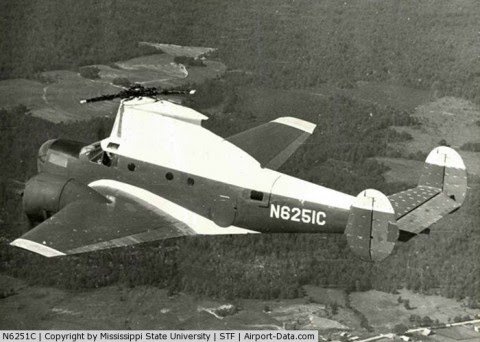
"The pictured aircraft was completed on March 18, 1942, and delivered to the RNMFS on May 16, 1942, marked 42-3069. On February 20, 1944, the aircraft was returned to the USAAF and serialed 44-72015; in 1953 it was stored at Hill AFB, Salina, Kansas. On June 14, 1956 it was donated by the Department of Health, Education & Welfare to the Mississippi State College (in 1958 renamed Mississippi State University). Registered N6251C on July 30, 1956, it gained its experimental class CofA in August 1956. The University's Aerophysics Department used it as a flying classroom & airborne laboratory.
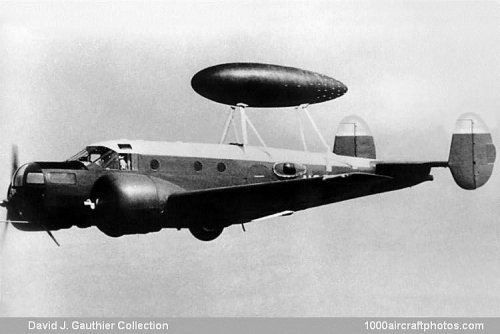
Painted overall in orange, the aircraft was modified in July 1959 to carry a blimp model above the fuselage testing aerodynamics for USN Goodyear blimps. Further modifications were an airspeed boom and a trailing airspeed cone. Aerodynamic test were also conducted on a Boeing Vertol 107 dummy helicopter pylon and rotor system. In 1968 it was fitted as a flying classroom with six test stations.
On August 18, 1980, the aircraft was acquired by George J. Wedekind Jr. of Middletown, Ohio, and a few weeks later, September 8, the aircraft was registered to the Heritage Flying Machines Inc., also at Middletown. In April 1982 the aircraft was repainted in its original RNMFS markings. On October 10, 1994, N6251C was registered to Star Aviation Inc. at Star, North Carolina, renamed Sport Air LLC on April 27, 2009. The aircraft is still airworthy and visiting air shows and providing group rides."
Photo of the aircraft with the blimp is enclosed.
It was originally part of a batch of 24 AT-11s ordered by the Dutch government to be sent to the Netherlands East Indies but, as the Japanese invaded the NEI before delivery, the aircraft were delivered to the Royal Netherlands Military Flying School in Jackson, Mississippi (not Missouri as the website states) with fake USAAF serials in the 42-30xx range with the last two digits of the serials derived from the last two digits of the c/n.
1000aircraft photos continues:
"The pictured aircraft was completed on March 18, 1942, and delivered to the RNMFS on May 16, 1942, marked 42-3069. On February 20, 1944, the aircraft was returned to the USAAF and serialed 44-72015; in 1953 it was stored at Hill AFB, Salina, Kansas. On June 14, 1956 it was donated by the Department of Health, Education & Welfare to the Mississippi State College (in 1958 renamed Mississippi State University). Registered N6251C on July 30, 1956, it gained its experimental class CofA in August 1956. The University's Aerophysics Department used it as a flying classroom & airborne laboratory.
Painted overall in orange, the aircraft was modified in July 1959 to carry a blimp model above the fuselage testing aerodynamics for USN Goodyear blimps. Further modifications were an airspeed boom and a trailing airspeed cone. Aerodynamic test were also conducted on a Boeing Vertol 107 dummy helicopter pylon and rotor system. In 1968 it was fitted as a flying classroom with six test stations.
On August 18, 1980, the aircraft was acquired by George J. Wedekind Jr. of Middletown, Ohio, and a few weeks later, September 8, the aircraft was registered to the Heritage Flying Machines Inc., also at Middletown. In April 1982 the aircraft was repainted in its original RNMFS markings. On October 10, 1994, N6251C was registered to Star Aviation Inc. at Star, North Carolina, renamed Sport Air LLC on April 27, 2009. The aircraft is still airworthy and visiting air shows and providing group rides."
Photo of the aircraft with the blimp is enclosed.
Attachments
- Joined
- 25 June 2009
- Messages
- 15,515
- Reaction score
- 9,447
Jos Heyman said:I found a description of this aircraft on 1000aircraftphotos.com.
It was originally part of a batch of 24 AT-111s
Very interesting, thanks! I suppose you meant AT-11, not "AT-111" though... ;-)
Jos Heyman
ACCESS: Top Secret
- Joined
- 15 February 2007
- Messages
- 597
- Reaction score
- 95
Oops, I have corrected my typing error

- Joined
- 29 July 2009
- Messages
- 1,949
- Reaction score
- 3,298

Beechcraft Model 20M according to King Air Magazine, https://kingairmagazine.com/article/bygone-beechcrafts-part-one/
The Model 20M "would have had a spacious cabin for up to five occupants, including the pilot, and was projected to have a maximum speed of 240 mph. Maximum takeoff weight was projected to be 4,850 pounds and at an economical cruise power setting, range would have been a respectable 600 statute miles. Wingspan was anticipated to be 32 feet and length 26 feet, 9 inches."
Similar threads
-
-
 George Exel Early Activities about Rotorcraft
- Started by hesham
- Replies: 9
-
 Antoine Odier's & Gustave Bessière's « Clinogyre » (1932)
- Started by Stargazer
- Replies: 12
-
Grumman G-511A "Helicat" tilt-rotor VTOL
- Started by Stargazer
- Replies: 4
-
Jess Dixon and his "Flying Ginny": an untold helicopter pioneer
- Started by Stargazer
- Replies: 9