DARPA Control of Revolutionary Aircraft with Novel Effectors (CRANE) - Aurora Flight Sciences X-65A

CRANE will be the first full-scale experimental active flow control airplane and the first to fully integrate AFC into its flight control system.

“Full-scale” was determined by DARPA as a 7,000 lbs (3,175 kg) aircraft with a 30ft (9.1m) wingspan. The wingspan is roughly equivalent to that of an F-16, but the similarity is merely coincidental Wleizen explains.

DARPA sought dimensions that provide room enough for an engine that can propel the AFC X-plane to speeds of up to Mach 0.67 (around 500mph/800km/h) and demonstrate airplane-representative Reynolds numbers – dimensionless quantities that help predict fluid flow patterns in different situations. AFC has been done at model scale Wleizen says, “But it behaves differently at a lower Reynolds number than it does at full scale.”
[...]
“We have tried to conceive a demonstrator that can accommodate all types of active flow control in a diverse range of aircraft planforms and uses for AFC, whether for high-lift, flight control or other objectives,” says Aurora’s government programs lead, Graham Drozeski.

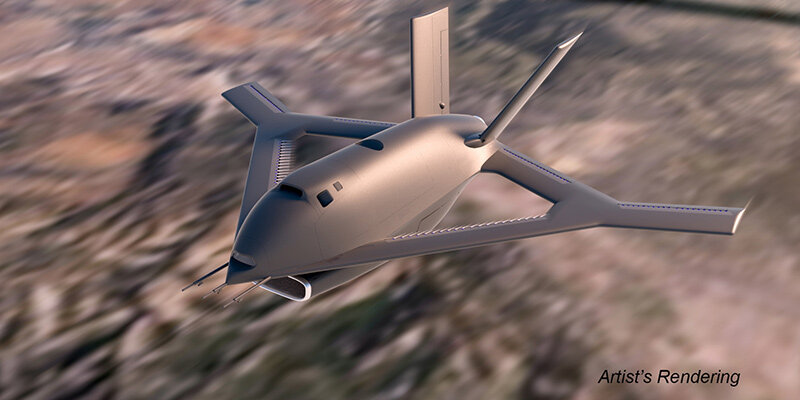
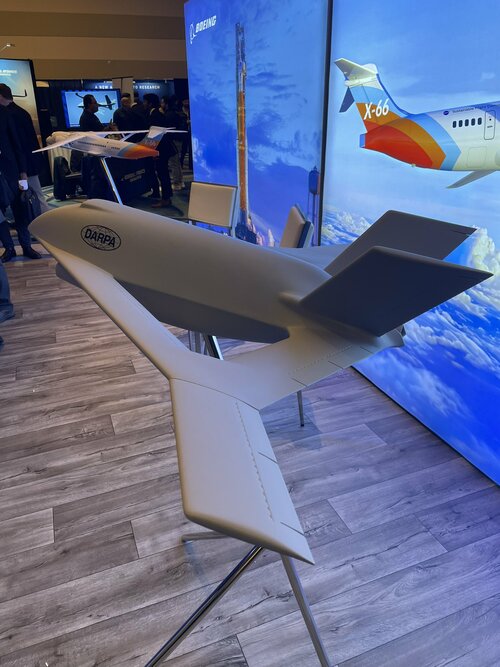
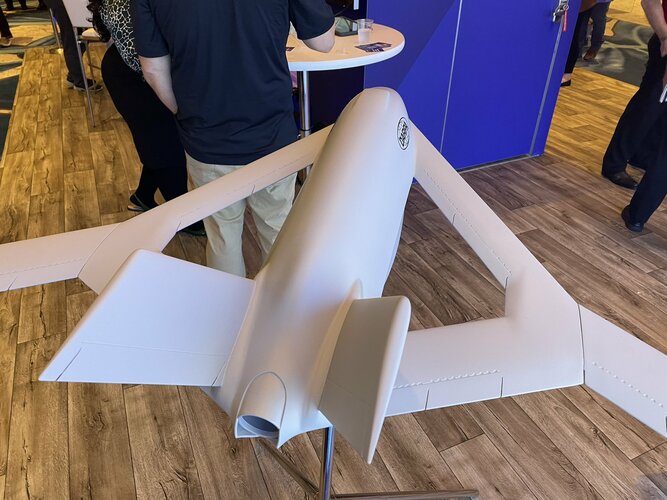
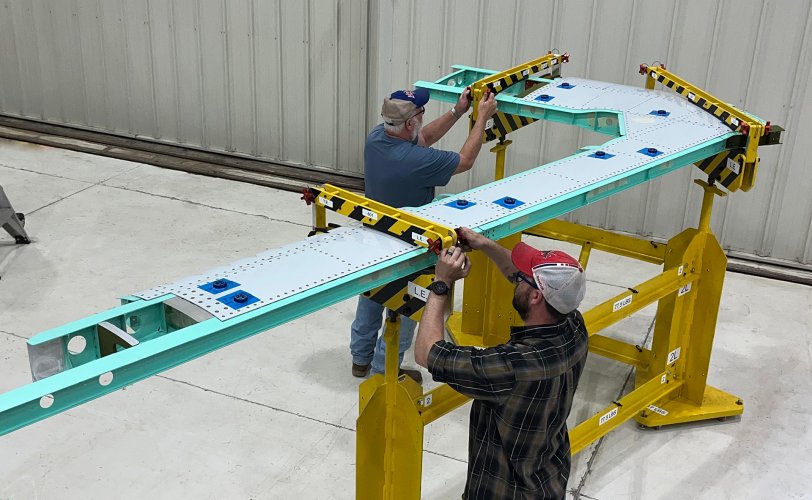
The X-plane will have three levels of configurability. The first arises from its co-planar shape which incorporates different wing sweep angles within one airframe. The forward wing section has a 55˚ sweep, the trailing outer wing has a 30˚ sweep, and the aft empennage-wing has a 20˚ forward-sweep. The design’s vertical tails have yet another sweep angle.

“Those four different flying surfaces all represent different aero elements that we characterized during the tools-design process and we built them into the X plane,” Uleck says.

 
DARPA has selected Aurora Flight Sciences to build a full-scale X-plane to demonstrate the viability of using active flow control (AFC) actuators for primary flight control. The award is Phase 3 of the Control of Revolutionary Aircraft with Novel Effectors (CRANE) program.
The 7,000+ pound, unmanned X-65 will have a 30-foot wingspan and be capable of speeds up to Mach 0.7. Its weight, size, and speed – similar to a military trainer aircraft – make the flight-test results immediately relevant to real world aircraft design.
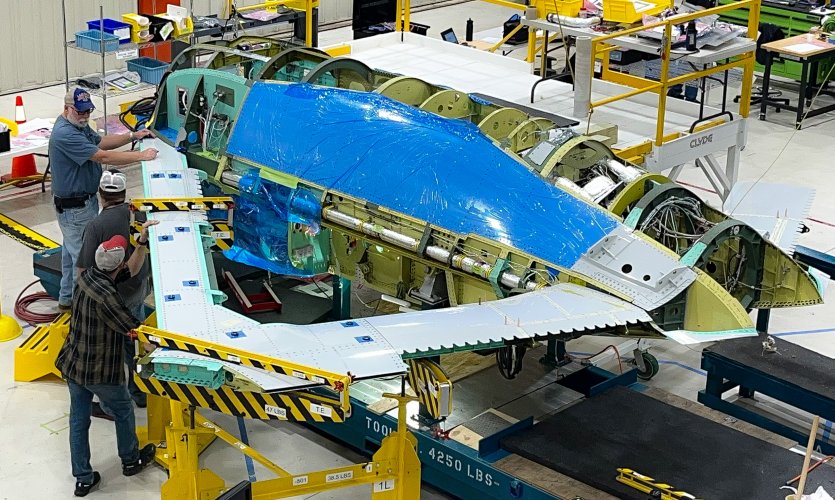
Aurora Flight Sciences has already started fabricating the X-plane; the X-65 is scheduled to be rolled out in early 2025 with the first flight planned for summer of the same year.
 

Attachments

  • CRANE_Frame_07_00_marked_crop.jpg
    CRANE_Frame_07_00_marked_crop.jpg
    97.3 KB · Views: 164
 
X-65...?
I'm stuck at X-62 with official designations.
X-63A and X-64A are as-yet unaccounted for... Since then, however, X-66A has been allocated to Boeing for an experimental airliner developed with NASA as part of its Sustainable Flight Demonstrator program, building on the company's SUGAR research program.
 
Whether hydraulic or pneumatic and in regards to redundancy for an example, hydro has the edge since you do require the additional hydro lines but the hydro servoactuators have the hydro redundancy built into the manifolds. With the pneumatics, you have to potentially double up on the control valves and maybe the ducting/jets. Will be interesting to see what kind of control performance they get though.
If you remember the Sikorsky X-Wing of the 1980's, if you lost the artificial lift from the Coanda Effect on just one of the four blade/wings in the transition phase, you lost the aircraft. That rotor hub held all of the control valves and you would definitely have to double up on those for redundancy.
 
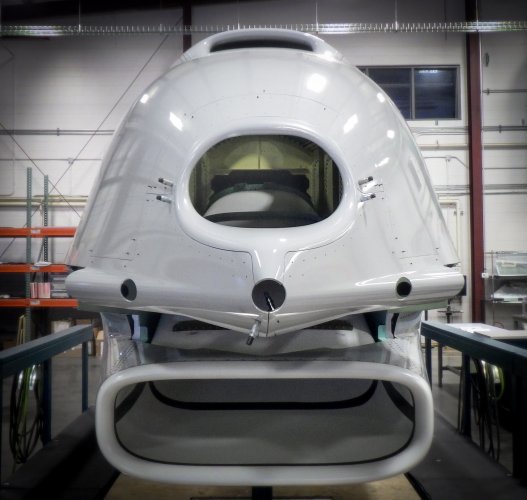
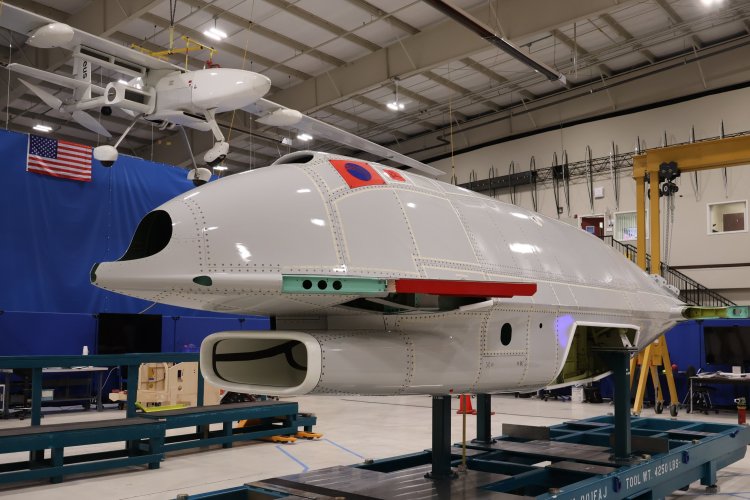
Aurora previously completed preliminary and critical design review phases and has made significant progress in manufacturing the aircraft. The fuselage, wing assemblies, and engine diffuser are being manufactured in Aurora’s West Virginia facility. Propulsion and AFC system components are currently in-house and ready for integration.

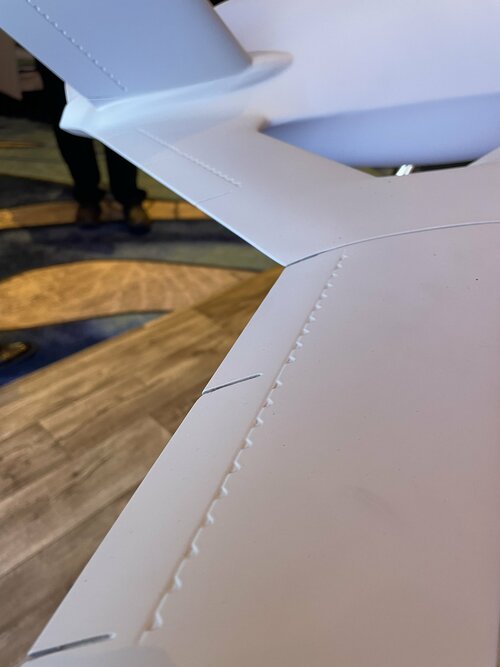
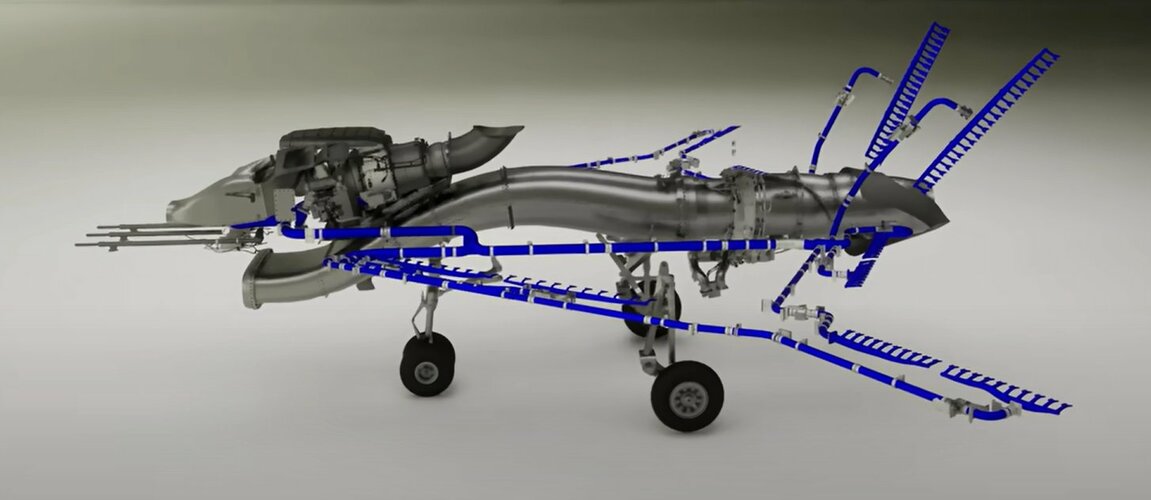
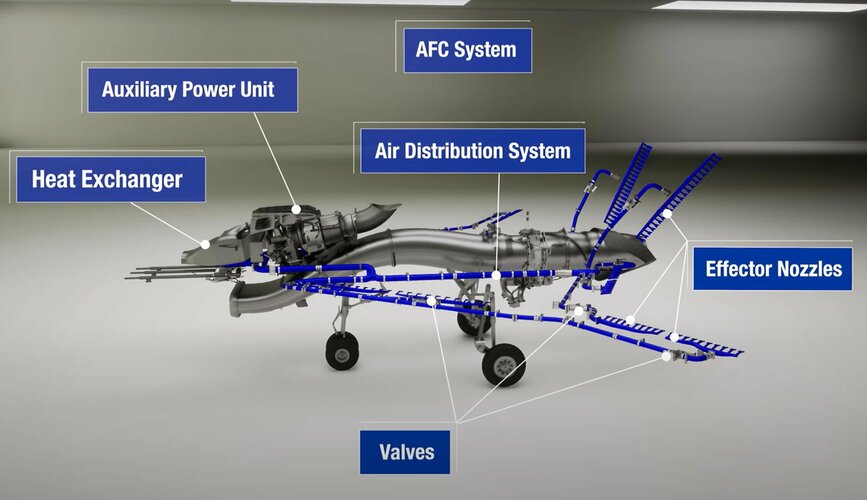
The X-65 is purpose-designed for testing and demonstrating active flow control with a 30-ft wingspan and 7000 lb. gross weight. The AFC system supplies pressurized air to fourteen AFC effectors embedded across all flying surfaces. The triangular wing design enables testing across multiple wing sweeps and is modular with replaceable outboard wings and swappable AFC effectors to allow for future testing of additional AFC designs.


1763645652265


Classic DARPA endeavor that gets halfway through development before they decide the technology is either not exciting enough, or cost prohibitive. This is at least the second Aurora effort that DARPA has pulled the rug out on that I am aware of.
 
Wouldn´t that be due to the fact they run validation tests and manufacturing in parallel and not sequentially (something that would take ages)?
Anyone looking today at the X-15 program would be flabbergasted by the cost overrun for example and, yet, all party agree it was a successful program. It´s just that we have focused our attention and analytics on cost when research projects are, per definition, full of indetermination.
 
X-65...?

I'm stuck at X-62 with official designations.
X-61 is Gremlins
X-62 is VISTA NF-16D
X-63 is an Aerospike testbed
X-64 is another Aerospike testbed
X-65 is CRANE (this thing)
X-66 is the Transonic Truss-Braced Wing airliner
X-67 is a General Atomics Off-board Sensing Station CCA prototype
X-68 is the Longshot CCA
 

Similar threads

Back
Top Bottom