From the cryptozoology... crypt: krakens!
Ordinarily I'd dismiss it, but if no less than
Nature is willing to publish... well then.
A bit of context, about fifteen years ago, this appeared:
In the fossil bed, some of the shonisaur vertebral disks are arranged in curious linear patterns with almost geometric regularity, McMenamin explained.The proposed Triassic kraken, which could have been the most intelligent invertebrate ever, arranged the vertebral discs in double line patterns, with individual pieces nesting in a fitted fashion as if they were part of a puzzle.
Nuts, right? McMenamin was already known for pushing the bounds of speculation a bit far for his colleagues' comfort.
Anyway, now this has popped up (Cretaceous, not Triassic).
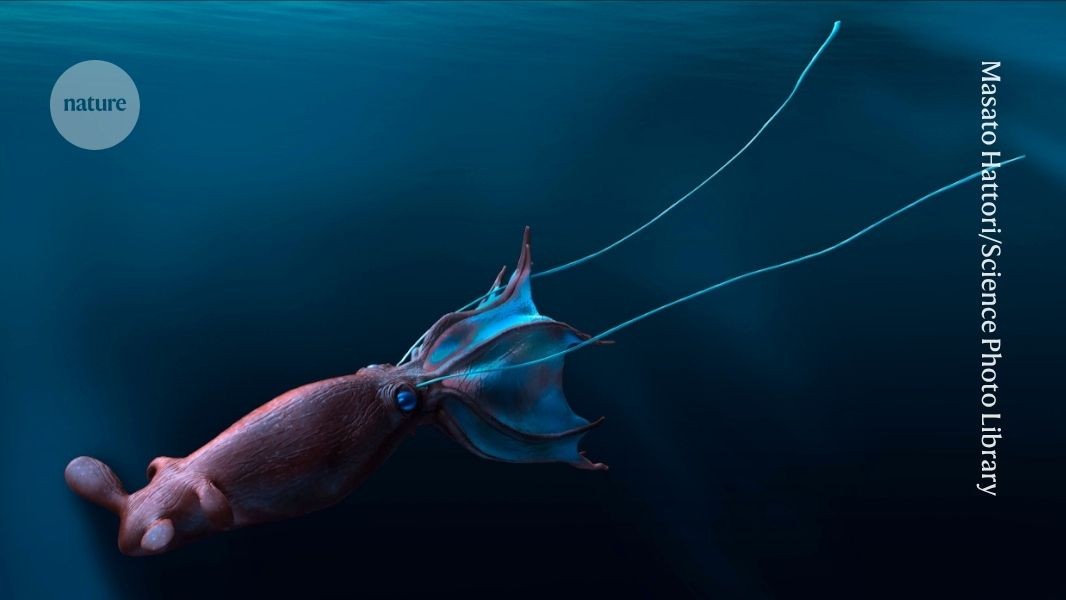
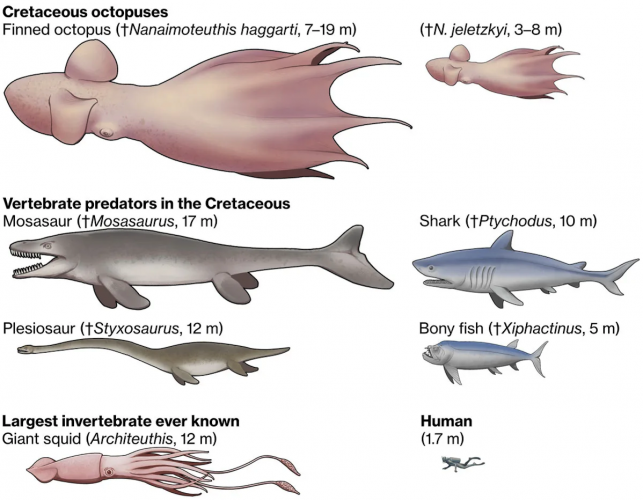
Extinct cephalopods might have been up to 19 metres in length and probably dined high up the food chain in ancient oceans.

www.nature.com
Paywalled unless you can negotiate access. I used a google account, and you get the gist from the free portion.
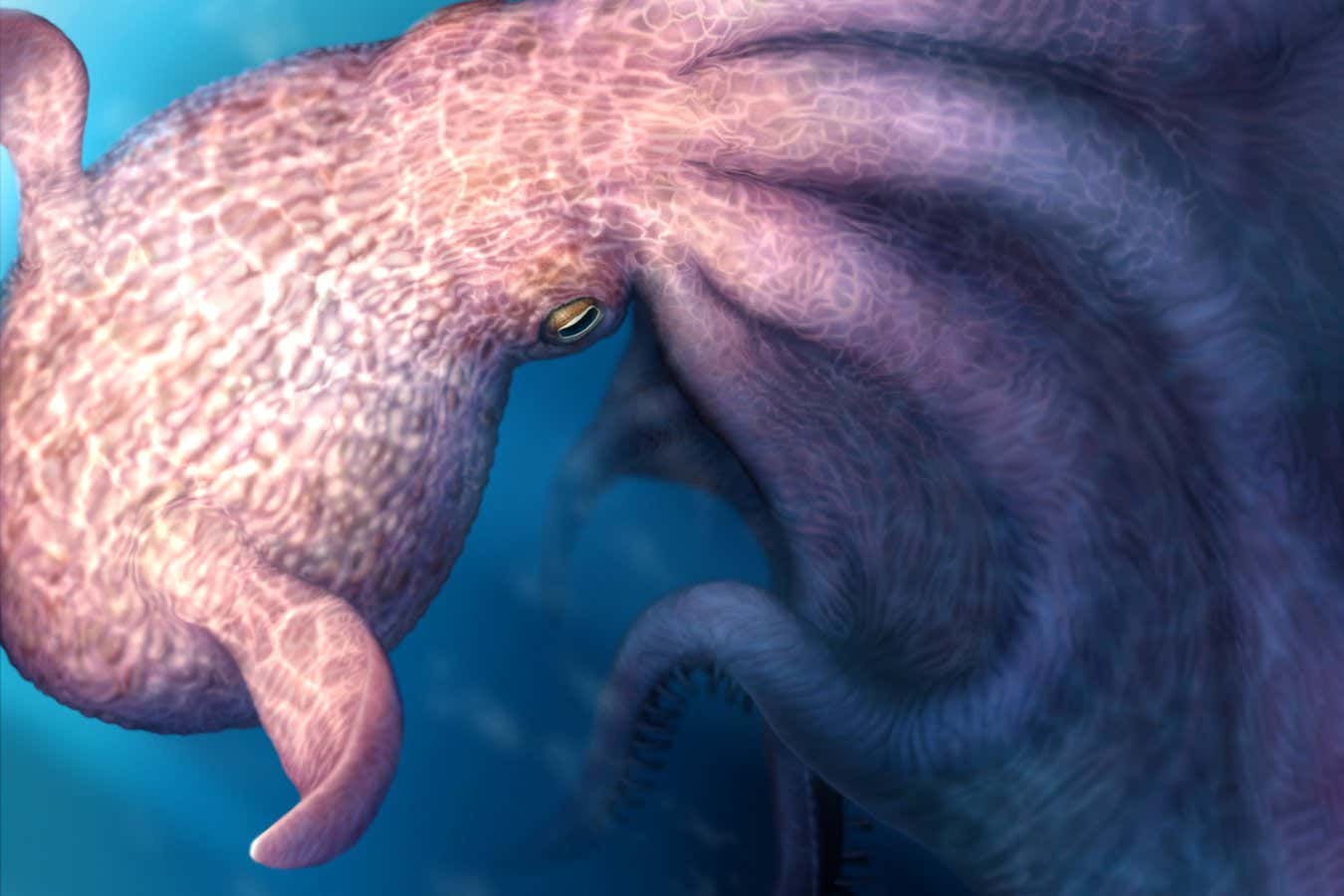
Scientists have identified extinct octopuses — sometimes named krakens after the mythological monsters — that might have grown to nearly 19 metres in length. The estimate is based on fossilized jaws, which the researchers say show patterns of wear that came from devouring animals that had hard shells and skeletons... The analysis grouped the krakens into two species: Nanaimoteuthis jeletzkyi
and N. haggarti
, and discovered that they belong to the same evolutionary group as modern dumbo octopuses (Grimpoteuthis
species)... “Some people will doubt that it really grew to 19 metres. I’m pretty sure about that,” says Christian Klug, a palaeobiologist at the University of Zurich in Switzerland, who was not involved in the research. The relationship between the mantle and tentacles of modern cephalopods is highly variable, so the lower or middle bounds of the size estimates could be more likely.
doi:
https://doi.org/10.1038/d41586-026-01342-w
The Kraken, the giant cephalopod of legend, was feared by sailors for centuries. Later interpretations suggested that it may have been based on sightings of the giant squid, which can be 10 meters long. Although they lived far too early to have been the source of the legend, Ikegami et al. describe fossil octopods from the late Cretaceous that truly would have fit the description of the monster, reaching up to 19 meters in length. Wear patterns on their jaws suggest that these octopods preyed upon the large reptiles present at the time, including plesiosaurs and mosasaurs. The authors interpret asymmetry in these wear patterns as an indication of corresponding asymmetry in behavior, suggesting complex brain development and, potentially, high intelligence. —Sacha Vignieri
Couldn't get past the paywall for this one, but you get the abstract:
National Geographic, registration required.
The ancient cephalopod, Nanaimoteuthis haggarti, appears to have been an apex predator that rivaled mosasaurs to rule prehistoric seas.

www.nationalgeographic.com
Scientific American (usually paywalled but I got the whole article immediately):
Fossil jaws from colossal octopuses place them at the top of a prehistoric marine food chain

www.scientificamerican.com
New Scientist:
During the Cretaceous, 19-metre-long predatory octopuses swam the seas, and evidence from their fossilised remains suggest they may have been highly intelligent hunters

www.newscientist.com
Another interesting find that the team has noted is that there is uneven wear of the jaws, possibly indicating “lateralisation”, which means favouring one side of the body over the other, behaviour that can imply intelligence – a trait for which modern octopuses are renowned.
In general, lateralisation is associated with increased brain complexity and more efficient information processing.
“In our fossils, asymmetric jaw wear suggests that these animals may have favoured one side during feeding,” says Iba. “This implies that they were not only physically powerful, but also behaviourally complex, with potentially individual behavioural tendencies.”
Other popular media:
Unlike most of its invertebrate peers, octopuses gave up protective shells... But it seems that the sacrifice was totally worth it.

gizmodo.com
Lurking in prehistoric seas, a colossal, intelligent hunter the length of four cars was crushing bones and seizing prey

www.sciencefocus.com
Anyway, the Internet is an echo chamber and as I said, I'd dismiss it if it was from one popular source, but there's reputable, peer-reviewed or reviewable publication.
Also, there's an interesting thread running through this about new paleontological techniques.
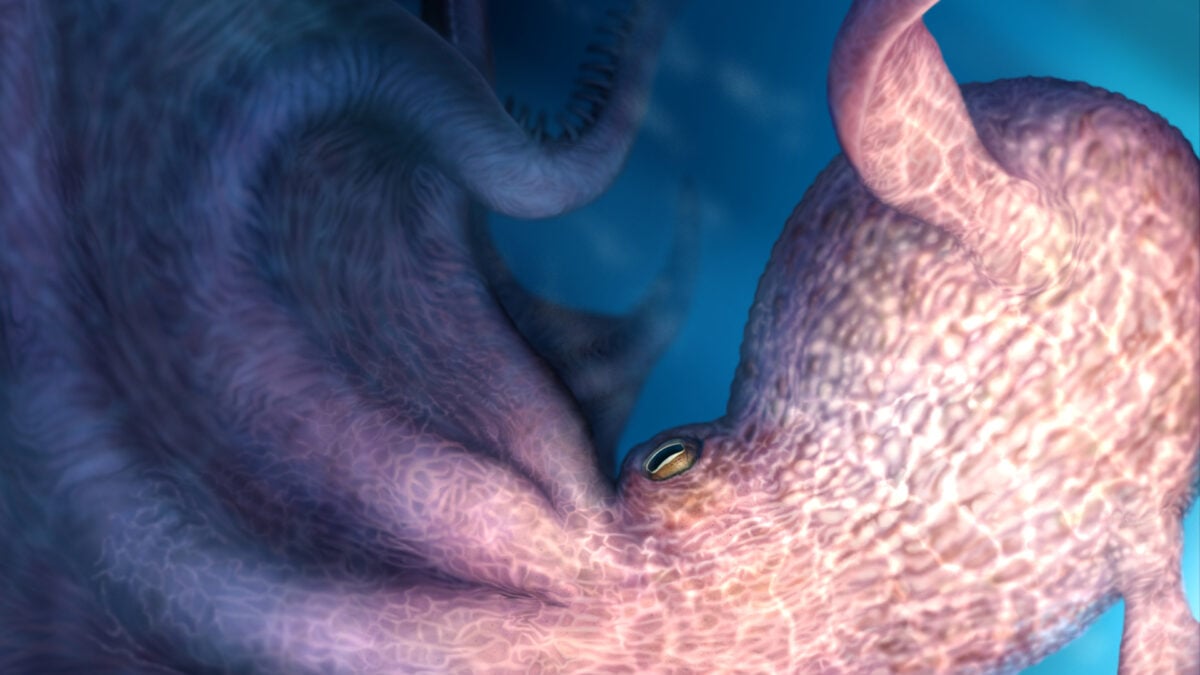
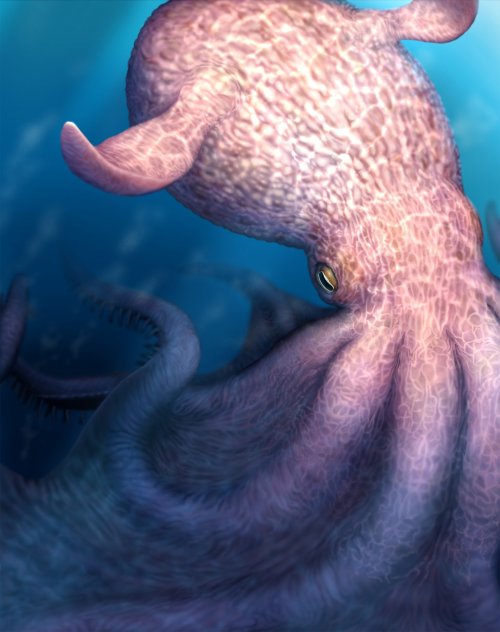
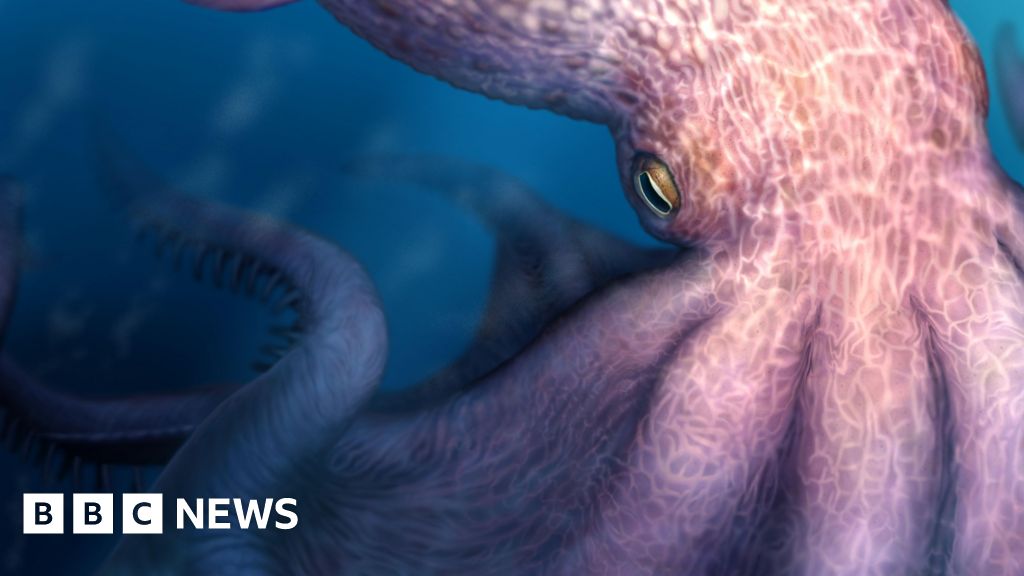
Illustration by Yohei Utsuki/Department of Earth and Planetary Sciences, Hokkaido University.