British Missile What-Ifs

Since this is about whatifs, how about SLEP Lightning (as an F.6C, F.7, or F.8 model) in 1991, just one more time before beginning the initial retirement around the year 2000.
It's a lovely fantasy, but one of the factors behind retirement was airframe hours (and fatigue cycles). I remember reading somewhere that once the decision was made to withdraw the last two squadrons, the pilots really started putting the planes through the wringer because they didn't have to care about aircraft life any more.

The B-52 continues in service because there are still enough of them to make upgrades worthwhile and because nothing else in the sky does what it does as well as it does it. Not true of the Lightning.

That being said, assuming you have infinite money to throw around on the last two squadrons of Lightnings, and you're willing to throw a zero-hours rebuild into the mix so that you don't have to wrap them in cotton wool, @zen and @MadRat have certainly shown what such a refit might entail. You're spending enough at that point, might as well wire the wing hardpoints for AMRAAM and keep Red Tops on the chin mounts for when an IR shot is required. If you want to upgrade the guns, you can put 27mm Mausers in the belly pack - I know a Lightning was used for firing trials at one point, so they will fit.

That you can fix with a big blister patch, like what was used on the F-8 Supersonic Supercritical Wing.
True, just making it clear that this is something you have to bear in mind.
 
The B-52 continues in service because there are still enough of them to make upgrades worthwhile and because nothing else in the sky does what it does as well as it does it. Not true of the Lightning.
Not only that, but also because B-52 was from very beginning designed to be easy to disassemble and reassemble. Any part could be easily replaced. Few other planes have such modular design.
 
That being said, assuming you have infinite money to throw around on the last two squadrons of Lightnings, and you're willing to throw a zero-hours rebuild into the mix so that you don't have to wrap them in cotton wool, @zen and @MadRat have certainly shown what such a refit might entail. You're spending enough at that point, might as well wire the wing hardpoints for AMRAAM and keep Red Tops on the chin mounts for when an IR shot is required. If you want to upgrade the guns, you can put 27mm Mausers in the belly pack - I know a Lightning was used for firing trials at one point, so they will fit.
Well, if variable geometry wing Lighting would be developed and would be a sales sucsess - in 1970s it was possible, since everyone were fascinated with Mig-23 and F-14 and variable sweep was assumed to be a mainstream - then the long Lighting career could actuall be possible.
 
As much as I'm an advocate for the Lightning having a greater production run and better weapons the time for the upgrade is in the early 70s using the solid state electronics from the TSR2's version of the AI23 radar. By he time the AMRAAM comes around the newest Lightnings are 20 years old and due for retirement.
 
I remember reading somewhere that once the decision was made to withdraw the last two squadrons, the pilots really started putting the planes through the wringer because they didn't have to care about aircraft life any more.

The same happened with the Sea Vixens.
 
As much as I'm an advocate for the Lightning having a greater production run and better weapons the time for the upgrade is in the early 70s using the solid state electronics from the TSR2's version of the AI23 radar. By he time the AMRAAM comes around the newest Lightnings are 20 years old and due for retirement.
Well, the variable geometry Lighting was suggested in 1963. Assuming the proposal would get adopted, we could expect first flight around 1968, and being accepted into service around 1970-1972.

At this timeframe, the variable-sweep Mach 2 interceptor could actually attract great export interest - the USSR just presented the Mig-23 fighter and Su-17 fighter-bomber, and they were viewed as "fighters of the future". So VG Lighting could actually enjoy the market sucsees, and have a production run well into 1980s.

So if we choose this scenario, it's plausible to have VG Lighting being refitted for AMRAAM in 1990s.

(also, they were supposed to have larger nose cone, so could handle larger radars)
 
It's a lovely fantasy, but one of the factors behind retirement was airframe hours (and fatigue cycles). I remember reading somewhere that once the decision was made to withdraw the last two squadrons, the pilots really started putting the planes through the wringer because they didn't have to care about aircraft life any more.
I’m lucky enough to know the last RAF pilot to qualify on the Lightening and participated in the last 6 months of front line service. He told me the airframes were in generally a poor/fragile shape with the ground crew working miracles to get aircraft to the flight line. Hence the remaining Fatigue Index was very carefully managed with some aircraft hitting maximum on the last day because they were operated gently. I’m sure the opposite might have happened but his description suggested it was approached in a very professional manner. After Lightening he moved on to the F4’s, then Tornadoes F3.
 
The point of a SLEP is to extend service life and add incremental capability.
 
Just buy new Hawk 200s, they could take AMRAAM easily and a radar, much more fuel efficient and much better for dogfighting.
Or make the RAF buy Sea Harrier FA.2s (Harrier F.7?).

Realised that the Imgur ban means my images are no longer visible to non-VPN using members in the UK. I might still have the originals knocking about to repost as attachments.
 
Now making the RAF take F/A.2 Sea Harrier is an AH. But an interesting one.

Potentially cheaper than licensed Gripen....?
 
I’m lucky enough to know the last RAF pilot to qualify on the Lightening and participated in the last 6 months of front line service. He told me the airframes were in generally a poor/fragile shape with the ground crew working miracles to get aircraft to the flight line. Hence the remaining Fatigue Index was very carefully managed with some aircraft hitting maximum on the last day because they were operated gently. I’m sure the opposite might have happened but his description suggested it was approached in a very professional manner. After Lightening he moved on to the F4’s, then Tornadoes F3.
Thanks for the background! I can only recall as best I can what I read.

I have no doubt that they were careful and professional about it, but - they're fighter pilots flying high-performance airplanes built to do high-performance things. I'm not saying they were all going "Woo-hoo, lets dogfight the SHIT out of these things!" and pulling blackout turns at zero feet, just that a firm date on end-of-service lets you match the remaining fatigue hours to that and go out of your way to make sure they are all used up.
 
The point of a SLEP is to extend service life and add incremental capability.
And sticking the Sea Harrier radar with Skyflash/AMRAAM capabilities into the nose of a Lightning would be a really good capability to add.


Now making the RAF take F/A.2 Sea Harrier is an AH. But an interesting one.
Oh, how they'd scream about it unless you could give the ones making noise some flights doing basic fighter maneuvering or ACT in the back seat of a T4/T10.

Problem is, "RAF Sea Harriers" would be a lot more expensive to operate than armed Hawks. And there's no way you'd replace a Mach 2 zoom climbing interceptor with a subsonic-only performance-limited-at-altitude fighter-bomber. Even with the Harrier power-to-weight ratio and 50,000ft/min initial climb rate.

Ignoring whatever political shenanigans are required to get Sea Harrier FA.2s into the hands of the RAF, I strongly suspect that they'd still catch an even number. It might be a Harrier F.14, which would be hilarious in all sorts of ways.

You see, 13 and 14 are the next two available numbers in the Harrier series(!).

I will note that I think I would want the "RAF Sea Harrier" to have the GR.5/7/9 wing, to get those two extra pylons where the outriggers are. That would allow you to fly with four AMRAAMs, two Sidewinders/ASRAAMs, and gun pods; or two AMRAAMs, two Sidewinders, and two fuel tanks.
 
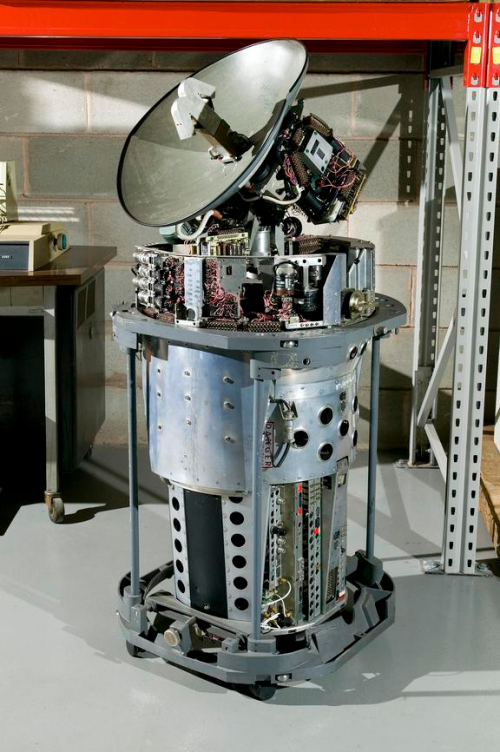
Is that the dish, which needs to move around within the nose cone, or the radar set itself with it's mounting etc?
 
With regard to Lightning fatigue life, when I joined 23 Sqn at Leuchars as JEngO in 1973, our official strength was 12 Mk 6 Lightnings and one T5. As a result of high fatigue life usage, in 1974 we were ordered to swap three of our Mk 6’s for three Mk3’s from one of the Binbrook squadrons. The Mk 3’s consumed less fatigue life in air combat manoeuvring, and the plan was to do most of the air combat training in them. It was an interesting horse trading exercise to reach agreement on which airframes would be swapped.
 
IIUC the Rep Top as late as the mid 60s was using cordite as propellant, like WW1 battleship guns. In contrast the near contemporary French R530 used more modern Ammonium Perchlorate/Powdered Aluminium in their Antoinette dual-thrust solid rocket motor.

Did the British not have access to more modern solid propellants?
 
It was discussed on first page of this thread. Apparently they considered cordite to be "reliable" fuel - very stable, well-known, no surprizes.
Which is deeply ironic considering the complaints about cordite's temperature stability as a small arms propellant...
 
Back
Top Bottom