- Joined
- 25 July 2007
- Messages
- 4,919
- Reaction score
- 5,547
Aeronautica Vittorio Bonomi Designations
The main designer for Bonomi was Dr Ing Camillo Silva - 'Bonomi-Silva' explaining the 'B.S.' system used to designate Bonomi glider and sailplane designs. This 'B.S.' designation system dates to 1929 (although Dr Ing Silva was designing for Bonimi earlier than that. Most Bonimi 'B.S.' designs were assigned popular names as well (my attempt at translating those names comes at the end of this entry).
Most construction was carried out by Aeronautica Lombarda (aka AVIA) - hence the common use of Aeronautica Lombarda BS-28, etc. In 1937, Lombarda finally bought out Aeronautica Vittorio Bonomi.
Prior to becoming part of Aeronautica Lombarda, other designs were built for Bonomi which were not part of the 'B.S.' designation system. Predating the 'B.S.' system were the 1928 Bonomi A and Bonomi B gliders with wire-braced wings - also known as the Bonomi Allievo A and Allievo B. To those, we can add the Allievo C (never seen as plain 'Bonomi C', AFAIK). However, it is possible that there was no relationship whatever between the Bonomi A and Allievo A, etc. [1]
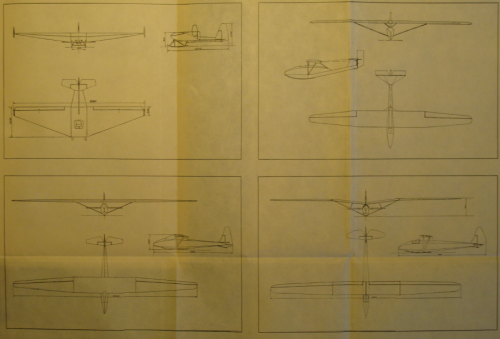
The 1928 Bonomi A and Bonomi B gliders predate that system. But, in 1929, there was the 1929 Bonomi 25 Monoplano which was followed in 1936 by the Bossi-Bonomi Pedaliante human-powered aircraft. Also given here is the Bonomi-Silva Startoplano proposal ... this being more a description than a type name.
There is also mention of Bonomi 2, Bonomi 2bis, and a short-lived Bonomi 2 S (1931; c/n 2; I-AAVN). Despite being designed by Camillo Silva (and concurrent with the B.S.1), the Bonomi 2 and 2bis were not listed as 'B.S.2' or 'B.S.2bis'. I can only assume that the B.S.2 S is related but this airframe lasted only four months. [2]
______________________________________________________
[1] If there is no relationship, we are left pondering the repeated use of Allievo (Student). Kind of an obvious (if unimaginative) name for trainers. Still, might names be connected? Pure *speculation* but perhaps Allievo A relates to the B.S.07 Allievo Italia; Allievo B to the B.S.16 Allievo Bonomi; and Allievo C to the B.S.17 Allievo Cantù - all training gliders dating to 1929.
[2] Golden Years of Aviation also has an odd entry. A 1931 glider registered I-AAYQ is listed as the Bonomi Sconosciuto with c/n 1. But sconosciuto just means 'unknown'. Unless Bonomi was being coe, I presume that Golden Years' original Italian source had listed I-AAYQ as a Bonomi but did not know the exact model of glider.
-- http://www.airhistory.org.uk/gy/reg_I-1.html
__________________________________________________
Bonomi Aircraft without 'B.S.' Designations
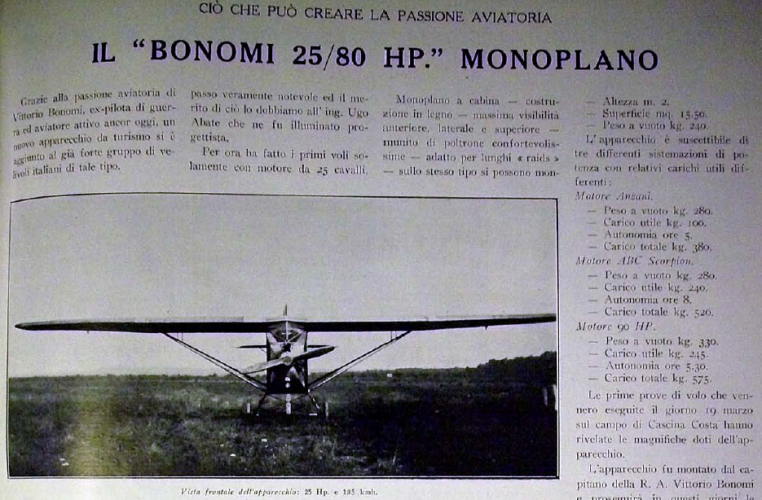
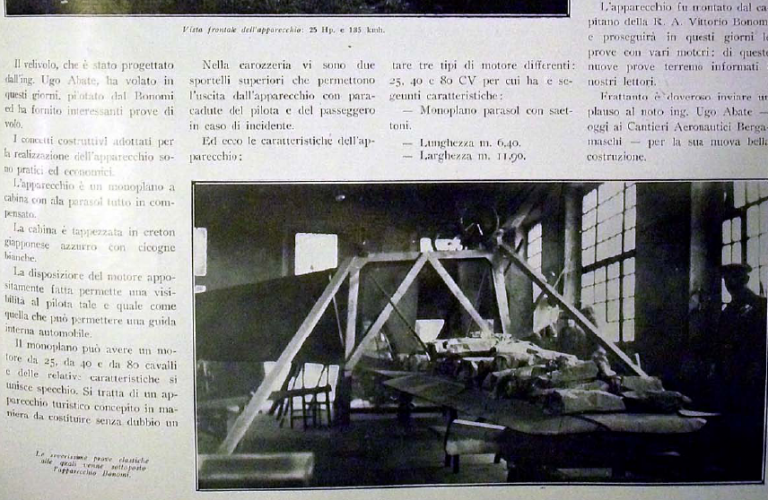
Bonomi 25 Monoplano - 1929 two-seat cabin monoplane; x 1
- Bonomi 25 : Braced, high-mounted, 3-section, undihedralled wing
- Bonomi 25 : 1 x 34 hp ABC Scorpion HO2 engine;* span 11.90? m
-- Ugo Abate-design Bonomi 25 proved to be ultimately unsuccessful
-- * Alternatives: 25 hp Anzani or other engine types up to 80 hp
Bossi-Bonomi Pedaliante - 1936 human-powered aircraft; x 1
- Pedaliante: Designed by Enea Bossi; built by Bonomi
- Pedaliante: Pedal-powered twin propellers; span 17.70 m
- Pedaliante: Streamlined, unbraced high-winged monoplane*
-- * In form of a sailplane; 80 flights made by cyclist Emilio Casco
Bonomi-Silva Startoplano - (Project) 1939 pick-a-back concept
- Startoplano : Single-seat, single-engined pick-a-back launch a/c
- Startoplano : 'Start-up plane'; proposal or patent application?
- Startoplano : Camillo Silva design; unclear on actual purpose
-- https://www.secretprojects.co.uk/threads/italian-mistel-concepts.3157/
______________________________________________________
Bonomi 'B.S.' Aircraft Designations
(Note these designations are not necessarily sequential.)
B.S.01 Aeroberlina - 1929 high-wing monoplane tourer; x 1
- B.S.01 Aeroberlina: aka Bonomi 1; c/n 1; I-AANQ/MM169
- B.S.01 Aeroberlina: 1 x (??) hp (??) engine; span (??) m
-- The failure of B.S.01 convinced Bonomi to focus on gliders
B.S.02 Balestruccio - 1929 (1932) gull-winged sailplane; x 1
- B.S.02 : Single-seater; designed specifically for record-breaking
- B.S.02 : Combined B.S.5 wings w/ B.S.15 fuselage; span 17.14 m
- B.S.02 : Design by Camillo Silva; fabric-covered wooden constr'n
-- https://en.wikipedia.org/wiki/Bonomi_BS.2_Balestruccio
-- https://www.j2mcl-planeurs.net/dbj2mcl/planeurs-machines/planeur-fiche_0int.php?code=269
B.S.03 -- (??) hypothetical designation
B.S.04 Basettino - 1936 parasol, single-seat Zögling-type glider; x 3*
- B.S.04 Basettino: Pod-and-boom (open framework); span 12.11 m
-- * B.S.04 numbers vary from 2 to 4 (latter assuming I-AAZW to be c/n 6)
-- * Known: B.S.04 c/n 3 (I-AAZY); c/n 4 (I-AAZU/I-AAZX); c/n 5 (I-AAZW)
-- https://www.j2mcl-planeurs.net/dbj2mcl/planeurs-machines/planeur-fiche_0int.php?code=274
B.S.05 Ballerina - 1932 single-seat parasol training sailplane; x (??)
- B.S.05 Ballerina: B.S.15 fuselage/tail w/ 3-part wing; span 16.00 m
- B.S.05 Ballerina: Intended to produce a simple and robust trainer
-- https://www.j2mcl-planeurs.net/dbj2mcl/planeurs-machines/planeur-fiche_0int.php?code=275
B.S.06 Bigiarella - 1930 single-seat training glider; became B.S.15 (qv)
B.S.07 Allievo Italia - 1929 single-seat primary training glider; x ~8
- B.S.07 Allievo Italia: Parasol-winged beam-fuselage, exposed seat
- B.S.07 Allievo Italia: Extrapolation of Zögling B.S.04; span 11.14 m
-- https://www.j2mcl-planeurs.net/dbj2mcl/planeurs-machines/planeur-fiche_0int.php?code=277
B.S.08 Biancone - 1932 single-seat parasol training glider; x 5 (6?)
- B.S.08 Biancone: Higher-performance B.S.07 deriv.; span 13.40 m
- B.S.08 Biancone: New wing design; streamlined fuselage nacelle
- B.S.08 Biancone Idro float conv., tow-launched by a motor launch
-- https://en.wikipedia.org/wiki/Bonomi_BS.8_Biancone
-- https://www.j2mcl-planeurs.net/dbj2mcl/planeurs-machines/planeur-fiche_0int.php?code=278
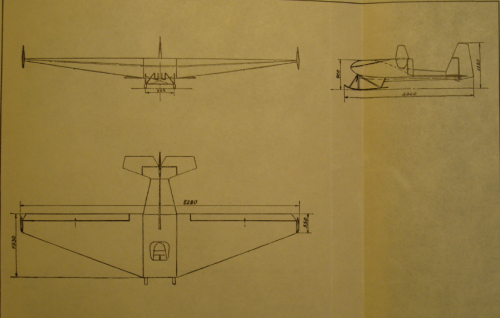
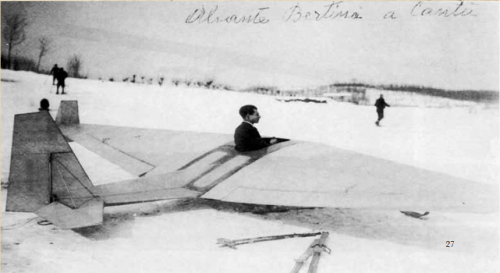
B.S.09 Bertina - 1933 pod-and-boom* type experimental glider; x 1
- B.S.09 Bertina: Burnelli-type wing with endplates; span 9.28 m
- B.S.09 Bertina: I-ABDO; flattened fuselage-to-tail boom section
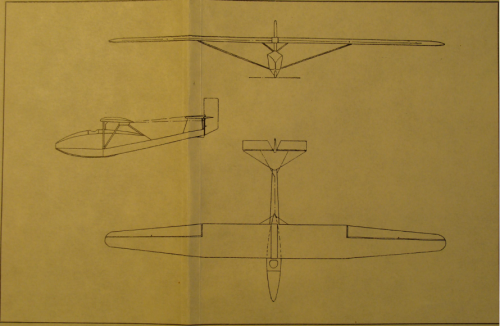
B.S.10 Ardea - 1933* parasol-winged aerobatic sailplane; x 1
- B.S.10 Ardea: Single seater competition glider; B.S.2 deriv.
- B.S.10 Ardea: Long, high aspect-ratio wings;* span 19.00m
-- * Slightly-gulled, 3-section, braced wings mounted on pedestal
- B.S.10 Ardea: Typical Bonomi constr.; ply-covered fuselage
-- * Wikipedia says first flight of B.S.10 Ardea was in 1934
-- https://en.wikipedia.org/wiki/Bonomi_BS.10_Ardea
-- https://www.j2mcl-planeurs.net/dbj2mcl/planeurs-machines/planeur-fiche_0int.php?code=263
B.S.11 Milano - 1934 single-seat primary training glider; x (??)
- B.S.11 Milano: Employed kingpost & wire-bracing (not struts)
- B.S.11 Milano: B.S.07 Allievo Italia tail/wings; span 10.92 m
- B.S.11 Milano: Rugged trainer; related to longer-span B.S.12
-- https://www.j2mcl-planeurs.net/dbj2mcl/planeurs-machines/planeur-fiche_0int.php?code=3604
B.S.12 Roma - 1934 single-seat primary training glider; x (??)*
- B.S.12 Roma: Employed kingpost & wire-bracing (not struts)
- B.S.12 Roma: As per B.S.11 but longer wings; span 20.00 m
- B.S.11 Milano: Rugged trainer; fuselage identical to B.S.11
* Wiki says about 6 x combined B.S.11 and B.S.12 trainers built
-- https://www.j2mcl-planeurs.net/dbj2mcl/planeurs-machines/planeur-fiche_0int.php?code=165
B.S.13 - (??) hypothetical designation
B.S.14 Astore - 1932 2-seat aerobatic sailplane trainer; x 10
- B.S.14 Astore: 2-seater; longer-spanned variant of B.S.15
- B.S.14 Astore: 3-sectioned, tapered wings; span 17.60 m
- B.S.14 Astore: Hexagon-section, plywood-skinned fuselage
-- Meant for aerobatic training; student seat below centre section
- B.S.14 Astore: NB: Wikipedia says only 1 x built in 1935
-- https://en.wikipedia.org/wiki/Bonomi_BS.14_Astore
-- https://www.j2mcl-planeurs.net/dbj2mcl/planeurs-machines/planeur-fiche_0int.php?code=264
B.S.15 Bigiarella - 1934 single-seat basic training glider; x 3
- B.S.15 Bigiarella: Orig. B.S.6 Bigiarella; span 13.40 m
- B.S.15 Bigiarella: Derived from the B.S.08 Biancone
- B.S.15 Bigiarella: Full, rectangular cross-sectioned fuselage
-- https://en.wikipedia.org/wiki/Bonomi_BS.15_Bigiarella
-- https://www.j2mcl-planeurs.net/dbj2mcl/planeurs-machines/planeur-fiche_0int.php?code=265
B.S.16 Allievo Bonomi - 1929 single-seat primary glider; x 60+
- B.S.16 Allievo Bonomi: Extrap. from Zögling B.S.04 & B.S.07
- B.S.16 Allievo Bonomi: Open-framed trainer; span 10.45 m
- B.S.16 Allievo Bonomi: Parasol-wing with a beam-fuselage
- B.S.16 Allievo Bonomi: Intended as prep. for A certificates
-- https://en.wikipedia.org/wiki/Bonomi_BS.16_Allievo_Bonomi
-- https://www.j2mcl-planeurs.net/dbj2mcl/planeurs-machines/planeur-fiche_0int.php?code=266
B.S.17 Allievo Cantù - 1930 single-seat primary training glider; x ~50
- B.S.17 Allievo Cantù: Full-fuselage deriv. of open frame-type B.S.16
- B.S.17 Allievo Cantù: Rect.-plan wings on N cabanes; span 10.45 m
- B.S.17 Allievo Cantù: Fabric/wood constr.; for B & C certificate prep
-- NB: Wikipedia says 1934; more than 100 B.S.17 Allievo Cantù built
-- https://en.wikipedia.org/wiki/Bonomi_BS.17_Allievo_Cantù
-- https://www.j2mcl-planeurs.net/dbj2mcl/planeurs-machines/planeur-fiche_0int.php?code=267
B.S.18 Airone - 1933 single-seat gull-wing trainer sailplane; x 5
- B.S.18 Airone: Combined B.S.08 wings with a B.S.10 fuselage
- B.S.18 Airone: Straight-tapered gulled wings; span 13.37 m
- B.S.18 Airone: Open cockpit; braced parasol wing (stub pylon)
-- https://en.wikipedia.org/wiki/Bonomi_BS.18_Airone
-- https://www.j2mcl-planeurs.net/dbj2mcl/planeurs-machines/planeur-fiche_0int.php?code=268
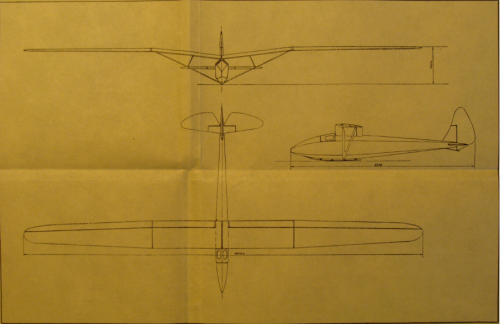
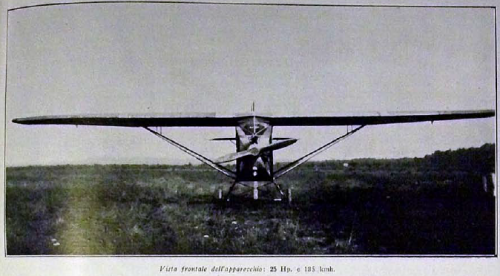
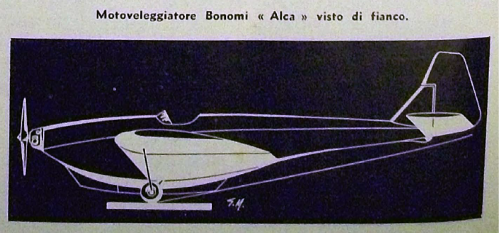
B.S.19 Alca - 1936 single-seat experimental motor glider; x 1
- B.S.19 Alca: Shoulder-mounted, 3-section, cantilever wings
- B.S.19 Alca: 1 x 20-to-25 hp (??) HO2 engine; span 14.50 m
- B.S.19 Alca: Fabric/wood constr.; cockpit between wing spars
-- Retractable wheels for takeoff; landings were performed on a skid
-- https://www.j2mcl-planeurs.net/dbj2mcl/planeurs-machines/planeur-fiche_0int.php?code=3080
B.S.20 Albanella - 1939 single-seat performance sailplane; x 1 (or 2)*
- B.S.20 Albanella: Pod-and-boom fuselage; shoulder-mounted wings
- B.S.20 Albanella: Fabric-covered wood construction; span 15.25 m
-- Slightly gulled wings; straight-tapered (leading edge only); round tips
- B.S.20 Albanella: NB: Wiki claims appearance at 1936(!) Olympics
-- * Number unclear; either 2nd airframe built or major changes to the 1st
-- https://en.wikipedia.org/wiki/Bonomi_BS.20_Albanella
-- https://www.j2mcl-planeurs.net/dbj2mcl/planeurs-machines/planeur-fiche_0int.php?code=270
B.S.21 - (??) hypothetical designation
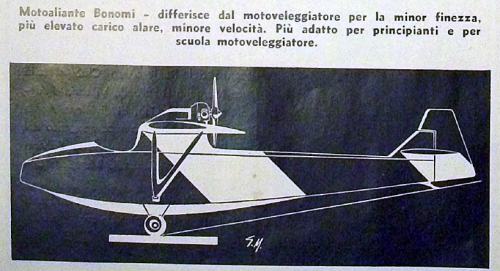
B.S.22 Alzavola - 1934 motor glider vers. of B.S.15 Bigiarella; x 1
- B.S.22 Alzavola: 18 hp or 25 hp pusher above wing; span 12.43 m
-- https://en.wikipedia.org/wiki/Bonomi_BS.22_Alzavola
-- https://www.j2mcl-planeurs.net/dbj2mcl/planeurs-machines/planeur-fiche_0int.php?code=3081
B.S.23 - (??) hypothetical designation
B.S.24 Biposta Roma - 1930 2-seat parasol training glider; x (??)
- B.S.24 Biposta Roma: Tandem seats, fuselage similar to B.S.17
- B.S.24 Biposta Roma: Span 14.18 m; sources vary on prod. # *
- B.S.24 Biposta Roma: Wikipedia says first flight not until 1935
-- Production figures vary from 6 x built to as high as 30 completed
-- https://en.wikipedia.org/wiki/Bonomi_BS.24_Biposto_Roma
-- https://www.j2mcl-planeurs.net/dbj2mcl/planeurs-machines/planeur-fiche_0int.php?code=271
B.S.25 - (Project) Twin-engined* twin-tailled assault-bomber
-- * Thick-wings monoplane with powerplants buried in wings
B.S.25 - In competition with Breda Ba.88 and Fiat CR.25**
-- ** Bonomi B.S.25 was eliminated from 1936 competition
-- http://www.secretprojects.co.uk/forum/index.php/topic,2049.msg135297.html#msg135297
B.S.26-B.S.27 - (??) hypothetical designations
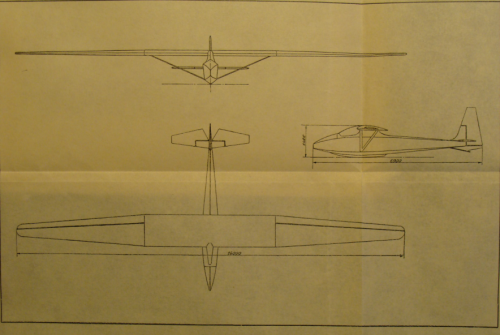
B.S.28 Alcione - 1937 single-seat peformance sailplane; x ~4
- B.S.28 Alcione: Shoulder-mounted wings;* span 14.50 m
- B.S.28 Alcione: Hexagonal section fuselage; enclosed cockpit
-- * Straight-tapered plan; fabric-covered constr'n (as was fuselage)
-- aka Lombarda B.S.28 (built by Lombarda; which took over Bonomi)
- B.S.28 Aerodinamico: 1938 variant; oval-section fuselage; x 1
-- https://www.j2mcl-planeurs.net/dbj2mcl/planeurs-machines/planeur-fiche_0int.php?code=273
__________________________________________________________________
Aeronautica Vittorio Bonomi glider name translations:
Aerodinamico - Aerodynamic
Airone - Heron
Albanella - Montagu's Harrier
Alca - Razorbill
Alcione - Kingfisher
Allievo Bonomi - Student of Bonomi
Allievo Cantù - Student of Cantù
Allievo Italia - Student of Italy
Alzavola - Cinnamon Teal
Ardea - Great Heron
Astore - Long-tailed Hawk
Balestruccio - House Martin
Ballerina - Wagtail
Basettino - Bearded Tit
Bertina - (Female name?)
Biancone - Short-toed Snake-Eagle
Bigiarella - Warbler (Whitethroat)
Biposta Roma - Rome 2-seater
______________________________
The main designer for Bonomi was Dr Ing Camillo Silva - 'Bonomi-Silva' explaining the 'B.S.' system used to designate Bonomi glider and sailplane designs. This 'B.S.' designation system dates to 1929 (although Dr Ing Silva was designing for Bonimi earlier than that. Most Bonimi 'B.S.' designs were assigned popular names as well (my attempt at translating those names comes at the end of this entry).
Most construction was carried out by Aeronautica Lombarda (aka AVIA) - hence the common use of Aeronautica Lombarda BS-28, etc. In 1937, Lombarda finally bought out Aeronautica Vittorio Bonomi.
Prior to becoming part of Aeronautica Lombarda, other designs were built for Bonomi which were not part of the 'B.S.' designation system. Predating the 'B.S.' system were the 1928 Bonomi A and Bonomi B gliders with wire-braced wings - also known as the Bonomi Allievo A and Allievo B. To those, we can add the Allievo C (never seen as plain 'Bonomi C', AFAIK). However, it is possible that there was no relationship whatever between the Bonomi A and Allievo A, etc. [1]
The 1928 Bonomi A and Bonomi B gliders predate that system. But, in 1929, there was the 1929 Bonomi 25 Monoplano which was followed in 1936 by the Bossi-Bonomi Pedaliante human-powered aircraft. Also given here is the Bonomi-Silva Startoplano proposal ... this being more a description than a type name.
There is also mention of Bonomi 2, Bonomi 2bis, and a short-lived Bonomi 2 S (1931; c/n 2; I-AAVN). Despite being designed by Camillo Silva (and concurrent with the B.S.1), the Bonomi 2 and 2bis were not listed as 'B.S.2' or 'B.S.2bis'. I can only assume that the B.S.2 S is related but this airframe lasted only four months. [2]
______________________________________________________
[1] If there is no relationship, we are left pondering the repeated use of Allievo (Student). Kind of an obvious (if unimaginative) name for trainers. Still, might names be connected? Pure *speculation* but perhaps Allievo A relates to the B.S.07 Allievo Italia; Allievo B to the B.S.16 Allievo Bonomi; and Allievo C to the B.S.17 Allievo Cantù - all training gliders dating to 1929.
[2] Golden Years of Aviation also has an odd entry. A 1931 glider registered I-AAYQ is listed as the Bonomi Sconosciuto with c/n 1. But sconosciuto just means 'unknown'. Unless Bonomi was being coe, I presume that Golden Years' original Italian source had listed I-AAYQ as a Bonomi but did not know the exact model of glider.
-- http://www.airhistory.org.uk/gy/reg_I-1.html
__________________________________________________
Bonomi Aircraft without 'B.S.' Designations
Bonomi 25 Monoplano - 1929 two-seat cabin monoplane; x 1
- Bonomi 25 : Braced, high-mounted, 3-section, undihedralled wing
- Bonomi 25 : 1 x 34 hp ABC Scorpion HO2 engine;* span 11.90? m
-- Ugo Abate-design Bonomi 25 proved to be ultimately unsuccessful
-- * Alternatives: 25 hp Anzani or other engine types up to 80 hp
Bossi-Bonomi Pedaliante - 1936 human-powered aircraft; x 1
- Pedaliante: Designed by Enea Bossi; built by Bonomi
- Pedaliante: Pedal-powered twin propellers; span 17.70 m
- Pedaliante: Streamlined, unbraced high-winged monoplane*
-- * In form of a sailplane; 80 flights made by cyclist Emilio Casco
Bonomi-Silva Startoplano - (Project) 1939 pick-a-back concept
- Startoplano : Single-seat, single-engined pick-a-back launch a/c
- Startoplano : 'Start-up plane'; proposal or patent application?
- Startoplano : Camillo Silva design; unclear on actual purpose
-- https://www.secretprojects.co.uk/threads/italian-mistel-concepts.3157/
______________________________________________________
Bonomi 'B.S.' Aircraft Designations
(Note these designations are not necessarily sequential.)
B.S.01 Aeroberlina - 1929 high-wing monoplane tourer; x 1
- B.S.01 Aeroberlina: aka Bonomi 1; c/n 1; I-AANQ/MM169
- B.S.01 Aeroberlina: 1 x (??) hp (??) engine; span (??) m
-- The failure of B.S.01 convinced Bonomi to focus on gliders
B.S.02 Balestruccio - 1929 (1932) gull-winged sailplane; x 1
- B.S.02 : Single-seater; designed specifically for record-breaking
- B.S.02 : Combined B.S.5 wings w/ B.S.15 fuselage; span 17.14 m
- B.S.02 : Design by Camillo Silva; fabric-covered wooden constr'n
-- https://en.wikipedia.org/wiki/Bonomi_BS.2_Balestruccio
-- https://www.j2mcl-planeurs.net/dbj2mcl/planeurs-machines/planeur-fiche_0int.php?code=269
B.S.03 -- (??) hypothetical designation
B.S.04 Basettino - 1936 parasol, single-seat Zögling-type glider; x 3*
- B.S.04 Basettino: Pod-and-boom (open framework); span 12.11 m
-- * B.S.04 numbers vary from 2 to 4 (latter assuming I-AAZW to be c/n 6)
-- * Known: B.S.04 c/n 3 (I-AAZY); c/n 4 (I-AAZU/I-AAZX); c/n 5 (I-AAZW)
-- https://www.j2mcl-planeurs.net/dbj2mcl/planeurs-machines/planeur-fiche_0int.php?code=274
B.S.05 Ballerina - 1932 single-seat parasol training sailplane; x (??)
- B.S.05 Ballerina: B.S.15 fuselage/tail w/ 3-part wing; span 16.00 m
- B.S.05 Ballerina: Intended to produce a simple and robust trainer
-- https://www.j2mcl-planeurs.net/dbj2mcl/planeurs-machines/planeur-fiche_0int.php?code=275
B.S.06 Bigiarella - 1930 single-seat training glider; became B.S.15 (qv)
B.S.07 Allievo Italia - 1929 single-seat primary training glider; x ~8
- B.S.07 Allievo Italia: Parasol-winged beam-fuselage, exposed seat
- B.S.07 Allievo Italia: Extrapolation of Zögling B.S.04; span 11.14 m
-- https://www.j2mcl-planeurs.net/dbj2mcl/planeurs-machines/planeur-fiche_0int.php?code=277
B.S.08 Biancone - 1932 single-seat parasol training glider; x 5 (6?)
- B.S.08 Biancone: Higher-performance B.S.07 deriv.; span 13.40 m
- B.S.08 Biancone: New wing design; streamlined fuselage nacelle
- B.S.08 Biancone Idro float conv., tow-launched by a motor launch
-- https://en.wikipedia.org/wiki/Bonomi_BS.8_Biancone
-- https://www.j2mcl-planeurs.net/dbj2mcl/planeurs-machines/planeur-fiche_0int.php?code=278
B.S.09 Bertina - 1933 pod-and-boom* type experimental glider; x 1
- B.S.09 Bertina: Burnelli-type wing with endplates; span 9.28 m
- B.S.09 Bertina: I-ABDO; flattened fuselage-to-tail boom section
B.S.10 Ardea - 1933* parasol-winged aerobatic sailplane; x 1
- B.S.10 Ardea: Single seater competition glider; B.S.2 deriv.
- B.S.10 Ardea: Long, high aspect-ratio wings;* span 19.00m
-- * Slightly-gulled, 3-section, braced wings mounted on pedestal
- B.S.10 Ardea: Typical Bonomi constr.; ply-covered fuselage
-- * Wikipedia says first flight of B.S.10 Ardea was in 1934
-- https://en.wikipedia.org/wiki/Bonomi_BS.10_Ardea
-- https://www.j2mcl-planeurs.net/dbj2mcl/planeurs-machines/planeur-fiche_0int.php?code=263
B.S.11 Milano - 1934 single-seat primary training glider; x (??)
- B.S.11 Milano: Employed kingpost & wire-bracing (not struts)
- B.S.11 Milano: B.S.07 Allievo Italia tail/wings; span 10.92 m
- B.S.11 Milano: Rugged trainer; related to longer-span B.S.12
-- https://www.j2mcl-planeurs.net/dbj2mcl/planeurs-machines/planeur-fiche_0int.php?code=3604
B.S.12 Roma - 1934 single-seat primary training glider; x (??)*
- B.S.12 Roma: Employed kingpost & wire-bracing (not struts)
- B.S.12 Roma: As per B.S.11 but longer wings; span 20.00 m
- B.S.11 Milano: Rugged trainer; fuselage identical to B.S.11
* Wiki says about 6 x combined B.S.11 and B.S.12 trainers built
-- https://www.j2mcl-planeurs.net/dbj2mcl/planeurs-machines/planeur-fiche_0int.php?code=165
B.S.13 - (??) hypothetical designation
B.S.14 Astore - 1932 2-seat aerobatic sailplane trainer; x 10
- B.S.14 Astore: 2-seater; longer-spanned variant of B.S.15
- B.S.14 Astore: 3-sectioned, tapered wings; span 17.60 m
- B.S.14 Astore: Hexagon-section, plywood-skinned fuselage
-- Meant for aerobatic training; student seat below centre section
- B.S.14 Astore: NB: Wikipedia says only 1 x built in 1935
-- https://en.wikipedia.org/wiki/Bonomi_BS.14_Astore
-- https://www.j2mcl-planeurs.net/dbj2mcl/planeurs-machines/planeur-fiche_0int.php?code=264
B.S.15 Bigiarella - 1934 single-seat basic training glider; x 3
- B.S.15 Bigiarella: Orig. B.S.6 Bigiarella; span 13.40 m
- B.S.15 Bigiarella: Derived from the B.S.08 Biancone
- B.S.15 Bigiarella: Full, rectangular cross-sectioned fuselage
-- https://en.wikipedia.org/wiki/Bonomi_BS.15_Bigiarella
-- https://www.j2mcl-planeurs.net/dbj2mcl/planeurs-machines/planeur-fiche_0int.php?code=265
B.S.16 Allievo Bonomi - 1929 single-seat primary glider; x 60+
- B.S.16 Allievo Bonomi: Extrap. from Zögling B.S.04 & B.S.07
- B.S.16 Allievo Bonomi: Open-framed trainer; span 10.45 m
- B.S.16 Allievo Bonomi: Parasol-wing with a beam-fuselage
- B.S.16 Allievo Bonomi: Intended as prep. for A certificates
-- https://en.wikipedia.org/wiki/Bonomi_BS.16_Allievo_Bonomi
-- https://www.j2mcl-planeurs.net/dbj2mcl/planeurs-machines/planeur-fiche_0int.php?code=266
B.S.17 Allievo Cantù - 1930 single-seat primary training glider; x ~50
- B.S.17 Allievo Cantù: Full-fuselage deriv. of open frame-type B.S.16
- B.S.17 Allievo Cantù: Rect.-plan wings on N cabanes; span 10.45 m
- B.S.17 Allievo Cantù: Fabric/wood constr.; for B & C certificate prep
-- NB: Wikipedia says 1934; more than 100 B.S.17 Allievo Cantù built
-- https://en.wikipedia.org/wiki/Bonomi_BS.17_Allievo_Cantù
-- https://www.j2mcl-planeurs.net/dbj2mcl/planeurs-machines/planeur-fiche_0int.php?code=267
B.S.18 Airone - 1933 single-seat gull-wing trainer sailplane; x 5
- B.S.18 Airone: Combined B.S.08 wings with a B.S.10 fuselage
- B.S.18 Airone: Straight-tapered gulled wings; span 13.37 m
- B.S.18 Airone: Open cockpit; braced parasol wing (stub pylon)
-- https://en.wikipedia.org/wiki/Bonomi_BS.18_Airone
-- https://www.j2mcl-planeurs.net/dbj2mcl/planeurs-machines/planeur-fiche_0int.php?code=268
B.S.19 Alca - 1936 single-seat experimental motor glider; x 1
- B.S.19 Alca: Shoulder-mounted, 3-section, cantilever wings
- B.S.19 Alca: 1 x 20-to-25 hp (??) HO2 engine; span 14.50 m
- B.S.19 Alca: Fabric/wood constr.; cockpit between wing spars
-- Retractable wheels for takeoff; landings were performed on a skid
-- https://www.j2mcl-planeurs.net/dbj2mcl/planeurs-machines/planeur-fiche_0int.php?code=3080
B.S.20 Albanella - 1939 single-seat performance sailplane; x 1 (or 2)*
- B.S.20 Albanella: Pod-and-boom fuselage; shoulder-mounted wings
- B.S.20 Albanella: Fabric-covered wood construction; span 15.25 m
-- Slightly gulled wings; straight-tapered (leading edge only); round tips
- B.S.20 Albanella: NB: Wiki claims appearance at 1936(!) Olympics
-- * Number unclear; either 2nd airframe built or major changes to the 1st
-- https://en.wikipedia.org/wiki/Bonomi_BS.20_Albanella
-- https://www.j2mcl-planeurs.net/dbj2mcl/planeurs-machines/planeur-fiche_0int.php?code=270
B.S.21 - (??) hypothetical designation
B.S.22 Alzavola - 1934 motor glider vers. of B.S.15 Bigiarella; x 1
- B.S.22 Alzavola: 18 hp or 25 hp pusher above wing; span 12.43 m
-- https://en.wikipedia.org/wiki/Bonomi_BS.22_Alzavola
-- https://www.j2mcl-planeurs.net/dbj2mcl/planeurs-machines/planeur-fiche_0int.php?code=3081
B.S.23 - (??) hypothetical designation
B.S.24 Biposta Roma - 1930 2-seat parasol training glider; x (??)
- B.S.24 Biposta Roma: Tandem seats, fuselage similar to B.S.17
- B.S.24 Biposta Roma: Span 14.18 m; sources vary on prod. # *
- B.S.24 Biposta Roma: Wikipedia says first flight not until 1935
-- Production figures vary from 6 x built to as high as 30 completed
-- https://en.wikipedia.org/wiki/Bonomi_BS.24_Biposto_Roma
-- https://www.j2mcl-planeurs.net/dbj2mcl/planeurs-machines/planeur-fiche_0int.php?code=271
B.S.25 - (Project) Twin-engined* twin-tailled assault-bomber
-- * Thick-wings monoplane with powerplants buried in wings
B.S.25 - In competition with Breda Ba.88 and Fiat CR.25**
-- ** Bonomi B.S.25 was eliminated from 1936 competition
-- http://www.secretprojects.co.uk/forum/index.php/topic,2049.msg135297.html#msg135297
B.S.26-B.S.27 - (??) hypothetical designations
B.S.28 Alcione - 1937 single-seat peformance sailplane; x ~4
- B.S.28 Alcione: Shoulder-mounted wings;* span 14.50 m
- B.S.28 Alcione: Hexagonal section fuselage; enclosed cockpit
-- * Straight-tapered plan; fabric-covered constr'n (as was fuselage)
-- aka Lombarda B.S.28 (built by Lombarda; which took over Bonomi)
- B.S.28 Aerodinamico: 1938 variant; oval-section fuselage; x 1
-- https://www.j2mcl-planeurs.net/dbj2mcl/planeurs-machines/planeur-fiche_0int.php?code=273
__________________________________________________________________
Aeronautica Vittorio Bonomi glider name translations:
Aerodinamico - Aerodynamic
Airone - Heron
Albanella - Montagu's Harrier
Alca - Razorbill
Alcione - Kingfisher
Allievo Bonomi - Student of Bonomi
Allievo Cantù - Student of Cantù
Allievo Italia - Student of Italy
Alzavola - Cinnamon Teal
Ardea - Great Heron
Astore - Long-tailed Hawk
Balestruccio - House Martin
Ballerina - Wagtail
Basettino - Bearded Tit
Bertina - (Female name?)
Biancone - Short-toed Snake-Eagle
Bigiarella - Warbler (Whitethroat)
Biposta Roma - Rome 2-seater
______________________________
Last edited: