Attachments

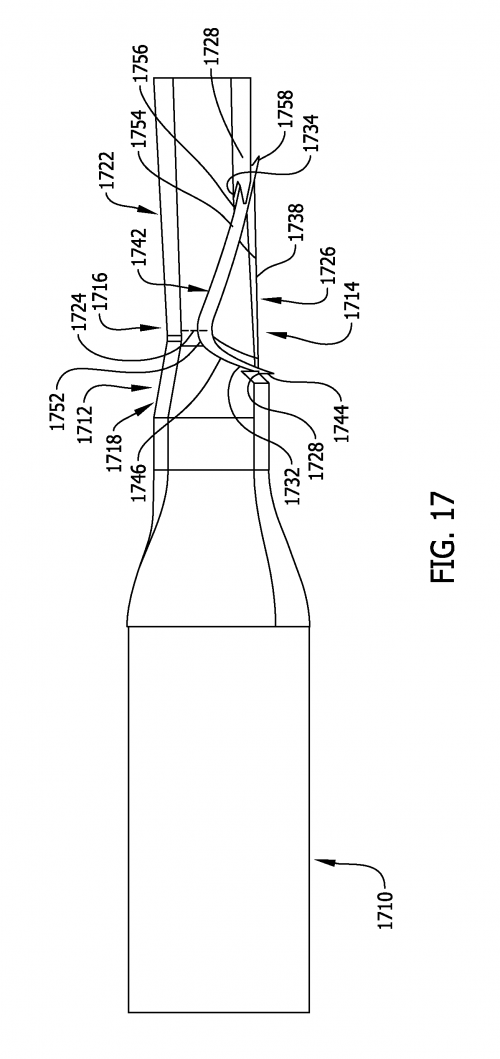
  • US10030605-20180724-D00015.png
    US10030605-20180724-D00015.png
    19.3 KB · Views: 258
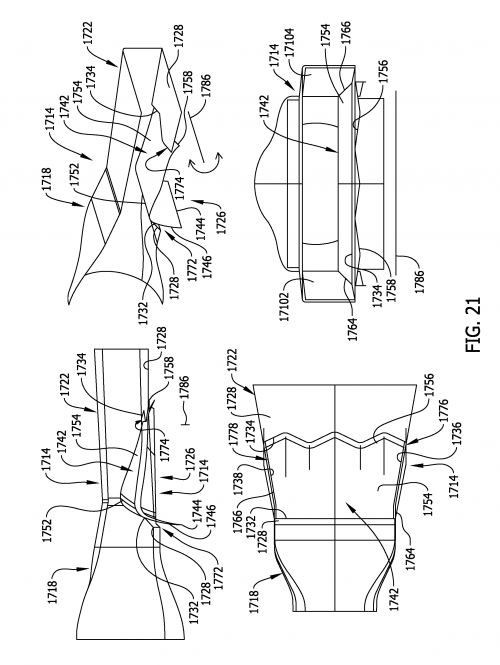
  • US10030605-20180724-D00019.png
    US10030605-20180724-D00019.png
    59.4 KB · Views: 131
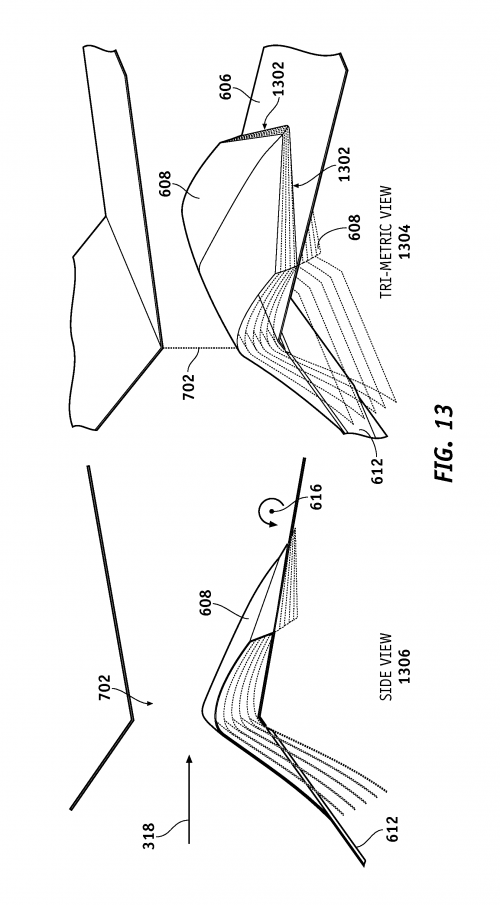
  • US10030605-20180724-D00011.png
    US10030605-20180724-D00011.png
    47 KB · Views: 122
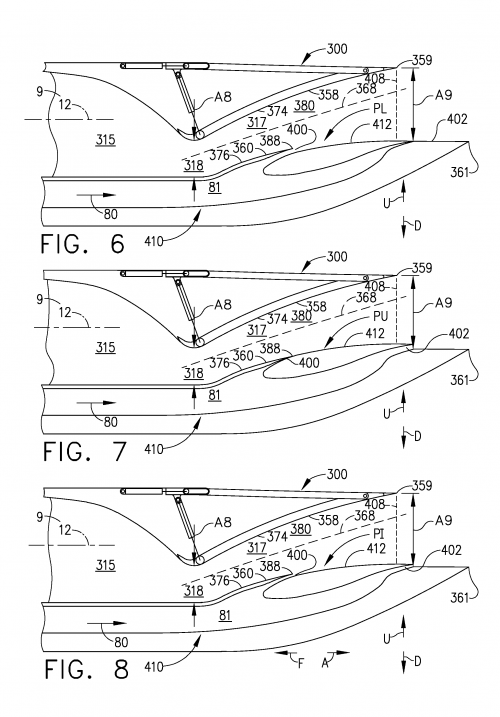
  • US08984891-20150324-D00003.png
    US08984891-20150324-D00003.png
    56.9 KB · Views: 114
  • US08984891-20150324-D00002.png
    US08984891-20150324-D00002.png
    55.1 KB · Views: 123
  • US20190323453A1-20191024-D00004.png
    US20190323453A1-20191024-D00004.png
    286.9 KB · Views: 127
  • US20190323453A1-20191024-D00004 (1).png
    US20190323453A1-20191024-D00004 (1).png
    286.9 KB · Views: 124
  • US20190323453A1-20191024-D00005.png
    US20190323453A1-20191024-D00005.png
    152.1 KB · Views: 116
  • US08984891-20150324-D00001.png
    US08984891-20150324-D00001.png
    76.9 KB · Views: 123
  • US08984891-20150324-D00000.png
    US08984891-20150324-D00000.png
    35.9 KB · Views: 277
Well it would need two engines to perform its mission.
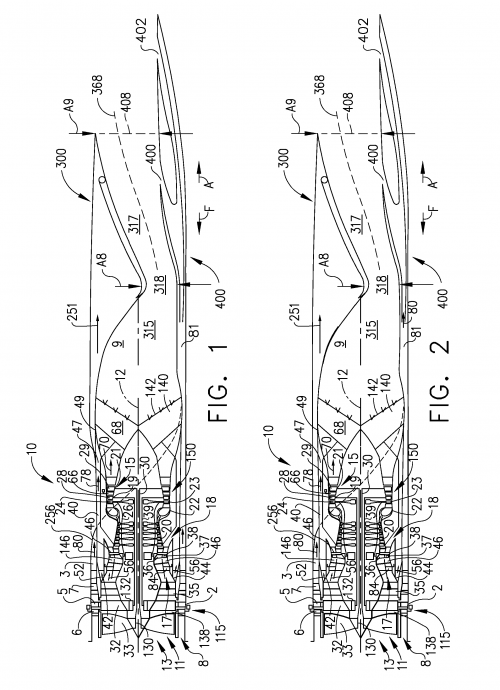
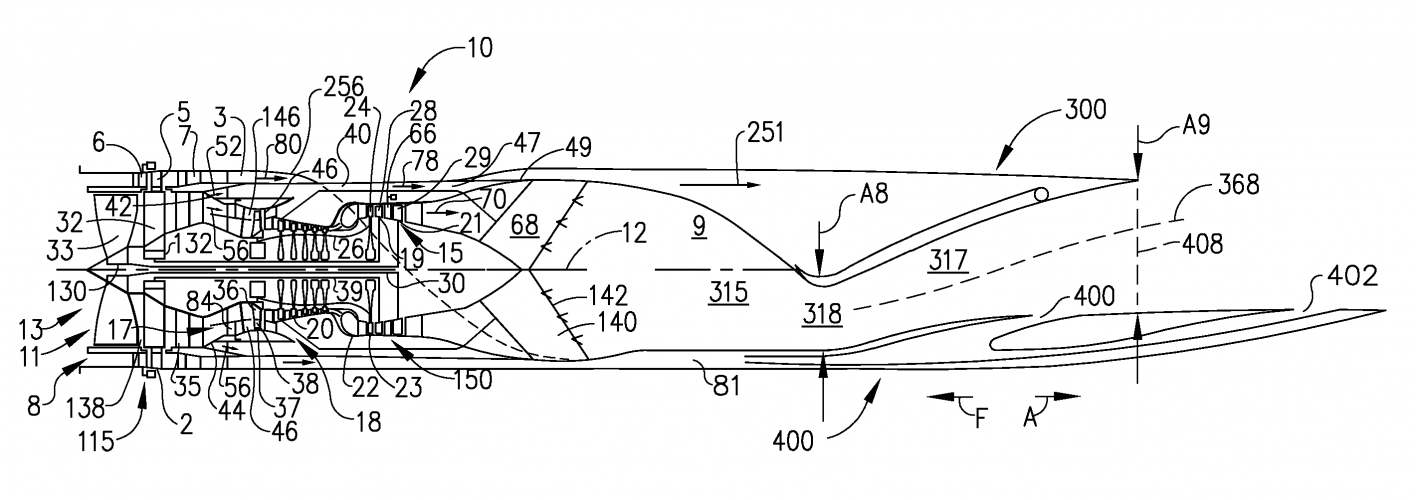
TomcatVIP is being a wee bit sarcastic. He's right, the video doesn't reveal as much as we/I had hoped, but we do have the nozzle shape now - possibly. It suggests a layout more YF-23 than F-22 - that is, engines further apart rather than close together since they are so wide in the horizontal plane. I can't imagine a fixed geometry for an aircraft meant to fly in subsonic and supersonic/supercruise regimes, so I'll assume it's a bit more complicated - the YF-23 had its flaps on top to change the geometry, and the J-36 does too, apparently. Is there some kind of flap and/or management of the concentric hot and cold airflows from the engine?
 
Last edited:
i guess those strange nozzle on Engine serve mainly to reduce Infrared signature of engine
i would not be surprised if that also are control surface or variation of Blow flap for increased lift.
 
The model presented in the video has 2 curious omissions - it seemingly lacks reheat and variable geometry nozzles. Rather than making the assumption that this is just a simplification of the 3D model, I'm going to run with the assumption that the production engine also doesn't have these things (considering most airliners and bombers do not have these )
  • For the AB, they are useful mainly in 2 conditions imo - at takeoff and low speeds, the extra thrust is needed, and for supersonic flight the flow velocity must be kept high. I think it's possible that the engine's bypass ratio is wildly variable, basically being able to operate in almost turbojet mode, to having a very significant bypass ratio (which would explain the seemingly large diameter of engines). In low bypass mode, the engine might be close to mixing jet fuel with air at a stochiometric ratio, which means there's no free air for the AB to burn, in low bypass mode, the engine's thrust is so high that an afterburner is unnecessary
  • As for not having variable geometry exhaust nozzles, either the advanced geometry of the exhaust pipe might create ideal flow separation at different speeds, preventing under/over expansion (aerospike nozzles, and the Space Shuttle's main engine, both of which have to operate basically through the entire atmosphere already had this working), or there might be some novel active flow control schemes I'm not aware of
 
Also, what's up with 'Ground testing expected in the late 2020s'? If this is the engine of the F-47, that means we wont see a final engine before the mid 2030s, which would put the F-47 IOC at mid to late 2030s, which is at least half a decade after the Chinese 6ths.
 
Also, what's up with 'Ground testing expected in the late 2020s'? If this is the engine of the F-47, that means we wont see a final engine before the mid 2030s, which would put the F-47 IOC at mid to late 2030s, which is at least half a decade after the Chinese 6ths.

It has been noted in this thread that prototype F-47s would probably have to fly with surrogate engines to have anything like the short development cycle being publicly discussed.
 
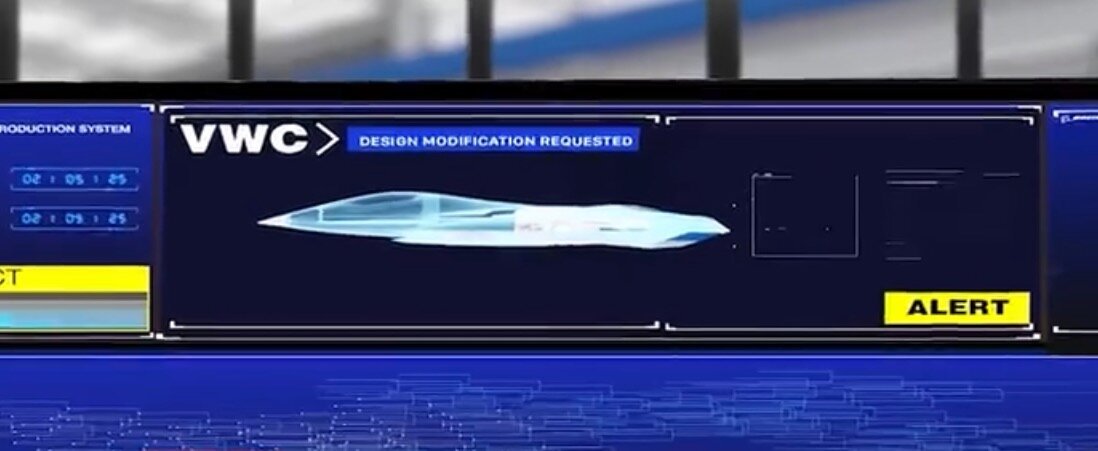
Exactly that. Boeing made it evident that the design would be able to be modified if requested, I know I'm going off an Easter egg here, but before this erupts into an engineering debate on mass flow and pressure recovery, it looks like they've accounted for life cycle evolution. (Notice the engine is the highlighted component).
 

Attachments

  • 243408-aacf7ef033e26fd15a2445da2f7c7be2.jpg
    243408-aacf7ef033e26fd15a2445da2f7c7be2.jpg
    58.4 KB · Views: 297
Last edited:
Exactly that. Boeing made it evident that the design would be able to be modified if requested, I know I'm going off an Easter egg here, but before this erupts into an engineering debate on mass flow and pressure recovery, it looks like they've accounted for life cycle evolution. (Notice the engine is the highlighted component).

The intake leading edge also looks interesting, not too dissimilar from what others have theorized in the possible configuration thread. Basically something similar to what the X-32 and Su-75 were/are going for, just further refined.

Obviously how well this represents the real deal if up in the air, I still found it interesting to notice.

Taking the discussion away from engines for a little bit here, sorry lol
 
Whenever I go over the timelines for XA102/103, such as they are currently, the question that comes after “what’s the interim powerplant” is “did the X demonstrators from LM and B even use VCEs?”
 
The last thing video would reveal is a real exhaust geometry.

I mean…this thread has far more knowledge than that release, which looks like it could have been stolen from a poster on this thread.

I ignore aircraft related news that is not discussed here at this point; it seems like the best stuff I read anywhere else is stolen from here.
 
Are there any flightworthy VCE prototypes available?
Zero evidence I have seen, but I haven’t looked 1% as much as others in this forum. I guess my subconscious is anchoring on XF119/120 and YF-22/23. Begs the bigger question of what the demonstrators actually demonstrated, besides potentially tailless supersonic flight?
 
What the hell?

I posted a possible way for that strange exhaust nozzle to have a variable area, it happened to be a clip from an anime.

And some moderator deleted it for being "off topic"? :mad:

Basically, the upper flap of the nozzle moves in and out like a Fowler flap.

Watch about 3 seconds of this:
 

It seems that the F/A-XX will be essentially shelved and further F-35 purchases will be cut in half to concentrate on the F-47. IMO this is a terrible Idea, but I would like to hear your opinions
 
Last edited:
I have a weird possibly wrong opinion that the F-47 is going to have two variants...
Yeah I also have that suspicion, but the history of the air force and navy trying to share aircraft shows that it doesn't work out 90 % of the time, and when it does work, it's extremely expensive and the two variants are essentially separate aircraft anyway.
 
Yeah I also have that suspicion, but the history of the air force and navy trying to share aircraft shows that it doesn't work out 90 % of the time, and when it does work, it's extremely expensive and the two variants are essentially separate aircraft anyway.
Unless a core feature of 6th gen tech in modularity to the extent that those components are swappable.
 
If Boeing kills it on F-47 timelines, then I believe the F/A-XX conversation would be revisited, if there is budget. This would mean meeting or beating timelines, and showing Boeings next gen manufacturing network works well, and has clear capacity upside.
 
I don't know if buying as much F-15EX than F-35A is not even worst.
And that days only after a stealth run across the ME.
To be fair, so did the F-15s.
ME is a general triumph of expeditionary airpower.
 
What the hell?

I posted a possible way for that strange exhaust nozzle to have a variable area, it happened to be a clip from an anime.

And some moderator deleted it for being "off topic"? :mad:
I'm not sure anime is a great source for engine nozzle design.
 
Last edited by a moderator:
I'm not sure anime is a great source for engine nozzle design.

I think Scott meant it in a way where it's a rough visualization of what he meant with regards to certain features present.

Similar to how I threw out of scale VLS cells on various potential positions on an LHD in an effort to just roughly visualize my point in the modern cruiser thread.
 
What the hell?

I posted a possible way for that strange exhaust nozzle to have a variable area, it happened to be a clip from an anime.

And some moderator deleted it for being "off topic"? :mad:

Basically, the upper flap of the nozzle moves in and out like a Fowler flap.

Watch about 3 seconds of this:

You can use screenshots rather than entire cartoon, that may not upset someone expecting profesional level i/p by non-aero global members. ;)
The artistic CADs & even some serious prelim drawings are also not calibrated precisely either but we still love them.
 
What the hell?

I posted a possible way for that strange exhaust nozzle to have a variable area, it happened to be a clip from an anime.

And some moderator deleted it for being "off topic"? :mad:

Basically, the upper flap of the nozzle moves in and out like a Fowler flap.

Watch about 3 seconds of this:
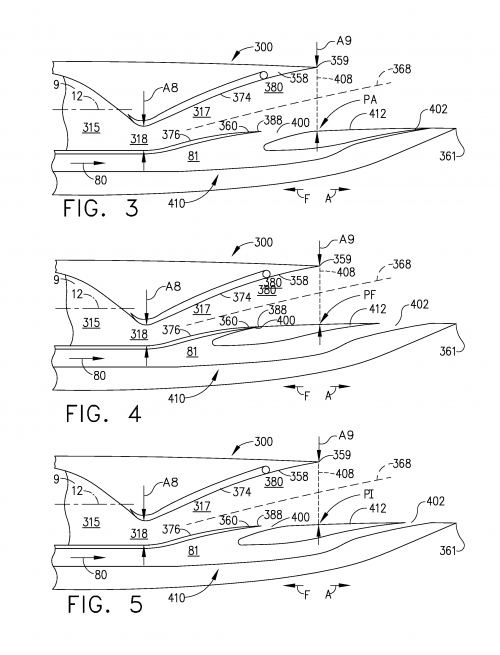
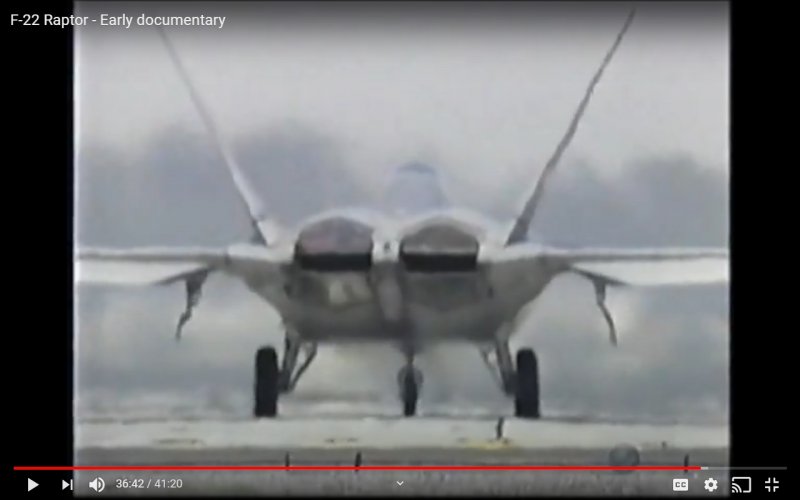
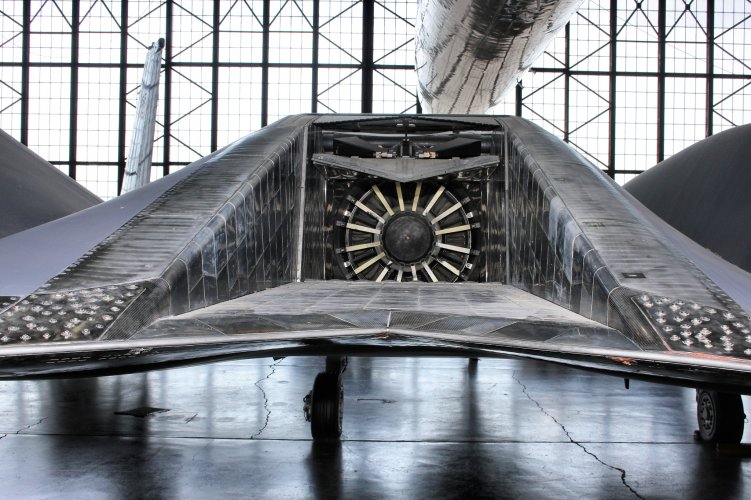
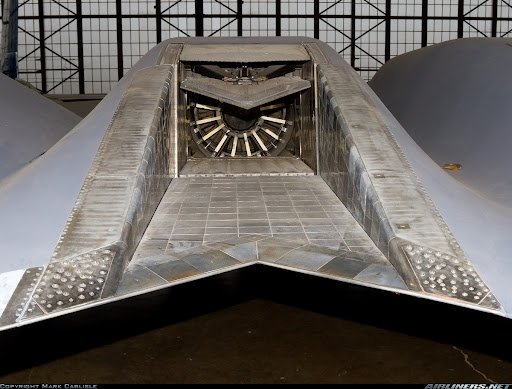
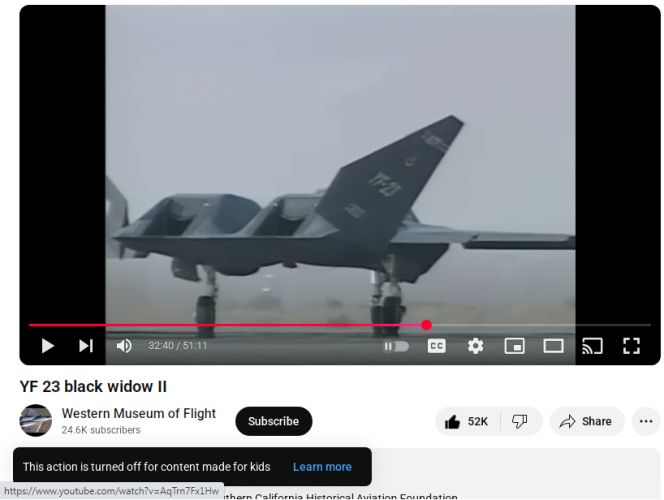
The YF-23 had something similar, though I'm not sure to what degree, if any, it was used for thrust vectoring.

View: https://youtu.be/PYLiMYGBE2Q?t=1955
 

Attachments

  • 2tq3nyt7bv061.jpg
    2tq3nyt7bv061.jpg
    3 MB · Views: 121
  • unnamed.jpg
    unnamed.jpg
    58.9 KB · Views: 96
The YF119 nozzle for the YF-23 had upper and lower convergent segments that were mounted across a chord of circular end plates that rotated on the centerline of the circles. They could be pivoted from a horizontal full open position (for Max AB) to an angled position that reduced the convergent area for Mil power, and the further rotated until the convergent segments touched, opening a path out the top and bottom of the nozzle for reverse thrust. The reverse function was deleted from the YF119 engines but that architecture remained.

As the convergent segments rotated from open towards close, the divergent segment leading edges that were attached to the trailing edge of the convergent segments that moved forward with closure. The lower divergent had the trailing edge running in a track aligned with the bottom of the aft end trough. The upper divergent was connected to an actuator that could vary the convergent/divergent area ratio. This also resulted in some axial movement of the divergent segment, but it wasn’t like a Fowler flap motion.
 
By changing the Convergent to Divergent area ratio with the variable upper divergent flap ( lower angle was fixed ) you could generate a small thrust vector angle, at the expense of optimum expansion ratio. Unknown whether the YF-23 FLCS made use of this capability.
 

It was my hope that they were synchronizing NGAP/NGAD development. You could design the initial increment with legacy engines? The F-15E had two different versions of the same engines - 220s and 229s. The F-16 was initially designed with the F100. A second engine was later developed as an alternative, but this was much later with the Block 30s. Perhaps the closest example is the F-14. The Navy initially went with the TF30, with plans to later upgrade with the F401, which never happened. But that was a later upgrade path. Not a powerplant was designed as part of the same program.

Even if they build the first batch with a legacy engine, it will cost time and money to design and test two different powerplants. You would have to assume that the F-47A with legacy engines wouldn't have the same range as reflected on Allvin's infographic comparing AF fighters.

The AF and Boeing must have a plan.
 
The F119 and GEs latest 110 iterations are fantastic powerplants. The F119 in particular has had a distinguished career capped most recently by real world data showing the motor has meaningful untapped potential. The problem is that we aren’t making F119s anymore. So if you think this time is different and you really think XA102 is right around the corner then maybe you beg borrow and steal some F119s. More likely, F-47 flies with a 110 derivative just to cover further XA102/103 slippage. Yes, I think the tea leafs suggest GE not PW.
 

It was my hope that they were synchronizing NGAP/NGAD development. You could design the initial increment with legacy engines? The F-15E had two different versions of the same engines - 220s and 229s. The F-16 was initially designed with the F100. A second engine was later developed as an alternative, but this was much later with the Block 30s. Perhaps the closest example is the F-14. The Navy initially went with the TF30, with plans to later upgrade with the F401, which never happened. But that was a later upgrade path. Not a powerplant was designed as part of the same program.

Even if they build the first batch with a legacy engine, it will cost time and money to design and test two different powerplants. You would have to assume that the F-47A with legacy engines wouldn't have the same range as reflected on Allvin's infographic comparing AF fighters.

The AF and Boeing must have a plan.
Well, the USN was definitely planning on running F110 derivatives, and it is possible that the USAF would accept those to de-risk the development.

Might even be more likely now if the USN really did choose Boeing's design.
 
Maybe they'll throw in a couple modified F135s as interim units. Dual F135s could be quite a combo. The next-gen motors may be similar in size to the F135s as well?
 
Maybe they'll throw in a couple modified F135s as interim units. Dual F135s could be quite a combo. The next-gen motors may be similar in size to the F135s as well?
It's my understanding that they're talking about thrust more in the F119 class.

But no fighter pilot is going to complain about more thrust!
 

Similar threads

Back
Top Bottom