Björn Andreasson / AB Malmö Flygindustri (MFI) Aircrafts

hesham

ACCESS: USAP
Senior Member
Joined
26 May 2006
Messages
37,566
Reaction score
19,616
Hi,

Mr. Björn Andreasson was a Swedish designer at AB Flygindustri in 1942,before that he made
a hang glider at age 15,after several aircraft,he joined MFI as a Chief Designer.

BA-1 was a hang glider inspired by Pelzners P 1
BA-2 was itself the AB FLygindustri Fi.1,a single seat high-wing glider
BA-3 was itself the ,, ,, Fi.3,an assault glider to carry troops
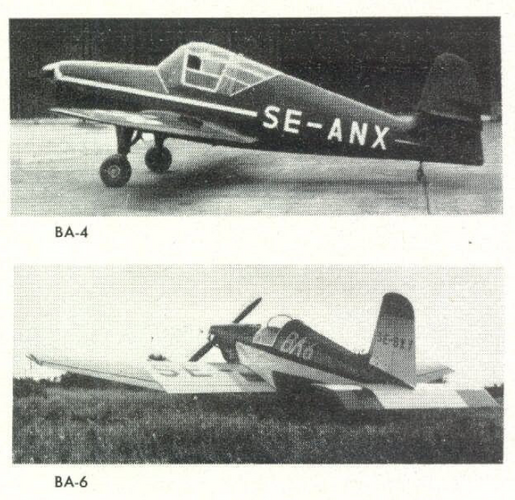
BA-4 was a single seat aerobatic biplane
BA-4B was all-metal version
BA-5 was itself SAI KZ-VII,a high-wing utility aircraft
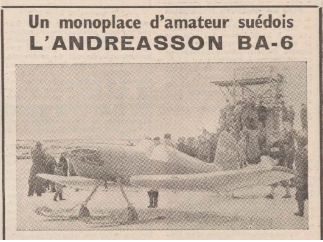
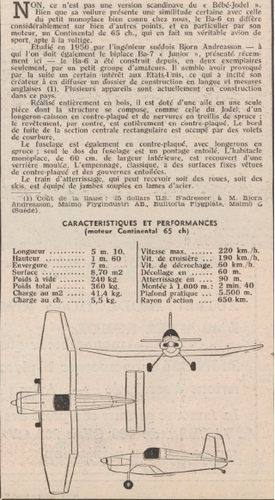
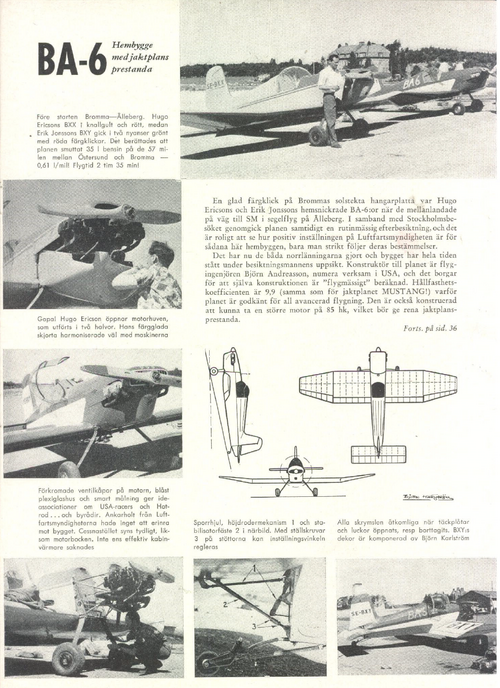
BA-6 was a single seat light monoplane aircraft
BA-7 was a side-by-side two-seat light and trainer monoplane,later developed
into MFI-9
BA-8 was itself SAI KZ-VIII,a single seat low-wing sporting aircraft
BA-9 -----?
BA-10 -----?
BA-11 was a two-seat aerobatic biplane aircraft
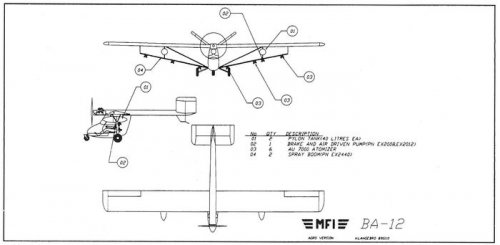
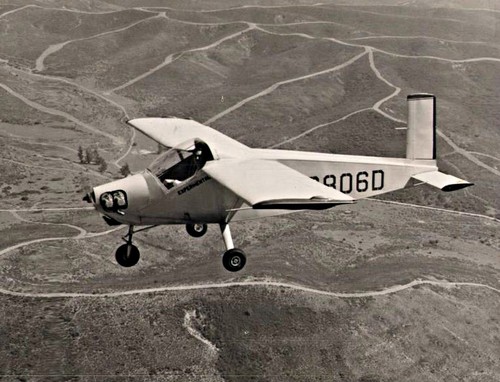
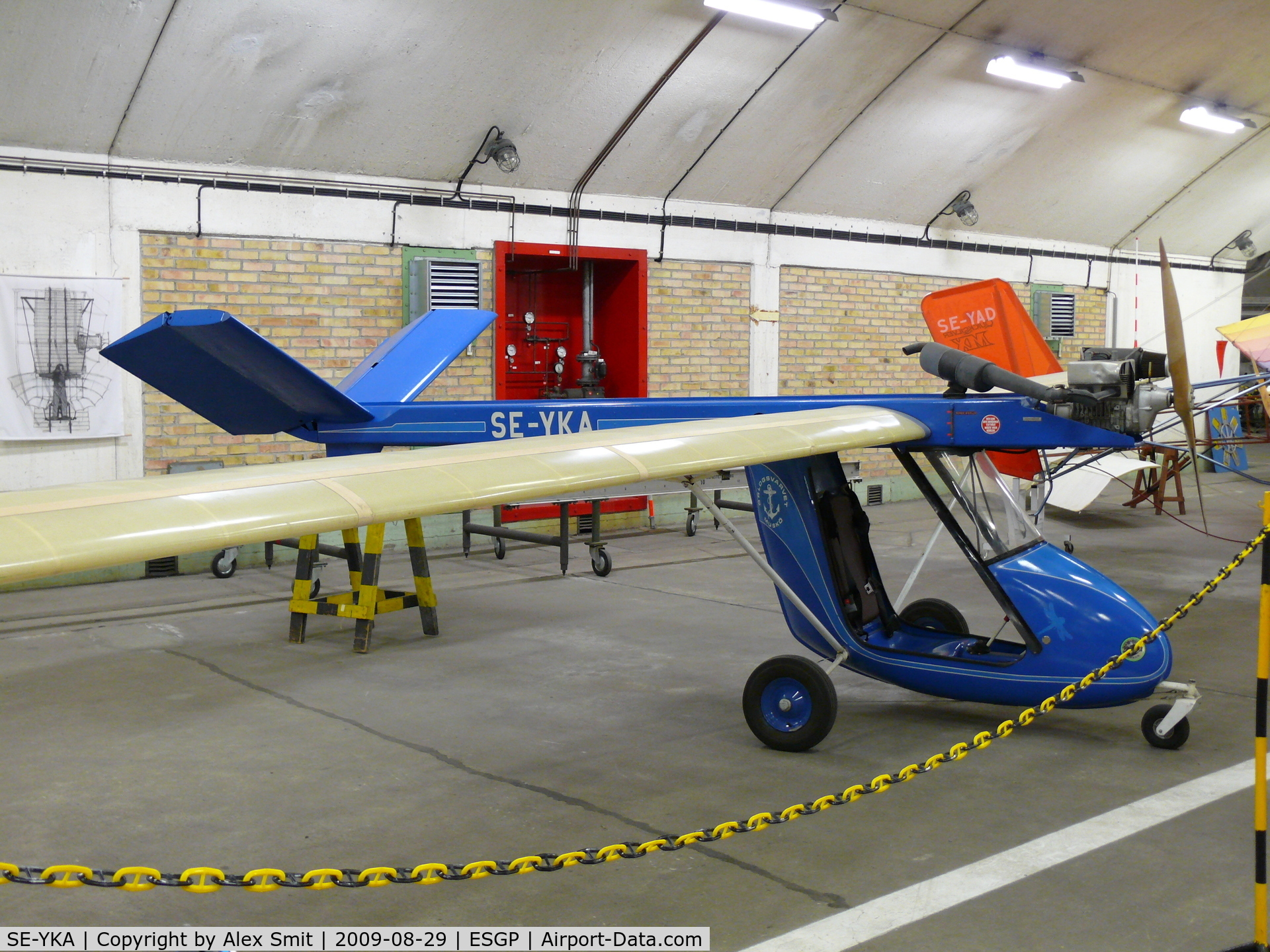
BA-12 was a single-seat ultralight aircraft
BA-13 -----?
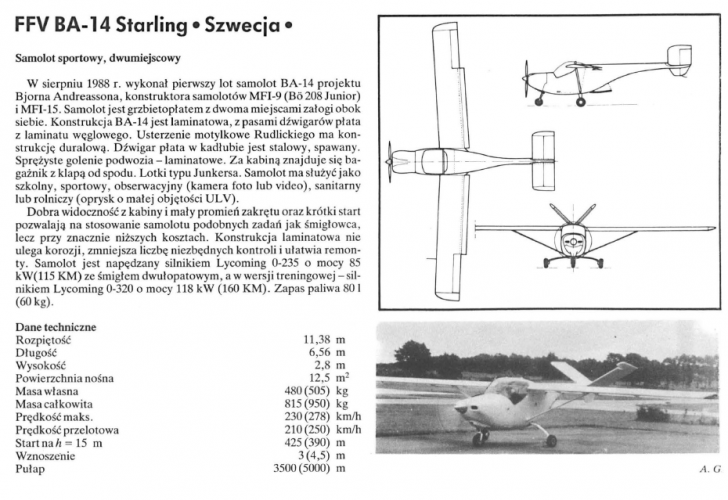
BA-14 was a two-seat light high-wing monoplane aircraft,with V-tail


For a MFI company,its products are very known;

MFI-9,MFI-10,MFI-13 (were a cars,not aircraft),MFI-15,MFI-17 & MFI-18.
 
Last edited:
By the way,

the AB Flygindustri company which formed in 1937,later became Malmö Flygindustri or MFI 1959,it began its series by Fi.1,Fi.2 & Fi.3,the unknown designs were from Fi.4 to Fi.8,and the Fi.9 redesigned as MFI.9.
 
Last edited:

Attachments

  • mfi_23-sj_35320871.jpg
    mfi_23-sj_35320871.jpg
    45.3 KB · Views: 205
  • ba-12-agro_35328682.jpg
    ba-12-agro_35328682.jpg
    26.7 KB · Views: 162
Last edited:
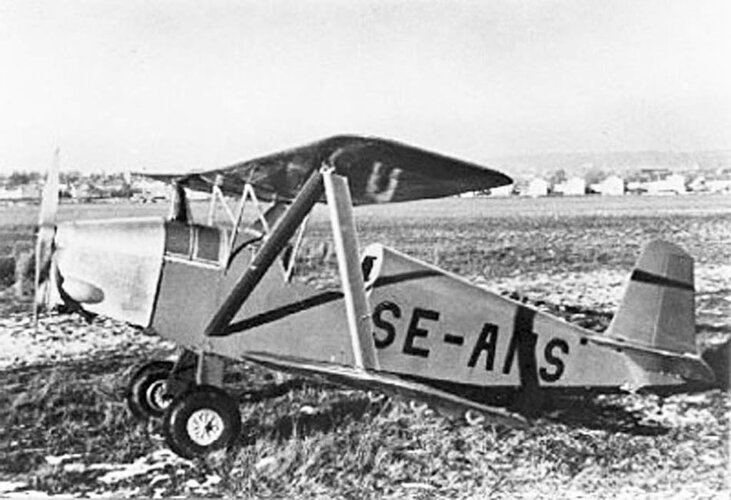
Very nice, hesham, Andreasson is an underappreciated designer. He was also an engineer in the San Diego area (Convair?) for a quite a few years and active in homebuilding, the original BA-7 he built himself was different from the later productions versions. It's all-moving tail surfaces may have influenced another homebuilt aircraft designer working at Convair, Bud Evans of Volksplane fame. Here is a pic, note the upright all-moving vertical tail unlike the swept two-piece production version:

316680_306983682735941_1089432019_n_56b07b812a6b2271fbfd7e16.jpg


Source: http://lae.blogg.se/2016/february/bjorn-andreasson-skriver-om-sin-ba-7-1959.html

And one of the BA-12 ultralight:

427541.jpg


Source: http://www.airport-data.com/aircraft/photo/000427541.html
 
From Ailes 12/5/1961,

the BA.6.
 

Attachments

  • 6.png
    6.png
    144.7 KB · Views: 87
  • 7.png
    7.png
    327.4 KB · Views: 96
From, flygrevyn_1957-4.
 

Attachments

  • 11.png
    11.png
    683.2 KB · Views: 36
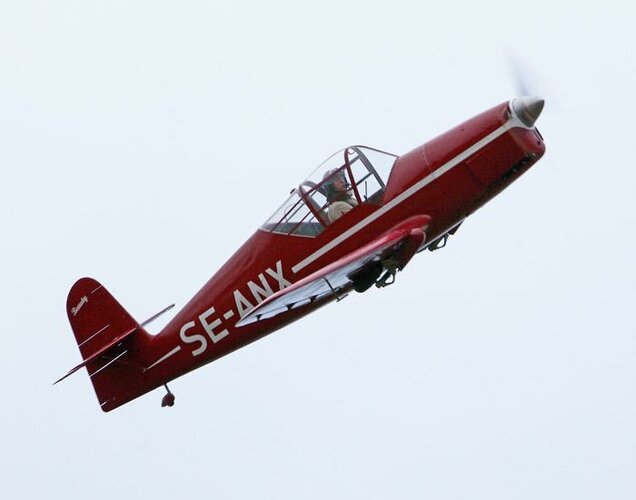
Here, too, a mistake has crept in. The aircraft designated BA.4 is not the BA.4 of Björn Andreasson, because it was a biplane. The aircraft shown here is the Skandinaviska BHT-1 Beauty.
 

Attachments

  • Skandinaviska BHT-1 Beauty.jpg
    Skandinaviska BHT-1 Beauty.jpg
    23.1 KB · Views: 32
  • ba4-1.jpg
    ba4-1.jpg
    102.2 KB · Views: 39
Hi,

MFI-395 Super Mushshak — Pakistan Aeronautical Complex unveiled a light attack variant of the Super Mushshak in March 2019. The aircraft is capable of launching Barq laser-guided and anti-tank missiles. The Super Mushshak is in use by several countries, including the Pakistan Air Force, Azerbaijani Air Force and the Nigerian Air Force.

 
Last edited:
Hi,

later I will speak about MFI series, MFI 9,10,11,12 ?,13,15,17,18,22 & 23
 
For the AB Flygindustri company,which later became MFI,

Fi-1 was a single seat mid-wing glider
Fi-2 was a project for a 6-seat high-wing transport glider with a single-
strut wing bracing
Fi-3 was a high shoulder wing transport glider monoplane,could carry
about 10 troop with 2 crew
Fi-4 ? was unknown,but may it was a licence built DFS Schulgleiter SG.38 glider,
or G-101,need confirm
Fi-5 ? was unknown,but may it was a C-103 glider aircraft,need confirm
Fi-6 ? was unknown,but may it was a Se-104,as a licence built DFS Weihe
glider,need confirm
Fi-7 ? was unknown,but may it was a C-180, as a glider aircraft,need
confirm
Fi-8 ------?
Fi-9 Junior was later called MFI-9,as a side-by-side shoulder high wing light
monoplane,powered by one 100 Rolls-Royce/Continental O-200-A
engine
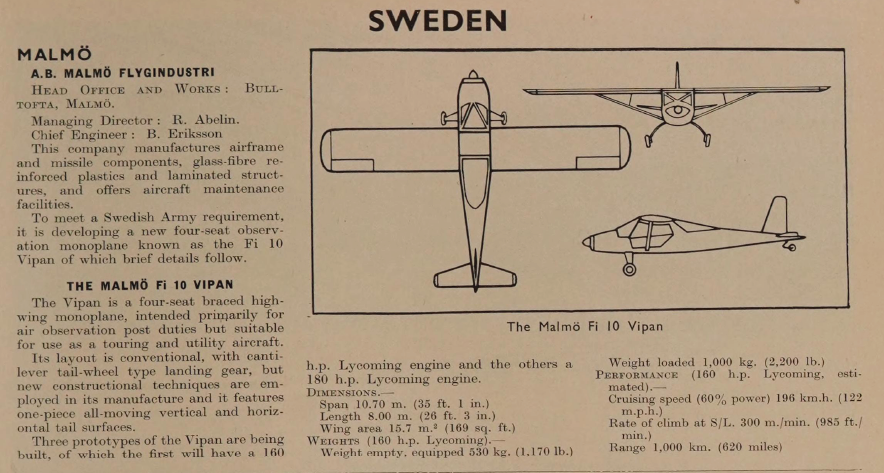
MFI-10 Vipan was a four-seat high wing utility light monoplane,powered
by one 180 hp Lycoming O-360 engine
MFI-11 was a side-by-side two-seat shoulder high wing light monoplane,
powered by one 115 hp Lycoming O-235 engine
MFI-12 ? was unknown,but may it was the same as Stiletto,a four-seat low-mid-wing light monoplane,powered by two 150 hp Zoche Aero engines,
Project
MFI-13 was a car,not aircraft
MFI-14 ------?
MFI-15 Safari was a side-by-side two shoulder high wing seat basic trainer
monoplane,powered by one 200 hp Lycoming IO-360 engine
MFI-16 ------?
MFI-17 Supporter was a military version of MFI-15
MFI-18 was a highly efficient COIN aircraft version of MFI-17
MFI-19 to MFI-21 ------?
MFI-22 was a 5/6 seat light transport airplane Project,powered by one Lycoming IO-720 engine,began its life as Andreasson Ba.15
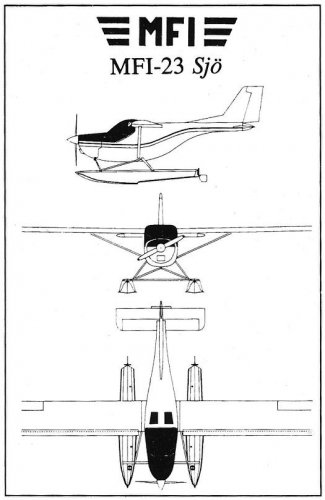
MFI-23 was a float version of Ba.14
MFI-395 Super Mushshak Pakistan Aeronautical Complex unveiled a light attack variant of the Super Mushshak in March 2019. The aircraft is capable of launching Barq laser-guided and anti-tank missiles. The Super Mushshak is in use by several countries, including the Pakistan Air Force, Azerbaijani Air Force and the Nigerian Air Force
MFI-
 
Last edited:
My 'Fi' list for AB Flygindustri is much shorter...

AFI Fi 1 - 1943 pod-and-boom high-perf. sailplane
- Fi 1 : Mixed construction; Tord Lidmalm design
- Fi 1 : Span 14.02 m; 14.49 m2; aspect ratio 13.9

AFI Fi-2 - (Project) 1943 cargo/transport glider
- Fi-2 : High, strut-braced wings; span (??) m
- Fi-2 : Mixed constr.; 1 + 6 x troops or cargo
- Fi-2 : Eclipsed by Flygvapnets' preferred Fi-3

AFI Fi-3 - 1944 assault/transport glider; x 5
- Fi-3 : Higher-capacity glider to replace Fi-2
- Fi 3: Design by J. Weibull w/ Tord Lidmalm*
-- * Acting in the role of project engineer
- Fi-3 : High, cantilevered wings; span 16.50 m
- Fi-3 : Span 16.50 m; 2.97 m2; aspect ratio 8.5
- Fi-3 : Mixed constr.; 2 + 12* x troops/cargo
-- Prototype flew Feb 1944; crashed Apr 1944
- Fi-3 : Orders placed for 5 x prod. as Lg 105**
-- * A number of sources say only 10 x troops
-- ** Cancelled at war's end w/ 4 x completed

But I'm not sure where your 'Fi' designations for licensed gliders is coming from. Have you found any documentation to suggest that 'Fi' designations were applied to other than AFI’s own designs?

Going through your suggestions:

- 'Fi-4' potentially as G 101 (licensed SG 38 glider).

Flygvapnets bought G 101 component kits from AFI but Kockums Flygindustri in Malmö actually held the Swedish SG 38 license - not AFI.

- 'Fi-5' potentially as 'C-103'.

Is there evidence of this 'C-103' designation outside of Wikipedia lists? If that 'C-103' were actually Se 103, these are licensed DFS Kranich/Tranan gliders.

- 'Fi-6' potentially as Se 104.

AFI sub-contracted 24 x DFS Weihe gliders but AB Flygplan of Norrköping held the Swedish type license (making it is unlikely that they would assigned AFI designations).

- 'Fi-7' potentially as 'C-180'.

Again, is there any evidence of this designation outside Wikipedia lists?

----
 
But I'm not sure where your 'Fi' designations for licensed gliders is coming from. Have you found any documentation to suggest that 'Fi' designations were applied to other than AFI’s own designs?

My dear Apophenia,of course I didn't find a documents about that,
so I said maybe and need confirm,so we can ask @blockhaj about
and evidences.
 
I'm confused. There is no mention of an 'Fi' designation on your clipping.

So, what does your @blockhaj quote refer to?
 
My dear Apophenia,

the MFI-9 was called at first Fi-9,also MFI-10 was called at first
Fi-10,so logically there are Fi-4 to Fi-8,but we don't know them,
so I just suggested or guessed what them were ?.
 
Fi = Flygindustri (with a pinch of salt)
Thanks, understood.

The source of my confusion was how the clipping in reply #17 was related to @hesham's speculated 'Fi' designations in reply #13 (or his reply #15 request for your confirmation of those speculated upon 'Fi' numbers).
 

Similar threads

Back
Top Bottom