Sometimes a duck is just a duck. The US Army customer requested Bell to advance aircraft deliveries. Bell requested additional funding to comply, US Army is in the process of obtaining additional funding from a dysfunctional congress. To make matters worse, progress payments to Bell were held up by the previous government shutdown.

You are using an out of date browser. It may not display this or other websites correctly.
You should upgrade or use an alternative browser.
You should upgrade or use an alternative browser.
Bell MV-75 Cheyenne II (aka V-280 Valor)
- Thread starter RavenOne
- Start date
someone has access to see which other version are they talking about here? I hope it's an armed one:
https://aviationweek.com/defense/aircraft-propulsion/bell-details-mv-75-tiltrotor-buildup-plans
https://aviationweek.com/defense/aircraft-propulsion/bell-details-mv-75-tiltrotor-buildup-plans
Last edited:

- Joined
- 18 October 2006
- Messages
- 4,776
- Reaction score
- 6,837
I believe the Special Operations version of the MV-75 is to be armed, but that is later in the program (unless prioritites have changed). The assault version the the U.S. Army wants (armed with machine guns) is likely to be the first version. So my interpretation of the comment is that while they are building prototypes of the assault version, work is being done for design changes for all of the special equipment is ongoing.
hey, you apparently you have insider info of this program, many articles talk about a massive cut in bureaucracies being the main driver of the unheard of adoption timeline shortening, but it's bureaucracy like "how much ohio squirrel population will be affected by this" or bureaucracy like "can we REALLY have this in mass production reliably"I believe the Special Operations version of the MV-75 is to be armed, but that is later in the program (unless prioritites have changed).
- Joined
- 18 October 2006
- Messages
- 4,776
- Reaction score
- 6,837
Having been around the rotocraft industry for a while. The only insider informationI I have is that Special Operation variants tend not show up before the base platform has been thoroughly tested. I could be wrong. Seems anything goes these days with acquisitions.

- Joined
- 11 February 2007
- Messages
- 4,132
- Reaction score
- 8,872
The other bureaucracy option for speeding things up is "do we really need all of this testing?"hey, you apparently you have insider info of this program, many articles talk about a massive cut in bureaucracies being the main driver of the unheard of adoption timeline shortening, but it's bureaucracy like "how much ohio squirrel population will be affected by this" or bureaucracy like "can we REALLY have this in mass production reliably"
Based on what I have read, no traditional qualification testing is being cut from the production MV-75 aircraft being delivered to the Army. What is planned is delivery of pre production aircraft for Army operational evaluation prior to all qualification testing being completed. Overlapping these typically sequential phases requires manufacturing of additional aircraft that may or may not be capable of being updated later to the final production configuration. This speeds up aircraft introduction into service without compromising performance. But requires more funding.

HaveVoid
ACCESS: Confidential
- Joined
- 4 October 2010
- Messages
- 84
- Reaction score
- 272
I think CTR has it explained beautifully, the way I understand it is that they are essentially pulling out the "pause" that is often seen between test/EMD aircraft and the beginning of the first batches of LRIP birds, and will basically roll directly from "Test" birds into "Production" aircraft concurrent with the actual test work that those EMD aircraft are doing.
So, as opposed to something like the Super Hornet, where McDD/Boeing built the 7 EMD airframes and then production stopped for a time during flight test, and then they hit the milestone for approval to proceed with LRIP and then got going again, the plan would now be to keep producing without that interruption.
This would probably also explain some of the charges that Textron described that it will take in connection with the acceleration - rotorcraft have some incredibly long-lead time items (think Castings and Forgings for Gearbox cases, Masts, etc.), so if there is suddenly no longer to be a lull between Test and LRIP, they would probably need to order those items ASAP even ahead of some sort of contract modification from the DOD to help fund some of that.
So, as opposed to something like the Super Hornet, where McDD/Boeing built the 7 EMD airframes and then production stopped for a time during flight test, and then they hit the milestone for approval to proceed with LRIP and then got going again, the plan would now be to keep producing without that interruption.
This would probably also explain some of the charges that Textron described that it will take in connection with the acceleration - rotorcraft have some incredibly long-lead time items (think Castings and Forgings for Gearbox cases, Masts, etc.), so if there is suddenly no longer to be a lull between Test and LRIP, they would probably need to order those items ASAP even ahead of some sort of contract modification from the DOD to help fund some of that.
- Joined
- 11 February 2007
- Messages
- 4,132
- Reaction score
- 8,872
The problem here is if you run into a major problem that requires significant redesign (cf the F-35B bulkhead issues), and suddenly your LRIP production run is potentially only fit for scrapping. It's an inherently riskier approach.Based on what I have read, no traditional qualification testing is being cut from the production MV-75 aircraft being delivered to the Army. What is planned is delivery of pre production aircraft for Army operational evaluation prior to all qualification testing being completed. Overlapping these typically sequential phases requires manufacturing of additional aircraft that may or may not be capable of being updated later to the final production configuration. This speeds up aircraft introduction into service without compromising performance. But requires more funding.
Scott Kenny
ACCESS: USAP
- Joined
- 15 May 2023
- Messages
- 19,517
- Reaction score
- 27,965
Yep. It's a known risk and you plan around it.The problem here is if you run into a major problem that requires significant redesign (cf the F-35B bulkhead issues), and suddenly your LRIP production run is potentially only fit for scrapping. It's an inherently riskier approach.
The scheduling mindset change for MV-75 is to accept that changes will be necessary, versus foolishly thinking that everything will be perfect from the start.The problem here is if you run into a major problem that requires significant redesign (cf the F-35B bulkhead issues), and suddenly your LRIP production run is potentially only fit for scrapping. It's an inherently riskier approach.
- Joined
- 11 February 2007
- Messages
- 4,132
- Reaction score
- 8,872
Which is okay if you don't mind the possibility of throwing away a few hundred million dollars worth of LRIP production (cf the non-combat codable F-22s). The taxpayers, and their representatives, may not be so cavalier.The scheduling mindset change for MV-75 is to accept that changes will be necessary, versus foolishly thinking that everything will be perfect from the start.

e-Graphite
ACCESS: Confidential
- Joined
- 15 June 2023
- Messages
- 86
- Reaction score
- 191
Rather than "throwing them away", they would be training assets or other stateside roles if they could not be upgraded to combat status. An MV-75 will also be a lot less expensive than a F-22 and the planned fleet size much larger. So long as changes are made quickly, I think this won't be a large issue in practice.Which is okay if you don't mind the possibility of throwing away a few hundred million dollars worth of LRIP production (cf the non-combat codable F-22s). The taxpayers, and their representatives, may not be so cavalier.
Which is why the added cost risk that pre production aircraft for operational evaluation might not meet production specifications must be incorporated into the MV-75 development contract. The US Army customer and Bell Textron must work as a team to avoid the pitfalls you referenced with Lockheed aircraft development contracts.Which is okay if you don't mind the possibility of throwing away a few hundred million dollars worth of LRIP production (cf the non-combat codable F-22s). The taxpayers, and their representatives, may not be so cavalier.
- Joined
- 11 February 2007
- Messages
- 4,132
- Reaction score
- 8,872
That depends if they're safely flyable, or economically convertable to be safely flyable. Remember, the UK once had to scrap 16 Tornado F.3 centre fuselages because of a error in engineering work, and the only reason that wasn't scrap 16 entire F.3s was they were able to use 16 Tornado F.2A fuselages as donor replacements (and thereby effectively scrapping the F.2As).Rather than "throwing them away", they would be training assets or other stateside roles if they could not be upgraded to combat status. An MV-75 will also be a lot less expensive than a F-22 and the planned fleet size much larger. So long as changes are made quickly, I think this won't be a large issue in practice.
For recent development incidents that could force major scrapping if applicable to simultaneous LRIP production, and if no simple fix were available, see the 787 wing box failures (plural), 777X fuselage failure and A380 wing failure, all of which occurred late in static testing.
- Joined
- 18 October 2006
- Messages
- 4,776
- Reaction score
- 6,837
The other inherent risk of modify as you go is (building the aircraft in flight is a fun way to look at it) that you end up with a bunch of different aircraft that look the same. Don't recall the number of variants of the MV-22 the USMC ended up with that caused a large investment by the USN to fix. I got to see a U.S. Army Cavalry Squadron commander have a melt-down many years ago because he had two variants of the OH-58D. Pilots could not fly both versions and he had a bigger headache for logistics, because some parts could only be used on one variant or the other.
I am all for acceleration. However I think the U.S. Army must 'run' carefully as an aircraft incident early in the program will send the naysayers into a frenzy of finger waving and frothing vitrole regarding the viability of tilt rotor aircraft.
I am mildly optimist but we ought remember that the U.S. Army has not built a completely new aircraft in almost half a century. The U.S. government has thrown out all of the rules, perhaps for good reason. This will be an interesting show.
I am all for acceleration. However I think the U.S. Army must 'run' carefully as an aircraft incident early in the program will send the naysayers into a frenzy of finger waving and frothing vitrole regarding the viability of tilt rotor aircraft.
I am mildly optimist but we ought remember that the U.S. Army has not built a completely new aircraft in almost half a century. The U.S. government has thrown out all of the rules, perhaps for good reason. This will be an interesting show.
That depends if they're safely flyable, or economically convertable to be safely flyable.
With rotorcraft, the predominant aircraft cost is in drivetrain, rotors and systems. All these can be replaced if required.
For commercial Bell helicopters, certification flight test aircraft are converted into static use maintenance training aircraft. I predict this will be the fate for any MV-75 fuselages and wings unsuitable for continued flight use.
For training US Army technicians to support their most advanced and first FBW aircraft, more than a couple maintenance training aircraft would be necessary.
- Joined
- 18 October 2006
- Messages
- 4,776
- Reaction score
- 6,837
https://www.military.com/feature/20...rcraft-and-future-of-air-assault-warfare.html
No surprises, but a little more on the rational.
No surprises, but a little more on the rational.
- Joined
- 18 October 2006
- Messages
- 4,776
- Reaction score
- 6,837
https://www.defenseone.com/defense-...g-its-first-tiltrotor-aircraft-online/412808/
A couple of typo's by the author trying to make a deadline (24 troops instead of 14).
Interesting to see the U.S. Army for once asking people to explore new capabilities as opposed to regergitating the dogma.
A couple of typo's by the author trying to make a deadline (24 troops instead of 14).
Interesting to see the U.S. Army for once asking people to explore new capabilities as opposed to regergitating the dogma.
Maybe just another typo, but 'as it prepares to send the first Bell MV-75s to units for testing and feedback later this year' is more that a little optimistic. Major aircraft subassemblies are still being fabricated, and significant aircraft testing is required prior to handing over an aircraft to the customer.
I also wonder how beneficial studying V-22 maintenance procedures will be in preparation for maintaining the MV-75. This is equivalent to studying F-15 maintenance procedures in preparation for maintaining the F-22. A lot has changed since the V-22 was designed 40 years ago.
I also wonder how beneficial studying V-22 maintenance procedures will be in preparation for maintaining the MV-75. This is equivalent to studying F-15 maintenance procedures in preparation for maintaining the F-22. A lot has changed since the V-22 was designed 40 years ago.

RavenOne
ACCESS: Top Secret
- Joined
- 18 June 2008
- Messages
- 1,194
- Reaction score
- 3,830
Welcome the Cheyenne II
https://www.twz.com/air/army-names-its-new-mv-75-tiltrotor-cheyenne-ii
Cheers
https://www.twz.com/air/army-names-its-new-mv-75-tiltrotor-cheyenne-ii
Cheers
spikedpsycho
ACCESS: Secret
- Joined
- 14 March 2026
- Messages
- 336
- Reaction score
- 470
More junk. issue Tiltrotors never resolved because they are solution to non-existent problem. Tilt rotor border island instability every time it flies. Even if rotors are synchronized, air is not. Pressure, temperature, moisture all affect surrounding air. For helicopters this is manageable. For tilt rotors their thrust is not center of mass focused. It diverts away from fuselage. Thus even slight offset thrust, it flips over and never recovers. V22 had ~20 loss hull accidents with 54 deaths. People remark Black hawks have more accidents, but those birds accumulated tens thousands flight hours and over 10,000 have been made. Statistically their accident are rare. For V22, short service history high cost run, it's accident rate is unsustainable
HaveVoid
ACCESS: Confidential
- Joined
- 4 October 2010
- Messages
- 84
- Reaction score
- 272
And yet statistically the V-22 has a mishap rate that is completely average amongst the DOD’s rotorcraft inventory, and lower than many types in the Marine Corps inventory - so your assertions here clearly miss the mark at a fundamental level if you want to invoke “statistics”.More junk. issue Tiltrotors never resolved because they are solution to non-existent problem. Tilt rotor border island instability every time it flies. Even if rotors are synchronized, air is not. Pressure, temperature, moisture all affect surrounding air. For helicopters this is manageable. For tilt rotors their thrust is not center of mass focused. It diverts away from fuselage. Thus even slight offset thrust, it flips over and never recovers. V22 had ~20 loss hull accidents with 54 deaths. People remark Black hawks have more accidents, but those birds accumulated tens thousands flight hours and over 10,000 have been made. Statistically their accident are rare. For V22, short service history high cost run, it's accident rate is unsustainable
As for being a solution to a non-existent problem, ask military leadership and troops if lack of range and speed are a “non-existent” problem that they don’t need solved.
There have been 12 V-22 mishaps since the type entered service, with a total of 32 fatalities. Contrary to your assertions, the majority of these mishaps have been - as is the case with most aircraft - due to pilot/crew error.
The anti-V-22 crusades that folks will go through gymnastic to embark on really get baffling after a while… this is a thread about the MV-75 Cheyenne II, feel free to go discuss the V-22 mishap rate in an Osprey thread if so eager to poorly regurgitate half truths that the press love to harp on…
- Joined
- 18 October 2006
- Messages
- 4,776
- Reaction score
- 6,837
@HaveVoid - well said. I was just going to ignore the rant.
Anyway AWS&T version -
https://aviationweek.com/defense/ai...5-schedule-leaves-no-slack-army-officials-say
and Breaking Defense -
https://breakingdefense.com/2026/04...wont-commit-to-first-flight-production-dates/
Anyway AWS&T version -
https://aviationweek.com/defense/ai...5-schedule-leaves-no-slack-army-officials-say
and Breaking Defense -
https://breakingdefense.com/2026/04...wont-commit-to-first-flight-production-dates/
Last edited:
e-Graphite
ACCESS: Confidential
- Joined
- 15 June 2023
- Messages
- 86
- Reaction score
- 191
This Cheyenne has a wing and the correct number of rotors!Cheyenne II?! A slap on the wrist of LM Sikorsky for their poor performance in the competition...


Colonial-Marine
UAVs are now friend, drones are the real enemy.
- Joined
- 5 October 2009
- Messages
- 1,714
- Reaction score
- 1,820
Maybe a bit too soon to use that one considering the recent cancellation of a promising scout helicopter program due to the Army's inability to stick with anything.Should have named it Comanche.

- Joined
- 29 November 2010
- Messages
- 2,275
- Reaction score
- 5,186
ok thread name updatedWelcome the Cheyenne II
https://www.twz.com/air/army-names-its-new-mv-75-tiltrotor-cheyenne-ii
Cheers
e-Graphite
ACCESS: Confidential
- Joined
- 15 June 2023
- Messages
- 86
- Reaction score
- 191
Every time I see that it’s “Bell MV-75” instead of “Bell/Boeing MV-75”… I smile broadly.

Scott Kenny
ACCESS: USAP
- Joined
- 15 May 2023
- Messages
- 19,517
- Reaction score
- 27,965
Nor mine.MV-75 Cheyenne II
Would not have been my first choice.
There are still a lot of unused tribal names, and honestly Crow would have fit perfectly between Army tribal names and the bird names.
But I guess they needed to make up for not buying the OG Cheyenne back in the day.
In 2003 I was working for Bell readying the 609 tiltrotor for first flight. Following Boeing’s withdrawal from the partnership to develop the 609 five years earlier, my mechanical systems engineering team was tasked with completing Boeing’s portion of the flight control, hydraulics and landing gear systems. Bell discovered Boeing had not only lied on the completion status of their engineering, a large portion of Boeing’s work also had to be completely redesigned.Every time I see that it’s “Bell MV-75” instead of “Bell/Boeing MV-75”… I smile broadly.
As the 609 was being buttoned up in preparation for first flight, quality inspectors adhered stickers across maintenance panels edges with their initials. The only inspection stickers available were originally for the V-22 program and had ‘Bell/Boeing’ printed on them. It pissed me off royal seeing Boeing’s name on the 609, so I borrowed a sharpie and began lining through the ‘Boeing’ on every sticker.
After only a few minutes of this pleasure the 609 Chief Engineer John Magee yelled at me ‘What the hell do you think you are doing?’ Hearing my explanation he grabbed the sharpie from my hand and told me ‘Hell no, that’s my job!’ The Chief Engineer then proceeded to line out the Boeing from every inspection sticker he could reach. The rest of us completed the job with pleasure.
Scott Kenny
ACCESS: USAP
- Joined
- 15 May 2023
- Messages
- 19,517
- Reaction score
- 27,965
Don't blame either one of you for that one, I worked adjacent to Boeing at Everett WA back in 1998-99 and they were kinda sketchy then.As the 609 was being buttoned up in preparation for first flight, quality inspectors adhered stickers across maintenance panels edges with their initials. The only inspection stickers available were originally for the V-22 program and had ‘Bell/Boeing’ printed on them. It pissed me off royal seeing Boeing’s name on the 609, so I borrowed a sharpie and began lining through the ‘Boeing’ on every sticker.
After only a few minutes of this pleasure the 609 Chief Engineer John Magee yelled at me ‘What the hell do you think you are doing?’ Hearing my explanation he grabbed the sharpie from my hand and told me ‘Hell no, that’s my job!’ The Chief Engineer then proceeded to line out the Boeing from every inspection sticker he could reach. The rest of us completed the job with pleasure.
What's that, you're looking to have delivery problems on a contract? It just so happens that the Boeing Employees Union has a bargaining unit that has a contract up for renegotiation, and they're going on strike. Along with all the rest of the union on site. Sorry, can't complete your order, force majeure due to the strike. One time it was the Engineers, another time it was the secretarial pool.

FighterJock
ACCESS: Above Top Secret
- Joined
- 29 October 2007
- Messages
- 7,228
- Reaction score
- 8,539
Cheyenne 2? I suppose the name will grow on me as the years pass.

- Joined
- 3 June 2006
- Messages
- 3,538
- Reaction score
- 6,212
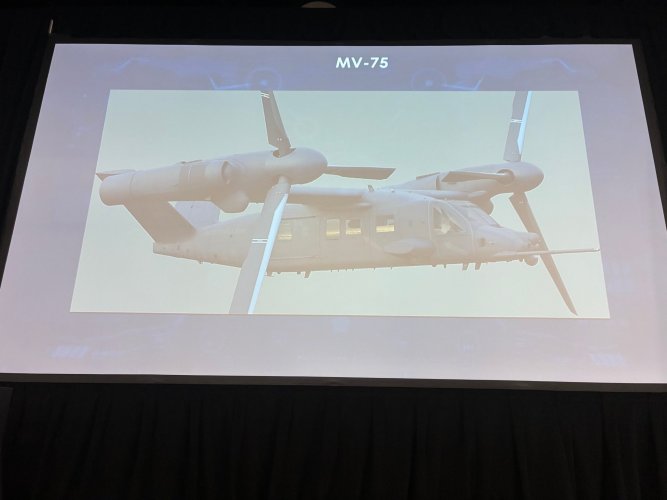
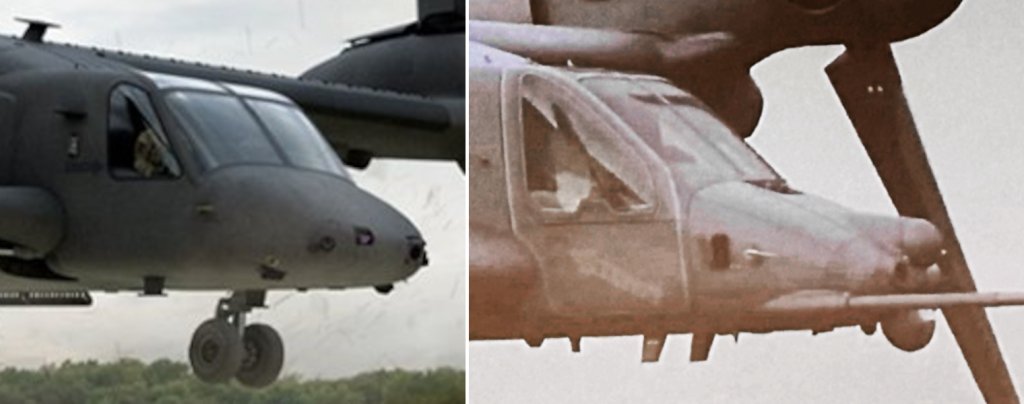
Here is a rendering depicting the MV-75 Cheyenne II configured for special operations and/or Combat Search and Rescue (CSAR). 
Source (X fka twitter):
View: https://x.com/i/status/2044518903758430581
Edit:
Another source:
https://www.twz.com/air/first-look-at-what-a-night-stalker-mv-75-cheyenne-will-look-like
Source (X fka twitter):
View: https://x.com/i/status/2044518903758430581
Edit:
Another source:
https://www.twz.com/air/first-look-at-what-a-night-stalker-mv-75-cheyenne-will-look-like
Attachments
Last edited:
Since tribe leaders are also allowed (Black Hawk, Little Bird) my personal vote would have gone for "Crazy Horse". Would be fitting for the US Army's first venture into tilt-rotors!There are still a lot of unused tribal names, and honestly Crow would have fit perfectly between Army tribal names and the bird names.
Similar threads
-
 Bell Helicopter Hybrid Tandem Rotor - The DEW Line
- Started by flateric
- Replies: 20
-
 US Army's 1990s Armored Systems Modernization (ASM) Program (FIFV, Block III Tank, Crusader)
- Started by RyanC
- Replies: 81