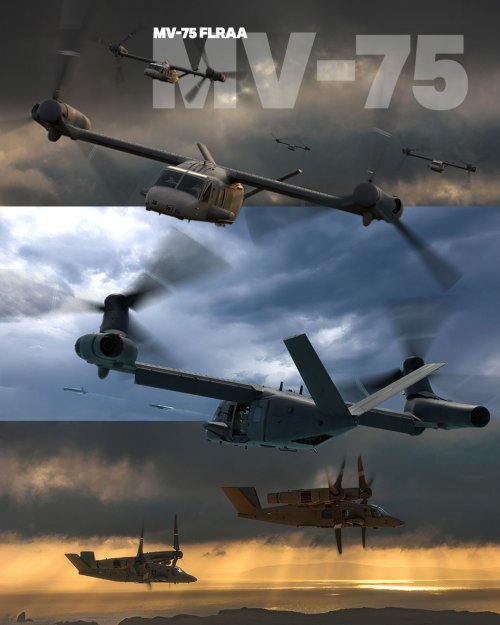
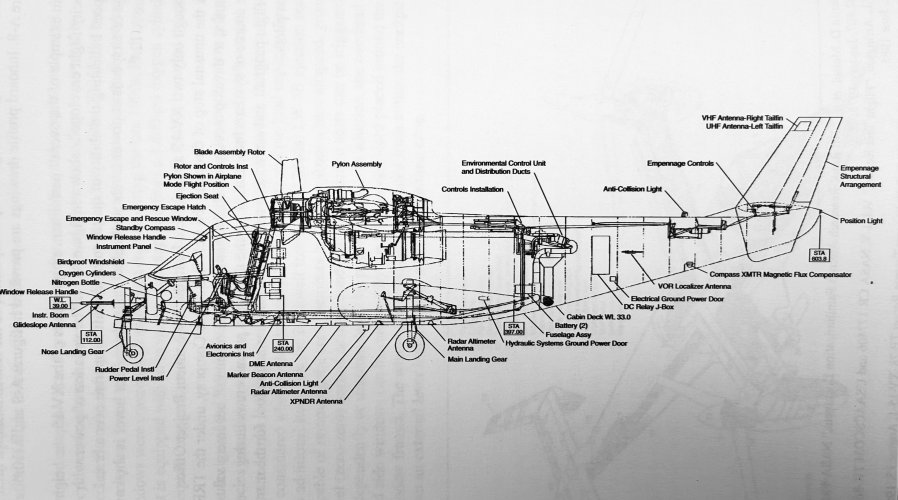
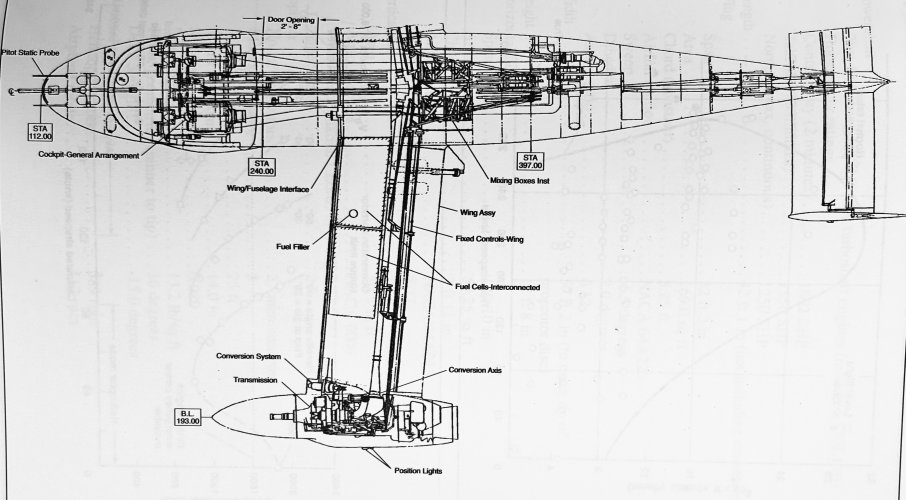
Bell MV-75 Cheyenne II (aka V-280 Valor)

Here is a shocker for you. AW&ST posted on X that MV-75 might have a budget shortfall. That likely means that flying the first prototype is not going to happen as early as desired.
The mantra of "good/fast/cheep" remains viable.
 
https://www.dvidshub.net/news/557864/us-army-redstone-test-center-ready-flraa

Some interesting news on how the U.S. Army plans to test MV-75


An interesting article. However even with the likelihood that components for MV-75 will be made in Canada, given the current spat between neighbors, and the likely cost of the platform I cannot see Canada going in this direction.
 

An interesting article. However even with the likelihood that components for MV-75 will be made in Canada, given the current spat between neighbors, and the likely cost of the platform I cannot see Canada going in this direction.

Geopolitical issues between the US and Canada notwithstanding, I wouldn’t count the MV-75 out when you factor in Bell’s considerable presence in Canada.

No other rotorcraft manufacturer has nearly the number of employees or overall industrial impact, and this is something that the Government of Canada will consider.

An order for Airbus or Leonardo aircraft ultimately pays salaries and R&D and advances in Europe, not Canada. An order with Bell could be seen as doing far more for the Canadian economy, with Bell having manufacturing, engineering, support, etc. teams all based in Quebec.
 
Geopolitical issues between the US and Canada notwithstanding, I wouldn’t count the MV-75 out when you factor in Bell’s considerable presence in Canada.

No other rotorcraft manufacturer has nearly the number of employees or overall industrial impact, and this is something that the Government of Canada will consider.

An order for Airbus or Leonardo aircraft ultimately pays salaries and R&D and advances in Europe, not Canada. An order with Bell could be seen as doing far more for the Canadian economy, with Bell having manufacturing, engineering, support, etc. teams all based in Quebec.
Exactly.

Jobs in Quebec means tax revenues.
 
Nothing ITAR is done in Bell's Canadian facility. That could change with a lot of paperwork, but right now, an MV-75 for Canada would have zero Canadian content.
Respectfully, that is incorrect.

A significant volume of CH-146 work is done in the facility, both engineering/technical support as well as physical upgrade work. The Griffon is an ITAR-controlled aircraft.

Their Canadian facility also regularly installs ITAR-controlled WESCAM cameras and other avionics into aircraft.

Further, every MV-75 will seemingly have Canadian content: https://www.safran-group.com/pressr...future-long-range-assault-aircraft-2023-09-25

Safran Landing Systems is supplying the Landing Gear.
 
Respectfully, that is incorrect.

A significant volume of CH-146 work is done in the facility, both engineering/technical support as well as physical upgrade work. The Griffon is an ITAR-controlled aircraft.

Their Canadian facility also regularly installs ITAR-controlled WESCAM cameras and other avionics into aircraft.

Further, every MV-75 will seemingly have Canadian content: https://www.safran-group.com/pressr...future-long-range-assault-aircraft-2023-09-25

Safran Landing Systems is supplying the Landing Gear.
Okay, fair. ITAR was too broad of a terminology. Still, there have always been significant barriers to doing new military work with Bell Canada. It obviously can be done with enough paperwork in place.
 
Will the MV-75 have a folding wing so it can be transported by ship or aircraft? Right now, it looks like it would have to self-deploy anywhere.
 
@Not James Stockdale : It seems the Army was not interested. Bell has proposed a swiveling wing since the first days of the program, specifically for the USMC and Navy, but we haven´t seen any work done further on this offer.
I would agree that most aircraft will certainly safe deploy and that the top mounted wing should be removable without any detrimental loss of time, not quickly but easily and that could be regarded as enough.
 
https://verticalmag.com/news/bell-a...e-fuselage-as-program-acceleration-continues/

"The wing for the first MV-75 tiltrotor prototype has been built, and Bell has begun assembly on the aircraft’s fuselage, the company says."

About as close to building an aircraft in flight as you can get.

Sure hope the test pilots are getting triple digit salaries, as their insurance premiums are likely astronomical.

Seriously, lets hope the software for this fly by wire aircraft is progressing carefully.
 
yasotay,

The MV-75 software and entire flight control system is not being rushed. The flight control system architecture in the MV-75 uses the unique Bell and Moog Aerospace design architecture that has been in continuous development for over 30 years to support use on commercial FBW rotorcraft.

The MV-75 flight control system has very little hardware and software DNA from the V-22. Instead the MV-75 flight control system is a direct descendent of the Bell 525 Relentless.
 
https://verticalmag.com/news/bell-a...e-fuselage-as-program-acceleration-continues/

"The wing for the first MV-75 tiltrotor prototype has been built, and Bell has begun assembly on the aircraft’s fuselage, the company says."

About as close to building an aircraft in flight as you can get.

Sure hope the test pilots are getting triple digit salaries, as their insurance premiums are likely astronomical.

Seriously, lets hope the software for this fly by wire aircraft is progressing carefully.
What drives the specific skepticism regarding MV-75 software and the comments about insurance premiums and test pilot salaries? What about this aircraft is scarier or more dangerous than any other test rotorcraft?

If I recall the demonstration phase between V-280 and SB-1 correctly, the Valor flew on time and flew way more hours during the contracted OTA phase - additionally the Bell team would have 525, 360, and AW-609 FBW experience in house, not to mention V-22.
 
What drives the specific skepticism regarding MV-75 software and the comments about insurance premiums and test pilot salaries? What about this aircraft is scarier or more dangerous than any other test rotorcraft?

If I recall the demonstration phase between V-280 and SB-1 correctly, the Valor flew on time and flew way more hours during the contracted OTA phase - additionally the Bell team would have 525, 360, and AW-609 FBW experience in house, not to mention V-22.
And XV-15 if that had any FBW.
 
The 525 flight program suffered a lethal accident that resulted in the loss of life of two test pilots with obviously the FBW FCS getting a huge amount of scrutiny (I’m no expert. Please explore and come to your own conclusions).

Thats probably where the anxiety stems from; have Bell evolved their FBW expertise sufficiently to make the leap (as it were) from a classic rotary wing to a tilt rotor in a way that minimizes crew and therefore program risk?
 
The tragic loss of the 525 flight test aircraft and crew resulted from an unforeseen combination of events during simulated engine loss that excited a severe fuselage bending mode vibration. This information can be found online from multiple sources that cite the FAA report.

The 525 flight control system architecture was originally designed for the 609 Tiltrotor to meet a E-9 probability of catastrophic failure. The MV-75, 525, and 609 share the same architecture. Due to delays in FAA certification of both the 609 and 525 this flight control system architecture has accumulated thousands of flight test hours and tens of thousands of hours in simulation labs.
 
Last edited:
Here is a shocker for you. AW&ST posted on X that MV-75 might have a budget shortfall. That likely means that flying the first prototype is not going to happen as early as desired.
The mantra of "good/fast/cheep" remains viable.
On time, meets requirements, on budget. Pick any two.
 
The actual text of the Aviation Week article referenced reads:

‘Rising costs could trigger a $60-110 million reach-forward loss for Bell on the first production versions of the MV-75 tiltrotor aircraft, a Textron executive warned market analysts Jan. 28. The potential charge reflects “higher costs than originally anticipated when the program was bid in 2021’.

The US Army customer has requested an acceleration of the program to deliver the first aircraft for evaluation as soon as possible. The plan is to initiate manufacturing of aircraft for Army evaluation concurrent with aircraft flight testing. This is not a cost overrun on an existing contract, but a requested change in contract by the customer to accelerate deliveries.
 
Sorry, the XV-15 had mechanical flight controls with high authority augmentation. It also had an incredibly complex mixing mechanism for phasing between helicopter and airplane modes.
I stand corrected , I thought it was FBW, thanks for the clarification.
 
I am clearly in favor of this program and want it to succeed. My concern is that the pressure to meet the customers desires and timelines while attempting to keep cost under control (Nunn-McCurdy does not care) can lead to pressures. Bell Flight has a very professional workforce I have no doubts. Can we say the same for all of the hundreds of sub-contractors?
It is a wariness that the loss of a prototype to reversed wires (not that it could happen...) or some such thing will get this program into much difficulty.
Clearly @CTR has expert knowledge of tilt rotor programs, so I certainly defer to him/her for best understanding on these things.

 
Don’t sweat it Hydroman. You would not believe how many Bell employees believe that Tiltrotor aircraft would be uncontrollable without FBW flight controls.
I'd think they'd have had to figure it out with the XV-3.
 
yas
I am clearly in favor of this program and want it to succeed. My concern is that the pressure to meet the customers desires and timelines while attempting to keep cost under control (Nunn-McCurdy does not care) can lead to pressures. Bell Flight has a very professional workforce I have no doubts. Can we say the same for all of the hundreds of sub-contractors?
It is a wariness that the loss of a prototype to reversed wires (not that it could happen...) or some such thing will get this program into much difficulty.
Clearly @CTR has expert knowledge of tilt rotor programs, so I certainly defer to him/her for best understanding on these things.
yasotay,

I like you hope Bell does not forget the hard lessons learned from the V-22 program. Especially since it has been over 40 years since the V-22 was originally designed. What gives me faith Bell will be more successful with MV-75 flight control system development are;

A) The V-22 was one of the first FBW production rotorcraft ever built. The MV-75 will be the third designed by Bell 40 years later.

B) The FBW V-22 was preceded by the much smaller mechanical flight control XV-15. The FBW MV-75 was preceded by the V-280 demonstrator of similar size and common flight control system architecture.

C) Boeing contracted with five different suppliers to provide major flight control system components on the V-22 and had responsibility for total system integration. Bell and Moog Aerospace are teamed to develop the MV-75 flight control system and together are integrating the system. Bell and Moog have a strong relationship working together for over three decades.
 
Last edited:
Don’t sweat it Hydroman. You would not believe how many Bell employees believe that Tiltrotor aircraft would be uncontrollable without FBW flight controls.
I assume the XV-15 aero design is a stable platform and that would make sense where you can use a mechanical FCAS, is the XV-15 a hydromechanical FCAS or purely mechanical? From info I had seen previously, the Boeing Bird of Prey uses an all mechanical FCAS in order to keep things simple, hence the drooped wing tips for stability, BoP could be a little bit of a handful to fly. Strakes were also added I think to the main gears when the BoP gear was deployed in order to improve gear-down stability.
 
The XV-15, V-22, 609, and V-280 are all dynamically stable designs. All three can be safely flown with zero augmentation in benign flight conditions. FBW on the V-22 and 609 without augmentation is known as direct mode and emulates fixed mechanical mixing schedules.

On the XV-15 the SCAS and force feel systems for the pilots are hydro-mechanical.
 
Not only less set on how to fight, but also in how to fly. In the 70’s and 80’s high flight hour USMC pilots transitioning from A-4 Skyhawks to the AV-8 Harriers accumulated more accidents than much less experienced pilots. It’s difficult to unlearn what has become instinctive.
 
Not only less set on how to fight, but also in how to fly. In the 70’s and 80’s high flight hour USMC pilots transitioning from A-4 Skyhawks to the AV-8 Harriers accumulated more accidents than much less experienced pilots. It’s difficult to unlearn what has become instinctive.
In fairness it is hard to "forget" muscle memory. Espcially in high stress situations. You are going to have some of the old school in the aircraft at first. However you are correct and it is a well known challenge.
 
Not sure we are reading the same article. I read there were schedule and funding challenges, not technical challenges.
Schedule challenges are usually brought on because something is not working as planned. To be sure funding is always a point of contention but more money is needed because a. cost increase, b. they have to pay people to figure out why the "widget" does not fit the "thingamadoodle" (my technical terms).

But yes, you are correct, they did not say technical challenges, but I doubt they would say that regardless.
 
Another problem is that a lot of technical challenges result from some project manager, bean counter, or politico (uniformed or otherwise) trying to be 'cost efficient' and cutting corners to save a few pennies.
 
Back
Top Bottom