Bell MV-75 Cheyenne II (aka V-280 Valor)

I would hope LM-Sikorsky can pull this revision back into the next-gen USN helo (I very much doubt the USN will go tilt rotor). The cabin stretch, improved rotor blades, and upgraded engines is basically just what the doctor ordered for an "MH-60X" naval helo.
And the USCG with the cramped space in the HH-60J/MH-60T Jayhawk for rescue and medical activities.

That 6" taller cabin will be a big help, and even just 12" longer makes a difference.

 

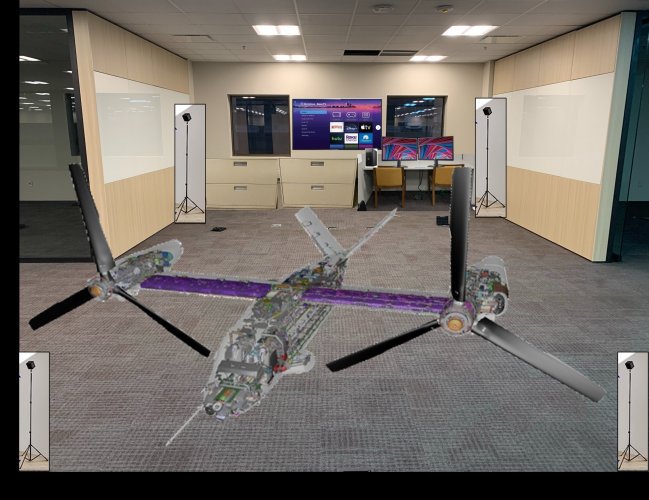
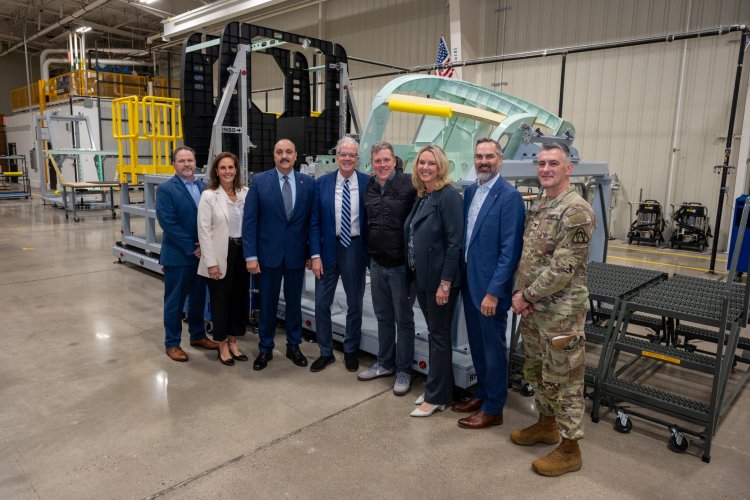
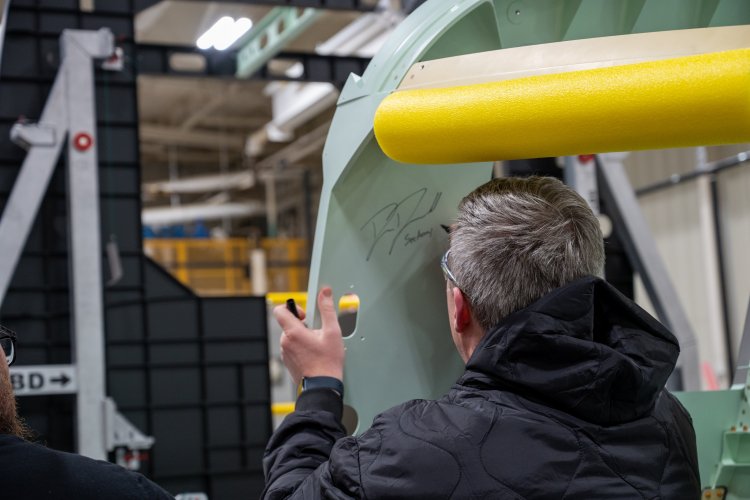
Army article about the FLRAA program. Included are also a few pictures, most of note to me are a shot of what looks like a simulator and a shot of a digital twin model (though it isn't really the focus of the picture).
 

Attachments

  • mv75_1.jpg
    mv75_1.jpg
    379.6 KB · Views: 150
  • mv75_2.jpg
    mv75_2.jpg
    1.2 MB · Views: 152
Last edited:
That I doubt.

Remember that a modern "lightweight" ASW torpedo is still some 800lbs. You want that as close to CG as you can get it, which likely means on a little stub pylon in line with where the rotor mast is.

Not that the next Naval helo won't have ESSS wings in addition, for when you're hanging Hellfires/JAGMs or APKWS on it.

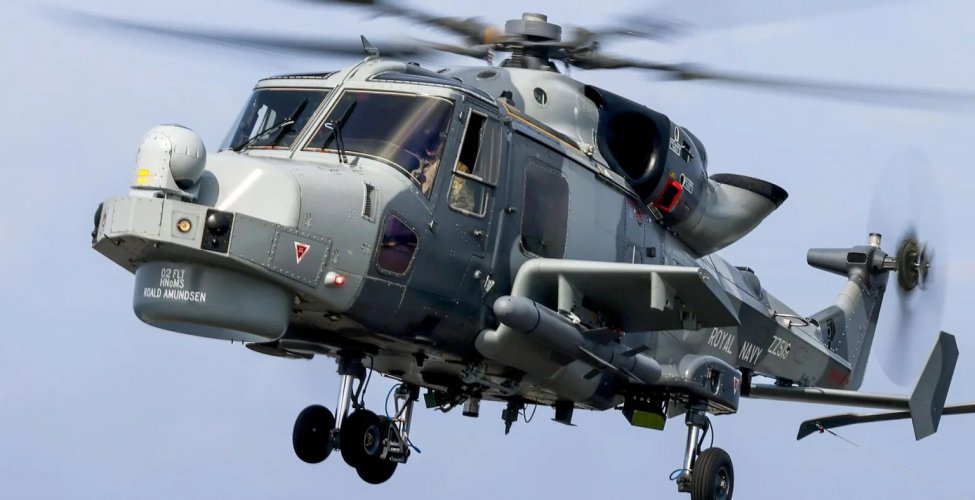
That's pretty much what I was thinking of. Something like the wings on the Wildcat that are specifically for non-torpedo armament.

1759518178684.jpeg
 

Interesting to see the level of risk the U.S. Army is now willing to take with this program. Completely "out of the box" from the slow JCIDS of old. This is going to be an interesting couple of years I think.


Not a lot new here, but some.of the sub-contractors are mentioned. The diversification certainly helps with necessary political support, but it also potentially increases risk with the acceleration

 
Last edited:

Latest on the program from the Army Aviation leaders.


Much the same but with a few more details.
 
Last edited:
It´s mated to a new Gearbox that has a specific geometry (90+ degree). The V-22 has nacelles that pivot entirely ;)
 
It´s mated to a new Gearbox that has a specific geometry (90+ degree). The V-22 has nacelles that pivot entirely ;)
To be sure there is no "free lunch", but there is no requirement now for dual oil systems and other engine trickery associated with V-22. I can only imagine that both Bell and the government are watching that particular dynamic very closely.
 
It´s mated to a new Gearbox that has a specific geometry (90+ degree). The V-22 has nacelles that pivot entirely ;)
Right. So you don't need to test the engine for sustained operations at oddball angles like the V-22 does (FFS the white tops don't seem to use flight mode at all around DC!)

And that gearbox normally stays flat with only part of it turning vertical. We've been building gearboxes like that for a hundred years or more to use in milling machines! And have been running them under heavy load and computer control since the 1980s and early CNC machines.
 
Obviously this is not Sci-fi. But a gearbox is all about reliable power transmission in front of the associated mechanical loads, Add the lightweight requirements that deprives you of using raw material mass as a shield against vibrations and you have an entirely new playground for mechanical engineers with a real problem to solve that explains the lengthy process with extended testing.

It's also quite clear that DoD's appetite for tilt rotors would hardly survive a repeated fleet grounding and human losses. Better doing it good and take the appropriate time.
 
Last edited:
First airframe expected in service for 2026:

The U.S. Army will field the long-anticipated Bell MV-75 tiltrotor aircraft this year ahead of its former schedule, Army Chief of Staff Gen. Randy George announced at the Army’s Senior Leader Sitrep town hall meeting that premiered online today.

 
The actual wording he used seems to just be referring to the first prototype aircraft being delivered, which has been planned for this year for a while now.
 
First airframe expected in service for 2026:


What was actually said:
Um, second thing is we're changing how we buy things. Um, and the secretary gave a couple of quick examples, but, you know, we were we went and we were talking about, um, the new aircraft and we have a new tiltrotor aircraft, and it was supposed to be delivered in 2031, 20, 32. And we said, no, we need it, you know, very quickly. And at the end of that this year, we will actually have those flying in, out in formations in both Campo one and Campo two. And in our soft formations, those will be we will be flying those aircraft. We mentioned next gen squad weapon. Who in here is actually, um, had a chance to mess around with next gen squad weapon?
 
As I have supposed earlier, this aircraft is so much transformational for the Army that it could follow the path of the Mustang with early versions entering service w/o an overly sophisticated development. A basic version that sticks to the V-280 demonstrator but with all military systems fitted from off the shelf hardware.
That is why I am less skeptical than most about 2026 as an objective.
 
I actually think there’s a lot to be said about how the Marines have a take-what-we’re-given-when-we’re-given-it -type approach with Osprey, F-35B and potentially UCAS.

I kinda like this Edward Scissorhands in a Sprint approach to MV-75. Let’s see if it pays off.
 
I actually think there’s a lot to be said about how the Marines have a take-what-we’re-given-when-we’re-given-it -type approach with Osprey, F-35B and potentially UCAS.

I kinda like this Edward Scissorhands in a Sprint approach to MV-75. Let’s see if it pays off.
You give the Marines anything, they'll make it work.
 
From AWST….

“The Advanced Single Main Rotor (A-SMR) concept proposes adding a hybrid-electric drivetrain to increase the range to 500 nm from the Seahawk’s current maximum of 220 nm.”
Adding an electric motor to the rotor mast? ~300rpm motor

Or adding an electric motor to the input side of the transmission? 6000rpm motor

Which is more efficient, 300rpm or 6000rpm?


I actually think there’s a lot to be said about how the Marines have a take-what-we’re-given-when-we’re-given-it -type approach with Osprey, F-35B and potentially UCAS.

I kinda like this Edward Scissorhands in a Sprint approach to MV-75. Let’s see if it pays off.
I fully expect the Corps to buy MV-75s to replace all their UH-1s. I'm not sure about their AH-1s yet, I still think that should be a different fuselage than the MV-75.


You give the Marines anything, they'll make it work.
But if they can get something made to their specifications, they'll do it.
 
Does a black box warning or disclaimer really need to be added every time a LMT proposal is discussed?

My point was merely that going fast has tradeoffs, but it also an effective countermeasure against real or vaporware competitive, alternative solutions.

Finally my comment about the Corps was only about their appetite to take on prematurely delivered systems and learn to fight them, warts and all. Ofc this is a function of budget and resource constraint, but I was merely observing going fast, no matter the reason, has it’s advantages, and extending the hope some of those same dynamics might be tailwinds for the MV-75 program for US Army Aviation.

Finally, it is almost certain the USN is closely watching this program as it fine tunes its potential requirements for a putative navalized variant. As it did with the Black Hawk.
 
Finally, it is almost certain the USN is closely watching this program as it fine tunes its potential requirements for a putative navalized variant. As it did with the Black Hawk.
I still think that the USN will end up buying another version of the H-60, just with T901s and maybe that hybrid setup. Probably based on the Mitsubishi H-60K or J Kai, the stretched version that is 6" taller and 12" longer through the cabin.

And Army SOC, the 160th SOAR, may end up getting those as well as some MV-75s, depending on whether the specific mission needs speed or hover performance.
 
I will be very happy to be proven wrong, however, I cannot believe that MV-75 will actually go to line units 2027. That implies that line pilots will be flying what are in essence prototypes. I do not think the U.S. Army (Air Corps) did that in WW2. They have just now started receiving components for the very first prototype, which may or may not fly (or even show up) this year. Bell was always very careful to explain that the V-280 was a demonstrator, NOT a prototype. No military systems, no armor, no survivability systems, etc. I can see the first prototype getting the sexy light show and dry ice entrance with somebody giving the "game changing," "paradigm shifting," speech this year, but not a company on the flight line at 101st Division.
Where do the pilots and maintainers get trained? USMC MV-22 flight training does not equate to being de facto an MV-75 qualified aviator. Where is the fleet of TMV-75 trainers to do the training? How many replacement parts are certified and available? Many, many things go into fielding a new aircraft.

There was a clarification from a spokesman that appeared to clarify that prototypes would be flying in 2027.

Will there be flying MV-75s in 2027? I think yes. I also think you will be able to count them on one hand with fingers left over.

There is a mantra in the U.S. DoW acquisition community; "Good, fast, cheap." "Pick two." Clearly the U.S. Army is going for "Good" and "Fast."
 
I will be very happy to be proven wrong, however, I cannot believe that MV-75 will actually go to line units 2027. That implies that line pilots will be flying what are in essence prototypes. I do not think the U.S. Army (Air Corps) did that in WW2. They have just now started receiving components for the very first prototype, which may or may not fly (or even show up) this year. Bell was always very careful to explain that the V-280 was a demonstrator, NOT a prototype. No military systems, no armor, no survivability systems, etc. I can see the first prototype getting the sexy light show and dry ice entrance with somebody giving the "game changing," "paradigm shifting," speech this year, but not a company on the flight line at 101st Division.
Where do the pilots and maintainers get trained? USMC MV-22 flight training does not equate to being de facto an MV-75 qualified aviator. Where is the fleet of TMV-75 trainers to do the training? How many replacement parts are certified and available? Many, many things go into fielding a new aircraft.

There was a clarification from a spokesman that appeared to clarify that prototypes would be flying in 2027.

Will there be flying MV-75s in 2027? I think yes. I also think you will be able to count them on one hand with fingers left over.

There is a mantra in the U.S. DoW acquisition community; "Good, fast, cheap." "Pick two." Clearly the U.S. Army is going for "Good" and "Fast."
Agreed. The MV-75 an all-new aircraft... I think we'll see the first couple of flight test aircraft flying in 2027 but it's a stretch of the language to call that "entry into service".
 
As I have supposed earlier, this aircraft is so much transformational for the Army that it could follow the path of the Mustang with early versions entering service w/o an overly sophisticated development. A basic version that sticks to the V-280 demonstrator but with all military systems fitted from off the shelf hardware.
That is why I am less skeptical than most about 2026 as an objective.
There will be zero part commonality between the V-280 demonstrator and the MV-75 production aircraft. It's an all-new design with different design criterial, engines, mission requirements, required mission equipment, supply chain, etc. It's not going into service in 2027. Flight test? Sure.
 

Air Assault 2.0. 101st Air Assault Division practicing for the arrival of MV-75.

In other news (behind a AW&ST pay wall) Textron reports it might be seeing a $60-100M loss up front with acceleration of MV-75.

Remember: good/fast/cheap ... pick two.
 
Back
Top Bottom