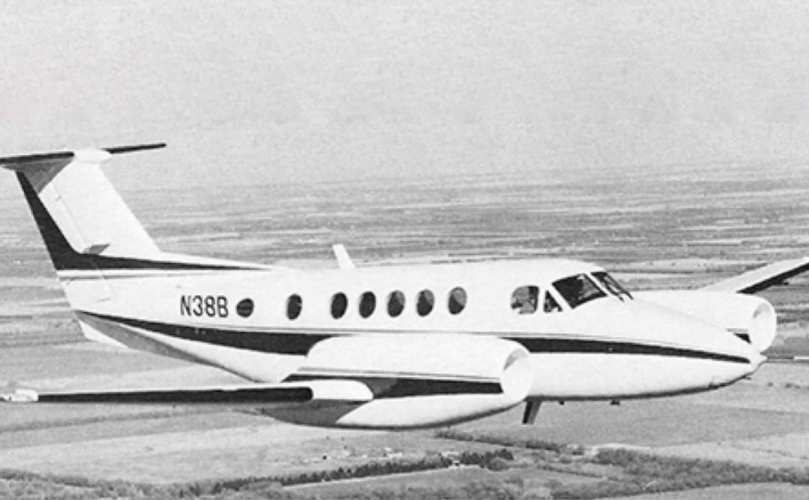
Beechcraft "King Air 400" / "Fanjet 400" (PD-290)

simkid22

ACCESS: Restricted
Joined
10 April 2007
Messages
4
Reaction score
1
Over on Wiki there was mention of a King Air that was designed to enter the private jet market...does anyone have anymore information on it and maybe some plan views? From the description, it kinda sounds like a weird predecessor to the Honda Jet.

PD 290

The King Air 200 design proved to be sound, and so Beech considered a jet-powered version in the mid-1970s. The first prototype King Air 200 was re-engined with Pratt & Whitney Canada JT15D turbofans in overwing nacelles. Given the designation PD 290 (for Preliminary Design), the aircraft was flown in this configuration for the first time on 12 March 1975. Beech did not pursue production, and the last flight was made on 30 September 1977. Beech later purchased the Mitsubishi MU-300 Diamond design, producing it as the Beechjet 400.
 
No plan views (sorry) but, IIRC, it was more like the early EMB-145/ERJ-145 studies where the turbofans were mounted directly on top of a more-or-less unchanged Brasilia wing (as opposed to the Honda Jet's VFW 614-style pods).

The point of the Embraer exercise was maximum commonality between EMB-145 and EMB-120. I'm guessing that Beech had the same thing in mind with King Air and PD290 components.
 
I do believe this is the beasty you're looking for... info and photo's seem to be very thin on the ground, there's a rumour that the a/c still exists engineless at boulder colardo though...

Zeb
 

Attachments

  • beech_fanjet.jpg
    beech_fanjet.jpg
    30.2 KB · Views: 252
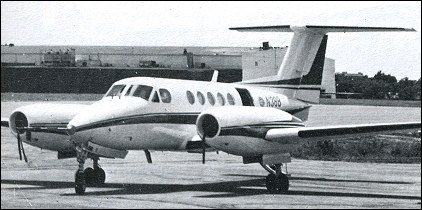
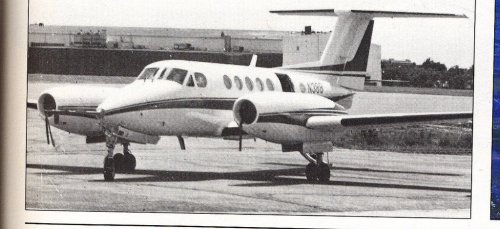
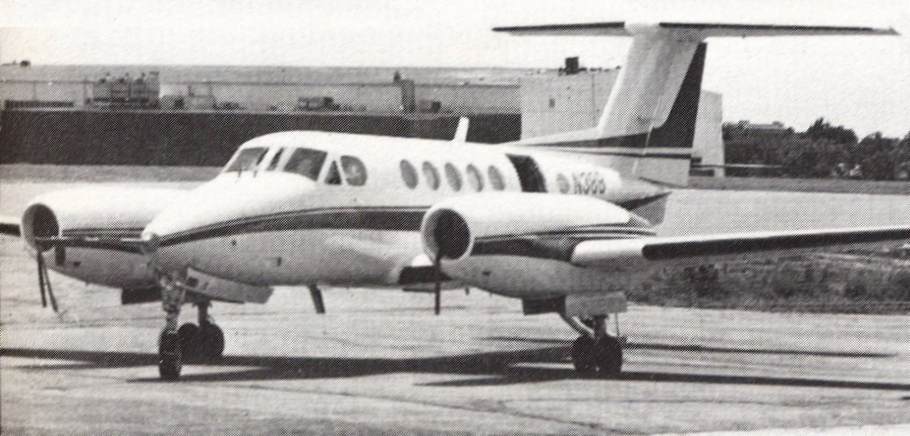
One of Beechcraft's lesser known efforts has got to be the single King Air 400 (Model PD-290), a 1975 experimental turbojet conversion of a King Air 200.

When Cessna unveiled its Citation in 1972, it was evident that at least some of Beech's future markets would have to be in jets, so in 1975, Beech built a testbed for jet aerodynamics and systems. Using the first King Air 200 prototype, engineers replaced the two turboprops in the wing nacelles with two Pratt & Whitney JT-15D-4 turbojets. The rather striking PD (Preliminary Design) 290 accumulated 93 hours on 103 flights between March 1975 and September 1977, apparently gathering enough information to convince the company to resume the search for a ready-built design. In late 1985, Beech announced it had purchased the design, tooling and rights to manufacture and market the Mitsubishi 300 jet.

Source

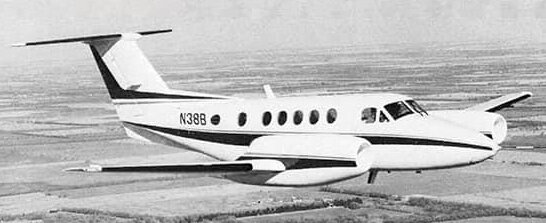
The prototype was modified from the very first King Air 200 (c/n BB-1), which had been registered on Oct 27, 1972 as N38B. Its later disposition is not known very precisely, but presumably it was reverted to King Air 200 configuration with PT6A engines, and was written off in March 1980.

Any other pics or info would be much welcome!!
 

Attachments

  • PD-290.jpg
    PD-290.jpg
    358.1 KB · Views: 196
Hi Stéphane,
this is the only other picture I know of.
 

Attachments

  • BEECHCRAFT Model PD-290 Fanjet 400.doc
    524.5 KB · Views: 79
It's hard to imagine what they hoped to learn from a mash-up like this in 1975. This is the sort of thing produced in the late 40's to gain experience with jet design and operations. By 1975, that experience was widely available even if Beech didn't have it in-house. To justify the expense of kluging this together, the lessons to be learned must have been tied to the King Air configuration or specific systems.
 
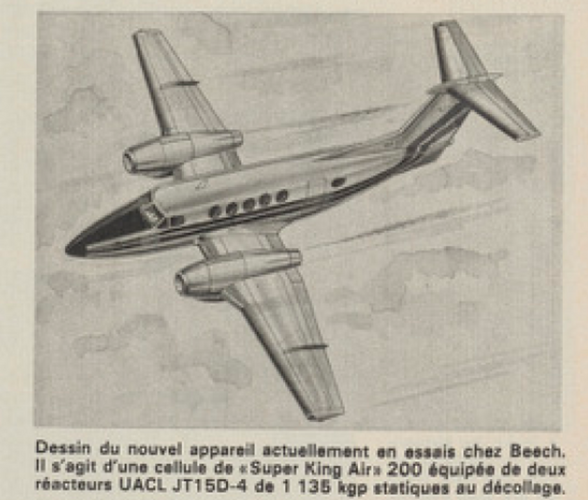
From Aviation magazine 1975.
 

Attachments

  • 8.png
    8.png
    821.3 KB · Views: 154
A little more on the Beechcraft PD-290:

Back in the 1970s, when Beechcraft was still determining the best way to enter the light jet market, they experimented with this King-Air.
The airframe initially served as the very first King-Air 200. When it was finished serving that role, the turboprops were removed and two JT-15 turbofan engines (like those used on the Cessna Citation) were installed.
Known as the PD-290 when fitted with the turbofans, it actually flew in two different configurations...first, with standard exhaust, and later with a “blown wing”, where the engine exhaust was ducted over the top of the wing to create additional lift.
Apparently, because the engines had significant residual thrust at idle and because the relatively small wheels lacked antiskid, the PD-290 was challenging to get stopped even on a 5,000 foot (1,524m) runway.
As is the case with many testbeds, the PD-290 was eventually parted out, but the nose section went on to live a second life as a simulator.
Ultimately, of course, Beechcraft simply bought the rights to the Mitsubishi MU-300 Diamond, developed it the Beechjet 400, and used that as their ticket into the light jet market.
Source: Jason McDowell's Facebook page

1750586537914.png

1750586590486.png
 
8-png.749306
From Aviation magazine 1975.
Actually, this was not a project, but a real prototype, the sole Beechcraft King Air 400 (or Fanjet 400), the company's first jet-powered aircraft since the Jet Mentor, purely intended as a testbed and for R&D purposes. Also designated PD-290, and first flown during March 1975, it was produced by modifying the first Super King Air 200 prototype [N38B]. The aircraft featured two wing-mounted 2,500lb P&W JT15D-4 (or -5) turbofan engines, replacing the P&W PT6A turbines. The project was halted in September 1977, and later Beechcraft acquired the Mitsubishi MU-300 rights to produce it as the Beechjet 400. The PD-290 was reportedly returned to standard Super King Air standards later on.
1760004768821.png 1760004533231.png
 
Last edited:

Similar threads

Back
Top Bottom