Beechcraft "Bonanza" derivatives

Piorun

ACCESS: Restricted
Joined
19 March 2010
Messages
2
Reaction score
0
Would the Super-V Bonanza qualify in this category? Five were built. In the early 90's, my friend Fred and I were exploring small airports, and at the West Texas Airport in El Paso, behind a Vickers Varsity which had crashed on landing there, and in the back corner of a hanger was N551B, a plane we had never seen before or even heard of; a V-tailed twin engined Bonanza.
-John Emery
Cedar Hill, Texas
 
Piorun said:
Would the Super-V Bonanza qualify in this category? Five were built. In the early 90's, my friend Fred and I were exploring small airports, and at the West Texas Airport in El Paso, behind a Vickers Varsity which had crashed on landing there, and in the back corner of a hanger was N551B, a plane we had never seen before or even heard of; a V-tailed twin engined Bonanza.
-John Emery
Cedar Hill, Texas

Oh my! Sure. Don't think I even heard of anything like it... and I thought I knew quite a bit about rare Beechcraft! Do you have a picture of it?
 
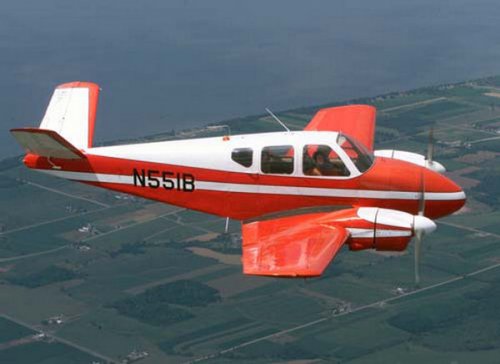
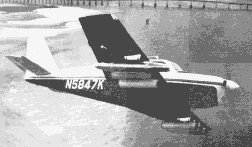
N5511B seen by Piorun was a Bay Aviation Super V conversion of the V-tailed Bonanza. I understand that some 14 were actually produced including 5 in Canada by Fleet Manufacturing. A prototype flew in 1956 and was built by Mr. David G. Peterson and his Skyline, Inc. Rights then went to Oakland Airmotive (later renamed Bay Aviation). The modifications to twin engine were so extensive that the Super V was certificated as new aircraft by the FAA.
Attached a photograph. I understand that at least one Super V is still flying around in he USA
 

Attachments

  • Bay Super V.jpg
    Bay Super V.jpg
    40.2 KB · Views: 406
Thanks for shedding light on this rare bird, John and Walter!
 
Super-Vs rights were transferred from Peterson Skyline, Tulsa to Bay Aviation Services, Oakland in 1959. The prototype conversion (c/n SV 101) was flown around the world by Chuck Banfe in Oct 1960.

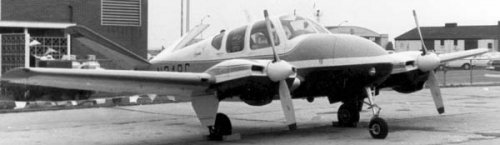
In 1961, rights were transferred to Fleet Aircraft (Fort Erie, Ontario). The five Fleet new-build Super-Vs (presumably from Beech-supplied Bonanza components) were built in 1962/1963. Serials for the Fleet Super-Vs were SV 112-SV115, and SV 117.

For some reason, Bay assigned construction numbers SV 110 and SV 111 but the aircraft were not built. Does anyone know why?

http://www.airbum.com/articles/ArticleSuperVTwinBonanza.html
http://www.beechcraftheritagemuseum.org/collection/N3124V.php
 

Attachments

  • fleet-super-v.jpg
    fleet-super-v.jpg
    17.8 KB · Views: 361
Piorun said:
Would the Super-V Bonanza qualify in this category? Five were built. In the early 90's, my friend Fred and I were exploring small airports, and at the West Texas Airport in El Paso, behind a Vickers Varsity which had crashed on landing there, and in the back corner of a hanger was N551B, a plane we had never seen before or even heard of; a V-tailed twin engined Bonanza.
-John Emery
Cedar Hill, Texas

I have been to that same airport and seen that same twin bonanza, and that crashed Vickers too. That twin engine bonanza is at least like a real bonanza, what Beechcraft called a twin bonanza, was an entirely different aircraft than a bonanza.
 
The Revista Aérea Collection at the NASM Archives has photos a "Beech-Paraguay Paraguay 1, prototype".

Any idea what this is and when it was built?? :eek:
 
Hello Stéphane :D
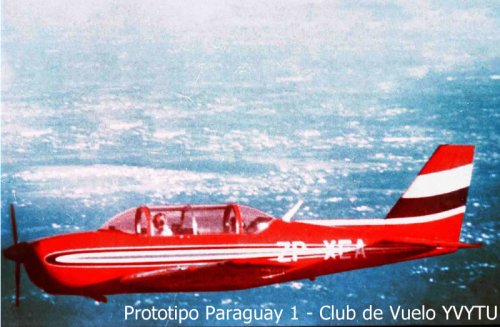
I think the plane you mean is the Paraguay 1 of AeroTalleres Guarani and I think it is still active with the Flight Club Deporyivo Yvytu at San Bernardino, Paraguay.
on http://www.yvytu.org/2006/?page_id=141 there are some pictures.
What I gathered is following:
Registration ZP-XEA and claimed to be indigenous design, but clearly a lot of features of the Debonair/Bonanza family. Developed under leadership of Messrs. J.Repka Kusi and W.Fagundez (of AeroTalleres Guarani SA, the builders) and first flight 27 November 1981. wingspan 35.105ft, length 24.606ft, height 9.612ft. Cruise 170 mph, ceiling 15,000ft, endurance 5.75 hours
Aimed at the Paraguayan AF as trainer. When no orders followed the aircraft became a club aircraft with the above aeroclub. I did not find what engine, but seems logical this is Bonanza/Debonair.

[link corrected]
 
Brilliant! Thank you so much for finding this rare aircraft.
With the link you provided I had enough leads to find more...

The ZP-XEA prototype, called Paraguay 1, was built by the firm AeroTalleres Guarani SRL (which translates as "Guarani Aero Workshops, Ltd."), owned by Messrs. Joseph Repka (Civil Aviation Pilot) and Mr. Walter Kusy Fagundez (structuralist and designer of the prototype).

Commander Airman Joseph Repka Kusi was born in the town of Carmen del Parana, Paraguay. He is also a pilot and an entrepreneur in the pharmacy business. With a broad smile, he very willingly agreed to this interview with a detailed overview of his great accomplishment of 24 years ago—at the end of 1981 to be exact. The fruits of his labor became a reality, and gave birth to the "first aircraft built entirely in our country."
  • How did the idea of building the first Paraguay airplane come about?
    AeroTalleres Guarani SRL in Guaraní was in partnership with Mr. Walter Fagundez, and it was exactly with this friend and partner that I developed this project.
  • How long did the construction take?
    From 1979 to 1981.
  • Was it built entirely in Paraguay?
    Yes, the design and also each part, forged and assembled by Paraguayan workers. Only the propeller and engine were imported from abroad.
  • What date was his first flight and who was the pilot?
    The first flight took place in the old Silvio Petirossi Airport on November 27,1981 and I had the great honor of being the test pilot for that plane.
  • How did you christen the first plane built?
    The ZP-XEA prototype was called the Paraguay 1.
  • What do the letters ZP-XEA mean?
    ZP- means that its nationality is Paraguayan and the letters XEA indicate an experimental advanced military version.
  • Who helped with the construction?
    Mechanics and assistants: in short, all the staff of AeroTalleres Guarani worked under the direction of Mr. Walter Fagundez and mine.
  • Is the plane still flying?
    It was donated to the Club de Vuelo Deportivo Yvytú(Yvytú Sports Flying Club) in San Bernardino and is still flying.

Technical data
(provided byJosephRepka):
  • Empty weight: 650 Kg
  • Autonomy: 5 hours 45 minutes
  • Payload: 600 Kg (bombs or rockets, placed under the wings).
  • Wingspan: 10.70 m
  • Length: 7.50 m
  • Height: 2.93 m
  • Glide Speed: 80 mph
  • Stall speed: 47 mph full PLAP
Sources:I've saved the two pictures and I'm attaching them here:
 

Attachments

  • paraguay1_catalogo.jpg
    paraguay1_catalogo.jpg
    114.4 KB · Views: 792
  • paraguay1b_catalogo.jpg
    paraguay1b_catalogo.jpg
    100.6 KB · Views: 711
Thanks Stéphane !
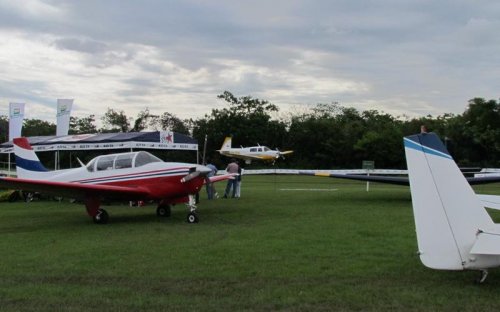
This photo shows the aircraft in 2011 during a fly-in. A different color schema. I think the Bonanza/Debonair ancestry is clear.
 

Attachments

  • Paraguay 1, photo.jpg
    Paraguay 1, photo.jpg
    48.3 KB · Views: 721
An earlier post talks about a Beech Bonanza mod for the USAF but no picture here's a picture. YAU-22A

Also I ran across a picture of a Bonanza with 2 engines but they were stacked one above the other. Unfortunately I didn't save it or know how to find it again. BeechYau-22A.jpg
 
Last edited:
Welcome aboard Cthornburg929,

and new Info about Bonanza with two engines ?.
 
There is some really interesting material in the two Bonanza books written by Larry Ball: "Those Incomparable Bonanzas" and "They called Me Mr. Bonanza"
 
I worked on the Beech D33 when I was in MRO. A beauty of an aircraft. I was using plenty of PPG PS 870 B1 2 on it though, old faithful I used to call it.
 
Welcome aboard sister Endaamelia,

and can I ask you if there were a projects,derivative of it ?.
 

Similar threads

Back
Top Bottom