
Atomic cannon submarine

Good lord! way too many big holes in the hull!!!!
I think you'd have to either find a way to make the turret rings watertight, or else design the entire gunhouse and barbette as a free-flood space. But with oil-fired steam plants, big holes for the uptakes and downtakes are unavoidable.

Sensible people use this as justification to not build such submarines. But the Royal Navy likes to pursue its own path at times.
 
I think you'd have to either find a way to make the turret rings watertight, or else design the entire gunhouse and barbette as a free-flood space. But with oil-fired steam plants, big holes for the uptakes and downtakes are unavoidable.

Sensible people use this as justification to not build such submarines. But the Royal Navy likes to pursue its own path at times.
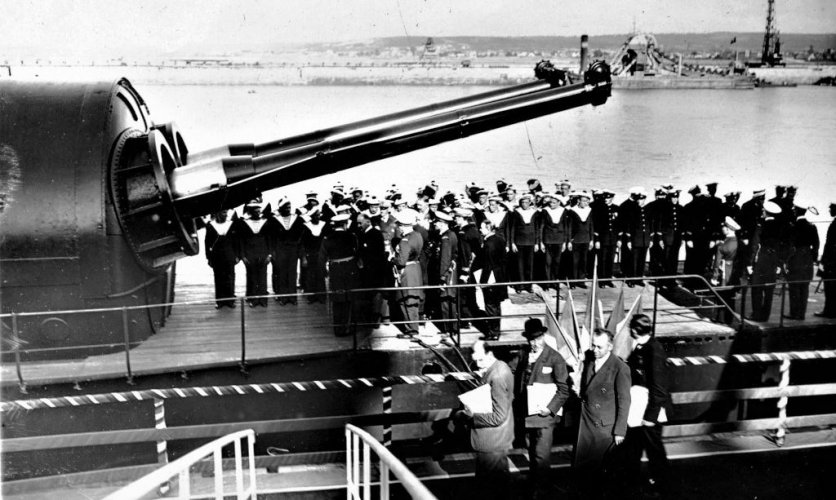
The RN steam-powered subs died due to the large holes required for uptakes and funnels. Lost at sea with most of their crews.

But I think you could make the turret rings watertight. At least watertight versus 300ft of water.
 
I think you'd have to either find a way to make the turret rings watertight,
Well, it's not as hard as it looks. The external pressure is trying to push turret into the hull, so as long as turret is sitting tight on the base, it basically works as any watertight hatch. You would need some kind of hydraulic jack to raise a turret a bit after surfacing (so it could rotate), but it isn't exactly a major problem - France used turrets of such type since late XIX century.
 
Well, it's not as hard as it looks. The external pressure is trying to push turret into the hull, so as long as turret is sitting tight on the base, it basically works as any watertight hatch. You would need some kind of hydraulic jack to raise a turret a bit after surfacing (so it could rotate), but it isn't exactly a major problem - France used turrets of such type since late XIX century.
The trick is to keep the waves from pushing the turret off the sealing surface as you're submerging or surfacing. A 20ft circle will let an immense amount of water in, even if the "crack" is only 3mm/1/8"

But once underwater safely you're 100% correct that the water pressure would push the turret down onto the sealing surface and do most of the work for you.
 
The trick is to keep the waves from pushing the turret off the sealing surface as you're submerging or surfacing. A 20ft circle will let an immense amount of water in, even if the "crack" is only 3mm/1/8"
True. Presumably the same jack that is required to raise the turret could be used in reverse - to push the turret down when sub is submerging, pressing it into base.
 

Similar threads

Back
Top Bottom