Ariane Group Missile Ballistique Terrestre / Missile Ballistique de Theatre (MBT)

muttbutt

ACCESS: Secret
Joined
31 January 2010
Messages
417
Reaction score
594
Could a MOD move this to the relevant thread if there is one please.

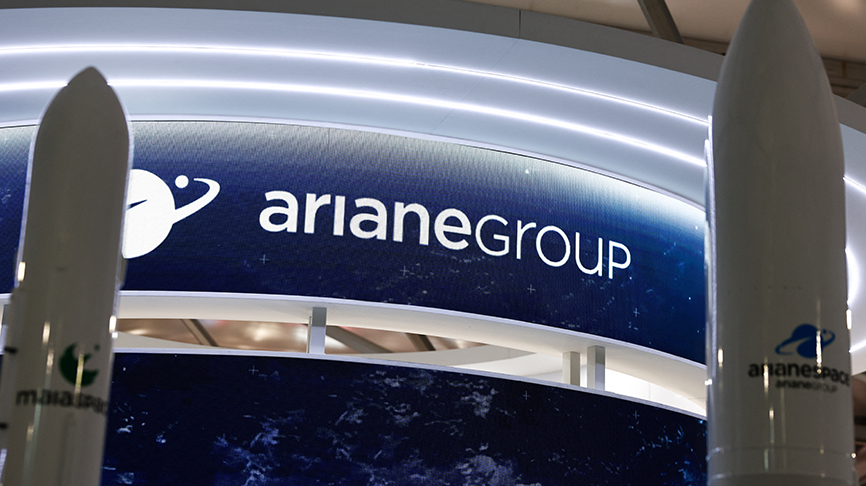
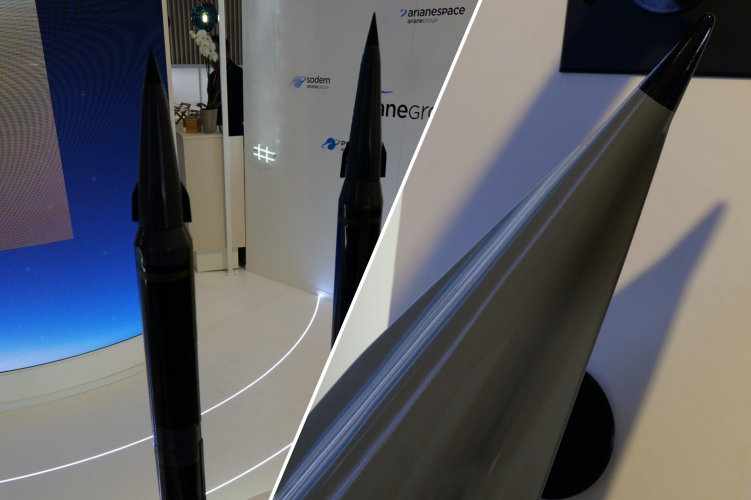
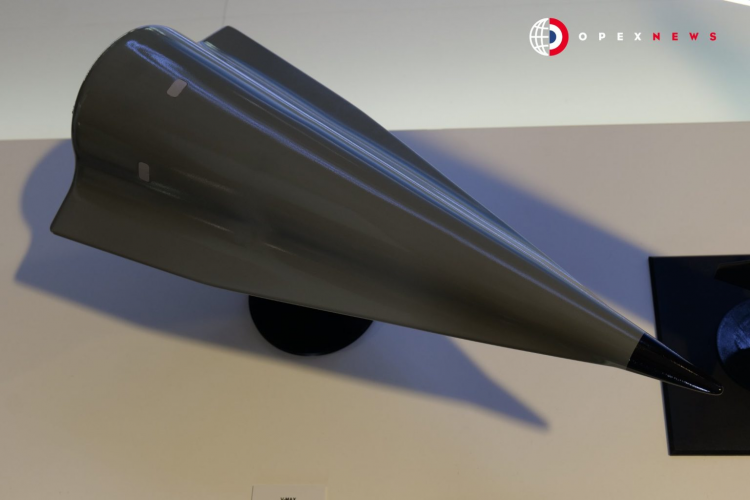
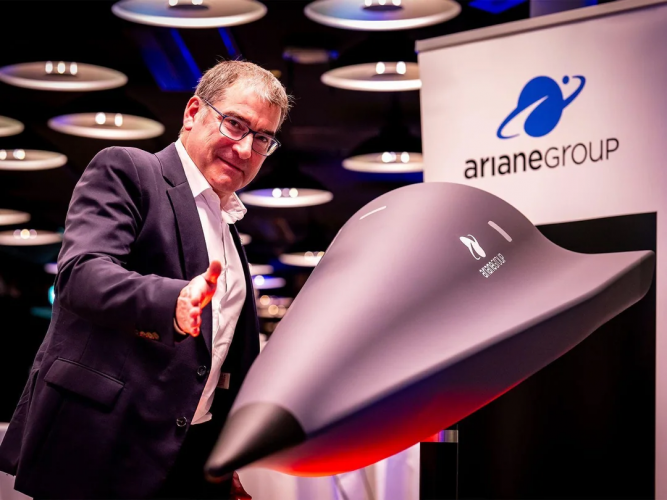
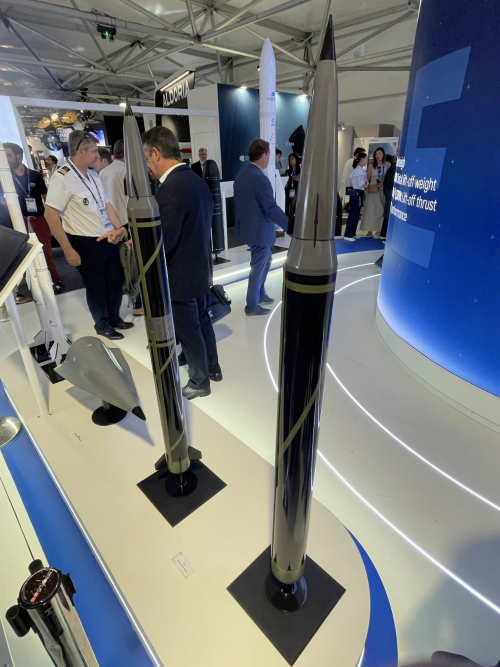
The European space company ArianeGroup is showcasing two models of high-range tactical ballistic missiles at the Paris Air Show, which are currently taking place in France, which may also be suitable for use as a “deep precision Strike” weapon. As can be heard from well-informed circles, the models referred to as Missile Balistique Tactique (MBT) are conceptual designs that were created for the French armed forces and offered to them.
Ballistische-Rakete-ArianeGroup_Bild_hartpunkt_Lars-Hoffmann-1068x801.jpg


Could a MOD move this to the relevant thread if there is one please.

https://www.secretprojects.co.uk/threads/european-long-range-strike-approach.43949/

I guess you've forgot about ELSA. And the name is quite deceiving, as ELSA is meant for MRBM ranges, this particular missile also said to have a max range of 2000km, not really a TBM range. The missile itself is quite huge, too.

As for merging the threads, it is said that there are 13 development pillars in ELSA. I don't know how many of those pillars each consist of a complete guided weapon, but ELSA most definitely isn't just one weapon (Ariane Group MBT) and those guided weapons would each warrant a separate thread in the forum had it been not projects included in a single initiative. So I think we should discuss a bit more if we should consolidate all of the conversation in one thread in the first place.
 
Last edited:

A French medium-range ballistic missile and ‘very high altitude’ ambitions​

At the June 2025 Paris Air Show, the French aerospace consortium ArianeGroup made its first showing of models of an in-development surface-to-surface medium-range ballistic missile dubbed missile balistique terrestre (MBT). The missile is ArianeGroup’s response to France’s ambition to develop operational conventional deep precision-strike (DPS) weapons with a range of over 2,000 kilometres by 2030.

French ‘very high altitude’ ambitions​

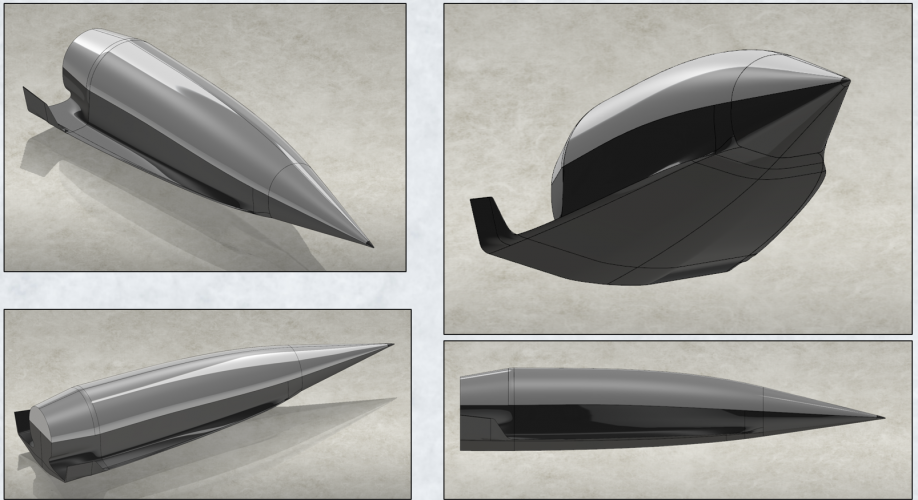
Deep precision-strike capabilities are a key element of the strategy that France announced in June 2025 for the so-called ‘very high altitude’ domain between 20–100 km above sea level. Quoting lessons learned from missile use in the Russia–Ukraine and Israel–Iran conflicts, the strategy envisions greater investment in advanced weapon systems that utilise high altitude to evade mid-course defences and can manoeuvre to overcome terminal-phase interceptors. Such systems include ballistic missiles equipped with manoeuvrable re-entry vehicles, hypersonic glide vehicles (HGV) and hypersonic cruise missiles. The strategy outlines such systems as particularly useful for suppression-of-enemy-air-defence missions and striking high-value targets. France has been developing HGV technology since 2018 through ArianeGroup’s Véhicule Manœuvrant Expérimental, or V-MaX, which was first flight-tested in 2023.
1757528731688.png
 

1757578445505.png

The next phase, dubbed V-MAX2, is expected to demonstrate an advanced guidance system capable of controlling the glide vehicle at hypersonic speeds. The future ballistic missile could likely serve as its primary launch platform.

1757578513136.png

1757578578598.png

 
If fixed silos were still considered Albion would remain the best choice - geology hasn't changed since 1996 or 1966, nor geography. But France probably don't want fixed IRBMs again. The submarines are plenty enough.
A MRBM is more like a return of Pluton and Hades, except with much longer range (480 km for Hades) and no nuke at the tip. They were mobile, on AMX-30 chassis and trucks.
 
Last edited:
If fixed silos were still considered Albion would remain the best choice - geology hasn't changed since 1996 or 1966, nor geography. But France probably don't want fixed IRBMs again. The submarines are plenty enough.
A MRBM is more like a return of Pluton and Hades, except with much longer range (480 km for Hades) and no nuke at the tip. They were mobile, on AMX-30 chassis and trucks.
Agreed, the mobile missiles in container launchers seems to be the most reasonable solution.

P.S. Actually the Albion could still be used as place for hardened shelters, used to house mobile launchers.
 
I think a big air launched ballistic missile droped from the cargo hold of an A400M is the most flexible option ...
That may serve well against CVBGs, but it would cost 200 km range because long-range SAMs have been deadly since the 60's and A400M is an easy target.
 
If fixed silos were still considered Albion would remain the best choice - geology hasn't changed since 1996 or 1966, nor geography. But France probably don't want fixed IRBMs again. The submarines are plenty enough.
A MRBM is more like a return of Pluton and Hades, except with much longer range (480 km for Hades) and no nuke at the tip. They were mobile, on AMX-30 chassis and trucks.
The question on range is whether 2,000km is the ballistic range or the total range - ballistic + glide.
 
Listed specs I have not seen on this thread like the intended goal of the vehicle is mach 16. In terms of range, it sounds like its less than the dark eagle HGV.

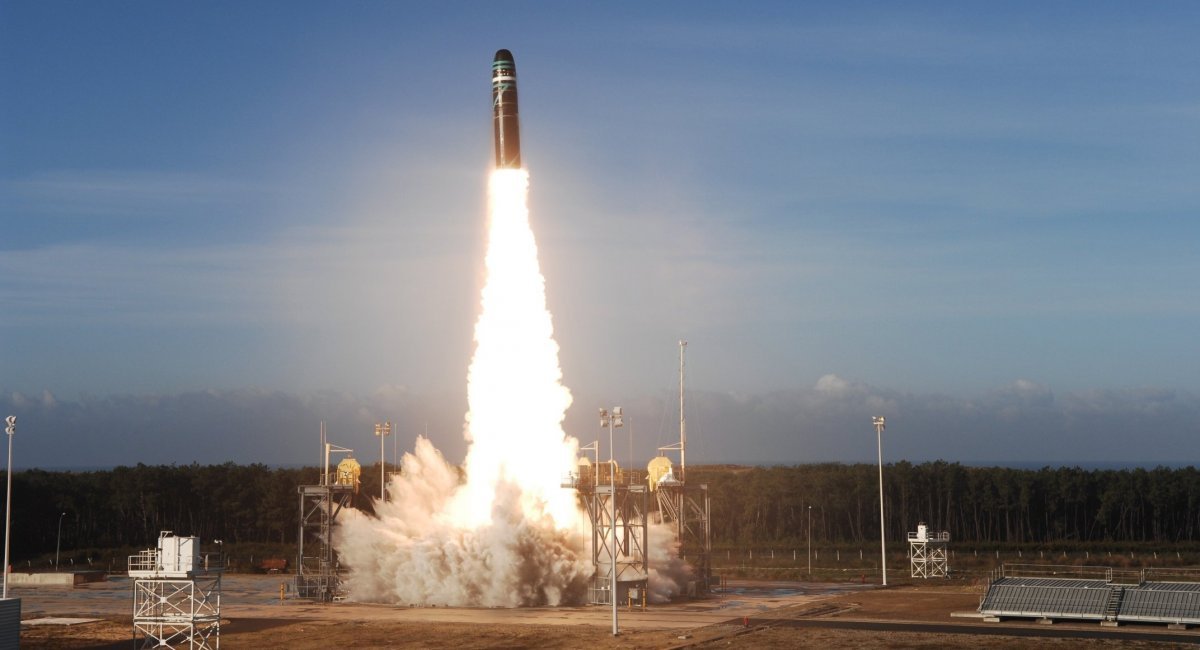
On June 26, 2023, France reached a decisive milestone in the field of hypersonics with the successful launch of the V-MAX hypersonic glider from Biscarrosse. This first flight, the result of cooperation between the French defence procurement agency (DGA), ArianeGroup, and Onera, validated key technological choices and marked a European first. By succeeding in stabilising and manoeuvring a vehicle at speeds above Mach 5, France demonstrated its ability to develop capabilities in a sector where only the United States, Russia and China had been active until then. Yet this test was only a first step. France’s ambition is now to move further with VMAX2, followed by the SyLex programme and finally ASN4G, to fully integrate these technologies into a national defence strategy.

Hypersonic glider weapon systems are designed to strike targets by penetrating enemy air and missile defences. Propelled into the upper atmosphere by carrier systems, these gliders reach speeds from Mach 5 to Mach 20. Their trajectories, made unpredictable by extreme manoeuvrability, render them very difficult to intercept. This combination of speed and agility provides a rapid intervention capability at both medium and long ranges. To overcome air and missile defence networks, a hypersonic glider must maintain very high velocity throughout its flight while being able to perform complex manoeuvres in the terminal phase, precisely when it is most exposed to interceptors. This requires a high lift-to-drag ratio, heat-resistant materials and a control system able to respond to extreme conditions.

Aware of these challenges, the Ministry of the Armed Forces appointed ArianeGroup as prime contractor for the V-MAX programme. The company possesses unique expertise in Europe in ballistic launchers, space vehicles and atmospheric re-entry. The first phase of work focused on aerothermodynamic modelling, high-temperature materials and thermal protection, inertial navigation and guidance systems, as well as sensors and antennas. The demonstrator launched in 2023 was designed to test manoeuvrability during re-entry, under severe mechanical and thermal constraints. The flight confirmed structural integrity and the performance of on-board systems, marking a technological success recognised as a first for France and Europe.

The next stage is embodied by VMAX2. This programme, part of the incremental roadmap defined by the DGA, is intended to demonstrate France’s ability to design and control a hypersonic glider equipped with an advanced command system. The vehicle, whose shape and thermomechanical strength are based on several technological breakthroughs, comes very close to an operational system. It will be used to experiment with critical subsystems under representative conditions while anticipating advances in adversary interception technologies. The aim is to achieve a precise understanding of hypersonic flight dynamics to guide future military capabilities.

In continuity with this programme, the SyLex project, presented at the Paris Air Show in 2025, represents an ambition to reach a new threshold. This demonstrator is expected to achieve speeds of up to Mach 16, or around 20,000 km/h. To reach such a leap, France will need to build a sovereign test infrastructure able to reproduce and analyse these extreme conditions. Initial flight experiments are scheduled for 2027, with potential operational integration around 2030. SyLex reflects a clear determination: to provide France with autonomous hypersonic capability, avoiding dependence on foreign infrastructures or technologies.

In parallel, France is preparing the replacement of the ASMP-A airborne nuclear missile with the ASN4G programme. Scheduled for around 2035, this system will be powered by a ramjet engine, combining hypersonic velocity with a strategic payload, thereby ensuring the credibility of French deterrence in the face of advancing missile defence systems. Led by MBDA and Onera under the MIHYSYS contract awarded in 2024, this project is directly embedded in France’s nuclear deterrence doctrine and will be a central element of future strategic posture.

These developments are taking shape in the context of international competition. Russia already fields the Avangard and Kinzhal systems, while China is multiplying tests of the DF-ZF glider. The United States continues several programmes but struggles to convert prototypes into operational capabilities. In this environment, France, despite more limited resources, is seeking to maintain credible status by relying on technological innovation and a reinforced deterrence doctrine.

Ultimately, the evolution of France’s hypersonic sector, from VMAX to VMAX2, then SyLex and ASN4G, reflects a progressive but ambitious strategy. Each demonstrator provides vital knowledge, each test is a milestone towards capabilities that could reshape military balances. The coming years will reveal whether France can translate these technological advances into a lasting strategic advantage. One thing is certain: in the global race for hypersonic missiles, Paris has chosen not to remain on the sidelines but to assert its place among the powers shaping the warfare of tomorrow.

 
A little more on SyLEX.
On the sounding rocket side, the Arianegroup representatives were a little more talkative. It is called SyLEX, for Système de Lancement Expérimental (Experimental Launch System), and is aimed at replacing the American sounding rockets that France currently uses for its HGV tests. It uses solid propulsion, coming in 1 and 2-stage versions. The motor itself is around 5m tall and loaded with 2 tonnes of propellant. It has no thrust vectoring to save cost. In fact, the whole project has a low-cost philosophy: the only attitude control system is yoyo-despin after engine burnout, the stability in flight being only provided by the fins. Quick pace of development was also paramount, with the whole thing being designed and built in 3 years, the first launch being planned in the remaining months of 2025. Contrary to usual practice for large solid motors, it will not have been test-fired on the ground first. The project serves first and foremost a military need (launching HGV prototypes like VMAX and testing missile components), but it will be available for commercial experiments, with quite a bit of time spent in microgravity for the 2-stage version.
 
New info on ArianeGroup's MBT :

The acronym used to stand for "Missile Ballistique Terrestre" or ("ground based ballistic missile"), however, it is now being reinterpreted as Missile Ballistique de Théâtre (“theatre ballistic missile”).

This change stems from the interest expressed not only by the Army, but now also by the Navy and the Air Force.


50cm diameter / 10m in length
Launched from a truck
Target production rate : ~10 units per month.
The range would exceed 1000km (could be much more, it's a political decision more than anything else)

15.6 million in funding planned for 2026, and around 1 billion expected before 2030.

A naval version launched from VLS cells is being considered, as well as an air-launched variant (from Rafale initialy)

Also ...
For now still an entirely French program, but nothing rules out the possibility of it becoming a Franco-German one, since ArianeGroup is itself a Franco-German company. The project could also be integrated into the European ELSA program, which involves about half a dozen countries. However, the complexity of multinational procedures could delay the program’s launch.
 
Last edited:

France Launches €900 Million MBT Ballistic Missile Program — 2,000 km Range, Four-Year Timeline​

ArianeGroup already appears to have a clear trajectory. During the Paris Air Show in Le Bourget earlier this year, the company unveiled models of ballistic missiles with ranges of 1,000 km and 2,500 km.
Thus, the proposed four-year timeline likely takes into account earlier and parallel research efforts. Nevertheless, it provides a realistic reference point for assessing the scope, technological complexity, and industrial capacity required to bring such a system to life.

Appears to actually be 4 missiles here. Are the smaller white ones air-launched maybe?
1767364906035.png
 

France Launches €900 Million MBT Ballistic Missile Program — 2,000 km Range, Four-Year Timeline​


Appears to actually be 4 missiles here. Are the smaller white ones air-launched maybe?
View attachment 797179
There Sylex sounding rockets
 
I really don't see a good reason to waste energy on a ground launched variant, but ok.
The air launched one is the main event IMO. As well as the naval one.
 

European rocket maker ArianeGroup is in talks with Germany and France to develop a new ballistic missile that can hit targets several thousand kilometers away with hypersonic warheads.

We are talking about a range of at least 1,000 kilometers,” Vincent Pery, director of defence programs at ArianeGroup, told reporters in Munich. “We can go to 2,000 kilometers, we can go to 3,000 kilometers,”

Pery said it would be up to European leaders to decide what range was needed and how to incorporate it into their militaries.

Pery said development and production of the new weapon would take a few years.
 
We are talking about a range of at least 1,000 kilometers,
” Vincent Pery, director of defence programs at ArianeGroup, told reporters in Munich.
We can go to 2,000 kilometers, we can go to 3,000 kilometers,”

ehh 1000km range from France that "ballistic missile"hit Germany...
with 2000km range you can hit Belarus from France
and 3000 km range that Missile is a deterrence for Russia

why I do point out for French launch silo for this Missile ?
you really think the French would install a Nuclear missile silo in Germany or Poland ?
 
ehh 1000km range from France that "ballistic missile"hit Germany...
with 2000km range you can hit Belarus from France
and 3000 km range that Missile is a deterrence for Russia

why I do point out for French launch silo for this Missile ?
you really think the French would install a Nuclear missile silo in Germany or Poland ?
A naval version is being considered, see post 26, for wich 1000km would be plenty good already.
And the warhead will be conventional only.
 
A sub-version in an M51 Payload Module would be extremely interesting.
Arguably if the missile is 0.5m diameter, it should be possible to fit 4 missiles into the space held by one M51 silo at 2.3m diameter or Trident missile silo at 2.11m diameter. Though when taken into consideration of sleeve cell diameter, Trident silos might only hold 3 such missiles.
 
Non-nuclear ballistic missiles will go into Barracuda attack subs (maybe) but not boomers. They are 100% nuclear deterrent and nothing else. They are built to hide and wait with nukes, nor for conventional warfare.
 
Last edited:
I really don't see a good reason to waste energy on a ground launched variant, but ok.
The air launched one is the main event IMO. As well as the naval one.
The ground launched version would be all-around cheaper as a system. As air launch has to take the cost per flight hour, maintenance and dedicated training into account.

France wants (and one may argue needs) something that's somewhere between Iskander-M/Kinzhal and the Oreshnik. Mostly conventional long range strike with the possibility of carrying nuclear warheads. And a ground based version is the cheaper albeit less (but still fairly) flexible side of that coin.

France took a look at what China and Russia (as well as DPRK and Iran) are rolling out and rightfulky realized that in this day and age you need a serious theater ballistic missile or pack up.

That aside, an SSGN version of the Suffren armed with a couple of these would be quite interesting.
 
Arguably if the missile is 0.5m diameter, it should be possible to fit 4 missiles into the space held by one M51 silo at 2.3m diameter or Trident missile silo at 2.11m diameter. Though when taken into consideration of sleeve cell diameter, Trident silos might only hold 3 such missiles.
An M51 hole should take 10 0.5m (3+4+3) missiles and a VPM 7 (3+2+3). But I doubt a 3,000km missile would still be only 0.5m. It would need to be nearer CPS diameter.

Non nuclear missiles will go into Barracuda attack subs but not boomers. They are 100% nuclear deterrent and nothing else. They are built to hide and wait with nukes, nor for conventional warfare.
There is the possibility that M51 Payload Modules might be incorporated into future SSNs, the UK is definitely considering VPMs for future SSNs.
 

Similar threads

Back
Top Bottom