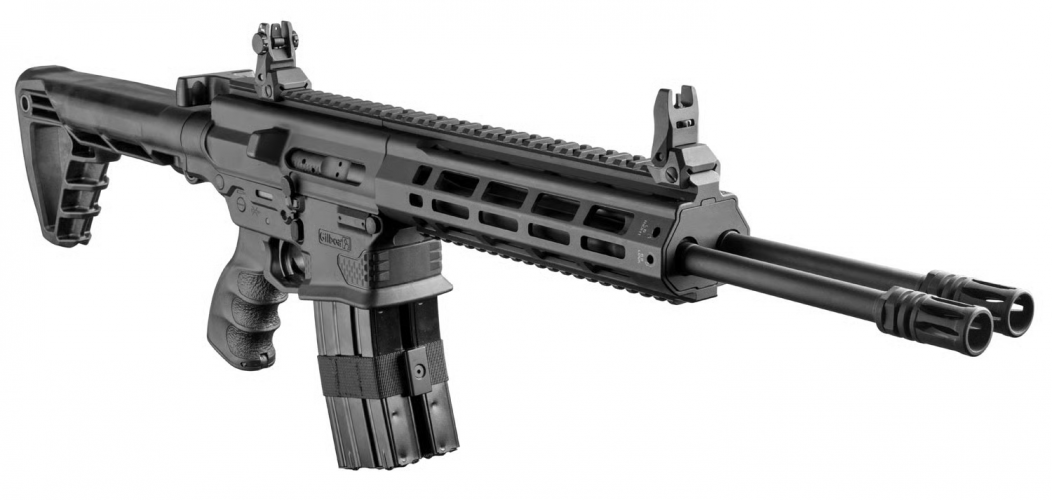
There is always combining parts and not duplicating unnecessary structure where they can be combined. They got the original Beck .510 under 11 pounds without major improvements. I am not suggesting combining barrels but over-unders have been done over 100 years without being equal to two guns.And hasn't gone anywhere since 2016.
Also means that the basic infantry rifle would need to be an AR-15 bolted to an AR-10. (Or rather an AR-18 bolted to an AR-10). Starting at about 15lbs.

You are using an out of date browser. It may not display this or other websites correctly.
You should upgrade or use an alternative browser.
You should upgrade or use an alternative browser.
Alternative new rifle cartridges
- Thread starter CastleBravo
- Start date
I'm aware, .17 Remington is derived from .223 Remington / 5.56x45 cases with some adjustments. It's like how 6.8x51mm is derived from 7.62x51mm.Whatismoo -
Howdy !
.17 Remington case' AOL is .036" longer than the 1.760" lg 5.56 NATO case;
according to on-line data I have seen
Case capacity ( in grains H2O ) data seen for both .17 Remington and 5.56 NATO
indicates that .17Rem case capacity can been less than that of the 5.56 NATO
Exactly how much more case capacity the 5.56mm cal case holds.... varies by case manufacturer.
In .17" - .224" calibre cartridges having case capacities in the 27 - 28.5gr H2O
range ( as is being discussed here ), a case having some 1.5gr H2O more capacity than one w/ 27gr nominal H2O capacity.... would be case that likewise holds a tad more POWDER; too. *** In this case capacity range, the ability of one cartridge to be able to hold and safely discharge ( an example ) 1gr more powder than a similar smaller capacitied cartridge; constitutes a significant potential performance increase in obtainable muzzle velocity & terminal energy **** .... when comparison is made within the same calibre, and shooting the same bullet. Powder " burn rate " selected could be varied; to accomodate differences in barrel lengths used for specialized applications.
As an aside:
.17 Remington has been known to significantly foul barrels, during use. This might present firearm cleaning and serviceability issue beyond those seen when operating
( example ) 5.56" cal chambering ?
With regards,
357Mag
See my comments referencing the spectacularly stupid gilboa snake.And hasn't gone anywhere since 2016.
Also means that the basic infantry rifle would need to be an AR-15 bolted to an AR-10. (Or rather an AR-18 bolted to an AR-10). Starting at about 15lbs.
Yep, I'm familiar! UK adoption of AR-15 pattern rifles is one of my areas of interest, and it seems like the 60 year long walk from SOF to mass adoption will come to fruition with Grayburn!It's not just close protection (which in the UK military is an RMP role more often than SF), SF went to the L119A1 after it won the SFW competition in 2000, followed by the Royal Marines, and a lot of civilian police forces (who'll have semi-auto variants). Special Forces L119A1s were replaced with A2s from 2013, a lot of which are the CQB model with 10" barrel.
You don't force the other guy to wear bulky armor by doubling the weight of your ammunition, you cripple YOUR mobility and sustainability by losing 30-50% of your squad round count and making resupply that much worse. M855A1 could also be fairly readily improved by applying the high pressure concepts SOCOM is playing around with to get closer to 80ksi instead of 60.I disagree entirely. Forcing the other guy to wear bulky armour is enough of a benefit. The more I can impede the enemy without actually having to shoot at them the better. M855A1 is still going thru alot of current light armor albeit with some questionable terminal ballistics. But if I have a spare billion to invest.
Sub 300m hard armor penetration with a tungsten tip.
Easy to make, yes. But the material tech is getting stagnant now, meanwhile manufacturing tech isn't. I think China is going to have a field day repurposing their UHMWPE extrusion tooling to pump out cheap plates. Just need Xi to put the stamp on the subsidy paper.
Talking about 7.62 belt fed. The US has disgustingly poor machingunery comparing to SF GPMG training. But that's a story for another day.
Heavier bullet like 77gr TMK, could have a bonded jacket. Tool steel core, no tungsten. I would aim to reduce copper consumption everywhere. Maybe less copper, more zinc, a type of coating.
I disagree partly. Is the impact on troops operation leading first in any conversation? Yes. Is logistics in the same conversation? Nah. For me it'd fall into sunk cost fallacy, and the further the topic of a new intermediate caliber is neglected, the bigger and more impactful this fallacy grows. Small arms impact has significantly grown in the past decade as the battlefield becomes more dispersed, multipliers like scopes and bipods more accessible. I see the 556 as a pursuit for an 1.5x duplicate of the 30 Carbine. It has flourished so much but it's time to look further. Yeah we're in a pretty tight situation. I'd rather see things like FVL, reopening the Abrams line, a proper new IFV etc but the caliber situation is a close runner up.
The Army doesn't have a spare billion to invest, it actually has a 4-6 billion dollar budget gap this year due to the iran war and domestic deployments!
Tungsten small arms ammunition is a non-starter, it's generally too expensive to be useful in a war or procured in mass numbers.
I'm not sure what your point about UHMWPE is, you still need a strike face for steel core due to the defeat mechanism not working well, it's why basic M855 causes issues for UHMWPE plates. In any case, the Chinese already pump out cheap plates. This is why I've consistently been arguing that plate defeat is not a high priority. The trade-offs don't work.
Small arms casualty production has gone DOWN in Ukraine! Dispersal doesn't result in small arms casualties, it results in FPV, artillery and mortar casualties. A new infantry cartridge is a waste of money because it won't improve lethality, certainly not in the form of 6.8x51, but it also is as you rightly mention a far lower priority than other issues. I would put IAMD higher than Abrams line and MICV, but the Army has a lot of spending priorities and it's been blowing ~450 million a year on small arms that are less effective and more expensive than a URGI or DDM4.

Colonial-Marine
UAVs are now friend, drones are the real enemy.
- Joined
- 5 October 2009
- Messages
- 1,714
- Reaction score
- 1,819
I'm not convinced very short carbines are "better" than PDWs for their envisioned usage by vehicle crews, logistics personal, etc., but the fact is they use the same ammo and that is a really huge selling point.From what I can gather, once the M4 and AKSU carbines started proliferating, they took 99% of the PDW's market.
I think the cased telescoped ammunition Textron was putting all that effort into is worth continued R&D investment.
With a small Clay plug to keep the projectile centered then a smaller diameter bullet could be fit into a simplified, wider brass. That is if they choose brass or go composite.I think the cased telescoped ammunition Textron was putting all that effort into is worth continued R&D investment.
If we just consider close range and ammo amount, a Kriss Vector pistol with larger mags might be a good idea. Only one should be sufficient. Using 9mm instead of all the heavy rifle ones with the benefit for the whole group for other house clearing occasions etc.
Btw. What happen to their derivative rifle recoil system?
Btw. What happen to their derivative rifle recoil system?
Scott Kenny
ACCESS: USAP
- Joined
- 15 May 2023
- Messages
- 19,511
- Reaction score
- 27,956
A double barrel shotgun or rifle or combination setup has one action, one receiver. Maybe two separate locks, depends on design. Basically, an over-under is a single shot with two barrels, so the weight increase is just the second barrel.There is always combining parts and not duplicating unnecessary structure where they can be combined. They got the original Beck .510 under 11 pounds without major improvements. I am not suggesting combining barrels but over-unders have been done over 100 years without being equal to two guns.
A double semi auto setup requires a separate bolt, bolt carrier, and receiver for each barrel. It also requires a separate operating system for each barrel, but roller-locked or roller-delayed blowback is not notably heavier than a basic bolt carrier. Just more complex.
They are very notably worse than a real PDW. Huge muzzle blast and low muzzle velocity, because the powder hasn't finished burning before the bullet exits the barrel.I'm not convinced very short carbines are "better" than PDWs for their envisioned usage by vehicle crews, logistics personal, etc., but the fact is they use the same ammo and that is a really huge selling point.

GreenBullet
International rules-based hors d'oeuvre
- Joined
- 2 September 2015
- Messages
- 69
- Reaction score
- 121
They are very notably worse than a real PDW. Huge muzzle blast and low muzzle velocity, because the powder hasn't finished burning before the bullet exits the barrel.
I don't think that's borne out in practice even with M855A1, let alone the more specialized stuff that's in use in US military SBRs. Whether that makes it out to conventional users of 10.5's/10.3's is a question of deployment and logistics, not a fault of the platform or an intrinsic disadvantage of the cartridge.
If you give them MP7s or pistol caliber subguns, you're still pushing out another type of ammo, AND a different type of weapon system with a whole separate manual of arms, parts and sustainment chain, and ammo that is grossly inferior to modern short barrel 5.56, of which there are plenty of options in U.S. stock already used. Just currently by higher-speed dudes.
Their recoil system doesn't work, is what happened. It's essentially blowback with the reciprocating mass going down instead of back so it bounces around a lot. I've heard the .45 ACP version and 9mm version with +P ammo are awful to shoot. If you're familiar with the original "Blish Lock" Thompson guns, it's like that.If we just consider close range and ammo amount, a Kriss Vector pistol with larger mags might be a good idea. Only one should be sufficient. Using 9mm instead of all the heavy rifle ones with the benefit for the whole group for other house clearing occasions etc.
Btw. What happen to their derivative rifle recoil system?
You could probably affix it to a locked bolt system for a rifle but what's the point?
It's also much larger than a normal machine pistol (like whatever they're calling the TMP now, or a stocked pistol) and roughly the same size as a normal submachine gun. It really doesn't do great against the "is it better than an MP-5 or other locked breech SMG" test.
Attachments
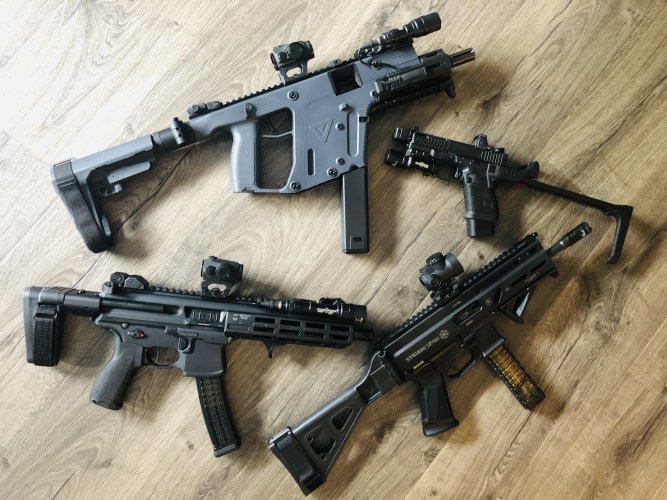
The Danes and some others issue 10" guns in the support troops role, or at least I've seen some people using them.I don't think that's borne out in practice even with M855A1, let alone the more specialized stuff that's in use in US military SBRs. Whether that makes it out to conventional users of 10.5's/10.3's is a question of deployment and logistics, not a fault of the platform or an intrinsic disadvantage of the cartridge.
If you give them MP7s or pistol caliber subguns, you're still pushing out another type of ammo, AND a different type of weapon system with a whole separate manual of arms, parts and sustainment chain, and ammo that is grossly inferior to modern short barrel 5.56, of which there are plenty of options in U.S. stock already used. Just currently by higher-speed dudes.
Scott Kenny
ACCESS: USAP
- Joined
- 15 May 2023
- Messages
- 19,511
- Reaction score
- 27,956
That's one hell of a high bar to clear, though.[The Kriss] really doesn't do great against the "is it better than an MP-5 or other locked breech SMG" test.
I was thinking a re-imagination of something like Project SALVO. They did shotgun with flatchettes. I think a .510 is a better alternative.A double barrel shotgun or rifle or combination setup has one action, one receiver. Maybe two separate locks, depends on design. Basically, an over-under is a single shot with two barrels, so the weight increase is just the second barrel.
GreenBullet
International rules-based hors d'oeuvre
- Joined
- 2 September 2015
- Messages
- 69
- Reaction score
- 121
I should have written more clearly. I mean modern 5.56 ammo optimized for short carbines around that length. There's a couple different rounds in common circulation these days in some circles, but I don't think they get widely distributed outside of special operations units (although they buy and burn through a lot by themselves)The Danes and some others issue 10" guns in the support troops role, or at least I've seen some people using them.
You can avoid this with certain things. There's a fairly good argument that if you want a PDW the best iteration is Colt's MARS 5.56x30mm system, but it also doesn't get you much of a benefit over 5.56x45mm, especially if you use a moderator or suppressor to avoid some of the muzzle blast. I also suspect a 12.5 isn't nearly as bad as a 10.3 but I've only ever shot a suppressed 12.5.They are very notably worse than a real PDW. Huge muzzle blast and low muzzle velocity, because the powder hasn't finished burning before the bullet exits the barrel.
Ah! You're not wrong but IIRC M855A1 out of a 12.5 is good to like 200m for expansion.I should have written more clearly. I mean modern 5.56 ammo optimized for short carbines around that length. There's a couple different rounds in common circulation these days in some circles, but I don't think they get widely distributed outside of special operations units (although they buy and burn through a lot by themselves)
SALVO was a really fucking stupid idea though! Replacing the flechettes with a 12ga 3" magnum slug is only more practical than SALVO because SALVO was spectacularly unsuccessful.I was thinking a re-imagination of something like Project SALVO. They did shotgun with flatchettes. I think a .510 is a better alternative.
Well yes, the submachine gun is basically a solved problem! You honestly can get away with blowback closed bolt. I've heard good things about the CMMG delayed blowback 9mm ARs, even if I personally would prefer a gas operated stoner internal piston over their delayed blowback because it makes me happy. But more to the point, I think for a fighting small arm it's generally a very high bar to do significantly better than existing small arms. Pretty much everything has been tried in the past hundred years and while some things are worth reinvestigating, a lot of things failed for a reason. Part of engineering is knowing which ideas failed because they didn't work and which failed because they couldn't work. If you can differentiate that, you can make some solid money.That's one hell of a high bar to clear, though.
If someone wanted 12 gauge in magum they would go full goose load double magum at a bore of 3.5 inches. 2.75 inches and 3 inches are mild in comparison, but it takes the reinforced chamber. Or use the 10 gauge.
That being said, a .510 Beck is much closer to the size of the rare 28 gauge. Like I said earlier they report a kick like a 20 gauge. I am not as impressed with shotgun slugs compared to elephant bullets.
That being said, a .510 Beck is much closer to the size of the rare 28 gauge. Like I said earlier they report a kick like a 20 gauge. I am not as impressed with shotgun slugs compared to elephant bullets.
jsport
what do you know about surfing Major? you're from-
- Joined
- 27 July 2011
- Messages
- 8,596
- Reaction score
- 6,898
Is this assault/precision a very obsolete, boutique, or way of future.and or is it still classified?
Nah, it's "normal". A well adjusted battle rifle gives good precision grouping downrange up to a few hundred meters. Always had best result in such a case even without any optics.Is this assault/precision a very obsolete, boutique, or way of future.and or is it still classified?
I've used them all (assault/battle). In fact sniper qualifaction expects you to hit a target at a certain range with it without a scope.
Scott Kenny
ACCESS: USAP
- Joined
- 15 May 2023
- Messages
- 19,511
- Reaction score
- 27,956
Well, it is kinda the way of the future for the USMC.Is this assault/precision a very obsolete, boutique, or way of future.and or is it still classified?
They bought M27 IARs for every infantryman, with one person per squad getting a much better scope as the M38 Squad Designated Marksman Rifle. All 5.56, though.
And the Army M110A1 is an HK417 in 7.62, though that's apparently assigned as the spotter's rifle to legit sniper teams.
jsport
what do you know about surfing Major? you're from-
- Joined
- 27 July 2011
- Messages
- 8,596
- Reaction score
- 6,898
L2A capabilities should be afforded by SIG to M7/8.
Unfortunately, the USMC is not positioned to jump to the Army standard until the ammo supply chain is mature. The USMC made the right decision for now. however antiquated. It is additionally unfortunate as USMC marksmenship training at long range is superior to the US Army, but they will not have the M7/8 to make those shots for sometime.
Unfortunately, the USMC is not positioned to jump to the Army standard until the ammo supply chain is mature. The USMC made the right decision for now. however antiquated. It is additionally unfortunate as USMC marksmenship training at long range is superior to the US Army, but they will not have the M7/8 to make those shots for sometime.
Scott Kenny
ACCESS: USAP
- Joined
- 15 May 2023
- Messages
- 19,511
- Reaction score
- 27,956
I would not expect the Marines to adopt more than 1 M7 per squad. M250s are debatable, the Corps did keep their SAWs for missions where having a belt fed 5.56 would make sense (open terrain) but they will need to replace the SAWs at some point as well.L2A capabilities should be afforded by SIG to M7/8.
Unfortunately, the USMC is not positioned to jump to the Army standard until the ammo supply chain is mature. The USMC made the right decision for now. however antiquated. It is additionally unfortunate as USMC marksmenship training at long range is superior to the US Army, but they will not have the M7/8 to make those shots for sometime.
jsport
what do you know about surfing Major? you're from-
- Joined
- 27 July 2011
- Messages
- 8,596
- Reaction score
- 6,898
The smallest wpn justifying the issues associated w belt fed are. .338s of some type. Others are obsolete & should be retired.I would not expect the Marines to adopt more than 1 M7 per squad. M250s are debatable, the Corps did keep their SAWs for missions where having a belt fed 5.56 would make sense (open terrain) but they will need to replace the SAWs at some point as well.
Likewise, 5.56 is obsolete. Previous discussion about MBRs evolving up to .50 cal are justified. The issues remaining, cost, ammo carry, guided or guided & most importantly recoil in semiautomatic.
Just an opinion, or a proven fact?Likewise, 5.56 is obsolete.
I'm not sure what you mean? It's got "assault" features for the same reason the SVD has a bayonet lug, close combat means everyone has to take part. It dates to the same late-2000s period as the L129A1, but where the LMT won the Army trials the HK417 won the SAS trials.View: https://youtu.be/pt5pyGTZ6yo
Is this assault/precision a very obsolete, boutique, or way of future.and or is it still classified?
It's not even a well founded opinion lmao. But god forbid you argue there's a happy medium of a cartridge that does all things well enough.Just an opinion, or a proven fact?
And that's before everyone forgets that you can push 5.56 to 80-90k PSI and lower the weight by 1/3 with new case designs.
CastleBravo
ACCESS: Confidential
- Joined
- 21 January 2026
- Messages
- 197
- Reaction score
- 181
The smallest wpn justifying the issues associated w belt fed are. .338s of some type. Others are obsolete & should be retired.
Likewise, 5.56 is obsolete. Previous discussion about MBRs evolving up to .50 cal are justified. The issues remaining, cost, ammo carry, guided or guided & most importantly recoil in semiautomatic.
If anything, trying to make rifle and machine gun calibers bigger than 5.56 post-2022 is like trying to make bigger battleship gun calibers in 1946. Infantry need to be carrying more man portable loitering munitions, not heavier small arms.
jsport
what do you know about surfing Major? you're from-
- Joined
- 27 July 2011
- Messages
- 8,596
- Reaction score
- 6,898
Bigger battleship guns even beyond 1946 proposals made sense then & still do. If "effects" are the game & every target that matters is underground, large calibers matter within a sustainable warship context.If anything, trying to make rifle and machine gun calibers bigger than 5.56 post-2022 is like trying to make bigger battleship gun calibers in 1946. Infantry need to be carrying more man portable loitering munitions, not heavier small arms.
Future infantry need maximize standoff while still maximizing effects. Reloadable loitering munition launching uas ugv r useful & best utilized in coordination long range effecting small arms.
jsport
what do you know about surfing Major? you're from-
- Joined
- 27 July 2011
- Messages
- 8,596
- Reaction score
- 6,898
As if you don't know small arms opinions are as vast as the universe. Wise military operations focus on stand off effects.Just an opinion, or a proven fact?
I've just asked a simple question. Too bad the answer is as it is.As if you don't know small arms opinions are as vast as the universe. Wise military operations focus on stand off effects.
jsport
what do you know about surfing Major? you're from-
- Joined
- 27 July 2011
- Messages
- 8,596
- Reaction score
- 6,898
Options afforded the user r maximized, a good start in an MBR.I'm not sure what you mean? It's got "assault" features for the same reason the SVD has a bayonet lug, close combat means everyone has to take part. It dates to the same late-2000s period as the L129A1, but where the LMT won the Army trials the HK417 won the SAS trials.
jsport
what do you know about surfing Major? you're from-
- Joined
- 27 July 2011
- Messages
- 8,596
- Reaction score
- 6,898
5.56 has been complained about since its inception.. it has never failed to deliver on proving its detractors correct.I've just asked a simple question. Too bad the answer is as it is.
"Never failing to deliver" is more praise than anyone can hope for.5.56 has been complained about since its inception.. it has never failed to deliver on proving its detractors correct.
jsport
what do you know about surfing Major? you're from-
- Joined
- 27 July 2011
- Messages
- 8,596
- Reaction score
- 6,898
it has never failed to deliver on proving its detractors correct.
Bigger battleship guns than the typical 15-16" did not make sense in 1946, and certainly don't today. There are FAR better ways to put that amount of shell-mass to that kind of range, and there have been since the 40s. And of course it's worth noting that defeating underground structures is much easier with aircraft, especially given that 5000lbs bunker busters are significantly larger than even the 3200lbs shells from Yamato's 18" guns, and far more accurate.Bigger battleship guns even beyond 1946 proposals made sense then & still do. If "effects" are the game & every target that matters is underground, large calibers matter within a sustainable warship context.
Future infantry need maximize standoff while still maximizing effects. Reloadable loitering munition launching uas ugv r useful & best utilized in coordination long range effecting small arms.
Wise military analysis also has an appreciation for logistics, for trade-offs, and for the realm of the possible and the practical. Pushing infantry ranges out beyond 300m doesn't do anything useful if the infantry can't see targets past 300m because they're masked by terrain, in concealment, etc. It also doesn't do anything useful if the infantry can't hit targets at 600, 700, 800m because the targets do not present long enough to engage, or because the infantry have not had the training time to learn how to shoot that well.As if you don't know small arms opinions are as vast as the universe. Wise military operations focus on stand off effects.
And of course if you do spend all your time learning to shoot out to 750m that is time not spend learning how to use drones, shoot down drones, call for artillery, work with armored vehicles, use anti-tank weapons, work with friendly air power, conduct CASEVAC, entrench themselves in a position, etc. These are all vital tasks whose failure can doom the whole unit! There are only so many hours in the day for training.
I don't know what you mean here? The L2A1 and L129A1 were both issued as precision rifles, and were functionally indistinguishable in role and performance. The SAS, like most SOF units, always have had and always will have the flexibility and knowledge to choose the optimal rifle for their situation. This is an absolute luxury and one which cannot be afforded to typical infantry units. They need a rifle which is good enough to do the job in all conditions, balanced towards being best in those most likely. Especially as Europe returns to mobilization concepts where your standard infantry soldier six months into the war may be running on eight weeks of training, if they're lucky.Options afforded the user r maximized, a good start in an MBR.
But if you want options, the amount of options available in the 5.56x45mm specification AR platform are frankly unbeatable. You can make it belt fed, magazine fed, short stroke piston, stoner piston, delayed blowback, normal blowback, anything from .22 long rifle up through your pistol calibers and then into cartridges like .243 Winchester Super Short Magnum or 6mm ARC without changing the recievers, only barrel bolt and magazine. You can even run .300 Olympic Super Short Magnum, which is a .30-06 analogue that fits in the reciever of a standard 5.56 AR-15. You can slap an absurd amount of attachments onto the platform to make it whatever you want.
If you want options for the user, a 5.56x45mm pattern AR-15 is readily the most optionable firearm on the planet! Hell, if you swap on a new upper reciever you can turn one into a .50 BMG anti materiel rifle (McCutchen MF-50M) or 7.62mm NATO belt fed (BRP XMG).
It has been complained about because luddites and morons cannot wrap their heads around the two key facts that infantry combat doesn't meaningfully occur past 300m (the vast majority of it, indeed, occurs at less than 200m,) and that small caliber high velocity bullets are incredibly easy to shoot and have very effective terminal ballistics.5.56 has been complained about since its inception.. it has never failed to deliver on proving its detractors correct.
M193 (55gr FMJ) had excellent soft tissue performance, M855 did fine but had some issues at short ranges, and M855A1 is an absurdly lethal projectile design. The reverse drawn jacket, multi-piece core, and hardened steel penetrator give M855A1 large fragment mass, divergent wound tracks, and consistent fragmentation down to very low velocities (in the neighborhood of 1900fps). This is about 800fps lower than M193's threshold of ~2700fps for reliable fragmentation. M855/SS109 is similar but has fleet yaw issues and a lower muzzle velocity which make it less consistent than M193.
Now, I'm not going to be dogmatic here. I would encourage you to lay out in clear and concise language what exactly the problems with 5.56x45mm are, what analysis you have that supports these claims, and why these issues cannot be remedied with improvements to 5.56x45mm. You can just keep saying over and over that it's bad, but you haven't given any meaningful evidence that there's a problem, much less an insoluble problem.
The fellow member @whatismoo has laid it out in a far more eloquent fashion than I can hope to do.
And of course the feedback by @Scott Kenny is appreciated as always.
Kudos.
And of course the feedback by @Scott Kenny is appreciated as always.
Kudos.
jsport
what do you know about surfing Major? you're from-
- Joined
- 27 July 2011
- Messages
- 8,596
- Reaction score
- 6,898
To quote someone. "Prove it".Bigger battleship guns than the typical 15-16" did not make sense in 1946, and certainly don't today.
Again, "prove it" missiles, more shells are more expensive. The whole point of even researching these guns was the then revealed gun shortfalls during ww2. Precision gets one just so far. Not even an argument.There are FAR better ways to put that amount of shell-mass to that kind of range, and there have been since the 40s.
This is getting tired already. If one doesn't have air sup.. then one never gets close enough. Have stated before numerous times concerning Plaaf hardened structures.And of course it's worth noting that defeating underground structures is much easier with aircraft, especially given that 5000lbs bunker busters are significantly larger than even the 3200lbs shells from Yamato's 18" guns, and far more accurate.
Afghanistan proved range is a tyrant over the infantry. The dreaded urban canyon where most of the world's population live is also a range tyrant.Wise military analysis also has an appreciation for logistics, for trade-offs, and for the realm of the possible and the practical. Pushing infantry ranges out beyond 300m doesn't do anything useful if the infantry can't see targets past 300m because they're masked by terrain, in concealment, etc
The current & future transparent battlefield will provide targets, but yes range time is a disaster. Any infantry training not focused on PT, combat drills, & marksmanship is wasted. Cliche, "move, shoot, communications transparent ie effortless & automated".. It also doesn't do anything useful if the infantry can't hit targets at 600, 700, 800m because the targets do not present long enough to engage, or because the infantry have not had the training time to learn how to shoot that well.
The Ukrs know drones r gonna need to one finger operated ie nearly effortlessly operated or someone else needs to operate. At least one Swedish company is working the effort less infantry drone. Nearly automating drone defense down to the Dismount is also Israeli development goal& is part of long range engagement.And of course if you do spend all your time learning to shoot out to 750m that is time not spend learning how to use drones, shoot down drones,
All combat drills so...call for artillery, work with armored vehicles, use anti-tank weapons, work with friendly air power, conduct CASEVAC, entrench themselves in a position, etc.
General Scales WGrp recommended infantry needs to 30+ & have plenty previous svc. Soldiers need that experience to juggle all these demands. Those folks are usually married & not retained as better pay is elsewhere. Never ending problem. Infantry is not a young person's thrill seek anymore if effectiveness is sought.These are all vital tasks whose failure can doom the whole unit! There are only so many hours in the day for training.
Again if want effectiveness the rifle needs the options the title of rifle entails. If your conventional infantry isn't ready, do what most Western Armies do, use SOF instead. Forget about the conventional infantry doing much of anything but patrol after the fact.I don't know what you mean here? The L2A1 and L129A1 were both issued as precision rifles, and were functionally indistinguishable in role and performance. The SAS, like most SOF units, always have had and always will have the flexibility and knowledge to choose the optimal rifle for their situation. This is an absolute luxury and one which cannot be afforded to typical infantry units. They need a rifle which is good enough to do the job in all conditions, balanced towards being best in those most likely. Especially as Europe returns to mobilization concepts where your standard infantry soldier six months into the war may be running on eight weeks of training, if they're lucky.
LOLBut if you want options, the amount of options available in the 5.56x45mm specification AR platform are frankly unbeatable.
The L2A & M7/8 are likewise AR platforms so what r we even talking about?ou can make it belt fed, magazine fed, short stroke piston, stoner piston, delayed blowback, normal blowback, anything from .22 long rifle up through your pistol calibers and then into cartridges like .243 Winchester Super Short Magnum or 6mm ARC without changing the recievers, only barrel bolt and magazine. You can even run .300 Olympic Super Short Magnum, which is a .30-06 analogue that fits in the reciever of a standard 5.56 AR-15. You can slap an absurd amount of attachments onto the platform to make it whatever you want.
Yes, quite aware.If you want options for the user, a 5.56x45mm pattern AR-15 is readily the most optionable firearm on the planet! Hell, if you swap on a new upper reciever you can turn one into a .50 BMG anti materiel rifle (McCutchen MF-50M) or 7.62mm NATO belt fed (BRP XMG).
These statements r old tro ps and why all these variations from the original 5.56mm even exist. 5.56 has been a near failure from the beginning thus giving rise to the original cottage, now Mega industry which cakes lipstick on that pig so deep it is no longer even a pig. Thank you for a pretty good synopsis of all that lipstick.It has been complained about because luddites and morons cannot wrap their heads around the two key facts that infantry combat doesn't meaningfully occur past 300m (the vast majority of it, indeed, occurs at less than 200m,) and that small caliber high velocity bullets are incredibly easy to shoot and have very effective terminal ballistics.
If you talk to SIG Saur, they are not even interested in human targets, more BTRs etc. Maybe they are correct, anti-vehicle+anti-material.M193 (55gr FMJ) had excellent soft tissue performance, M855 did fine but had some issues at short ranges, and M855A1 is an absurdly lethal projectile design. The reverse drawn jacket, multi-piece core, and hardened steel penetrator give M855A1 large fragment mass, divergent wound tracks, and consistent fragmentation down to very low velocities (in the neighborhood of 1900fps). This is about 800fps lower than M193's threshold of ~2700fps for reliable fragmentation. M855/SS109 is similar but has fleet yaw issues and a lower muzzle velocity which make it less consistent than M193.
LOL the US Army has selected, no interest or time to geek out on nostalgia.Now, I'm not going to be dogmatic here. I would encourage you to lay out in clear and concise language what exactly the problems with 5.56x45mm are, what analysis you have that supports these claims, and why these issues cannot be remedied with improvements to 5.56x45mm.
Thinkin...ur not my boss. U & other kids can live in past all you want. A waste. The 5 56mm problem is.long since been solved...You can just keep saying over and over that it's bad, but you haven't given any meaningful evidence that there's a problem, much less an insoluble problem.
Scott Kenny
ACCESS: USAP
- Joined
- 15 May 2023
- Messages
- 19,511
- Reaction score
- 27,956
Problem w/ 338 is that the ammo weighs twice as much as 7.62.The smallest wpn justifying the issues associated w belt fed are. .338s of some type. Others are obsolete & should be retired.
This is fine for a vehicle-mounted MG, not exactly desirable for a squad-portable weapon.
I do happen to agree that 5.56 is not the right caliber. I'm a fan of 6.5 Grendel, but arguments can be made for 6mm ARC as well.Likewise, 5.56 is obsolete. Previous discussion about MBRs evolving up to .50 cal are justified. The issues remaining, cost, ammo carry, guided or guided & most importantly recoil in semiautomatic.
It's been known since Meiji 38 (1905) that the best infantry rifle throws a ~9gram projectile at ~770m/s for ~2600J muzzle energy. ~140gr at ~2500fps for ~2000ft-lbs muzzle energy, for folks like me who think in SAE units for small arms. This energy level was confirmed by the British during their development of the .280 British.
This power level can be reached by 6.5 Grendel, even though Grendel is usually loaded with a much lighter projectile in the 100 to 123gr range (7-8 grams fired at ~820-800m/s).
Even the old Soviet 7.62x39 is very close to the usual Grendel power level.
The US military has been designing around the idea of a company arms room having a wide variety of options since about 2015. Particularly the Marine Corps. Patrolling in cities? Take the M27/M38s. Open country? Bring the SAWs. 7.62 or now 6.8 DMRs in every squad, but you could take an M38 for lighter weight at the cost of a bit less range.I don't know what you mean here? The L2A1 and L129A1 were both issued as precision rifles, and were functionally indistinguishable in role and performance. The SAS, like most SOF units, always have had and always will have the flexibility and knowledge to choose the optimal rifle for their situation. This is an absolute luxury and one which cannot be afforded to typical infantry units. They need a rifle which is good enough to do the job in all conditions, balanced towards being best in those most likely. Especially as Europe returns to mobilization concepts where your standard infantry soldier six months into the war may be running on eight weeks of training, if they're lucky.
If you're still using ARs, have a belt-fed upper in each vehicle to swap over. Else you need space for a full freaking SAW.
Afghanistan has the longest infantry engagement ranges on earth! Who TF plans to fight there twice?!?Afghanistan proved range is a tyrant over the infantry. The dreaded urban canyon where most of the world's population live is also a range tyrant.
If you can reach out 500m in the urban fight, you're good. And 7-9g at 770-820m/s will handle that quite happily.
The British Army in India had much the same opinion about age, but that was more a matter of sufficient conditioning to fight in the heat and mountains (Long-service regiments, ~21yr enlistments, performing much better than the short-service, ~4yr enlistment, ones). We've since had decades of Olympians proving that peak human performance is usually held at about 22 years old and can be held for maybe 8-12 years with ever-increasing effort to maintain it. By enlisting 18yo, you get 4 years to build them up to their peak performance and then get 8-12 years at that level.General Scales WGrp recommended infantry needs to 30+ & have plenty previous svc. Soldiers need that experience to juggle all these demands. Those folks are usually married & not retained as better pay is elsewhere. Never ending problem. Infantry is not a young person's thrill seek anymore if effectiveness is sought.
As a further reminder, during GWOT it was discovered that it took roughly 1 year from service entry until the basic solider had all the skills to be useful in combat, and then it took another year with their unit to get the unit up to speed with combat teamwork. 2 years from "service entry" to "ready to deploy a unit in combat".
I just realized my post from the NGSW thread wasn't moved over here, so let me copy it over and make my point about 5.56.
TL;DR: 5.56x45mm is a nearly perfect balance of low logistical and soldier load footprint, high lethality, accuracy, and low recoil.
It also has a significant amount of growth opportunity to improve on these strengths by implementing existing concepts like lightweight high pressure cases (such as the NAS3 steel case or True Velocity polymer case) which would drop weight by ~1/3 (from 12 grams per cartridge to 8 grams) while readily allowing muzzle velocities in excess of 3250 ft/s from 14.5"-16" barrels, and neckless case geometries to allow a more aerodynamic bullet without needing to modify the rifle. Of course, bringing all this together would take time, money and testing, but you're looking at gluing a bunch of TRL-6 to 9 concepts together.
Small arms (including the MG) still kill, but the trend has been incredibly stable that in conventional wars they produce ~10-30% of casualties, with the majority of lethality and casualty production coming from explosive weapons (artillery, aircraft, grenades, mines). The exact balances change over time, but if you're looking at the numbers then improving infantry lethality is going to come from enabling fires, fixing the explosive shortage, and improving the ability of small units to throw HE-FRAG at the enemy (commando mortars, FPVs, kamikaze drones, a gustav that doesn't give you brain damage, using one of those tennis ball throwers for dogs to chuck hand grenades), NOT from adopting a battle rifle.
Spending >400,000,000 a year on NGSW is (IMO) pretty symptomatic of how much the Army has lost the path on infantry, in part due to the over-emphasis on light infantry and airborne. The baffling part is that 6.8x51 ammunition is nearly twice as heavy as 5.56, at ~22g vs ~12g, so even if the gun weight is held steady the infantry basic load of 210 5.56 rounds (2.5kg) either goes up to 4.6kg for 210 rounds of 6.8 or stays at 2.5kg but only gets you ~114 rounds of 6.8.
Breaking the ammunition weight out a little further, you've got:
View attachment 811201
Apologies for the inconsistent numbers, I put 21.7 into the spreadsheet instead of 22g. Generously there's a version of the squad comparison where 6.8 saves weight vs 5.56, but it saves 3.4kg per squad in exchange for carrying 2000 fewer rounds of ammunition, equivalent to both 5.56 SAW gunners! And that 3.4kg is only equivalent to 286rds 5.56/158rds 6.8!
The ammunition weight issue is unsolvable for 6.8x51, and IMO is the most lethal problem, to the program and to the infantry that have to carry it. It's a recipe to lose the volume of fire fight and have sustainment issues in the field.
Of course there's also the looming alternative that SOCOM is moving towards: high pressure 5.56x45. There's been some scuttlebutt of pushing 62 grain projectiles (i.e. M855/A1) at ~3180 ft/s (970m/s) out of an 11" barrel. That's scratching M193 20" muzzle velocities, probably faster out of a 14.5" barrel (i.e. standard infantry rifle). Flatter shooting, longer effective range, plenty of lethality, backwards compatible, no weight increase, and relatively inexpensive. NAS3 cases even are a ~4g per casing weight SAVINGS, which is 840-1320g per rifleman and 2400-4000g per SAW gunner just from a better case design.
So of course, in true Army fashion, they're spending a lot of money on fundamentally flawed rifles instead of doing the less expensive and better performing route. Just like cancelling JLTV for what is essentially the bastard child of a CUCV and the fabric roof HMMWV, because it's a great idea to get rid of shrapnel protection when battlefields are coming to be dominated by artillery and ATGW (including FPV/Kamikaze drones).
I am constantly baffled how they managed to avoid significant scrutiny, and I really wish that the Army would be hauled in front of congress and asked to answer how they made this math work.
A while back I sketched out a concept for 3300 ft/s 62gr with the G7 of 7N6 (.168) which ended up being comically flat shooting (a 300-350m battle zero ends up mathing out to fairly point and shoot to 500m.
View attachment 811207 View attachment 811206
TL;DR: 5.56x45mm is a nearly perfect balance of low logistical and soldier load footprint, high lethality, accuracy, and low recoil.
It also has a significant amount of growth opportunity to improve on these strengths by implementing existing concepts like lightweight high pressure cases (such as the NAS3 steel case or True Velocity polymer case) which would drop weight by ~1/3 (from 12 grams per cartridge to 8 grams) while readily allowing muzzle velocities in excess of 3250 ft/s from 14.5"-16" barrels, and neckless case geometries to allow a more aerodynamic bullet without needing to modify the rifle. Of course, bringing all this together would take time, money and testing, but you're looking at gluing a bunch of TRL-6 to 9 concepts together.
There's absolutely no way that rifle fire is killing more people in Ukraine than explosives (be it hand grenades, artillery, kamikaze drones, mines, bombs, missiles, rockets, ATGW, etc).Which new rounds? The Russian 6x49 is ancient unless you're referring to the 6.02x41, which lies in a different class (6.5 Grendel, 6mm ARC etc).
The Chinese round is a reactionary development and as it's already hanging around in a showcase there's little chance they're adopting it for general purpose use (as a 6.5 Creed domestic equivalent, maybe) (and not the 70s one, the new 2025 one).
There's one objective underpinning 6.8 NGSW: extended range AP performance. This quote sums up the history quite well.
If it's about "suppressing", the aim would be more limited to accuracy at range, which most 556 match bullets could already do, and increase lethality at medium range against lvl 4 plates with limited BFD reqs, which could be done with improvements in material science. Thoug of course this improvement would be much better applied on a 6.5mm catridge akin to Grendel with respectable range, lethality, mass and felt recoil, not a full blown magnum rifle round. Flesh infantry is still limited to either full soft vest coverage to eat close 155mm burst, or a heavy plate carrier to eat 556/762 AP (at their respective expected combat range).
Rifles still kill aplenty. Ironically rifle might actually kill more people in Ukr, in ratio figures, than they did in ODS if we get an accurate casualty compilation some 10 years down the line and most kills post 2023 is from people assaulting each others trenches with AK-74s and impromptu tied together grenade 6pacs. I agree with the sentiment, but warfare is dynamic, and NGSW is leaning too hard to one spectrum. We do have something that can fit perfectly in the center, 6.5 LSAT, or the 6.8 SPC if they give it P+ rated propellants and NAS3 or TV polymer case, or even the aforementioned 6.02mm Russian.
Small arms (including the MG) still kill, but the trend has been incredibly stable that in conventional wars they produce ~10-30% of casualties, with the majority of lethality and casualty production coming from explosive weapons (artillery, aircraft, grenades, mines). The exact balances change over time, but if you're looking at the numbers then improving infantry lethality is going to come from enabling fires, fixing the explosive shortage, and improving the ability of small units to throw HE-FRAG at the enemy (commando mortars, FPVs, kamikaze drones, a gustav that doesn't give you brain damage, using one of those tennis ball throwers for dogs to chuck hand grenades), NOT from adopting a battle rifle.
Spending >400,000,000 a year on NGSW is (IMO) pretty symptomatic of how much the Army has lost the path on infantry, in part due to the over-emphasis on light infantry and airborne. The baffling part is that 6.8x51 ammunition is nearly twice as heavy as 5.56, at ~22g vs ~12g, so even if the gun weight is held steady the infantry basic load of 210 5.56 rounds (2.5kg) either goes up to 4.6kg for 210 rounds of 6.8 or stays at 2.5kg but only gets you ~114 rounds of 6.8.
Breaking the ammunition weight out a little further, you've got:
View attachment 811201
Apologies for the inconsistent numbers, I put 21.7 into the spreadsheet instead of 22g. Generously there's a version of the squad comparison where 6.8 saves weight vs 5.56, but it saves 3.4kg per squad in exchange for carrying 2000 fewer rounds of ammunition, equivalent to both 5.56 SAW gunners! And that 3.4kg is only equivalent to 286rds 5.56/158rds 6.8!
The ammunition weight issue is unsolvable for 6.8x51, and IMO is the most lethal problem, to the program and to the infantry that have to carry it. It's a recipe to lose the volume of fire fight and have sustainment issues in the field.
Of course there's also the looming alternative that SOCOM is moving towards: high pressure 5.56x45. There's been some scuttlebutt of pushing 62 grain projectiles (i.e. M855/A1) at ~3180 ft/s (970m/s) out of an 11" barrel. That's scratching M193 20" muzzle velocities, probably faster out of a 14.5" barrel (i.e. standard infantry rifle). Flatter shooting, longer effective range, plenty of lethality, backwards compatible, no weight increase, and relatively inexpensive. NAS3 cases even are a ~4g per casing weight SAVINGS, which is 840-1320g per rifleman and 2400-4000g per SAW gunner just from a better case design.
So of course, in true Army fashion, they're spending a lot of money on fundamentally flawed rifles instead of doing the less expensive and better performing route. Just like cancelling JLTV for what is essentially the bastard child of a CUCV and the fabric roof HMMWV, because it's a great idea to get rid of shrapnel protection when battlefields are coming to be dominated by artillery and ATGW (including FPV/Kamikaze drones).
I am constantly baffled how they managed to avoid significant scrutiny, and I really wish that the Army would be hauled in front of congress and asked to answer how they made this math work.
IMO the cost argument falls apart when you have to buy new receivers. NAS3 cases have more internal volume so it's possible a longer bullet could fit to get better ballistics in a 62 grain projectile. Personally I think that the steel case should be a fairly large warning that it'll blow up guns. There's also the prospect of mixing NAS3 with the neckless geometries of 5.56 that TV and some people online have played with to get the longer bullet in the same OAL. I've heard some scuttlebutt that steel has odd neck tension issues that might preclude this, but the general point is that 5.56x45's formfactor is absolutely not pushed to the limit, and there's room for a rebarrel/bolt upgrade that should make 5.56 shoot absurdly flat and punch through velocity limited plates (which is most ceramics and steel) at reasonable ranges.The 100ksi NAS3 5.56 stuff looks really interesting. I would like to see that combined with a new magazine pattern that can handle a ~2.5" cartridge overall length. This would allow loading long VLD bullets with a significantly better ballistic coefficient. It would also prevent loading the longer high pressure rounds in a normal STANAG magazine/weapon while still allowing the new weapon to fire existing 5.56 ammo for training.
A while back I sketched out a concept for 3300 ft/s 62gr with the G7 of 7N6 (.168) which ended up being comically flat shooting (a 300-350m battle zero ends up mathing out to fairly point and shoot to 500m.
View attachment 811207 View attachment 811206
jsport
what do you know about surfing Major? you're from-
- Joined
- 27 July 2011
- Messages
- 8,596
- Reaction score
- 6,898
.338s r worth the weight delivering .50 cal like effects for dismounts. Dismount wpn wanted by socom is where the whole thing began on the military.Problem w/ 338 is that the ammo weighs twice as much as 7.62.
This is fine for a vehicle-mounted MG, not exactly desirable for a squad-portable weapon.
Weight reduction for any rifle or MG is an equation of government willingness to burn down risk on. Lightweight will happen as the government pays for it. If they want to pay for it. The material science is there.
Don't even want anyone going there, but (I) is mountainous. Bandits will always find mountains anywhere in world..so silly to even bring up.Afghanistan has the longest infantry engagement ranges on earth! Who TF plans to fight there twice?!?
All this new Fire Control tech will continue to stretch the standoff which troops will increasingly be asked to engage at. Better to have a rifle ready.If you can reach out 500m in the urban fight, you're good. And 7-9g at 770-820m/s will handle that quite happily.
Similar threads
-
-
-
Divergence on the Runway: An Alternate History of Military Aviation (1956-1982)
- Started by kpuscas
- Replies: 6
-
Design Study: MBTP-170 "MAUS-II LEVIATÃ" - Modern Heavy Tank Concept (2026)
- Started by Bulle
- Replies: 6
-
Roter Rhein , Krasnyy Reyn - What If The Axis Members Called It Quits In Early 1943?
- Started by TheRejectionist
- Replies: 36