I would argue that the 14-16" 5.56 is closer to the WW1-WW2 era ±25" barrel "short rifle" that generally supplanted ≈30+" rifles and ≈20" carbine like the SMLE, M1903, M1, K98K, MAS-36, Type-99, etc.No, I'm not joking. And don't call me Shirley.
You said:
And we currently do arm the assaulting troops mostly with carbines/PDWs.
The Army fireteam is: SAW gunner, SAW loader (w/ M4), grenadier (w/ M4+M203), and either DMR or Javelin gunner (w/ M4).

You are using an out of date browser. It may not display this or other websites correctly.
You should upgrade or use an alternative browser.
You should upgrade or use an alternative browser.
Alternative new rifle cartridges
- Thread starter CastleBravo
- Start date
They're demonstrably wrong and the Russians, Ukrainians, and North Koreans are proving it every day. It's also telling that SOCOM, with functionally free reign, unlimited budget, and a pressing need to kill people effectively, have not significantly fielded 6.5x51mm or similar. 75th Ranger Regiment has them but has (AIUI) mostly limited their use to DMRs.Except the current leadership believes modern threats can not be met by 5.56 mm x 45 mm, hence the new rounds that deliver greater kinetic energy and have promised greater penetration.
Put it another way, current leadership also believe(d) the Sig P320 was better than a Glock, and that they should send troops out to drive around in a Chevy Colorado with no roof or doors. Hope it doesn't rain much and there's no shrapnel! Seniority doesn't inherently beget wisdom.
jsport
what do you know about surfing Major? you're from-
- Joined
- 27 July 2011
- Messages
- 8,596
- Reaction score
- 6,898
When firing no more than 50yds the science is out.Multi-Flechette had 30 years of unsolved accuracy and precision issues!
When I put g in my statement I assumed people would interpret it as grain, not grams. I also assumed shooting silenced subsonic projectiles is close quarters, precision work. It is easier to support one large chamber that can use two or more types of rounds than carry separate guns for ammunition with the same bore. The contrast between subsonic rounds and supersonic was solely to provide context. In my opinion such a weapon would be geared toward urban and trench scenarios while being perfectly valid in most any environment.
I can honestly say I have never fired lethal rounds at other humans. But a moving target always takes higher skill than stationary ones. The whole point of the .510 was to put a larger kinetic delivery device within easy use when the hypervelocity pea shooter is not having enough effect. Not a fan of a 12 inch barrel for such a big bullet, and a 20 inch imho would be a better choice. Both need to consistent at 400 meters, no different that current 5.56 mm weapons. To mate two guns in .177 and .510 calibers the triggers need to be seperated in a way not to confuse the user.
One thing the .177 bullets are is extremely loud on the muzzle side. It will certainly create an audible impact on the receiving end even when missing its target. The .510 at above sonic speeds will have a lovely sound, too. Not the kind you want to hear. But of the two different bores, the .177 would probably be better at suppression work. The .510 would be ideal for punching door hinges and breaking apart block walls. Neither round would be a great for for a dedicated precision marksman.
I can honestly say I have never fired lethal rounds at other humans. But a moving target always takes higher skill than stationary ones. The whole point of the .510 was to put a larger kinetic delivery device within easy use when the hypervelocity pea shooter is not having enough effect. Not a fan of a 12 inch barrel for such a big bullet, and a 20 inch imho would be a better choice. Both need to consistent at 400 meters, no different that current 5.56 mm weapons. To mate two guns in .177 and .510 calibers the triggers need to be seperated in a way not to confuse the user.
One thing the .177 bullets are is extremely loud on the muzzle side. It will certainly create an audible impact on the receiving end even when missing its target. The .510 at above sonic speeds will have a lovely sound, too. Not the kind you want to hear. But of the two different bores, the .177 would probably be better at suppression work. The .510 would be ideal for punching door hinges and breaking apart block walls. Neither round would be a great for for a dedicated precision marksman.
I thought they used 6.8 mm x 51 mm.They're demonstrably wrong and the Russians, Ukrainians, and North Koreans are proving it every day. It's also telling that SOCOM, with functionally free reign, unlimited budget, and a pressing need to kill people effectively, have not significantly fielded 6.5x51mm or similar. 75th Ranger Regiment has them but has (AIUI) mostly limited their use to DMRs.
jsport
what do you know about surfing Major? you're from-
- Joined
- 27 July 2011
- Messages
- 8,596
- Reaction score
- 6,898
Being too clever by a quarter is the point of this bonfire (dumpster fire) of vanities we r writing on.G11 performed measurable worse than an M16A2 with iron sights in several parts of ACR, and at best (Phase 1 short range trials) was inferior to the Colt ACR firing duplex 5.56, albeit that neither rifle's improvement was statistically significant. See my post #32 in this thread.
I wish more people understood that the infantry rifle is essentially a solved problem, and the answer is a ±5.5mm assault rifle with an optic, low recoil, and decent ergonomics. Everyone wants to be too clever by half.
Tround rds or caseless rd shotguns something short of full exploding grenade etc is needed to clear spaces where threats could be hidding. Any one who's a.. is on the line knows what E Stoner said the studies displayed. Troops put rds into where someone might get a shot at them. Not every space. but plenty of them. Noone wants to be out of ammo 15mins into a patrol, nor do they want there bell rung every 3mins in village after a grenade goes off nearby.

- Joined
- 11 February 2007
- Messages
- 4,132
- Reaction score
- 8,871
Not a safe assumption when most of the audience uses the metric system.When I put g in my statement I assumed people would interpret it as grain, not grams.
- Joined
- 11 February 2007
- Messages
- 4,132
- Reaction score
- 8,871
Carbine has been the standard term for a shortened rifle since at least the 15th century, nothing absurd about it, cf the Kar 98, aka the Karabiner 98, the shortened form of the original Gewehr 98, or perhaps even more relevant the MaschinenKarabiner Mk 42(H).The Army wanted to add mystique to shortened barrels so started calling the them 'carbines'. Absurd.
yeetmahboi
ACCESS: Top Secret
- Joined
- 6 April 2022
- Messages
- 1,025
- Reaction score
- 1,434
SOF doesn't carry your class of PDWsNoone in the US carries PDWs accept SOF, Secret Service & wealthy Metro Police.
They use either 300BLK Rattlers or SOLGW/Noveske/URGI/Mk18 or a different flavor. No 5.7mms
And Military Polices, AFAIK, doon't use PDWs either. They moved to majority M4A1s.
They made an offensive grenade explicitly for that purpose.Ha ha, & ur still wrong. I would prefer not to suffer continously from grenade blast effects trying to clear compounds, or alternatively be shot in the back of the head. Walking around a compound ain't gonna wear u out.
And if you don't use concussive force in enclosed area to incapacite enemy fighters then you're walking into a crossfire death trap. Big gun or small gun doesn't change that.
yeetmahboi
ACCESS: Top Secret
- Joined
- 6 April 2022
- Messages
- 1,025
- Reaction score
- 1,434
If people looked into the reqs for the PDW in the JSSAMP paper people would realized how absurd the entire thing was.
They asked for essentially a machine pistol that could penetrate light armour for artillerymen or MPs.
556 carbine or CQBR does the same without the hassle of messing up logistics or training.
At the cost of slightly heavier felt recoil and a longer gun draw you achieve the same effect for minimal change.
They asked for essentially a machine pistol that could penetrate light armour for artillerymen or MPs.
556 carbine or CQBR does the same without the hassle of messing up logistics or training.
At the cost of slightly heavier felt recoil and a longer gun draw you achieve the same effect for minimal change.
jsport
what do you know about surfing Major? you're from-
- Joined
- 27 July 2011
- Messages
- 8,596
- Reaction score
- 6,898
Not sure how anyone would claim SOF uses no PDWs when H&k 4 7mm were a thing fot awhile. Tier I can ogtrn carry what they wish. Likely a nearly classified and fluid discussion if there is/was one. There are AR based PDWs which are also called pistols even. Who knows who is carrying what.SOF doesn't carry your class of PDWs
They use either 300BLK Rattlers or SOLGW/Noveske/URGI/Mk18 or a different flavor. No 5.7mms
And Military Polices, AFAIK, doon't use PDWs either. They moved to majority M4A1s.
As stated 5 grenades in one compound leaves ur bell a bit rung. Small grenades still send a potentially brain traumatizing wave thru you. Offensive vs defensive really only speaks to shrapnel amounts.They made an offensive grenade explicitly for that purpose.
Fires saturation when the space is not large enough to justify a grenade is better than a concussion which works both ways. The fires Germans overused on the advance east, & what E Stoner was referring to was often not within grenades throw range more 50 to 100ms.And if you don't use concussive force in enclosed area to incapacite enemy fighters then you're walking into a crossfire death trap. Big gun or small gun doesn't change
Last edited:
jsport
what do you know about surfing Major? you're from-
- Joined
- 27 July 2011
- Messages
- 8,596
- Reaction score
- 6,898
Yes, agree "Short rifle"as opposed to a smaller round or much shorter barrel ( Carbine) reserved for less than main battle rifles or assault rifles. The CAR- 15 was a carbine back in the Vietnam era, not so much currently.I would argue that the 14-16" 5.56 is closer to the WW1-WW2 era ±25" barrel "short rifle" that generally supplanted ≈30+" rifles and ≈20" carbine like the SMLE, M1903, M1, K98K, MAS-36, Type-99, etc.
yeetmahboi
ACCESS: Top Secret
- Joined
- 6 April 2022
- Messages
- 1,025
- Reaction score
- 1,434
Yeah they carry 300 BLK or 556 SBR/carbines like I said.Not sure how anyone would claim SOF uses no PDWs when H&k 4 7mm were a thing fir awhile Tier I can carry what they wish.
There are plenty of former SEAL/CAG/ on the net you can ask around. I just find mine, comb through his postings. Or go thru publicly announced tenders like MRGG.
I know of one SEAL, no idea if DEVGRU or not, has claimed that Damneck divested all of their PDW inventory when industry started putting out reliable suppressed 300BLK carbines.
yeetmahboi
ACCESS: Top Secret
- Joined
- 6 April 2022
- Messages
- 1,025
- Reaction score
- 1,434
Personally I like the new catridges SOF has been experimenting with. 6ARC or 264 USA for something. There's a ton of OTS tech that only needs some mixing mashing to yield a potent near term solution.
But lets look at the threat assessment first.
Lvl4 body armour is so cheap and accessible now that the Chinese are pumping them out for Russia like dorayakis.
It's almost certain that any future intermediate rifle/catridge will have to be able to defeat these armour at certain combat distances, and then reliably fragment to dump as much energy into the target as possible.
Barrier blind and accuracy is also important factors.
And then there's the impact on marksmanship. The catridge and specced rifle/grip/stock has to output a managable felt recoil force for aimpoint stability. Range and ballistics are also, I repeat, important factors.
So you have a bunch of reqs. Of course engineering is a practice of making compromises and you have to choose which one is the most pertinent for performance.
But lets look at the threat assessment first.
Lvl4 body armour is so cheap and accessible now that the Chinese are pumping them out for Russia like dorayakis.
It's almost certain that any future intermediate rifle/catridge will have to be able to defeat these armour at certain combat distances, and then reliably fragment to dump as much energy into the target as possible.
Barrier blind and accuracy is also important factors.
And then there's the impact on marksmanship. The catridge and specced rifle/grip/stock has to output a managable felt recoil force for aimpoint stability. Range and ballistics are also, I repeat, important factors.
So you have a bunch of reqs. Of course engineering is a practice of making compromises and you have to choose which one is the most pertinent for performance.
jsport
what do you know about surfing Major? you're from-
- Joined
- 27 July 2011
- Messages
- 8,596
- Reaction score
- 6,898
The Tier I community is all svc & beyond therefore the idea that they are uniform & going to publish that is unlikely like I said.Yeah they carry 300 BLK or 556 SBR/carbines like I said.
There are plenty of former SEAL/CAG/ on the net you can ask around. I just find mine, comb through his postings. Or go thru publicly announced tenders like MRGG.
I know of one SEAL, no idea if DEVGRU or not, has claimed that Damneck divested all of their PDW inventory when industry started putting out reliable suppressed 300BLK carbines.
yeetmahboi
ACCESS: Top Secret
- Joined
- 6 April 2022
- Messages
- 1,025
- Reaction score
- 1,434
Lol nope. You are glorifying. All credits to T1s but SEALs have a notoriety for podcasts and film deals and shilling and dunking on each other already.The Tier I community is all svc & beyond therefore the idea that they are uniform & going to publish that is unlikely like I said.
You can revel in you ignorance or go out, look for JSOC media accounts and find real a guy to Q&A. That's the furthest I'll take this conversation to.
CQBR M4s or short stroke ARs dominate the current PDW market. P90/MP7 sales is abyssmal, last time I saw them in real T1 not Secret Service hands is years ago. Dunno much about the snub nose AKs but these are probably equally proliferated, but a VSSM is much better for SOF imho.From what I can gather, once the M4 and AKSU carbines started proliferating, they took 99% of the PDW's market.
jsport
what do you know about surfing Major? you're from-
- Joined
- 27 July 2011
- Messages
- 8,596
- Reaction score
- 6,898
LLOL alright, I have personal professional service knowledge of these units from sone years back and at various levels. It would difficult to believe the diversity & optons would demied. There has been a penchant for .300 blackout et al rds for sometime but various missions. w various targets, degrees of covert ness etc. specify what the bullet/weapon needs to accomplush kinetically & operationally. Large diverse inventories abound. Sure practice is with the latest fade, but if some operation detail requires going back to an older then it happens. This process goes back the Vietnam SOG & probably WW2 SOE . .recall seeing some desert storm operator carrying an Ultimax 100 back in the day.Lol nope. You are glorifying. All credits to T1s but SEALs have a notoriety for podcasts and film deals and shilling and dunking on each other already.
You can revel in you ignorance or go out, look for JSOC media accounts and find real a guy to Q&A. That's the furthest I'll take this conversation to.
Last edited:

GreenBullet
International rules-based hors d'oeuvre
- Joined
- 2 September 2015
- Messages
- 69
- Reaction score
- 121
some desert storm operator carrying an Ultimax 100 back in the day.
That was around 06 actually. GWOT. It was Iraq though
Scott Kenny
ACCESS: USAP
- Joined
- 15 May 2023
- Messages
- 19,511
- Reaction score
- 27,956
"g" is always grams, grains are "gr"When I put g in my statement I assumed people would interpret it as grain, not grams.
Generally. Subsonic to roughly 100m.I also assumed shooting silenced subsonic projectiles is close quarters, precision work.
No, they're using 6.5 creedmore for 300winmag range out of 308 cases.I thought they used 6.8 mm x 51 mm.
The issue with .510 is that you run into exactly the same ammunition mass problem as 6.8x51, except worse and for even less benefit! Not only that but you're going to be severely limited by the ammunition for your squad machine gun, or you're going to have to add a third small arms caliber to the squad supply chain. Not to mention you say that the marksman would need a different round too. So now you've gone from one round for the squad (5.56) to three or four (.510, .177, and an LMG round and/or a DMR round).When I put g in my statement I assumed people would interpret it as grain, not grams. I also assumed shooting silenced subsonic projectiles is close quarters, precision work. It is easier to support one large chamber that can use two or more types of rounds than carry separate guns for ammunition with the same bore. The contrast between subsonic rounds and supersonic was solely to provide context. In my opinion such a weapon would be geared toward urban and trench scenarios while being perfectly valid in most any environment.
I can honestly say I have never fired lethal rounds at other humans. But a moving target always takes higher skill than stationary ones. The whole point of the .510 was to put a larger kinetic delivery device within easy use when the hypervelocity pea shooter is not having enough effect. Not a fan of a 12 inch barrel for such a big bullet, and a 20 inch imho would be a better choice. Both need to consistent at 400 meters, no different that current 5.56 mm weapons. To mate two guns in .177 and .510 calibers the triggers need to be seperated in a way not to confuse the user.
One thing the .177 bullets are is extremely loud on the muzzle side. It will certainly create an audible impact on the receiving end even when missing its target. The .510 at above sonic speeds will have a lovely sound, too. Not the kind you want to hear. But of the two different bores, the .177 would probably be better at suppression work. The .510 would be ideal for punching door hinges and breaking apart block walls. Neither round would be a great for for a dedicated precision marksman.
I thought they used 6.8 mm x 51 mm.
The proposed rifle, with two actions, two triggers, two calibers, a 20" barrel, and a 400m effective range, is exactly the kind of expensive unnecessary too-clever-by-half solution that has failed to function on trials ranges, much less the battlefield, for the past 60-70 years. It is by nature a heavy and logistically inefficient design with meaningful drawbacks in comparison to even the ACR trials M16A2 with an ACOG, much less an M4A1 with a modern rail and optic package like the now 8 year old URG-I.
Needless to say I think you need to step back and think about what makes a squad effective as part of the wider system, what it needs to maintain that effectiveness, and what impact proposed changes would have.
Oh and regarding 75th Ranger Regiment, they have been issued 6.8x51mm weapons but (from what I have heard) are not pleased with them and are mainly using them as DMRs. Honestly I've yet to hear anyone who's used them who has been enthusiastic or thought they were an improvement, but that's just anecdotal.
Trying to be too clever with a rifle strikes me as the waste of time and money. Artillery, from mortars to the HIMARS, exists for a reason. Air support, be that with manned aircraft or drones today, is a thing.
If you have problems of reaching and touching the enemy at 800m with an infantry weapon (as you should have), shell that darned position.
If you have problems of reaching and touching the enemy at 800m with an infantry weapon (as you should have), shell that darned position.
My point from the start has been to push back against the tendency for people who have not seriously studied infantry combat (I thankfully cannot talk from personal experience, though I stay closely in touch and conversation with as wide a net of those who have seen the elephant as possible) to focus on the less important aspects, such as optimizing rifle performance to an absurd degree. The Ukrainians have done yeoman's work with an incredible menagerie of rifles, and it is telling that they are not fond of 7.62mm rifles, but have found 5.45 and 5.56 rifles wholly satisfactory!Being too clever by a quarter is the point of this bonfire (dumpster fire) of vanities we r writing on.
Tround rds or caseless rd shotguns something short of full exploding grenade etc is needed to clear spaces where threats could be hidding. Any one who's a.. is on the line knows what E Stoner said the studies displayed. Troops put rds into where someone might get a shot at them. Not every space. but plenty of them. Noone wants to be out of ammo 15mins into a patrol, nor do they want there bell rung every 3mins in village after a grenade goes off nearby.
Personally, I think that the best typology for infantry small arms length these days is:Carbine has been the standard term for a shortened rifle since at least the 15th century, nothing absurd about it, cf the Kar 98, aka the Karabiner 98, the shortened form of the original Gewehr 98, or perhaps even more relevant the MaschinenKarabiner Mk 42(H).
- Rifle
- 20" or longer barrel (e.g. M16A2, L85A1)
- Short Rifle
- 14.1"-19.9" barrel (e.g. M4A1, most AKs)
- Carbine
- Below 14" barrel (e.g. CQBR, AKS-74U, L22A1)
it's 4.6mm, and SOF have some use for PDWs, but they are in niche specialist roles without widespread adoption. But 4.6 and 5.7 have terrible lethality, worse than even 9x19mm, and so they have visibly fallen out of favor since the 2000s-2010s.Not sure how anyone would claim SOF uses no PDWs when H&k 4 7mm were a thing fot awhile. Tier I can ogtrn carry what they wish. Likely a nearly classified and fluid discussion if there is/was one. There are AR based PDWs which are also called pistols even. Who knows who is carrying what.
As stated 5 grenades in one compound leaves ur bell a bit rung. Small grenades still send a potentially brain traumatizing wave thru you. Offensive vs defensive really only speaks to shrapnel amounts.
Fires saturation when the space is not large enough to justify a grenade is better than a concussion which works both ways. The fires Germans overused on the advance east, & what E Stoner was referring to was often not within grenades throw range more 50 to 100ms.
Regarding grenades and TBIs, there's really no way around blast injury in war and while it can be mitigated, it turns out that an unsuppressed short-barreled rifle indoors gives people brain injuries. It's really not ideal, but there's bigger culprits (looking at you, Carl-Gustav!).
I assume by CAR-15 you mean the Colt 607 with the 10" barrel (which I would consider a carbine today) and not the 605 with a 15" barrel? If this is the case then I think that's easily still a carbine!Yes, agree "Short rifle"as opposed to a smaller round or much shorter barrel ( Carbine) reserved for less than main battle rifles or assault rifles. The CAR- 15 was a carbine back in the Vietnam era, not so much currently.
I'm not impressed with 6mm ARC or .264 USA for a standard infantry cartridge. They do SOF things well, but the high pressure 5.56 is easier to apply to Big Army and there's essentially no practical need to require small armors hard armor defeat by shooting through the plate vs around the plate (or using other weapons).Personally I like the new catridges SOF has been experimenting with. 6ARC or 264 USA for something. There's a ton of OTS tech that only needs some mixing mashing to yield a potent near term solution.
But lets look at the threat assessment first.
Lvl4 body armour is so cheap and accessible now that the Chinese are pumping them out for Russia like dorayakis.
It's almost certain that any future intermediate rifle/catridge will have to be able to defeat these armour at certain combat distances, and then reliably fragment to dump as much energy into the target as possible.
Barrier blind and accuracy is also important factors.
And then there's the impact on marksmanship. The catridge and specced rifle/grip/stock has to output a managable felt recoil force for aimpoint stability. Range and ballistics are also, I repeat, important factors.
So you have a bunch of reqs. Of course engineering is a practice of making compromises and you have to choose which one is the most pertinent for performance.
Looking at the threat assessment, the second assertion is unsubstantiated (especially the first clause). Punching through some armor is good and part of barrier defeat, but it's fairly easy to make fairly robust body armor. This is less of an issue for countries (like the UK) with a long and consistent history of pushing 7.62mm belt feds into the squad level, assuming the UK actually procured an equivalent 7.62x51mm cartridge to M80A1, since it's fairly straightforward to defeat 7.62x51mm ball projectiles. Really EPR projectiles like M855A1 and M80A1 are quite good as far as infantry rounds go, with the only real major criticism being that perhaps they could be made more inexpensively by moving the 'copper plug' to another metal to reduce copper consumption (maybe some kind of steel-lead alloy? Or like a 78/22 steel-tungsten? IDK. Dense stuff is expensive. You could re-contour the bullet to be mass neutral by making it marginally longer)
Anyway, my point is that the juice has to be worth the squeeze, and for infantry small arms armor pen cripples sustainability, shootability, and logistics.
Yeah this lines up with what I'veLol nope. You are glorifying. All credits to T1s but SEALs have a notoriety for podcasts and film deals and shilling and dunking on each other already.
You can revel in you ignorance or go out, look for JSOC media accounts and find real a guy to Q&A. That's the furthest I'll take this conversation to.
CQBR M4s or short stroke ARs dominate the current PDW market. P90/MP7 sales is abyssmal, last time I saw them in real T1 not Secret Service hands is years ago. Dunno much about the snub nose AKs but these are probably equally proliferated, but a VSSM is much better for SOF imho.
That was around 06 actually. GWOT. It was Iraq though
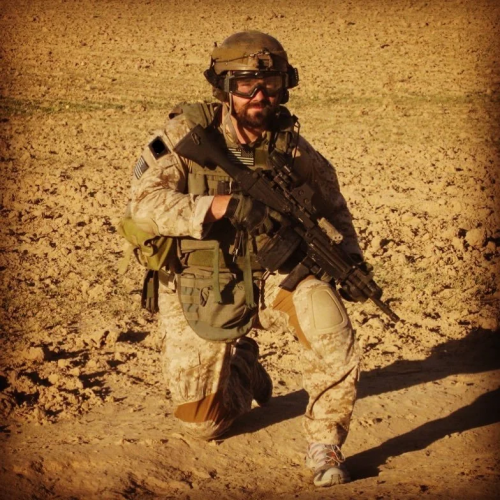
Yep here's Delta in Iraq with one, which the people who keep an eye on this kind of thing ID as '06-'07.
- Joined
- 11 February 2007
- Messages
- 4,132
- Reaction score
- 8,871
I've never heard short rifle used outside of the US/ATF Short Barrelled Rifle context. Historically a short rifle is a carbine. And note that your carbine grouping has three different roles in three examples (CQB, SMG-substitute, aircrew/vehicle rifle)Personally, I think that the best typology for infantry small arms length these days is:
- Rifle
- 20" or longer barrel (e.g. M16A2, L85A1)
- Short Rifle
- 14.1"-19.9" barrel (e.g. M4A1, most AKs)
- Carbine
- Below 14" barrel (e.g. CQBR, AKS-74U, L22A1)
- Joined
- 11 February 2007
- Messages
- 4,132
- Reaction score
- 8,871
Probably not surprising considering they were designed for self-defence use by cooks and drivers, not Tier 1 SOF.P90/MP7 sales is abyssmal, last time I saw them in real T1 not Secret Service hands is years ago.
Sorry for necroposting a little but I just saw you shoot muskets (cool and fun! Big fan of black powder shooting) but you do understand that the ballistic performance of a musket is on the order of a 12ga shotgun slug? There's some debate but at the demonstrated service charge muzzle velocity of ~1000 ft/s it's producing ~1760J in the linked test, with some reports of up to 1500 ft/s for 3000J. This compares to ~4000J for the Brenneke Black Magic, a comparable mass projectile (38g vs 35g). Now recoil force isn't directly linked to muzzle velocity, but I just want to help you re-frame the suggestion so you can understand you're suggesting to strap a 20" barrel semiautomatic 12 gauge shotgun to an AR-15 firing .17 Remington (5.56 necked down to .177 with 20 grain projectiles to reach >4000fps). Or a Gilboa Snake with one side chambered in .17 Remington and the other side in .458 SOCOM.You know what is cool about hypervelocity .177 caliber? The ability to resist the kick while moving while having immense penetration power. 5.56 mm was precise when braced on bipods and tripods, but not so much without Getting more rounds on target is driving the push for smaller higher velocity rounds than what is currently the mainstream rounds. A standing infantry can keep his barrel down in full automatic at 5.56 mm, but once you get up to 7.62 mm the barrel wants to rise. The infantry has to deploy the tripod and immobilize to lay effective precision fire. 5.56 mm was fine for suppression fire while moving, but not for precision while moving. If we can give moving infantry precision fire while moving that is a leap in capability. I believe you need more than a smaller caliber, which is why the computer is a must. But the secondary .510 caliber would come in handy when the .177 is not enough power to drop a target. In some cases the .177 might pass through targets without imparting much energy into what it hits. So when you do not see any effect you want Plan B.
I used to shoot large caliber muskets for fun. The 50s could poke through and in some cases actually split railroad ties. There is very little kick but the mass of the bullet obliterates what it hits. You may not penetrate a guy with heavy body armor. That guy hit by something over .50 caliber is going to be out of action for obvious reasons. They might even lose a whole limb.
https://www.guns.com/news/brown-bess-musket-ballistic-gel-test
Short, Magazine, Lee Enfield! I believe I've heard Othias from C&Rsenal use it? It's to describe the ~24" barrel universal rifles which were adopted by the US, UK, Switzerland, and others during the early 1900s which set the barrel length for rifles thereafter. In this case, I want to highlight the universally issued ~14-18" barrels that have become the default in most militaries, starting from the VZ.58 and AK, and moving over to the west through the 2000s (M4, SCAR-L, HK416F, MSBS Grot, G95A1, Gv.M/10 and M/25, Malyuk, Tavor, the standard AK-12, AK24B, Sako ARGS40, INSAS, SiG716, MPT-76, IA2, ARX-160, CM901, CZ BREN/2/3, most of the Galils being bought these days, K2, F2000, QBZ-95, Type 81, QBZ-191, T91, Type 89, Type 20, etc etc)I've never heard short rifle used outside of the US/ATF Short Barrelled Rifle context. Historically a short rifle is a carbine. And note that your carbine grouping has three different roles in three examples (CQB, SMG-substitute, aircrew/vehicle rifle)
I am not describing a typology based on role, but on barrel length. You can have many kinds of small arm within a given length category, like how back in the old days you'd have artillery carbines, cavalry carbines, gendarme carbines, etc etc etc. That said, I would like to point out that the AKS-74U and L22A1 serve the same role (vehicle crew weapon), and
When .177 (4.5 mm) doesn't penetrate it still imparts its full energy on the target. I would not want to be on the receiving end, as the impulse from the hit can have devastating results on human bodies even while not penetrating. The only reason to use such a small diameter round is to get more rounds on target over time. That is why 5.56 mm is a big advantage over 7.62 mm until penetration at range plays a factor. The 5.56 mm user is going to have better aim and carry more rounds in most situations.
Since this is supposed to be a 'new rifle catridges' I figured go for maximum cartridge count, and for what won't go down follow up with a large f--- slug for overkill. The .510 is actually smaller than the Euro 32 gauge but bigger than the American .410 shotguns. However, I wasn't proposing a shotgun slug but rather a full fledged .510 rifle shot. I am familiar with .454, .50, and .54 muskets. I would almost say the .410 with 3 inch magnums kicks harder than .50 and .454 muskets. But we want an aggressive smokeless rifle grade propellant not black powder or the slow burn granules. Subsonic projectile might use slow burn propellants, but that would not be a regular combat load.Sorry for necroposting a little but I just saw you shoot muskets (cool and fun! Big fan of black powder shooting) but you do understand that the ballistic performance of a musket is on the order of a 12ga shotgun slug? There's some debate but at the demonstrated service charge muzzle velocity of ~1000 ft/s it's producing ~1760J in the linked test, with some reports of up to 1500 ft/s for 3000J. This compares to ~4000J for the Brenneke Black Magic, a comparable mass projectile (38g vs 35g). Now recoil force isn't directly linked to muzzle velocity, but I just want to help you re-frame the suggestion so you can understand you're suggesting to strap a 20" barrel semiautomatic 12 gauge shotgun to an AR-15 firing .17 Remington (5.56 necked down to .177 with 20 grain projectiles to reach >4000fps)...
- Joined
- 11 February 2007
- Messages
- 4,132
- Reaction score
- 8,871
UK RMP close protection details have used HK53s in the past, which is basically the same concept we're now seeing with things like the SIG Rattler. The UK MOD Police, who are technically a civilian special police force, did have the MP7-SF as their standard carbine, but they seem to have transitioned to C8s.And Military Polices, AFAIK, doon't use PDWs either.
- Joined
- 11 February 2007
- Messages
- 4,132
- Reaction score
- 8,871
Fair point.Short, Magazine, Lee Enfield!
Scott Kenny
ACCESS: USAP
- Joined
- 15 May 2023
- Messages
- 19,511
- Reaction score
- 27,956
So, something like .50 Beowolf bolted onto an MP7?Since this is supposed to be a 'new rifle catridges' I figured go for maximum cartridge count, and for what won't go down follow up with a large f--- slug for overkill. The .510 is actually smaller than the Euro 32 gauge but bigger than the American .410 shotguns. However, I wasn't proposing a shotgun slug but rather a full fledged .510 rifle shot. I am familiar with .454, .50, and .54 muskets. I would almost say the .410 with 3 inch magnums kicks harder than .50 and .454 muskets. But we want an aggressive smokeless rifle grade propellant not black powder or the slow burn granules. Subsonic projectile might use slow burn propellants, but that would not be a regular combat load.
Heavy, complex, asking for trouble.
AIUI there was a general shift to L119A1 in the mid-2000s among UK close protection?UK RMP close protection details have used HK53s in the past, which is basically the same concept we're now seeing with things like the SIG Rattler. The UK MOD Police, who are technically a civilian special police force, did have the MP7-SF as their standard carbine, but they seem to have transitioned to C8s.
Something like that. .458 SOCOM and .50 Beowulf are similar concepts. The proposed .177 is MUCH higher performance than you could get out of 4.6x30mm though, it'd essentially require 5.56x45mm case capacity necked down (hence .17 Remington, which is that), and so it's even bulkier and more inconvenient.
https://defensereview.com/beck-defe...ed-chaos-hybrid-and-nanordx-explosive-rounds/Heavy, complex, asking for trouble.
Kicks like a 20 gauge.
Whatismoo -Something like that. .458 SOCOM and .50 Beowulf are similar concepts. The proposed .177 is MUCH higher performance than you could get out of 4.6x30mm though, it'd essentially require 5.56x45mm case capacity necked down (hence .17 Remington, which is that), and so it's even bulkier and more inconvenient.
Howdy !
.17 Remington case' AOL is .036" longer than the 1.760" lg 5.56 NATO case;
according to on-line data I have seen
Case capacity ( in grains H2O ) data seen for both .17 Remington and 5.56 NATO
indicates that .17Rem case capacity can been less than that of the 5.56 NATO
Exactly how much more case capacity the 5.56mm cal case holds.... varies by case manufacturer.
In .17" - .224" calibre cartridges having case capacities in the 27 - 28.5gr H2O
range ( as is being discussed here ), a case having some 1.5gr H2O more capacity than one w/ 27gr nominal H2O capacity.... would be case that likewise holds a tad more POWDER; too. *** In this case capacity range, the ability of one cartridge to be able to hold and safely discharge ( an example ) 1gr more powder than a similar smaller capacitied cartridge; constitutes a significant potential performance increase in obtainable muzzle velocity & terminal energy **** .... when comparison is made within the same calibre, and shooting the same bullet. Powder " burn rate " selected could be varied; to accomodate differences in barrel lengths used for specialized applications.
As an aside:
.17 Remington has been known to significantly foul barrels, during use. This might present firearm cleaning and serviceability issue beyond those seen when operating
( example ) 5.56" cal chambering ?
With regards,
357Mag
Scott Kenny
ACCESS: USAP
- Joined
- 15 May 2023
- Messages
- 19,511
- Reaction score
- 27,956
And hasn't gone anywhere since 2016.
Also means that the basic infantry rifle would need to be an AR-15 bolted to an AR-10. (Or rather an AR-18 bolted to an AR-10). Starting at about 15lbs.
- Joined
- 11 February 2007
- Messages
- 4,132
- Reaction score
- 8,871
It's not just close protection (which in the UK military is an RMP role more often than SF), SF went to the L119A1 after it won the SFW competition in 2000, followed by the Royal Marines, and a lot of civilian police forces (who'll have semi-auto variants). Special Forces L119A1s were replaced with A2s from 2013, a lot of which are the CQB model with 10" barrel.AIUI there was a general shift to L119A1 in the mid-2000s among UK close protection?
yeetmahboi
ACCESS: Top Secret
- Joined
- 6 April 2022
- Messages
- 1,025
- Reaction score
- 1,434
I disagree entirely. Forcing the other guy to wear bulky armour is enough of a benefit. The more I can impede the enemy without actually having to shoot at them the better. M855A1 is still going thru alot of current light armor albeit with some questionable terminal ballistics. But if I have a spare billion to invest.I'm not impressed with 6mm ARC or .264 USA for a standard infantry cartridge. They do SOF things well, but the high pressure 5.56 is easier to apply to Big Army and there's essentially no practical need to require small armors hard armor defeat by shooting through the plate vs around the plate (or using other weapons).
Sub 300m hard armor penetration with a tungsten tip.
Easy to make, yes. But the material tech is getting stagnant now, meanwhile manufacturing tech isn't. I think China is going to have a field day repurposing their UHMWPE extrusion tooling to pump out cheap plates. Just need Xi to put the stamp on the subsidy paper.Looking at the threat assessment, the second assertion is unsubstantiated (especially the first clause). Punching through some armor is good and part of barrier defeat, but it's fairly easy to make fairly robust body armor.
Talking about 7.62 belt fed. The US has disgustingly poor machingunery comparing to SF GPMG training. But that's a story for another day.This is less of an issue for countries (like the UK) with a long and consistent history of pushing 7.62mm belt feds into the squad level
Heavier bullet like 77gr TMK, could have a bonded jacket. Tool steel core, no tungsten. I would aim to reduce copper consumption everywhere. Maybe less copper, more zinc, a type of coating.e 30, assuming the UK actually procured an equivalent 7.62x51mm cartridge to M80A1, since it's fairly straightforward to defeat 7.62x51mm ball projectiles. Really EPR projectiles like M855A1 and M80A1 are quite good as far as infantry rounds go, with the only real major criticism being that perhaps they could be made more inexpensively by moving the 'copper plug' to another metal to reduce copper consumption (maybe some kind of steel-lead alloy? Or like a 78/22 steel-tungsten? IDK. Dense stuff is expensive. You could re-contour the bullet to be mass neutral by making it marginally longer
I disagree partly. Is the impact on troops operation leading first in any conversation? Yes. Is logistics in the same conversation? Nah. For me it'd fall into sunk cost fallacy, and the further the topic of a new intermediate caliber is neglected, the bigger and more impactful this fallacy grows. Small arms impact has significantly grown in the past decade as the battlefield becomes more dispersed, multipliers like scopes and bipods more accessible. I see the 556 as a pursuit for an 1.5x duplicate of the 30 Carbine. It has flourished so much but it's time to look further. Yeah we're in a pretty tight situation. I'd rather see things like FVL, reopening the Abrams line, a proper new IFV etc but the caliber situation is a close runner up.Anyway, my point is that the juice has to be worth the squeeze, and for infantry small arms armor pen cripples sustainability, shootability, and logistics.
Yeh." Forcing the other guy to wear bulky armour is enough of a benefit. The more I can impede the enemy without actually having to shoot at them the better. "
But....getting them to don their chemical warfare protective ensemble' is even better !
Especially in extreme desert WX, and hot/humid tropics. Plus, the perceived need to wear chem gear typically extends to a whole bunch of other aligned individuals as well;
including command, logistics; and admin types.
With regards,
357Mag
yeetmahboi
ACCESS: Top Secret
- Joined
- 6 April 2022
- Messages
- 1,025
- Reaction score
- 1,434
Yeah killing off MOPP is kinda stupid, thankfully no one has done that yet.Yeh.
But....getting them to don their chemical warfare protective ensemble' is even better !
Especially in extreme desert WX, and hot/humid tropics. Plus, the perceived need to wear chem gear typically extends to a whole bunch of other aligned individuals as well;
including command, logistics; and admin types.
With regards,
357Mag
Even more thankfully is that most nations kinda divested their "special warfare" stockpile. Dunno about the PLAGF or Russian Army but the US Army has like 5 labs and no major mass production facility but I'm sure they can spin a deal with chemical/pharmaceutical corps to build a stockpile in pace should the need arise. That being said the B and the C in NBC is not worth half the N's value for the same media impact (OTOH, for smaller states, these might actually be better, as they can be pretty easily concealed).
But if my Xitter mutuals tag me in an infopost about future-XXX-stan's 500 Hantavirus Promaxx tipped Farsi Iskanders and my commander doesn't issue MOPP gears I'm going to mutiny before the ferry lands.
Similar threads
-
-
-
Divergence on the Runway: An Alternate History of Military Aviation (1956-1982)
- Started by kpuscas
- Replies: 6
-
Design Study: MBTP-170 "MAUS-II LEVIATÃ" - Modern Heavy Tank Concept (2026)
- Started by Bulle
- Replies: 6
-
Roter Rhein , Krasnyy Reyn - What If The Axis Members Called It Quits In Early 1943?
- Started by TheRejectionist
- Replies: 36