Alternate Australian Defence Force 1970s Procurements?

That's true, but it's the LVT thats in production in the 50s, like the Centurion and British wheeled AFVs bought in that decade.
It's a doctrinal change from the -4s. Not a problem necessarily, but a thing to keep in the back of your mind.


The romantic in me would love RAAF V bombers, but given the £200m cap on the Defence budget at the time I'd think getting the Melbourne refitted and equipped with a new generation of aircraft would be totally abandoned if they were acquired. V bombers strike me as a but like the RAN's strike carrier ideas of 1964, a huge expense that would unbalance the entire ADF, and I'd prefer a handy, modernised light carrier than a sqn of strategic bombers.
That 200m cap really needed to be challenged, as it went from what, 1/3 of the total Oz.gov budget to maybe 1/8?


I agree that going F111 instead of A5C was kicking the can down the road, and the 3 years instead became 7 years and included a Phantom lease. However, I think the A5C would have it's own problems, it's base of support is much smaller than the F111 and ends in 1979 not 1996 for one. While I think it would make a good strike aircraft, a massive improvement over the Canberra, it isn't in the class of the F111.
The biggest problem with Vigilante is that it is nuclear only without a major redesign from linear bay to a conventional bay.
 
hat 200m cap really needed to be challenged, as it went from what, 1/3 of the total Oz.gov budget to maybe 1/8?
According to the website: https://www.abs.gov.au/ausstats/abs...e=Summary&prodno=1301.0&issue=2001&num=&view=
and going off the the fact the 2 Australian Dollars = 1 Australian Pound in 1966 when the currency changed. The Defence budget was under the 200m cap between 1953/54 to 1960/61, being under the cap by 45m to 4m during that period. Meaning if the Cap was stuck to during this period things like (Of course not all of them with out spending more than the cap)
  • the Vulcan Bomber buy
  • HMAS Sydney Modernised
  • the 4th Daring not cancelled
  • 5th & 6th Rivers not cancelled
  • all the Tribals modernised
  • all the Qs modernised
  • 30x Seaward Defence Motor Launches & 12x Coastal Minesweepers Built
  • 49x Sea Venoms & 45x Gannets brought for the FAA
  • MIM-23 Hawk brought for the Army
he biggest problem with Vigilante is that it is nuclear only without a major redesign from linear bay to a conventional bay.
The bomb bay would be used to hold more fuel for longer range and buddy refuelling. Plus maybe the the Bomb if Australia aquired it.
Any convention bombs would be on external hardpoints on the wings
 
I would have expected that the F4s to have been wired for the current model of AIM9 thought we probably use the AIM9B cause we already had it and to save money.

I can't find anything good on Sidewinder procurement, however I'm aware that when the Mirage was acquired the RAAF also acquired a batch of R530s that remained in service until 1986 and no additional R530s were procured after the initial mid 60s batch.

As best as I can find out a reasonable batch of Aim9Bs were acquired for the 112 Avon Sabres in the late 50s and another batch were procured through French channels for the 100 Mirages in the early-mid 60s, and the Sabre's Aim9Bs were passed to the Mirages. The RAN also bought Aim9Bs for the initial batch of 8+2. I suspect that much like the R530 these initial batches of Aim9Bs were retained in service all through the 70s until the Magic entered services.

If the F4s were retained I suspect that the Aim9B stocks acquired to equip ~100 fighters each carrying 2 missiles would be insufficient for another 23 fighters each carrying 4 Aim9 missiles. That fleet will require its own batch of Aim9s in the early-mod 70s by which time the 60s Aim9B is out of production.
 
I can't find anything good on Sidewinder procurement, however I'm aware that when the Mirage was acquired the RAAF also acquired a batch of R530s that remained in service until 1986 and no additional R530s were procured after the initial mid 60s batch.

As best as I can find out a reasonable batch of Aim9Bs were acquired for the 112 Avon Sabres in the late 50s and another batch were procured through French channels for the 100 Mirages in the early-mid 60s, and the Sabre's Aim9Bs were passed to the Mirages. The RAN also bought Aim9Bs for the initial batch of 8+2. I suspect that much like the R530 these initial batches of Aim9Bs were retained in service all through the 70s until the Magic entered services.

If the F4s were retained I suspect that the Aim9B stocks acquired to equip ~100 fighters each carrying 2 missiles would be insufficient for another 23 fighters each carrying 4 Aim9 missiles. That fleet will require its own batch of Aim9s in the early-mod 70s by which time the 60s Aim9B is out of production.
They might buy the upgraded AIM-9B for the Mirage III and Phantoms to reduce aquistion cost for the Fleet. though i would prefer the best version if the AIM9 for the phantoms
 
Setting up a FGW.2 rework line in Australia would be good if it could be incorporated into existing rework/maintenance facilities. However I still think the Phantoms would need their own batch of missiles.
 
Setting up a FGW.2 rework line in Australia would be good if it could be incorporated into existing rework/maintenance facilities. However I still think the Phantoms would need their own batch of missiles.
That would be a fantastic idea to give Australian industry experience with manufacturing Air to Air Missiles.
Yeah they probably would need there own stockpile of missile
 
According to the website: https://www.abs.gov.au/ausstats/[email protected]/Previousproducts/1301.0Feature Article102001?opendocument&tabname=Summary&prodno=1301.0&issue=2001&num=&view=
and going off the the fact the 2 Australian Dollars = 1 Australian Pound in 1966 when the currency changed. The Defence budget was under the 200m cap between 1953/54 to 1960/61, being under the cap by 45m to 4m during that period. Meaning if the Cap was stuck to during this period things like (Of course not all of them with out spending more than the cap)
Yep, that's the plan. Keep military spending to about 1/3 of total government spending, even as total government budget increases.


The bomb bay would be used to hold more fuel for longer range and buddy refuelling. Plus maybe the the Bomb if Australia aquired it.

Any convention bombs would be on external hardpoints on the wings
The wing pylons of the Vigilante have a weight limit, you're going to max out at 2000lb or 3x500 on each. With a severe attendant impact on range.
 
Yep, that's the plan. Keep military spending to about 1/3 of total government spending, even as total government budget increases.


The wing pylons of the Vigilante have a weight limit, you're going to max out at 2000lb or 3x500 on each. With a severe attendant impact on range.
Possibly mate, but the RAAF Selected the A-5C to replace the Canberra fleet so the must have thought it was all good in that department. It was the Government that wanted the F-111
 
FWIW early AAMs have a 'life on the wing' of 50-100 hours. The 8 Sabres in Thailand 1962-68 scrambled regularly fully armed, and I think Sabres in Malaysia would have scrambled regularly during the Confrontation years. This would have eaten into the lives of a reasonable number of Sidewinders, as would test firings and other attrition events, reducing the stockpile over time.
 
If we got the A5s instead would we get some tankers to support the A5s?

The Hancock mission report said that the RA5C had a full developed buddy tanking system, presumably we'd use that. I can't recall if it mentioned KC130 with the RA5C, it may have, it certainly did forbthe Mirage IV.

The document is on the forum somewhere.
 
The Hancock mission report said that the RA5C had a full developed buddy tanking system, presumably we'd use that. I can't recall if it mentioned KC130 with the RA5C, it may have, it certainly did forbthe Mirage IV.

The document is on the forum somewhere.
Yeah ive read it had buddy refueling system but say 6 KC-130 or KC-135 would be handy to allow more A5s to be available for strike missions instead of using a few for refueling
 
The Hancock mission report said that the RA5C had a full developed buddy tanking system, presumably we'd use that. I can't recall if it mentioned KC130 with the RA5C, it may have, it certainly did forbthe Mirage IV.

The document is on the forum somewhere.
I'm not sure an A-5C can fly slowly enough to tank off a Hercules, so Oz may be looking at buddy tanking or KC-135s with drogues and hose reels as their options.
 
I'm not sure an A-5C can fly slowly enough to tank off a Hercules, so Oz may be looking at buddy tanking or KC-135s with drogues and hose reels as their options.
The A5s were eqiped for buddy tanking. So if we want taker it would most likely have to be the kc135 then?
 
The Hancock mission report said that the RA5C had a full developed buddy tanking system, presumably we'd use that. I can't recall if it mentioned KC130 with the RA5C, it may have, it certainly did forbthe Mirage IV.

The document is on the forum somewhere.
The NAA 885 gal liner refuelling system for the A3J/A-5 Vigilante.
Although, in truth, I don't think it would be an efficient use of such a sophisticated strike platform.....

At least with an actual dedicated tanker/transport design, the whole RAAF/RAN would benifit.


Regards
Pioneer
 

Attachments

  • NAA A-5 Vigilante 885 gal liner refuelling system.jpg
    NAA A-5 Vigilante 885 gal liner refuelling system.jpg
    21.6 KB · Views: 15
The NAA 885 gal liner refuelling system for the A3J/A-5 Vigilante.
Although, in truth, I don't think it would be an efficient use of such a sophisticated strike platform.....

At least with an actual dedicated tanker/transport design, the whole RAAF/RAN would benifit.


Regards
Pioneer
No it isn't the most efficient use of a strike platform, but it does allow for more flexibility for operations if a tanker is not available you could use one of the A5s.
Though i do agree that a dedicated Tanker Aircraft would benefit the RAAF/RAN massively
 
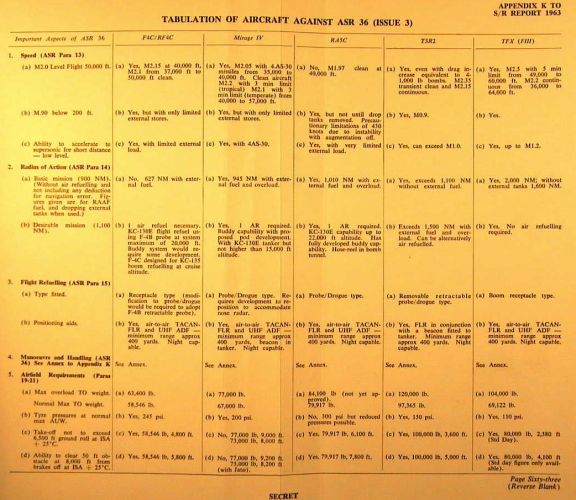
The specification wanted 1,000mn combat radius (iirc, I'm on my phone and don't have the document) and the A5C had an unrefuelled combat radius if 1,010nm (iirc). This combat radius is chosen because it was sufficient for the vast majority of missions the RAAF envisaged. Any mission beyond 1,000nm would be unusual and special enough for a buddy aircraft to not be a major detriment to other operations.

Of course some tankers would be good, but their lack isn't crippling.
 
The specification wanted 1,000mn combat radius (iirc, I'm on my phone and don't have the document) and the A5C had an unrefuelled combat radius if 1,010nm (iirc). This combat radius is chosen because it was sufficient for the vast majority of missions the RAAF envisaged. Any mission beyond 1,000nm would be unusual and special enough for a buddy aircraft to not be a major detriment to other operations.

Of course some tankers would be good, but their lack isn't crippling.
Is this the Document you are referring too? According to the document the desired mission was 1,100nmi which would require refueling from either a Buddy Tanker A-5 or KC-130E. So with the A-5 i would say tankers would be brought to help support them for operations from australia, with operations from butterworth they would use the buddy refuelling system
1762158999349.png
 
Last edited:
Is this the Document you are referring too? According to the document the desired mission was 1,100nmi which would require refueling from either a Buddy Tanker A-5 or KC-135E. So with the A-5 i would say tankers would be brought to help support them for operations from australia, with operations from butterworth they would use the buddy refuelling system

Yes, that the one.

You're focusing on a 'hoped for' radius rather than the 'must have' radius and extrapolating force structure requirements from an optional extra that none of the '1966' aircraft met. You should note that all of the 1966 aircraft mentioned the buddy system, even the F4C which did not have the capability and the Mirage IV which was in development at that point.

I'd suggest the way to look at it is the buddy system would be a useful addition that could be bundled up into the initial purchase at minimal cost without drawing much attention. If that meant that one A5C couldn't fly a 900nm mission that day so two A5Cs would fly 1,100nm missions that's a good trade-off. Indeed I'd suggest any buddy aircraft would be selected because it was flyable but not fully mission ready, perhaps it's weapons system was un-serviceable.

FWIW the distance from Learmonth to Jakarata is about 1030nm and Darwin to Jakarta is about 1460nm, but Learmonth wasn't expanded until 1973.

The mention of the KC130E in all three '1966' aircraft is interesting as the RAAF was looking at getting C130Es ordered 12 in November 1964. I suspect kicking the Canberra replacement down the road to 1969 'saved' money by not adding a handful of KC130E to the C130E buy.
 
Yes, that the one.

You're focusing on a 'hoped for' radius rather than the 'must have' radius and extrapolating force structure requirements from an optional extra that none of the '1966' aircraft met. You should note that all of the 1966 aircraft mentioned the buddy system, even the F4C which did not have the capability and the Mirage IV which was in development at that point.

I'd suggest the way to look at it is the buddy system would be a useful addition that could be bundled up into the initial purchase at minimal cost without drawing much attention. If that meant that one A5C couldn't fly a 900nm mission that day so two A5Cs would fly 1,100nm missions that's a good trade-off. Indeed I'd suggest any buddy aircraft would be selected because it was flyable but not fully mission ready, perhaps it's weapons system was un-serviceable.

FWIW the distance from Learmonth to Jakarata is about 1030nm and Darwin to Jakarta is about 1460nm, but Learmonth wasn't expanded until 1973.

The mention of the KC130E in all three '1966' aircraft is interesting as the RAAF was looking at getting C130Es ordered 12 in November 1964. I suspect kicking the Canberra replacement down the road to 1969 'saved' money by not adding a handful of KC130E to the C130E buy.
The A5 isn't to far off the desired range. I agree with how the buddy fuel tankers would be used and yes it would be useful for mission flexibility. I would say Learmoith would be expanded earlier with an A5 buy. Thats interesting about the KC130E buy, do you know how many KC130Es the RAAF wanted?
 
The A5 isn't to far off the desired range. I agree with how the buddy fuel tankers would be used and yes it would be useful for mission flexibility. I would say Learmoith would be expanded earlier with an A5 buy. Thats interesting about the KC130E buy, do you know how many KC130Es the RAAF wanted?

I've never seen anything to say the RAAF even looked at getting Hercules tankers, but it does seem like a strange coincidence that the November 1963 Hancock document specifically mentions the KC130E 3 times so I put 2 + 2 together.

I suspect that if KC130s were added to the 12 C130Es the RAAF would only get 2, as the Mirages couldn't be refueled, on the A5Cs.
 
I've never seen anything to say the RAAF even looked at getting Hercules tankers, but it does seem like a strange coincidence that the November 1963 Hancock document specifically mentions the KC130E 3 times so I put 2 + 2 together.

I suspect that if KC130s were added to the 12 C130Es the RAAF would only get 2, as the Mirages couldn't be refueled, on the A5Cs.
Fair enough. 2 seems to maybe 4 so you always have 2 in service the
 
Fair enough. 2 seems to maybe 4 so you always have 2 in service the

You can't go wrong picking the smallest, cheapest option, this is Australia's defence after all. In any case with a regular combat radius of 1,000nm against an aspirational target of 1,100nm and only 36 aircraft in the fleet a pair of tankers is likely enough to do those few missions greater than 1,000nm.
 
Apparently the Hancock mission stated that an A5C could refuel from a KC130 at 22,000', the Mirage IV refuelled at 15,000'
Oh? Outstanding!

KC130s it is, then.


The NAA 885 gal liner refuelling system for the A3J/A-5 Vigilante.
Although, in truth, I don't think it would be an efficient use of such a sophisticated strike platform.....
It wouldn't be super efficient, but adding that to a buy would be minimal extra costs for maximum gains.


At least with an actual dedicated tanker/transport design, the whole RAAF/RAN would benifit.
Agreed that a dedicated tanker would be better.

For the KC-130, is there a fuel bladder in the cargo bay as well as whatever fuel the Herc usually carries? Because if not, I'd actually recommend that Oz buy nothing but KC-130s. I believe that's what the USMC currently has. Entire fleet has the refueling gear.

If you don't need it for a tanker mission, any bird can fly cargo. And if you need a tanker, any bird can fly fuel. No reason to buy an extra 4 birds just to be able to have 2 tankers available. You buy maybe 1-2 extra birds if there's some oddball mission that would require full cargo hauling plus tankage.

 
For the KC-130, is there a fuel bladder in the cargo bay as well as whatever fuel the Herc usually carries? Because if not, I'd actually recommend that Oz buy nothing but KC-130s. I believe that's what the USMC currently has. Entire fleet has the refueling gear.
Agree the KC130s make some much sense for australia and where we operate. Apparently when we brought the 12 super Hercules there was an option for 6 to 8 KC130Js aswell
 
Oh? Outstanding!

KC130s it is, then.

It wouldn't be super efficient, but adding that to a buy would be minimal extra costs for maximum gains.

Agreed that a dedicated tanker would be better.

For the KC-130, is there a fuel bladder in the cargo bay as well as whatever fuel the Herc usually carries? Because if not, I'd actually recommend that Oz buy nothing but KC-130s. I believe that's what the USMC currently has. Entire fleet has the refueling gear.

If you don't need it for a tanker mission, any bird can fly cargo. And if you need a tanker, any bird can fly fuel. No reason to buy an extra 4 birds just to be able to have 2 tankers available. You buy maybe 1-2 extra birds if there's some oddball mission that would require full cargo hauling plus tankage.
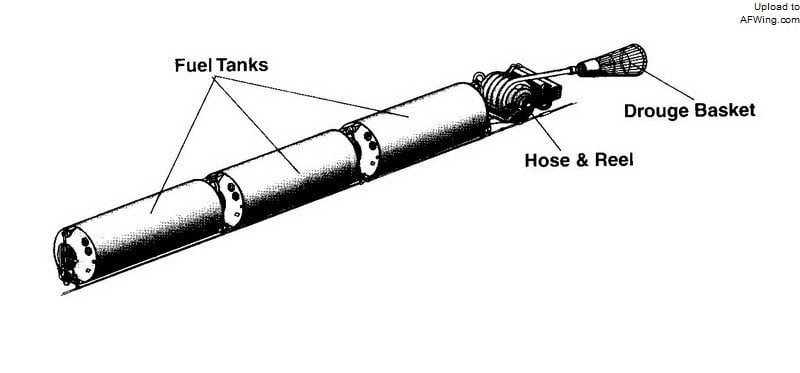
Yes, Scott, if my memory serves me right, the KC-130 air refuelling system is removable, with the wing-mounted pods and an optional internal fuselage tank being removed to allow the aircraft to carry cargo instead.

Really makes you wonder why the RAAF never utilised such a multi-mission capability for all those decades.....

Regards
Pioneer
 
Last edited:
Yes, Scott, if my memory serves me right, the KC-130 air refuelling system is removable, with the wing-mounted pods and an optional internal fuselage tank being removed to allow the aircraft to carry cargo instead.

Really makes you wonder why the RAAF never utilised such a multi-mission capability for all those decades.....

Regards
Pioneer

While it's possible to remove the refueling Hose-Drum Units from the wings of the Hercules, IIUC it's not like taking off a buddy pack, I think they're more or less fixed like those on a Victor or VC10 wings.

The reason we never used it was because we didn't get probe and drogue capable aircraft until the Hornet from 1985, and we converted 4 B707s to tankers in 1989-92.
 
While it's possible to remove the refueling Hose-Drum Units from the wings of the Hercules, IIUC it's not like taking off a buddy pack, I think they're more or less fixed like those on a Victor or VC10 wings.

The reason we never used it was because we didn't get probe and drogue capable aircraft until the Hornet from 1985, and we converted 4 B707s to tankers in 1989-92.
Would it be possible to retrofit IFR to say 2 sqns of mirage 3s to make the kc130 buy more appealing. Plus you've got the RAN A4s that could use it. What system did the P3s have?
 
I'm thinking about the A5 in 1966, and possibly a couple of KC130s and their impact on the Mirage replacement.

I think the F111 cast a very long shadow over the RAAF, it came at huge cost, right at the point where the threat evaporated but with a massive, transformative capability leap. I suspect these factors quashed any hope that the Mirage would be replaced early.

However, if the A5 entered service in 1966 at more or less the right price I wonder how this would affect how the Mirage replacement would be viewed. The replacement decision might well be made to replace while Vietnam was still being fought in about 1972.
 
I'm thinking about the A5 in 1966, and possibly a couple of KC130s and their impact on the Mirage replacement.

I think the F111 cast a very long shadow over the RAAF, it came at huge cost, right at the point where the threat evaporated but with a massive, transformative capability leap. I suspect these factors quashed any hope that the Mirage would be replaced early.

However, if the A5 entered service in 1966 at more or less the right price I wonder how this would affect how the Mirage replacement would be viewed. The replacement decision might well be made to replace while Vietnam was still being fought in about 1972.
My feelings is if the A5s entered service in 66 the mirage replacement would be selected in the early 70s, what it is im not a 100%. Could be the Saab37, Mirage F1 or F4s are the only jets i could see
 
Would it be possible to retrofit IFR to say 2 sqns of mirage 3s to make the kc130 buy more appealing.

I asked a RAAFie techo his exact question on Monday. He explained that RAAF Mirages were refueled using gravity, a screwdriver was jammed in a vent hole and fuel was pumped into the fuel filler hole from a truck, or drums or whatever was available, when the tanks were full the screwdriver was pulled out and the pumping stopped. In contrast the pressure refueling was like the dry-break system you see in motor racing, where the connection is pressurised and with self contained venting and overflow. Its only the latter which can be adapted for inflight refueling, meaning the RAAF Mirages cannot.

In any case, you shouldn't expect too much from IFR with Mirages, as it's limiting factor isn't fuel but engine lubrication oil, which was ejected via the exhaust after lubricating the engine. Those 1,100nm ferry flights from Darwin to Malaysia/Singapore via Indonesia were at the limit of the Mirage's endurance, not least being the engines using up almost all of their oil. An inflight refueled Mirage might go from 1hr20m endurance with the low-drag 'supersonic' tanks to almost 2hrs while keeping the perfromance. However, the same endurance can be achieved with ferry tanks, which can be discarded in air to air combat.
 
IIUC the Avon has a 'closed' cycle lubrication system, in that oil that has lubricated engine components is cycled through the engine continuously rather than being ejected once it had passed over the components like the Atar. This would be a great advantage on long flights as the oil is not 'consumed', and is perhaps why I've seen reference to the Avon being able to go from Darwin to Singapore in a single flight.
 
IIUC the Avon has a 'closed' cycle lubrication system, in that oil that has lubricated engine components is cycled through the engine continuously rather than being ejected once it had passed over the components like the Atar. This would be a great advantage on long flights as the oil is not 'consumed', and is perhaps why I've seen reference to the Avon being able to go from Darwin to Singapore in a single flight.
This makes me think the Avon powered mirage wpuld have been better for the RAAF than the atar powered version. Especially in a scenario where relations with Indonesia don't cool down like the did historical
 
Back
Top Bottom