Ainen
I really should change my personal text
- Joined
- 25 August 2011
- Messages
- 2,872
- Reaction score
- 4,982
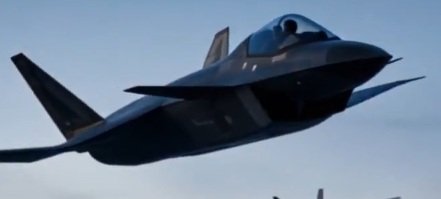
With this wing shape, I have an idea for a name. You can hear it from the picture.
p.s. not Qaher-313
Last edited:


Let's be fair to them, this isn't meant to represent anything in particular. It's just a crappy AI-generated concept made for publicity...With this wing shape, I have an idea for a name. You can hear it from the picture.
p.s. not Qaher-313
Let's be fair to them, this isn't meant to represent anything in particular. It's just a crappy AI-generated concept made for publicity...


BERLIN—MTU Aero Engines is urging the French and German governments to take “necessary steps” to preserve the expertise and industrial capabilities created to support the development of an advanced powerplant for a European sixth-generation combat aircraft, despite the fracture in the industrial partnership that would develop the platform.
You mean also the text, right?Let's be fair to them, this isn't meant to represent anything in particular. It's just a crappy AI-generated concept made for publicity...
You assume Germany can't produce analog to a plane, first conceived in mid-1990s, flown in mid-2000s and finished in mid-2010s?But what Airbus probably can't do on its own, and definitely not by 2040, is something similar in capability to F-35.
Spain will negotiate with Germany to launch a new sixth-generation fighter jet program , similar to the Future Combat Air System (FCAS) , which is currently being decommissioned. Within the Spanish industry, it is believed that both countries could execute a project of this magnitude without needing other partners, although they are not ruling out the possibility of additional companies joining, with the Swedish firm Saab being the most highly regarded.
Indra will be Spain's leader in any international program to develop a next-generation fighter jet, barring a major political shift. The Spanish company has held preliminary talks with Saab, which has indicated it needs the approval of the Swedish government to join any initiative.
However, our sources explain that "Saab is neither included nor expected in the short term." In that regard, they assert that the priority now is to undo all the agreements with France related to the FCAS program, something that will take some time. Although they insist that there is an intention to begin working closely with Germany as soon as possible.
Until now, some voices questioned whether Germany and Spain could independently manufacture a new-generation fighter jet and lead a new system of systems. However, various sources consulted do not rule out this possibility, emphasizing that, although it would be "risky," if there is ever a time to do it, it is now, as Europe is allocating record military budgets to rearm.
Spain had already committed around €2 billion to the FCAS program, but the total budget for the program was €100 billion, to be shared among the partners. The most expensive part was the manufacture of the fighter jets, which we now know will not be carried out. Therefore, it is expected that the German and Spanish governments will now be able to invest that money in a new project.
In any case, nothing is finalized yet, and high-level negotiations are ongoing after it was confirmed that the fighter jet that France, Germany, and Spain planned to build under the FCAS program has been scrapped. Any further developments will have to be announced by the respective governments of the countries involved.
I wonder if Ukraine would be interested in joining a programme led by Airbus and SAAB. They would certainly be interested in fielding a replacement for Gripen E/F in the long term. They might not be able to provide much in funding but there might some useful expertise when it comes to engines in Ivchenko/MotorSich.Airbus could probably execute some sort of a plane on its own, if it had to. But in that case, it may really be only a warmed up extention of eurofighter airframe. If 2040 deadline has any chance of being even remotely met. Providing Airbus has enough IP ownership in it, which it might, with owning nearly 50% of the Eurofighter consortium. That said, the rest is owned by BAE and Alenia, which are direct competitors for export market, as they're part of the GCAP consortium. Perhaps a bigger issue might be engines. Airbus (or even SAAB if it joins) don't really have many engine options. Best bet would be to try to secure Eurofighter's engines. But again, german firms hold 30% there. Spanish firm hold 16%. British RR holds 35 and Italian firm 19%. So again, there could be some throttling of access or at least development of more advanced versions.
If SAAB could be talked into joining, chances rise to execute a half decent plane. Given Swedish needs, that's actually pretty likely in my opinion. For as long as Airbus and Germany aren't asking for exclusive leadership on the project. Still, even that doesn't solve the engine issue. In theory, they could try sourcing from the states but such dependence is politicaly unwise. If an outside engine was to be sourced, it'd have to be complete transfer of tech, with no strings attached. It's unlikely US would go for that. Korea and Turkey are working on their own engines but who knows when those will be ready and how good they'll be. And with so much uncertainty, you can't start work on a plane if you don't know the engine output planned. Basically - the most realistic option is to design the plane around two existing EJ200 engines and then pray that a more advanced version will be politically and technologically available in 10 or 20 years time.
So what if it won't exactly be the most capable fighter jet in world - it's likely gonna be a decade or two behind the top of the curve - but at least it will help the domestic industry and it will not be subject to sanctions. Given the only realistic potential threat - Russia - it should be more than enough.

“We are currently setting ourselves up to not lose time,” Airbus Defense and Space CEO Michael Schöllhorn told investors on the sidelines of the Farnborough Airshow. “My preference does entail we find a solution that gives Airbus a significant position in a sixth-generation fighter with a Spanish and German industrial footprint.”
While he would not identify potential paths forward, he said, “There's a few options in Europe to work together.”
Questions remain, however, over the future of Safran's fighter-engine joint venture with Germany's MTU Aero Engines after the collapse of a Franco-German-Spanish FCAS fighter. Andries said the venture, which sources say has operated smoothly in contrast to feuding that triggered the collapse of the fighter itself, is funded until September and its future will depend on paths each country takes in future developments.
Safran cannot commit to two entirely different next-generation military engines and will give priority to France's military development requirements, he added. Sources familiar with the matter say the engine venture is set to close with its engineers redeployed in the absence of new funding, unless France and Germany decide to develop two broadly similar planes, something most analysts now consider unlikely.
Sadly, we don't know what was discussed during the meeting, but perhaps Francken/Belgium now sees an opportunity to secure a place in the engine program, with the Safran option seemingly off the table.As expected Airbus may have some trouble finding an engine for their future glider, as Safran indicates that the Eumet joint venture is most likely winding down by September.
i highlighted it ...Do not minor that angle
Absolutely not. Safran can make an engine alone.If nobody find a middle ground b/w the two new dissimilar projects surfacing from FCAS collapse (that itself is a result of the ex-Franco-British FCAS), both would be gliders.
Didn't Orpheus already get through CDR and start testing?design work will be complete by the end of the year.
This is probably RR Deutchland.Didn't Orpheus already get through CDR and start testing?
Definitely, just like Spain. It's not really a question of capability, but of cost and timeframe.Do you guys think that MTU and RR Germany can build an engine together?
Didn't Orpheus already get through CDR and start testing?
https://aviationweek.com/defense/ai...-royce-preparing-orpheus-be-cca-engine-family

Well, they could all build AN engine. question of how good and how advanced of an engine is a matter of time and money invested. neither of which is likely there to spare. if EJ200 level is enough, that is likely doable in an acceptable timeframe. simpler engines for subsonic CCAs could probably be done in just a few years.


With this wing shape, I have an idea for a name. You can hear it from the picture.
p.s. not Qaher-313
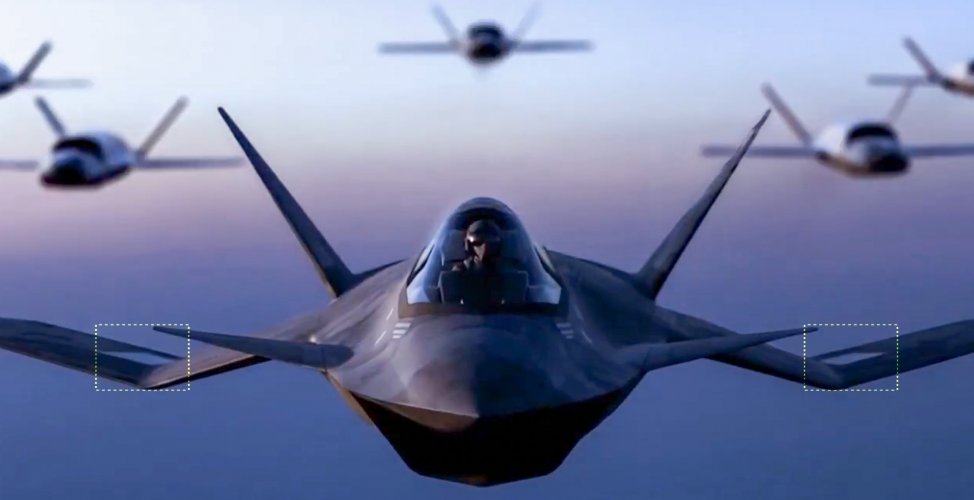
The engine bit can be resolved with one phonecall. One.
To Rolls Royce Plc.
"That new 12.5 ton engine that you are proposing to develop with the Indians?
We're interested"
Et voila...
When talking Indian shop , that answer might not be as straight forward as you imagine , after the bollywood dance off you learn they could be talking a 8 or 9 or 12.5ton or more likely no engine at all. Or just trying to get some technology transfer for an engine not developed in the 70's.


