A Weimar Republic with out the NAZI...

Michel Van

ACCESS: USAP
Senior Member
Joined
13 August 2007
Messages
10,423
Reaction score
18,114
This here focus on Military and Technology in 1930s Europe onwards
were Weimar Republic Survives

How ?
Obvious no Hitler, either he died during WW1 or get shoot during Bierhall putsch.
Either the DAP decay or NSDAP is forbidden and dissolve.
instead the DNVP fill the gap, but is not so successful as Nazi.

Point of Difference
Reichstag election November 1932
The Conservative parties manage to establish a coalition with DNVP as member, but unter Conservative control
With Franz von Papen as Chancellor
He establish his plan of "Impartial national governance" were voter merely elect the Reichs-President
What happens in 1934 as Von Hindenburg dies.

In upcoming years face Weimar several crisis
like Sudetendeutsche crisis, question of Austria unification with Weimar, Civil-war in Spain ?
Termination of Versailles Treaty and build up modern Army in Weimar
Were France and Italy would have serious issue with that.

What loophole Weimar could use to by pas Versailles Treaty ?
 
In upcoming years face Weimar several crisis
like Sudetendeutsche crisis, question of Austria unification with Weimar, Civil-war in Spain ?
The 1st two crisis were of Nazi German making. No Nazis = no problems there.
Civil war in Spain is not the German problem.

Termination of Versailles Treaty and build up modern Army in Weimar
Were France and Italy would have serious issue with that.

What loophole Weimar could use to by pas Versailles Treaty ?

Play UK and France one against the other, perhaps by playing the ball with the UK even if there are no direct short-term benefits to Germany? Once the wedge is driven between the two, the job is much easier. The economic crisis of 1929-33 can be used as a pretext.
 
Play UK and France one against the other, perhaps by playing the ball with the UK even if there are no direct short-term benefits to Germany? Once the wedge is driven between the two, the job is much easier. The economic crisis of 1929-33 can be used as a pretext.
That de facto is the policy of appeasement, by Nevile Chamberlain the British Prime minister 1937-1940.
He by passed The French, Czechoslovakia and Poland sovereignty during the Munich Agreement.
Yes He had to face the Third Reich and Italy, but his main goal was to keep peace in Europe at any price.
He would do same with Weimar Republic in result alienating the French.

However the leaders of Weimar could get impression, that Versailles Treaty is now strictly a french matter...
...What could let to a War.
 
You are forgetting the former colonies and the Kaiser's Jihad program.
Germany secretly helps to expand and spread the Jihad movement leading to outbreak of rebellion etc.
Accusations will go around for a while.
 
That de facto is the policy of appeasement, by Nevile Chamberlain the British Prime minister 1937-1940.
He by passed The French, Czechoslovakia and Poland sovereignty during the Munich Agreement.
Yes He had to face the Third Reich and Italy, but his main goal was to keep peace in Europe at any price.
He would do same with Weimar Republic in result alienating the French.

However the leaders of Weimar could get impression, that Versailles Treaty is now strictly a french matter...
...What could let to a War.
France and Poland both needed to be destroyed for Germany to continue to exist so a war would happen in any case. The big questions are around the UdSSR and GB. Could Weimar continue to improof it relations with the UdSSR?
And can GB accept a strong Germany on the continent?
 
Even if there was no Nazi Party, the most consistent threat to the Weimar republic was probably the German army, which was supportive of the Nazis and others who would weaken that government. "Undefeated in the field" was a lie as was the defeatist blame assigned to the government who signed the Armistce.

Artie Bob
 
Even if there was no Nazi Party, the most consistent threat to the Weimar republic was probably the German army
It was threaten by all side: Military, own Politician, Extremist Left and Right, Communist.
The NAZI manage to get on Top because:
The diabolical charisma Hitler, The Propaganda Goebbles, and Göring connection to High society Germany.
They used the mood of disappoint German people hit by Great Depression and hate of the Versailles Treaty.
Ironically there SA recruit from disgruntled Communist

And without NSDAP ?
I guess that few key figure end up in DNVP of Alfred Hugenberg
Goebbels could end up at media mogul Alfred Hugenberg (do his connection to UFA Movie studio)
but Hugenberg had not connection Hitler gain with Göring help.
Even during they high time they had lower results as NSDAP later in the 1930s

back to main Topic
rearming Germany under Weimar Republic
Sooner and later the military want Aircraft Tanks and new weapons
and that without Hitler or Göring in way...
 
The 'Pocket Battleships' were started as early as 1929, so even Weimar was looking to evade the restrictions of Versailles that early. I suspect even without the Nazis Weimar would look for loopholes throughout the 30s, and perhaps even get something like the Anglo-German naval agreement more or less on schedule.
 
back to main Topic
rearming Germany under Weimar Republic
Sooner and later the military want Aircraft Tanks and new weapons
and that without Hitler or Göring in way...
They have the idea of modern warfare being tested in Lipetsk, Russia. Some indirect & concelaled help comes from Sweden, some from Switzerland. They are very restricted in the powered aircraft they are allowed to make, so the gliders are all the rage, and with them the advanced aerodynamics, since there is no engine power to cancel the drag. No designer worth his salt will insist on the biplanes, apart from training.
(I acknowledge the combat biplanes from OTL Germany)
Come the mid-1930s, and with the wedge driven between the UK and France, they can challenege the rules of Versailles more openly. Start add the armored cars and trucks so the training can be also done in Germany, introduce the small tanks shortly after (the Pz-I works, and with some tweking will work even better, buy the licence of the Landswerk 60 tank for the follow-up before the fully-fledged German tanks can be had.
Artillery and Flak will come on-line more or less as per OTL.

Military aircraft - also pretty much as per OTL. Goering was not standing in the way of Luftwaffe, he was a key player for the LW to became what it was. Same for Hitler - he wanted a powerful military for Germany, so the strong LW was pretty much up his alley.
 
They have the idea of modern warfare being tested in Lipetsk, Russia. Some indirect & concelaled help comes from Sweden, some from Switzerland. They are very restricted in the powered aircraft they are allowed to make, so the gliders are all the rage, and with them the advanced aerodynamics, since there is no engine power to cancel the drag. No designer worth his salt will insist on the biplanes, apart from training.
i wonder if the Jet engine and Rocket engine would consider as Loophole in regulation.
Rockets like Von Braun made were more Ballistic Missile to by past the regulation on heavy artillery.
They were various rocket Interceptors proposed even by von Braun
But that point short range rocket plane for Point air defence

Here is simpler to trow the Versailles Treaty away and start building piston Fighters and bombers.
 
In my opinion, what caused the rise of Nazism was the infinite fiscal voracity of the French finance minister, who used the pretext of war reparations to exacerbate the suffering of the German people.

Once the rebellion has begun, any madman can put himself at the head of it, the more extremist, the better. The Americans and British tried to soften the French attitude to allow the Germans to recover their economy to pay for the reparations, but all was in vain.
 
Once the rebellion has begun, any madman can put himself at the head of it, the more extremist, the better. The Americans and British tried to soften the French attitude to allow the Germans to recover their economy to pay for the reparations, but all was in vain.

That will happens in 1934 as Von Hindenburg dies.
Who ever will be new Reichs President, He will let Weimar to War with France !

but Reichswehr missing Tanks, Aircraft, while Navy need Submarines and Boats.
Another issue Weimar depends on resources import (just like the Third Reich).
 
The 'Pocket Battleships' were started as early as 1929, so even Weimar was looking to evade the restrictions of Versailles that early. I suspect even without the Nazis Weimar would look for loopholes throughout the 30s, and perhaps even get something like the Anglo-German naval agreement more or less on schedule.
The Reichswehr has actively been evading the restrictions always and ever since the peace treaty was signed. First of all on the subjects of submarines and airplanes.
The Panzerschiffe A - C, however, adher pretty strictly to the peace treaty. AFAIK, the navy didn't even try to cheat with the displacement (as was later done with the CAs). So how exactly are they a sign of circumventing the peace treatie's restrictions?
 
The Reichswehr has actively been evading the restrictions always and ever since the peace treaty was signed. First of all on the subjects of submarines and airplanes.
The Panzerschiffe A - C, however, adher pretty strictly to the peace treaty. AFAIK, the navy didn't even try to cheat with the displacement (as was later done with the CAs). So how exactly are they a sign of circumventing the peace treatie's restrictions?

IIUC the Panzerschiffe displaced 10,600-12,340t, when most 'Washington' cruisers of the era and the Nelson and Rodney tried hard to come in under their 10,000 and 35,000t limits.

IIUC Versailles set the 10,000t limit thinking of a coast defence ship, but the Germans were thinking offensively, which isn't in the spirit of Versailles.
 
True enough, and as I said before: Germany has always been activly breaking the Versailles Treaty when she expected to get away with it.

Now, the lead ship Deutschland/Lützow ended up at 10600ts, which obviously is above the 10000 tons limit, and also obviously, the navy didn't give a damn about that breach. However, to get all the armament, armour, speed and range into such a comparatively small ship the navy did what they always did in the interwar years: They used the very newest technologies in a scale that was not well proven yet. And, of course, they didn't quite meet the performance requirements nor could they keep the calculated weight limits. Like with about every other German warship of the interwar years. If you take into consideration the weight problems the German navy had with, e.g., the first destroyer classes, the you might call it a little wonder that the Deutschland had a mere 600ts overweight and not much more.

If the navy would have had the intention to actvely cheat with the weights of the class one would expect a much higher displacement of Deutschland - probably at around the 12000 to 12500 tons that Graf Spee ended up five years later.

We must also not forgett that the political situation changed drastically between ~1925 and 1935: In 1926, about when the planning phase for the Deutschland class must have started, France occupied parts of Germany for comparatively little reason. in 1935 Britain not only ignored various open breaches of the peace treaty by Germany but also rewarded her with the new Anglo-German Naval Agreement. And France... did nothing.

IIUC Versailles set the 10,000t limit thinking of a coast defence ship, but the Germans were thinking offensively, which isn't in the spirit of Versailles.

First of all:
There I can't accept no such thing as a spirit of Versailles. The treaty conditions were very concrete and harsh, and they were so by intention. If the treaty didn't mention that the ships were only to be defensive and coast defence ships, then your bad luck, France! ;)

Second:
The offensive capabilities of the Deutschland class shrink considerably if you don't look only at the ships' data but also at the overall capabilities and size of the German fleet as defined in the peace treaty.

Third:
It was pretty clear, that the most probable conflict would be between Germany and Polland. In that case, France would have entered the war on Pollands side, in which case the Deutschland class' task would have been to block the entry of French cruisers. That actually is defensive.


But as I said before:
Germany did evade the treaty restrictions willingly and gladly wherever possible. Only those ships are no suitable example!
 
Perhaps spirit is the wrong word, expectation is better. The Allies didn't think much could be done with 10,000t, and the (over)reaction to the 'Pocket Battleships' shows the impact these ships had on the world stage. IIUC the French Dunkerque-class battleships were partially in response, which in turn elicited responses from Italy and Germany.

In any case the Germans didn't fall in line with the expectations of the Allies, they broke free and chose an unexpected path long before Hitler came to power. These ships are one thing; there were others as has been noted.
 
In my opinion it was a waste of resources to build battleships and cruisers for the Kriegsmarine that would never have been able to beat the Royal Navy in another battle of Jutland. If those resources had been used to manufacture strategic bombers, the Luftwaffe would have destroyed the British fighter factories in 1940 to take over, after pursuing the Royal Navy, which would have had to retreat to Canada. Had the resources been spent on building thousands of Ju 52 transports, the Sea Lion invasion would have been successful, transporting several divisions to the Sector 11 airfields. If the resources had been used in the construction of Type 21 submarines, England would have starved into surrender.
 
Perhaps spirit is the wrong word, expectation is better. The Allies didn't think much could be done with 10,000t, [...]
Mmmm... I'd rather formulate it a bit different:
The intention/expectation of the Entente forces (France, in particular) was that, when push came to shove, that they/she would have a guaranteed and absolute superiority over the German fleet.

We don't have to talk about Britain's superiority, less about the combined fleets of the entente. So let's concentrate on a direct comparison France vs. Germany:
- At the end of WW I France had (at least) the four Courbet and three Bretagne Dreadnought-type battleships, that's a total of 48 12" guns and 36 13" guns (admittedly at a low speed, but nonetheless).
- Germany was allowed a total of six capital ships at 10000 tons each with a maximum caliber of 11". At first those were old pre-Dreadnought ships with 4 11" guns each, with the prospect that replacement ships could go up to 6 big guns (I don't think that you reasonably could go further up). That amounts to a total of 36 11" guns.

Germany had various option to build new ships within these limits, heavyly armoured but slow "battleships", faster "battlecruisers" with lighter armour, or even unarmoured "heavy gunboats", but the results would always have been the same:
Either they engage in battle and get overwhelmed by the pure numbers of French guns or they withdraw and allow the French fleet to operate at will. (Germany's situation actually was even worse than that, because she was only allowed a really ridiculous number of ridiculously small torpedoboats).

In terms of the Washington treaty, Germany was left a small number of medium sized sticks to fight the (Washington) cruisers but was totally denied the big stick.

The reactions to the "pocket battleships" were, AFAIK, mostly from the press and armchair admirals.
Britain had enough (and faster) cruisers to deal with them.
The French Dunkerques, though, were a reaction to the Deutschlands, indeed, but only a partial one on the other hand. The French navy was more concerned with fascist Italy, and has already been looking for a proper answer to her heavy cruisers (c.f. here). The advent of the Deutschlands basically defined armour and gun calliber and, of course, raised the pressure to actually build the ships. But the idea of a cruiser-killer was much older.
 
In my opinion, what caused the rise of Nazism was the infinite fiscal voracity of the French finance minister, who used the pretext of war reparations to exacerbate the suffering of the German people.

Once the rebellion has begun, any madman can put himself at the head of it, the more extremist, the better. The Americans and British tried to soften the French attitude to allow the Germans to recover their economy to pay for the reparations, but all was in vain.

The Versailles treaty's fiscal penalties were about a severe as those paid by France after the Franco-Prussian War and possibly less than those paid by France after the Napoleonic Wars.

Germany's defeated army's generals started one of the great lies of history, the stab in the back myth. The Entente should have made them watch and salute as the Entente's armies marched down the Strasse 17 juin to the Brandenburg Gate to bivouac and make the generals clean up after the horses
 
The Versailles treaty's fiscal penalties were about a severe as those paid by France after the Franco-Prussian War and possibly less than those paid by France after the Napoleonic Wars.

Germany's defeated army's generals started one of the great lies of history, the stab in the back myth. The Entente should have made them watch and salute as the Entente's armies marched down the Strasse 17 juin to the Brandenburg Gate to bivouac and make the generals clean up after the horses
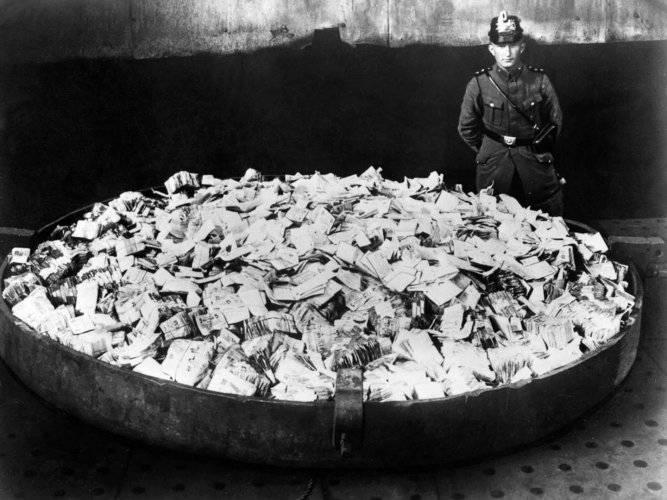
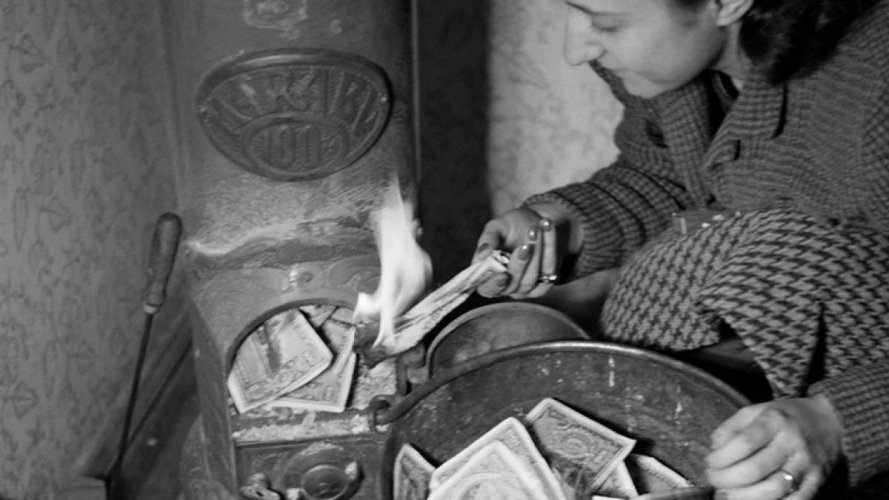
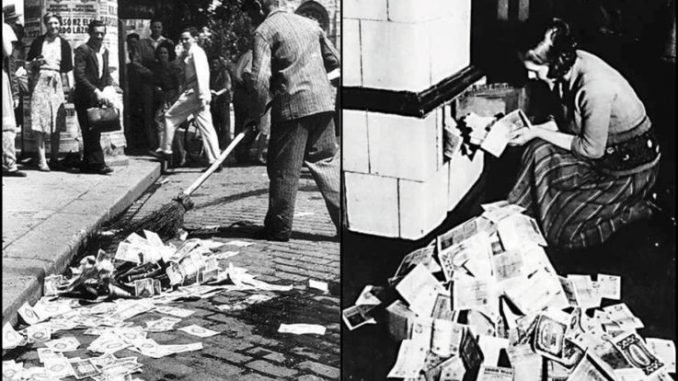
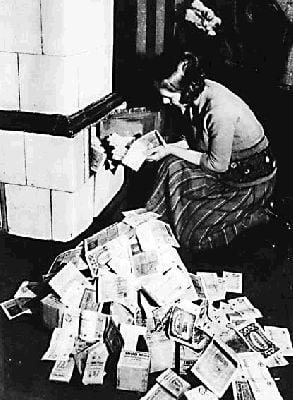
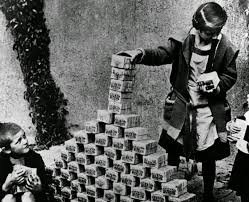
They were not affordable by Germany. They directly caused the Weimar Hyperinflation, and likely caused WW1 part 2, I mean WW2.
 
In my opinion it was a waste of resources to build battleships and cruisers for the Kriegsmarine that would never have been able to beat the Royal Navy in another battle of Jutland. If those resources had been used to manufacture strategic bombers, the Luftwaffe would have destroyed the British fighter factories in 1940 to take over, after pursuing the Royal Navy, which would have had to retreat to Canada. Had the resources been spent on building thousands of Ju 52 transports, the Sea Lion invasion would have been successful, transporting several divisions to the Sector 11 airfields. If the resources had been used in the construction of Type 21 submarines, England would have starved into surrender.

Recent history had shown that Germany could build the world's 2nd largest navy, use it to hold the RN at bay in the North Sea, conduct operations in the Baltic and forward bases in Flanders. Other powers maintained and added to large fleets between the wars, so it stands to reason that Germany would follow the conventional wisdom, which was utilised by the winners of WW2, and starting building up a surface fleet again.

As for the other stuff, an airborne invasion of Britain would have been about as successful as Market Garden at best and the Type 21 uboat came along in 1944 after years of tough war experience. Neither of these things is practical in the 20s and early 30s.
 
Recent history had shown that Germany could build the world's 2nd largest navy, use it to hold the RN at bay in the North Sea, conduct operations in the Baltic and forward bases in Flanders. Other powers maintained and added to large fleets between the wars, so it stands to reason that Germany would follow the conventional wisdom, which was utilised by the winners of WW2, and starting building up a surface fleet again.

As for the other stuff, an airborne invasion of Britain would have been about as successful as Market Garden at best and the Type 21 uboat came along in 1944 after years of tough war experience. Neither of these things is practical in the 20s and early 30s.
Market Garden dropped Polish paratroopers on a Panzer division, the Ju-52s conquered Norway and Crete (with terrible casualties) by landing at Allied airfields and unloading materiel while paratroopers fought on the ground. The elite Fallschrimjägern troops would only have faced the Waafs and the retirees of the territorial militia.

The U-boats would have won if the war had started a year later, but the Battle of the Atlantic was fought with the Type VII, which was a crew training submarine.
 
In my opinion, what caused the rise of Nazism was the infinite fiscal voracity of the French finance minister, who used the pretext of war reparations to exacerbate the suffering of the German people.

Once the rebellion has begun, any madman can put himself at the head of it, the more extremist, the better. The Americans and British tried to soften the French attitude to allow the Germans to recover their economy to pay for the reparations, but all was in vain.
Riiiight... France also caused the 1929 crash, political instability, and the rise of communism and far-right in Germany... Bad bad France.
A big cause of the rise of nazism was the big lie of the "stab in the back" which gave the illusion in German population that it wasn't defeated militarily and that the treaty was an unjustified humiliation. When in fact the real humiliation for Germany was loosing the war, but that was too much to accept, so blaming the other or a "humiliating" treaty was the easy way.
The only purpose of the Treaty of Versailles was the seek reparation for the immense damages caused by 4 years of war on French soil, and try to contain Germany militarism (and that failed because the treaty wasn't hard enough, thank you W.Wilson).
I suppose you figure France, after winning that war, but ruined and in ruin on the whole north-east sector, should have said "hey! was a good fight! don't bother, I'll clean all the mess you left here, no probs, oh and yeah, you can keep rearming as much as you like...".
No.
What caused the rise of the nazis was a serie of factors :
  • Political and social crisis: The Weimar Republic (1919–1933) was weakened by successive crises (coups, hyperinflation, the Great Depression of 1929). Nazism exploited these weaknesses by promising to restore Germany's greatness.
  • Nazi propaganda: Hitler used the Treaty of Versailles as a symbol of German humiliation, presenting it as a betrayal by the “November criminals” (the leaders who signed the armistice in 1918).
  • Other factors: Fear of communism, anti-Semitism, and Hitler's charisma also played a major role.
Sorry, but parroting that "Versailles IS WHAT caused the rise of the nazis" is repeating an old bs that the nazis themselves liked a lot.
The treaty was indeed an effective propaganda tool for the nazis, but it alone does not explain the rise of nazism, far from it.
 
Last edited:
Market Garden dropped Polish paratroopers on a Panzer division, the Ju-52s conquered Norway and Crete (with terrible casualties) by landing at Allied airfields and unloading materiel while paratroopers fought on the ground. The elite Fallschrimjägern troops would only have faced the Waafs and the retirees of the territorial militia.

Airborne troops are hideously vulnerable to even regular infantry divisions with a full compliment of artillery, let alone armoured units and Britain by 4 August had 698 tanks in the UK: 336 light, 189 infantry, and 173 cruiser. This is why airborne operations usually were in conjunction with a heavy ground or amphibious operation like the German invasion of Norway and operations Overlord and Market Garden. Crete is an outlier, both the victory and the British situation on the island, yet it was on a knife edge and could easily have been a German defeat and casualties were so bad the Germans never did another major airborne operation.

The U-boats would have won if the war had started a year later, but the Battle of the Atlantic was fought with the Type VII, which was a crew training submarine.

The war started when it started, if it had started a year later the British and French would have been stronger too. In any case the Type VII Uboat wasn't much different to the likes of the British S class sub.
 
Airborne troops are hideously vulnerable to even regular infantry divisions with a full compliment of artillery, let alone armoured units and Britain by 4 August had 698 tanks in the UK: 336 light, 189 infantry, and 173 cruiser. This is why airborne operations usually were in conjunction with a heavy ground or amphibious operation like the German invasion of Norway and operations Overlord and Market Garden. Crete is an outlier, both the victory and the British situation on the island, yet it was on a knife edge and could easily have been a German defeat and casualties were so bad the Germans never did another major airborne operation.


The war started when it started, if it had started a year later the British and French would have been stronger too. In any case the Type VII Uboat wasn't much different to the likes of the British S class sub.
War begins when the aggressor decides and if he is not well prepared perhaps, he should have waited another year.
 
The elite Fallschrimjägern troops would only have faced the Waafs and the retirees of the territorial militia.
You should quit whatever you are smoking and take up Romeo y Julieta Churchills instead.

Alternatively watch the British war film Went the Day Well? Nearly all the cold-blooded and gruesome killing is done by women (the blokes tend to clutch Tommy guns like gangsters).

it was a waste of resources to build battleships and cruisers for the Kriegsmarine that would never have been able to beat the Royal Navy in another battle of Jutland
Agreed on this. The Kriegsmarine's surface ships had about as much effective return as all the millions of tons of concrete spent on the Atlantic Wall.

If those resources had been used to manufacture strategic bombers, the Luftwaffe would have destroyed the British fighter factories in 1940
Got to have air superiority or thousands of bombers to achieve that. The Allied 24-hour 365-day campaign 1943-45 dealing out kilotons of HE every day didn't even manage to stop German aircraft production. Good luck doing that in 1940 with a handful of Do 19s and Ju 89s....

Had the resources been spent on building thousands of Ju 52 transports, the Sea Lion invasion would have been successful,
Wait are you building thousands of strategic bombers or thousands of Tante Jus? Can't have both, unless Germany has suddenly become the USA.

transporting several divisions to the Sector 11 airfields.
Unarmed Junkers coming straight for AA-defended airfields can't go wrong surely? Crete was a bloodbath, almost 300 Junkers lost and nearly 6,000 casualties.

If the resources had been used in the construction of Type 21 submarines, England would have starved into surrender.
The U-boats would have won if the war had started a year later, but the Battle of the Atlantic was fought with the Type VII, which was a crew training submarine.
Type XXI in 1940? Design work didn't even begin until 1943....
How late are you delaying this war?


As to the main topic of this thread, I feel that some kind of relaxation of the military terms were likely by 1940, especially in regards the manufacture of armed aircraft (which a blind eye had been turned to for years even with the fictions of Swedish and Swiss subsidiaries). By 1940, Stalin's moves in the Baltics (likely to take place at some point even without the historical Molotov-Ribbentrop Pact) is likely to strengthen Weimar Germany's call to bolster its defences.

Air - I can see some relaxation on this, probably with numerical limits of fleet size and allowance of fighters and small two-seat army cooperation types but no multi-engined bombers (France would be most worried about those). It's likely that there would be no independent Luftwaffe as such, but an Army Air Force. Something like the Stuka might materialise.

Land - increase in troop numbers, revitalised artillery, possibly even a relaxation on tanks (perhaps with quantitative or weight/gun calibre restrictions - France not likely to worry about a few Pz I & IIs).

Sea - replacement of warships as specified by Versailles, so six Panzerschiff (no three-turret S&G), six Konigsburg & Leipzig class light cruisers, new destroyers. I doubt the submarine ban would be lifted, possibility of increased fleet tonnage, probably nothing as generous as 35% of the RN though (France would be keen to limit expansion given Mussolini's naval plans). The collapse of the Washington system due to Japan's actions is likely, so a blind eye might be turned to exceeded tonnage for individual warships. Would be a pretty effective navy in regional terms for the Baltic. The Navy might get its own air arm with seaplanes.
 
You should quit whatever you are smoking and take up Romeo y Julieta Churchills instead.

Alternatively watch the British war film Went the Day Well? Nearly all the cold-blooded and gruesome killing is done by women (the blokes tend to clutch Tommy guns like gangsters).


Agreed on this. The Kriegsmarine's surface ships had about as much effective return as all the millions of tons of concrete spent on the Atlantic Wall.


Got to have air superiority or thousands of bombers to achieve that. The Allied 24-hour 365-day campaign 1943-45 dealing out kilotons of HE every day didn't even manage to stop German aircraft production. Good luck doing that in 1940 with a handful of Do 19s and Ju 89s....


Wait are you building thousands of strategic bombers or thousands of Tante Jus? Can't have both, unless Germany has suddenly become the USA.


Unarmed Junkers coming straight for AA-defended airfields can't go wrong surely? Crete was a bloodbath, almost 300 Junkers lost and nearly 6,000 casualties.


Type XXI in 1940? Design work didn't even begin until 1943....
How late are you delaying this war?


As to the main topic of this thread, I feel that some kind of relaxation of the military terms were likely by 1940, especially in regards the manufacture of armed aircraft (which a blind eye had been turned to for years even with the fictions of Swedish and Swiss subsidiaries). By 1940, Stalin's moves in the Baltics (likely to take place at some point even without the historical Molotov-Ribbentrop Pact) is likely to strengthen Weimar Germany's call to bolster its defences.

Air - I can see some relaxation on this, probably with numerical limits of fleet size and allowance of fighters and small two-seat army cooperation types but no multi-engined bombers (France would be most worried about those). It's likely that there would be no independent Luftwaffe as such, but an Army Air Force. Something like the Stuka might materialise.

Land - increase in troop numbers, revitalised artillery, possibly even a relaxation on tanks (perhaps with quantitative or weight/gun calibre restrictions - France not likely to worry about a few Pz I & IIs).

Sea - replacement of warships as specified by Versailles, so six Panzerschiff (no three-turret S&G), six Konigsburg & Leipzig class light cruisers, new destroyers. I doubt the submarine ban would be lifted, possibility of increased fleet tonnage, probably nothing as generous as 35% of the RN though (France would be keen to limit expansion given Mussolini's naval plans). The collapse of the Washington system due to Japan's actions is likely, so a blind eye might be turned to exceeded tonnage for individual warships. Would be a pretty effective navy in regional terms for the Baltic. The Navy might get its own air arm with seaplanes.

Much propaganda has been made about the moral resistance of the British people during the Blitz of 1940, but the reality is that they had nowhere to go and the government was already moving files to Canada. In my opinion, the news, even censored, that German troops were occupying RAF airfields would have been enough for panic to have brought down Churchill's fighting government to replace it with another more dialogue-oriented: Another Vichy... and we saved the empire.

I haven't said in any post that the Type 21 could be built in 1940, but the British people would have starved in both 1940 and 1943.

We are debating what might have happened in 1940 if the German and British leaders had been omniscient, but they were only prejudiced and conflicting mature men who made dangerous decisions every day.

I wonder what the leaders of the future will do when AI gives them the opportunity to believe they know all the reality. Maybe they're already doing it now... Interesting times again, after a very long nuclear peace.
 
Riiiight... France also caused the 1929 crash, political instability, and the rise of communism and far-right in Germany... Bad bad France.
A big cause of the rise of nazism was the big lie of the "stab in the back" which gave the illusion in German population that it wasn't defeated militarily and that the treaty was an unjustified humiliation. When in fact the real humiliation for Germany was loosing the war, but that was too much to accept, so blaming the other or a "humiliating" treaty was the easy way.
The only purpose of the Treaty of Versailles was the seek reparation for the immense damages caused by 4 years of war on French soil, and try to contain Germany militarism (and that failed because the treaty wasn't hard enough, thank you W.Wilson).
I suppose you figure France, after winning that war, but ruined and in ruin on the whole north-east sector, should have said "hey! was a good fight! don't bother, I'll clean all the mess you left here, no probs, oh and yeah, you can keep rearming as much as you like...".
No.
What caused the rise of the nazis was a serie of factors :
  • Political and social crisis: The Weimar Republic (1919–1933) was weakened by successive crises (coups, hyperinflation, the Great Depression of 1929). Nazism exploited these weaknesses by promising to restore Germany's greatness.
  • Nazi propaganda: Hitler used the Treaty of Versailles as a symbol of German humiliation, presenting it as a betrayal by the “November criminals” (the leaders who signed the armistice in 1918).
  • Other factors: Fear of communism, anti-Semitism, and Hitler's charisma also played a major role.
Sorry, but parroting that "Versailles IS WHAT caused the rise of the nazis" is repeating an old bs that the nazis themselves liked a lot.
The treaty was indeed an effective propaganda tool for the nazis, but it alone does not explain the rise of nazism, far from it.
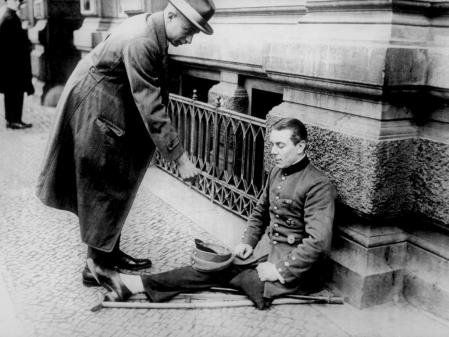
Having suffered more than a million young French people killed and others disabled for life, successive French governments felt compelled to satisfy the people's desire for revenge with highly visible political actions. On the dark side of history was the enormous economic ruin that the First World War had caused with millions of dead horses, destroyed villages, the enormous sacrifices of all kinds in an agrarian economy, which had not yet been fully industrialized and the danger of colonial troops who were beginning to be aware of the weakness of the Metropolis. Governments had to be tough and find someone to blame to deflect the anger of a population that would have to be fiscally oppressed for the next twenty years... you know, the Roaring Twenties. Everything was done wrong, the next war was inevitable.
 
Having suffered more than a million young French people killed and others disabled for life, successive French governments felt compelled to satisfy the people's desire for revenge with highly visible political actions. On the dark side of history was the enormous economic ruin that the First World War had caused with millions of dead horses, destroyed villages, the enormous sacrifices of all kinds in an agrarian economy, which had not yet been fully industrialized and the danger of colonial troops who were beginning to be aware of the weakness of the Metropolis. Governments had to be tough and find someone to blame to deflect the anger of a population that would have to be fiscally oppressed for the next twenty years... you know, the Roaring Twenties. Everything was done wrong, the next war was inevitable.
Well, that's a more balanced view than :
In my opinion, what caused the rise of Nazism was the infinite fiscal voracity of the French finance minister, who used the pretext of war reparations to exacerbate the suffering of the German people.
...
Which is putting all the blame for the rise of nazism on Versailles, France, and a poor finance minister in particular, ignoring all others factors that contributed as much if not more to it.
 
poor finance minister ???

Minister of Finance, 12 September 1917 – 20 January 1920, in the second government of Georges Clemenceau. He was responsible for negotiating reparations from Germany. His policy was characterised by his famous formula: "The Boche will pay!" His efforts were motivated by his concerns over France's growing budget deficit and subsequent inflation.[2]

https://en.wikipedia.org/wiki/Louis-Lucien_Klotz
Oh, then he is solely responsible for the rise of the nazis ? like :
In my opinion, what caused the rise of Nazism was the infinite fiscal voracity of the French finance minister,
Lol yes, poor damned minister. Without him, no nazis in power ¯\_(ツ)_/¯
 
Last edited:
Yes, that's exactly how the German people felt, to them, that guy was the personification of all their miseries.
 

Attachments

  • f.elconfidencial.com_original_912_f0b_848_912f0b8483c22df53bea602db96470d2.jpg
    f.elconfidencial.com_original_912_f0b_848_912f0b8483c22df53bea602db96470d2.jpg
    205.9 KB · Views: 10
  • 63692439caf5b.jpeg
    63692439caf5b.jpeg
    91.3 KB · Views: 10
  • marco-aleman-devaluado-737x415-678x381.jpg
    marco-aleman-devaluado-737x415-678x381.jpg
    67 KB · Views: 9
  • 63ed02dd8a2a8.jpeg
    63ed02dd8a2a8.jpeg
    31.3 KB · Views: 9
  • dinero-combustible.jpg
    dinero-combustible.jpg
    30 KB · Views: 10
  • images.jpg
    images.jpg
    13.8 KB · Views: 12
I don't think Wiemar Germany would have the same expansionist aims as the Nazis, so the same or 'better' rearmament as the Nazis is likely not appropriate and a more balanced programme is likely called for. This should, in my view, include a conventional navy and strategic bomber force.
 
Yes, that's exactly how the German people felt, to them, that guy was the personification of all their miseries.
Lol... You should be thankful then, if we go that way. Without him, no nazis in power, and you wouldn't have had all these silly Luft'46 planes to fantasize about.
 
Last edited:

Similar threads

Back
Top Bottom