Some Cancelled Projects and What-ifs I brought to life in 1/72 scale....

scautomoton

ACCESS: Secret
Joined
19 January 2024
Messages
346
Reaction score
866
A selection of 1/72 Cancelled Projects/What-ifs/ If-onlys that I've done over the last couple of years since getting back into modelling. Some I buy, most I draw in Fusion and print in resin (which after I've built one for myself I make available for sale via Machina Models). The task is ongoing (happily!). More detailed pictures and the builds in progress are available on other sites, namely Whatifmodellers and Britmodeller, but also the Unofficial Airfix Modellers Forum. However, I thought some of the folks on here who don't visit those forums might like to see something other than 3-view drawings and manufacturers artwork.

I apologize in advance for my questionable photographic skills.... and the recurring F.155T theme.

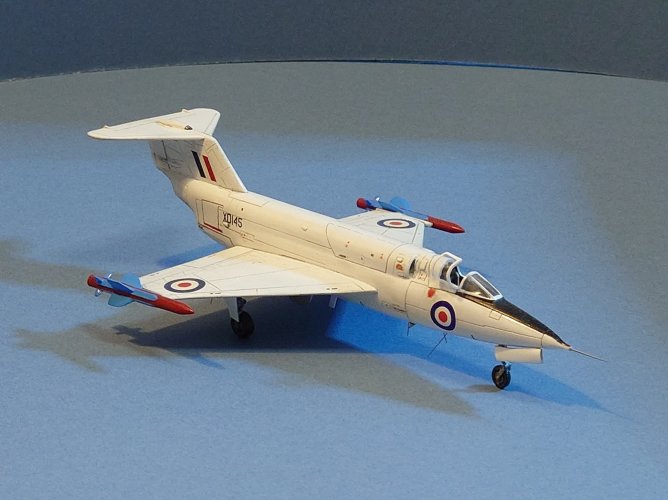
AZ Models Saunders Roe SR.53
20241229_084752.JPG

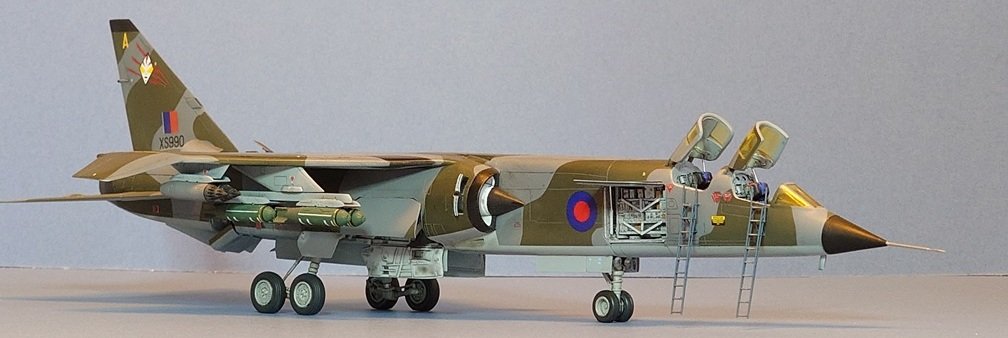
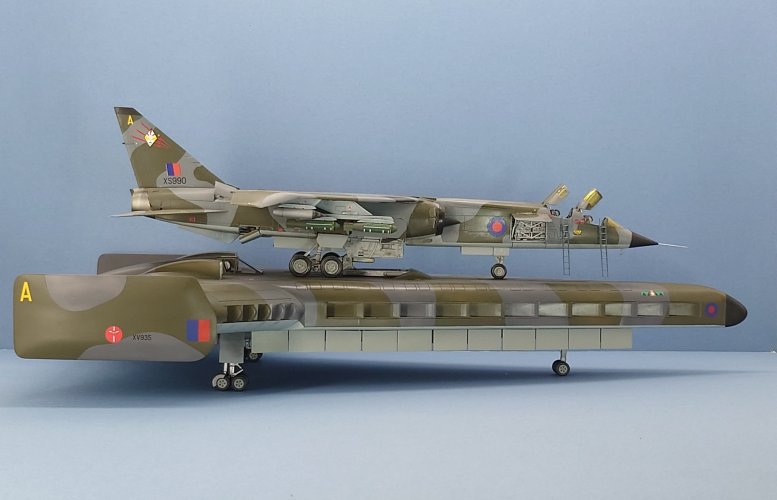
Airfix TSR.2 in "Eagle GR.1" bombtruck guise. There are 6x 1000-pounders hiding in the bomb bay too.
20241223_145652.JPG

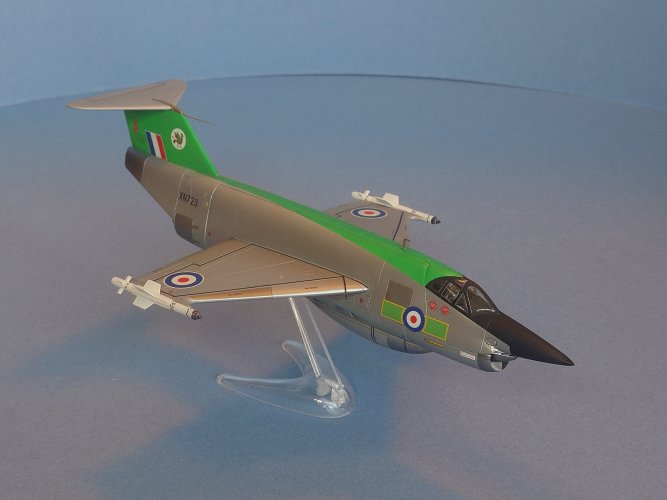
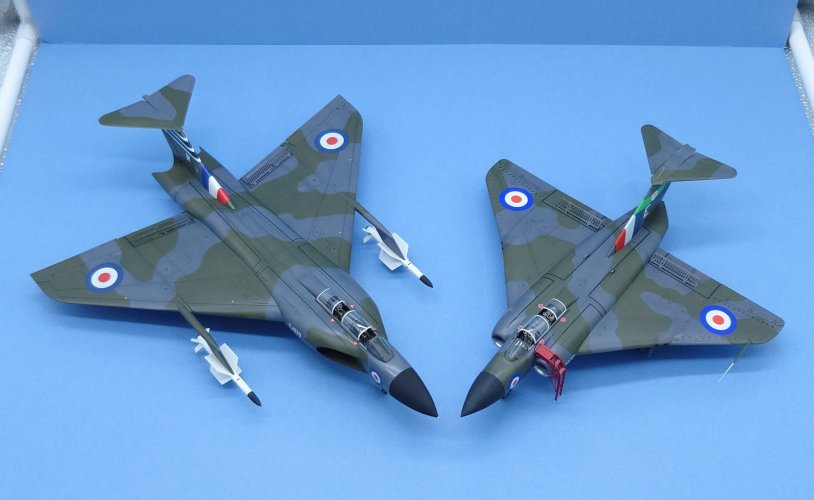
A couple of Freightdog Saunders Roe P.177s. One as an RAF F.1 variant
20250411_185132.JPG

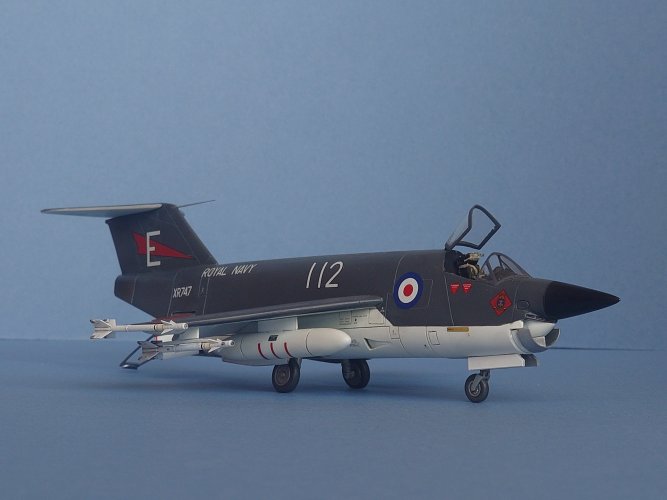
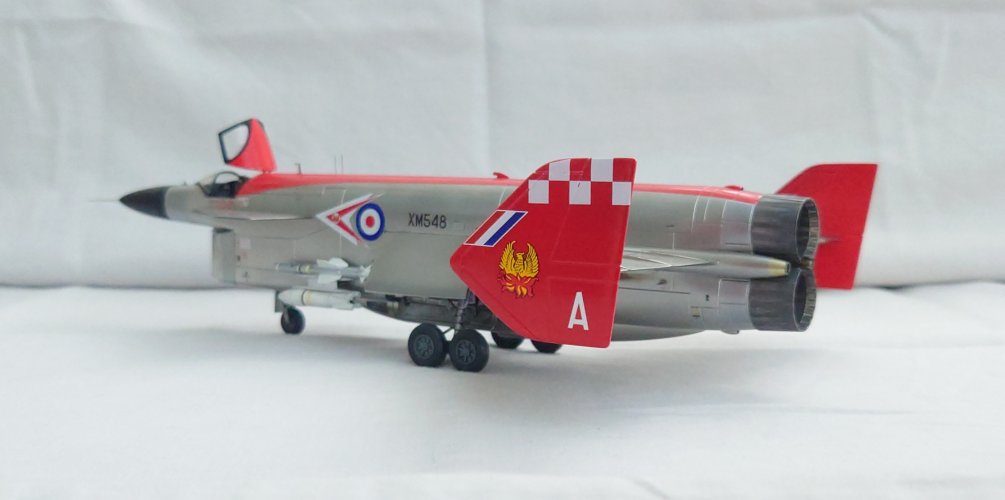
The other as a Royal Navy FAW.2 variant
20250411_183435.JPG

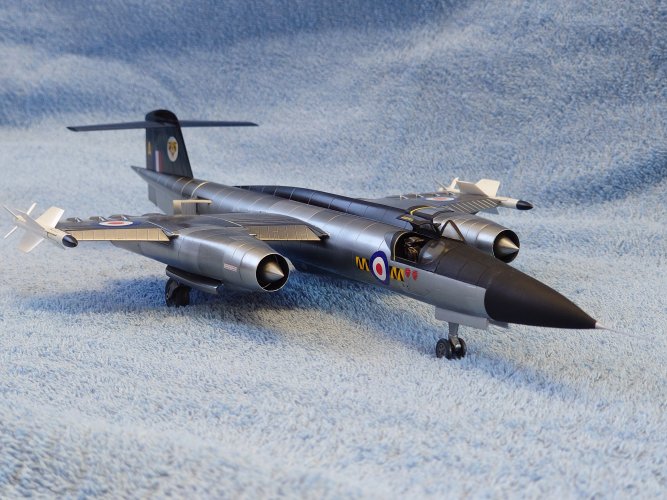
Fantastic Plastic Vickers 559 but without the silly dorsally mounted missiles, and with MIG-31 exhausts since they look "right".
20240805_160058.JPG

Machina Models Armstrong Whitworth AW.169. This was my first attempt at 3d printing. It took many, many iterations to get to this. It just screams peak 1950s pointy jet to me.
20241024_121226.JPG

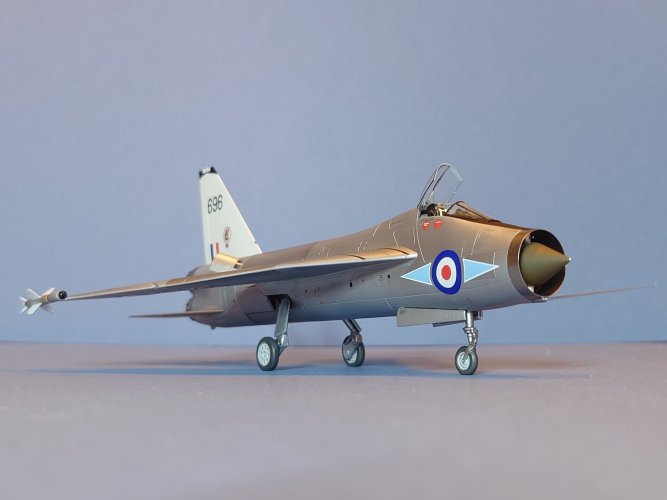
Machina Models English Electric P.8 conversion for Airfix Lightning. Believe it or not, this took almost as much effort as the AW.169 due to trying to make it fit Airfix parts.
20250318_181859.JPG

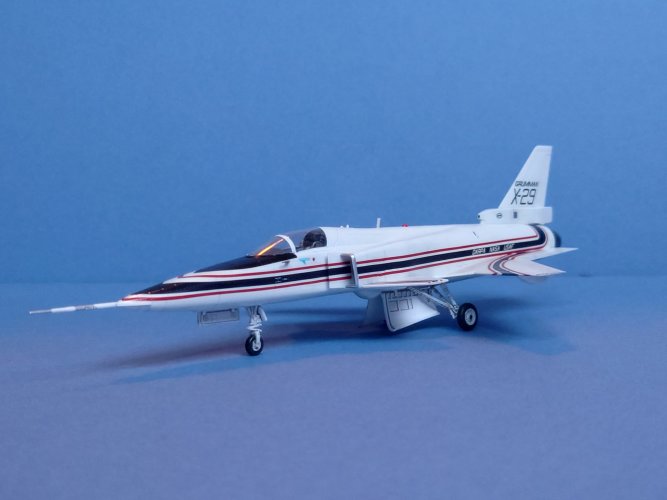
Although its not really a cancelled project, the most visually obvious technology was never pursued further; Hasegawa's Grumman X-29
20250806_191405.JPG

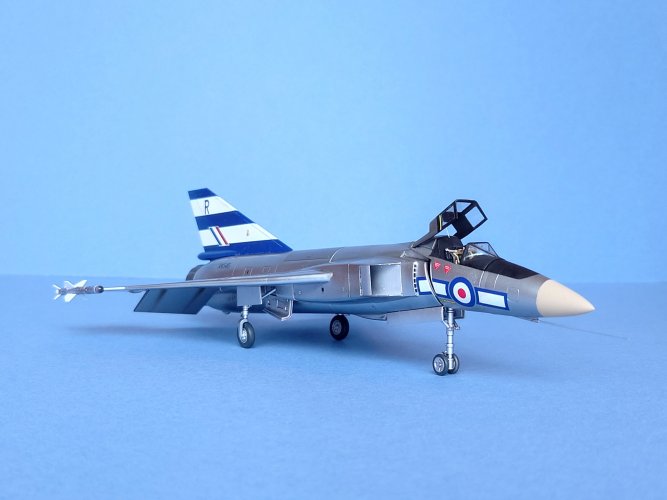
Machina Models Fairey ER.103C or "FD.3 Small"; it's actually quite a bit bigger than the FD.2.
20250624_120907.JPG

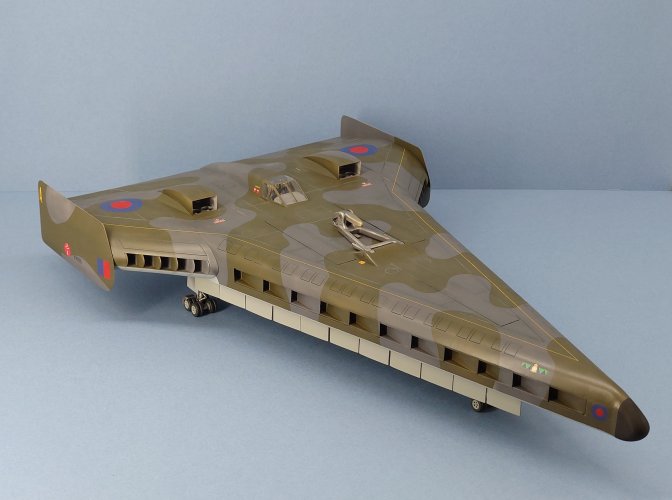
And for the TSR.2 to perch on, a Shorts PD.17 that I had to do. I used Vulcan undercarriage and B-52 cockpit etch amongst other things. I don't sell this one however, since it would tie up the printer for at least a week... I will do the P.17A for it at some point.
20251120_163125.JPG
20251120_180724.JPG

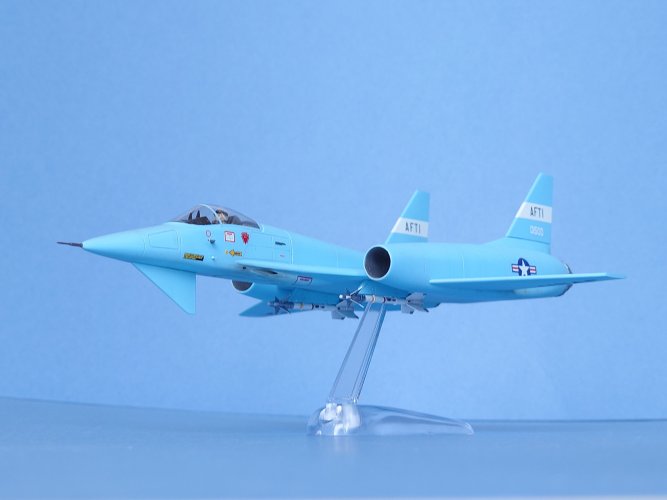
Machina Models McDonnell Douglas 265-1 (inspired by the forum topic icons on this very site). I chose Air Superiority Blue to give my shelf a splash of colour amongst the camo and shiny metal.
20251005_133357.JPG

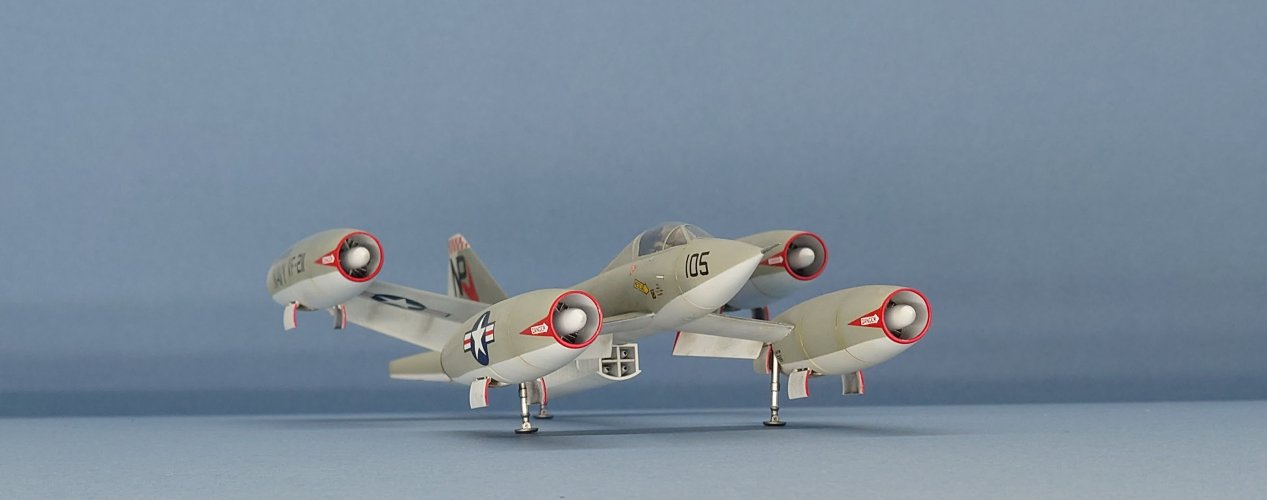
Machina Models AVRO Canada TS.140. This was very fiddly, even after I made lots of the parts more chunky for robustness. It is cool though.
20260410_201712.JPG

And that's where I've got to thus far.

I'm about to print out a Gloster P.376 Thin Wing Javelin. So that should keep me occupied for a while. And I'm also in the middle of the BAC Lightning F.53 as displayed at the 1969 Paris Airshow, which could be considered BAC's own What-if.
 
Last edited by a moderator:
The P.8 looks so much like a Sukhoi or MiG late 1950s jet - Ye-152 or one of those brutish looking Sukhoi interceptor prototypes.

The PD.17 was such a wild concept. Love how the 1960s treated lift jets as some kind of magic anti-gravity drive.
 
The easiest thing would be to go to Whatifmodellers forum and search on there, I don't want to start spamming this forum. The whole build and then final photos are available.
Thank you. Still have my account there, which just turned 20 last february.
 
Love the Saunders Roe P.177 liveries and the Vickers 559. It looks so crazy.
 
The P.376 Thin Wing Javelin missile pylons are pretty weird - never noticed that in Tony Buttler books. Looks as if they put "reverse Kuchemann carrots" on the wings to support the pylons to support the missiles. Then again, the Red Dean was so huge, must have been complicated to drop that at supersonic velocity. Plus the enormous fins. I have this suspicion the missiles were positioned that way because of CoG shift when dropped. Can't even imagine the asymmetric drag if only one of them was fired.

The same missiles also negatively influenced the F.155T designs that followed, think of the Vickers 559.
 
Attractive models, and in The One True Scale too! :)

Okay, yes, I did see the photo caption, and even read it too, and not while multitasking, but still, What is THAT and where did it come from??????

Machina Models AVRO Canada TS.140. This was very fiddly, even after I made lots of the parts more chunky for robustness. It is cool though.
20260410_201712.JPG
 
Attractive models, and in The One True Scale too! :)

Okay, yes, I did see the photo caption, and even read it too, and not while multitasking, but still, What is THAT and where did it come from??????
Thread here : https://www.secretprojects.co.uk/threads/avro-x-wing-ts-140-u-s-navy-proposal.6279/#post-90015

Its where I got the inspiration. To be fair, most of the models above can be blamed on this site. Thanks to @overscan (PaulMM) for laying the groundwork!
 
TWJ look far better that vanilla Javelin. Then again it's a low bar...
 
Is there any special prep work required to paint the plastic/resin? I've had trouble with 3D printed parts in the past in getting the paint to adhere. I'm definitely looking at picking up your Model 265-1. Nice work!
 
Is there any special prep work required to paint the plastic/resin? I've had trouble with 3D printed parts in the past in getting the paint to adhere. I'm definitely looking at picking up your Model 265-1. Nice work!
I use kitchen degreaser to strip the mold release off any cast-resin models.

3d resin prints get an isopropyl alcohol bath.
 
As Scott says, IPA (not the beer!) is best for removing any uncured resin or residue from the post-print wash. Even though the parts get a thorough wash after being printed, invariably as the wash becomes more contaminated some print batches are marginally less clean than others. This is the worst part of SLA resin printing, dealing with the contaminated IPA wash.

Panel degreaser is also very good, and importantly is not a paint solvent. Its the stuff they use when prepping car bodies for paint. So available in bulk for quite cheap, and will last a while.

Typically the surfaces to be painted need a very light prep to remove print layers and the remnants of the supports, so will end up being keyed nicely (2000 wet finish). I then typically use My Surfacer primer, sand and repeat until I'm happy with the surface finish.

For small parts I clean and tend to just go straight on with the paint.
 
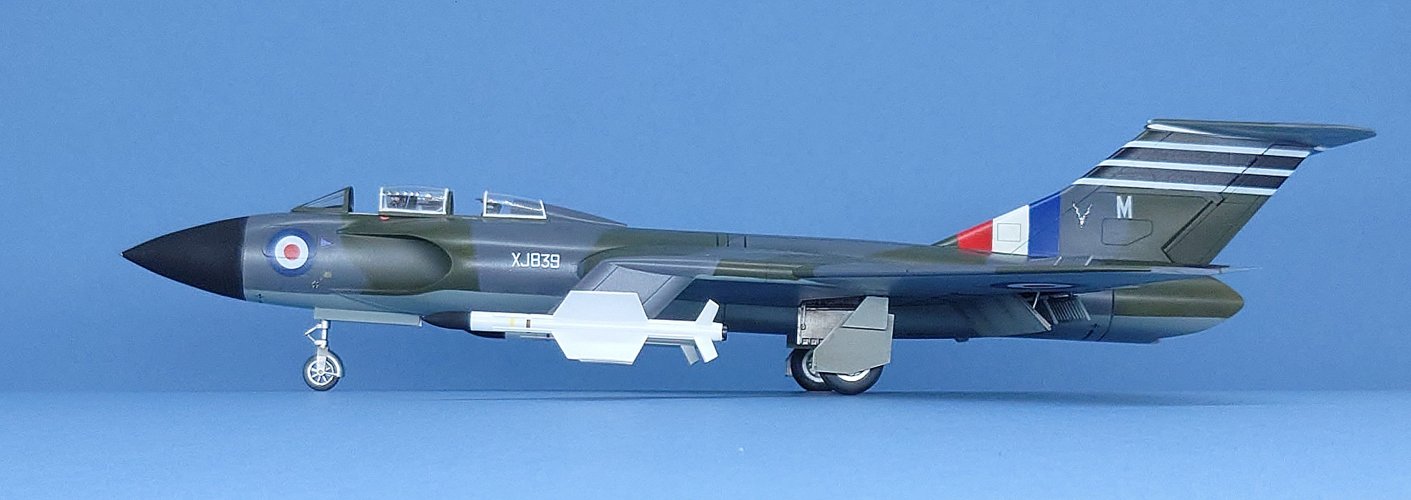
My latest effort, the Gloster P.376 Thin Wing Javelin. Note FAW.4 variant for comparison. Hopefully this time I've scaled the images such that I don't fall foul of the Mods.

View attachment 816107View attachment 816108
It's a beautiful model, but I suspect it'd suffer a lot if real. Boundary-layer ingestion, plus I bet those missile pylons would flutter like a guitar string.
 
It's a beautiful model, but I suspect it'd suffer a lot if real. Boundary-layer ingestion, plus I bet those missile pylons would flutter like a guitar string.
Agreed, there is a lot wrong with it, both in terms of carryover from real Javelin and new design. I did consider some sort of boundary layer splitter, but it's then a slippery slope. So I try to make a point of going with whatever design data was most mature and leave it at that.

I think in general they were thinking in the right direction for lots of it, but the base Javelin was a bad foundation to build on. I suspect if they'd focused on reducing drag rather than applying brute force it may have gone further. Who knows.
 
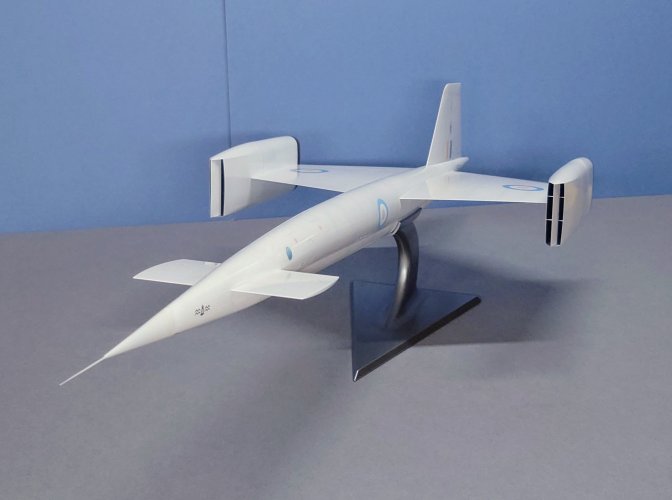
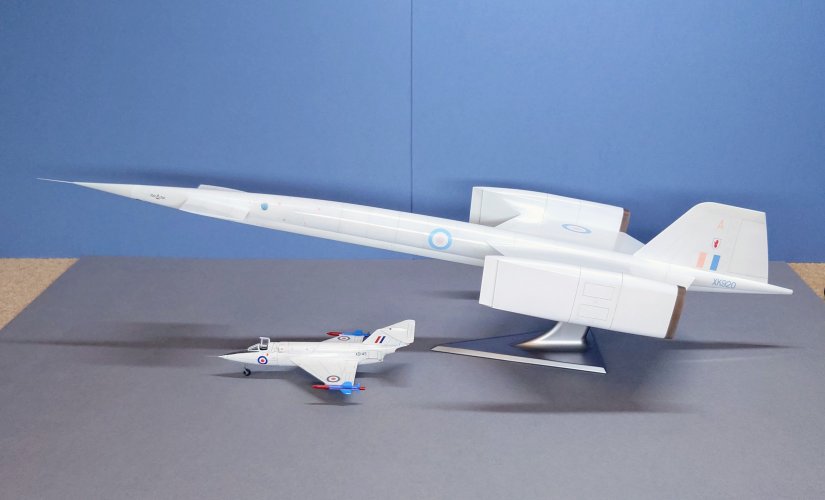
One I've just finished, the original design for the Avro 730 to specification R156T. Not quite as long as Concorde, but in 1/72 it's still over 2 ft long
Good lord! You were definitely not exaggerating about the sheer size of the thing! And if that's how big it is in the One True Scale of 1/72, then I can only imagine / dread to think how much room a 1/32 version would take up.... Good decision to display it in flying configuration too: lots of room underneath that to display other models.
 
Looks nice with the Sparrows. Sparrow IIIs with CW injection AI 18? Or Sparrow II active radar homing?
 
Last edited:
I went with 7Ds because the timing seemed reasonable. I probably didn't get the markings quite right, but I struggled to find suitable images. But they look like Sparrows from across the room!
 
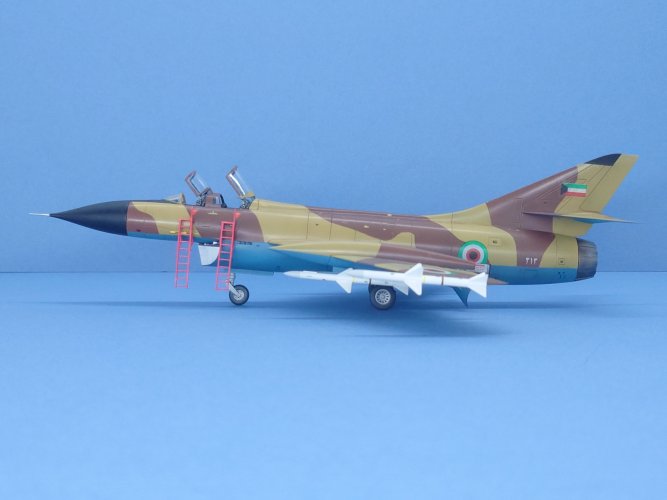
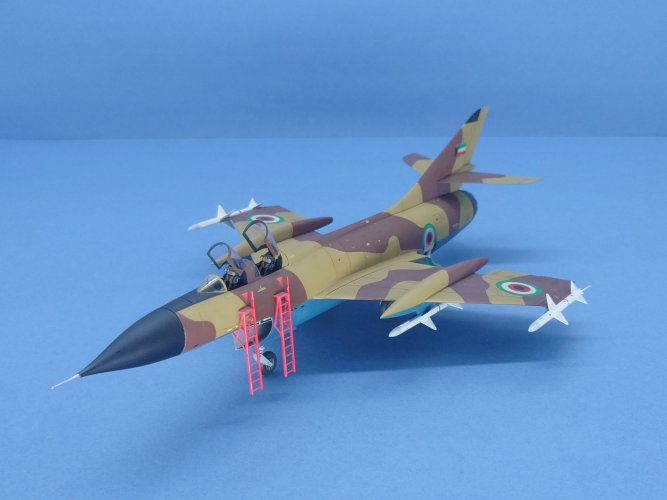
The latest in my F155T obsession; the Hawker P.1103 in Kuwaiti service
That is an attractive airplane.
But they look like Sparrows from across the room!
That is a very valid design principle for both model airplanes and model railways, especially those outdoor garden railways.
Is also why not one of my pilot guys or railway people has ever had their eyelashes and nose hairs painted.
 
I went with 7Ds because the timing seemed reasonable. I probably didn't get the markings quite right, but I struggled to find suitable images. But they look like Sparrows from across the room!
Sparrow III family including 7D requires CW illumination from the radar. Perhaps the P.1103 got the F-4's AN/APQ-72 radar in this scenario?
 
Sparrow III family including 7D requires CW illumination from the radar. Perhaps the P.1103 got the F-4's AN/APQ-72 radar in this scenario?
Knowing Hawker it would probably have been left up to the Customer to specify and fit, since they weren't keen on the Weapon System concept. But the nose looks big enough for either the AI18 or the AN/APQ-72. As a side note, and I know this was looked into by Hawker, the low-set cockpit and that huge nose means it would have been awkward to land.

Now I have it in the flesh in front of me I really like the profile. Hawker did make pretty jets.

I'm hoping that doing the P.1116 next (and then the P.1121) will be a relatively quick effort by adapting the CAD for this. But we'll see. I need to really analyse the shape differences to see what I can get away with.
 
P.1116 is less common than the P1121, actually. The P.1121 was explicitly intended to reuse as much P.1103 work as possible.
 
Intended radar for P.1103 was "developed AI.18" initially. P.1103 was sufficiently specialist it would really require the RAF to buy some before any exports.
 
P.1116 is less common than the P1121, actually. The P.1121 was explicitly intended to reuse as much P.1103 work as possible.
When you overlay the drawings of the 3 designs, they all differ enough that it may be easier to do a fresh design for each. Having scanned the drawings from your book, imported them to Fusion, and then aligned them sizewise the following are obvious:

- P.1103 is obviously not area ruled, so the others need a new rear fuselage section (and 1121 is also longer and fatter at the very rear than 1116)
- all three have different nose profiles
- all three have different canopy profiles and locations
- all three have different wing designs, which is further impacted by the area ruling on the 1116 and 1121
- 1103 and 1116 share airbrake position, yet 1116 is area ruled at this location
- all three have a different spine
- plus many other little details not worth discussing

And this is without comparing the cross sections through the 3 designs.

I think in reality what I'll end up doing is a mostly new airframe for the 1116 and editing it for the 1121, but with chunks and parts copied across from the 1103 (landing gear is easy to copy and extend for instance, inlet as well since it was a pig to get the shape right).
 
When you overlay the drawings of the 3 designs, they all differ enough that it may be easier to do a fresh design for each. Having scanned the drawings from your book, imported them to Fusion, and then aligned them sizewise the following are obvious:

- P.1103 is obviously not area ruled, so the others need a new rear fuselage section (and 1121 is also longer and fatter at the very rear than 1116)
- all three have different nose profiles
- all three have different canopy profiles and locations
- all three have different wing designs, which is further impacted by the area ruling on the 1116 and 1121
- 1103 and 1116 share airbrake position, yet 1116 is area ruled at this location
- all three have a different spine
- plus many other little details not worth discussing

And this is without comparing the cross sections through the 3 designs.

I think in reality what I'll end up doing is a mostly new airframe for the 1116 and editing it for the 1121, but with chunks and parts copied across from the 1103 (landing gear is easy to copy and extend for instance, inlet as well since it was a pig to get the shape right).
I can give you CAD versions of the drawings, might be easier.
 

Similar threads

Back
Top Bottom