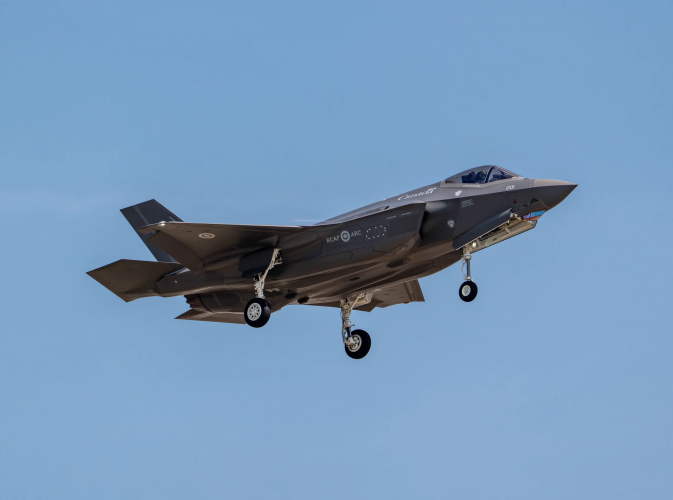
Canada Future fighter capability project (ex-Next Generation Fighter Capability)

Yet Americans keep telling us that a Gripen purchase would be more expensive, and not suitable for obligations to NATO, or international clout.
No, the Canadian fighter competition evaluation identified that the Gripen wasn't capable of meeting mission performance, not the US. Canada wasn't pressured to join the JSF program, they saw the industrial advantages it provided. Canada would have a full fleet of F-35A at lower cost had it gone through with its initial acquisition timeframe. Instead the decision to run a competition ironically added years and billions to the cost of the Future Fighter Capability Project and even then resulted in the F-35 being selected anyway.
Personally I, a Canadian, also feel that way, and I think leasing EF2000, along with already purchased F-35s, until GCAP becomes available, is the way to go.
A much better option than a Gripen purchase.
But I really resent that the people who voted in that buffoon President, are now telling us not to over-react, as things will change.
That is exactly the point of trade diversification; things will always change.
I certainly didn't vote for him, not my country...

That's how we ended up without our own aerospace industry.
Maybe we've learned ...
??? Canada has a thriving aerospace industry that is multiples of the size of Sweden. Canada remain a top tier supplier, aside from building their own commercial aircraft, to US and European commercial and military programs.
Australia is indeed a great example.
You can't cancel an order that was never made... 100 F-35s was the aim but never budgeted for. The initial 72 were always planned to replace the classic Hornet but the subsequent 28 were always reliant on a decision on SH.
They extended life of their SHornet and Growler fleet into the 2040s (originally due to retire next year), and redirected money from the last F-35 batch into their upgrades and even deeper munition stocks (their stocks are already some of the deepest).
Growler was never retiring next year, it was always going to be in service until the late 2030s. The SH decision was made for several reasons and provides today some capabilities the F-35 has yet to achieve including LRASM/JASSM.

Had there ben a Govt change in the last election then the additional F-35 order would have been made but, like Canada, it was political more than capability or intent to maintain a mixed fleet, that made that decision.
I.e. it's a 3-component fleet already.
That is a long leap, calling Growler a third aircraft type is not a valid statement. It is a SH with extra wiring and pods.
 
Growler was never retiring next year, it was always going to be in service until the late 2030s. The SH decision was made for several reasons and provides today some capabilities the F-35 has yet to achieve including LRASM/JASSM.
This is another argument against a single F-35 fleet: the F-35 weapons integration pipeline has been confirmed defective. Yes, blk.4 will do that. It was supposed to be available in 2024, and now we're only in 2026; there are more than enough opportunities for even more delays (given current experience, they're almost certain).

A platform where other weapons can be integrated without global blocks is a reason to have a second aircraft all by itself. Case study: Europe, where F-35 nations are disarming themselves v affordable mass capability exactly as it now stands firm on its feet.
That is a long leap, calling Growler a third aircraft type is not a valid statement. It is a SH with extra wiring and pods.
Still, it's an entirely separate capability set and entirely different sustainment/procurement pipeline.
One of the arguments in favour of Gripen E is that it also comes with escort EW pods (EAJP); you're getting multiple capability sets F-35 won't provide, too.
 
Last edited:
This is another argument against a single F-35 fleet: the F-35 weapons integration pipeline has been confirmed defective. Yes, blk.4 will do that. It was supposed to be available in 2024, and now we're only in 2026; there are more than enough opportunities for even more delays (given current experience, they're almost certain).

A platform where other weapons can be integrated without global blocks is a reason to have a second aircraft all by itself. Case study: Europe, where F-35 nations are disarming themselves v affordable mass capability exactly as it now stands firm on its feet.
No none of that is justification for a nation Canada's size to operate a two type fleet and they have not wanted to for the last 45 years. Again, as you know, this potential decision isn't based on Canada desiring a mixed fleet, it is solely a political decision due to the trade war.

Australia only has a two type fleet because the F-111 fatigued earlier than the RAAF was willing to afford. Had it served to its expected retirement date the RAAF would have an all F-35 fleet today.
Still, it's an entirely separate capability set and entirely different sustainment/procurement pipeline.
The Growler has over 90% commonality with the Super Hornet. More than an F-35A does with a B...
One of the arguments in favour of Gripen E is that it also comes with escort EW pods (EAJP); you're getting multiple capability sets F-35 won't provide, too.
No that isn't an argument in favour of the Gripen, it is lipstick on a pig...
 
No that isn't an argument in favour of the Gripen, it is lipstick on a pig...
State-of-the-art escort jamming pod family add-on to the EW suit, which specifically went into WW(!) Eurofighter over Praetorian eVo?
I beg your pardon. Except for said Growler(US) and Sweden itself, it's a capability not a single other NATO member has/will have.

And it's most certainly advantageous for F-35 operations!
No none of that is justification for a nation Canada's size to operate a two type fleet and they have not wanted to for the last 45 years. Again, as you know, this potential decision isn't based on Canada desiring a mixed fleet, it is solely a political decision due to the trade war.
F-35 untill 2030s carries:
- stand-in bombs (JDAM, PW)
- stand-off bombs (GBU-39/53, JSOW)
- AMRAAM
- B-61
- Sidewinder(outside)

It's a rather basic list. With a couple of exceptions, this list has been here for a full decade, since 2015. Notably, in Iran, F-35s appear to have operated with both Growlers and Wild Weasels.
Canada may have thought this is unimportant b/c nothing is more important than the United States - this no longer holds. Canada may've thought that surely the US won't mix simple weapon integration with a fleet-wide upgrade with additional risks. Canada may've thought that said upgrade won't get delayed for almost as long as it took to reach IOC (2006 - 2015). Canada may've thought that F-35 would get operational readiness levels under control. This no longer holds, too; their deal is for F-35A and not for F-35I.

F-35 right now just doesn't look the way it was promised before. In so many ways, it evidently can't and very likely won't deliver everything on its own.
 
Last edited:
State-of-the-art escort jamming pod family add-on to the EW suit, which specifically went into WW(!) Eurofighter over Praetorian eVo?
I beg your pardon. Except for said Growler and Sweden itself, it's a capability not a single other NATO member has.
No it really isn't a capability Canada needs if they pursue an all F-35 fleet.
F-35 untill 2030s carries:
- stand-in bombs (JDAM, PW)
- stand-off bombs (GBU-39/53, JSOW)
- AMRAAM
- B-61
- Sidewinder(outside)

It's a rather basic list. With a couple of exceptions, this list has been here for a full decade, since 2015. Notably, in Iran, F-35s appear to have operated with both Growlers and Wild Weasels.
Canada may have thought this is unimportant b/c nothing is more important than the United States - this no longer holds. Canada may've thought that surely the US won't mix simple weapon integration with a fleet-wide upgrade with additional risks. Canada may've thought that said upgrade won't get delayed for almost as long as it took to reach IOC (2006 - 2015). Canada may've thought that F-35 would get operational readiness levels under control. This no longer holds, too; their deal is for F-35A and not for F-35I.

F-35 right now just doesn't look the way it was promised before. In so many ways, it evidently can't and very likely won't deliver everything on its own.
None of that changes the facts to date or the reason Canada politically is now potentially seeking the Gripen.
 
F-35 untill 2030s carries:
- stand-in bombs (JDAM, PW)
- stand-off bombs (GBU-39/53, JSOW)
- AMRAAM
- B-61
- Sidewinder(outside)

It's a rather basic list. With a couple of exceptions, this list has been here for a full decade, since 2015. Notably, in Iran, F-35s appear to have operated with both Growlers and Wild Weasels.
It is to be remarked that the Gripen and also the other two eurocanards can outrange the F-35 because they have the Meteor missile integrated. When supported by a a network of ground based sensors and airborne radars this missile can use third-party targeting.
https://nationalinterest.org/blog/buzz/how-meteor-missile-gives-europe-strategic-autonomy-hk-022226
 
It is to be remarked that the Gripen and also the other two eurocanards can outrange the F-35 because they have the Meteor missile integrated. When supported by a a network of ground based sensors and airborne radars this missile can use third-party targeting.
https://nationalinterest.org/blog/buzz/how-meteor-missile-gives-europe-strategic-autonomy-hk-022226
Meteor (and its F-35 integration saga) is part of the question, though it's not that much of an enabler for F-35 itself. But there are multiple other gaps.

- Sortie rate (and cost),
- Infrastructure issues,
- Independent sustainment,
- Twin seater;
---
- Drop tanks,
- APKWS (integration initiated for Gripen family),
- EW pods,
- Recon pods;
---
- Stand-off capability,
- ASCM.

The last two points are relatively weak, as they'll reach Gripen E only around the same time when similar capabilities should be rolled onto the F-35 fleet (2033 and 2030, respectively). The rest are inherent, for the time being.
 
Let's be realistic, the Gripen story with regard Canada is over.
It was a fun posulation as a 14 page distraction, but the reality of the original decision carried through, normal service can now resume
 
Last edited:
Let's be realistic, the Gripen story with regard Canada is over.
It was a fun posulation as a distraction, but the reality of the original decision carried through, normal service can now resume
For now it appears to be the exact opposite. With 2 more years to work with, if any fighter decision is to come at all, it seems increasingly unlikely for Gripen not to happen.
GlobalEye is a very sure indicator of the direction.
 
GlobalEye is the result of being cheaper than E-3 or E-7 while providing what's asked of it. The same doesn't apply to the Gripen. By that logic acquisition of Type 212CD indicates a Eurofighter purchase? Why? Because even though they have nothing to do with each other whatsoever, they come from the same country.

That's the same rationale as saying GlobalEye is indicative of a potential Gripen purchase.
 
GlobalEye is the result of being cheaper than E-3 or E-7 while providing what's asked of it.
GlobalEye is absolutely meh compared to E-7.
It is, in fact, directly worse than E-7 in everything that matters, i.e., a direct decrease in capability for the primary role of the aircraft, with no redeeming qualities.
And yes, no MADL.
The same doesn't apply to the Gripen.
And in terms of air defense/doing non-1st day tasks, Gripen certainly does better than GlobalEye.
It's worse than the F-35 unit for unit, but rather marginally so. With actual sorties, basing, loiter, and readiness taken into account, it'll likely be completely reversed.
 
GlobalEye is absolutely meh compared to E-7.
It is, in fact, directly worse than E-7 in everything that matters, i.e., a direct decrease in capability for the primary role of the aircraft, with no redeeming qualities.
I repeat myself as the point was seemingly lost in translation: GlobalEye is the result of being cheaper than E-3 or E-7 while providing what's asked of it.

It's not necessary to be better, which is why it was the preferred choice.

Unlike Gripen, which is why the F-35 has been picked by Canada. It does what the Canadians wanted from the program, the Gripen didn't and doesn't.
 
Unlike Gripen, which is why the F-35 has been picked by Canada. It does what the Canadians wanted from the program, the Gripen didn't and doesn't.
In a wide-ranging interview with The New York Times at its headquarters in Midtown Manhattan on Wednesday, Mr. Carney described in meticulous detail how he was systematically reducing Canada’s reliance on the United States for key technology — from space satellites to fighter jets.

https://www.nytimes.com/2026/09/23/...e_code=1.DVE.QCoB.Y-F3_gJwlVf4&smid=url-share
 
I see your NYT article regarding the claimed desire to reduce reliance on the US (thus wholesale rejecting the Gripen by default, if that was the goal, congratulations to Dassault), and raise you the official site of the Canadian government regarding the FFCP.

Announcement of the competition:
https://www.canada.ca/en/public-ser...ndtransparentcompetitiontoreplacecanadas.html

F-35 chosen based on meeting the requirements laid out by Canada:
https://www.canada.ca/en/public-ser...gotiations-with-the-top-ranked-bidder-th.html

Independent report that the processes were carried out in a fair way according to the standards set by the Canadian government and military:
https://www.canada.ca/en/public-ser...g/2023/future-fighter-capability-project.html

The F-35 beat the Gripen on merit, it was deemed less than insufficient to meet Canadian requirements compared to the offering from Lockheed based on performance and economic value. The only reason several pages have been filled with meaningless noise regarding the Gripen is that some factions in Canada try to use it's existence as a bargaining chip to further improve the conditions of the already signed F-35 contract (which unlike the Gripen is already being delivered to the RCAF, because it has actually secured an order). Because realistically there is no rational and arguably not even an irrational reason to backpedal on a sound decision which has been made based on a multi-year competition that was transparently and independently monitored. It's an attempt to get further concessions from the US and LM, unfortunately though neither of them is particularly afraid that Canada could genuinely end up with an order for the Gripen. Because if they'd do that, the Canadians would be even more guilable and easy to rip off than the Americans already think they are. Lastly the Gripen is heavily reliant on US sourced parts, it wouldn't make the Canadians any less reliant on their dearest southern neighbors than the jet that's literally from America itself, go figure.

On a general note. Every day I open this thread in the hopes to read something interesting or actually new regarding the program, yet each day it's the same delusional ramblings page after page on endless repeat (mostly by the same people). The whole thing is terribly played out by now and substance to noise ration is taking a nose dive.

That said...picture unrelated.
 

Attachments

  • IMG_20260925_011642.png
    IMG_20260925_011642.png
    603.4 KB · Views: 9
Let's be realistic, the Gripen story with regard Canada is over.
It was a fun posulation as a 14 page distraction, but the reality of the original decision carried through, normal service can now resume

Using that reasoning (and by analogy) instead of wasting time on the obviously inferior Hurricane, Britain should have ordered the Messerschmitt Bf 109B in 1937. Because ...

1 - The Bf 109 was the most advanced fighter of its day;
2 - Fighter Command pilots deserve the best available; and
3 - Nobody takes that Chaplinesque guy's threats seriously.

So, no. Can't really see "normal service" being resumed in Canada any time soon.
 
It just might be the attitude of American posters.
The "Shut up and keep buying our stuff; you don't have a choice." posts, that make me think American attitudes won't change with with swapping out your President.

Well ... we do have a choice.
 
Last edited by a moderator:
I would recommend to focus more on the technical aspects in this thread here. The others, though important and charged with emotions they are, may lead us straight into the field of politics.
And that's a NO-NO here, as you know ! ;)
 
Well ... we do have a choice.
What plane would you buy then?

Eurofighter? Rafale? Because those are the only two western fighters that don't have any US content. Gripen has a US engine and a very significant US contribution in the avionics, too.


I would recommend to focus more on the technical aspects in this thread here. The others, though important and charged with emotions they are, may lead us straight into the field of politics.
And that's a NO-NO here, as you know ! ;)
Kinda hard to discuss procurement without touching on the politics around it, boss.
 
Eurofighter? Rafale? Because those are the only two western fighters that don't have any US content. Gripen has a US engine and a very significant US contribution in the avionics, too.
Eurofighter is not ITAR-free.
The point is not to get a completely independent platform; for that, you'll have to buy Chinese.

The point is making a political statement of not buying an auxiliary unit for USAF(1); rather, getting more narrow-minded local value and price savings.
It's also buying something that won't get switched off, directly or indirectly(2).
But it still should be co-operable with the US; buying Rafale will make political sense only if relations are to collapse completely.
 
Kinda hard to discuss procurement without touching on the politics around it, boss.

True, you cannot talk comprehensively about procurement without the politics inherent. But, I think @Jemiba was referring to purely political statements (which can certainly be triggers for me ... apologies for that, Jens!).

I am happy to debate the purely technical merits of one fighter design over another. Indeed, as I understand it, that was why this thread was split off from the Gripen E discussion. And, anyone with an interest in a given procurement subject should be able to participate in that discussion.

Alas, in this thread, we also have witnessed a number of diktats by non-Canadians about what Canada will or must buy and why. Maybe that is mere control-freakism or the lines between 'fact' and 'opinion' just gets muddled. Either way, such 'certainty' from individuals who are well outside of the true decision chain isn't helpful or even useful.

Others clearly feel entitled to condemn actions/policies/nations/civilisations that don't align with their preferences, hobby horses, or passing whims. As Joni Mitchell once said: "Where is that at?"
 
Canada said the F-35 was the only offering that met all of their requirements.

Canadian forum members get mad at the Americans because they...made the better jet that Canada already bought?

Is this supposed to be a sitcom now?

Nobody is telling anyone what to buy, Canada told itself the F-35 is the only viable option and subsequently purchased it and the first unit has just recently taken flight. Kinda late to get mad about the F-35, Lockheed Martin and these dastardly Americans *shakes fist*.
 
Canada said the F-35 was the only offering that met all of their requirements.

Canadian forum members get mad at the Americans because they...made the better jet that Canada already bought?

Is this supposed to be a sitcom now?

Nobody is telling anyone what to buy, Canada told itself the F-35 is the only viable option and subsequently purchased it and the first unit has just recently taken flight. Kinda late to get mad about the F-35, Lockheed Martin and these dastardly Americans *shakes fist*.
Sure sure... One have to take into account though that a key factor for the Canadian selecting the F-35 and meeting "all their requirements" was the fact that it is a US jet already NORAD compatible, and 5 eyes / 2 eyes intel sharing requirements compatible, meaning it is already compatible with political and strategic agreements and stances that favours the F-35 in this competition.
Thus the F-35 is (was?) already meeting all their requirements because it met the political requirements for the Canadians.

That is why Dassault and Airbus gave up on this market. saying respectively, the sharing of intel requirement was unacceptable, and the work for making the Typhoon NORAD compatible was too expensive (!?).

I suppose Saab stayed in the game because,
- They though using a US engine would make the pill of Canada buying a no-US jet easier for the US to swallow (after all they must make a bit of $ on these engines).
- Having much less to lose in that sharing intel requirement, the Gripen having already a lot of US/non-Swedish electronic components.
- A new political situation.

Oh and, if this is a sitcom and you don't like it, just go on another thread. Repeating in effect "Just shut up, it's the F-35 and nothing else!" is not gonna change the scenario.
 
Last edited:
The analysis of the CF-5 being a way to avoid investing in a heavy fighter... which is somewhat how the Gripen could be described - although the Gripen is a much more capable platform.

Nobody is telling anyone what to buy, Canada told itself the F-35 is the only viable option and subsequently purchased it and the first unit has just recently taken flight. Kinda late to get mad about the F-35, Lockheed Martin and these dastardly Americans *shakes fist*.

People, including yourself - have repeatedly said that we only have one choice and we have to buy one option... that we cannot meet our obligations without picking this one choice... that is kind-of telling someone what to buy. It is also worth noting that we have been diplomatically threatened with consequences if we buy something else... these are facts.

Being told you have only one option, is neither good politics (if you are trying to avoid a negative reaction) nor good procurement (one should always have more than one option).

Alas, in this thread, we also have witnessed a number of diktats by non-Canadians about what Canada will or must buy and why. Maybe that is mere control-freakism or the lines between 'fact' and 'opinion' just gets muddled. Either way, such 'certainty' from individuals who are well outside of the true decision chain isn't helpful or even useful.

Yes. I certainly agree on that.
 
I would recommend to focus more on the technical aspects in this thread here. The others, though important and charged with emotions they are, may lead us straight into the field of politics.
And that's a NO-NO here, as you know ! ;)

I very much agree. I do think there is the issue of the defence-industrial base and inter-operability requirements - which inherently involves questions of geo-strategic alignment and supply chain stability etc. This makes it very hard to discuss, as these are factors which influence procurement. This is especially true in this case.

Any suggestions on how better to walk this line are appreciated.
 
@Avimimus the Canadian government told itself it has only one option because only one option met all requirements across the board (I posted some nice links that talk about this, from the CA gov point of view), the other option, as there have been two contenders, didn't meet the requirements.

Such strawman arguments, like the ones you've now repeatedly made, are not worthwhile. If you're particularly upset about everything related to the topic, call your local elected representative and vent your frustrations about "literally Adolf Hitler" (as some have made that comparison) forcing you (you in particular, as you always talk about "we" and "us", thus you must be representative of EVERY Canadian ever) to buy several dozens of the most successful advanced fighter jet on the export market. Maybe they can help you with that rather peculiar problem.

Otherwise this may be your best bet for asking how they could dare to make an offer that the Canadian government deemed suitable for their needs: https://www.lockheedmartin.com/en-us/contact.html

I'm glad that I could offer some help.
 
An interesting comparison:
https://nordicdefencesector.com/en/article/gripen-e-vs-f-35-the-wrong-question-to-ask

"There are many ways to detect an aircraft. The most common is a fighter radar (X-band), and stealth is a clear advantage there. It should absolutely not be understated that the F- 35 has a significant advantage in reducing enemy detection range, especially against older or less capable radars. The reduced RCS (0.005 vs 0.5 m2) means around a third of the detection range if you do the calculations and the stealth works optimally. It’s easy to think that detection range would scale linearly with RCS, but there’s actually a r4 relationship.

However, to fully benefit from stealth, you can’t use your own radar—doing so is like turning on a flashlight in a dark room. Even if they don’t see the flashlight itself, they know exactly where it is. This means a stealth aircraft in stealth configuration can’t see others unless someone else provides that information via datalink. And both sides can get that information from long-wave ground-based radars, which see stealth aircraft just fine."

"Infra-Red Search and Track (IRST) has advanced massively in the last decades. It’s a passive sensor detecting infrared radiation, i.e. heat. Aircraft are hot, especially against the cold background of high-altitude air. Today, IRST sensors can see out to 100+ km, and both Gripen E and F-35 have them. But what matters is whether the enemy has them, and they do. China and Russia have invested heavily in IRST, obviously in response to Western stealth reliance.

The enemy can fly with silent radars and use IRST to detect targets. Then it becomes a competition between IRST capabilities, and here it’s hard to say definitively who’s ahead."

"A large part of stealth capability comes from the radar-absorbent coating. Maintaining it is expensive and time-consuming. That reduces aircraft availability and increases fleet size requirements. Internal weapon bays also limit payload. The moment you hang external stores, stealth is largely gone.

A stealth aircraft carries that burden through its whole lifecycle. As mentioned, the advantages today are already smaller than in the 1990s, and they risk shrinking further. The F-35 is expected to serve for at least 50 more years, and it’s unlikely that stealth will remain decisive that long. The airframe is what it is, optimized for RCS rather than aerodynamics."

"In terms of range, Gripen E generally wins, but largely because the F-35 can’t carry external drop tanks without losing stealth. If you drop the stealth requirement and use external tanks, the ranges become comparable.

Once in the combat zone, avoiding enemy missiles requires sustained high speed and short bursts of acceleration before missile launch. Here, Gripen E has a clear advantage. It’s 10–20% faster overall, both in max speed and on dry thrust. The latter usually matters more, since reaching max speed (Mach 2.0 for Gripen E vs. Mach 1.6 for F-35) is impractical in real combat. Flying Mach 1.2 instead of Mach 0.97 is akin to maintaining 20% higher running speed in soccer. This matters especially in DCA/OCA missions."


So, in air defense and air policing missions the stealth is not that relevant, but readiness rate and the speed of Quick Reaction Alert might matter more.
 
Last edited:
In terms of range, Gripen E generally wins, but largely because the F-35 can’t carry external drop tanks without losing stealth. If you drop the stealth requirement and use external tanks, the ranges become comparable.
F-35 doesn't have drop tanks, stealth or no stealth. I.e. 2200km range and ~2.5hrs in the air is what you're working with.
The reduced RCS (0.005 vs 0.5 m2) means around a third of the detection range if you do the calculations and the stealth works optimally
The difference is more substantial. Gripen is not going to be 0.1, especially an armed one.
 
Last edited:
Apologies for straying too far into politics.

I have said, numerous times, our best option is retaining the 30ish F-35s ordered so far, as these will allow us to meet our NORAD obligations, and, leasing about 50 Tranche1 Eurofighters, with Link16 and AMRAAM, to meet our NATO obligations ( essentially policing in Eastern Europe ).
This won't be ITAR-free, but it seems to work for other Europeans, for about 10-12 years, until we can get our hands on GCAP and CCAs.
A more expensive choice, agreed, but we do have to increase our defense spending to 3.5% real/5% discretionary.
Of course this would be easier if the current American Administration didn't insist on deliberately destroying the free world's economy ( sorry again ).

And when posters say the F-35 is the better and cheaper aircraft, I would argue that a Chinese J-20 ( or even the J-36/J-50 6th gen ) is much better/cheaper, with suitable avionics/electronics, for our needs.
Only reason we don't buy them is because, you guessed it, POLITICS !
 
@Avimimus the Canadian government told itself it has only one option because only one option met all requirements across the board (I posted some nice links that talk about this, from the CA gov point of view), the other option, as there have been two contenders, didn't meet the requirements.

For the record - aside from not saying (or thinking) much of what you imply I think... it is important to recognise that:
- Canada has had multiple governments in power since 1997.
- Canada has had multiple defence ministers since 1997.
- Canada has had doctrinal changes, and there have been major changes with regard to both geostrategic situations Internationally and with regard to technology and warfighting since 1997.

Now, one can argue that we didn't actually intend to procure the fighter when we joined the program 29 years ago... but the essential point is that we've had multiple public and internal reports/assessments over 29 years... and there have been differences in view within government and within military procurement over that time. Even the airforce has changed its name over that period.

I will acknowledge that there are people in the RCAF who believe the F-35 to be an excellent platform and prefer it. I just don't think a claim that 'the government told itself it has only one option met all requirements across the board' only captures one report, under one minister, under one government, at one point of time.

It doesn't necessarily capture the diversity of views within government or within the military, over the entire period (up to and including the present day).
 
Back
Top Bottom