I’m gonna go with they designed this thing for the F-35 market, which is huge, at 2 per IWB, and then tacked on a cheap booster for a PrSM analog. Money made via mass production of the common end missile, with the booster being an add on for surface launch, but the actual weapon designed around F-35 carriage and launch.

Lug placement might offer some insight.

The blackbeard appears to be a standard 13 ft. long missile which can help meet several requirements including those for the Navy, Army and Air Force. And allies. While that happens to also be the F-35's bay length limit (roughly), it is also just about the standard size of the Army's tactical missiles which are probably just as important for a company founded around solving the long range fires problem. This would be a smart form factor to start with for a company looking to sprout and gain some sort of hold on one aspect of the tactical missile market.

Also, if you are a startup looking to survive and thrive, you don't bet the company on integrating a new weapon on the F-35. The god's at the JPO will dig your grave for you.

This is obviously not the only modern 13 ft long tactical missile system as we already have the PrSM (Inc 1 -4), AARGM-ER, SiAW, and the two SiAW phase 1 contract awardees including the 1,300 lb / 13" / 13 ft. Mako and the L3 Harrris proposal for the same. Blackbeard is likely focusing on the lower end of the price point but there are several questions unanswered. How will this be guided. How will they manage to have sophisticated GPS denied guidance (something that the AARGM-ER has already successfully tested against) while still being useful against a range of emiting, non-emiting, time-critical movable or mobile targets. And if this thing is going to be used in the anti ship role then will it have an adequate warhead for that purpose? All the while hitting that promised sub $400K cost per AUR.

A cheap missile is great for many missions but for several others, it is wise to optimize your weapon given you do not have infinite number of aircraft or space in your magazine (2-3 shots instead of one shot sounds great until you realize that you still require that many pylons in the fight to be able to put up that scale). Comparisons are naturally being made to AARGM, AARGM-ER/SiAW and PrSM. And folks doing so are just skimming past the fact that both of those have now been put through years of developmental and operational testing and, in the case of the AARGM,AARGM/ER, the multi-mode guidance system has been put through its paces over years if not a decade plus, and that replicating that testing and maturity is itself a multi-year task for a system that has not even started developmental testing yet (or any testing for that matter?). I think the niche that this weapon fills is going to be as an alternative for some tactical strike systems for use against soft targets leaving the more sophisticated anti-IADS missions to specialized weapons like PrSM inc 2 /4, SiAW and others. This takes a similar approach to the Israeli Rampage i suppose.
 

Attachments
  • 1787398524342.png
    1787398524342.png
    1.8 MB · Views: 153
Last edited:
The Hypersonic Attack Cruise Missile (HACM) is the Air Force’s next generation air-launched hypersonic weapon and is of high strategic importance to Raytheon and the warfighter. The Manufacturing Readiness (MR) Program Director high-priority programs with concurrent development and production activities with contracted scope exceeding $1 Billion dollars with an aggressive, highly critical schedule. This role reports directly to the HACM Portfolio Director and is responsible for the execution and establishment of factories across different Raytheon locations to build complex missiles at production rates.

https://careers.rtx.com/global/en/job/01866043/Manufacturing-Readiness-Program-Director-HACM
 
Sounding rocket doesn't need to carry seeker hough, so they can use most of their internal space/weight for propellants. Besides, that sounding rocket look pretty thin whereas black beard is a bit stubby (draggier)
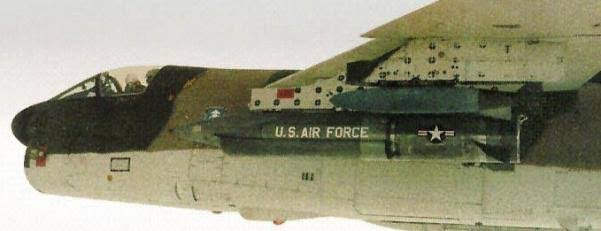
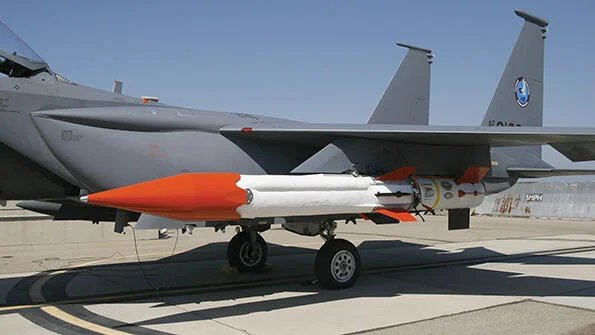
Still missing the point. This chunky boy did Mach 5.4:
 

Attachments

  • imagesbb.jpg
    imagesbb.jpg
    19.5 KB · Views: 94
Still missing the point. This chunky boy did Mach 5.4:
That chunky boy weight 2700 lbs and 4.3 meters long though, that quite significantly more space for propellant compared to second stage of black beard. The fact that it use ramjet mean it use propellent even more efficient than pure rocket.
 
Lug placement might offer some insight.
Also, if you are a startup looking to survive and thrive, you don't bet the company on integrating a new weapon on the F-35. The god's at the JPO will dig your grave for you.
Weren't black beard chosen for MACE program already?, so it obviously will be integrated on F-35
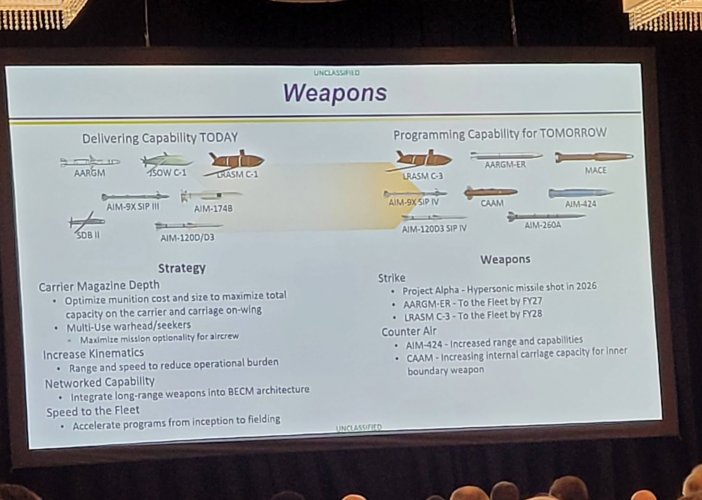
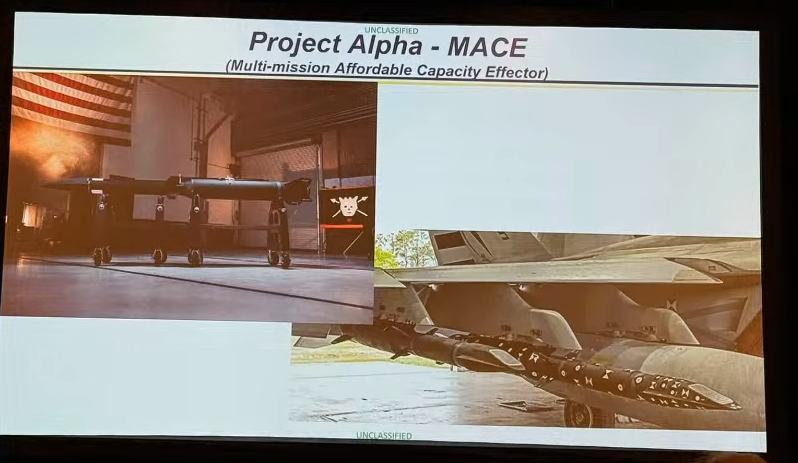
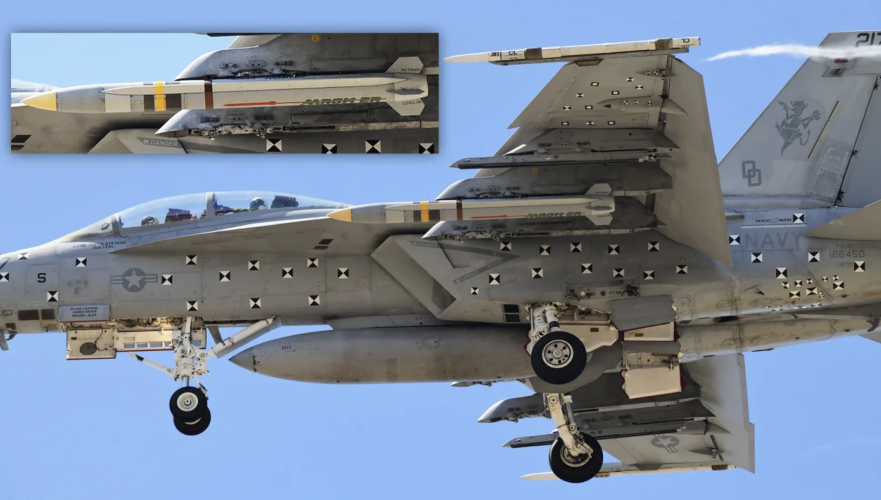
The United States Navy has selected Blackbeard, a hypersonic missile developed by defense startup Castelion, for their Multi-mission Affordable Capacity Effector (MACE) program. On February 25, the US Navy announced that Castelion had been awarded a $49,998,005 firm-fixed-price order for “full-scale prototypes, flight testing, and operational fielding to continue to expedite the Blackbeard Hypersonic Weapons development, integration, testing, and early operational capability”. Axios subsequently reported that Blackbeard would “fly aboard an F/A-18 in the near future”. Defense Archives reached out to the Navy regarding the contract award and was informed that it was related to the MACE effort.

The MACE program was first revealed in a February 2024 Naval Air Systems Command Request For Information. The requirement was for an “air-launched weapon with adequate stand-off ranges to provide desired lethality without exposing manned platforms to significant survivability risks”. Mandatory system requirements specified a range that is “complimentary” to the AGM-158C LRASM (Long Range Anti-Ship Missile), which has an unclassified range of over 370km, the same as AGM-158 Joint Air-to-Surface Standoff Missile (JASSM), however LRASM is actually a derivative of JASSM-ER, with a 925km range. Desired requirements stipulated that MACE be “compatible with carriage on F/A-18E/F, as the threshold platform” & “designed for internal carriage of 4 AURs in F-35A/C to enable future integration”, have a 75lb warhead, terminal guidance to capable of detecting moving targets, a unit cost of under $300,000 per All Up Round (AUR) at a minimum production capacity of 500 AURs per year, with Early Operational Capability by Fiscal Year 2027.
https://defensearchives.com/news/ca...c-missile-selected-for-us-navys-mace-program/
 
It certainly is shorter than the test articles I used for the F47/FA-XX design arts but that's the only size diffference.
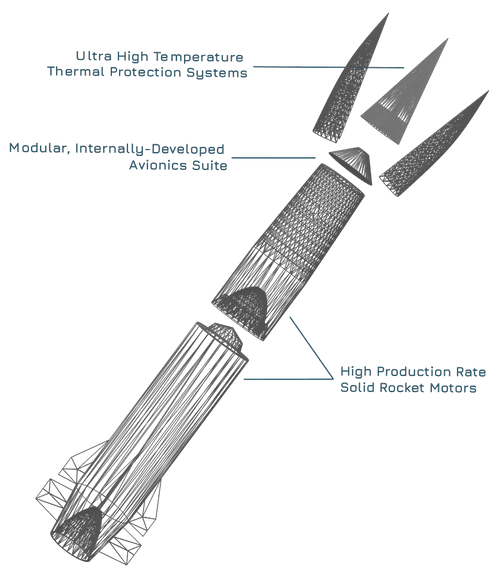
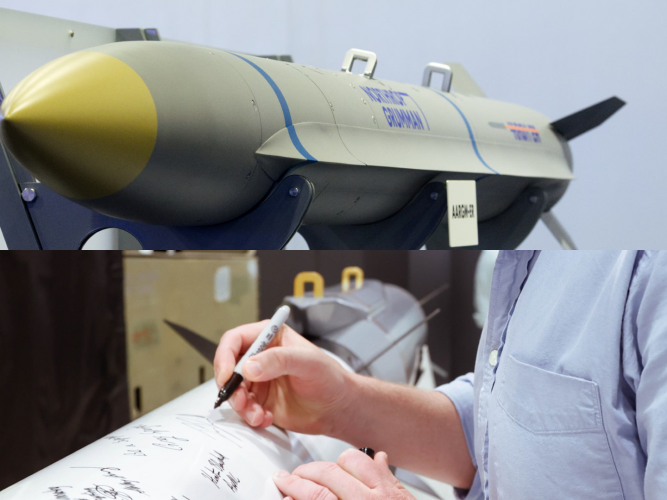
The new thing are those delta strakes similar tapered but different to AARGM-ER/SiAW likely due to higher speed.
Also, the vehicle (sub-caliber missile) section is clearly visible.
Is it just me or does it look like black beard has 3 distinct stages?
It always had been.
2nd stage is longer for surface launch.
 

Attachments

  • MACE Blackbeard.png
    MACE Blackbeard.png
    49.9 KB · Views: 92
That chunky boy weight 2700 lbs and 4.3 meters long though, that quite significantly more space for propellant compared to second stage of black beard. The fact that it use ramjet mean it use propellent even more efficient than pure rocket.
But also had a lot more weight to get keep moving. That's my point. Size doesn't mean anything. If it did, LRASM would be a hypersonic missile. Fuel fraction, sectional density, L/D ratio, etc are all more important than absolute size.
 
. Fuel fraction, sectional density, L/D ratio, etc are all more important than absolute size.
I got your point that sectional density, fuel fraction, L/D ratio are more important than absolute size. However, I still think absolute size matter since you can only shrink seeker and warhead so much till they become useless. I mean, take simple ballistic missile as an example, ICBM is always gonna be bigger than SRBM
 
It certainly is shorter than the test articles I used for the F47/FA-XX design arts but that's the only size diffference.
The new thing are those delta strakes similar tapered but different to AARGM-ER/SiAW likely due to higher speed.
Also, the vehicle (sub-caliber missile) section is clearly visible.

It always had been.
2nd stage is longer for surface launch.
Is it possible to make the photo background white when you enlarge it?

EDIT: Ah, if you click the 'New Window' icon it does that.

where you got that photo from ?
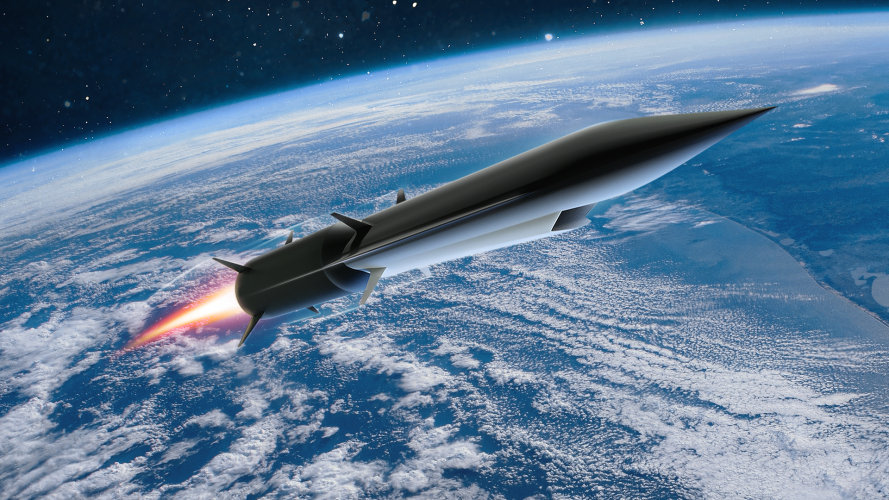
It doesn't really look like the actual missile.
 
Last edited:
I got your point that sectional density, fuel fraction, L/D ratio are more important than absolute size. However, I still think absolute size matter since you can only shrink seeker and warhead so much till they become useless. I mean, take simple ballistic missile as an example, ICBM is always gonna be bigger than SRBM
Not necessarily. Depends on what size warhead you want to throw. The Midgetman ICBM weighed 30klbs. The South Korean Hyunmoo-5 is 79klbs. An SM-6 weighs 3300lbs. A Nike Hercules 10,700lbs.
 
I don't get how the SiAW is seen as the mature option, given that it has encountered multiple program delays. It may be tested, it doesn't work yet.

As for Castellion sensor, that is the obvious remaining known-unknown and either the procuring officers are blatantly incompetent or Castellion has found a way to implement some sensor to solve a decades old problem.


A cheap missile is great for many missions but for several others, it is wise to optimize your weapon given you do not have infinite number of aircraft or space in your magazine (2-3 shots instead of one shot sounds great until you realize that you still require that many pylons in the fight to be able to put up that scale). [... ] I think the niche that this weapon fills is going to be as an alternative for some tactical strike systems for use against soft targets leaving the more sophisticated anti-IADS missions to specialized weapons like PrSM inc 2 /4, SiAW and others. This takes a similar approach to the Israeli Rampage i suppose.

If Castellion can hit soft-mobile targets that are moderately defended, that likely comprises 80% of the target set. It is not really a niche capability, more, does everything but the hardest problems.
 
That chunky boy weight 2700 lbs and 4.3 meters long though, that quite significantly more space for propellant compared to second stage of black beard. The fact that it use ramjet mean it use propellent even more efficient than pure rocket.
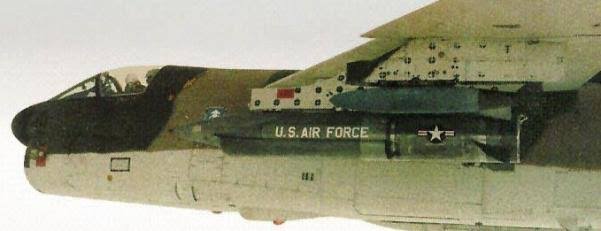
ASALM fit onto Navy ordnance elevators, for one thing.

It may be a tight squeeze into an F-35 bay. It may not even fit into an F-35 bay. IIRC it is 18" tall and 20" wide, I'm not clear if that fits into an F-35 bay.

But it is an easy "1.5 stage" high-supersonic/low-hypersonic weapon with a demonstrated range around 500km.

It has a booster rocket that was cast inside the ramjet supersonic expansion nozzle, and that kicks the missile from aircraft speed up to about M2.5 where the ramjet will happily start up. The Ramjet then pushes the missile up to at least M4 in cruise before the missile goes into a terminal dive and impacts above M5.
 
If Castellion can hit soft-mobile targets that are moderately defended, that likely comprises 80% of the target set. It is not really a niche capability, more, does everything but the hardest problems.
To be fair, except for a bunker and maybe an aircraft carrier, I don't think there are many things around that can survive a direct hit by 70-100 lbs warhead moving at at least Mach 5
 
https://sam.gov/workspace/contract/opp/915baf83ac494216a319676ab7dcc4a2/view
The SCO plans to hold a classified Industry Day in Chantilly, Virginia, on September 14–16, 2026.

The SCO aims to accelerate the development of a family of next-generation, maneuverable, high-precision hypersonic weapons specifically designed to penetrate advanced defensive architectures. These weapons will span multiple programs and utilize various configuration combinations, specifically involving:

Different stand-off ranges

Different booster sizes

Different payload packages

The objective is to provide the Department of Defense with flexible options for engaging a wide range of targets.
 

Attachments

  • IMG_20260824_165002.jpg
    IMG_20260824_165002.jpg
    374.5 KB · Views: 65
AARGM-ER already cancelled. :mad:
Its there in the 'future capability'. Official IOC is now by the end of this calendar year if the program holds that timeline (has about 2 flight tests remaining for it IIRC).

This article makes it sound like it's all over but the crying.
The strategic pause is on the procurement side. Northrop Grumman / OATK need to fix serious software bugs and recover testing. The Navy is still funding RDT&E and plans to declare IOC later this year. NG for its part is investing internally on software recovery.
 
MACE is small but seem longer than AARGM-ER? or same length?

Comparison with AARGM-ER
 

Attachments

  • MACE project alpha.png
    MACE project alpha.png
    355.5 KB · Views: 210
  • Screenshot 2026-08-26 110701.png
    Screenshot 2026-08-26 110701.png
    2.4 MB · Views: 79
Last edited by a moderator:
$100 a coin?

Did costs get blown to hell after I got out of the Navy? We could get coins for IIRC $10 each.
Have you seen how much old, rare aviation pictures go for on ebay? And they probably cost a couple bucks, if that, to take.
 
I have. But challenge coins are cheap enough to make that "Hung Cow" made his own. Maybe $20 to make the LRHW coins.
Yeah but if I make an imaginary F-47 coin I'm not going to sell it for $20. I'll sell it for $200 some someone might think it's real. ;) Plus it's not your typical round coin. Hell, if I knew it was real, I might drop a Benjamin for it.
 
Also…”Hung Cow”…I am so glad someone else has the same 12 year old sense of humor I do!

I am just waiting for Trump to refer to him as Bull Big Balls.
 

GE Aerospace wins DIU hypersonic testbed competition​

https://insidedefense.com/daily-news/ge-aerospace-wins-diu-hypersonic-testbed-competition
LYNN, MA -- GE Aerospace will enter the next phase of development for its air-launched, air-breathing hypersonic testbed as part of the Defense Innovation Unit’s Hypersonic and High-Cadence Airborne Testing Capabilities initiative, company officials told reporters today. “This is a significant milestone for us, and it is a path to getting an all-up round into flight,” Doogie Russell, general manager and vice president of GE’s Edison Works division, told reporters during a visit to the firm's facilities here.

View: https://x.com/NatSecLedger/status/2095275823167066122?s=20
 
Last edited:

Attachments

  • df-bahype-office_of_naval_research_promo.jpg
    df-bahype-office_of_naval_research_promo.jpg
    113.7 KB · Views: 32
  • images.xxjpg.jpg
    images.xxjpg.jpg
    19.5 KB · Views: 30

Similar threads

Back
Top Bottom