1,600 test flights and 213 months of flight testing (the sum of the age of each of the 6 KF-21 prototypes) actually seems quite reasonable as a milestone to declare the end of the initial prototype phase and to have enough confidence in the design having matured and being ready for production.

This is only slightly longer than the Rafale test plan (back in the 1990s) which was for 1,500 flights over 190 months of flight testing, including about 10% on navalisation tests which obviously KAI didn't need to worry about.

This shouldn't mean that flight testing is over, just that they are out of the prototyping phase and a new phase of testing can start focused on of production & operational testing. Basically the 13,000 realized test points should give confidence that the prototypes and key systems have been tested across the entire enveloppe, the aircraft design is now stable and safe, the airframe and systems are mature enough to be usable at a basic level, production or (pre-production?) aircraft can be rolled out, and experienced pilots without test pilot qualifications can start flying KF-21 etc.

Obviously (like all other new fighters), the testing program will need to continue to resolve both "bug fixes" and user feedback items that are identified over time and also to deliver enhanced functionality that is on the roadmap (including A2G capability, advanced systems integration, stealth etc).
The F-22 EMD program was approximately 7600 flight test hours.
 
The F-22 EMD program was approximately 7600 flight test hours.
Most of those EMD hours were flown after production F-22s had already been delivered, i.e. much later in the operational testing phase of the program (2003-2005).

The 9 F-22 EMD prototypes passed 2,000 flight hours in June 2002, after 258 prototype months of flight testing. The first production F-22 flew 4 months later (this was the 10th F-22, S/N 4010, in October 2002), at which point flight testing had reached ~2,500 hours.
 
Last edited:
1600 test flights is no indication of the number of hours flown. A single flight can last 20 min or multiple hours...

That performance is however remarkable as a sign of good industrial planning and execution (multiple prototypes were activated and tested in parallel w/o any major incidents) and a mature level of engineering as an aerospace company.
 
as i wrote on the previous page..

I've mentioned it a few time before.. Mason is not a very good source of defense information.
He's just a general enthusiast that takes commonly found information. Half his stuff is okay, but the other half he tends to exaggerate or embellish, modifying official powerpoint slides, etc with his own information
 
as i wrote on the previous page..
Are there any good sources for Korean related defense topics, especially towards new/future developments? I keep seeing this mason guy on my timeline, and he's been really my primary news source to latest Korean defense developments. There likely is, but due to my inability to speak Korean, him being a English poster will generally reach the wider international audience.
 
Are there any good sources for Korean related defense topics, especially towards new/future developments? I keep seeing this mason guy on my timeline, and he's been really my primary news source to latest Korean defense developments. There likely is, but due to my inability to speak Korean, him being a English poster will generally reach the wider international audience.

I think thats probably why Mason gets cited a lot, he built a niche of using social media to post Korean defense stuff in English. But at the end of the day, he's just an enthusiast like many here.

I sometimes use Bemil, but you'll need some kind of translator. Fortunately AI has gotten a lot better for it.

@Maro.Kyo might have more suggestions
 
This seems rational:
The KF-21 is a masterclass in project management. There is no reason to underestimate South Korea's ability to develop a so-called sixth generation fighter for the 2040+ period.
And they would do well to embark on the development independently again.
 

An interesting abstract from the (rather old) article:
Without Indonesia’s participation, KF-21 development might have failed. Indonesia has contributed greatly to the development of Korea’s aerospace industry.

Full Article Translation:

“KF-21 Concentrates Technologies Such as AI… Interest Extends Beyond Southeast Asia to Europe”


Kang Gu-young, President of Korea Aerospace Industries

“F-16 and French Rafale are upgraded 3rd-generation types, KF-21 has superior performance yet is cheaper. Even though development isn’t finished, requests for information are pouring in”

“People call the KF-21 a 4.5-generation fighter, but I think that’s an understatement. When compared to 4.5-generation fighters like France’s Rafale or Europe’s Eurofighter Typhoon, its performance is superior. That’s why I call it a 4.9-generation fighter—close to a true 5th generation (fully stealth-capable fighter). Moreover, its price is far lower than other 4.5-generation models.”

On the 26th, at KAI’s Seoul office in Gangnam-gu, Seoul, President Kang Gu-young emphasized “4.9 generation” while holding up a model of the Korean supersonic fighter KF-21. After system development began at the end of 2015, the KF-21 entered full-scale mass production this month after eight and a half years. It boasts performance on par with 5th-generation fighters. Its radar cross-section (RCS)—a key indicator of stealth performance—is smaller than that of the competing Rafale. While KAI has not disclosed the exact per-unit price, it is known to be about 30–40% cheaper than competitors.

President Kang stated, “Since system development started in 2016, the KF-21 is the world’s only advanced fighter that integrates fourth industrial revolution technologies such as artificial intelligence (AI) and big data.” He added, “Rafale and F-16 started as 3rd-generation aircraft and were upgraded to maximize performance at the 4.5-generation level, whereas the KF-21 is built on a 4.5-generation baseline and is designed to evolve into 5th and even 6th-generation capabilities. It is also the only 4.5-generation fighter developed in the 21st century.” He expressed confidence, saying, “Given that, you can imagine how well-equipped it is with active electronically scanned array (AESA) radar—known as the ‘eyes of the fighter’—and various electronic warfare systems.”

Last month, KAI signed a contract with the Defense Acquisition Program Administration for the production of 20 KF-21s. Next year, another 20 will be contracted, with plans to deliver 40 air-to-air armed versions to the Air Force first by 2028. System development will conclude in 2026. President Kang noted, “With continued praise for K-defense, some Southeast Asian, Middle Eastern, and European countries are showing great interest, making specific requests for KF-21 information.” It is rare—aside from U.S. fighters—for countries to request detailed information on a fighter whose development is not yet complete.

The KF-21 is a historic aircraft that began mass production 25 years after the Kim Dae-jung administration discussed an “independent fighter development plan” at the Aerospace Industry Development Policy Council in 1999. In the early stages, there were strong arguments to purchase overseas due to high costs and development failure risks. There were many twists and turns, including the U.S. refusing to transfer key technologies such as AESA radar system integration, forcing a shift to indigenous development.

As a retired Air Force major general who piloted the U.S.-made F-4 during active service, President Kang said he wanted to “shout hurrah” that the KF-21 had overcome numerous obstacles to reach mass production. He remarked, “I envy my Air Force juniors who will fly this supersonic fighter made in Korea around the world.” He added, “FA-50 fighters, T-50 advanced trainers, and KT-1 basic trainers have been exported to Indonesia, Poland, Malaysia, Iraq, Peru, Turkey, and others. By accelerating exports of the KF-21 and the Surion utility helicopter—which recently completed operational deployment—we aim to see Korean-made aircraft flying across every continent by 2030.”

The following is a Q&A excerpt:

Q: K-defense is receiving global attention. You attended the Farnborough Air Show in the UK (one of the world’s top three air shows) until the 26th (local time). Did you feel the heightened interest?
A: “At the KAI booth in the air show exhibition hall, 1/7-scale models of the KF-21, FA-50, and Korean utility helicopter (KUH-1) Surion were displayed. In the past, mostly people from third-world countries visited the KAI booth, but thanks to the elevated status of K-defense this year, Europeans stood out noticeably. Many came from the UK, Switzerland, Spain, Austria, Poland, etc. A prominent Western European country that previously showed no interest despite our persistent efforts had high-level government officials visit first this time. That country is considering replacing aging trainers, and since they operate advanced fighters like the F-35A stealth aircraft, they need matching advanced trainers. They need something like KAI’s FA-50 light combat aircraft. We plan to send our staff there soon to hold a briefing. European countries have imported many F-35As, so interest in proven light combat aircraft like the FA-50—suitable for training—has increased.”

Q: The T-50 family light combat aircraft FA-50 hit the jackpot with a 2022 export contract to Poland for 48 units (worth about 4 trillion won), and was also exported to the Philippines, Malaysia, etc. The T-50 has been exported to Indonesia, Iraq, and others, serving as KAI’s export star. With KF-21 mass production now underway, expectations are high that the KF-21 will take over as the export star.*
A: “Countries already operating the FA-50 are showing particularly strong interest in the KF-21. Middle Eastern countries are also requesting related information. Since the KF-21 is still under development, they are interested in its future technological capabilities. This means Korea’s aviation technology has entered the major leagues. Especially among countries that find it difficult to introduce Western 5th-generation (fully stealth) fighters but still operate aging 4th-generation fighters introduced in the 1980s–90s, interest is very high.”

Q: Beyond interest, securing price competitiveness will be key to actually concluding KF-21 export contracts.
A: “The KF-21 contains 300,000 parts. The aircraft assembly process centers on ‘hole processing’ (drilling holes to fit so many parts) and ‘logistics movement’ (moving forward, center, and aft fuselage sections for assembly). From the prototype production stage, KAI introduced some automation processes for the KF-21. We plan to complete the automated line by December this year. This will significantly shorten production time and enable mass production, lowering the per-unit price. Even now, the KF-21 is 30–40% cheaper than competitors, and we are working to reduce the price further through automation.”

Q: Before KF-21 mass production began, KAI faced controversy over suspicions of classified information leaks by Indonesian researchers involved in joint development.
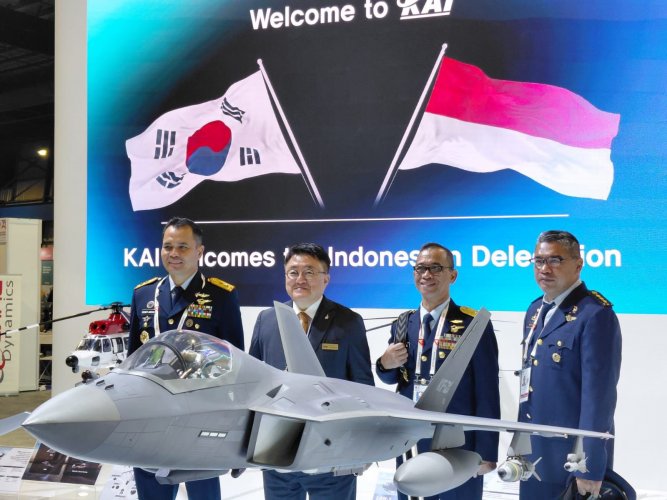
A: “We should have managed those researchers better and regret showing any gaps to the government and the public. At our level of verification, there was no major issue—it was mostly compiled reports of information we provided during meetings, etc. Since an investigation is underway, we cannot prejudge the outcome. However, because Indonesia is an important strategic partner for us, turning it into a diplomatic issue would be burdensome. Indonesia was the first country to purchase Korean aircraft with the KT-1 in 2001, and later bought the T-50 as well. Without Indonesia’s participation, KF-21 development might have failed. Indonesia has contributed greatly to the development of Korea’s aerospace industry. When Indonesia buys Korean weapons, the ripple effect extends to all Southeast Asian countries. Considering these points, I hope for a big-picture, positive resolution.”

Q: Indonesia failed to pay 1 trillion won of its 1.6 trillion won share in KF-21 development costs, leaving the government and KAI to cover the 1 trillion won shortfall.
A: “Efforts were made during KF-21 development to reduce costs, etc. If R&D proceeds smoothly as currently planned, we expect savings of about 500–600 billion won. Still, it is a very large burden, but there is no choice but for the government and KAI to share and cover it.”

Q: There is much criticism that instead of Indonesia, which repeatedly fails to pay development costs, joint development should be done with financially solid countries in the Middle East, etc.
A: “Phase 1 development (air-to-air armed version) is almost complete. Phase 2 adds air-to-ground weapons, etc., which is relatively simple with lower development costs. Involving other countries in Phase 2 would create very complex issues such as exposure of Phase 1 technology. From Phase 3 onward, it moves to manned-unmanned teaming systems, which requires much more funding. I think starting from Phase 3, it would be fine to develop jointly with countries that have both abundant money and technology.”

 
Last edited:
And regarding the Indonesian involvement, looking back at those old articles..


KF-21 could have been single engine with no hope to be upgraded into 5th generation, C101, the one heavily supported by the DAPA… The current design derived from C103 design was both worked by ADD Korea and Indonesian Aerospace. C103 got picked also because it is supported by Indonesia.
 

I can't say that Mason is credible source of information, but it is widely known in south korean online forums, that the ROKAF and KAI are not particulary interested in developing KF-21 into full-fledged 5+ gen fighter.

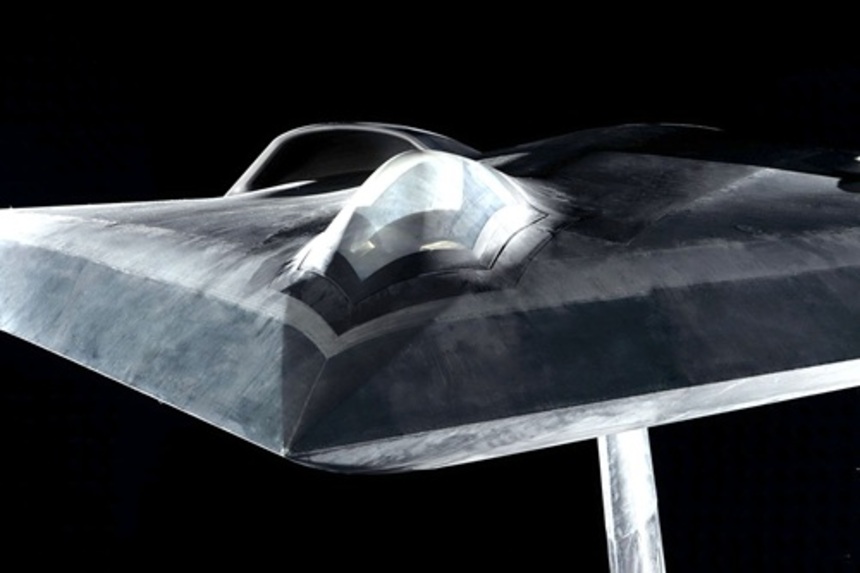
Instead, ROKAF and DAPA started Stealth Bridge program, which is developing full-sized ground testbed as a 'bridge' to ultimate Next Generation Fighter program. Rumor has it that the Next Generation FIghter aims to develop fully capable, all-aspect VLO, MUM-T fighter (Some could well say that it's 6th gen, if we ignore the fact that 6th gen is not particularly specified).

However, it doesn't mean that KF-21 performance enhancement program is abandoned, as the NACS program, which includes adding MUM-T ability to KF-21, is still ongoing and actually doing well. It is expected that the first MUM-T flight test will take place in 2029 (w/ KAI AAP), and the first KF-21SA - yes, 'SA' -, which will be used in NACS program, will be ready in 2028, per roadmap revealed in korean defence related offline forum.

Sorry to say that the original roadmap is behind paywall :(
 
I can't say that Mason is credible source of information, but it is widely known in south korean online forums, that the ROKAF and KAI are not particulary interested in developing KF-21 into full-fledged 5+ gen fighter.

Instead, ROKAF and DAPA started Stealth Bridge program, which is developing full-sized ground testbed as a 'bridge' to ultimate Next Generation Fighter program. Rumor has it that the Next Generation FIghter aims to develop fully capable, all-aspect VLO, MUM-T fighter (Some could well say that it's 6th gen, if we ignore the fact that 6th gen is not particularly specified).

However, it doesn't mean that KF-21 performance enhancement program is abandoned, as the NACS program, which includes adding MUM-T ability to KF-21, is still ongoing and actually doing well. It is expected that the first MUM-T flight test will take place in 2029 (w/ KAI AAP), and the first KF-21SA - yes, 'SA' -, which will be used in NACS program, will be ready in 2028, per roadmap revealed in korean defence related offline forum.

Sorry to say that the original roadmap is behind paywall :(
Thanks, valuable comment. Even the original report from the recent visit of the Saudi delegation does not indicate interest in financing further development of the KF-21 into a "fifth generation" version, but rather the possibility of cooperation on "further modernization, including the integration of domestic precision-guided weapons and the introduction of a system of cooperation between manned and unmanned vehicles."
 
“F-16 and French Rafale are upgraded 3rd-generation types, KF-21 has superior performance yet is cheaper. Even though development isn’t finished, requests for information are pouring in”

“People call the KF-21 a 4.5-generation fighter, but I think that’s an understatement. When compared to 4.5-generation fighters like France’s Rafale or Europe’s Eurofighter Typhoon, its performance is superior. That’s why I call it a 4.9-generation fighter—close to a true 5th generation (fully stealth-capable fighter). Moreover, its price is far lower than other 4.5-generation models.”

Bullshit. I love the Boramae, but this is utterly idiotic.
 
Last edited:
Would it be accurate to describe the KF-21 as basically a South Korean F-22?
 
Once the Block-II version (With its' IWB) is operational will the Block-Is be upgraded to that standard or would that require too much structural modification to their fuselages?
 
Once the Block-II version (With its' IWB) is operational will the Block-Is be upgraded to that standard or would that require too much structural modification to their fuselages?
Blk II won't have an internal weapons bay, that is a Blk III mod. That is what makes a lot of the talk about not progressing with Blk III not making a lot of sense. If Blk III was never really supported then there is a lot of wasted space and weight in the KF-21 today that isn't necessary...
 
Blk II won't have an internal weapons bay, that is a Blk III mod. That is what makes a lot of the talk about not progressing with Blk III not making a lot of sense. If Blk III was never really supported then there is a lot of wasted space and weight in the KF-21 today that isn't necessary...
So turn what was intended to be the weapons bay into a fuel tank. Problem solved.
 
So turn what was intended to be the weapons bay into a fuel tank. Problem solved.
While that is a solution and a reasonable one the primary customer of the aircraft likely doesn't need that extra fuel/range so increased cost and complexity on a program that is already not wanting to spend more than necessary.

EDIT: And comes at the expense of payload so likely less weapons carried.
 
As far as I know the first two blocks have structural provisions for an IWB.
I haven't seen anything that suggests Blk I and II aircraft will be retrofitted to use the IWB once Blk III development is complete. The provision was there to reduce production complexity between Blks.
 
While that is a solution and a reasonable one the primary customer of the aircraft likely doesn't need that extra fuel/range so increased cost and complexity on a program that is already not wanting to spend more than necessary.

EDIT: And comes at the expense of payload so likely less weapons carried.
Means that instead of needing drop tanks you can use those wing pylons for weapons.
 
Would it be accurate to describe the KF-21 as basically a South Korean F-22?
Maybe once they get the weapons bay working.

Until that it's slightly better than a Super Hornet.

Basically a super hornet with lower RCS airframe, better aerodynamics and electronics, plus MUM-T capabilities in the near future.
 
I haven't seen anything that suggests Blk I and II aircraft will be retrofitted to use the IWB once Blk III development is complete. The provision was there to reduce production complexity between Blks.

In fact, technically speaking, fitting IWB alone wouldn't be too hard because the IWB and needed launcher capable of firing full-sized missiles and guided bombs is already in development, for future multipurpose UCAV project. One could just remove extra gun magazine from the prepared space, add launchers and doors, and perform test flights. It's just a matter of time and cost-performance.

But fitting all the Block-III features is another thing, as it contains not just IWB but also a series of changes such as sensors, structural revision, and etc.
 
I love Kaan and Boramae, nice to see new nations joining the "indigenous fighter private club." But I can't help thinking about the Viggen. Not having an indigenous turbofan but a US one can be a giant PITA for export.
Of course I do know that South Korea and Turkey have indigenous turbofans in the pipeline. But that specific technology is no picnic, and actually much harder to pull out than even a stealth airframe.
 
Better electronics might be debatable, especially given the existence of the Blk III Super Hornets. As for the airframe, having an airframe designed around the idea of stealth but then hanging external payloads off of it is negating any positive effects the geometric design might offer (unless you fly it clean with just it's gun). So until the KF-21 Block III/KF-21EX/Whatever KAI PR department calls it this week comes out it is more like non-carrier capable Super Hornet with an IRST that also launches Meteor. Hard to justify it in it's Initial form over aircraft like the Eurofighter, Rafale or F-15EX for that matter. Purely talking about exports here, for the ROKAF it makes sense alone for being indigenous, same applies to an extent to Indonesia I suppose.
 
Would it be accurate to describe the KF-21 as basically a South Korean F-22?

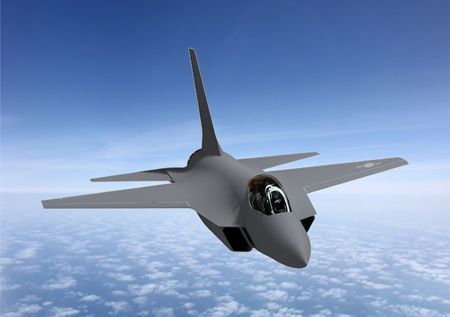
superficially it looks like a smaller F-22.
performance wise, I don't think there's enough information about the KF-21 to really compare it to the Rafale/Typhoon/SuperHornet
For example we know that the Typhoon excels at higher altitudes, speed, etc. The Rafale excels with air to ground due to its configuration.. and the Super Hornet being larger than both of them, has range advantages and is known for its integration of a wide variety of US munitions and low operating costs for its size.

That being said, besides having two of the same engines as the Super Hornet.. I'm not sure what else they are similar in. In terms of Empty weight, the KF-21 is closer to the Typhoon, and with the F-414s, gives it a similar TWR.

It has an overall "stealthy" shape and provisions for an internal bay, but if you look at the details, there's still more work that needs to be done to make it more comparable with other planes considered "5th gen". For example its round IRST, lack of serrated edges on its paneling, etc. However because it can carry four of its missiles through a semi-recessed bay, combined with its existing shaping, it could be argued it has a lower RCS than the other 4th gen planes (or 4.5 whatever you want to call them).
 
Until that it's slightly better than a Super Hornet.
I’m not entirely convinced on the sensor side. The primary sensor of any fighter aircraft is its radar, and while the KF-21 does feature an integrated IRST, the Superbug fields a radar with a noticeably larger antenna by roughly 300 T/R modules to my knowledge (~1550 vs ~1200). Both are GaN-based, though open-source figures for the APG-79’s approximate T/R count vary (some say ~1100 or ~1338), so I’m open to correction.

Assuming comparable power generation and similar allocations for radar power and cooling, this antenna advantage likely translates into a modest detection-range edge for the AN/APG-79.

Again, happy to be corrected, but no LWIR system currently in service can reliably detect and track a fighter-sized target, head-on, at ranges beyond ~90 km.

Better electronics might be debatable, especially given the existence of the Blk III Super Hornets. As for the airframe, having an airframe designed around the idea of stealth but then hanging external payloads off of it is negating any positive effects the geometric design might offer (unless you fly it clean with just it's gun). So until the KF-21 Block III/KF-21EX/Whatever KAI PR department calls it this week comes out it is more like non-carrier capable Super Hornet with an IRST that also launches Meteor. Hard to justify it in it's Initial form over aircraft like the Eurofighter, Rafale or F-15EX for that matter. Purely talking about exports here, for the ROKAF it makes sense alone for being indigenous, same applies to an extent to Indonesia I suppose.
I like both the aircraft itself and the management of the Boramae program, but it wouldn’t be an exaggeration to say that the airframe’s weapons arrangement isn’t particularly the most optimal for either a 4th or 5th-generation fighter. With more time and greater ambition, they could have arrived at a better solution, but that was never really the point. The priority was to replace the KF-5 quickly and to catch up in terms of competitive, modern fighter design.
 
It's in fact a bit hard to identify where kf-21 stands out, despite it's unique appearance.
It's best traits appear outside of airframe - it's just an exemplary execution, despite the relative lack of experience(which they now certainly have). Otherwise they just diligently add capabilities. I.e. more excution.
Other than that, what stands out is good range of heavy stand off options of several kinds (ALBM, LACM, glide bombs) - which it can comfortably take together with heavy a2a suite(also long ranged - meteor). Up to debate if it's necessary, but if you have to - it works well.
In Korean specific conditions, unique aspects are Meteors(for now) and ALBMs.

The irony is of course that original basic goal(replacing F-5) was apparently more than doable with just FA-50(skipping aim-120 integration adventures for the time being). I.e. future will give verdict to this aircraft(and Indonesian pressure as well)
I’m not entirely convinced on the sensor side. The primary sensor of any fighter aircraft is its radar, and while the KF-21 does feature an integrated IRST, the Superbug fields a radar with a noticeably larger antenna by roughly 300 T/R modules to my knowledge (~1550 vs ~1200). Both are GaN-based, though open-source figures for the APG-79’s approximate T/R count vary (some say ~1100 or ~1338), so I’m open to correction.
GaAs for both. Only GaN radar in US service is APG-79(V)4, USMC bug one (not superhornet).
What Superhornet does have(somewhat ironically for the flow of conversation) is a very capable optional lwir IRST in its center tank...
 
Last edited:
GaAs for both. Only GaN radar in US service is APG-79(V)4, USMC bug one (not superhornet).
GaN, block TR array for APY-016K, radar of the KF-21.

Both are GaN-based, though open-source figures for the APG-79’s approximate T/R count vary (some say ~1100 or ~1338), so I’m open to correction.

APY-016K is known to have 1088 TRs, but with higher peak power(~18W each)
 
By the time KF-21 is actually in service and available for export there likely will be 2-3 GaN radars available on US fighters (APG-82(V)X on F-15, APG-85 on F-35, APG-79 upgrades on Super Hornet etc). Likewise GaN radars are coming shortly to Eurofighter and Rafale.

Basically everyone has prototypes of these radars flying already or very soon, just like KF-21. The radar doesn’t feel like a clear differentiator, especially as the more advanced modes needed for A2G missions are still to be developed.
 
By the time KF-21 is actually in service and available for export there likely will be 2-3 GaN radars available on US fighters (APG-82(V)X on F-15, APG-85 on F-35, APG-79 upgrades on Super Hornet etc). Likewise GaN radars are coming shortly to Eurofighter and Rafale.

Basically everyone has prototypes of these radars flying already or very soon, just like KF-21. The radar doesn’t feel like a clear differentiator, especially as the more advanced modes needed for A2G missions are still to be developed.
Well, the best predictor of the future is the past and radar upgrades for Eurofighter and Rafale are mostly promises.
 
Well, the best predictor of the future is the past and radar upgrades for Eurofighter and Rafale are mostly promises.
Well, GaN is reaching maturity, it should come sooner or later. Especially since both are now at MLU age.

Whomever won't get GaN MESA by late 2020s is at serious risk of being not very competitive.
(will be ironic since Gripen E came as a redesign a bit too early to benefit).
 

Similar threads

Back
Top Bottom