Philippines may be expected to sign a contract this year
View: https://x.com/MonteroMax/status/2008728108921483285?s=20


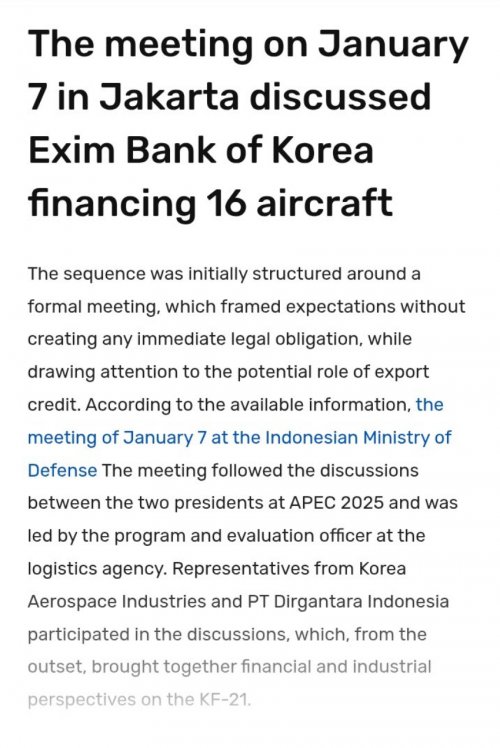
Indonesia most likely will procure 16 units Block 2 bit No guarantee yet for 48 units total procurement as initially projected
 

Thanks for posting, was just about to share it.
No guarantee yet for 48 units total procurement as initially projected
If I recall correctly and based on the information from Indonesian sources, that would be the total amount of KF-21 acquired. 16 is specifically Block 2 aircrafts.
 

Seoul has agreed with the export of KF-21 to Philippines via loans as negotiations between KAI and DND are going smoothly.
They will be able to acquire the KF-21 via foreign loans through a legal amendment this year, looking for deliveries next year.


Indonesia most likely will procure 16 units Block 2 bit No guarantee yet for 48 units total procurement as initially projected

Paywalled article


IMG_7637.jpeg
 

According to Malaysia Military Power, Malaysia has begun early discussions with KAI in Jan 2026 on a potential KF-21 acquisition. There’s no idea of which Block it will be, but I suspect like Indonesia it will be a Block II and then seek to acquire Block III.
 
I’ve seen a lot of disinformation from reputable sources about KF-21 and Indonesia, here’s what I know, this is one of the most popular posts. Usual Korean complaining.

View: https://x.com/mason_8718/status/2012087364882227542?s=20


KAI has seemingly announced (according to this guy, I don’t trust him in this post, I will explain later) they won’t give the prototype to Indonesia anymore.

Now, what this post gets wrong:

> Indonesia will purchase 16 KF-21 Block II instead of 46 Block I

16 KF-21s is supposedly the first batch, not the whole order. Also it’s 48 KF-21s. Look at Rafale, originally bought 6 units because they were divided into several batches. In the end, the full 42 units have been bought, there are even plans to add 18 more to make 60 units total.

> Indonesia is showing interest in the Chinese JF-17, the Turkish KAAN, the American F-15, the Korean KF-21, and the French Rafale

Pakistan offered the JF-17, that’s it. No interest from Indonesian side. KAAN has a deal only if it comes with Turkish engines. F-15EX is probably long gone and for good. Rafale is the only official one.

> KAI is expected to sell the Block-I and provide upgrades separately.

Indonesia hasn’t confirmed which block will obtain. The whole agreement says 48 KF-21s. Any block. We can buy Block II or Block III depending what we need. The plan is for 30 new fighter squadrons, hence why we buy small numbers. 48 KF-21 is a not binding agreement, same as 150 KF-21 for South Korea.


Moreover,

 
Indonesia hasn’t confirmed which block will obtain. The whole agreement says 48 KF-21s. Any block. We can buy Block II or Block III depending what we need. The plan is for 30 new fighter squadrons, hence why we buy small numbers. 48 KF-21 is a not binding agreement, same as 150 KF-21 for South Korea.
Really??? 30.squadrons of combat aircraft or just 30 squadrons across the whole Air Force? 30 squadrons of combat jets is generally about 450+ aircraft...
 
I’ve seen a lot of disinformation from reputable sources about KF-21 and Indonesia, here’s what I know, this is one of the most popular posts. Usual Korean complaining.

View: https://x.com/mason_8718/status/2012087364882227542?s=20


KAI has seemingly announced (according to this guy, I don’t trust him in this post, I will explain later) they won’t give the prototype to Indonesia anymore.

Now, what this post gets wrong:


16 KF-21s is supposedly the first batch, not the whole order. Also it’s 48 KF-21s. Look at Rafale, originally bought 6 units because they were divided into several batches. In the end, the full 42 units have been bought, there are even plans to add 18 more to make 60 units total.


Pakistan offered the JF-17, that’s it. No interest from Indonesian side. KAAN has a deal only if it comes with Turkish engines. F-15EX is probably long gone and for good. Rafale is the only official one.


Indonesia hasn’t confirmed which block will obtain. The whole agreement says 48 KF-21s. Any block. We can buy Block II or Block III depending what we need. The plan is for 30 new fighter squadrons, hence why we buy small numbers. 48 KF-21 is a not binding agreement, same as 150 KF-21 for South Korea.


Moreover,
What I’m about to say has nothing to do with the KF-21 or anything else, but why does everyone take this “wannabe Korean” Japanese dude seriously, especially when half the things he says never see the light of day? He’s just another enthusiastic account on Twitter, one of many dozens, if I may add. The only difference is that his content is focused on Korean stuff, but he’s not an expert or anything. I’d advise taking everything he says with a grain of salt, since he certainly doesn’t bring a realistic angle. I certainly trust actual Korean members on DefenceHub more than this guy.
 
Last edited:
this guy, I don’t trust him in this post
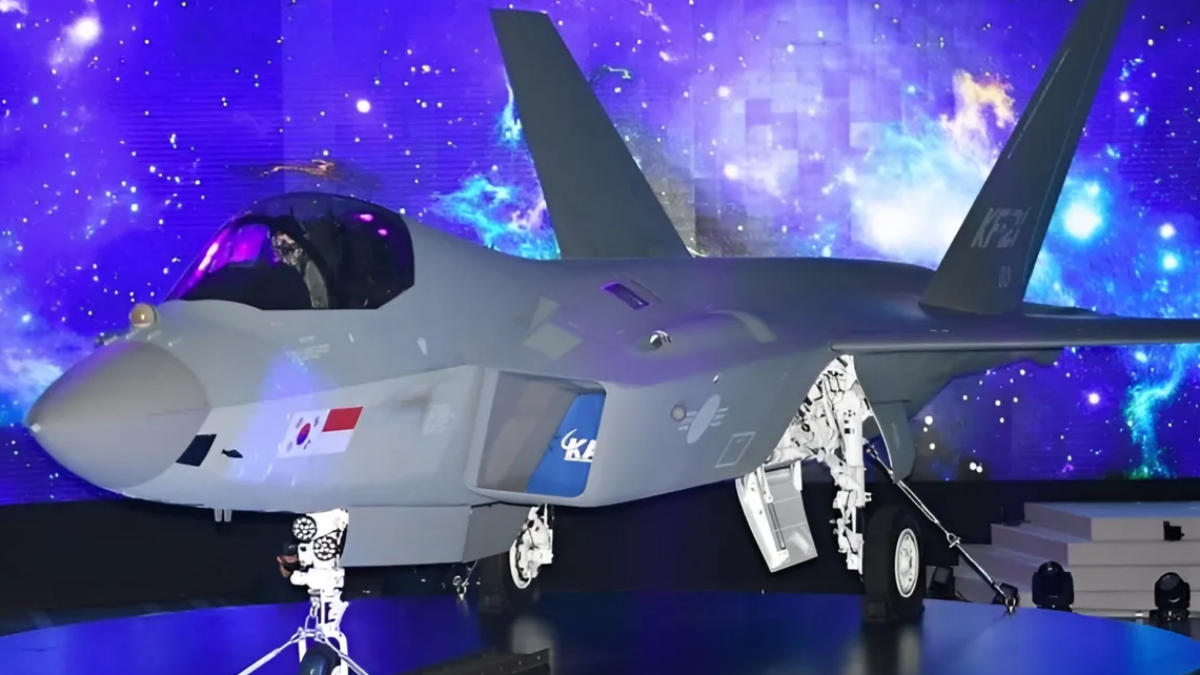
It’s pretty amazing what the KF-21 can already do with less than 3,000 flight hours ...
It can operate existing latest air-launched weapons, as well as various Korean air-launched long-range cruise missiles, ballistic missiles, hypersonic cruise missiles, and special-purpose missiles.
This guy is a cheerleader not a journalist
 
Since its inception the design looked like a cross between F-35 front fuselage and inspiration from the F-22 from the neck on back. But it has a surprisingly high fineness ratio. My guess is they went for better than an F-16C in agility. It will be interesting to see if it has low speed handling of an F-18, considering its large surface controls. IMHO, those large surface controls may be its weakness against radar. It should be even more interesting of program when conformal fuel tanks and internal bays get added. I suspect FCS will be a real challenge to add them.
 
Indonesia hasn’t confirmed which block will obtain. The whole agreement says 48 KF-21s. Any block. We can buy Block II or Block III depending what we need. The plan is for 30 new fighter squadrons, hence why we buy small numbers. 48 KF-21 is a not binding agreement, same as 150 KF-21 for South Korea.
I know Indonesia has a lot of territory to cover, but 30 additional squadrons?

Squadrons are usually 12-15 aircraft each.

Is Indonesia really planning on building up their air force to 450+ aircraft?
 
Is Indonesia really planning on building up their air force to 450+ aircraft?
It’s a gigantic country (the world’s largest archipelago) with nearly 300 million citizens, around 5% annual GDP growth, and located between China, India, and the AUKUS alliance. In that context, 450 doesn’t seem excessive to me ... which is why there’s room for multiple aircraft types and diversification.
 
I know Indonesia has a lot of territory to cover, but 30 additional squadrons?

Squadrons are usually 12-15 aircraft each.

Is Indonesia really planning on building up their air force to 450+ aircraft?
Well, let's just look at Indonesian Army plans.
The president wants grand plan to built 150 new Infantry Battalion each year, so each City/Regency in Indonesia will have a Battalion strength troops stationed there. Indonesia has more than 500 City and Regency Battalions covering all the country. If TNI really sticks into the plan (which I think they are given the amount of military construction trucks and convoys + new military buildings being constructed around my city and mass renovations) around 400 new Infantry Battalion should be formed. (add after 100 Battalion already exists).

So, I think the 450+ aircrafts air force one day will happen. Not all fighter jets of course, but yes.
 
Last edited:
Btw is Sikatan still alive? :)
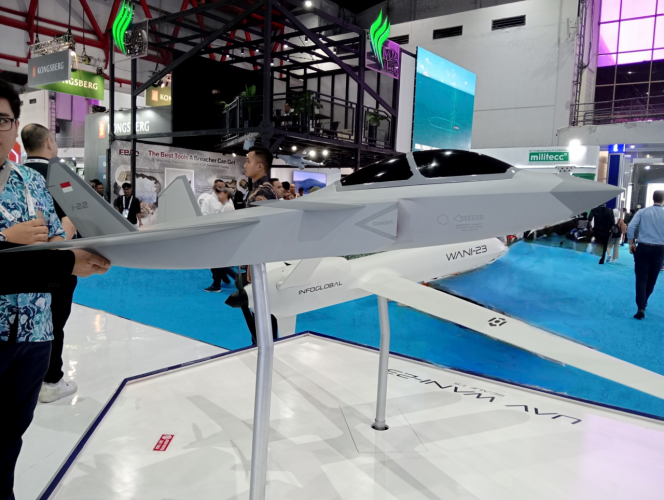
That was supposedly a derivate of IF-X (KF-X) if I recall correctly, but with more domestically developed systems. Koreans even got angry because apparently it resembled it and Chinese as well because they said we got some inspiration from J-20.

Also I suggest to go further off topic or at least stick to KF-21 in order to not annoy our mods (my fault for posting about Indonesia)
 
Last edited:
No, this has nothing to do with the KF-X at all (nothing like "IF-X" outside of marketing and a few plastic models with Indonesian emblems never existed).
But ok, back to the topic.
 
Hyundai Rotem wants to have a word.

View: https://www.youtube.com/watch?v=ZdxQqRUtWXY


At about 2:41 the video becomes something else than purely a reusable launch promotion. Hypersonic vehicle with a dual mode ramjet and a long-range a/a missile with a ducted ramjet featured. Both launched from a KF-21 Boramae. Mostly CGI but a couple of seconds worth of test footage right at the end.
 
Some of the claims of exports or even interest in exports reported/commented upon in the recent posts to this thread are just ridiculous. People need to go do some looking at the economies/budgets of the countries involved to see that such speculation is fantasy at best.
 
By the way, this enthusiastically excited guy is talking about the paralell development of Block III and the "6th generation fighter."
If I ignore the wild speculations from our "favorite sources" about possible cooperation with Saudi Arabia and the like, is there any truth to it?
I remember the heated debates among South Korean politicians before they secured funding for KF-X, and now the 6th generation program is running concurrently, albeit within a limited budget of ADD?
View: https://x.com/mason_8718/status/2012087364882227542?ref_src=twsrc%5Etfw%7Ctwcamp%5Etweetembed%7Ctwterm%5E2012087364882227542%7Ctwgr%5E19f52f29c4f4eed5a964c5090e926e57399de969%7Ctwcon%5Es1_&ref_url=https%3A%2F%2Fwww.secretprojects.co.uk%2Fthreads%2Fkai-kf-21-boramae-kfx-korean-indigenous-fighter-program.1686%2Fpage-51
 
By the way, this enthusiastically excited guy is talking about the paralell development of Block III and the "6th generation fighter."
If I ignore the wild speculations from our "favorite sources" about possible cooperation with Saudi Arabia and the like, is there any truth to it?
I remember the heated debates among South Korean politicians before they secured funding for KF-X, and now the 6th generation program is running concurrently, albeit within a limited budget of ADD?
View: https://x.com/mason_8718/status/2012087364882227542?ref_src=twsrc%5Etfw%7Ctwcamp%5Etweetembed%7Ctwterm%5E2012087364882227542%7Ctwgr%5E19f52f29c4f4eed5a964c5090e926e57399de969%7Ctwcon%5Es1_&ref_url=https%3A%2F%2Fwww.secretprojects.co.uk%2Fthreads%2Fkai-kf-21-boramae-kfx-korean-indigenous-fighter-program.1686%2Fpage-51
I've mentioned it a few time before.. Mason is not a very good source of defense information.
He's just a general enthusiast that takes commonly found information. Half his stuff is okay, but the other half he tends to exaggerate or embellish, modifying official powerpoint slides, etc with his own information
 
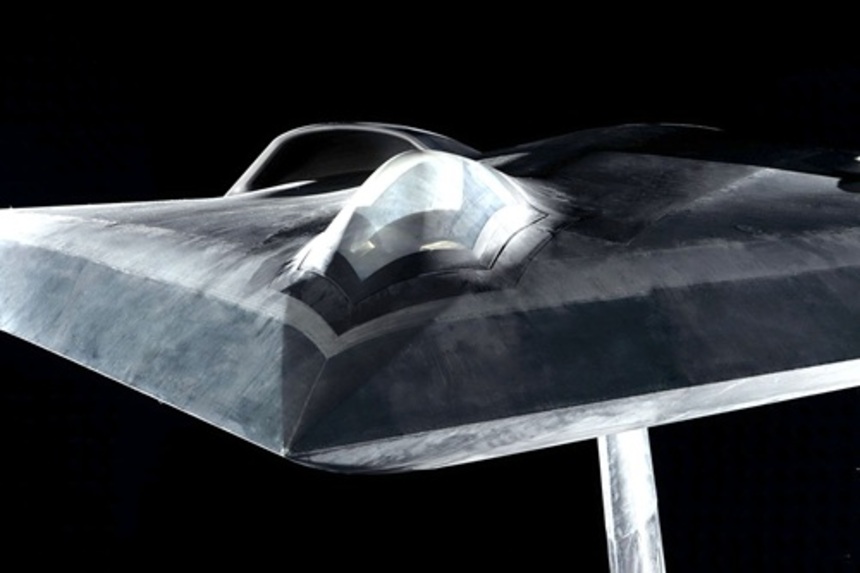
His claim appears to exaggerate South Korea’s “Next-Generation Fighter Testbed Program,” which is being conducted by ADD and related organizations over a four-year period beginning this year. The program is not intended to develop a sixth-generation fighter aircraft. Instead, it focuses on the construction of a functional, ground-based full-scale VLO aircraft mock-up, excluding elements such as the engine, OBIGGS, ejection seat, landing gear.

The initiative was requested by the ROKAF to assess whether South Korea possesses the technical capability to independently develop a tailless VLO fighter aircraft. Through the testbed effort, both the South Korean government and the ROKAF aim to evaluate the country’s current technological maturity and to explore the critical technologies that would be required for a potential sixth-generation fighter program in the future.

According to the program plan, the mock-up is intended to demonstrate the following capabilities:
  1. An airframe exhibiting all-aspect, broadband VLO characteristics.
  2. Low observable control surfaces without vertical tails, incorporating operable high speed electric actuators, as well as an internal weapons bay.
  3. A functional wideband AESA radar based on a next-generation architecture, capable of simultaneous transmit-and-receive operations at both the broadband and channel levels.
  4. Low observable optical systems, such as EOTS, EODAS, and an improved canopy.
  5. Low observable sensor suites, such as ECM, RWR, FADS, and COMMs.
  6. New low-observable materials, including RAM, RAS, and low-observable engine nozzle concepts.
The proposal has been incorporated into South Korea’s 2026 government budget plan, with funding of approximately KRW 63.6 billion.

 
Last edited:
I wouldn't be surprised if a like with like comparison ended up adding another 1,000kg onto the empty mass.
A question : are the static stress tests of the frame already ended successfully ?

If not, it's not the first time the frame has to be strength, with some weight penalty.

And in the first std no load in internal bays : a surprise may also occur with these internal loads.
 
His claim appears to exaggerate South Korea’s “Next-Generation Fighter Testbed Program,” which is being conducted by ADD and related organizations over a four-year period beginning this year. The program is not intended to develop a sixth-generation fighter aircraft. Instead, it focuses on the construction of a functional, ground-based full-scale VLO aircraft mock-up, excluding elements such as the engine, OBIGGS, ejection seat, landing gear.

The initiative was requested by the ROKAF to assess whether South Korea possesses the technical capability to independently develop a tailless VLO fighter aircraft. Through the testbed effort, both the South Korean government and the ROKAF aim to evaluate the country’s current technological maturity and to explore the critical technologies that would be required for a potential sixth-generation fighter program in the future.

According to the program plan, the mock-up is intended to demonstrate the following capabilities:
  1. An airframe exhibiting all-aspect, broadband VLO characteristics.
  2. Low observable control surfaces without vertical tails, incorporating operable high speed electric actuators, as well as an internal weapons bay.
  3. A functional wideband AESA radar based on a next-generation architecture, capable of simultaneous transmit-and-receive operations at both the broadband and channel levels.
  4. Low observable optical systems, such as EOTS, EODAS, and an improved canopy.
  5. Low observable sensor suites, such as ECM, RWR, FADS, and COMMs.
  6. New low-observable materials, including RAM, RAS, and low-observable engine nozzle concepts.
The proposal has been incorporated into South Korea’s 2026 government budget plan, with funding of approximately KRW 63.6 billion.

Ok, thanks, this makes sense.

In the long term, the ROKAF will need a replacement for the F-15K.
With experience gained from the KF-X program and its own indigenous powerplants they will have no reason to look abroad.
 
In the long term, the ROKAF will need a replacement for the F-15K.
With experience gained from the KF-X program and its own indigenous powerplants they will have no reason to look abroad.
That's not in the cards in the near future. When even the likes of Dassault and Airbus are in doubt of delivering such an aircraft independently, and the likes of BAE and Mitsubishi have to join together as well, it's highly unlikely KAI can pull this off on their own. They can join in other efforts, but that's about it.

And that's arguably outside of the scope of this thread.
 
That's not in the cards in the near future. When even the likes of Dassault and Airbus are in doubt of delivering such an aircraft independently, and the likes of BAE and Mitsubishi have to join together as well, it's highly unlikely KAI can pull this off on their own. They can join in other efforts, but that's about it.

And that's arguably outside of the scope of this thread.
In the long term, yes.
The South Koreans are not crazy enough to follow the same path as the hyper-indebted countries in Europe and get stuck in endless debates and spiraling cost increases, amplified by the interests of the industrial lobby.
The dynamics of technological development there are fast enough, the population is highly technically educated, motivated and disciplined, the infrastructure is very high quality and project management... the development costs of the KF-X are around 8 billion dollars in today's prices.
 
In the long term, yes.
The South Koreans are not crazy enough to follow the same path as the hyper-indebted countries in Europe and get stuck in endless debates and spiraling cost increases, amplified by the interests of the industrial lobby.
The dynamics of technological development there are fast enough, the population is highly technically educated, motivated and disciplined, the infrastructure is very high quality and project management... the development costs of the KF-X are around 8 billion dollars in today's prices.
I thought Korea suffered much the same problem as Japan did with a real estate bubble bursting and fubaring their economy for a decade, which led to some scary governmental debt building up?
 
I thought Korea suffered much the same problem as Japan did with a real estate bubble bursting and fubaring their economy for a decade, which led to some scary governmental debt building up?
no, nothing like Japan's. One thing it does share are issues with demographic growth, which are arguably worse.
in any case we are starting to go off topic. lets get back to strictly the KF-21
 
That's not in the cards in the near future. When even the likes of Dassault and Airbus are in doubt of delivering such an aircraft independently, and the likes of BAE and Mitsubishi have to join together as well, it's highly unlikely KAI can pull this off on their own. They can join in other efforts, but that's about it.

And that's arguably outside of the scope of this thread.
Since KAI (almost) delivered KF-21 - i din't think it's a correct way of interpreting things.
LM or not, they have a design team with experience of delivering fighters from request to production run.
In Dassault and Airbus, these people are close to retirement, and in any case didn't go through this cycle for 20 years.
 
Since KAI (almost) delivered KF-21 - i din't think it's a correct way of interpreting things.
LM or not, they have a design team with experience of delivering fighters from request to production run.
In Dassault and Airbus, these people are close to retirement, and in any case didn't go through this cycle for 20 years.
To be fair, there were a few smaller projects in between - the most notable and finished one being the Neuron - but they didn’t require the company’s full engineering workforce. For example, TA(I)’s UAV division alone designed and built the Anka-3, while the Manned Aircraft division was fully focused on Hürjet and Kaan, and the Helicopter division was occupied with its own programs.

Now, however, with countries once again pouring immense amounts of money into defense and with the emergence of wingman drones and related concepts, these industrial muscles are being exercised again as seen in projects like the Airbus’ Wingman or the German startup Helsing’s MQ-28 lookalike (not to mention the push to master modern manned fighter design through the GCAP or FCAS).
 
To be fair, there were a few smaller projects in between - the most notable and finished one being the Neuron - but they didn’t require the company’s full engineering workforce. For example, TA(I)’s UAV division alone designed and built the Anka-3, while the Manned Aircraft division was fully focused on Hürjet and Kaan, and the Helicopter division was occupied with its own programs.
There's in the end huge difference b/n "x-projects" and producable aircraft.
Scale manufacturing, sustaining quality requirements on normal production lines, having operationally useful aircraft flown by normal pilots and serviced by normal technicians - this is one hell of a barrier.
Neuron is certainly something, but overall KAI now has a fresh team in a way European grands (other than SAAB, sort of) do not.
 
There's in the end huge difference b/n "x-projects" and producable aircraft.
Scale manufacturing, sustaining quality requirements on normal production lines, having operationally useful aircraft flown by normal pilots and serviced by normal technicians - this is one hell of a barrier.
Neuron is certainly something, but overall KAI now has a fresh team in a way European grands (other than SAAB, sort of) do not.
The Neuron was a technology development project from the outset, and I mentioned it as such, as it was the most notable and complete one. They indeed lack the kind of experience you mentioned, which is why I focused on covering the design side of things. I think the need to relearn production development will largely be overcome by the members of the "group projects" once they bring smaller projects into production and are able to reflect on that experience.

The Gripen is similar to the Rafale in this context, and I do not see SAAB as being ahead of the European grands in maintaining that project management memory.
 

1600 hours..? That doesn’t look like a lot to me..?

This definitely seems unusual. I recall reading an article stating that there were 2,200 scheduled flight tests through the first half of 2026. Considering their historically conservative approach to development, this shift is quite peculiar.


My guess is that the schedule might have been adjusted because the development of Block 2 was fast-tracked, incorporating additional tests that began in the summer of 2025. Or maybe they think that after the rollout in March, there will be a test and evaluation period with the Air Force until September, and that's enough. Even so, it doesn't seem like the best idea, regardless of how high-risk the F-5 fleet has become.
 

1600 hours..? That doesn’t look like a lot to me..?
1,600 test flights and 214 months of flight testing (the sum of the age of each of the 6 KF-21 prototypes) actually seems quite reasonable as a milestone to declare the end of the initial prototype phase and to have enough confidence in the design having matured and being ready for production.

This is only slightly longer than the Rafale test plan (back in the 1990s) which was for 1,500 flights over 190 months of flight testing, including about 10% on navalisation tests which obviously KAI didn't need to worry about.

This shouldn't mean that flight testing is over, just that they are out of the prototyping phase and a new phase of testing can start focused on production & operational testing. Basically the 13,000 realized test points should give confidence that the prototypes and key systems have been tested across the entire enveloppe, the aircraft design is now stable and safe, the airframe and systems are mature enough to be usable at a basic level, production or (pre-production?) aircraft can be rolled out, and experienced pilots without test pilot qualifications can start flying KF-21 etc.

Obviously (like all other new fighters), the testing program will need to continue to resolve both "bug fixes" and user feedback items that are identified over time and also to deliver enhanced functionality that is on the roadmap (including A2G capability, advanced systems integration, stealth etc).
 
Last edited:

Similar threads

Back
Top Bottom