Scott Kenny
ACCESS: USAP
- Joined
- 15 May 2023
- Messages
- 17,084
- Reaction score
- 24,222
I really want an itemized list of what all the USAF required on their E-7s that the Aussies and NATO didn't.

I really want an itemized list of what all the USAF required on their E-7s that the Aussies and NATO didn't.


 aviationweek.com

The USAF configuration builds on the UK configuration that modernized several aspects of the E-7 over and above what was exported to Australia, South Korea and Turkey originally. US has requirements for GPS/PNT, SATCOM (M-CODE and SATCOM mandates), OMS computing architecture (new mission computers), USAF specific software and cybersecurity compliance with US standards. Basic things that the US would expect a platform being delivered in 2028 to have especially with ABMS and CJADC2 capabilities in mind.I really want an itemized list of what all the USAF required on their E-7s that the Aussies and NATO didn't.

Senate $852B Defense Budget Saves E-7, Keeps Space Force Flat
Senators advanced a $852 billion defense spending bill for 2026 that would give the Air Force nearly $5 billion more than it sought.www.airandspaceforces.com
The bill also rounds out congressional support for the Air Force’s pursuit of the E-7 early-warning jet, which the Pentagon wants to ditch in favor of using Navy E-2D Hawkeye planes and satellites to track airborne threats instead. Senators are offering $847 million to continue that prototyping effort—a precursor to buying a 26-piece fleet to replace the Wedgetail’s decades-old predecessor.
Lawmakers and some military aviation experts have expressed skepticism that adding five Hawkeyes as a stopgap measure before surveillance satellites are ready to take on the Wedgetail’s mission would be enough to satisfy demand for its help.
“I can’t explain why the department wanted to wait on Navy fighters or Air Force early-warning programs … but we identified these issues and addressed them appropriately,” said Sen. Chris Coons, the top Democrat on the defense appropriations panel.

 www.twz.com

(Subscription or registration may be required)Proposed E-7 Cut Reflects Budget Limit, Not Capability: USAF Official | Aviation Week Network
The “tough decision” to cut the U.S. Air Force’s planned E-7A Wedgetail fleet was simply a balancing act for funding, Chief of Staff Gen. David Allvin says.
Too few districts have naval shipyards in them. Especially since the 1990s BRAC closures.The Navy keeps trying the same thing with the SCN budget, but hasn't quite realized that Congress doesn't have enough members who care about shipbuilding.
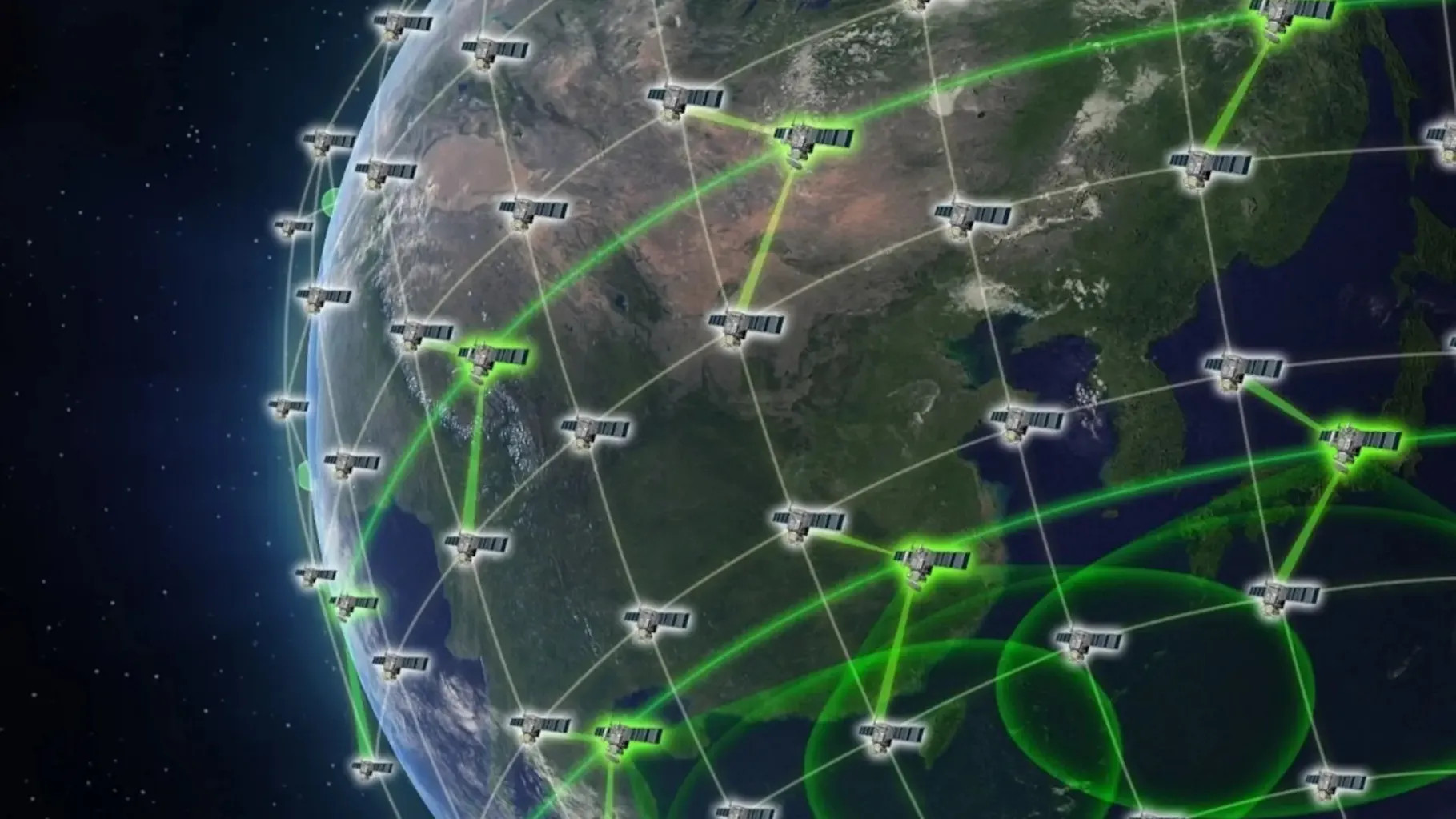
A bureaucratic rearguard action?Regarding the GMTI sats:

Space Force launching sats to ‘enable’ GMTI ahead of mission-dedicated birds in 2028 - Breaking Defense
Lt. Gen. DeAnna Burt, the Space Force’s deputy chief of space operations for operations, cyber and nuclear, also said the service expects to complete an analysis of alternatives by this fall for a separate but related effort to track airborne targets from the heavens.breakingdefense.com

Basic things that the US would expect a platform being delivered in 2028 to have especially with ABMS and CJADC2 capabilities in mind.
But by pushing for those things they've now lost the entire capability, possibly to be replaced by the E-2D that also lacks them.

It went relatively under the radar after the IDEF 2025 fair, but Turkey is now indigenously replacing the consoles and modernizing the sensors (including the radar) of its E-7T aircraft.Turkey is looking to modernize its E-7T fleet using indigenous efforts.
View: https://x.com/T_Nblty/status/1796201429939405246?t=EzXqpHYOlkPvHgV7wbAVTA&s=19

Some software and hardware modernisation(s) have already been completed.It went relatively under the radar after the IDEF 2025 fair, but the Turkey is now indigenously replacing the consoles and modernizing the sensors (including the radar) of its E-7T aircraft.

This is viewed by many as a critical interim step toward developing a fully indigenous AEW&C platform by the early 2030s. Based on the experience gained from this modernization effort and the earlier integration work of Turkish companies during the production of the E-7Ts, I suspect that the eventual design could be also based on the 737 airframe and bear a strong resemblance to the current platform.
[...] a dangerous misconception in parts of the Department of Defense is now equating Airborne Moving Target Indicator (AMTI) data, snapshots of moving targets from radar-based systems like space-based satellites, with the orchestration of air battle management.
This fallacy threatens US air superiority, especially against near-peer adversary China, whose advanced anti-access/area-denial (A2/AD) capabilities demand more than passive surveillance. AMTI informs, but only human-led air battle management, supported by platforms like the Boeing E-7 Airborne Early Warning and Control (AEW&C) aircraft, directs fighters, deconflicts lethal effects, and secures the skies.


I understood that space-based AMTI would eventually give full coverage not just snapshots.
The GMTI and AMTI are to be full coverage, same as hypersonic target and missile coverage.I think it’s hard to access what it will include at this point.
The GMTI and AMTI are to be full coverage, same as hypersonic target and missile coverage.
Getting the correct number of assets up there is the only issue I know of.I am sure that is the intention; execution seems a bit more complex.

That's really missing the point of the article, which is that even continuous AMTI is not battle-management. There's no point putting an AMTI feed of the full theatre on an F-47's display, the pilot doesn't know what's critical and what's not. You need the feed from the AEW feed to go to people who are dedicated to integrating that with what's happening on the surface and able to assign missions across the available assets, and that's not adequately being addressed by the space-based AMTI advocates.I understood that space-based AMTI would eventually give full coverage not just snapshots.

 www.flightglobal.com
It's already being done by the USAF, there is no reason the people need to be airborne to accomplish that task. All that is required is a feed, whether space based or airborne sensor, and sufficient comms to allow the respective airborne assets and ground based units such as the 728th to communicate.You need the feed from the AEW feed to go to people who are dedicated to integrating that with what's happening on the surface and able to assign missions across the available assets, and that's not adequately being addressed by the space-based AMTI advocates.
When an E-3 Sentry Airborne Warning and Control System aircraft failed to launch during a key mission during a recent exercise, it could have meant the loss of real-time command and control for a multinational force conducting complex air operations.
Instead, the 728th Battle Management Control Squadron stepped in.
The unit, based out of Robins Air Force Base, Georgia, was participating in a Red Flag exercise, which is designed to give flying, command and control, maintenance and other support units valuable experience in realistic air-to-air combat scenarios.
However, for two days during the combat training event, the E-3 was unable to make it off of the ground. The 728th BMCS assumed full responsibility for the Air Battle Management mission, providing control and coordination for the entire Battle Management Area.
“For every mission in Red Flag we had two C2 agencies going,” said Maj. Walter Oliver, the 461st Air Control Wing deputy director of plans and programs and the 728th BMCS detachment commander for the exercise. “On two of those days, the E-3 was not able to get up in the air or take off for some reason. So the 728th covered down for the entire BMA … checking in aircraft, routing them to their hold points, and controlling the mission from start to finish.”
No, they don't need to be airborne, but they do need to be deployable. Imagine trying to run the Desert Storm air campaign from the States.It's already being done by the USAF, there is no reason the people need to be airborne to accomplish that task. All that is required is a feed, whether space based or airborne sensor, and sufficient comms to allow the respective airborne assets and ground based units such as the 728th to communicate.
And airborne is THE ultimate deployability, with current technology.No, they don't need to be airborne, but they do need to be deployable. Imagine trying to run the Desert Storm air campaign from the States.
Getting the correct number of assets up there is the only issue I know of.
You would build redundancy into the system and how would it be any different to an AEW being jammed or even blown out of the sky by an LRAAM fired from a stealth aircraft, which it's trying to see the frontal RCS of? How do you manage a battlespace when you've been blown up? Then there's also the refuelling requirements for the AEWs, which puts the tanker in danger too. What's more deployable than permanently deployed?Fusing data from multiple satellites and sending it to C2 and tactical units is no minor affair. Even more so if it might be out of date/have time gaps, which one might expect with an incomplete system or a system under attack.
Other than enjoying the comfort of their own office chair I'm not sure what wouldn't be deployable about what the 728th does?No, they don't need to be airborne, but they do need to be deployable. Imagine trying to run the Desert Storm air campaign from the States.

Could it be done? Yes, probably. Could it be done optimally? No. There's no substitute for being in the same time-zone as the people you're working with. If you're trying to coordinate Georgia with Taiwan you're 12 hours out, you have to make a mental translation for everything you're assuming is going on. Same time zone, no issue.For Desert Storm as long as the sensor data and secure communications were available there is no reason that ABM for a conflict that size couldn't be run remotely today.
Disagree, this isn't a new issue and the US has been doing this for a while now.Could it be done? Yes, probably. Could it be done optimally? No. There's no substitute for being in the same time-zone as the people you're working with. If you're trying to coordinate Georgia with Taiwan you're 12 hours out, you have to make a mental translation for everything you're assuming is going on. Same time zone, no issue.
You would build redundancy into the system and how would it be any different to an AEW being jammed or even blown out of the sky by an LRAAM fired from a stealth aircraft, which it's trying to see the frontal RCS of? How do you manage a battlespace when you've been blown up? Then there's also the refuelling requirements for the AEWs, which puts the tanker in danger too. What's more deployable than permanently deployed?
Like I said, "Could it be done? Yes, probably. Could it be done optimally? No." Note in your example that they're not proposing to shut down the CAOC at Al Udeid, they're simply demonstrating that they can run ops from Shaw for a few hours if they need to. Running it on an extended basis would be more of an issue.Disagree, this isn't a new issue and the US has been doing this for a while now.
www.centcom.mil/MEDIA/NEWS-ARTICLES/News-Article-View/Article/1976249/command-and-control-of-afcent-from-shaw-not-caoc

So I got curious and ran a quick search / shitty napkin math by going through SDA's own documents on the latency required for a satellite network and accounting for some integration between various sensors and what not. My math is probably wrong all over the place, but ..Latency can also be a generic issue for some decisions today and might be a serious issue in an environment where we just don’t know what kind of capabilities a peer might bring in the EM spectrum but I a am skeptical, despite all the claims of resiliency and robustness, that the comms network needed to support the DoDs space based AMTI vision, won’t be seriously degraded.
AESA already implies certain LPI features though.LPI for fire control radars be applied to the AESA AWACS (btw I know this term is outdated, what is the preferred nomenclature?)
Depends. I'm increasingly starting to think that the true vulnerability isn't E-7 or satellite but rather having sufficiently attritable flying communication nodes.Do people need to be on it?


