
You are using an out of date browser. It may not display this or other websites correctly.
You should upgrade or use an alternative browser.
You should upgrade or use an alternative browser.
Compact Air-to-Air Missile (CAAM)
- Thread starter raptor82
- Start date



- Joined
- 16 April 2008
- Messages
- 10,618
- Reaction score
- 18,246
CAAM & EXRAAM?
Seems like addditional funding for an initiative that started last year, which Raytheon and Boeing are both getting money for.
https://www.thedefensepost.com/2022/12/20/raytheon-next-gen-missile/
https://www.defense.gov/News/Contracts/Contract/Article/3249030/
Raytheon Missiles & Defense, Tucson, Arizona, has been awarded an estimated $21,000,000 indefinite-delivery/indefinite-quantity, cost-plus-fixed-fee contract. This contract is to develop critical subsystem technologies that support the Compact Air to Air Missile and Extended Range Air to Air Missile systems. Work will be performed in Tucson, Arizona, and is expected to be completed by Dec. 15, 2029. This award is the result of a white paper originating from broad agency announcement FA8651-20-S-0008. Fiscal 2022 research, development, test and evaluation funds in the amount of $1,725,000 are being obligated at the time of award. Air Force Research Laboratory, Eglin Air Force Base, Florida, is the contracting activity (FA8651-23-D-A001).

bring_it_on
I really should change my personal text
- Joined
- 4 July 2013
- Messages
- 4,241
- Reaction score
- 5,842
Posting here. Mods, please move if there's a better thread for it somewhere else.
https://sam.gov/opp/91c6de4b5fae4cae9ad6e26d32f37831/view
Naval Air Warfare Center Weapons Division (NAWCWD) China Lake, California intends to procure on a Full and Open competition basis to develop and demonstrate technology that results in greatly enhanced kinematic capability for the next generation of tactical missiles. To support this technological development efforts, NAWCWD is interested in maturing high total impulse loaded and energy tailorable solid propulsion systems for transition into compact weapon systems, including a Compact Air-to-Air Missile (CAAM). Requirements will include tasking and products needed to provide a Concept Design with build-to-print data package, identify critical technology gaps, conduct critical component and rocket motor experiments, conduct a Design for Manufacturing & Assembly study to identify features required to meet manufacturing and cost goals, and provide a plan to mature the CAAM HLG Concept Design to a maturity state ready to enter a Department of Defense (DOD) Engineering and Manufacturing Development (EMD) program. It is anticipated that there will be a combination of Cost-Plus Fixed Fee (CPFF) and Firm Fixed Price (FFP) line items to satisfy requirements. This procurement will be solicited under full and open competition per Federal Acquisition Regulation (FAR) 6.102(b). More information will be provided in the Request for Proposal (RFP), solicitation number N6893625R0029, to be posted in Contract Opportunities on the System for Award Management (SAM) website at https://www.sam.gov/ and the, and will close 45 days from the RFP issue date.
https://sam.gov/opp/91c6de4b5fae4cae9ad6e26d32f37831/view
lfx160219
I really should change my personal text
- Joined
- 9 May 2016
- Messages
- 22
- Reaction score
- 102

Erdosain
ACCESS: Top Secret
- Joined
- 10 March 2020
- Messages
- 753
- Reaction score
- 3,032
I'm not sure if it's worth starting a new thread for this new CAAM project, which went somewhat unnoticed due to the presentation of the AIM-424 Malice.
I'm posting it here because it's intended for the F-35C and the future F/A-XX.
Joseph Trevithick, Howard Altman
Published Aug 24, 2026 3:39 PM EDT
https://www.twz.com/air/tiny-air-to-air-missile-in-development-for-stealthy-u-s-navy-combat-aircraft
I'm posting it here because it's intended for the F-35C and the future F/A-XX.
Tiny Air-To-Air Missile In Development For Stealthy U.S. Navy Combat Aircraft
The big AIM-424 long-range air-to-air missile has grabbed headlines, but the Navy is also pursuing a new weapon for the exact opposite use case.Joseph Trevithick, Howard Altman
Published Aug 24, 2026 3:39 PM EDT
https://www.twz.com/air/tiny-air-to-air-missile-in-development-for-stealthy-u-s-navy-combat-aircraft
Attachments
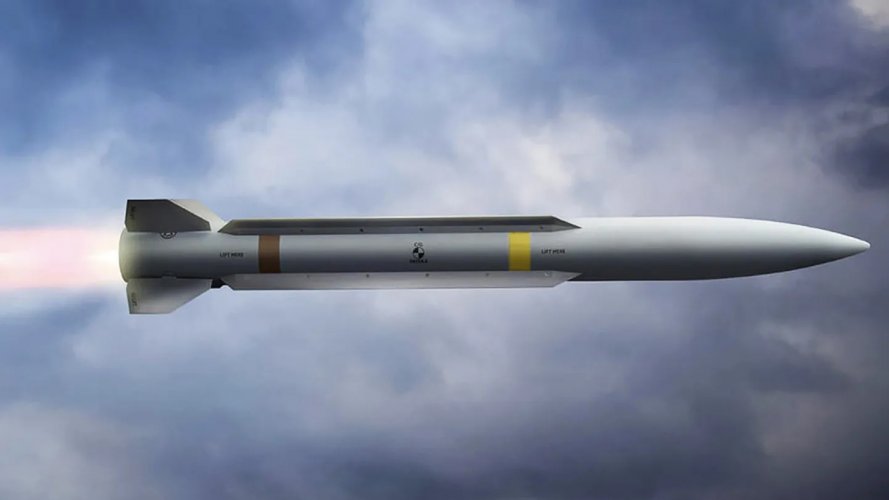
Erdosain
ACCESS: Top Secret
- Joined
- 10 March 2020
- Messages
- 753
- Reaction score
- 3,032
U.S. Navy Reveals Concept For Short-Range Aerial Kills
https://aviationweek.com/defense/mi...navy-reveals-concept-short-range-aerial-killsIf two stealth fighters remain radar silent and fly without giving out too much heat, will they bump into each other unexpectedly, like the collision between the British and French SSBNs in 2009?
Is the CAAM a weapon for such a scenario?
Is the CAAM a weapon for such a scenario?
Ainen
I really should change my personal text
- Joined
- 25 August 2011
- Messages
- 2,957
- Reaction score
- 5,082
If you replace one or both of them with a non-LO one, it still can happen.If two stealth fighters remain radar silent and fly without giving out too much heat,
If radar is off, wheth it is LO or not LO doesn't matter...

Avimimus
ACCESS: Top Secret
- Joined
- 15 December 2007
- Messages
- 2,740
- Reaction score
- 1,433
If you replace one or both of them with a non-LO one, it still can happen.
If radar is off, wheth it is LO or not LO doesn't matter...
With networked sensors (including space based radars) the likelihood of that happening is decreasing though - even if your local on-board sensors are turned off.
I think a more common use might be to increase magazine depth for intercepting cruise missiles and anti-ship missiles?
I can also think of more exotic scenario - a flight fires off all of its missiles in a BVR engagement and then retreats - but is chased down by a remaining aircraft that has more magazine depth... again though, with increasing engagement ranges it seems less likely that the gap could be crossed before the retreating flight is covered by another sortie (assuming the enemy is well organised). A lot depends on how much sensors, communications, and control have been degraded.
Ainen
I really should change my personal text
- Joined
- 25 August 2011
- Messages
- 2,957
- Reaction score
- 5,082
It does, but not as fast as it appears to be.With networked sensors (including space based radars) the likelihood of that happening is decreasing though - even if your local on-board sensors are turned off.
Number of fully networked aircraft with modern cockpits, operating in modern information ecosystems with this level of feed is, to date, very low. Especially when said aircraft operate over neutral/hostile ground.
I.e. sensors of local flight and individual aircraft still matter. As such, yes, more or less anyone still can be ambushed, by even a relatively simple ambusher. Situation started changing, but it'll remain like this for a while.
Avimimus
ACCESS: Top Secret
- Joined
- 15 December 2007
- Messages
- 2,740
- Reaction score
- 1,433
It does, but not as fast as it appears to be.
Number of fully networked aircraft with modern cockpits, operating in modern information ecosystems with this level of feed is, to date, very low. Especially when said aircraft operate over neutral/hostile ground.
I.e. sensors of local flight and individual aircraft still matter. As such, yes, more or less anyone still can be ambushed, by even a relatively simple ambusher. Situation started changing, but it'll remain like this for a while.
Yes, definitely! I was thinking more about trends suggesting what things might be like in the late 2030s-2060s.
It seems more likely to me close range weapons are more for UAVs that have more limited weapons bays and can afford the higher risk of close combat, though manned aircraft might also use them defensively against massed stand off munition threats.
My impression is that both USAF and USN want to get away from having separate short range weapons on their manned aircraft and that things like AIM-260 will have a high off bore site and lock on after launch capability for short range work in an emergency. I doubt there will be an AIM-9 follow on missile, only “half RAM” types that can fit 2 per in an AIM-120/260 sized space. And even then, I doubt manned aircraft are the intended platform.
My impression is that both USAF and USN want to get away from having separate short range weapons on their manned aircraft and that things like AIM-260 will have a high off bore site and lock on after launch capability for short range work in an emergency. I doubt there will be an AIM-9 follow on missile, only “half RAM” types that can fit 2 per in an AIM-120/260 sized space. And even then, I doubt manned aircraft are the intended platform.
https://ursamajor.com/media/press-release/us-navy-awards-ursa-major-137m-for-srm-caam-nmm/
Seems like the propulsion for CAAM has been rewarded to Ursa Major. Will be a 7 inch diameter solid rocket motor (like the AMRAAM/JATM) instead of the 5 inch motor of the Sidewinder.
Seems like the propulsion for CAAM has been rewarded to Ursa Major. Will be a 7 inch diameter solid rocket motor (like the AMRAAM/JATM) instead of the 5 inch motor of the Sidewinder.
Scott Kenny
ACCESS: USAP
- Joined
- 15 May 2023
- Messages
- 19,882
- Reaction score
- 28,539
Hrm. Don't know that I like the increased diameter. That increases drag, completely messes up the fineness ratio.
The joke I want to make is that we're going to end up with the Macross/Robotech "beer can missiles."
The joke I want to make is that we're going to end up with the Macross/Robotech "beer can missiles."
bring_it_on
I really should change my personal text
- Joined
- 4 July 2013
- Messages
- 4,241
- Reaction score
- 5,842
Given the Raytheon-Andurl collaboration on a new HLG rocket motor for an unspecified A2A application, announced last year, could we potentially be looking at a teaming arrangement here? Ursa Major partners with Boeing while Anduril joins the Raytheon team?
The diameter change makes sense. This is a HALFRAAM than purely a AIM-9X replacement so might as well use the full diameter of the AIM-120 around which IWB's are optimized.
https://www.anduril.com/news/anduri...ded-grain-rocket-motor-for-air-to-air-weapons
The diameter change makes sense. This is a HALFRAAM than purely a AIM-9X replacement so might as well use the full diameter of the AIM-120 around which IWB's are optimized.
https://www.anduril.com/news/anduri...ded-grain-rocket-motor-for-air-to-air-weapons
Depending on the design chosen someone could be looking at a 5.5"-6" forebody mated to a 7" motor to maximize performance and aerodynamics.That increases drag, completely messes up the fineness ratio.
Last edited:
That increase in diameter also increases thrust by a heck of a lot. If CAAM is meant to be stacked longitudinally (which I expect due to the ~2m length of the missile), then the mass of the missile is probably roughly equivalent to that of a sidewinder ( and about half that of an AMRAAM). Increasing the internal area by 96% gives the rocket engine much higher burn area, and the mass flow rate will increase proportionally. More energetic, highly loaded grain propellants, and an increase in nozzle size should do the same. Now the range would be harmed by this (with all other things equal, due to a more draggy airframe), but the initial thrust and thrust to weight ratio should increase massively instead. I can see this being a very effective short range "defensive" air to air missile. Either targeting fast-moving cruise missiles or even air-to-air missiles.
Now, I'm more convinced the AIM-9X CV program is for a hybrid design (AIM9 foreboddy matted to 7" motor) and CAAM a full size clean sheet design. Due to compactness for the half-amraam format it should look similar to the AIM-424 with a short nose section and "long" motor.
Given the same motor length the mass increase is the same as the cross section area increase. In simple terms thrust increases proportional with area or (for short) with diameter. This means the acceleration potential remains the same. Unless chamber size is increased in volume and pressure rating which will increase burn rate. You can evaluate burn rate as lenght/burn-time. Given same lenght the higher acceleration burn will decrease burn time and ultimately range. The secret gain here lies with HLG. For "same" design acceleration rate we get 1.5x range. But drag and other compomises and tweaks will change this.That increase in diameter also increases thrust by a heck of a lot. If CAAM is meant to be stacked longitudinally (which I expect due to the ~2m length of the missile), then the mass of the missile is probably roughly equivalent to that of a sidewinder ( and about half that of an AMRAAM). Increasing the internal area by 96% gives the rocket engine much higher burn area, and the mass flow rate will increase proportionally. More energetic, highly loaded grain propellants, and an increase in nozzle size should do the same. Now the range would be harmed by this (with all other things equal, due to a more draggy airframe), but the initial thrust and thrust to weight ratio should increase massively instead. I can see this being a very effective short range "defensive" air to air missile. Either targeting fast-moving cruise missiles or even air-to-air missiles.
I just don't think this missile will be close to the same length (given that it needs to be compact) and the diameter is already that of the AMRAAM, thus I would expect the motor length to be much lower, and hence the weight too. The peregrine graphic released earlier (different missile, but it seems like comparatively similar goals) is also quite the stubby missile, and has a length-to-width ratio of about 11 to 12. This would give a length of about 2 meters (1.96-2.13 m) for the whole missile, which should allow for two missiles in a F-35 IWB stacked lengthwise.

- Joined
- 30 May 2023
- Messages
- 696
- Reaction score
- 1,496
@Scott Kenny ill skip right to a shadow fighter with a nasty reflex main gun tyvm
I'm assume the AIM9 "long" forebody (~0.9m) will be made shorter with new tech like from RAM. Larger sizes for CAAM could come from Blackbeard's AESA programs etc. This would allow to retain motor length somewhat. Target half-araam size is about ~1.8m so ~1.2-1.5 m motor might be possible.I just don't think this missile will be close to the same length (given that it needs to be compact) and the diameter is already that of the AMRAAM, thus I would expect the motor length to be much lower, and hence the weight too. The peregrine graphic released earlier (different missile, but it seems like comparatively similar goals) is also quite the stubby missile, and has a length-to-width ratio of about 11 to 12. This would give a length of about 2 meters (1.96-2.13 m) for the whole missile, which should allow for two missiles in a F-35 IWB stacked lengthwise.
You would not need an AIM-120 Length motor to achieve similar ranges with a much lighter missile. This is intended as a low cost weapon, so I suspect the main compromise is in the guidance system and electronics, which likely can be miniaturized with regards to AIM-120 just with commercial components and some lower performance standards, and what is left is used for a small but fairly conventional warhead (maybe 3D printed for increased fragmentation efficiency but not directional) and whatever is left is SRM of a fairly conventional, cheap to produce type.
- Joined
- 30 May 2023
- Messages
- 696
- Reaction score
- 1,496
So the dumbed down, cost focused approach seems to be to combine a -120D3 seeker with a new 7” HLG motor, putting aside the HTK or small warhead with LE trade off. Using the Mk1 eyeball and wet thumb, looks doable at 1/2 AMRAAM sizes, even though as a concept it would be more like a mini SM-6 given the AMRAAM seeker heritage.
Clean sheet design should be able to do better especially if designed for low cost high volume production, but I have no insight on how fast they could go if prioritized/funded.
Clean sheet design should be able to do better especially if designed for low cost high volume production, but I have no insight on how fast they could go if prioritized/funded.
Last edited:
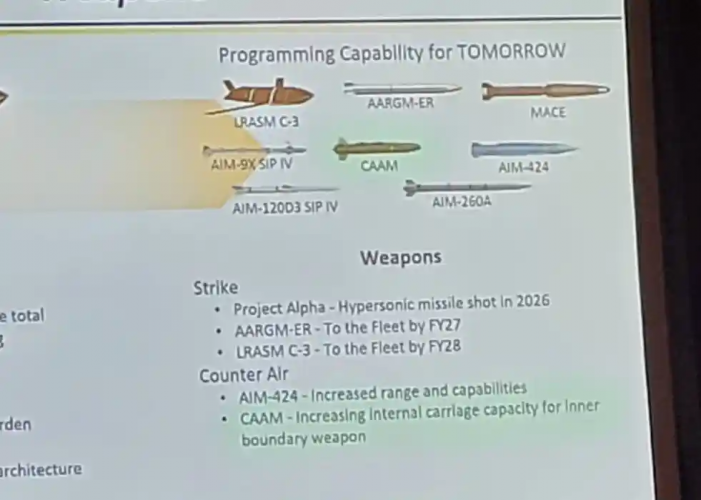
Why the focus on AMRAAM-esque ranges and use case? They describe it as inner boundary weapon after all...
It's really quite apparent that CAAM will be remarkably shorter than other AAMs, when comparing the visual representation to that of JATM - they have the same diameter motor after all.
It's really quite apparent that CAAM will be remarkably shorter than other AAMs, when comparing the visual representation to that of JATM - they have the same diameter motor after all.
Attachments
Similar threads
-

-
-

-
MBDA Bags €200M Meteor Missile Deal For Brazilian Gripen NG Jets
- Started by Forest Green
- Replies: 13
-
