
You are using an out of date browser. It may not display this or other websites correctly.
You should upgrade or use an alternative browser.
You should upgrade or use an alternative browser.
U-Boot Degaussing
- Thread starter DRAK
- Start date
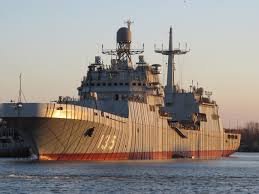
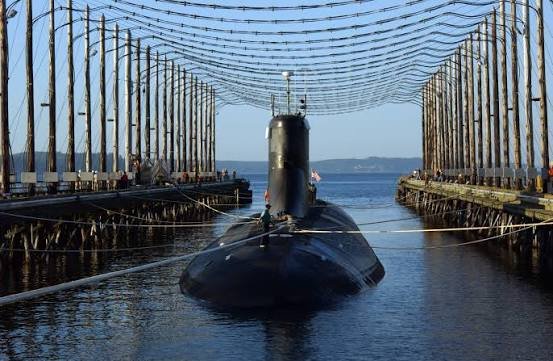
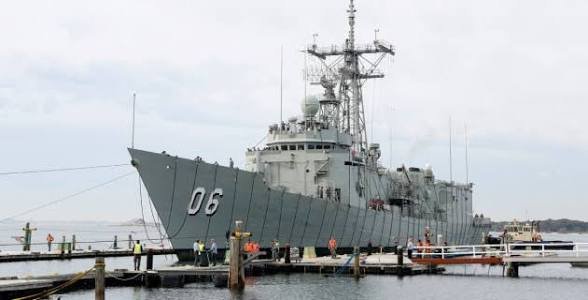
I was able to find that the Germans had developed more or less the same degaussing (demagnetization using coils on board ships) and deperming (demagnetization using cables outside ships) techniques that the americans (images attached below), as well as the names of the special teams who were supposed to take care of it (EntMagnetisierungsGruppe (EMG) and Sperrversuchskommando). In the deperming technique, ships are wrapped in cables and subjected to intense pulsed electric currents to reduce the ship’s magnetic field. This is a punctual, total magnetic treatment of the ships. We can see that at p. 151 of the book of Igor Witkowski ("The truth about the wunderwaffe", English Edition, 2013 Second updated edition, RVP Press New York) that, points 11 and 17 of the text document make reference to demagnetization "entmagnetisierungsgruppe" and of the development of the “Magnetische Feldstarkemessung mit Hilfe hochfrequenztechnischer Methoden” meaning “Magnetic field strength measurement using high-frequency methods”. From November 1939 to October 1, 1943, a working group (the ArbeitsGemeinschaft Cornelius (AGC) ) was created in emergency to mainly solve the "Torpedokrise" but also to develop demagnetization techniques for ships. There are two essays on the AGC in the web. The first is on the AGC p.19 of the PDF, they both talk about Walther Gerlach, Gustav Hertz, the AGC, the "torpedokrise" and the second about the FEP kriegsmarine as well. I also put in third the link to my page of the secret project forum on the AGC.
Here are the links :
1. https://oar.ptb.de/files/download/681c516853218de84f08e5e5 .
2. https://macau.uni-kiel.de/servlets/MCRFileNodeServlet/dissertation_derivate_00001805/d1805.pdf .
3. https://www.secretprojects.co.uk/threads/arbeits-gemeinschaft-cornelius-agc.50783/ .
Here are the links :
1. https://oar.ptb.de/files/download/681c516853218de84f08e5e5 .
2. https://macau.uni-kiel.de/servlets/MCRFileNodeServlet/dissertation_derivate_00001805/d1805.pdf .
3. https://www.secretprojects.co.uk/threads/arbeits-gemeinschaft-cornelius-agc.50783/ .
Attachments


Nik
ACCESS: Top Secret
- Joined
- 15 July 2009
- Messages
- 1,376
- Reaction score
- 1,215
In addition to 'harbour coil' degaussing, didn't some cargo ships carry on-board system ?
May be urban legend but, IIRC, one convoy survivor triggered a harbour-drifted magnetic mine when they rang 'Finished with Engines' and shut off their compensating coils...
May be urban legend but, IIRC, one convoy survivor triggered a harbour-drifted magnetic mine when they rang 'Finished with Engines' and shut off their compensating coils...
This is not often said, but most of the magnetization of a submarine is produced by the friction of water and air on the ship (MagnetoHydroDynamics).
Some U-Boots had an MES system (Magnetische EigenSchutzanlage), means "on-board magnetic protection system", which is therefore a "degaussing" technique.
Some small cargo ships have been modified into "Sperrversuchsschiff" (experimental anti-mine ship) including the DORPAT or the MEERSBURG, ex-KONSTANZ. These experiments gave rise to the "Sperrbrecherflottillen". The "Sperrbrecher" (blockade by mines breaker) had an MES and were often used when entering or leaving a port of a U-Boot from its U-Bunker to create a safe passage for it.
Some U-Boots had an MES system (Magnetische EigenSchutzanlage), means "on-board magnetic protection system", which is therefore a "degaussing" technique.
Some small cargo ships have been modified into "Sperrversuchsschiff" (experimental anti-mine ship) including the DORPAT or the MEERSBURG, ex-KONSTANZ. These experiments gave rise to the "Sperrbrecherflottillen". The "Sperrbrecher" (blockade by mines breaker) had an MES and were often used when entering or leaving a port of a U-Boot from its U-Bunker to create a safe passage for it.
Attachments

Vepr157
I like submarines
- Joined
- 20 December 2015
- Messages
- 174
- Reaction score
- 464
It's not true though. The magnetization of the hull is simply due to moving in the presence of the Earth's magnetic field. Magnetohydrodynamics need not be invoked.This is not often said, but most of the magnetization of a submarine is produced by the friction of water and air on the ship (MagnetoHydroDynamics).
Sorry, but you are mistaken. I believe that you have never experienced electrostatic discharge after a long trip by touching the car door when you leave it.It's not true though. The magnetization of the hull is simply due to moving in the presence of the Earth's magnetic field. Magnetohydrodynamics need not be invoked.
Wikipedia English : Electrostatics : Electrostatics is a branch of physics that studies slow-moving or stationary electric charges on macroscopic objects where quantum effects can be neglected. Under these circumstances, the electric field, electric potential, and the charge density are related without complications [to] magnetic effects.
Wikipedia English : Magnetohydrodynamics : Magnetohydrodynamics (MHD; also called magnetofluid dynamics or hydromagnetics) is a model of electrically conductive fluids that treats all types of charged particles together as a single continuous fluid. It is primarily concerned with the low-frequency, large-scale magnetic behavior of plasmas and liquid metals [also all types of electrically conductive fluids (like seawater)] and has applications in multiple fields, including space physics, geophysics, astrophysics, and engineering.
Also, watch the scene from the movie "Red October" as an illustration at 3:20 min. Link to the video :
.
Vepr157
I like submarines
- Joined
- 20 December 2015
- Messages
- 174
- Reaction score
- 464
@DRAK I'm familiar with the electromagnetism given that my degree is in physics and I work in the physical sciences. You're conflating the build up of electric charge with a change in the hull's magnetic field. These phenomena are unrelated in this case.
In any case, ships and submarines don't really experience large accumulations of electric charge for a very simple reason: they are always grounded to the ocean because it is made of conductive seawater. So in your (fictional) example, there is a potential difference between the submarine and the helicopter due to the former being grounded and the latter being charged. Aircraft are surrounded by insulating air and accumulate charge because of its interaction with the air and precipitation.
In any case, ships and submarines don't really experience large accumulations of electric charge for a very simple reason: they are always grounded to the ocean because it is made of conductive seawater. So in your (fictional) example, there is a potential difference between the submarine and the helicopter due to the former being grounded and the latter being charged. Aircraft are surrounded by insulating air and accumulate charge because of its interaction with the air and precipitation.
Ah, I’m happy to talk to a physics specialist. I agree with you but, I don’t understand how the displacement in the Earth’s magnetic field can have a greater influence on the magnetization of the hull than that of the displacement in seawater, if that’s what you’re saying?It's not true though. The magnetization of the hull is simply due to moving in the presence of the Earth's magnetic field.
Vepr157
I like submarines
- Joined
- 20 December 2015
- Messages
- 174
- Reaction score
- 464
I mean there are really just two things here: the (ferromagnetic) steel hull and the Earth's magnetic field. That the submarine's hull is surrounded by seawater doesn't really make a difference. We're in the realm of magnetostatics where there are no appreciable time-varying currents. There are some subtle electrodynamic effects which can occur, such as the emission of very weak radio waves due to the submarine's motion through a conductive fluid, but they are negligible compared to the simple interaction between the hull and Earth's magnetic field. It's basically like taking a lump of iron near a bar magnet.Ah, I’m happy to talk to a physics specialist. I agree with you but, I don’t understand how the displacement in the Earth’s magnetic field can have a greater influence on the magnetization of the hull than that of the displacement in seawater, if that’s what you’re saying?
Scott Kenny
ACCESS: USAP
- Joined
- 15 May 2023
- Messages
- 19,732
- Reaction score
- 28,269
And what matters for magnetic fuzes, that lump of iron bends the local geomagnetic field lines. There's basically a compass inside a mine or torpedo, and if the compass needle moves far enough the warhead goes boom.It's basically like taking a lump of iron near a bar magnet.
It’s strange, I would have thought that the friction with seawater would have more impact than that. So, thank you for the explanation.I mean there are really just two things here: the (ferromagnetic) steel hull and the Earth's magnetic field. That the submarine's hull is surrounded by seawater doesn't really make a difference. We're in the realm of magnetostatics where there are no appreciable time-varying currents. There are some subtle electrodynamic effects which can occur, such as the emission of very weak radio waves due to the submarine's motion through a conductive fluid, but they are negligible compared to the simple interaction between the hull and Earth's magnetic field. It's basically like taking a lump of iron near a bar magnet.
Similar threads
-
-
Kriegsmarine - Submarine Type 26 - U-Boat Typ XXVI
- Started by moin1900
- Replies: 0
-
 Engelmann-Boot - Sub/Speedboat Hybrid - Germany WW2
- Started by Michel Van
- Replies: 28
-
-