albeit Block 2, with IWB, would be more in line with what was really sought at program launch)

Block 2 doesn't have IWBs. Block 2 is the true multirole variant, as Block 1 lacks proper air-to-ground capabilities.

The eventual (not confirmed) Block 3 / KF-21EX would have IWBs.
 
The engine specs are a bit mysterious. Either the engines are much bigger than F414 or they are false figures. No way they leap past literally most engine makers on their first try.

Maybe I'm misunderstanding, but the KF-21 does use the F414s... The domestic engine projects appeared just recently...
 
I was referring to this, not F414.
And it's not clear if that planned engine is going into the KF21 or into the next generation Korean fighter.

Though with a proposed bypass ratio of 0.6:1 compared to the 0.25:1 of an F414, I do suspect that the Korean engine will be closer in size to an F100 than an F414. More like a 36" fan than a 31" fan. Give or take, just not enough data to derive fan diameter.
 
And it's not clear if that planned engine is going into the KF21 or into the next generation Korean fighter.

Though with a proposed bypass ratio of 0.6:1 compared to the 0.25:1 of an F414, I do suspect that the Korean engine will be closer in size to an F100 than an F414. More like a 36" fan than a 31" fan. Give or take, just not enough data to derive fan diameter.
The Korean engine is expected to be just 80 lbs heavier than the F414 and that doesn't warrant an F100 size inlet at all in this day and age.
 
The USAF buying a new fifth generation fighter when they already have spent possibly multi-billions on the development of the F-47 that would not be a wise move I would think.
 
The USAF buying a new fifth generation fighter when they already have spent possibly multi-billions on the development of the F-47 that would not be a wise move I would think.
I guess the assumption is that KF-21 can be pitched as an off the shelf MRF. Which is not completely without merit for future KF-21 blk 2(EJ).

But either way, it seems to be a stretch; even before industrial considerations, existing and produced F-16 makes it pointless.
Plus I'm deeply unconvinced, how much a twin F414 jet&a literal alternative to F-18E/F/G can save.

I.e., it's an MRF, just not the American MRF.
 
Last edited:
To perhaps supplement their F-35 numbers.

for the US to consider something foreign, it needs to solve an issue/gap that exists and can't be resolved in a short time by its own domestic industries. For example the US Navy considering ships based off the designs of foreign warships because of the issues with US shipyards.

For the USAF, this issue doesn't exist. Lockheed Martin and Boeing would love to keep selling F-16s, F-15s, F-35s, and F-47s. The KF-21 doesn't offer any meaningful capabilities in that line up, nor does it offer any faster deliveries.

the only Korean aircraft that had some chance to enter the USAF was the TF-50, especially with its Lockmart connection. But that's now gone with the USAF choosing the T-7A, followed by their withdrawal from the USN competition. The KF-21 has significantly less Lockmart involvement than the TF-50.
 
for the US to consider something foreign, it needs to solve an issue/gap that exists and can't be resolved in a short time by its own domestic industries. For example the US Navy considering ships based off the designs of foreign warships because of the issues with US shipyards.

For the USAF, this issue doesn't exist. Lockheed Martin and Boeing would love to keep selling F-16s, F-15s, F-35s, and F-47s. The KF-21 doesn't offer any meaningful capabilities in that line up, nor does it offer any faster deliveries.

the only Korean aircraft that had some chance to enter the USAF was the TF-50, especially with its Lockmart connection. But that's now gone with the USAF choosing the T-7A, followed by their withdrawal from the USN competition. The KF-21 has significantly less Lockmart involvement than the TF-50.
I get what you are saying, and I agree with the conclusion that US buying the KF-X is unlikely, but its more for politcal reasons than rational ones.
First the cost - imo the KF-21 costs what it does because its full of US export parts, and licensed US tech. For example, the F414 was just sold to India for $20m a pop, while domestic prices are around $5m.
Likewise I don't believe that the KF-21 isn't cheaper/easier to manufacture while being more capable that the Super Hornet - it represents 3 decades of technological progress. Since the US still procures decades old designs that are supposed to have been long retired by now, I'm sure if they had seen this coming (or just hedged their bets) - there could presumably something like the KF-21 or TF-X made by an US contractor flying today that would be built instead of the F-15 or F-18.
 
IIRC LockMart had an assist contract, but couldn't share anything specific. So if you look at the KF-21, it doesn't have any skin-integrated arrays, they're all either inset or scabbed on top. I believe those LockMart engineers said "It took us a really long time to figure out how to do that, we recommend continuing to develop the ability in-house but do not recommend planning on having them on the early KF-21s."
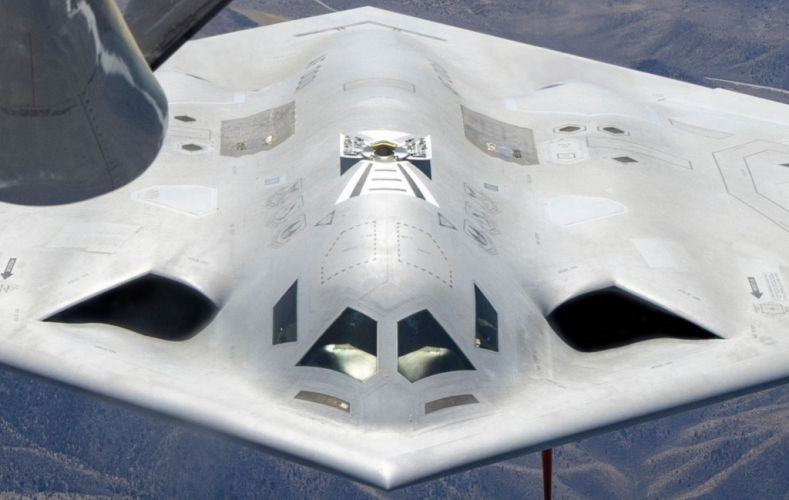
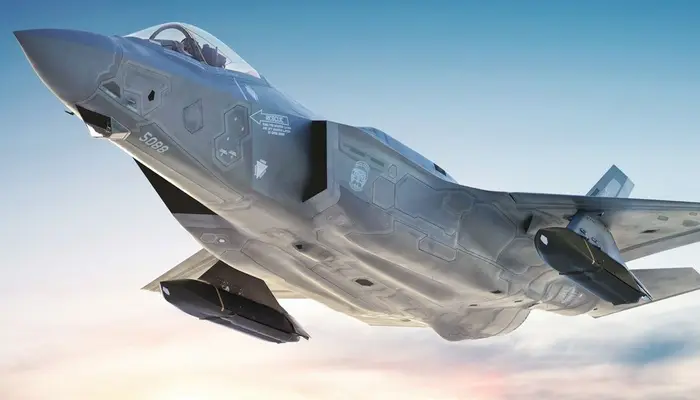
I would not read too deeply into this. The F-35 has its sensors mounted on breakaway panels. So does the B-21. I guess servicing F-22 sensors required either stripping off the skin or the sensor must've been made reachable from inside. 1790507419990.png 1790507393084.png
 
I would not read too deeply into this. The F-35 has its sensors mounted on breakaway panels. So does the B-21. I guess servicing F-22 sensors required either stripping off the skin or the sensor must've been made reachable from inside.
That was more an example than the total advice.

That LockMart could suggest paths to avoid or paths to follow, without revealing the tricks behind any specific tech.
 
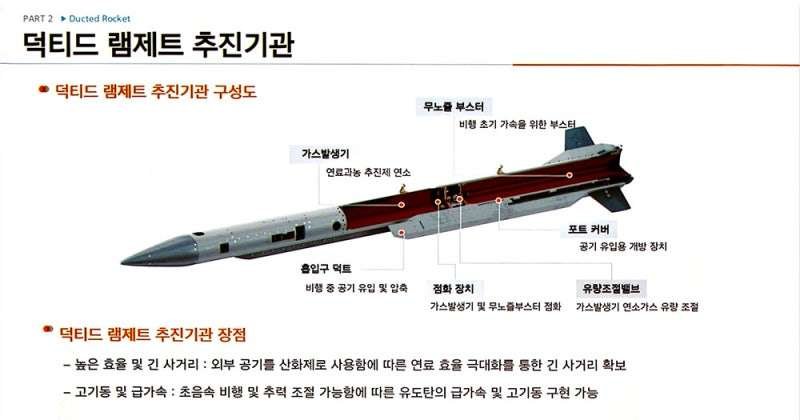
It makes sense that they'd go for a Meteor analogue, but I honestly fear both South Korea and Turkey are putting way too many eggs in the ramjet basket (Turkey especially)...

But it's arguably worse for South Korea, because while they do have AMRAAMs in inventory and could potentially get AIM-260s down the line, those would still have to be integrated onto the KF-21 (except for AIM-120) and are never going to arrive in anything close to the numbers they could field with a domestically produced missile...

And that's where the problem lies: AFAIK (feel free to correct me!), they don't have an indigenous rocket-propelled BVRAAM in development that could serve as a complement to the ramjet...
 
It makes sense that they'd go for a Meteor analogue, but I honestly fear both South Korea and Turkey are putting way too many eggs in the ramjet basket (Turkey especially)...

But it's arguably worse for South Korea, because while they do have AMRAAMs in inventory and could potentially get AIM-260s down the line, those would still have to be integrated onto the KF-21 (except for AIM-120) and are never going to arrive in anything close to the numbers they could field with a domestically produced missile...

And that's where the problem lies: AFAIK (feel free to correct me!), they don't have an indigenous rocket-propelled BVRAAM in development that could serve as a complement to the ramjet...

KF-21 is built with Meteor in mind, more or less; it's a natural path for them, especially for the first two blocks (available conformal stations are used to their best value this way). More so than for Europeans themselves, where Meteor happened in the process, and will apparently dissapear the same way it emerged.

But they still get to keep the American part of the fleet as a contingency option. And Korea is a way more loved ally, i.e. missiles will arrive in numbers.
 
Last edited:
KF-21 is built with Meteor in mind, more or less; it's a natural path for them, especially for the first two blocks (available conformal stations are used to their best value this way). More so than for Europeans themselves, where Meteor happened in the process, and will apparently dissapear the same way it emerged.

But they still get to keep the American part of the fleet as a contingency option.
I don't really see how your reply provides a counterargument to what I said, it just restates the same points in a more explanatory way?

It makes sense that they'd go for a Meteor analogue, but I honestly fear both South Korea and Turkey are putting way too many eggs in the ramjet basket (Turkey especially)...

But it's arguably worse for South Korea, because while they do have AMRAAMs in inventory and could potentially get AIM-260s down the line, those would still have to be integrated onto the KF-21 (except for AIM-120) and are never going to arrive in anything close to the numbers they could field with a domestically produced missile...

And that's where the problem lies: AFAIK (feel free to correct me!), they don't have an indigenous rocket-propelled BVRAAM in development that could serve as a complement to the ramjet...
 
I don't really see how your reply provides a counterargument to what I said, it just restates the same points in a more explanatory way?
Basically, I think they're not going far beyond arming their own a2a jets, and they won't form the majority of the fleet for at least a decade. It is more of an advanced "RnD with benefits" direction for Korea; their air power is American at source, and will remain to be.

I.e., for Turkey, the problem of how reliable the US (or EU) is as an ally stands for at least 10 years (30 more broadly), and the issue is absolutely urgent.
Korea is not in a similar position; if there are cracks in their unity with the US, they're not even of the kind that the Turkish Republic had back in the 1990s.

But they'll start getting their proper experience with Meteor hands-on soon, and we'll see how it goes.
 
Basically, I think they're not going far beyond arming their own a2a jets (which won't form the majority of the fleet for at least a decade), for now.
I.e., for Turkey, the problem of how reliable the US (or EU) is as an ally stands for at least 10 years(30 more broadly).
Korea is not in a similar position; if there are cracks, they're not even of the kind that the Turkish Republic had back in the 1990s.

But they'll start getting their proper experience with Meteor hands-on soon, and we'll see how it goes.
Again, this still doesn't really address the numbers problem, though...

They'll be operating in the Pacific, squeezed between US/JP/AUS and China, for crying out loud...
...and are never going to arrive in anything close to the numbers they could field with a domestically produced missile...
 
Again, this still doesn't really address the numbers problem, though...

They'll be operating in the Pacific, squeezed between US/JP/AUS and China, for crying out loud...
I think no domestic missile produced outside of US/China will realistically come in numbers close to AMRAAM.

Main Korean Air Force jet types are KF-16(F-16V), F-15K and F-35A, up to 250 units altogether. Plus, add in US own aircraft (3 sq) and their stocks; overall, some 300+ jets.
They're all AMRAAM users, and very much debatable whether K-LRAAM is even applicable/allowed to be integrated into any of them.

Compared to that, the current order for KF-21 is in dozens, and to date it doesn't appear whether ROKAF is even interested in giving their FA-50 a2a capacity. I.e., we're talking about a relatively token, longer-range augmentation.

Plus, keep in mind the jets themselves. Unlike the earlier KF-21EA graphics, KF-21EJ seems to lose a pair of inner conformal MRAAM stations. I.e., even if the first batch of KF-21 is A2A specialists, the second batch is much less so, and apparently not even swing role.

If there's a point to consider a second Korean a2a MRAAM, I think that'll come after 2035, for KF-21EX.

 
Last edited:
I think no domestic missile produced outside of US/China/Russia will realistically come in higher numbers than AMRAAM.
That's the point -- it doesn't need to match the production rates of the big legacy AAM producers. A large chunk of US annual production goes straight into US stocks, with the remainder spread across a whole bunch of export customers. It only needs to sustain a higher annual production rate than what you'd realistically expect to receive in peace time from the US/EU...

Commonality with US-designed, Korean-operated aircraft is obviously a very nice capability to have, but those missiles will also be in very high demand across the rest of the fleet. I don't know how large existing Korean AAM stocks are, but I'd imagine they're at least enough for ~1.5x full load per aircraft?

Countries don't suddenly start developing indigenous AAMs for sh!ts and giggles, after all... And as a Pacific country sitting right between China and Japan, Korea has every reason to produce its own missiles and build up a large enough stockpile to actually sustain a crisis in such a crazy wartime environment...
 
Commonality with US-designed, Korean-operated aircraft is obviously a very nice capability to have, but those missiles will also be in very high demand across the rest of the fleet. I don't know how large Korean AAM stocks are, but I'd imagine they're at least enough for ~1.5x full load per aircraft?
I just think that with their fleet as it is until 2035-2040 at the earliest, - either US missiles come, or they're screwed. Until 2026, it was also likely not very expected that US help may not come for any reason. South Korea is nowhere near as furiously juche as her northern sister.

They can produce their way out of SAM system and interceptor stock problems during this period, but not for aircraft missiles. There's simply no path to solve the issue with domestic missiles.

I.e., for now, from a Korean perspective, the best path forward is learning how to do it (and investing in optimization of producing a better weapon), not rushing manufacturing (and optimization towards manufacturing).
 
The engine specs are a bit mysterious. Either the engines are much bigger than F414 or they are false figures. No way they leap past literally most engine makers on their first try.
How come? It's a rather realistic update compared to F414 or EJ200 which are decades old. Modest TIT uprate compared to EJ200 and rather comparable SFC with slightly higher thrust, and overall comparable/less ambitious compared to the F414EE which has been pitched since when? A decade ago? I can't even remember. I don't see how the new engine "leaps past" what legacy gas turbine makers have to offer already. Perhaps a challenging goal set out by the Korean industry, but it's not their first try either. That's just ignorance on your part.

And it's not clear if that planned engine is going into the KF21 or into the next generation Korean fighter.

Though with a proposed bypass ratio of 0.6:1 compared to the 0.25:1 of an F414, I do suspect that the Korean engine will be closer in size to an F100 than an F414. More like a 36" fan than a 31" fan. Give or take, just not enough data to derive fan diameter.
The new engine is planned as a drop-in replacement of the F414.

Problem is, Hanwha is still in the bidding phase facing off LIG D&A to win the programme.
 
With as big a change in bypass ratio they're talking about, that's a couple inches of additional fan diameter.
Not if the core is physically smaller but hotter. A lower BPR makes easier to achieve the same thrust (what Soviets did with their late turbojets).
The F414-400 has a relatively "low" airflow for its inlet diameter (and a lot of unrealized growth potential), even lower than the F404 or F110-129. Using the late F404 or the EJ200 as reference then 90-95 kg/s could be possible and 56-60 kg/s for the core.
Just for comparison using Jet power (V_exhaust²*M_exhaust/2 * 1/M_core), EJ200: 0.43 MW/kg, Korean engine: 0.50 - 0.44 MW/kg. (napkin estimate), compared to the EJ200 it'll be hotter, and their claimed TIT is 1900K.
 
Last edited:

Similar threads

Back
Top Bottom