F-35: The Inside Story of the Lightning II by Tom Burbage et al

vstol

ACCESS: Confidential
Joined
8 May 2006
Messages
83
Reaction score
26
Website
www.vtol.org
Hey, folks. I was so inspired by the discussion of the F-35 towards the end of Mike Pryce's book that I finally started listening to the F-35 book by Tom Burbage, et al. I was looking for a detailed discussion of that book here but didn't find it. I'm only in Chapter 3 (17%) but so far I'm slightly appalled.

https://www.amazon.com/F-35-Inside-Story-Lightning-II-ebook/dp/B0C1KXJBMZ

So many superlatives embedded in every paragraph it reads like Lockheed marketing material. And it says that the McDonnell F-4 was the first aircraft that was used by all of the US military services. Wow -- when are we going to find out about the secret Army F-4? WTF. A couple of other idiotic blunders and it reads like an 8th grader did the research for this:

Apparently, during the early 1940s, there was "the widespread realization by aero designers and engineers" that someone needed to invent the jet engine. That's now how I understand the history of Whittle and von Ohain, et al.

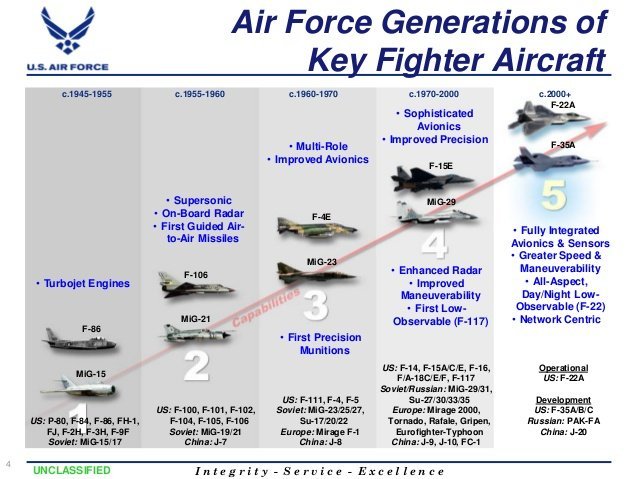
And, shortly thereafter, "The evolution of future fighter aircraft would pick up the moniker of "Generations." No, I think that was a Lockheed marketing convention they invited in the 1990s to differentiate the F-22/F-35 from competitors.

But you guys are the experts on these things. I've been off looking at rotorcraft, eVTOL and AAM for the past 15 years.
 
Last edited by a moderator:
So many superlatives embedded in every paragraph it reads like Lockheed marketing material. And it says that the McDonnell F-4 was the first aircraft that was used by all of the US military services. Wow -- when are we going to find out about the secret Army F-4?
The Army hasn't operated fixed wing fighters since before the Korean war.

https://en.wikipedia.org/wiki/Key_West_Agreement
 
Last edited:
The Army hasn't operated fixed wing fighters since before the Korean war.

https://en.wikipedia.org/wiki/Key_West_Agreement
Exactly. The authors apparently didn't include the Army in their count of "all of the US military services." lol

I just finished the 1996 JSF down-select section. It's God awful. They mentioned that McDonnell lost and had a Gas-Powered Lift System (which they had actually abandoned a few years earlier) and only then start to talk about "V/STOL". I don't think it's gotten to STOVL yet. LMAO
 
Exactly. The authors apparently didn't include the Army in their count of "all of the US military services." lol

I just finished the 1996 JSF down-select section. It's God awful. They mentioned that McDonnell lost and had a Gas-Powered Lift System (which they had actually abandoned a few years earlier) and only then start to talk about "V/STOL". I don't think it's gotten to STOVL yet. LMAO
Almost anybody would know that they meant "all services who use fighters". I notice you didn't mention the Coast Guard, who also didn't use the F-4.
 
Almost anybody would know that they meant "all services who use fighters". I notice you didn't mention the Coast Guard, who also didn't use the F-4.
Haha. Yes, good point! Though they aren't part of the (then) DoD, and today we have the Space Force too. But that was just one of the many, many flubs in this book. And I'm only in Chapter 3! It seems like the whole JSF program started when Gen Mike Hough took over before the 1996 down-select (he actually took over in 1997), and nothing happened had before then. Lockheed just designed their X-35 as a slimmed down version of the F-22! :rolleyes:

And Lockheed funded Yakovlev with $400 MILLION in cash for them to build the Yak-141M. WTF?!
 
Haha. Yes, good point! Though they aren't part of the (then) DoD, and today we have the Space Force too. But that was just one of the many, many flubs in this book.
Except that it wasn't a flub.
 
Just imagine if they took the authors writing team and then in a locked room with Bill Sweetman as the "Editor with Dictatorial powers - with Editing Stick".

ISTR Monty Python doing a skit with the "Editing Clinic". Could be wrong though.
 
Personally I'm excited for the US border patrol F4 or the secret service F4.

Nothing like blowing past migrant children and cartel mobsters at mach 2

/S
 
And, shortly thereafter, "The evolution of future fighter aircraft would pick up the moniker of "Generations." No, I think that was a Lockheed marketing convention they invited in the 1990s to differentiate the F-22/F-35 from competitors.
Is this the provenance of that nonsense?

Chris
 
First version of "generations" I know of was Richard P. Hallion in 1990. He assigned them quite differently though.
1. High subsonic (1943-50): Me 262, Meteor, P-80, Vampire, Yak-15, MiG-9, Saab J-21, F-84 straightwing, F9F straightwing, Ouragan, Venom. Little aerodynamic difference from the last generation of propeller-driven fighters. First- and second-generation turbojets; wood, fabric, and all-metal construction; optical gunsights; straight wing and straight tail. Mechanical control systems. Primitive ejection seats. Mach 0.75-0.85.

2. Transonic (1947-55): F-86, F-84 sweptwing, F9F sweptwing, MiG-15/17, Hunter, Mystère TV. Second-generation turbojets; radar gunsights; swept wings; generally have adjustable horizontal stabilizers. Early hydromechanical flight control systems. Mach 0.90-1.05.

3. Early supersonic (1953-60): MiG-19, F-100, F-8. Swept wings, all-moving tails, radar gunsights, introduction of air-to-air missile armament. Third-generation turbojet engines. Early stability augmentation technology. Generally adaptable for both air-to-air and air-to-ground missions. Mach 1.3.

4. Supersonic (limited purpose) (1955-70): F-104, early model MiG-21, EE (BAC) Lightning, early model Mirage III. Supersonic aerodynamics, especially area ruling; fourth-generation turbojets; radar for search and fire control. Overreliance on -air-to-air missiles based on unrealistic expectations. Mach 2.0.

5. Supersonic (multirole) (1958-80): F-105, F-4, late-model MiG-21, late-model Mirage III, F-5, F-111, Mirage V, Su-24, MiG-23/27, Jaguar, Mirage Fl, Kfir. Refined supersonic aerodynamic design, including canards and variable geometry wings; fourth- and fifth-generation engines; stability augmentation; mixed-gun air-to-air missile (AAM) armament; terrain-following radar for low-level high-speed flight; radar search and fire control; infrared sensors; heads up displays (HUD); laser ranging and targeting; wide range of air-to-surface missiles, bombs, and rockets, including precision-guided munitions. Mach 1.4-2.5.

6. Supersonic multirole, high efficiency (1974-present): F-14, F-15, F-16, F-18, Mirage 2000, Tornado, MiG-29, Su-27. Combined the characteristics of the fifth-generation fighters with advances in propulsion, radar (multiple target track-while-scan, look-down/shoot-down), sensor, and electronic flight control technology to generate highly maneuverable, highly agile aircraft that can be swing-roled for air-to-air and air-to-ground missions. Fifth- or sixth-generation gas-turbine engines; engine thrust-to-weight ratios in excess of one; ability to attain supersonic speeds without afterburning; sustained high-G flight, and controllability below 70 knots at angles of attack exceeding 70 degrees. High degree of energy efficiency. Mix of cannonand missile armament, coupled with diverse air-to-ground weaponry. Mach 1.8-2.5.
 
You can refer to this topic for a lot of factual contemporary documentations.

https://www.secretprojects.co.uk/threads/lockheed-martin-and-the-yak-141.42891/

The Lockheed 400M figure was called out by our resident Russian insider as BS, so ya do ya.
I think it was something like $80k or $100k and all they got was a binder of (very good) information on the aircraft and engines. I had a copy. I also wrote a monograph on the Yaks (and was a co-author on the 350-page JAST-JSF History FOUO report, through 2001).
 
"No, I didn't misunderstand something everybody else got. The author is clearly wrong." Uhm, okay.
Wait a minute. Are you insinuating that I thought that the Army flew the F-4? I hope you are not trying to be insulting.

I didn't say that the authors were clearly wrong. I'm not saying that I'm right either. The Preface says it's targeted as "a book for a more general audience." The authors should use clearer terminology. That's the point I had tried to make, with my jest about the Army flying the F-4. I apologize that my deadpan humor didn't come through.

The authors wrote "The McDonnell F-4 Phantom became the first fighter in history to be used by every branch of the United States Armed Forces." When the book was written, there were six branches; so "every" in this case only meant "half."

But mainly this isn't something worth quibbling about. Apologies again!
 

Attachments

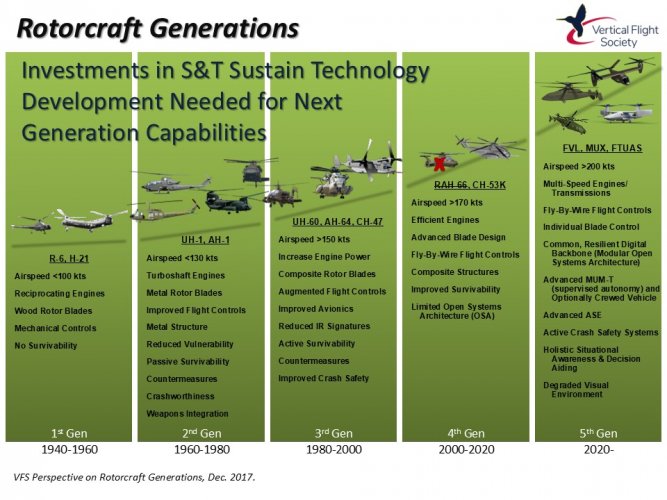
  • VFS Rotorcraft Generations definitions.jpg
    VFS Rotorcraft Generations definitions.jpg
    161.9 KB · Views: 33
The Army hasn't operated fixed wing fighters since before the Korean war.

https://en.wikipedia.org/wiki/Key_West_Agreement
FYI, I mentioned the separation of the Air Force from Army and its impact on helicopter research earlier this year in my 25,000 word paper on the Army research at the NASA Ames Research Center (attached). The Army center was closed this year after 60 years of tremendous contributions to the Nation.

The 1962 Howze Board is normally cited as the beginning of expanded helicopter usage by the Army, but the changes really started during Korea:

"As helicopter capabilities improved, however, the Army found the arrangement increasingly unsatisfactory. In the mid-1950s, Gen. James Gavin elevated helicopters from niche support roles to a key facet of Army operations, and the Korean War showed the dramatic capabilities of helicopters for rescue and other missions. The expanded role and numbers of helicopters prompted several reorganizations within the Army to better support the development and operations of rotorcraft. (Ref. 3)"

Ref 3 was by the Smithsonian's rotorcraft curator: Connor, Roger D., “Rooftops to Rice Paddies: Aerial Utopianism, Helicopters, and the Creation of the National Security State,” PhD dissertation, George Mason University, Spring 2020. Unfortunately, I couldn't find it online, but it has a lot of great new material on the subject.
 

Attachments

  • ArmyAviationAmes-TVF2026-Hirschberg-Ormiston-final.pdf
    1.8 MB · Views: 6
If you wrote it already, can you provide a link? I'm sorry I'm 3 years late on this, but just shocked that this book has so many pedestrian mistakes.
I never did a review, could skim through it and write one.

The book is littered with mistakes that should never have been made in the first place, and definitely picked up in editing. The subtitle, "The Inside Story of...", does rather convey an expectation that the book will contain newly declassified information but as far as I can tell, tells you nothing that wasn't already published elsewhere. I suppose that helps with security, you don't need to clear anything if you stick to secondary sources.

There's a smattering of personal anecdotes from Burbage, but at the level you'd expect from a CEO, i.e. entirely business/politics related not design or engineering. Given his career history (Navy Pilot, retires and gets management job on Navy program for Lockheed Martin, then moves around various Vice-President positions until ending up as President in 1999), its lack of attention to detail and engineering is understandable. Whether Burbage and the other named authors wrote it or just put their names to it, it's pretty poor execution though. I was expecting to learn something new about the F-35, and I really didn't.

If you just fell from the sky and have never read anything previously written about the F-35, its okay as a general summary I suppose, though the aforementioned errors are a bit concerning. If you already own a book on the F-35, its probably not going to be that interesting for you. Therefore I wouldn't recommend it.
 
I never did a review, could skim through it and write one.

The book is littered with mistakes that should never have been made in the first place, and definitely picked up in editing. The subtitle, "The Inside Story of...", does rather convey an expectation that the book will contain newly declassified information but as far as I can tell, tells you nothing that wasn't already published elsewhere. I suppose that helps with security, you don't need to clear anything if you stick to secondary sources.

There's a smattering of personal anecdotes from Burbage, but at the level you'd expect from a CEO, i.e. entirely business/politics related not design or engineering. Given his career history (Navy Pilot, retires and gets management job on Navy program for Lockheed Martin, then moves around various Vice-President positions until ending up as President in 1999), its lack of attention to detail and engineering is understandable. Whether Burbage and the other named authors wrote it or just put their names to it, it's pretty poor execution though. I was expecting to learn something new about the F-35, and I really didn't.

If you just fell from the sky and have never read anything previously written about the F-35, its okay as a general summary I suppose, though the aforementioned errors are a bit concerning. If you already own a book on the F-35, its probably not going to be that interesting for you. Therefore I wouldn't recommend it.
Thanks, Paul. Yeah, I thought it would be like the "definitive" story. I'm listening to this on Audible, mind you, but the first 3 chapters are available for free as an eBook on Amazon. I've never stopped listening to an audio book, but your comments have dissuaded me from continuing. Here's the first 3.5 paragraphs of the Preface, which gave me such high hopes:

The F-35's journey through time has been unlike any other in the annals of aerospace and defense history. It was devised under the gospel of acquisition reform, it undertook the unprecedented challenge of unifying three very different US armed services in a common platform to replace ten existing and aging aircraft, it involved eight other allied nations in the development and production phases, and it was charged with delivering transformational military capability across the joint allied partnership.

The F-35 has been vilified by critics from multiple corners. A barrage of headlines over the last two decades has focused on its cost and delays and has highlighted every problem and bump in the road. It is a program of near-unfathomable complexity along multiple dimensions that include the integration of transformational new technologies.

The design, development, and production have proceeded against a backdrop of international stakeholders and a supply chain spanning all eight partner countries and thousands of companies, within an environment of interservice rivalries and competition for dollars. Somehow, amid a roar of criticism, some deserved but much ill-informed and driven by competing interests, the program continued on.

This book captures that journey through the accumulation of over one hundred interviews with the people that made it happen. The program challenges, trials, setbacks, and successes are documented through their eyes.
 
I mainly only read books that are read to me nowadays. That was the only audio book (besides "Jump Jet") that is available that discusses JSF.

I guess for the technical development of the X-35 and F-35, there's this compendium of conference papers (some written by my former colleagues) by AIAA, but probably not a good fit for audio: https://arc.aiaa.org/doi/book/10.2514/4.105678

Kudos again to @Mike Pryce for going to extra mile to have it made into an audio book. I've listened to some great audio aviation books, but they are few and far between.
 
Just imagine if they took the authors writing team and then in a locked room with Bill Sweetman as the "Editor with Dictatorial powers - with Editing Stick".

ISTR Monty Python doing a skit with the "Editing Clinic". Could be wrong though.
snert
 

Similar threads

Back
Top Bottom