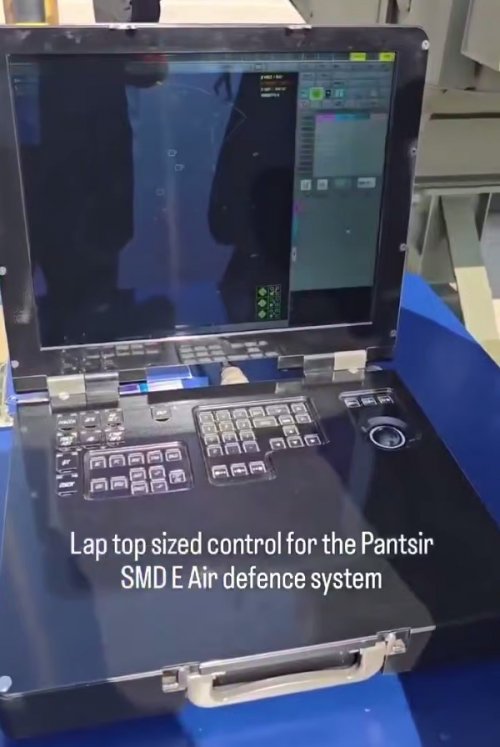
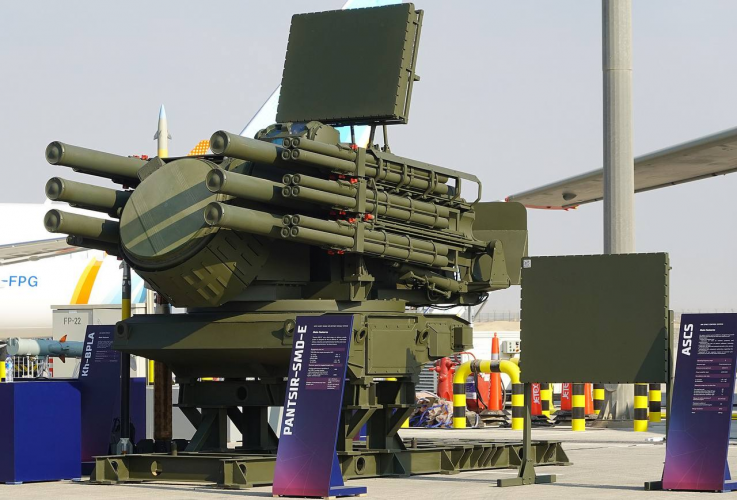
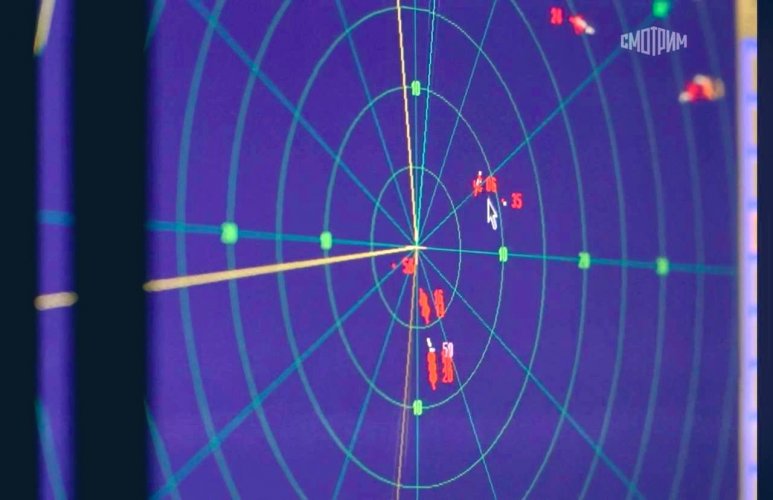
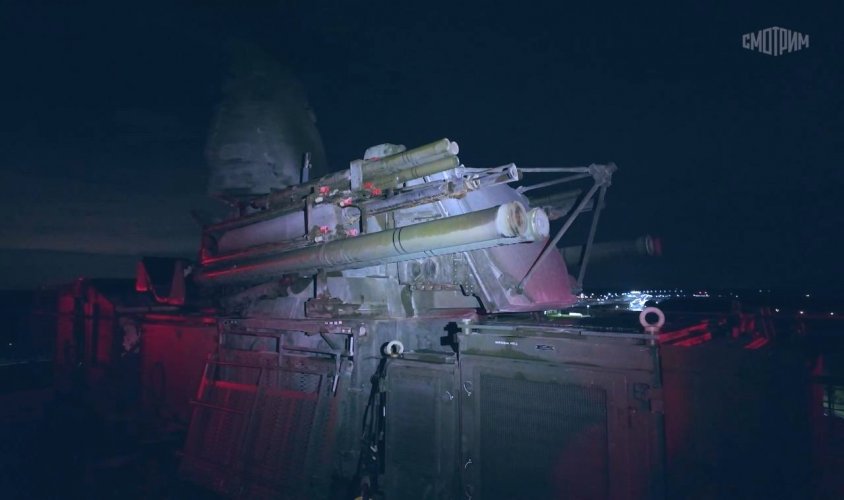
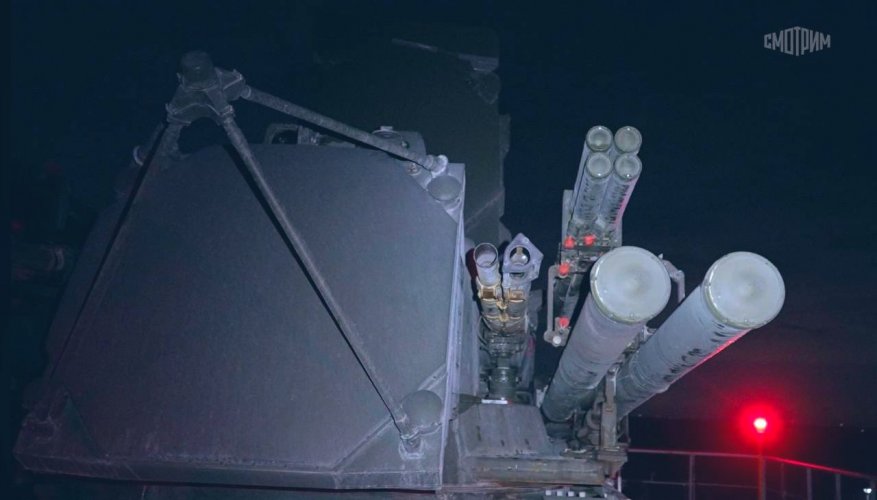
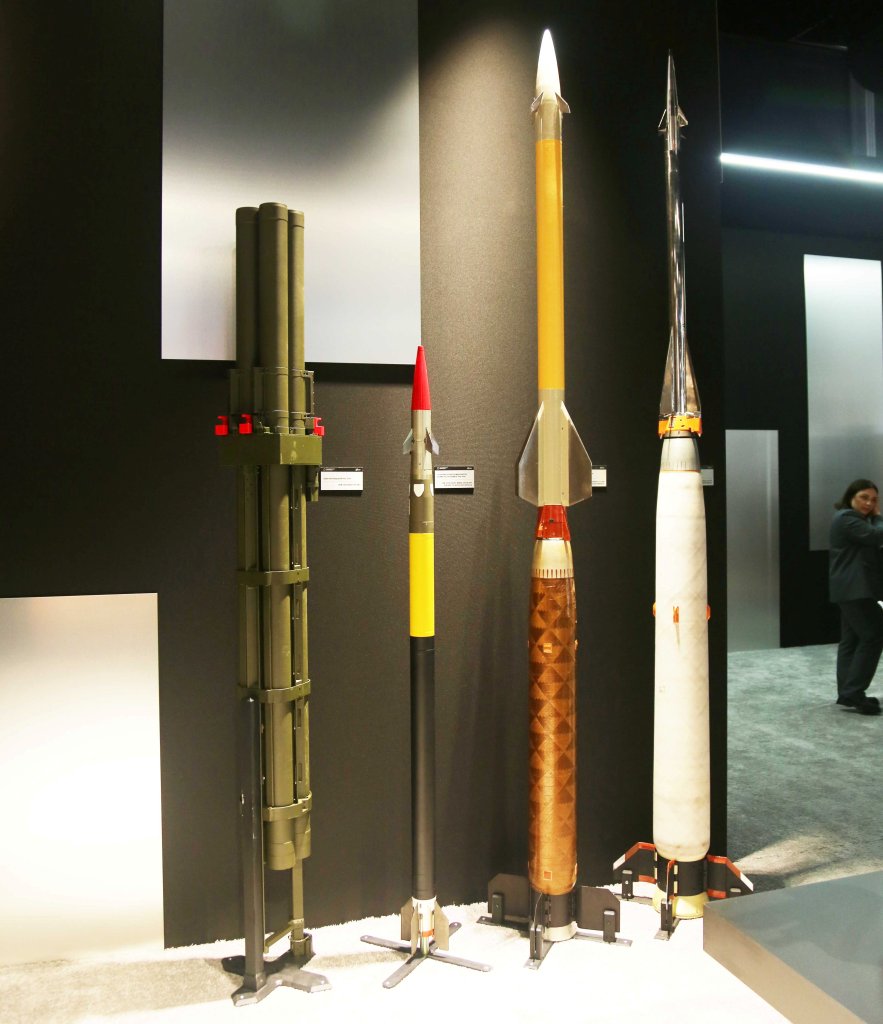
Yeah, I've seen plenty of the typical stories about The 2S38 "almost being ready" for years, now, so while your post isn't at all surprising, does anyone happen to know as to why these shells, etc., were never introduced? Could they simply not make them work, or was there a severe lack of money/interest in ultimately procuring the system?
Severe lack of money in procuring the system.


$400k MANPADS? $10m MRBMs won't be around long either when expended at that rate.
A bare Stinger in launch tube should be about 150k, not sure about how much the Stinger CLU is.
 
Here's this video from Suchomimus which if correct Ukraine destroyed half of Russia's SA-22 Greyhound batteries in 2025:


Ukraine shared a compilation of drone strikes on Russian Pantsir SAM systems from 2025, saying half of Russia's Pantsirs were destroyed in one year.

PS: Would one of the Mods please add the US DoD designation/NATO reporting name to the thread's title.
 
Here's this video from Suchomimus which if correct Ukraine destroyed half of Russia's SA-22 Greyhound batteries in 2025:
Sceptical about half(of what number? per oryx from pre-war stock? Esp. batteries), but this is tbh secondary.
Main thing is CIWS and C-UAS are two distinctively different niches.

CIWS can do it to a degree, but lacks critical enabling traits. Though to be fair, it's rather hard to come up with modern land system system which truly checks all C-UAS boxes.
 
I wonder how long it will be before they get blown up by Ukrainian drones?
They suffer significant losses, mainly in Crimea(starlink). But production(+repairs) also appears to be very high.

Basically pantsirs are still the main reason Russia fares far better than Ukraine in drone city war, despite being slower in new approaches (drone intercept).
 
They do but:
Without sources, but there are reasons to believe she underestimates their production manyfold.

Saudi order was fulfilled on top of construction of 3 digit new positions over last year, without even vacating older ones.
I.e. yearly production is [likely] significantly into 3 digits (before simpler SMD and TBM variants entered picture), and missile production is [likely} deep into 5 digits (also before TKB-1055 entered picture).
I.e. pantsir is one of chosen mission-critical systems which Russia manufactures at full wartime tempo.
 
Last edited:

Attachments

  • fHwU3GGBs1mC1Jd291GZJO-ynTiE2Bm7bgI9wQiL9JZDD-lQFee84t_3Dmv6eX3nnA3NoecL0xrjmNos2hv05tv7.jpg
    fHwU3GGBs1mC1Jd291GZJO-ynTiE2Bm7bgI9wQiL9JZDD-lQFee84t_3Dmv6eX3nnA3NoecL0xrjmNos2hv05tv7.jpg
    85 KB · Views: 55
  • 1774207827521.png
    1774207827521.png
    1.2 MB · Views: 53
Defense Updates has uploaded a video concerning the SA-22 Greyhound and its performance in Ukraine:


One of Russia's key air defense assets is the Pantsir family of short-range air defense systems.The Pantsir has become one of the most important tactical air defense systems in the Russian Armed Forces because it fills a critical capability gap that long-range systems such as the S-300, S-400, and S-500 are not designed to address. As part of Russia's layered Integrated Air Defense System (IADS), the Pantsir is optimized to intercept low-altitude, short-range threats.​
However, a growing number of incidents have raised questions about the Pantsir-S1's effectiveness against modern drone threats. One notable example is the repeated targeting of the Moscow Oil Refinery in Kapotnya. Despite the deployment of multiple Pantsir-S1 systems following earlier attacks, the facility was struck again by Ukrainian drones, resulting in another fire.​
In this video, Defense Updates analyzes how Russian Pantsir-S1 has been exposed so badly?
#defenseupdates #ukrainewar #ukrainerussiawar
Chapters:
0:00 TITLE
00:11 INTRODUCTION
01:13 SPONSORSHIP - NordVPN
01:47 RUSSIAN Su-35
05:02 PATRIOT AIR DEFENSE SYSTEM
07:44 ANALYSIS

Also would one of the Mods please modify the thread's title to include the missile system's US DoD designation and NATO reporting name.
 
PS: Would one of the Mods please add the US DoD designation/NATO reporting name to the thread's title.

Why? Why?

We know the actual designations.

I can see why we used reporting names back when these systems were classified during the Cold War (and it'd make sense for Chinese drones today)... but for something like the Pantsir... why would we call it an Sa-22 Greyhound?
 
I can see why we used reporting names back when these systems were classified during the Cold War

We are in a second informal Cold War.

but for something like the Pantsir... why would we call it an Sa-22 Greyhound?

Both the US DoD and NATO have their official designations so why not, also I have no doubt that Russia has its own designations/reporting names for NATO weapons, weapon systems and aircraft.
 
Russia has its own designations/reporting names for NATO weapons, weapon systems and aircraft.
No, because the western MIC already does all the naming and branding for them. An Eagle is an Eagle and a Raptor is a Raptor.
 
Both the US DoD and NATO have their official designations so why not, also I have no doubt that Russia has its own designations/reporting names for NATO weapons, weapon systems and aircraft.

So, I think the argument is actually fairly simple:

If we have access to the actual designations it allows us to be much more accurate and much more precise. The NATO names are sometimes inaccurate and often quite vague.

Imagine the equivalent: If we always referred to the 'Viper' without ever distinguishing between different Block numbers? Just calling it the Viper-A (for the non-BVR equipped version), Viper-B (for the F-16C) and Viper D for the export versions? Why would we insist on doing this when we can use the actual designations and even use the actual block numbers?

As for the Soviet Union and Russia, I gather that the VVS didn't have a system similar to the NATO reporting names. That said, I suspect that their intelligence services would have had something similar to the Ramenskoye (Ram-A, Ram-M etc.) for prototypes that they hadn't uncovered the designation for yet.

Such a system of classification is useful for highly classified systems (e.g. China's current drone development push), but most of us moved on to using the actual designations (e.g. Mig-29) and then sub-designations (Mig-29S) and then actual real classifications (9.12) as information gradually improved.
 
„Pantsir S1“ probably is most widely used, but SA-22 Greyhound“ often is used besides „Pantsir“ to designate this system, sometimes even without the Russian designation. So adding it to the title may help people, who are not really familiar with such designations, I think, especially as the spelling of „Pantsir“ may differ (Pantsyr, Panzir).
But we can go without other, more internal desgnations like „57E6M-E“, „96K6“ (only the missile, I think) , or „Панцирь-С1“, can‘t we ?
 
But we can go without other, more internal desgnations like „57E6M-E“, „96K6“ (only the missile, I think) , or „Панцирь-С1“, can‘t we ?
Why though? It would be accurate and thorough, so everyone even people only familiar with the GRAU Index number can find the thread. You see how this kind of slippery slope regarding such irrelevant semantics can be fuel for discussion by itself? Has anyone really the patience and drive to adjust every Russian and and Chinese themed thread in order to satisfy the repeated demand of *checks notes* one person? Nobody knows what a Flanker X2 is, everyone knows what a J-15 is, same with Pantsir and...Greyhound.

The vast majority of people active on this forum or stumbling upon it are deep enough in the realm of military programs and systems to know what is what. SPF is not a resource for people with a mild interest or barely any knowledge, these people start out on Reddit, TikTok, YouTube or read *shudders* TWZ. Then you have the WarThunder forum nerds as a next step and then you get people sufficiently invested that dig into this forum, which isn't particularly accessible or user friendly (thus requires more investment and effort to actually use and navigate in the first place, implying a basic level of interest).
 
Материальная_часть_и_основы_эксплуатацииии_Панцирь-С_2019.pdf

55 MB upload failed. DM me if you want it. Not really *that* secret.
 
Clearly the SA-22 missiles proximity-fuses have got the wrong settings since they're not triggering when they should.
 
Last edited by a moderator:
Are they even physically there? Or at least the explosives there?

See also the "ERA" blocks filled with clay.
Things produce all sorts of fails at high numbers. The only difference with big missiles is that Iranian rockets don't have starlink terminals for a happy live feed.
 
Things produce all sorts of fails at high numbers. The only difference with big missiles is that Iranian rockets don't have starlink terminals for a happy live feed.
Three in a row is sufficiently unlikely to warrant investigation.
 
Three in a row is sufficiently unlikely to warrant investigation.
It probably did, and know for sure there were such investigations in 2022.

But things happen, pantsir missiles are produced in tens of thousands, pantsirs themselves are produced in hundreds. Even more get damaged, come through repairs and work (equipment and men) to exhaustion.
 
They DID have fusing issues at least that was the scuttlebutt a couple years back in the conflict. Some recent videos show they are pretty effective these days. Did a mod delete one of the more recent interception videos that someone posted? Was interesting as it seemed to rapidly disassemble a drone close to the vehicle that slung it.
 
SARH terminal though. The problem is drone targets are very small and RFCLOS doesn't always get the missile close enough to trigger the proximity fuse, as many videos have shown recently.
The competence of Russian SAM operators is unimaginably poor; a vast number of interceptors were wasted because the command to detonate them via remote control was never issued.

many missiles do not have the remote-command detonation function enabled. Theoretically, this has been the standard practice since the 1950s for engaging targets with small radar cross-sections.
Of course, not all missiles lack this capability; Russia has still managed to intercept the majority of the drones launched by Ukraine.
 
Three in a row is sufficiently unlikely to warrant investigation.
If a proximity fuze relies on a radio-based detection mechanism—specifically when engaging an aircraft with an RCS of 3 [or a strategic bomber with an RCS of 100]—it would perform disastrously in the mission of intercepting small-cross-section targets; this issue can be circumvented by using command-controlled detonation, where the guidance station transmits the ignition signal.
This configuration was already widely implemented on the S-75M system.
 
If a proximity fuze relies on a radio-based detection mechanism—specifically when engaging an aircraft with an RCS of 3 [or a strategic bomber with an RCS of 100]—it would perform disastrously in the mission of intercepting small-cross-section targets; this issue can be circumvented by using command-controlled detonation, where the guidance station transmits the ignition signal.
This configuration was already widely implemented on the S-75M system.
How do you accurately gauge proximity for remote detonation by eye looking at the screen? ,i imagine chances of scoring hits with manual detonation are quite low aspecialy if target is far off and optical conditions are less than ideal.

Indeed fusing is the issue against small targets , not just on russian sams but also western ones.

I imagine new smaller missiles also come with fuses for small targets.
Pantsir-SMD-E_02.jpg


Now try eyebaling command detonation
 
The competence of Russian SAM operators is unimaginably poor; a vast number of interceptors were wasted because the command to detonate them via remote control was never issued.

many missiles do not have the remote-command detonation function enabled. Theoretically, this has been the standard practice since the 1950s for engaging targets with small radar cross-sections.
Of course, not all missiles lack this capability; Russia has still managed to intercept the majority of the drones launched by Ukraine.
Remote detonation is really a last resort when the technology has broadly failed.

This is not any of the Pantsir's interceptor missiles. The boost phase of Pantsir interceptors is very short.
This is clearly a vertical-launch air defense system employing a hot-launch mode.
I would agree that it appears to be vertical launch but its difficult to tell if it's hot or cold from that range. Tor maybe? If they wasted 3 S-300/350/400 missiles on it then that would be a huge fail.
 
How do you accurately gauge proximity for remote detonation by eye looking at the screen?
I am not sure how you interpret the terminology, but the command-controlled detonation of an air-defense missile relies on the guidance station to make the decision. As is well known, for command-guided missiles, the guidance station must track both the target and the missile simultaneously; this facilitates command-controlled detonation.[of course, fully automated.]
 
Remote detonation is really a last resort when the technology has broadly failed.
I firmly believe that for small-cross-section targets, the use of command-controlled detonation for radar fuzes is essential, particularly when laser proximity fuzes have not been fielded.
 
Last edited:

Similar threads

Back
Top Bottom