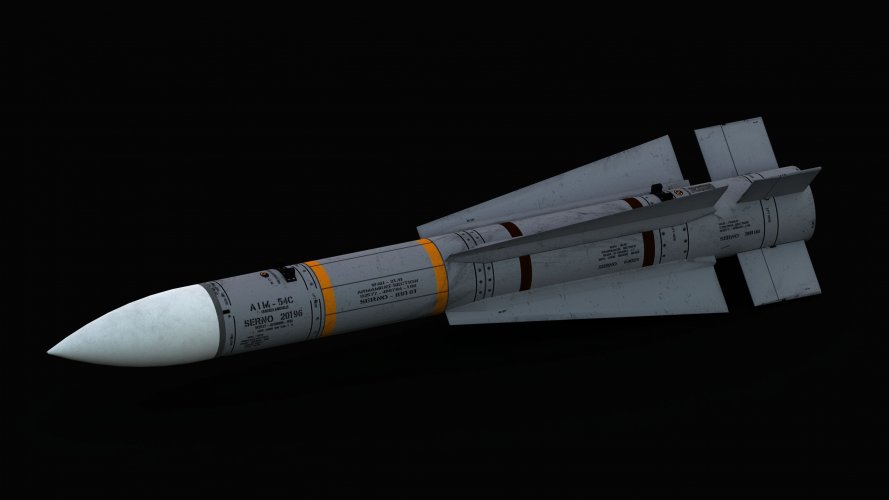
Naval Modular Missile Program (NMM)

joshjosh

ACCESS: Top Secret
Joined
31 May 2024
Messages
690
Reaction score
2,182
The Navy Modular Missile Program (NMM) is a NAVSEA program for a future family of modular missiles for VLS:

July 7, 2021
https://sam.gov/workspace/contract/opp/0eacb6e6891b44b58018f3458a294f23/view
The Navy’s Modular Missile (NMM) program’s objective is to design and develop a family of missiles with common components utilizing a newly defined shared and open systems architecture. NMM needs to 1) define open architecture standards to sub-assembly/component level and 2) transition its acquisition strategy to a Model Based Systems Engineering (MBSE) approach. The key to this approach is for the US Navy to develop a Government Reference Architecture (GRA) which will define the system architecture. This acquisition strategy will enable the program to break the dependency on a single development contractor and allow more extensive competition at the subsystem/critical component level. The GRA will then guide and constrain the development of multiple solutions responsive to stakeholder requirements.

September 25, 2025
https://sam.gov/workspace/contract/opp/20c6c7ffde6e4c14b6391f31411aef4f/view
Event Purpose:
The Industry Day will focus on introducing the NMM program, its acquisition strategy, and collaboration opportunities for industry partners. The goal is to identify performers to support the development of a dynamic, multi-mission Family Of Missiles (FOM) that will enhance naval lethality and operational flexibility.

About the Naval Modular Missile (NMM) Program:
The NMM program is a next-generation initiative designed to revolutionize surface naval capabilities through:
  • Multi-Mission Flexibility: A long-range hypersonic variant and scalable configurations to replace and enhance existing short-, medium-, and extended-range weapons.
  • Enhanced Capacity: Multiple weapons in a single launcher cell, improving fleet endurance and combat effectiveness.
  • Modular Open Architecture: A collaborative approach with the U.S. Air Force to establish an open government-reference architecture, enabling industry to develop and integrate best-of-breed solutions—from individual components to the All-Up Round.

https://www.navalnews.com/naval-new...duce-next-generation-modular-missile-program/https://insidedefense.com/insider/n...ular-missile-requirement-october-industry-day
 
“A very capable” common front-end seems to scream JATM in the way the AMRAAM C seeker found its way on to SM-6 (and then back onto a Hornet with AIM-174B, which is where it started), but your references suggest the USN is laser focused on MBSE level granularity on every component against a true GRA.

It’s one thing to grow the rocket motor or propellant industrial base, quite another for advanced multimode seeker subsystems but there’s no choice but for the US to level up. Fun times!
 
https://www.navalnews.com/naval-new...-support-hypersonic-strike-air-defense-roles/
Sounds like further developments of the navy modular missile and/or the compact agile interceptor

No further development of the Compact Agile Interceptor? Zero dollars requested for FY26, and I can't find evidence of this program elsewhere. From the FY26 Navy RDT&E BA 1-3:

FY 2025 to FY 2026 Increase/Decrease Statement:
The decrease in funding from FY 2025 to FY 2026 is due to this INP completing Applied Reserarch development in FY 2025
Background:
Title: Compact Agile Interceptors
Description: The US Navy lacks both in capability and capacity interceptors that have the ability to defeat complex raids of hypersonic missiles, cruise missiles and surface vessels. The Compact Agile Interceptor INP will use small diameter missiles to achieve a higher packing efficiency. Disruptive seeker technology, which weighs mere ounces will replace wasted pounds of payload weight and allow for higher speed missile interceptors. The seedling will evaluate multiple propulsion technologies including solid fuel ramjets, highly loaded grain propellants, and active throttling of solid rockets. The missiles airframe may be staged to enable the interceptor(s) the greatest agility to overmatch the threat. Multiple warhead technologies will be evaluated including reactive materials, kinetic warheads, and tailorable fragment warheads. The Activity identified in Project Unit 3506 specifically addresses Applied Research in support of the Compact Agile Interceptors INP effort.
FY 2025 Plans:
Initiate
- Independent Cost Estimate for the proposed INP program
- Procurement of 2-3 flight test units with selected propulsion concept
- Live fire proof of concept flight demonstration of propulsion concept
Complete
- Mission Analysis to establish Capability & Limitations of Engagement Envelope
- Propulsion/Payload Study to establish Missile Architecture and Technology Design Objectives
https://www.secretprojects.co.uk/threads/us-navy-standard-missile-family.7671/post-867422
 
The Navy Modular Missile is now the Naval Modular Missile. RDT&E falls under Standard Missile Improvements for now. Some interesting details that have emerged in the FY27 PB:

"The Naval Modular Missile (NMM) is the next generation family of surface and sub-surface launched kinetic hard-kill interceptors that serve as a competitive followon to the Standard Missile family of missiles."

"It will provide the US Navy, Joint Force, Allies and Partners with advanced defensive and offensive capability"

Modularity, WOSA, and GRA are mentioned again. The Navy is seeking $311M in FY27 to award competitive development contracts to at least two vendors.

Further, ESSM Block II development is tied to the NMM:
"Ongoing studies seek performance and producibility improvements for ESSM Blk 2 and future variants, exploring new tech and manufacturing methods to support evolving threats. Efforts will align closely to the developing requirements of the Navy Modular Missile."

It appears that the NMM is envisioned as being a broad enough effort to eventually replace a wide swath of weapons: ESSM, SM-2, SM-6, SM-6 IB (strike).

It doesn't appear that the NMM will replace SM-3 (exoatmospheric, although GPI is less clear to me, as the GPI is endoatmospheric.
 
The Navy Modular Missile is now the Naval Modular Missile. RDT&E falls under Standard Missile Improvements for now. Some interesting details that have emerged in the FY27 PB:

"The Naval Modular Missile (NMM) is the next generation family of surface and sub-surface launched kinetic hard-kill interceptors that serve as a competitive followon to the Standard Missile family of missiles."

"It will provide the US Navy, Joint Force, Allies and Partners with advanced defensive and offensive capability"

Modularity, WOSA, and GRA are mentioned again. The Navy is seeking $311M in FY27 to award competitive development contracts to at least two vendors.

Further, ESSM Block II development is tied to the NMM:
"Ongoing studies seek performance and producibility improvements for ESSM Blk 2 and future variants, exploring new tech and manufacturing methods to support evolving threats. Efforts will align closely to the developing requirements of the Navy Modular Missile."

It appears that the NMM is envisioned as being a broad enough effort to eventually replace a wide swath of weapons: ESSM, SM-2, SM-6, SM-6 IB (strike).

It doesn't appear that the NMM will replace SM-3 (exoatmospheric, although GPI is less clear to me, as the GPI is endoatmospheric.

Subsurface is interesting. Could just be about strike but it might also open the door for the return of Son of SubSAM. Self-defense for starters, obviously.

But these days, with active seekers and distributed (and possibly space-based) target tracking, you could actually make a submerged SAM trap a viable technique. An SSGN with a clutch of SAMs could do nasty things to high value air assets that thought they were far enough up-threat.
 
Subsurface is interesting. Could just be about strike but it might also open the door for the return of Son of SubSAM. Self-defense for starters, obviously.

But these days, with active seekers and distributed (and possibly space-based) target tracking, you could actually make a submerged SAM trap a viable technique. An SSGN with a clutch of SAMs could do nasty things to high value air assets that thought they were far enough up-threat.

Now think about a UUV launching it from the Taiwan Strait. One subsam missile whacking an AEW&C could swing the outcome of a major air battle.
 
I think there are much easier ways of doing that rather than custom building a XLUUV around an SM-6. But if a sub is carrying SM-6 anyway (and it is suspected that is what Sea Dragon is) I could see the advantages of creating an anti air kill chain, just because it probably would not require much work. SM-6 is already one of the most networked SAMs; working some kind of NIFCA relay into a UAV and forwarding target information, possibly from orbit (pretty easy to track AEW when radiating) should not be difficult. It is enough of a niche capability I probably would not bother building it from scratch, but it might be worth piecing together if the entire kill chain mostly existed already off the shelf.
 
https://aviationweek.com/defense/mi...als-details-standard-missile-replacement-plan

U.S. Navy Reveals Details Of Standard Missile Replacement Plan​

A newly obtained document reveals the full scope of the U.S. Navy’s preliminary plans for replacing all members of the venerable, RTX-made Standard Missile (SM) series with a family of new air and missile interceptors that are focused on boosting load-outs and raising performance. The family of Navy...

1785448805278.jpg
 
I mean the plan was for those big tubes to be in future ships and wasn't there talk about a big 2 cell MK.41 replacement?
 
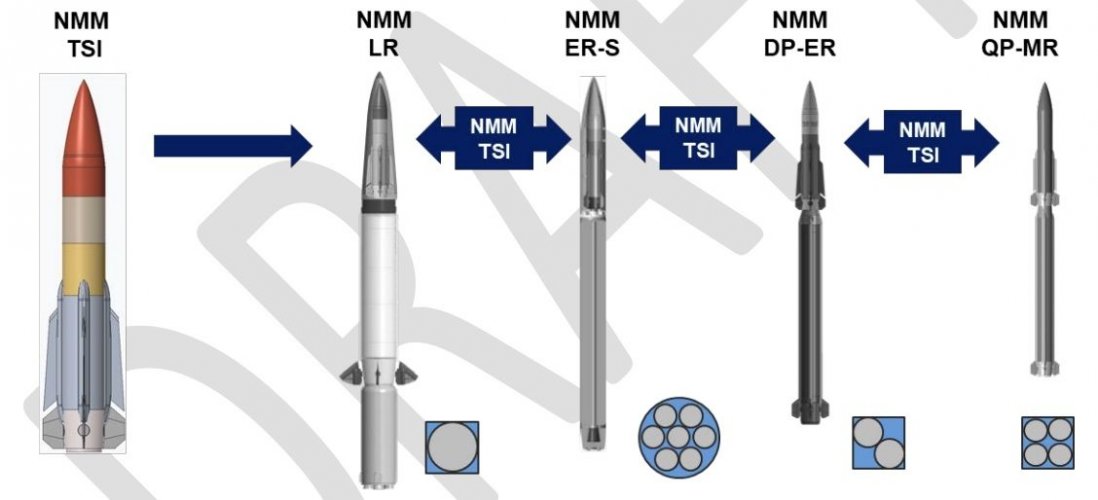
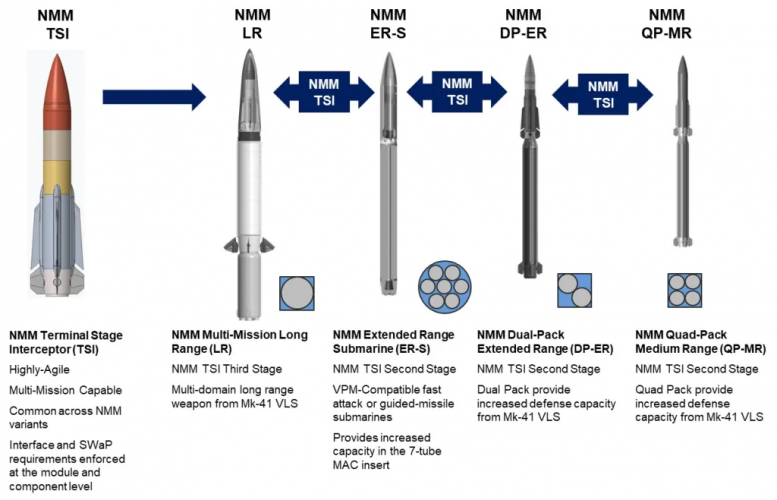
So, the QP-MR (Quad-Pack, Medium-Range) is likely 10 inches in diameter, the max diameter to quad-pack into Mk 41. Looks like it has tail fins that would fold around the boat tail and probably not need any extra space. The DP-ER missile (Dual-Pack, Extended Range) is likely no more than 13.5 inches in diameter, the max size that can dual-pack into a Mk 41 cell. But maybe a bit smaller since it has folding fins that have to pack in somehow. (Again, maybe around the boat-tail? But they seem bigger than that.) Assuming that ER-S is Extended-Range Submersible (or Strike?), I think the scaling is wrong on its cross-section diagram. The tube packing diagram suggests it's very close in diameter to QP-MR, which would be necessary to fit three missiles across inside a 36-inch tube (max is close to 11-inches). But the cross-section suggests its closer to the DP-ER, which has to be close to 13.5 or it has a LOT of wasted volume and lost kinematics.

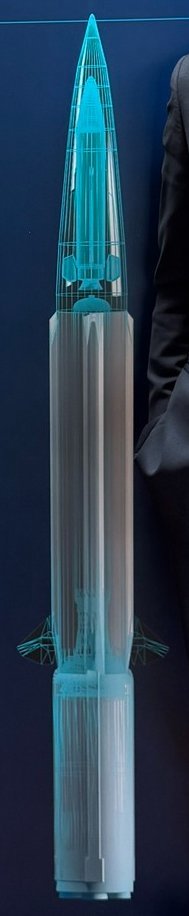
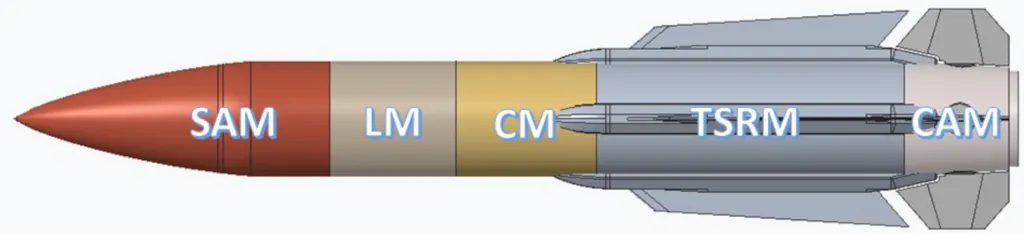
I have very little confidence in the aerodynamic configuration of the TSI (Third-Stage Interceptor) actually looking like that. Seems like way too much fin.

In terms of equivalence, QP-MR is obviously an ESSM replacement (maybe with some PAC-3 capability), DP-ER is an SM-2 MR replacement (likely with something like PAC-3 MSE capacity) and LR is something like SM-6 Block 1B. It is an Outer Air Battle and local area TBMD missile with a high enough fly-out speed that the interceptor needs to be shrouded for thermal protection until it gets to high altitude. Same basic config could then be adapted with an EKV/TSRM successor to succeed SM-3.
 
Last edited:
I wonder is the ER-S designed to fit VPMs given the graphic??
If it's designed to fit seven in VPM what niche could ER-S possibly fill? Strike? Or (S)ubmarine launched SAMs for more distributed anti air..
 
If it's designed to fit seven in VPM what niche could ER-S possibly fill? Strike? Or (S)ubmarine launched SAMs for more distributed anti air..
Probaly both.
If LR truly is SM-6 Block ib then both is very mutch on the table
 
So that must be instead of a CPS missile at 36".
Yes.

I was trying to mentally pack 7 into a 21" tube (as in Tomahawks) but that's not working.

Still, though, 7x SM6-equivalents in place of a single CPS is a pretty useful trade. Loses range but IIRC CPS has a long minimum range. So you've got 7x500km surface strikes plus 2x 1000+km per VPM.
 
So, between this extra text and the TWZ article, it sounds like they are talking about seven (7) ER-S rounds per VPM. That leaves this missile probably at 13.5 inch diameter, like the DP-ER, but with a somewhat longer booster, no fins, and a shroud for the TSI. This seems a bit inefficient from a volume perspective. But I think I know why. It's probably sitting in a concentric canister style launch tube that will vent the hot exhaust back up around the missile to keep it from touching water during the launch. Described in this thread:

Post in thread 'Water Piercing Missile Operational Concept' https://www.secretprojects.co.uk/th...missile-operational-concept.16516/post-159118

Other option would be a buoyant capsule launcher, but that would likely be called out in the drawing.
 
Honestly I would just assume that they want to take the already working Tomahawk VPM tube insert and just swap in interceptors for TLAMs on a 1:1 basis for expediency. I suspect that’s what “the 7 tube MAC insert” refers to.
 
Honestly I would just assume that they want to take the already working Tomahawk VPM tube insert and just swap in interceptors for TLAMs on a 1:1 basis for expediency. I suspect that’s what “the 7 tube MAC insert” refers to.
Thing is, the Tomahawk VPM insert holes are only 25" in diameter. Can't pack 7x10" missiles into a 25" diameter tube. And the missile description as NMM-ER-S means it's not a 21" missile like NMM-LR.
 
If it's designed to fit seven in VPM what niche could ER-S possibly fill? Strike? Or (S)ubmarine launched SAMs for more distributed anti air..
It's the surface version on the Zumwalts and BBGs. The 'submarine' part might be TWZ running away with the spoon.
 
It's the surface version on the Zumwalts and BBGs. The 'submarine' part might be TWZ running away with the spoon.

"sub-surface" is explicit in budget documents:

FY27 PB:

"The Naval Modular Missile (NMM) is the next generation family of surface and sub-surface launched kinetic hard-kill interceptors that serve as a competitive followon to the Standard Missile family of missiles."
 
It's literally in the Navy graphic.
Sorry, missed that bit. I guess it keeps ballistic attackers of surface ships guessing as to how many interceptors are in the area and also provides a defence against MPAs that have sniffed them out. Seems like Longchamp will be out of a job.

So based on that and assuming it's to scaled, a single VPM will carry 21 (3x7), or is it just 7? It's just 7 because it has the same TSI, hence same size as 21" missiles. Mind you, the smaller missiles are also labelled as having the NMM TSI??? Doesn't look the same for all missiles though??? Confusing.

Does the TSI actually have DACT, difficult to tell from the labelling?

So, between this extra text and the TWZ article, it sounds like they are talking about seven (7) ER-S rounds per VPM. That leaves this missile probably at 13.5 inch diameter, like the DP-ER, but with a somewhat longer booster, no fins, and a shroud for the TSI. This seems a bit inefficient from a volume perspective. But I think I know why. It's probably sitting in a concentric canister style launch tube that will vent the hot exhaust back up around the missile to keep it from touching water during the launch. Described in this thread:

Post in thread 'Water Piercing Missile Operational Concept' https://www.secretprojects.co.uk/th...missile-operational-concept.16516/post-159118

Other option would be a buoyant capsule launcher, but that would likely be called out in the drawing.
Tomahawks are 7 per VPM, so if it's 7 per VPM, it's a 21" missile. Don't think that VPM graphic is to scale, since VPM is 87" vs 25" cell diameter for Mk41, so VPM would be 3.5X wider if to scale, whereas in graphic it's ~1.75x wider, so missile is half size it should be relative to rest. Which raises an interesting question about length, assuming it's been downscaled in proportion to width. If so, it would be circa 12m long!o_O
 
Last edited:
So based on that and assuming it's to scaled, a single VPM will carry 21 (3x7), or is it just 7?
At leasst 21, but if you look at the research on Flexible Payload Module (FPM) more could be packed inbetween.. up to +9.
It's just 7 because it has the same TSI, hence same size as 21" missiles. Mind you, the smaller missiles are also labelled as having the NMM TSI??? Doesn't look the same for all missiles though??? Confusing.
It's the same airframe body but with different wings, hence, 3 sizes in total for LR, MR, ER.
 
Tomahawks are 7 per VPM, so if it's 7 per VPM, it's a 21" missile.

No, it's clearly not. The TSI is common across all the missiles at 10-inches in diameter, and you can see it's just a little smaller than the booster in ER-S. So, ER-S is approximately 13.5 inches in diameter. The rest of the space in its canister inside the MAC is likely for a hot-gas exhaust management system, unlike the gas generator used to eject Tomahawk.
 
No, it's clearly not. The TSI is common across all the missiles at 10-inches in diameter, and you can see it's just a little smaller than the booster in ER-S. So, ER-S is approximately 13.5 inches in diameter. The rest of the space in its canister inside the MAC is likely for a hot-gas exhaust management system, unlike the gas generator used to eject Tomahawk.
Okay but it is 7 per VPM right?

TSI looks very different in LR vs ER-S and QP-MR but probably the same as one in DP-ER. Is that just a bad drawing? It does say it's common across all. Is DP-ER 13.5"? Because TSI fins extend out beyond that making ER-S a bit wider than 13.5", maybe 16" at a guess, and TSI fin arrangement is different in ER-S??
 
Okay but it is 7 per VPM right?

TSI looks very different in LR vs ER-S and QP-MR but probably the same as one in DP-ER. Is that just a bad drawing? It does say it's common across all. Is DP-ER 13.5"? Because TSI fins extend out beyond that making ER-S a bit wider than 13.5", maybe 16" at a guess, and TSI fin arrangement is different in ER-S??

It's all down to differences in the fins. The whole goal here is for the TSI body to be the same across the family of missiles.

And as I say, I would not bet a lot on the TSI shape being accurate. Since it still has to be completed, what we're seeing here is a placeholder.
 
Honestly I would just assume that they want to take the already working Tomahawk VPM tube insert and just swap in interceptors for TLAMs on a 1:1 basis for expediency. I suspect that’s what “the 7 tube MAC insert” refers to.
The MAC is the Multiple All-Up-Round Canister, which is the 7-shot TLAM adapter currently used by the Ohio SSGNs that will be used on the VPM tubes (not the VPT tubes in the bow of a Virginia-class).

The main question here is why, if there is space available for a TLAM, which fits in the Mk 41 envelope, is the submarine-launched missile going to be a smaller NMM-ER instead of the NMM-LR, which should fit if the seven rounds shown in the diagram are actually the spaces in the TLAM canister.

You wouldn't be able to fit seven missiles larger than a PAC-3 MSE in the CPS tube inserts, so that wouldn't work if the NMM-DPER for surface ships is closer to the Terrier/Tartar in diameter.
 
The way I'm looking at NMM, the booster for the submarine version is smaller diameter than the surface ER. Booster is proportionally longer since it's packed into a smaller diameter tube.

Because a 500km ~8" diameter missile is not worth as much as a Tomahawk to me. Don't care that the missile is doing Mach 6, it's still only a 300lb missile so the missile KE is only that of ~600lbs of TNT. At most.

I do not see the logic in 7x NMM-ER-S versus 7x Tomahawks. But you can pack 7x 10" diameter missiles into a ~40" diameter tube for a 34" diameter missile with 2" of shock-absorbing space around it.
 

Similar threads

Back
Top Bottom