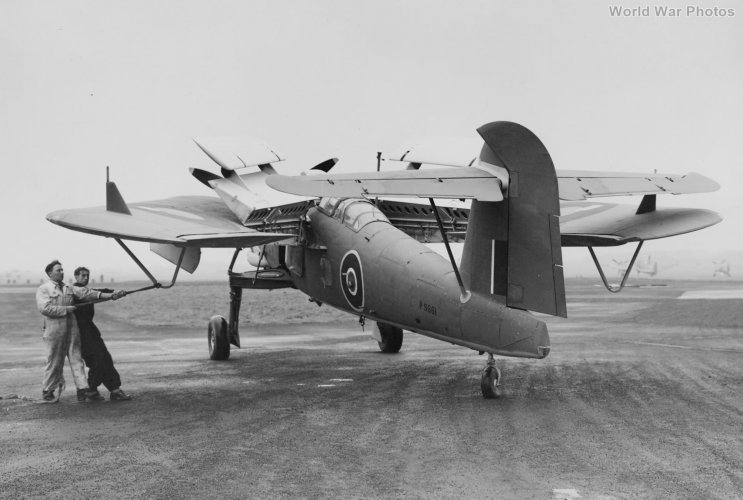
I was really (failing to) suggest that the British jets could have used the Sto-Wing design to fit into the short hangars. IIRC the patent on that was filed in 1940 or 41, so the first generation of British jets would need to pay royalties but the 1955 generation would not.
I was really (failing to) suggest that the British jets could have used the Sto-Wing design to fit into the short hangars. IIRC the patent on that was filed in 1940 or 41, so the first generation of British jets would need to pay royalties but the 1955 generation would not.
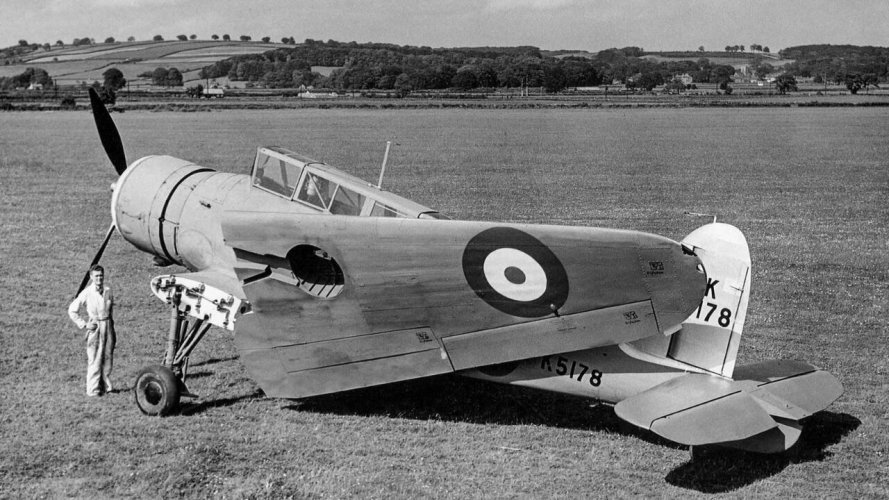
Blackburn Skua designed in the mid-1930s (Edit - and its cousin the Roc)
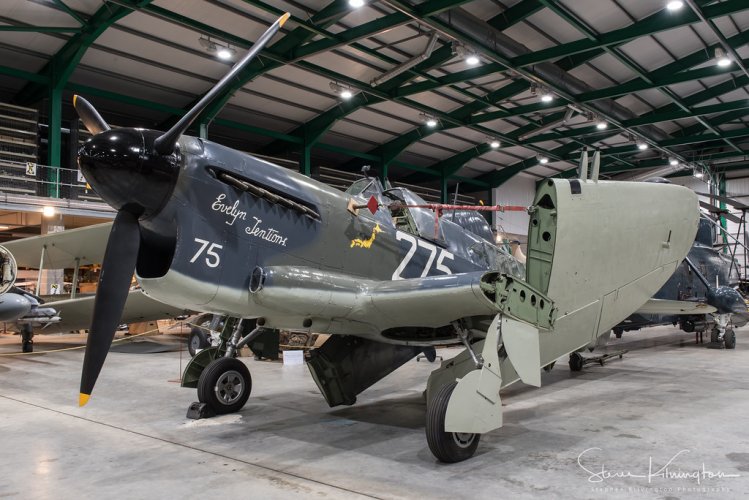
Fairey Firefly. Design work started in 1939.
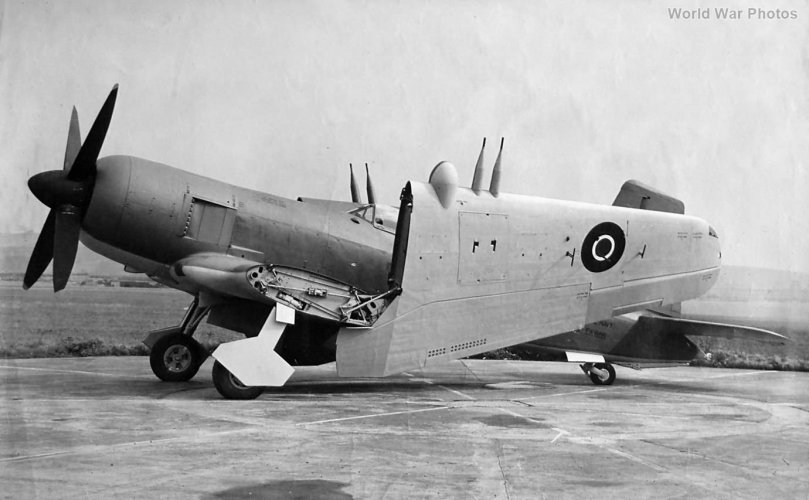
Blackburn Firebrand design dating from 1940
There was a navalised Spitfire proposal from Supermarine in 1938/39 with the same arrangement.
The main difference with these designs compared to Grumman's Sto-wing was that the wing leading edge faced up not down.
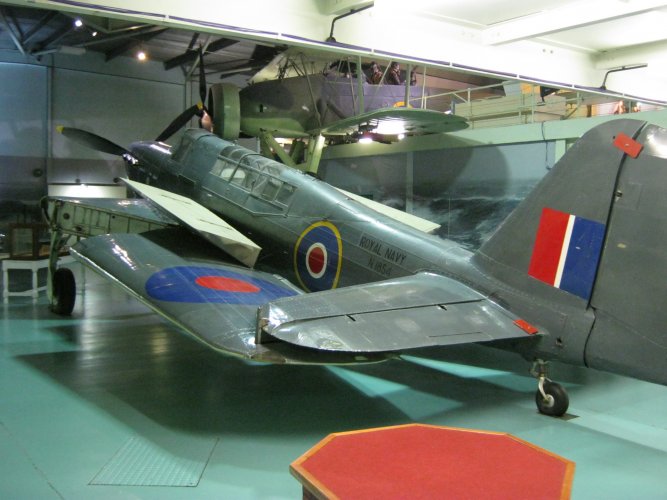
When Fairey first moved to building monoplane aircraft for the RN they chose to follow what they had been doing with biplane designs and fold the wings aft horizontally. Bit more complicated to make it work but still. Maybe explains the change on the Firefly, along with changing RN width requirements.
Fulmar of 1938/39 Design.
And the Barracuda
Grumman actually had problems getting the Sto-wing into production in 1940/41 on the G-36B Martlet II for Britain and the F4F-4 For the USN. A lot of promises made in late 1940 but April 1941 before the first was tested and Aug before they started rolling off the production line in any numbers, first for Britain and then for the USN in Nov / Dec 1941. Along the way they had to drop any idea of power folding due to weight issues.
It is interesting though that Grumman did not use the Sto-wing on its fighters after the F6F Hellcat, although it continued to do so on its larger strike / ASW aircraft.
Folding upwards is a much simpler arrangement.
Incidentally the folded height of a DH Sea Venom and Sea Vixen with upward folding wings was not hugely different from their unfolded state, because the wings folded over well past the vertical.
So I really don't think British aircraft designers would have needed to have paid royalties to Grumman to use their Sto-wing design.
I give you the
[...]
So I really don't think British aircraft designers would have needed to have paid royalties to Grumman to use their Sto-wing design.
I wonder if annintroduction of the steam catapult and heavier carrier-borne jets some years earlier or a postponement of the armoured box hangar carrier reconstruction programme by a few years might have led to the Implacables being reconstructed and the Illustrii and Indomitable being scrapped, as the two extra boilers and generally speaking greater speed of the Implacables might have been considered a greater advantage in a situation where more powerful steam catapults allowing heavier jets but demanding more steam were included in the reconstruction programme right from the initial planning stage. This might have also affected the construction of the Centaur-class ships, and HMS Hermes in particular, as their ability to produce steam with their four Admiralty three-drum boilers was rather limited and their speed of 28 knots barely sufficient for fleet work. I might be biased, but IMO the Centaurs were a greater waste than the ABH carrier reconstruction programme, as they provided a capability which was barely sufficient for a front-line carrier in the 1960's even in the form of the extensively modified Hermes and their work as commando and ASW carriers could have been fulfilled nearly as well by the Colossi and Majestics. The ABH carriers might have been similarly size-constrained as the Centaurs and their crews larger due to a large machinery, but at least they had a speed advantage of 2-4 knots, more steam generation capacity in the form of two or four extra boilers, which would have allowed more powerful catapults, extra electrical power for better electronics and air conditioning and better survivability thanks to them not being war emergency designs partly designed and built to mercantile standards using inferior quality wartime and imnediate postwar steel.
This site uses cookies to help personalise content, tailor your experience and to keep you logged in if you register.
By continuing to use this site, you are consenting to our use of cookies.