Modern Warship Defence (CIWS) Discussion

spikedpsycho

ACCESS: Secret
Joined
14 March 2026
Messages
336
Reaction score
484
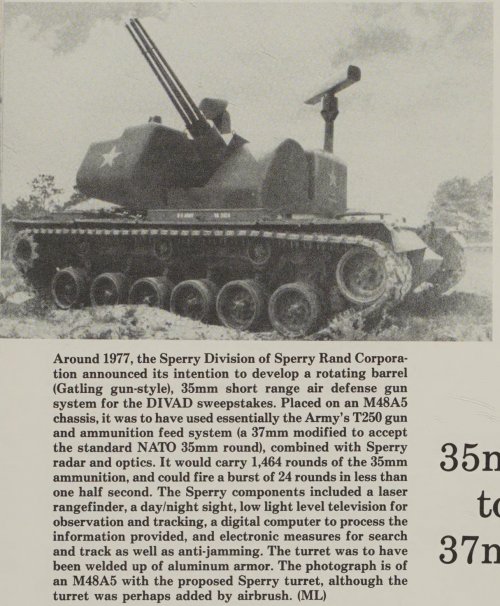
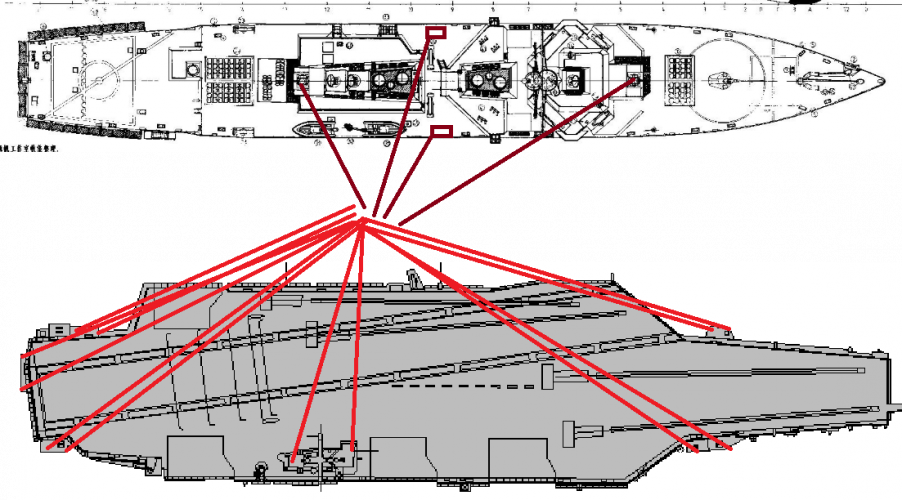
If Sperry 35mm DIVADS program had been more successful over Sgt Uork. Might have seen its variant as Naval CIWS supplement. 35mmx228 has decent range 4,000 meters creating stand off distance more sufficient prevent collateral damage from high speed debris or whats left of the missile. 1000034823.jpg
 
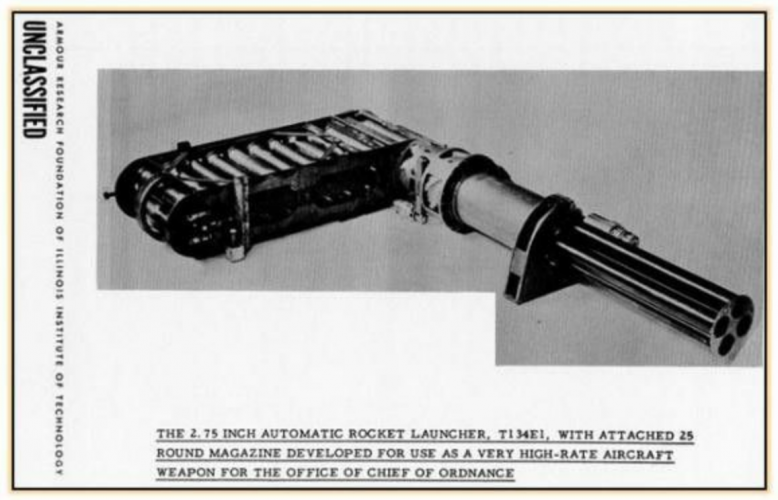
Back during A-X attack aircraft development project. Which would yield A9 and A10. Development of gatling rocket firing system.
Not bad idea though a magazine filled rockets sounds dangerous for plane it might be Ideal concept for CIWS.
They can carry superior warhead sizes than bullets, achieve supersonic velocities thru gradual but quick acceleration and proximity fused to explode on target. In essence a Gun fires miniature guided missiles.


1000034855.png
 
- caliber conversion? (25mm NATO.. or possible cased telescope ammunition)
- higher velocity cartridge (submunition in superior propellant)
I would do this as a single thing. Replace the M61 with a GAU-12 or GAU-22, and give it the APDS ammo from the Bradleys.


- one new technology optical color discrimination
- Spectroscopy cameras like those on space probes to segregate Oxygen/hydrogen from metal/plastics.
I'm not sure "color" is as valuable as spectroscopy would be.


That said, it's looking like SeaRAM is a better defense against high-subsonic and especially against supersonic antiship missiles. CIWS is just destroying the missiles too close to the ship that the fragments are taking out antennas etc.

So, SeaRAM with the FLIR etc off Phalanx 1B is what I'm really expecting.
 
Defending a ship with 1-2 Phalanx is the bigger issue. I'm surlrised nobody has peed on their monopoly and introduced alternatives. There should be 3-4 guns per side, with at least 2 each fore and aft. And there should be a SeaRAM type of system on each quadrant, preferably a minimum one each side and one each end. Attacking a ship at a 45 degree angle puts you under CIWS fire from 3-4 guns and a minimum of 2 missile launchers. You need redundancy.
 
Defending a ship with 1-2 Phalanx is the bigger issue. I'm surlrised nobody has peed on their monopoly and introduced alternatives. There should be 3-4 guns per side, with at least 2 each fore and aft. And there should be a SeaRAM type of system on each quadrant, preferably a minimum one each side and one each end. Attacking a ship at a 45 degree angle puts you under CIWS fire from 3-4 guns and a minimum of 2 missile launchers. You need redundancy.

Most ships struggle to find enough deck space to carry more.
 
Most ships struggle to find enough deck space to carry more.
As light as CIWS and SeaRAM are, you'd think it'd be relatively trivial to add an upper-level sponson or expand a little deck space to make room for more. (yes, topweight may be an issue)


Defending a ship with 1-2 Phalanx is the bigger issue. I'm surlrised nobody has peed on their monopoly and introduced alternatives. There should be 3-4 guns per side, with at least 2 each fore and aft. And there should be a SeaRAM type of system on each quadrant, preferably a minimum one each side and one each end. Attacking a ship at a 45 degree angle puts you under CIWS fire from 3-4 guns and a minimum of 2 missile launchers. You need redundancy.
IIRC there usually are 4x+ Mk38s plus the CIWS plus SeaRAM. And in theory the Mk38Mod4s are AA capable but could use an on-mount radar to help with that instead of pure EOTS.

But for the most part, the Mk38s are your anti-USV/small boat guns, CIWS and SeaRAM are for incoming air threats.

The way it's usually laid out, Mk38s are on the corners of the ship. I would place CIWS amidships, and place lasers/RAM/SeaRAM bow and stern.
 
IIRC there usually are 4x+ Mk38s plus the CIWS plus SeaRAM.
That's a CVN sort of outfit. The DDGs have 1 or 2 CIWS/SeaRAM/Mk 49 RAM (the specifics vary depending on the Flight, AEGIS baseline, and other factors) and 2 Mk 38.
 
Defending a ship with 1-2 Phalanx is the bigger issue. I'm surlrised nobody has peed on their monopoly and introduced alternatives. There should be 3-4 guns per side, with at least 2 each fore and aft. And there should be a SeaRAM type of system on each quadrant, preferably a minimum one each side and one each end. Attacking a ship at a 45 degree angle puts you under CIWS fire from 3-4 guns and a minimum of 2 missile launchers. You need redundancy.
In general yes, but for most of Cold War and post-Cold War era the general consensus was, that if more than one-two enemy missiles came into CIWS engagement envelope, then the ship is toast anyway. CIWS were mostly to defend against single missiles, that slipped through outer defenses. Putting more CIWS on warship weren't viewed as practical, because the benefits would be limited to narrow set of situations - like "more than one, but not more than three missiles slipped through". So it was assumed that putting efforts into area defense capabilities would be more practical than in CIWS.

To summarize, one-two CIWS is a reasonable improvement over zero, because they provide a quantative advantage - a new capability. But subsequent increase of CIWS numbers add little advantages. The area defenses are synergetic; a ship squadron with overlapping SAM coverage is stronger than merely a sum of its parts. But CIWS aren't synergetic, they add nothing to other ships defense.
 
Your ship spacing should be where CIWS use is a non-issue to peers.

Where ships bunch up, they die. Right, HMS Coventry?
 
I'm surlrised nobody has peed on their monopoly and introduced alternatives.
Goalkeeper
Meroka
Sea Zenith
Millennium
Gokdeniz
Myriad
CIWS II (South Korea)
Dardo
Fast Forty
RapidFire
RAM
SeaRAM
Kortik
Kashtan
Sea Oryx
HQ-10
and so on.

There's no shortage of CIWS systems, just re-read the start of this thread for some of the ones that failed to gain traction
 
Your ship spacing should be where CIWS use is a non-issue to peers.

Where ships bunch up, they die. Right, HMS Coventry?
You misunderstood me. My point was exactly that CIWS do not offer any group defense advantages. While long-range SAM sums up for the whole group - providing total capability "greater than the sum of its parts" - the CIWS protect only the unit they are installed on. They add nothing to other units defense. So from practical point of view, investing into long-range SAM's is more efficient than investing in CIWS, since long-range SAM's add to the group defense as a whole.
 
At $1.4 billion for an FF(X), it is time to rethink the need to self defend. Sure the VLS missiles are good for supporting other ships, but your VLS missiles the US Navy buys are honestly gold-plated relics of the cold war. Sea CAMM and other smaller missiles tend to be LOAL and capable of ripple firing in a way neither ESSM nor Standard can. Until we have such options better lean on CIWS because there will be leakers.
 
At $1.4 billion for an FF(X), it is time to rethink the need to self defend. Sure the VLS missiles are good for supporting other ships, but your VLS missiles the US Navy buys are honestly gold-plated relics of the cold war. Sea CAMM and other smaller missiles tend to be LOAL and capable of ripple firing in a way neither ESSM nor Standard can. Until we have such options better lean on CIWS because there will be leakers
Well, its a result of arising drone threat of latest years mostly. Before that, the main concern was a high-end threats - cruise & ballistic missiles with sophisticated autonomous seekers.
 
Your ship spacing should be where CIWS use is a non-issue to peers.
Someone better tell the USN then, because there have been at least two instances of USN vessels being hit by friendly CIWS fire (Iwo Jima during an exercise and Missouri off Iraq).
 
At $1.4 billion for an FF(X), it is time to rethink the need to self defend. Sure the VLS missiles are good for supporting other ships, but your VLS missiles the US Navy buys are honestly gold-plated relics of the cold war. Sea CAMM and other smaller missiles tend to be LOAL and capable of ripple firing in a way neither ESSM nor Standard can. Until we have such options better lean on CIWS because there will be leakers.
ESSM Block 2 is active radar with mid-course guidance, so should be LOAL capable.
 
At $1.4 billion for an FF(X), it is time to rethink the need to self defend. Sure the VLS missiles are good for supporting other ships, but your VLS missiles the US Navy buys are honestly gold-plated relics of the cold war. Sea CAMM and other smaller missiles tend to be LOAL and capable of ripple firing in a way neither ESSM nor Standard can. Until we have such options better lean on CIWS because there will be leakers.

CAMM/SeaCeptor whatever hell they rename it... has been development since 2004. It has relatively small warhead (22 lbs) and modest range and top speed mach 3.
ESSM has top speed Mach 4, an 87 lb warhead.

These Cold War relics have been phased out with Block Upgrades. SM2 will slowly be phased out by SM6 .
Tomahawk remains an expensive but versatile weapon most European air defense destroyers/frigates typically do not have.

CIWS guns do require upgrades, issue is not sensors but ballistics. Bullets simply lack distant hitting power. So sufficient hitting power can come new aerodynamic design sub-munition from larger case.

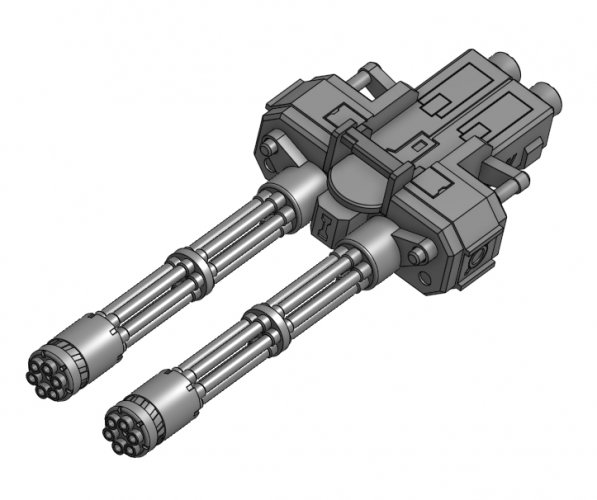
This can be solved by incorporating dual cannon. One fires APFS and one firing HEI. 1000036110.jpg

2nd issue for high rate of fire weapons is ammunition consumption. Since ammo drum is limited . Thats a more easy fix.
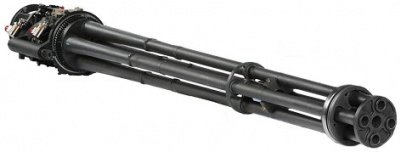
Place drum up and behind so it can still pivot. And move sensors forward underwrap the gun. This can accommodate a larger caliber gun 1000036113.jpg In essence gun look like Umbrella or Music note turned sideways
 
Someone better tell the USN then, because there have been at least two instances of USN vessels being hit by friendly CIWS fire (Iwo Jima during an exercise and Missouri off Iraq).
How long ago was that? If the USN hasn't learned from Missouri off Iraq in 1991, can't help them.
 
CIWS guns do require upgrades, issue is not sensors but ballistics. Bullets simply lack distant hitting power. So sufficient hitting power can come new aerodynamic design sub-munition from larger case.

This can be solved by incorporating dual cannon. One fires APFS and one firing HEI.
You don't need two guns for mixed APDS and HEI, you don't even need two barrels, just pattern-load the magazine, or if you want the option to choose, have the ammunition feeds go through a selector (the revolver section of a revolver cannon's breech could be set up to do this just by having two feed positions instead of one, and so could a gatling).

And ultimately this doesn't solve the problem that gun-based CIWS* underperforms in comparison to missile-based CIWS in kill-distance. More reliably reducing a missile to fragments is still going to leave you shotgunned by those Mach 3-4 fragments.

* Which is itself of course a Cold War left-over, but one far more clearly outdated.

2nd issue for high rate of fire weapons is ammunition consumption. Since ammo drum is limited . Thats a more easy fix.

Place drum up and behind so it can still pivot. And move sensors forward underwrap the gun. This can accommodate a larger caliber gun In essence gun look like Umbrella or Music note turned sideways
You're increasing the revolving and elevating mass and doing it high in the ship, with all that implies for mount size and weight and metacentric height. If you want to seriously increase the magazine size, drop it down a deck and fix it in place. Just as happens with larger calibre guns.
 
Well, they don't seem to have learned they need an FFG, so....
Fair point.

issue with CIWS is lack there of.
For destroyer/Frigate have Four. Carrier a dozen.
It's relatively easy to move the Mk38 guns around, and a destroyer should have 4 of them to deal with small boat/USV swarms (2 at the corners of the helo deck aft, 2 forward of the bridge, widest possible fields of fire).

If you have CIWS on the forward centerline and RAM on the aft centerline, you're forced to maneuver to give a broadside to the incoming missiles, and that broadside is your largest RCS and thermal signature. It does give you the greatest crossing velocity, but IIRC proportional navigation doesn't care about crossing targets.

I would put RAM/SeaRAM on the centerlines and CIWS on the sides amidships of a destroyer. This means you can maneuver to an angle to the oncoming threat and still have RAM and CIWS available to engage it. Likely lower RCS, definitely lower thermal, but lesser crossing velocity.

IIRC the ODIN laser (might have been HELIOS) was appreciated more for the big optics and high magnification it could get than the laser effects. So I'd want lasers on the centerline and as high as possible, atop the bridge above the RAM launchers.

HPM emitters then go on broadsides.

Oh, side note: the Navy will probably curse that the CIWS uses different ammunition caliber than the Mk38s, but the Mk38s are using PFF/AHEAD type ammunition while CIWS wants APFSDS-DU.

 
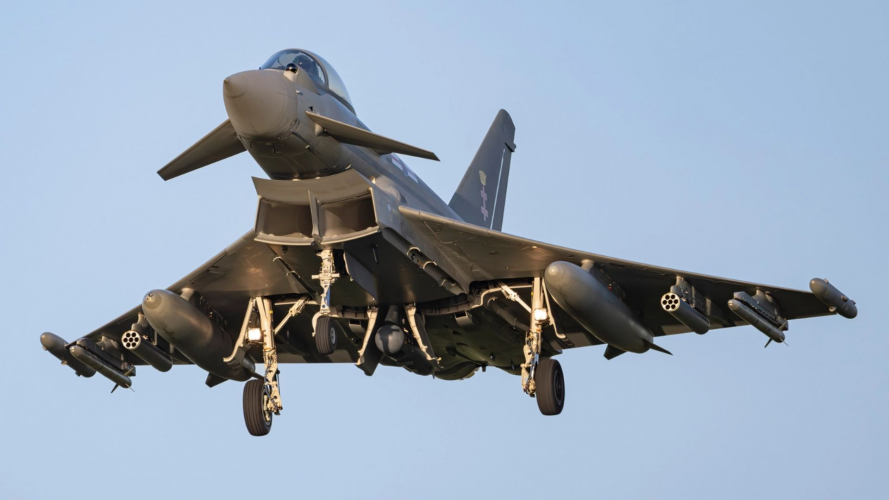
Alternative is application of Rocket's. Europe's Typhoon is experimenting laser guided rockets. 1775826969536.png
The Navy simply needs revive ASROC rocket launcher With Cell capacity quad packed dozens of rockets can be adopted
 
Fair point.


It's relatively easy to move the Mk38 guns around, and a destroyer should have 4 of them to deal with small boat/USV swarms (2 at the corners of the helo deck aft, 2 forward of the bridge, widest possible fields of fire).

If you have CIWS on the forward centerline and RAM on the aft centerline, you're forced to maneuver to give a broadside to the incoming missiles, and that broadside is your largest RCS and thermal signature. It does give you the greatest crossing velocity, but IIRC proportional navigation doesn't care about crossing targets.

I would put RAM/SeaRAM on the centerlines and CIWS on the sides amidships of a destroyer. This means you can maneuver to an angle to the oncoming threat and still have RAM and CIWS available to engage it. Likely lower RCS, definitely lower thermal, but lesser crossing velocity.

IIRC the ODIN laser (might have been HELIOS) was appreciated more for the big optics and high magnification it could get than the laser effects. So I'd want lasers on the centerline and as high as possible, atop the bridge above the RAM launchers.

HPM emitters then go on broadsides.

Oh, side note: the Navy will probably curse that the CIWS uses different ammunition caliber than the Mk38s, but the Mk38s are using PFF/AHEAD type ammunition while CIWS wants APFSDS-DU.
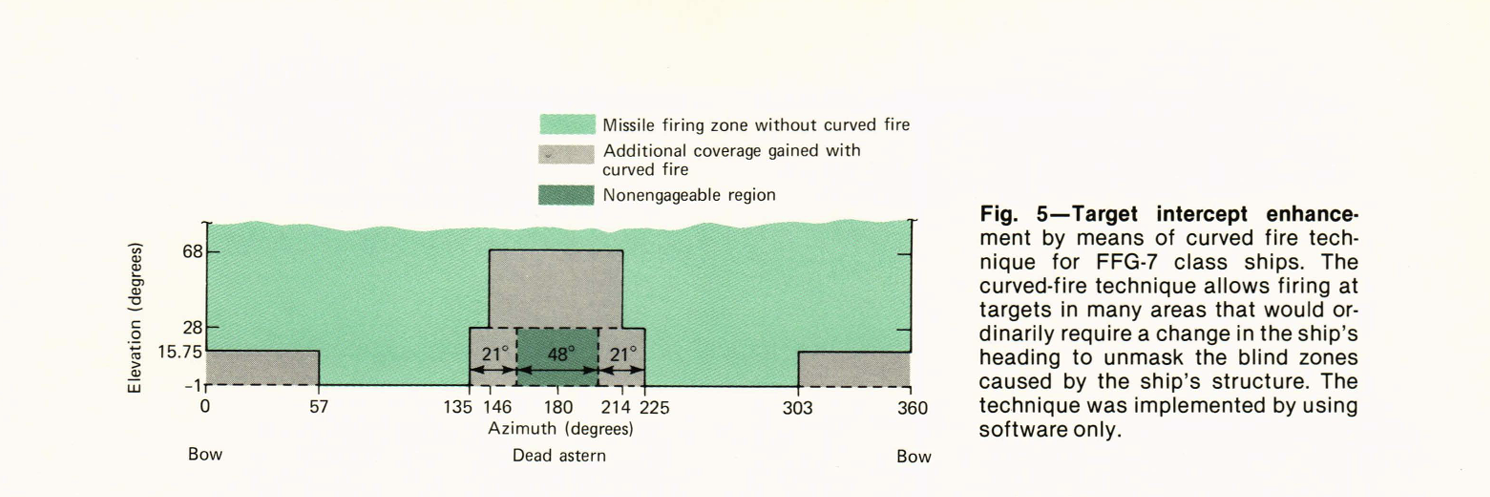
I'm pretty sure RAM Block 2 can do over the shoulder, the guidance logic has been a thing since JHU APL cooked it up for SM-1 on the OHPs.

https://secwww.jhuapl.edu/techdigest/content/techdigest/pdf/V02-N02/02-02-Shade.pdf
1775831211135.png
 
I'm pretty sure RAM Block 2 can do over the shoulder, the guidance logic has been a thing since JHU APL cooked it up for SM-1 on the OHPs.

https://secwww.jhuapl.edu/techdigest/content/techdigest/pdf/V02-N02/02-02-Shade.pdf
View attachment 808657
Right, now look at that arc: can't engage anything across the stern below 30deg. That is one hell of an improvement in arc over the "no OTS shots" version, though.

But okay, let's say a RAM launcher gives us 21 shots in a full 360 or close enough to it. CIWS and Mk38s still need direct lines of sight/fire. DEWs need direct lines of sight/fire.

Alternative is application of Rocket's. Europe's Typhoon is experimenting laser guided rockets.
APKWS needs a separate laser designator, I'm not sure that the Mk38s have one of those. But yes, surface ships should have the equivalent (if not physically the same sensors) as the F-35 DAS and EOTS.
 
CIWS runs independent sensors.
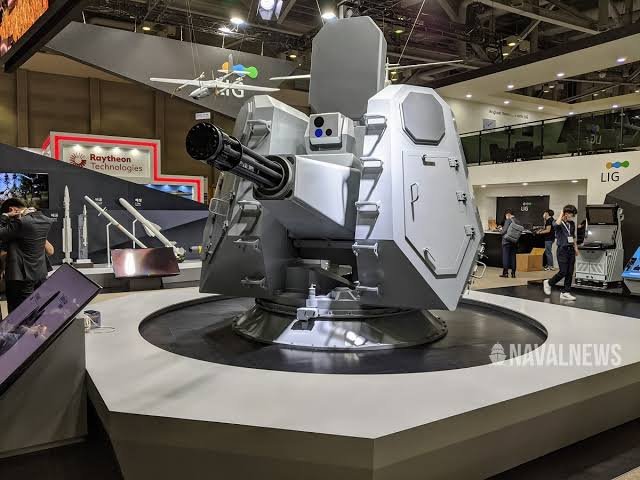
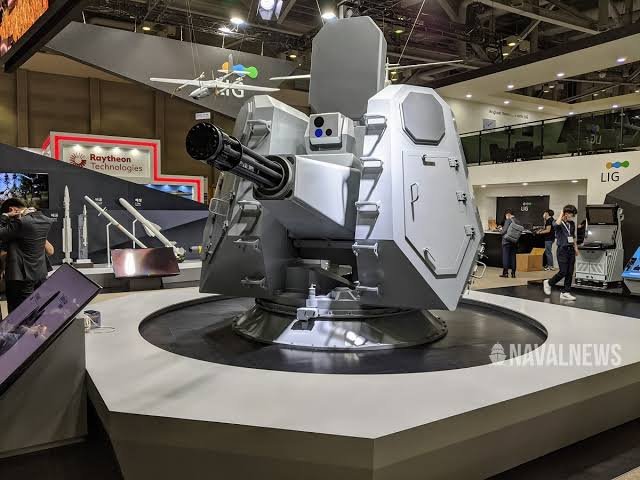
South Korea new LiG CIWS designed in response delay and cost hikes of Phalanx (never less S. KOREA has revently purchased More of them). 1000036504.jpg

AESA radar but choice 30mmx173 round.
Reason UK navy chose Phalanx over Goalkeeper, In threat assessment tests, Goalkeeper did well against subsonic assailants but did more poorly against supersonic ones. Where as phalanx faired superior performance against supersonic threats. Also after Falklands, Need ciws that easy to install as retrofit. On other hand Improvements on APFSDS since then might allow for Cased Telescope 25mm rounds that are compatible to GAU-12: 1,400 m/s or Mach 4 flachettes.
 

Attachments

  • 1000036504.jpg
    1000036504.jpg
    44.4 KB · Views: 91
CIWS runs independent sensors.
South Korea new LiG CIWS designed in response delay and cost hikes of Phalanx (never less S. KOREA has revently purchased More of them).View attachment 808750

AESA radar but choice 30mmx173 round.
I suppose if you're also using 30mm Mk38s (or local-production equivalents) you might want to consider a 30mm CIWS for stowage convenience. But they're not using the same ammunition types generally. Mk38s in anti-drone mode would be using PFF/AHEAD, while your CIWS are using APDS or APFSDS. Different primary targets, different ammo.


Reason UK navy chose Phalanx over Goalkeeper, In threat assessment tests, Goalkeeper did well against subsonic assailants but did more poorly against supersonic ones. Where as phalanx faired superior performance against supersonic threats. Also after Falklands, Need ciws that easy to install as retrofit.
Exactly. Early Phalanx is basically a bolt-on unit you can drop anywhere you have enough deck space. It's also a very lightweight mount, only 5 tonnes. So you can drop that anywhere and all it's got in the CIC is a 3 position switch and a fire button: Off/safe, Semi, and Auto.

Newer Phalanx installs added an EOTS and a TV/Video screen, and changed to a 4-position switch with a joystick instead of the plain fire button, adding a full manual control mode.


On other hand Improvements on APFSDS since then might allow for Cased Telescope 25mm rounds that are compatible to GAU-12: 1,400 m/s or Mach 4 flachettes.
I mean, the current Bradley 25mm APFSDS would do the job, and the GAU-22 is the same weight as the M61 vulcan (GAU-12 is only a little heavier). But 25x137 is a good bit heavier so the ammo drum makes the total weight to more like 6 tonnes.
 
I'd guess the reason Phalanx was found superior against supersonic missiles was due to the radar and perhaps the specific ammunition used. With the right improvements there is no reason such a 30mm CIWS shouldn't do substantially better than the 20mm Phalanx. I imagine that new South Korean CIWS corrects any of those flaws the original Goalkeeper had, it seems rather promising.
 
I'd guess the reason Phalanx was found superior against supersonic missiles was due to the radar and perhaps the specific ammunition used. With the right improvements there is no reason such a 30mm CIWS shouldn't do substantially better than the 20mm Phalanx. I imagine that new South Korean CIWS corrects any of those flaws the original Goalkeeper had, it seems rather promising.
The original Goalkeeper CIWS mount is 10 tonnes with a deck penetration. That imposes design limits that Phalanx does not.
 
and 5 times the cost of a phalanx mount.

The goalkeeper, especially at it's time, was superior to Phalanx in it's ability to delete missiles, but it's cost and ship impact will make you wonder if there are better ways to spend that money, displacement and volume. Phalanx seems to have been the answer in being "good enough". I mean if you can fit multiple on the same cost and ship impact as a single goalkeeper, it is very hard for the goalkeeper to be superior *enough*.
 
The goalkeeper, especially at it's time, was superior to Phalanx in it's ability to delete missiles, but it's cost and ship impact will make you wonder if there are better ways to spend that money, displacement and volume. Phalanx seems to have been the answer in being "good enough". I mean if you can fit multiple on the same cost and ship impact as a single goalkeeper, it is very hard for the goalkeeper to be superior *enough*.
Which is essentially what we saw the RN doing. Goalkeeper was evaluated as better, but Phalanx could fit in places (Type 42s) that were a problem for Goalkeeper, and when the decision was made to settle on one mounting, Goalkeeper lost out.
 
The original Goalkeeper CIWS mount is 10 tonnes with a deck penetration. That imposes design limits that Phalanx does not.
You're entirely right that is a big advantage of Phalanx. There are many cases where something you can pretty much just bolt to the deck and be done with is preferable. I was just comparing the two solely on their ability to engage incoming missiles.

For destroyers and larger surface combatants (and carriers) I'm personally of the opinion that space should be afforded to allow for larger and more capable CIWS than the typical 20mm Phalanx. In that role I imagine the new South Korean CIWS is one of the better options out there. For smaller combatants and the myriads of transports and support ships the "bolt-on" options like Phalanx or RAM ought to be good enough.
 
You're entirely right that is a big advantage of Phalanx. There are many cases where something you can pretty much just bolt to the deck and be done with is preferable. I was just comparing the two solely on their ability to engage incoming missiles.

For destroyers and larger surface combatants (and carriers) I'm personally of the opinion that space should be afforded to allow for larger and more capable CIWS than the typical 20mm Phalanx. In that role I imagine the new South Korean CIWS is one of the better options out there. For smaller combatants and the myriads of transports and support ships the "bolt-on" options like Phalanx or RAM ought to be good enough.
That gets you into trouble with logistics simplicity. There's a reason even the USN only bought Phalanx instead of Goalkeeper or some other more advanced unit. Well, short of RAM/SeaRAM.
 
For destroyers and larger surface combatants (and carriers) I'm personally of the opinion that space should be afforded to allow for larger and more capable CIWS than the typical 20mm Phalanx
The replacement you're looking for is RAM and directed energy weapons. Gun based systems are increasingly becoming obsolete.
 
For destroyers and larger surface combatants (and carriers) I'm personally of the opinion that space should be afforded to allow for larger and more capable CIWS than the typical 20mm Phalanx. In that role I imagine the new South Korean CIWS is one of the better options out there. For smaller combatants and the myriads of transports and support ships the "bolt-on" options like Phalanx or RAM ought to be good enough.
That basically gets us to RAM/SeaRAM or OTO 76mm Sovraponte. 76 rounds ready for the 76mm in the turret, and they're all guided. In a mount that weighs in about the same as Phalanx!

And a Sovraponte mount is very nearly a bolt on. You do technically need a separate gunfire control radar that also counts against total system weight, though.


The replacement you're looking for is RAM and directed energy weapons. Gun based systems are increasingly becoming obsolete.
I think there's still a space for gun-based CIWS, even 20mm, as the last ditch stop before eating a hit.

There's a big difference between a mission kill because your antennas are all messed up from a close-aboard explosion and half your ship blown to hell from a missile impact.
 
think there's still a space for gun-based CIWS, even 20mm, as the last ditch stop before eating a hit.

There's a big difference between a mission kill because your antennas are all messed up from a close-aboard explosion and half your ship blown to hell from a missile impact.

Maybe, but what if you had an extra SeaRAM instead of a Phalanx, and that incoming weapon never got close enough to damage your ship?
 
I don't why you couldn't have a system that has both RAM and a rotary cannon in the 20-30mm range if the missiles run out or fail to hit.

What caliber is best for the job seems to be an open question. The 20mm and 30mm options generally rely on rate of fire to fire a large number of rounds in a short burst, but there are also the 35mm and 40mm options firing AHEAD type or proximity-fuzed ammunition. Guided projectiles for 57mm and 76mm guns are also making those larger guns more effective in this role.
 
To my simple mind the SeaRAM only supplements a Phalanx. RIM-116 engages and the 20 mm is insurance. It is admirable that the Italians stagger a pair of 76 mm. If one gun will do then two is better.
 

Similar threads

Back
Top Bottom