Majestics as VSTOL carriers/Escort Cruisers

Martes

ACCESS: Top Secret
Joined
12 January 2025
Messages
738
Reaction score
1,090
We have a lot of British carrier threads, but I would like to explore the particular aspect of using Majestic/Colossus carriers as a possible implementation of the Escort Cruiser project - combining Harriers and Sea Slug/Sea Dart, possible reengine (as was proposed in full missile cruiser conversions), installation of sonar systems, etc.

Would it be feasible, both technically and financially?

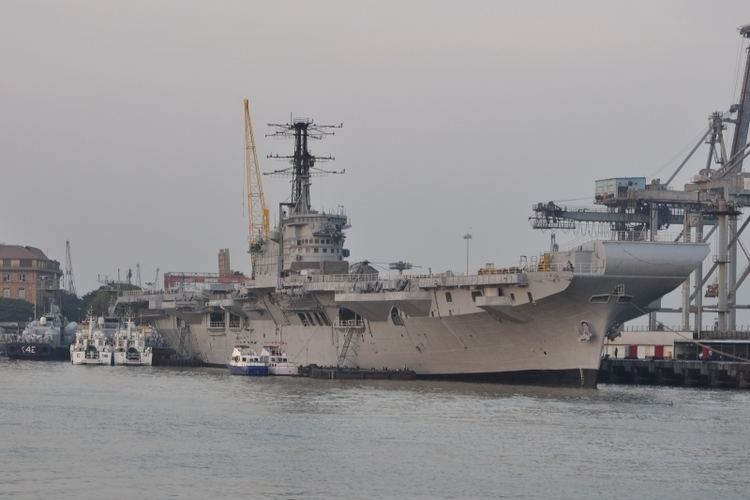
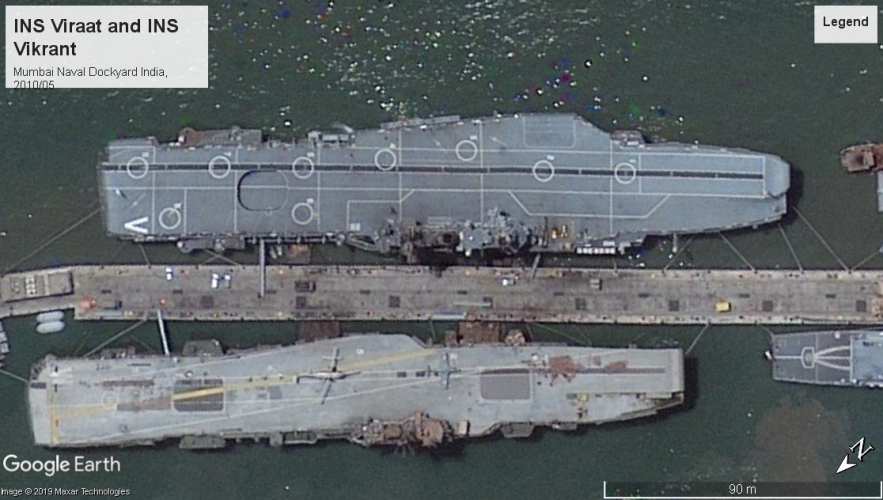
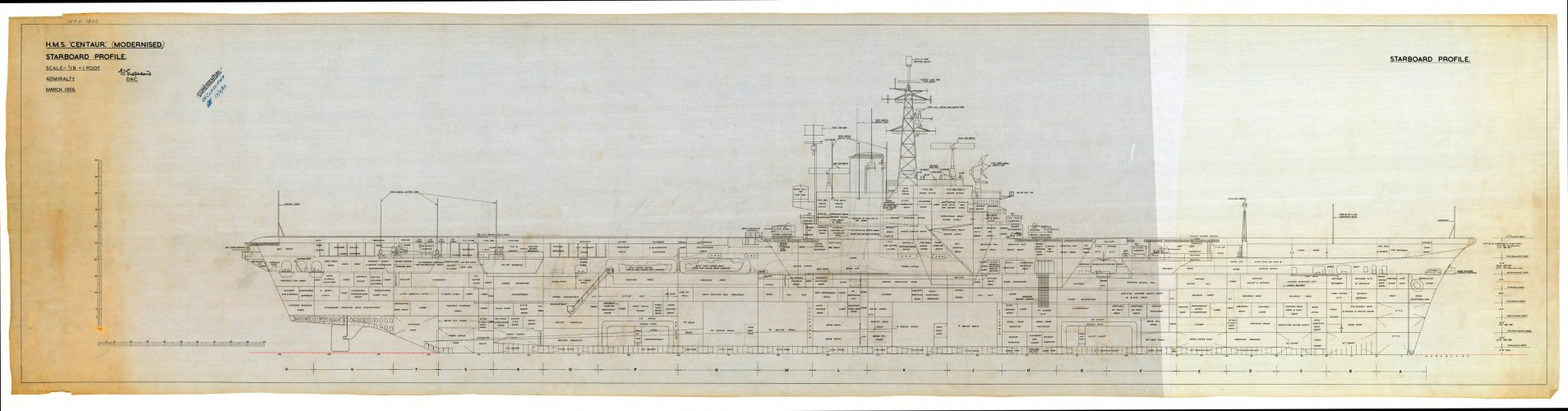
There is an example of the old Vikrant:


Attachments

  • 1780435940956.png
    1780435940956.png
    314.5 KB · Views: 62
  • 1780436013558.png
    1780436013558.png
    987.9 KB · Views: 66
Last edited by a moderator:
Installing a Sea Slug system would likely require to rebuild part of hangar into missile magazine. The optimal solution would likely be to cut off the rear end of flight deck, put a launcher on this freed place (so it would sit on hangar deck, below the flight deck, and would not obstruct landing operations) and rebuild the rear hangar section into missile magazine, missile check room, fire controlroom, ect.

So about 15-20 meters shorter deck, about 1/4 less of hangar capability, but have Seaslug SAM now - maybe even with two fire control radars. For ocean escort ship, it would looks like a good trade.
 
I don't know how far it got, or even if it occurred during the decision-making timeframe, but I've seen it written that Bulwark would have made a better 'ASW Command cruiser' than the Tiger and Blake conversions. The carrier would have scarified the gun armament of the cruiser conversions but would have had triple the ASW helicopter capacity, more crew than a single cruiser but and as good if not better Command facilities. Any work on Majestics would fit in with this early-mid 60s 'interim' environment rather than a permanent solution like a new build Escort Cruiser would have been.
 
Any work on Majestics would fit in with this early-mid 60s 'interim' environment rather than a permanent solution like a new build Escort Cruiser would have been.

It is a question of numbers as well. A centralized modification program could have produced 4 or even 6 (if using the maintenance carrier hulls as well) ships to same specifications, and claim no new hull building.

Depending on the timeframe I would think of Sea Dart + Ikara + ski-jump, effectively replacing the T82.

Crew size may be a problem, though.
 
It is a question of numbers as well. A centralized modification program could have produced 4 or even 6 (if using the maintenance carrier hulls as well) ships to same specifications, and claim no new hull building.

Depending on the timeframe I would think of Sea Dart + Ikara + ski-jump, effectively replacing the T82.

Crew size may be a problem, though.

The Majestics also had a top speed of 24 knots, well below the ~30 knot 'fleet speed' so these conversions wouldn't be able to keep up with the Task Force carriers, cruisers, DLGs etc. However, there are potentially a number of them available so there might be enough to go around.

The ultimate solution to the Escort Cruiser is a purpose designed new ship, any Majestic conversion will be a short lived lashup like the Tiger and Blake. They may be a better lashup than the Cruisers, but they're interim lashups all the same.

Requirement were constantly changing, and even if the 'general' requirement remained reasonably constant each time a ship was built or converted too that requirement the details changed. I think 'peak' escort Cruiser was for 6 County DLGs and 4 Escort cruisers, when the escort cruiser was shelved in about 1964 to concentrate on CVA01 the 3 planned ASW Command cruiser conversions and 2 extra DLGs which perhaps could have been Type 82s cover the general requirement.

What Majestics were available in the early 60s for the RN to convert?
 
The Majestics also had a top speed of 24 knots, well below the ~30 knot 'fleet speed'
possible reengine (as was proposed in full missile cruiser conversions)

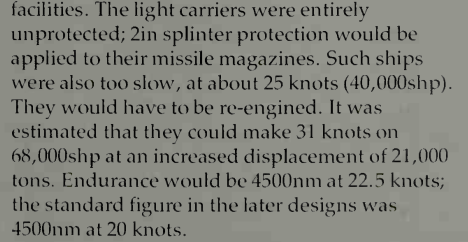
According to "Post-war naval revolution" when there were proposals (1950-51) for full conversion of the Majestics to missile cruisers, it was considered replacing their engines bringing the speed to 31kt.

1780460032538.png

Majestic conversion will be a short lived lashup like the Tiger and Blake.
IIRC Tiger and Blake finished up serving much longer than it was intended, and the general resource of the hulls, if Vikrant is anything to go by, could've been stretched into the 90s.

What Majestics were available in the early 60s for the RN to convert?
Assuming all exports going as they were IRL,

Available circa 61 - Glory, Ocean, Theseus, Leviathan.
Possibly - Triumph if converted from repair ship and Magnificent as she was returned from Canada and not yet scrapped.
 
Last edited:
Available circa 61 - Glory, Ocean, Theseus, Leviathan.
Leviathan especially, since she wasn't comissioned, and have greater service life in her hull left.

According to "Post-war naval revolution" when there were proposals (1950-51) for full conversion of the Majestics to missile cruisers, it was considered replacing their engines bringing the speed to 31kt.
What about turning them COSAG/COSOG, by installing a set of gas turbines & clutches to link them with steam turbines shafts?
 
This is crucial, the ever declining cycle of firebox relining kills any ships which have already done a decade of service.
Yep, and Leviathan boilers literally weren't ever lit. She could easily handle 25+ years of service. So for escort cruiser conversion she is the obvious candidate; uncomplete status allows for more changes, and as hybrid missile cruiser/carrier she could combine several roles.
 
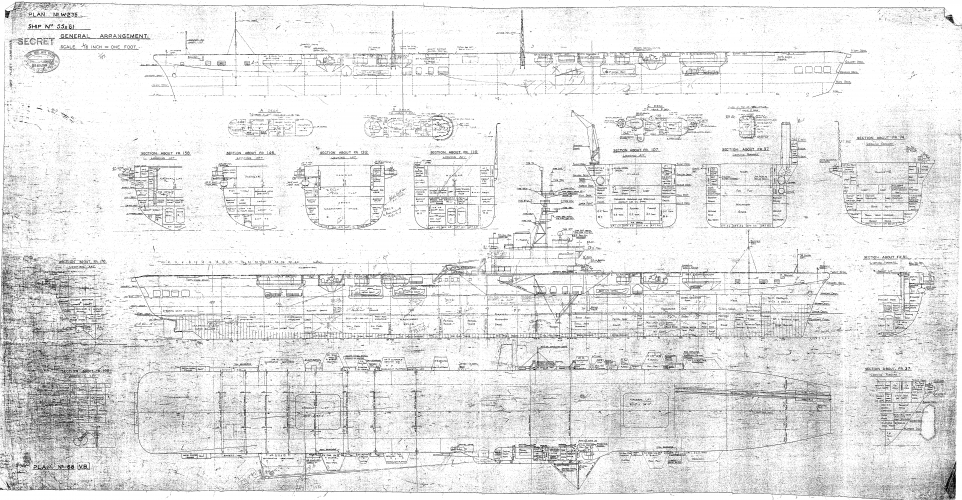
Do you have blueprints of Majestic/Colossus internal arrangement? I'm trying to figure out the least painful way to install "Sea Slug" on them.
Here is Colossus / Arromanches. Note the ASDIC dome under the hull forward that was crossed out as it was never installed. Could be a good place for a more modern hull sonar.

EDIT: Also HMS Vengeance / Minas Gerais plans here, which show several of the decks: https://www.hms-vengeance.co.uk/plans.htm
And HNMLS Karel Doorman plans here... requires lots of clicks but most detailed: http://www.vlaggeschipsmaldeel5.nl/html/dekken-indeling_en_index.html
 

Attachments

  • ARROMAN1943PL025.png
    6.5 MB · Views: 12
  • ARROMAN1943PL235.png
    ARROMAN1943PL235.png
    9.9 MB · Views: 47
Last edited:
Yes, under the three plans.
As I suspected. In that case you know just as much about the subject as me.

Plans b) and c) of the Majestic class remind me a lot of the USN's Albany class missile cruisers which were rebuilt Baltimore class gun cruisers.

There's a lot of missile and I suspect no helicopters because it looks like the hangars have been converted into magazines for the missiles. Maybe a hangar could be built into the superstructure like as was done with Triumph when she was converted into a heavy repair ship and the space aft of the stern missile launcher used as the helipad.

It's not what you asked in the OP, with a POD of 1950-51 Hercules, Leviathan and Powerful could have been completed as guided missile ships instead of completing the Tiger class. Another candidate is the aircraft maintenance ship Pioneer completed in February 1945 and had been in reserve since February 1946. Perhaps she could be the Seaslug trials ship instead of Girdle Ness.

That would mean Canada couldn't buy Powerful and have her completed as Bonaventure while India couldn't buy Vikrant.
 
Last edited:
with a POD of 1950-51
This is also an option (and I have to think about it in more detail separately), but I meant it more as a reference that with POD of 60-61 ten-year-old reengine projects would be more or less at hand and relatively easily remembered/found/adopted in case of need, thus resolving the speed question.
 
This is also an option, but I meant it more as a reference that with POD of 60-61 ten-year-old reengine projects would be more or less at hand and relatively easily remembered/found/adopted in case of need, thus resolving the speed question.
I know you did and that's why I wrote.
It's not what you asked in the OP.
However, that's the only way I can see it happening. 1960-61 is too late.
  • First the age of the ships.
  • Second new ships are more cost effective.
  • Third the RN had been stung too may times by rebuilds/completing suspended ships to new designs going over time and over cost by the POD. Victorious is the well known one. However, there are plenty of other examples such as the completing the Tiger class, the aborted reconstruction of Superb, the ongoing (in 1961) conversion of Triumph in to a heavy repair ship, the ongoing (in 1961) modernisation of 2 submarine depot ships to support nuclear powered submarines and the ongoing (in 1961) reconstruction of Eagle.
 
Leviathan was the only Majestic left in the UK. She was not scrapped until 1968.
Canada might have been a customer to replace Bonaventure or provide spares for her.
The RN did consider her for conversion to a Commando Ship (Helicopter Carrier) but Bulwark and Albion became available.
The Blake class were chosen initially for a straightforward conversion to carry Wessex helos. The need to carry 4 of the larger and heavier Seakings led to the much more complicated hangar and deck design aft. There was also a view (Mountbatten) that cruisers were a vital element in the RN. Ironically this preserved the helicopter VSTOL carrier in 1966 as a Command Cruiser.
Earlier RN plans had envisaged ASW carriers using the Gannet much as Australia Canada and the Netherlands used the S2.
A double ended Seaslug platform or trial ship for the big NIGS missile might have seen Leviathan used.
 
Here is Colossus / Arromanches. Note the ASDIC dome under the hull forward that was crossed out as it was never installed. Could be a good place for a more modern hull sonar.

EDIT: Also HMS Vengeance / Minas Gerais plans here, which show several of the decks: https://www.hms-vengeance.co.uk/plans.htm
And HNMLS Karel Doorman plans here... requires lots of clicks but most detailed: http://www.vlaggeschipsmaldeel5.nl/html/dekken-indeling_en_index.html
So it seems that we could cut the flight deck circa behind 198 frame to the hangar deck, to provide enough space for "Sea Slug" launcher without the need to rearrange something heavy and vital. And the rear hangar section (behind 176 frame, just behind rear elevator) could be rebuild into missile magazine.

With that, we would still have fully usable flight deck from the rear elevator forward, and could use AWS helicopters and at least some Harriers, too.
 
Leviathan was the only Majestic left in the UK. She was not scrapped until 1968.
Depending on the timeframe, up to 1962 at least I counted six hulls still around. Although Leviathan makes the prime candidate, of course.

First the age of the ships.
With the eventual longevity of both Hercules/Vikrant and Hermes/Viraat I have certain doubts about this argument. I already noted it elsewhere, but looking at repairs schedule Hermes didn't start to show critical age problems till around 2006, and tropics aren't easier on ship's metal and structure than the Atlantic. I think RN underestimated the hull life potential in many cases, for political or other reasons.

  • Second new ships are more cost effective.
  • Third the RN had been stung too may times by rebuilds/completing suspended ships to new designs going over time and over cost by the POD.
On the other hand, there is this persistent political fiction that rebuilding is not as painful for the parliament to swallow as building a new unit. Add to it a cancellation of redundant program or two, and it may just pass even before the 1966 review.

However, that's the only way I can see it happening.
This does deserve a separate overview.

Generally, I like those conversion programs very much. Although for some reason all of them have double ended missile launchers and totally sacrifice the aerial capabilities, but it could be suggested that for ASW operations the launcher is placed only forward (with angled deck) or only aft (with cut deck) we can get more or less the same result as @Dilandu suggests above, initially for helicopters only, but with inevitable addition of Harriers a decade later. And considering the speed of missile development the modernization program will be signed off in early 50's and already paid for, but the ships won't be ready before Sea Slug does, i.e. around 1960.

It could work, actually.

There would be a headache to replace the Sea Slug with Sea Dart if ever this would be contemplated, or during the 70's the missile launchers would be removed to increase back the deck and the hangar for Harriers. They will still need newer sonars and electronics.

 
Last edited:
With the eventual longevity of both Hercules/Vikrant and Hermes/Viraat I have certain doubts about this argument. I already noted it elsewhere, but looking at repairs schedule Hermes didn't start to show critical age problems till around 2006, and tropics aren't easier on ship's metal and structure than the Atlantic. I think RN underestimated the hull life potential in many cases, for political or other reasons.

This isn't comparing apples to apples, everything about service in India is different to service in the RN. By the 70s the habitability, safety, crewing and availability of a ship built in WW2 was vastly below what was expected in that era in Britain and would result in crew discharging from the Navy rather than stay on such a ship for months at a time. Indian requirements and expectation are different; Indian Navy didn't have NATO commitments that required certain availability and capability minimum requirements and the cost of labour makes it possible to do the continuous minor maintenance of chipping rust, patching holes, fixing broken metalwork. By the 70s the HMAS Melbourne was badly rusting and in constant need of continuous rust repair and painting that took up huge amounts of crew time.
 
By the 70s the habitability, safety, crewing and availability of a ship built in WW2 was vastly below what was expected in that era in Britain and would result in crew discharging from the Navy rather than stay on such a ship for months at a time.
Was this an issue with Hermes circa Falklands?

I remember she was looking quite rusty when returned, but Ward, IIRC, wrote that this was because she had to skip the scheduled repaint due to hasty departure, not because something was utterly wrong with her.
 
Last edited:
Was this an issue with Hermes circa Falklands?

In 1982 the RN had one new carrier in commission, one almost ready to be commissioned and a third under construction, any problems the Hermes might have caused with personnel could be managed and the end was in sight. If the RN had her in commission in the 90s she would obviously be the worst ship to serve on in the fleet, leaving aside the fact she would need long and very expensive refits every ~3 years to re-line the boiler firebox.
 
any problems the Hermes might have caused with personnel could be managed and the end was in sight.

Oh, I didn't mean the modernized Majestics to serve beyond 1990 in any scenario, rather being gradually replaced by the Invincibles over the 80s. But 1990 is sufficiently far away date if considered as potential end-of-life when planning in 1950 or even 1960.

But my question was if there were any documented problems with Hermes from crew side at that time.
 
Last edited:
But my question was if there were any documented problems with Hermes from crew side at that time.

No, but I've read how bad the Melbourne was by the late 70s and post-war ships had continued habitability improvements. In WW2 nobody cared much about habitability as long as it didn't effect crew performance, but by the 60s it had become a serious consideration for recruiting and retention.
 
how bad the Melbourne was by the late 70s
That depends on whether this problem was for some reason unique to Melbourne or plagued all the ships of the class. But now I would like to know what the crew thought of Hermes in the 80s.

Also, consider that during the modernization we discuss the ships would be refurbished rather dramatically, so it may add to habitability as well.
 
That depends on whether this problem was for some reason unique to Melbourne or plagued all the ships of the class. But now I would like to know what the crew thought of Hermes in the 80s.

Also, consider that during the modernization we discuss the ships would be refurbished rather dramatically, so it may add to habitability as well.

Melbourne was by the 70s an old ship, built in WW2 with less than excellent materials without any thought of longevity, and I suspect the Hermes and her class were pretty much the same. While Melbourne's flight deck was strengthened and catapult lengthened in the 60s and given 'forced air' a feeble air conditioning system she still was an uncomfortable WW2 ship in an era when new ships were much better appointed. When money is tight, and it always is, money isn't wasted on giving 19-year-olds more comfort.
 
built in WW2 with less than excellent materials without any thought of longevity, and I suspect the Hermes and her class were pretty much the same.
And yet Hermes fought a war half a globe away from home in 1982 and was still flying Harriers in 2015.
 
And yet Hermes fought a war half a globe away from home in 1982 and was still flying Harriers in 2015.

My point is that lasting in the Indian Navy is a completely different thing than lasting in the RN. To make the Hermes serve in the RN until the 90s or beyond would require a massive and expensive SLEP like the USN does to its carriers, by 1982 the Hermes had already served 23 years and that opportunity had pretty much passed.

Have a look at the condition of Hermes sister Bulwark in 1982 to see the other side of the coin.
 
Link to Message 25.
I aught to have added that the Royal Dockyards may be fully occupied with the work they already had and were therefore unable to take on more work. If that's correct (and I suspect that it is) what OTL work don't you do ITTL to make room for your escort cruiser conversions?
 
If that's correct (and I suspect that it is) what OTL work don't you do ITTL to make room for your escort cruiser conversions?
Depending on what missile system is installed. Sea Slug makes some of the Counties redundant, waiting for Sea Dart may be used to replace T82.
 
by 1982 the Hermes had already served 23 years
My point exactly. That when planning in 1950-1960 a potential service life of ~30 years is sufficient to go for a modernization if you get an aviation cruiser unit for this.

Have a look at the condition of Hermes sister Bulwark in 1982 to see the other side of the coin.
All we can say that some ships of the period fared better than others, which is, probably, a direct factor of maintenance priority.
 
Depending on what missile system is installed. Sea Slug makes some of the Counties redundant, waiting for Sea Dart may be used to replace T82.
A Sea Dart GWS, I suppose, would be placed in front of superstructure, with "amphitheater" recession (like on Invincible-class). A magazine would likely be narrow & compact, taking some hangar space.
 
Depending on what missile system is installed. Sea Slug makes some of the Counties redundant, waiting for Sea Dart may be used to replace T82.
That doesn't solve the problem because the Counties were built in private shipyards and the Majestic conversions will be done by the Royal Dockyards at the naval bases. Therefore, not building County class destroyers on the Clyde, Mersey, Tyne and at Belfast, doesn't make space at Chatham, Devonport, Portsmouth and Rosyth.
 
Back
Top Bottom