I've always imagined making a 7-barrel Gatling-type DP gun using the 3"/70 Mk 26 and its 3400 fps ammo. The barrel was good for up to 150 rpm in short bursts so you could get around 1050 rpm for a complete gun if firing 50-75 round bursts (which would be plenty at that caliber). I envisioned using a scaled-up Mark 13 GLMS as the mount, with the ammo feed belt going through the support arms to a large below-deck drum instead of under the gun like Phalanx. The water cooled Mk 26 barrels would need a different cooling system given their rotation. If the gun was housed inside the Mk 13's boxy missile rail structure (again, scaled up) you could cool the barrels with a water spray system external to the barrels but inside the "box".

You are using an out of date browser. It may not display this or other websites correctly.
You should upgrade or use an alternative browser.
You should upgrade or use an alternative browser.
Fantasy 76mm Gatling Gun CIWS
- Thread starter SCAT-15F
- Start date
Scott Kenny
ACCESS: USAP
- Joined
- 15 May 2023
- Messages
- 19,533
- Reaction score
- 27,979
That sounds like a whole lot of recoil that the Mk13 launcher isn't designed to handle.I've always imagined making a 7-barrel Gatling-type DP gun using the 3"/70 Mk 26 and its 3400 fps ammo. The barrel was good for up to 150 rpm in short bursts so you could get around 1050 rpm for a complete gun if firing 50-75 round bursts (which would be plenty at that caliber). I envisioned using a scaled-up Mark 13 GLMS as the mount, with the ammo feed belt going through the support arms to a large below-deck drum instead of under the gun like Phalanx.
You could run a modified water cooling system using the standard barrels, a gatling system can take cooling water up the center of rotation to deliver into the barrels and then dump that out over the side.The water cooled Mk 26 barrels would need a different cooling system given their rotation. If the gun was housed inside the Mk 13's boxy missile rail structure (again, scaled up) you could cool the barrels with a water spray system external to the barrels but inside the "box".
Last edited:


SuperShark
ACCESS: Confidential
- Joined
- 28 July 2019
- Messages
- 109
- Reaction score
- 157
Would it ruin the fun if I questioned the feasibility of a water cooled 76mm rotary cannon?
7th barrel not pictured...

7th barrel not pictured...
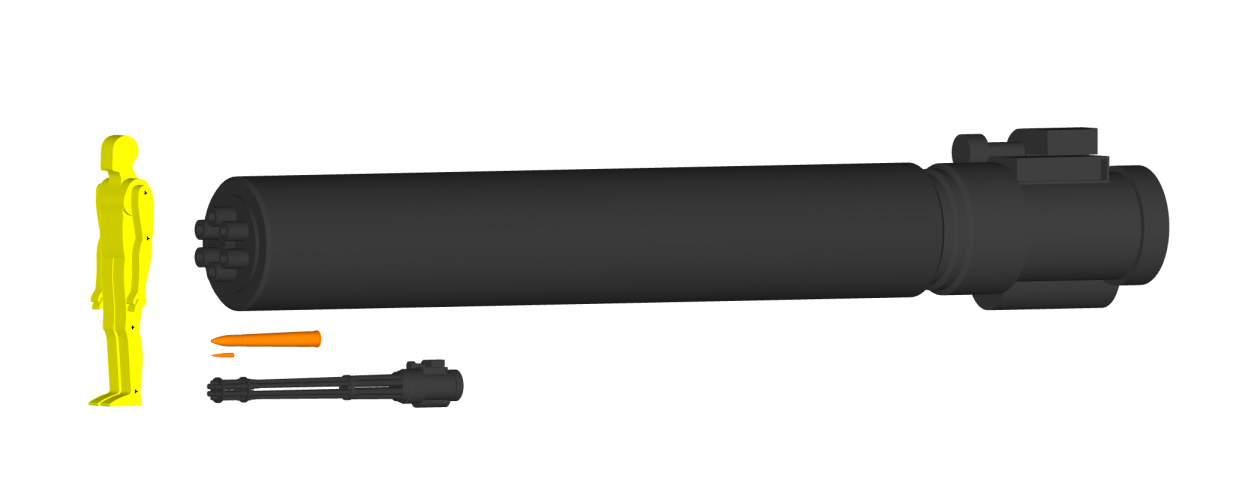
SuperShark
ACCESS: Confidential
- Joined
- 28 July 2019
- Messages
- 109
- Reaction score
- 157
I am going to post this ONLY to reinforce my opinion that a 76mm rotary cannon CIWS is completely ridiculous and certainly beneath us to even consider...I can't help but wonder - what if you added a bunch of smaller caliber barrels around the outside... just for... well... for reasons...
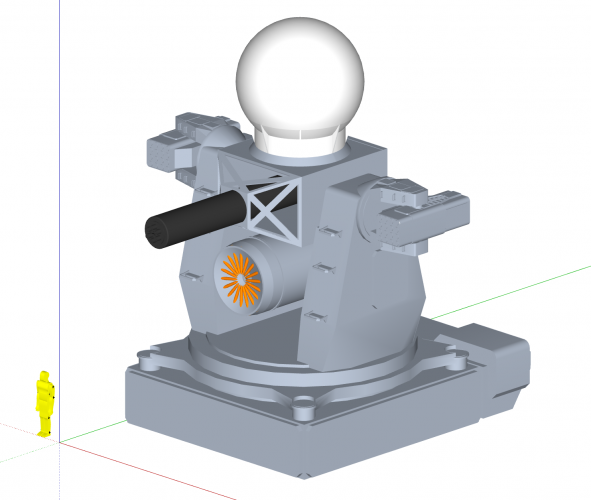
Scott Kenny
ACCESS: USAP
- Joined
- 15 May 2023
- Messages
- 19,533
- Reaction score
- 27,979
Gundam Mobile Arms?I can't help but wonder - what if you added a bunch of smaller caliber barrels around the outside... just for... well... for reasons...

SuperShark
ACCESS: Confidential
- Joined
- 28 July 2019
- Messages
- 109
- Reaction score
- 157
Pea shooters!There is a 37mm version of the GAU-8 and a Hotchkiss 57mm rotating cannon was developed back on the 1800's.

- Joined
- 3 June 2011
- Messages
- 20,910
- Reaction score
- 19,113
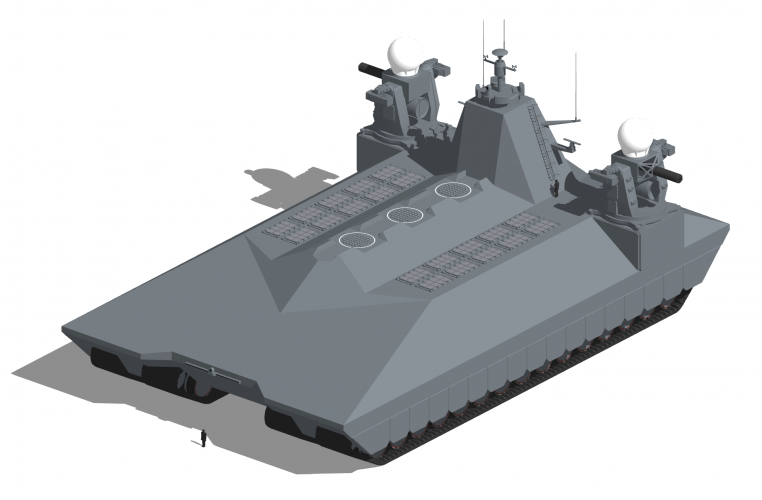
Then put it on tank treads. And make it nuclear powered. And nuclear armed.I am going to post this ONLY to reinforce my opinion that a 76mm rotary cannon CIWS is completely ridiculous and certainly beneath us to even consider...View attachment 813751
Attachments

SuperShark
ACCESS: Confidential
- Joined
- 28 July 2019
- Messages
- 109
- Reaction score
- 157
If I get a formal, signed document from the moderators saying that I will not be banned for posting it, I will post it.Then put it on tank treads. And make it nuclear powered. And nuclear armed.
That's a bad one, let me get a far better one:Then put it on tank treads. And make it nuclear powered. And nuclear armed.

Depends on the context of the weapon in question. The technological context of a setting (and reality) determines practically everything. So this might be considered complete overkill in one setting, but a base requirement for another.I am going to post this ONLY to reinforce my opinion that a 76mm rotary cannon CIWS is completely ridiculous and certainly beneath us to even consider...View attachment 813751
Hell, in a C&C Generals/Tiberium fusion setting I've been playing in, GDI developed gatling artillery. Why? Because it needed to maximize artillery throw weight without adding more batteries, due to two factors: the development and proliferation of C-RAM-style weapon systems (especially pulse lasers), and GDI's very shallow manpower pool until Tiberium caused most of the governments under its aegis to break down under the strain. So, you get the situation where you've got a 3-barrel 160mm gatling mortar or a 3-barrel 155mm gatling howitzer becomes a requirement for frontline artillery.
SuperShark
ACCESS: Confidential
- Joined
- 28 July 2019
- Messages
- 109
- Reaction score
- 157
Excellent point!That's a bad one, let me get a far better one:
Depends on the context of the weapon in question. The technological context of a setting (and reality) determines practically everything. So this might be considered complete overkill in one setting, but a base requirement for another.
Hell, in a C&C Generals/Tiberium fusion setting I've been playing in, GDI developed gatling artillery. Why? Because it needed to maximize artillery throw weight without adding more batteries, due to two factors: the development and proliferation of C-RAM-style weapon systems (especially pulse lasers), and GDI's very shallow manpower pool until Tiberium caused most of the governments under its aegis to break down under the strain. So, you get the situation where you've got a 3-barrel 160mm gatling mortar or a 3-barrel 155mm gatling howitzer becomes a requirement for frontline artillery.
Attachments

TwoTribes
ACCESS: Secret
- Joined
- 3 July 2025
- Messages
- 437
- Reaction score
- 1,635
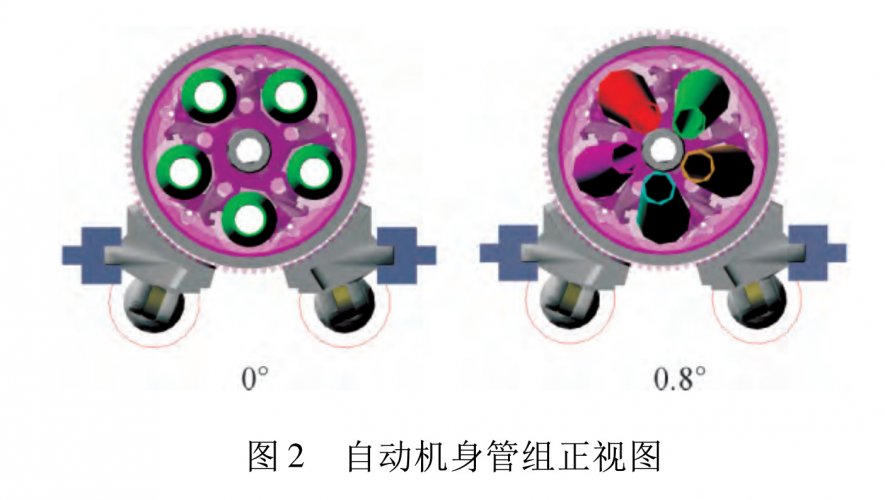
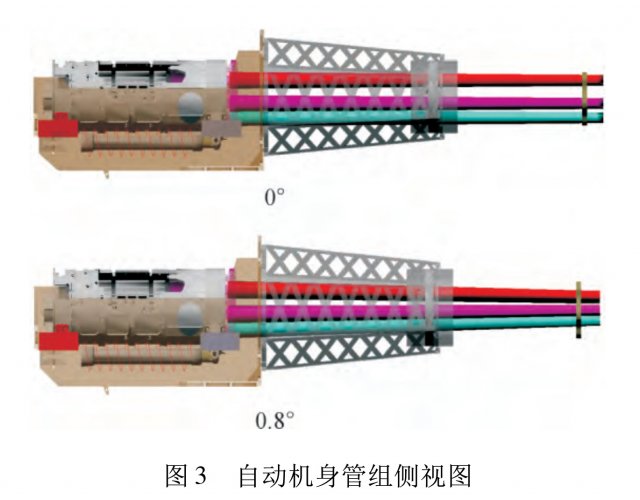

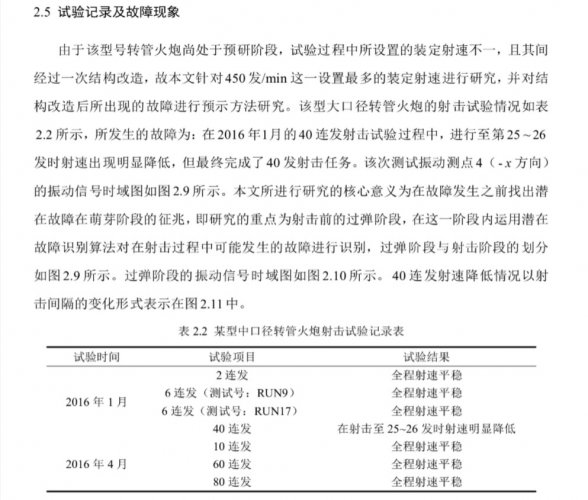
SuperShark
ACCESS: Confidential
- Joined
- 28 July 2019
- Messages
- 109
- Reaction score
- 157
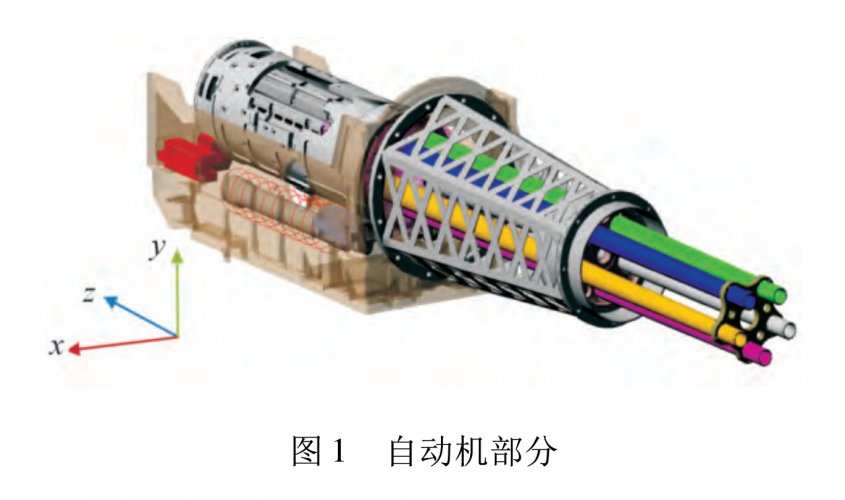
Well I'll be...China's 76mm five-barrel rotary cannon, has undergone multiple test firings in 2016.
- Joined
- 3 June 2011
- Messages
- 20,910
- Reaction score
- 19,113
Is this real? What for?China's 76mm five-barrel rotary cannon, has undergone multiple test firings in 2016.
Last edited:
TwoTribes
ACCESS: Secret
- Joined
- 3 July 2025
- Messages
- 437
- Reaction score
- 1,635
The first three images are from this paper.Is this real? What for?
(The PDF I uploaded.)
The fourth image is sourced from this paper. I cannot access this paper (due to a paywall), but the table of contents suggests my inference is correct?
https://d.wanfangdata.com.cn/thesis/Y1698158
The most critical one is the fifth image, which records data from previous test launches. This I cannot find.
You can refer to this video.
https://www.bilibili.com/video/BV1QS9TB6Ebh/
I believe this gun really exists, though that's just my opinion.
Attachments
TwoTribes
ACCESS: Secret
- Joined
- 3 July 2025
- Messages
- 437
- Reaction score
- 1,635
That video mentioned that a PLA research institute conducted computer simulations based on the gun's performance, simulating the interception of theater ballistic missiles. That should be one of its potential uses. However, this cannon is likely just a technological exploration or accumulation, just like the 30mm 20-barrel rotary gun.This thing makes me think of an 8-wheel Ferrari. Okay, you can do it, but why?

Avimimus
ACCESS: Top Secret
- Joined
- 15 December 2007
- Messages
- 2,709
- Reaction score
- 1,396
That video mentioned that a PLA research institute conducted computer simulations based on the gun's performance, simulating the interception of theater ballistic missiles. That should be one of its potential uses. However, this cannon is likely just a technological exploration or accumulation, just like the 30mm 20-barrel rotary gun.
It is interesting - it isn't just the barrel sleeve but the actual barrel angle, correct? So the result is a dispersion pattern?
Does the study mention if the rounds are guided?
TwoTribes
ACCESS: Secret
- Joined
- 3 July 2025
- Messages
- 437
- Reaction score
- 1,635
Are you talking about that paper in the PDF?It is interesting - it isn't just the barrel sleeve but the actual barrel angle, correct? So the result is a dispersion pattern?
Yes, that paper discusses muzzle disturbance under different barrel angles. But it's not actual testing — it's a computer simulation based on a "certain medium-caliber rotary cannon."
From the paper's abstract: The simulation results show that as the inclination angle of the rotary cannon's barrel group increases, the vertical and horizontal components of the bore resultant force increase, but the equivalent stiffness and strength of the barrel group are enhanced. The effects of the bore resultant force components and the equivalent stiffness and strength on muzzle disturbance are opposite.
As I said, it's a computer simulation, quite different from a real gun. Also, the paper focuses on muzzle disturbance — there's still some distance from the muzzle to the target, right? I don't think we can simply say we can get dispersion pattern data from this paper.
There is guided ammunition of the same caliber, but that PLA research institute's computer simulation shows it still uses conventional ammunition.Does the study mention if the rounds are guided?
Avimimus
ACCESS: Top Secret
- Joined
- 15 December 2007
- Messages
- 2,709
- Reaction score
- 1,396
I had a momentary late-night lapse in judgment! If it is conventional rotary design - of course the barrels will be discharged from approximately the same position!
For some reason I'd imagined firing the barrels from different points in the rotation to produce a distributed pattern of rounds, then building in a small amount of terminal correction as a way of ensuring a larger volume was covered by interceptors (and thus deal with manoeuvring targets or targets with some uncertainty regarding trajectory). Something similar to Starstreak.
For some reason I'd imagined firing the barrels from different points in the rotation to produce a distributed pattern of rounds, then building in a small amount of terminal correction as a way of ensuring a larger volume was covered by interceptors (and thus deal with manoeuvring targets or targets with some uncertainty regarding trajectory). Something similar to Starstreak.

SuperShark
ACCESS: Confidential
- Joined
- 28 July 2019
- Messages
- 109
- Reaction score
- 157
Having long since figured out that a 76mm rotary cannon is both feasible and totally radIt looks like they want to figure out if a cone angle for the gun's barrels is worth designing for.
Scott Kenny
ACCESS: USAP
- Joined
- 15 May 2023
- Messages
- 19,533
- Reaction score
- 27,979
If you're using a gatling design to spray ammunition up there, guided rounds are unlikely, IMO.Does the study mention if the rounds are guided?
SuperShark
ACCESS: Confidential
- Joined
- 28 July 2019
- Messages
- 109
- Reaction score
- 157
'Only' at 600rpmIf you're using a gatling design to spray ammunition up there, guided rounds are unlikely, IMO.

Avimimus
ACCESS: Top Secret
- Joined
- 15 December 2007
- Messages
- 2,709
- Reaction score
- 1,396
If you're using a gatling design to spray ammunition up there, guided rounds are unlikely, IMO.
If you are intercepting theatre ballistic missiles though? The combination of high rate of fire and terminal manoeuvring might raise PK substantially.
It could be a very short, very dense, burst.
SuperShark
ACCESS: Confidential
- Joined
- 28 July 2019
- Messages
- 109
- Reaction score
- 157
According to Wikipedia/Navweaps the AK-176 single barrel naval cannon "...has selectable rates of fire of 30, 60 and 120 rounds per minute. The 120 r.p.m. rate is achieved by firing a burst of 75, but afterwards the gun has to cool off for 30 minutes. The AK-176 is effective against missiles, being able to shoot down AT-2 Swatter (simulating a Harpoon anti-ship missile), taking an average of 25 rounds per kill."
That sounds pretty garbage, a full minute of continuous fire to shoot down a single Harpoon? Starting to really sound like a rotary cannon might be bare minimum...
That sounds pretty garbage, a full minute of continuous fire to shoot down a single Harpoon? Starting to really sound like a rotary cannon might be bare minimum...
Scott Kenny
ACCESS: USAP
- Joined
- 15 May 2023
- Messages
- 19,533
- Reaction score
- 27,979
Still 5-10x faster than what the AK-176 can do.
As to needing a 25rd burst to drop a Harpoon, I'd imagine that's caused by a lack of radar-proximity fuzes. The OTO-Melara DART guided ammo is designed around a 3rd burst.
Okay, that might be viable. Especially since nuclear TBMs are going to be pretty solid things, I don't think that a nuclear RV or hypersonic tungsten crowbar will be destroyed by anything short of a direct hit.If you are intercepting theatre ballistic missiles though? The combination of high rate of fire and terminal manoeuvring might raise PK substantially.
It could be a very short, very dense, burst.
600rpm and a ~3second burst to get a wall of guided rounds between the incoming and the target? That's also only ~5rds per barrel in terms of how much heat is building up.
I settled on 76mm because I figured its close to the upper limit of what's technically achievable simply from a size standpoint while still being small enough in caliber to have a usefully high rate of fire. This is considering that some individual 76mm guns have demonstrated burst rates up to 140-150 RPM, meaning a theoretical 7-barrel rate of fire of ~1000 rpm for 75 or 100-round bursts. Any larger (say 105 or 127mm) and the rate of fire would drop pretty dramatically (probably to 20-25 rpm per barrel), making such a gun truly pointless.
A 76mm gun capable of 100 round bursts at 1000 rpm however, might actually make sense for certain applications while being technically feasible. Even 840 rpm (120 per barrel) would still be excellent.
A 76mm gun capable of 100 round bursts at 1000 rpm however, might actually make sense for certain applications while being technically feasible. Even 840 rpm (120 per barrel) would still be excellent.
Last edited:
spikedpsycho
ACCESS: Secret
- Joined
- 14 March 2026
- Messages
- 336
- Reaction score
- 471
Sure you can whittle that down 57mm with 3-4 barrels.


Similar threads
-
 Recent Leonardo Canon Concepts (X-Gun, Gatling 20, Blaze30)
- Started by TomS
- Replies: 10
-

-
-

-
Early Italian 76/62's of the 1950s
- Started by Phoenix_jz
- Replies: 2