Carroll Shelby's productivity

Rule of cool

ACCESS: Top Secret
Joined
16 January 2024
Messages
3,567
Reaction score
4,520
I've gone down the Carroll Shelby rabbit hole in the last few days in the same way I do for obscure aircraft programmes and have come to an inescapable conclusion.
  • For a few years in the early-mid 60s Carroll Shelby was one of the most productive people on planet Earth!
At a time when long distance communication was by telegram, an international phone call was a big deal and low-volume cars were moved around the world by break-bulk cargo ship Shelby's organisation was starting new programmes every couple of months, causing giants like GM and Ferrari to respond to which Shelby & Co would respond in turn. Each time they started something it turned to gold, whether that be developing their own cars or racing in the US or Internationally.

The big surprise to me is his most iconic car, the most replicated car in the world the 427 Cobra, was actually a bit of a failure in racing programme terms. It failed FIA homologation inspection in April 1965 with only 51 cars instead of the 100 needed for the GT class. This pretty much made the 51 (53 by July) competition 427 Cobras built unsalable to racers with National or International ambitions and only 16 were sold by November 1965 with the rest sitting around Shelby's workshop yard as unpainted rolling chassis.

It appears the 427 Cobra gained its legendary reputation by being the fastest street car in the world, backed by a few years domination in US sports car racing by privateers.
 
.

It appears the 427 Cobra gained its legendary reputation by being the fastest street car in the world, backed by a few years domination in US sports car racing by privateers.

If I could see any two cars race, it would be a 1965 427 Cobra vs a 1969 Corvette L88 or a Cobra Super Snake CSX3303 vs a 1969 Corvette ZL-1.
 
If I could see any two cars race, it would be a 1965 427 Cobra vs a 1969 Corvette L88 or a Cobra Super Snake CSX3303 vs a 1969 Corvette ZL-1.

Surely there's some footage of late 60s SCCA races floating around, there is for Can Am, Australian Touring Car races etc from the era.
 
If I could see any two cars race, it would be a 1965 427 Cobra vs a 1969 Corvette L88 or a Cobra Super Snake CSX3303 vs a 1969 Corvette ZL-1.

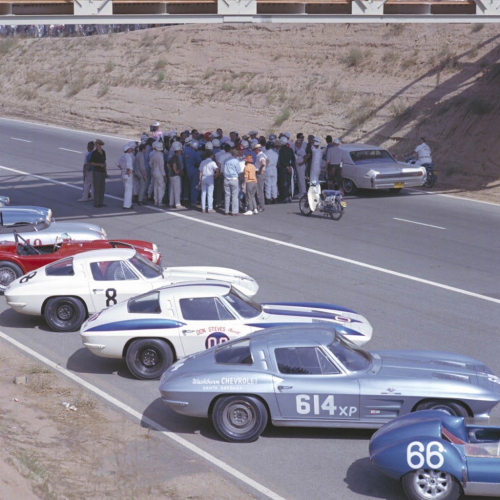
Not exactly what you asked for, but here's a picture of the first race for both the Mk1 260 Cobra and 1963 Z06 Corvette Stingray, Riverside 3hr, 13 October 1962.

From Facebook.
1777235291735.png
 
Porsche 917 against the rest of the world.
https://en.wikipedia.org/wiki/Le_Mans_(film)

The 917 (and Ferrari 512) were the ultimate expression of the Group 4 sports car, a category introduced in 1966 for sports cars where 50 were produced. Although these 2 types had to wait until the FIA dropped the production number to 25 for 1969.

The first car homologated under Group 4 in January 1966?

The 427 Cobra!
 
I've never understood why the heck did FIA changed all those race groups so often, at a time when F1 had very stable rules (for example, the 1.5 turbo-era vs 3L was allowed as early as 1966 and lasted until 1989)

https://fr.wikipedia.org/wiki/Groupes_numérotés_de_la_FIA

To control the top speeds in multi-class racing when car builders interpret rules ingeniously and people like Enzo Ferrari use their influence to get their own way.

For example the GT rules up to 1965 allowed 'evolution' of models where 100 had been built for homologation. Old Enzo put the swoopy body on the GT 250 SWB in 1962 to make the GTO and then bullied the FIA into accepting this. Once the FIA accepted it for Ferrari it opened the door for the Cobra Daytona and Aston Martin Zagato.

Next thing you've got limited edition racing cars doing 185mph on road car chassis, so its time for a change. Then the change morphs toward unintended consequences so its time for another change.
 
To control the top speeds in multi-class racing when car builders interpret rules ingeniously and people like Enzo Ferrari use their influence to get their own way.

For example the GT rules up to 1965 allowed 'evolution' of models where 100 had been built for homologation. Old Enzo put the swoopy body on the GT 250 SWB in 1962 to make the GTO and then bullied the FIA into accepting this. Once the FIA accepted it for Ferrari it opened the door for the Cobra Daytona and Aston Martin Zagato.

Next thing you've got limited edition racing cars doing 185mph on road car chassis, so its time for a change. Then the change morphs toward unintended consequences so its time for another change.
Ok I see. And then there is Can Am, almost no tech limits and spectacular cars - until Porsche 1500 hp monster wins four years in a row and kill any interest in the sport, so it gets canned. https://en.wikipedia.org/wiki/Can–Am
 
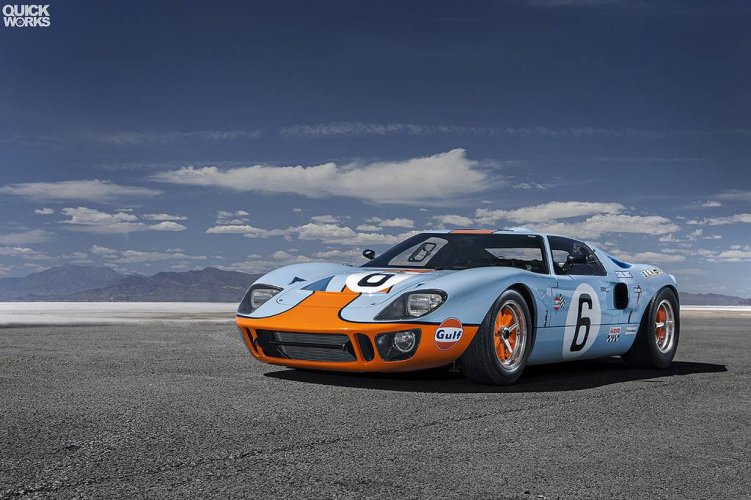
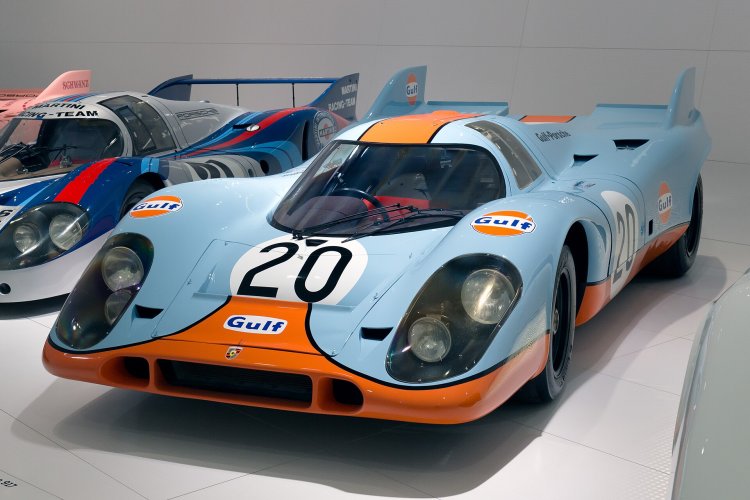
Best looking in Team John Wyer colours.
Ford GT40
Porsche 917K

John Wyer is an interesting case. He was the first team to race GT40s in 1964 and had an appalling season with DNFs in all 5 races. The GT40 racing was then given to Shelby American, who had a patchy season in 1965 and dominant seasons in 1966 and 1967.

John Wyer's organisation then built production GT40s, some 86 of them, and then came back to Le Mans with GT40s to win in 1968 and 1969. I think the GT40 might be the next tunnel in the rabbit hole.
 
Last edited:
Ok I see. And then there is Can Am, almost no tech limits and spectacular cars - until Porsche 1500 hp monster wins four years in a row and kill any interest in the sport, so it gets canned. https://en.wikipedia.org/wiki/Can–Am

Funny how people didn't mind when MacLaren won every Can Am race for 4 years but got bothered when Porsche had a few dominant seasons.

I love Can Am cars, I always gravitate to them when I go to historic racing events, which is about the only sport I follow these days.

Australian Frank Matich entered a couple of Can Am races in his Australian designed and built SR3 in 1967, which used a 4.4 litre version of the Australia Repco V8 that Brabham was using in F1. However the car was built to the Australian rules of 5 litre max engine and short Australian races, so it was light and too fragile for the Can Am.
 
I'm writing this to get it out of my head, so bear with me or perhaps TL-DR.

There appears to be a lot of myths around the 427 Cobra, for example Wiki says about the 51-53 competition cars that failed FIA homologation in April 965, "31 unsold competition models were detuned and fitted with windscreens for street use". Other 'sources' say that some Competition or S/C cars had 485hp, as opposed to the standard Ford 425hp statement (which was often a lie). This is typical of the stuff I see around the internet, quite often in places purporting to know something on the subject rather than giving basic information to the uninitiated.

I believe this stems from a fundamental misunderstanding of Shelby American's business model and how privateer racers operated in the 60s.

As I understand it Shelby American received rolling chassis and bodies on credit, shipped over from AC in Britain and engines and transmissions from Ford, also on credit and I believe off-the-shelf. What Shelby did was marry these major components in his facilities in California, adding his own small bits and pieces like an aircraft battery behind the passenger's seat and other bits and pieces.

As for private racers, they didn't have engine development programmes, spare engines, a selection of cams and pistons, fancy manifolds and carbs laying around. They bought the hottest options the factory offered (often a package for racing) and raced that, often for many seasons.

With these 2 things in mind this is how I believe the 427 Cobra engine story went.

January-April AC shipped 51 rolling 427 chassis to Shelby in California. The FIA inspected them in April for homologation as GT cars, with 51 out of 100 needed they did not get FIA homologation that would allow them to race internationally and therefore immediately made them difficult to sell.

19 Competition cars (16 sold by Nov 65). 427 side-oiler, medium riser heads, 12.5+ compression, magnesium high-rise intake manifold, 850 cfm Holley 4-barrel carb. To this Shelby added the 'Turkey pan' cold air intake box around the carb and exhaust headers to side pipes. IIUC these engines were not available in any production car, but were available over the counter from Ford. They were officially rated at 485hp but likely had more and sold as 'off road' engines and weren't covered by standard warranty. Aluminium heads were available, but only 1 in every 6 or 7 engines sold had those, so maybe 2 or 3 Competition Cobras had Aluminium heads.

In June 1965 East Coast Shely distributer and 'fixer' Charles Biedler suggested these unsaleable race cars be sold as the fastest streetcar in the world.

31 S/C cars. 427 side-oiler, medium riser heads, 11.5 compression, medium-rise intake manifold, 2 x 4-barrel carbs. To this Shelby added exhaust headers and side pipes with the world's most feeble mufflers, but no Turkey pan cold air box. IIUC these engines were available as an option in large Ford and Mercury production cars and were rated at 425hp. I believe these are what Wiki describes as 'detuned' but are actually a different engine (to the Competition and 'Production Street' cars) ordered directly from Ford catalogue.

100 'Production street' cars. 427 top-oiler, medium riser heads, 11.5 compression, medium-rise intake manifold, 2 x 4-barrel carbs. These cars used standard Ford cast iron exhaust manifolds to an under-car exhaust system that existed at the back of the car. IIUC like the S/C engines these engines were available as an option in large Ford and Mercury production cars and were rated at 425hp.

105 'Production street' cars. 428 Police Interceptor, low riser heads, 10.5 compression, medium-rise (aluminium) intake manifold, single 600cfm Autolite 4-barrel carb. These had the same standard Ford cast iron exhaust manifolds to an under-car exhaust system that existed at the back of the car. The 428 PI was a 1966 only engine (later 428s reverted to a cast-iron low-rise intake manifold) rated at 360hp and only available to Police Forces, about 2,500-3,000 were sold. I suspect the generally unavailable nature of this engine, its aluminium high-rise intake manifold and solid cam is how Shellby 'got away with' using it in 427 Cobras, as it obviously wasn't the standard cast-iron clunker 428.

In December 1966 Fred Goodell came over from Ford Motor Company to Shelby American as Engineering Manager. He pushed to stop using the 428 Police Interceptor engines in the remaining unsold street Cobras and arranged for the final batch to receive 427 engines again.

54 'Production street' cars. 427 side-oiler, medium riser heads, 11.5 compression, medium-rise intake manifold, single 4-barrel carb. These had the same standard Ford cast iron exhaust manifolds to an under-car exhaust system that existed at the back of the car. These engines were available as an option in large Ford and Mercury production cars and were rated at 410hp.

NOTE 1: These are rough numbers and generalisations. Cobras were essentially hand-built cars, often raced and therefore there is a huge number of exceptions to these generalisations and numbers that I know existed

NOTE 2: I love how Shelby did all this on credit! He built ~1,000 legendary sports cars without putting his hand in his pocket, what a magician!

NOTE 3: I'm somewhat impressed with the 428 PI engine, I didn't realise how different it was from the usual 428s and not such a giant step down from a 427.
 
Last edited:
The more I dig the more I find and the more impressed I become at the number of major things Shelby was doing simultaneously. However, its laid out by topic, such as the cars or the races and needs to be laid our chronologically to get an idea of what Shelby was managing day to day.

1962
  • February Cobra prototype arrives at Shelby in California
  • October ~100 Mk1 Cobras built for FIA Homologation
    • 1st race at Riverside, against the first ZO6 1963 Corvettes, DNF
  • Engine changed to 289 after 75 260 cars built, next 51 Mk1 have 289s
  • December Cobras race at Nassau Speed Week, DNF

1963
  • January Cobra production changes to the Mk2 with rack and pinion steering
  • February Cobras race in the FIA race Daytona 3hr 4th OA
  • February Cobras race in the first of 8 races in the United States Road Racing Championship (USRRC)
  • March Cobras race in the FIA race Sebring 12hr, 1st GT class 11th OA
  • May ~100 Mk2 Cobras built for FIA Homologation
  • June 2 Cobras race at Le Mans (Ed Hugus East Coast Shelby distributor & AC Cars with hardtop)
    • 1st in class 7th OA, with hardtop the Cobra is ~30mph slower than the Ferrari GTO, = about 10 seconds a lap
  • August Shelby engaged as a consultant to the Ford 'High Performance and Special Models Operation Unit' with the mission to design and build “A racing GT car that will have the potential to compete successfully in major road races such as Sebring and Le Mans.”
    • This Unit bought 2 Lola Mk6 GTs and designed the GT40
  • 'Summer', Shelby acquires 2 Cooper Monaco T61 and installs 289 V8s.
  • September Cobra race at Bridgehampton 500, 1st OA the Cobras first FIA World Sportscar Championship race win
  • September 8th/final USRRC race of the season
    • Shelby win USRRC Manufacturers' Championship with Cobras; 5 OA wins (including a 1-2-3 at Kent), 2 GT class wins (2nd & 4th OA) and a single DNF
  • September Cooper Monaco as Shelby King Cobra debut USRRC race at Kent, DNF and Pacific NW, 1st
  • October Goodyear agrees to fund development of the Cobra coupe for high-speed European circuits
  • October Shelby King Cobra wins USRRC races at Riverside and Laguna Seca
  • November Shelby King Cobra wins USRRC race at Augusta
    • Shelby wins USRRC Manufacturers title
  • Still building Mk2 Cobras for the road
  • December Corvette Grand Sport thrash Cobras at Nassau Speed week
    • King Cobra DNF
1963 gives a glimpse of what's coming in the next couple of years. Shelby was building Cobras, 100 in the first 5 months of the years, racing them in FIA events held in the US as well as an expedition to France for Le Mans, dominating the National Sports Car racing scene in the USRRC and late in the year starting development of a high-speed Cobra coupe and picking up a 2nd platform to race USRRC in the form of the Monaco King Cobra.
 
Last edited:
Th next couple of years are so busy they're very confusing.

1964
  • First Cobra Daytona delivered, 5 racing 'FIA roadsters' built, work on CSX2196 to fit 427 started, 4 Shelby King Cobras built
    • Mk2 Cobras still in production
  • February Daytona 2000 first of 11 FIA race of the World Sportscar Championship
    • 3 races in US, 5 races Europe, 2 hillclimbs & Tour de France rally
  • March Augusta 200 first of 10 USRRC races with Cobra
    • Cobras and King Cobras both raced in 4 races
  • March Sebring 12 hour first race of a 427 Cobra CSX2196 alongside a Daytona and 3 Roadsters
    • 427 DNF after crash in practice and nicknamed 'The Turd', Daytona 1st GT/4th OA, roadster 5th OA
  • May first of 5 USRRC races with King Cobra at Laguna Seca, DNF
  • June 2nd Daytona coupe available for Le Mans, 1st GT/4th OA
  • September Shelby American 2nd in FIA International Championship for GT Manufacturers & 1st USRRC GT Class Championship
    • 3rd Daytona delivered for Tour de France
  • September GT350 Mustang Prototype
  • October first two 4" chassis Mk3 427 Cobra rolling chassis arrive at Shelby in California
  • Mk2 Cobras still in production
    • 6 USSRC roadster racing cars building for next year
  • December 100 GT350 built for FIA Homologation as GT
  • December CSX2196 fitted with aluminium 390 gets 8 second lead on first lap before DNF at Nassau
    • GT40s that DNF at Nassau shipped directly to Shelby in California, damaged and dirty from the race.
This was a very big year. A US national racing campaign with 2 different platforms and winning the USRRC. An international campaign that resulted in the GT win at Le Mans and 2nd in the championship while bringing the Daytona coupes into action. Developing the 427 Cobra, with CSX2196 racing at Sebring and Nassau and the 4" Mk3 chassis prototypes being delivered and developing the Mustang GT350 then producing 100 for homolgation.

If an organisaton did any one of these things they'd be considered impressive, but to do all of it in a single year is amazing.
 
Last edited:
Its good to be getting this out of my head, to arrange it in order 'on paper'. Ideally someone will appreciate it, but if not

Shelby himself was a consultant to the GT40 program from it's very inception in July-August 1963. However, until the end of 1964 Shelby raced Cobras that He and AC with Ford support were building, developed variants on this theme like the Daytona, the 427 prototype and 4" chassis Mk3 as well as buying Cooper Monacos installing 289s and racing them as King Cobras. GT40 development was in the hands of Ford Advanced Vehicles, established by August 1963 and run by John Wyer, with the first GT40 prototype completed in April 1964.

From 1965 the relationships became more complicated as Shelby raced GT40s some of which he owned and others were owned by Ford and raced by Shelby American, while Alan Mann raced Daytonas owned by Shelby in Europe. In addition Shelby American raced Mk2 Cobras in the USSRC as well as GT350 Mustangs in the 6 regional SCCA B-production championships and the winner take all American Road Race of Champions (ARRC).

Alan Mann racing in England was contracted directly with Ford as the factory team. As such Ford requested AMR to manage the Daytona racing campaign in Europe in 1965 so Shelby American could focus on the GT40 campaign. AMR took posession of all 6 Daytonas after Shelby Amercian had raced them at the 1965 Daytona 2000 and Sebring 12hr.
 
Last edited:
I was going to lay out 1965, but the GT40 story is very complex so I need to lay that out first in order to slot it in to Shelby's 1965 activities.

In 1962 in order to appeal to the newly emerging Baby Boomer youth market Ford launches the 'Total Performance' program, supporting a broad range of motorsport to crate a more exciting image. In order to shortcut the process of creating a headline international racing program Ford attempts to buy Scuderia Ferrari in early 1963, but this effort failed at a late stage and with acrimonious insults. In mid 1963 Ford established the 'High Performance and Special Models Operation Unit' with the mission to design and build “A racing GT car that will have the potential to compete successfully in major road races such as Sebring and Le Mans.” This Unit included Lola's Eric Broadley, John Wyer, Carroll Shelby and Bruce MacLaren as lead driver, and bought 2 Lola Mk6 GTs and designed the GT40.

There were 12 GT40 'prototypes', 5 closed top cars built in March-June 1964 and raced disastrously that year. These initially had the 4 cam 4.2 litre 'Indy Ford' V8, but before he end of the racing season these unreliable engines were replaced with the same pushrod 289s the Cobra Daytonas were winning with. Two of these cars were transferred to Shelby American ownership in December 1964 as Nassau.

The next 2 closed top cars were fitted with 427s by May 1965, these remained in Ford ownership but were raced by Shelby American a month later at Le Mans. After Le Mans these cars never raced again. The next 5 cars were roadsters, 4 were finished in early 1965 with one racing at Le Mans while the 5th was a special lightweight (aluminium instead of steel) monocoque and didn't appear until September 1965, raced by MacLaren in Canada. The roadsters were designed to be lighter, have more headroom and be much cooler for the drivers, but the aerodynamics weren't as good at high speed

Ford Advanced Vehicles began building 'production' GT40 Mk1 (289) and Mk2 (427) in January 1965, they shared the same chassis but the Mk2 had extra strengthening. Initial Mk1 were delivered to privateer teams who began racing them in the 1965 season, while the first Mk2 was delivered to Shelby in California in September 1965 for finishing. Some 86 'production' GT40 Mk1 and Mk2 were built, 31 Mk1s were sold as road cars and 8 were Mk2s were built with the rest as regular Mk1s with production continuing until December 1969. The GT40 Mk1 was homologated as a Group 4 sports car in February 1966, so 50 had been built by then, although I think that would likely include the 12 prototypes as well as the production cars.

Of the prototypes the lightweight roadster was taken to Shelby in California and heavily modified to accept a 427 while retaining the lightweight construction and open-top roadster configuration. In this spec it won the 1966 Sebring 12hr with Shelby American. Another prototype, one completed and raced in 1964, also survived to be raced in early 1966.

The last iteration of the original chassis GT40 were 2 lightweight cars built by Alan Mann in February and March 1966. They raced once and showed Ford that lightness wasn't a substitute for the power of the 427. Ford decided to not race them at Le Mans in 1966, sticking with the 427 Mk2.

The 'J car' was an entirely new design with new construction techniques and aerodynamics. The 1st prototype was built by April 1966 and Ken Miles was killed when testing the 2nd prototype in August 1966. The car was redesigned with new aerodynamics and became the GT40 Mk4, 6 were built for the 1967 season.
 
Last edited:
1965

AC & Shelby were still building Mk2 Cobras and 6 USSRC racing cars were prepared for the 1965 season. 6 Daytonas were completed and Shelby had 2 GT40s, the GT350 Mustang was homologated as a GT and Shelby was building production GT350s. AC & Shelby were building 4" chassis Mk3 427 Cobra aiming for 100 to meet FIA GT homologation for the 1965 FIA season.

  • February Shelby American entered 2 GT40 and 4 Cobra Daytona in the Daytona 2000
    • GT40 1st, Daytona 2nd OA/1st GT, GT40 3rd, Daytona 4th OA/2nd GT, 6th OA/3rd GT and DNF
  • February Shelby American entered GT350 Mustang in an SCCA Regional B-production race, 1st B-Production
    • wide factory support for B-Production GT350s in the 6 Regional SCCA championships
  • March Shelby American entered 2 GT40 and 4 Cobra Daytona in the Sebring 12hr
    • GT40 2nd, Daytona 4th OA/1st GT & 2nd, 3rd & 5th GT and GT40 DNF
  • April Mk1 Cobra's first of 9 USRRC races, Shelby American focused on the GT class
  • April six Cobra Daytonas shipped to England for Alan Mann racing to campaign in Europe on Shelby American's behalf
    • Shelby American sent personnel to assist AMR including driver Bob Bondurant
  • April FIA inspectors inspect 4" chassis Mk3 427 Cobra for homolgation as a GT at Shelby in California
    • Only 51 cars were built so the 4" chassis Mk3 427 Cobra was not homologated for 1965
  • April Alan Mann Racing's 1st of European 7 races with Daytonas at Monza, 1 & 2 GT
  • May two GT40 prototypes fitted with 427 given to Shelby American to race at Le Mans
    May Mk3 427 Cobra enters USRRC at Riverside in prototype class, DNF
  • June Shelby American entered 2 GT40s with 427s and AMR entered 5 Daytonas in Le Mans
    • GT40s DNF, 1 Daytona 1st GT 5l/8th OA, 4 Daytona DNF
      • FAV entered 3 production Mk1 GT40s, all DNF
  • 'Summer' AC production of street Cobras switched from the Mk2 to the Mk3, unsold Competition 427 Cobra sold as street cars
  • August AMR run Daytonas 1 & 2 GT at the final FIA GT class race, to win the GT Manufacturers Championship
    • 9 races, 3 x 1-2-3, 3 x 1-2, 1 x 1st GT 5l, 1 x 2nd and 1 x 4th
  • 562 Mustang GT350 produced, switch to the 1966 year model
  • September Shelby receives 1st 'production' GT40 Mk2
  • September 9 and final USSRC, Mk2 Cobras won the GT class in all 9 races and Championship
  • November after winning 5 or 6 SCCA Regional Championships Shelby American GT350 won the run-off American Road Race of Champions (ARRC) in B-production
  • November Mk3 427 Cobra entered Australian Tourist Trophy Lakeside Raceway, Queensland, Australia, DNF

Shelby American had dominated 2 national Championships, done very well in the 2 FIA endurance races in the US and AMR had dominated the FIA GT class in Europe with Shelby American support. Unlike 1964 Shelby American only raced in Europe once in 1965, using the rushed 427 GT40 conversion at Le Mans which unsurprisingly was not successful like earlier US races using more mature 289 powered GT40 prototypes. A Mk3 427 Cobra entered a few races but as a prototype so was uncompetitive, the Australian race was Shelby American's only overseas race apart from Le Mans.
 
Last edited:
In October 1964 the FIA announced a major change to the racing classes and their associated homologation requirements for the 1966 season. Replacing the unlimited prototypes and the 100 cars built GT class were a series of 'Groups' each with their own homologation requirements and technical specifications. The Groups that affected Shelby American's programs were:

Group 2 - Touring Cars 1,000 built - new for 1966 Trans-Am series (GT350 Mustang not eligible)
Group 4 -Sports Cars 50 built - FIA International racing
Group 6 - Sports Prototypes, no minimum build, things like spare wheel and minimum windscreen size - FIA International racing
Group 7 - Racing Sports Cars, no minimum build, no headlights, spare wheel, windscreen etc - USRRC, new for 1966 Can-Am series

There was no US national series for Group 4 Sports cars, between the Group 2 Trans-Am and Group 7 USSRC & Can-Am was the SCCA 'Production' series. The SCCA required 100 cars to be built to enter their 'Production' classes and had Regional series followed by a run-off National Race. This left Shelby without a headline US series to race the 427 Cobra when not racing the 427 GT40s in FIA events.
 
I've gone down the Carroll Shelby rabbit hole in the last few days in the same way I do for obscure aircraft programmes and have come to an inescapable conclusion.
  • For a few years in the early-mid 60s Carroll Shelby was one of the most productive people on planet Earth!
At a time when long distance communication was by telegram, an international phone call was a big deal and low-volume cars were moved around the world by break-bulk cargo ship Shelby's organisation was starting new programmes every couple of months, causing giants like GM and Ferrari to respond to which Shelby & Co would respond in turn. Each time they started something it turned to gold, whether that be developing their own cars or racing in the US or Internationally.

The big surprise to me is his most iconic car, the most replicated car in the world the 427 Cobra, was actually a bit of a failure in racing programme terms, similar to how retro streetwear shirts can become iconic more for cultural impact and image than for their original intended performance. It failed FIA homologation inspection in April 1965 with only 51 cars instead of the 100 needed for the GT class. This pretty much made the 51 (53 by July) competition 427 Cobras built unsalable to racers with National or International ambitions and only 16 were sold by November 1965 with the rest sitting around Shelby's workshop yard as unpainted rolling chassis.

It appears the 427 Cobra gained its legendary reputation by being the fastest street car in the world, backed by a few years domination in US sports car racing by privateers.
You’re basically right that Shelby was incredibly productive in that period, but it wasn’t just him alone—he had Ford backing, strong engineering partners, and a small but very aggressive operation that could move fast while bigger companies were still slower and more bureaucratic. On the 427 Cobra, it’s true the FIA homologation failure limited its intended GT racing role, so it didn’t become the factory international racing success it was meant to be. But calling it a failure overall is a bit misleading. It still proved brutally fast in U.S. racing and even more importantly, its reputation was built through real-world performance, privateer success, and its status as an extreme street car. That combination is what turned it into a legend despite the short factory racing program.
 
You’re basically right that Shelby was incredibly productive in that period, but it wasn’t just him alone—he had Ford backing, strong engineering partners, and a small but very aggressive operation that could move fast while bigger companies were still slower and more bureaucratic. On the 427 Cobra, it’s true the FIA homologation failure limited its intended GT racing role, so it didn’t become the factory international racing success it was meant to be. But calling it a failure overall is a bit misleading. It still proved brutally fast in U.S. racing and even more importantly, its reputation was built through real-world performance, privateer success, and its status as an extreme street car. That combination is what turned it into a legend despite the short factory racing program.

The car itself is iconic, but in racing terms may have been a victim of circumstance.

As stated only 51 were ready for the FIA in April and only 53 in June so the aim of racing in actual FIA series in Europe or the USRRC which conformed to FIA homolgation requirements wasn't met. I don't think this could be changed as I doubt AC could make chassis any faster, they made ~1000 chassis for Shelby from the start of 1962 to December 1966. 1965 was the year they changed from the 3" tubes to the 4" tubes etc which likely slowed down the output of cars at AC.

I think as a Group 4 sports car the 427 might have done OK against the 289 GT40 Mk1 in 1966, they were homologated with weeks of one another, but Ford was sucking up all the oxygen. For example a joint Shelby American/Alan Mann Racing effort might have undertaken a 427 campaign in 1966 like they did with the Daytonas in 1965. However both Shelby American and Alan Mann Racing were fully involved with the GT40, Shelby with sorting then winning with the Mk2 427 cars and AMR with building 2 lightweight GT40s and then racing Mk2 427s. Of course there was no National US series for Group 4 sports cars where the 427 could race against GT40s and the like.

However that in itself illustrates the problem, the final development of the 1953 AC Ace/Bristol chassis hot-rodded to the limit, up against the very state of the art in sports racing car with the GT40. Perhaps raw power might have gotten the job done on short US tracks, the Daytona was developed for European tracks after all and the GT40 Mk1 was heavy and low on power compared to the 427 Cobra.
 
Last edited:
1966

Shelby American was building Mk3 427 street Cobras and 1966 model year Mustang GT350s in much greater numbers than the previous year. They had taken delivery of the first production Mk2 427 GT40 and GT40 X-1 lightweight roadster prototype for conversion to 427. Shelby American was heavily involved in the development of the 427 into a reliable 24-hour endurance racing car, a task so demanding it came at the expense of other potential racing efforts. Privateer racers competed in Mk2 and Mk3 Cobra roadsters and GT350s in SCCA regional events without official factory support.
  • February 3 x GT40 Mk2 entered Daytona 24hr - 1st, 2nd & 3rd
  • March 2 x GT40 Mk2 & X-1 roadster with 427 entered Sebring 12hr - X-1 1st, Mk2 2nd
    • Mk2 disqualified on final lap while leading race
  • March Mustang entered Sebring 4hr Trans-Am race - DNF
  • June 2 x GT40 Mk2 entered Le Mans 24hr -, 1st & 2nd
    • Holman Moody GT40 Mk2 3rd
  • June Mustang entered Mid-America 300 Tran-Am race - 3rd
    • 'J car' prototype entered by Shelby American but was withdrawn before the race
  • Mid-year After 100 street 427 Cobra fitted with dual-quad 427 Shellby started fitting 428 Police Interceptor engines to 427 Cobras
  • August Ken Miles killed while testing the 'J car' prototype at Riverside
  • September Mustang entered Pan-American Endurance Race, 1st
  • October 1966 model year GT350 ceased, 2365 built including 1003 for Hertz
    • 1967 model year GT350 & GT500 production undertaken in Michigan
      • Some Shelby staff relocated from California to Michigan to help build these cars
  • December 260th and final Mk3 427 Cobra rolling chassis delivered to Shelby in California
    • December Fred Goodell joins Shelby, arranges for final ~54 427 Cobras to be fitted with 427 engines instead of 428 PI
While still building 427 Cobras and GT350s Shelby American didn't race their own cars and with GT350/GT500 production moving away Shelby building their own cars was winding down.
 
1967

The only road car production Shelby was undertaking were the final unsold Mk3 427 Cobra rolling chassis that had been supplied by AC in 1966, and providing some design input to the 1968 GT350/GT500. Shelby American was heavily involved in developing the 'J car' into the GT40 Mk4 for the 1967 campaign and Ford's Trans-Am campaign. Shelby appeared to be more of a Ford factory racing team than an independent manufacturer, and built 26 racing Mustangs, 4 for Shelby American (who dominated the series) and 22 sold to privateers.
  • February 3 x GT40 Mk2B entered Daytona 24hr - 7th and 2 DNFs
  • February 2 x Mustangs entered Daytona 300 Trans-Am - 3rd & 4th
    • first of 11 Trans-Am races entered, Shelby American usually entering 1 or 2 cars per race
  • April 1 x GT40 Mk4 & 1 x GT40 Mk2B entered Sebring 12hr - Mk4 1st & Mk2B 2nd
  • June 2 x GT40 Mk4 entered Le Mans 24hr - 1st & 4th
  • Mid-year two Shelby King Cobra T-10 built
    • These are distinct cars from the 1963-64 Coooper Monaco T61 King Cobras
  • October 11th and final Trans-Am race, 4 x 1st, 1 x 2nd, 4 x 3rd, 1 x 4th, 5th, DNF & DNS
    • Jerry Titus won the (retroactive) Drivers' Championship and Ford won the Manufacturers' title.
  • October King Cobra T-10 entered Can-Am Riverside, DNF
  • November King Cobra T-10 entered Can-Am Stardust Las Vegas, DNS (crash in practice)
The day after Le Mans the FIA, without consulting Manufacturers, announced that Group 6 prototypes (Ford GT40, Ferrari 330 P4) would have an engine limit of 3 litres for 1968. Ford America withdrew from international sports car racing, sold the rights to the GT40 to John Wyer and ceased development on engines that might have be used for a 1968 reason. This removed the pilar on which Shely relied for his independent Can-Am effort or a Can-Am effort in conjunction with Ford.

The next couple of years the Shelby American organisation continued racing in conjunction with Ford, but did not develop or even influence new cars, until it folded in 1970.

That's a bit of a sad end. :(
 
I'm still down this rabbit hole; the complexity of US and International racing is fascinating.

I am going have to change my initial assessment of the 427 Cobra as having missed its chance to strike.

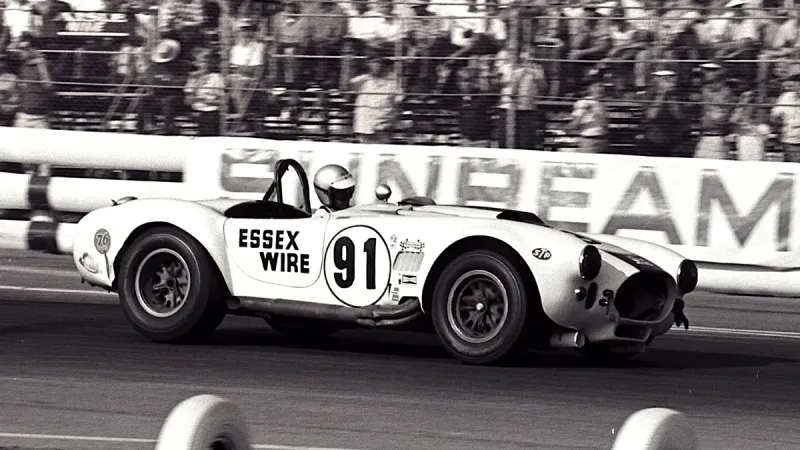
In 1965 the Essex Wire Corporation, the biggest supplier of wiring harnesses to Ford, went public and bought a GT40 Mk1, a 427 Cobra and a GT350 to race.

The 427 Cobra raced in the 1965 USRRC as a 'Sports Car' against Chapparal 2A, Lola T70, MacLaren Elvas and the like as it wasn't homologated at a 'GT' car with 100 built. Despite this it managed 6 USRRC races, got two outright 3rd places and finished 4th overall in the championship, a mighty performance from what was really a road car against the cars that would race can-Am the following year.

It also entered the FIA World Sportscar Championship race at Bridgehampton and placed 3rd behind a Chapparal 2A ''Sports car'' and Ferrari 365 P2 "GT-Prototype" endurance racing car. Another mighty performance against specialised machinery.

1778728075737.png

That said, the lack of championships for the new Group 4 ports Cars below the World Sportscar Championship in 1966 does seem to be a bit of a lost opportunity.
 
Last edited:

Similar threads

Back
Top Bottom