
You are using an out of date browser. It may not display this or other websites correctly.
You should upgrade or use an alternative browser.
You should upgrade or use an alternative browser.
Power sources for Ships, nuclear, gas turbines, solar, etc .
- Thread starter MadRat
- Start date
insidersource
ACCESS: Secret
- Joined
- 24 March 2025
- Messages
- 332
- Reaction score
- 587
This is great info but it seems too low for a 15,000 ton ship. The power is nearly identical to my proposed 10,000 ton destroyer. Members were saying that my 10 MWe reactor would be too small but it seems that it would provide reasonable cruising speed in full nuclear mode.
This is for a prospective 15kt bmd destroyer. It’s 7.5mw for 18 kn plus say 5 MW for fancy radar and other hotel loads. 15MW is more than enough. Even 6-7 would be enough for 12 kn cruise plus hotel
The Arleigh-burke sea trial chart from 2005 shows
27 knots maximum speed with two engines 40MW
21 knots maximum speed with a single engine 20MW
Your chart shows only 11MW for 21 knots and 25 MW for 27 knots. I would expect these power levels for a 7,000 ton ship.
Gas turbines are actually pretty close to the efficiency of diesels providing the gas turbine is kept at peak efficiency. That is easier said than done. For an Arleigh-burke to cruise at 16 knots it needs to run a single turbine at 50% power with just one prop spinning. That turbine is then quite far from peak efficiency. The Arleigh-burke is poorly optimised for long range cruise.Diesel engines allready exeed the 50 % efficiency mark
However when they fit the 1.9MW electric motor to the Arleigh-burke test ship the 3MW gas turbine generators were running near peak efficiency. Fuel saving was nearly 30% when cruising at 12 knots. That is compared to running the 20mw gas turbine at close to idle.
I suspect some zeroes were missed on the solar proposal. One panel typically produced less than 500W, so thats 0.0005MW, compared to the 10MW power supplies we are comparing. Maybe a towed raft of PV arrays that unfolds to the size of several football fields? BTW, NASA gets 30%+ efficiency because they can utilise UV wavelengths that normally get absorbed by the atmosphere.Solar is completely useless for this kind of application.
I was saying that ASW tasking would be competing with other priorities that are not compatible with ocean sub hunt, not even accounting for number of hulls that would make a frigate the better ship to build in useful numbers for the ASW role. The FF(X) being useful is obviously another story.The presence of AGS is overstated because it was so visible. The low observability features did not detract from the ASW role
If micro reactors were feasible, they would have to be easily swapped out. It would also require a solution for the reactor's density. That would likely mean a containerised mission bay that allows a container sized reactor to be loaded in straight off the wharf, and then dropped down a shaft to a effectively install in the bilge. It likely is not possible, but the ship would be designed around the 5 yearly modular reloading system rather than a lifetime reactor..If we assume that DDGs serve for at least 32 years (Burke is scheduled to make 40 at this point iirc) then the reactors will need to be torn out and replaced at least 3 times, if not 4 or 5. That is not a non trivial proposal.
I cant imagine what damage control looks like, but its probably a molten salt cooling system thats safer than your average.We have no idea what damage control looks like on a nuke surface combatant that takes a hit from a USV or something, and I hope we never find out. Leave the nuke plants for subs that are more or less lost with all hands when hit, and giant 100k ton CVNs that are less likely to ever have the radiological spaces compromised.
Oversizing an electric motor creates inefficiency at low speed. However its pissible to put 2 motors on the same shaft, one optimised for cruising and the other for loiter/ASW speeds.You could also oversize the propulsion motors for an even higher sprint speed over short distances using full generator and battery power.
With IEP we are no longer talking small generators for separate hotel loads and weapons, but generators that are sufficient to pickup whatever load you throw at them. So the T45 needed bigger diesels but I would have thought enough battery/flywheel storage would have covered that while the next generator or turbine starts up.Thing is, only having one size of GT makes your training and spares pipelines a lot simpler. So there's good logistics reasons to run IEP with a big diesel for hotel load and a GT for sprint power. Or size your hotel load for whatever power your GT makes. (Note that currently the USN runs on LM2500s and AG9160s/T56s, with the IEP Zumwalts using MT30s and RR4500s)
Lithium ion has issues, including damage control... LiFePO4 is a bit more stable, but probably sodium batteries will mature enough to take over the role. I heard DDG1000 has a flywheel, which should help to smooth out spikes in demand.Lithium batteries have about 5x the power capacity of lead-acid batteries by weight or by volume (once you add dedicated cooling systems), so it'd be viable to fit a very large capacity battery bank to the ship and try to keep it between 20% and 80% charge in normal conditions. Plus if you really need to run you can draw some battery power for an hour or two.
Firefinder
ACCESS: Top Secret
- Joined
- 5 October 2019
- Messages
- 1,223
- Reaction score
- 2,300
That is a Command deal not a design deal.I was saying that ASW tasking would be competing with other priorities that are not compatible with ocean sub hunt, not even accounting for number of hulls that would make a frigate the better ship to build in useful numbers for the ASW role.
If you can not stop youself from Micromanaging you crews or cannot Prioritizes tasking well you deserve what coming to you.
A burke captain if given the orders to hunt subs...
WILL do his best to HUNT SUBS. He will not Screw off and go tomahawk slinging unless ordered. He will not go look for planes to kill or find a destroyer to fight either. He will do the orders and avoid the above mention unless needed. Only keep enough focus on those to avoid being bushwack.
It is the Admiral's job to ensure the Burke knews what is needed to be focus on.
Tho with modern weapons ranges he can hunt subs and Tomahawk stuff at the same time with only minor loss of performance so long as the locations allow it. And with modern sensors and computers, an Burke hunting subs will still be a very VERY Scary ship to attack via planes. Cause you only getting like 15 extra seconds of leeway before the ASW Burke is now an ADA Burke with all that means.
Bigger issue come from the old numbers game. And since the gear needed to do whatever is the expansive part of the ship, not the hull or engines which are the cheapest...
It pays to unified the designs to get economically of scale and all.
60 Zumwalts be cheaper then 30 Constellations both in price tag and crews, which is honestly the bigger limiting factor then the gear. With those Zumwalts, even the cut down versions being as good as an ASW hunter as the Connies. The Full Bore ones be a submariner nightmare. And 60 Zumwalts give you far more ASW coverage then 30 Connies just from numbers.
Only when you limit the purposes to single use does that change.
However comma, if you go for single uses designs. You CANNOT bitch when said design has no Add abilitie worth the Name cause that the opportune cost for you.
You want a cheap good X Hunter? dont be surprise when it fucking sucks in Y roles since adding the need Y gear to be good means it will no longer be cheap.
Replace X and Y with what ever roles you want.
Seems like access through a large well deck would be pretty handy. One with its own handy dandy moving gantry that just might be able to move (ro-ro?) shipping containers for supplies, too.If micro reactors were feasible, they would have to be easily swapped out. It would also require a solution for the reactor's density. That would likely mean a containerised mission bay that allows a container sized reactor to be loaded in straight off the wharf, and then dropped down a shaft to a effectively install in the bilge. It likely is not possible, but the ship would be designed around the 5 yearly modular reloading system rather than a lifetime reactor.
Scott Kenny
ACCESS: USAP
- Joined
- 15 May 2023
- Messages
- 16,973
- Reaction score
- 24,079
DDGX was talking more like 40MW hotel load.This is for a prospective 15kt bmd destroyer. It’s 7.5mw for 18 kn plus say 5 MW for fancy radar and other hotel loads. 15MW is more than enough. Even 6-7 would be enough for 12 kn cruise plus hotel
You'd most likely have to swap reactors in drydock, not at the pier. But IIRC you're sticking a ship into dock about every 5 years anyway to scrub the hull clean.If micro reactors were feasible, they would have to be easily swapped out. It would also require a solution for the reactor's density. That would likely mean a containerised mission bay that allows a container sized reactor to be loaded in straight off the wharf, and then dropped down a shaft to a effectively install in the bilge. It likely is not possible, but the ship would be designed around the 5 yearly modular reloading system rather than a lifetime reactor.
It's still spinning steam turbines and those have unpleasant failure modes. Moreso their piping.I cant imagine what damage control looks like, but its probably a molten salt cooling system thats safer than your average.
I mean, you're still running an electric motor at significant oversize for your normal low-speed versus high speed. How much worse does the efficiency get when you increase the top end from ~30kts to ~35kts?Oversizing an electric motor creates inefficiency at low speed. However its pissible to put 2 motors on the same shaft, one optimised for cruising and the other for loiter/ASW speeds.
Correct, but we can generally describe/plan a couple of low level outputs and then a couple of higher level ones.With IEP we are no longer talking small generators for separate hotel loads and weapons, but generators that are sufficient to pickup whatever load you throw at them. So the T45 needed bigger diesels but I would have thought enough battery/flywheel storage would have covered that while the next generator or turbine starts up.
Lowest level: at sea EMCON ASW crawl or anchored out low/normal emissons
next level up: at sea normal emissions ASW crawl
low level 2: at sea normal emissions cruise
higher level 1: at sea normal emissions carrier flight ops
higher level 2: at sea normal emissions sprint
highest level: at sea battle emissions sprint
We're not going to care about inefficiencies pulling into port, that's only a couple of hours every couple of weeks.
All batteries have damage control issues. Flywheels even moreso.Lithium ion has issues, including damage control... LiFePO4 is a bit more stable, but probably sodium batteries will mature enough to take over the role. I heard DDG1000 has a flywheel, which should help to smooth out spikes in demand.
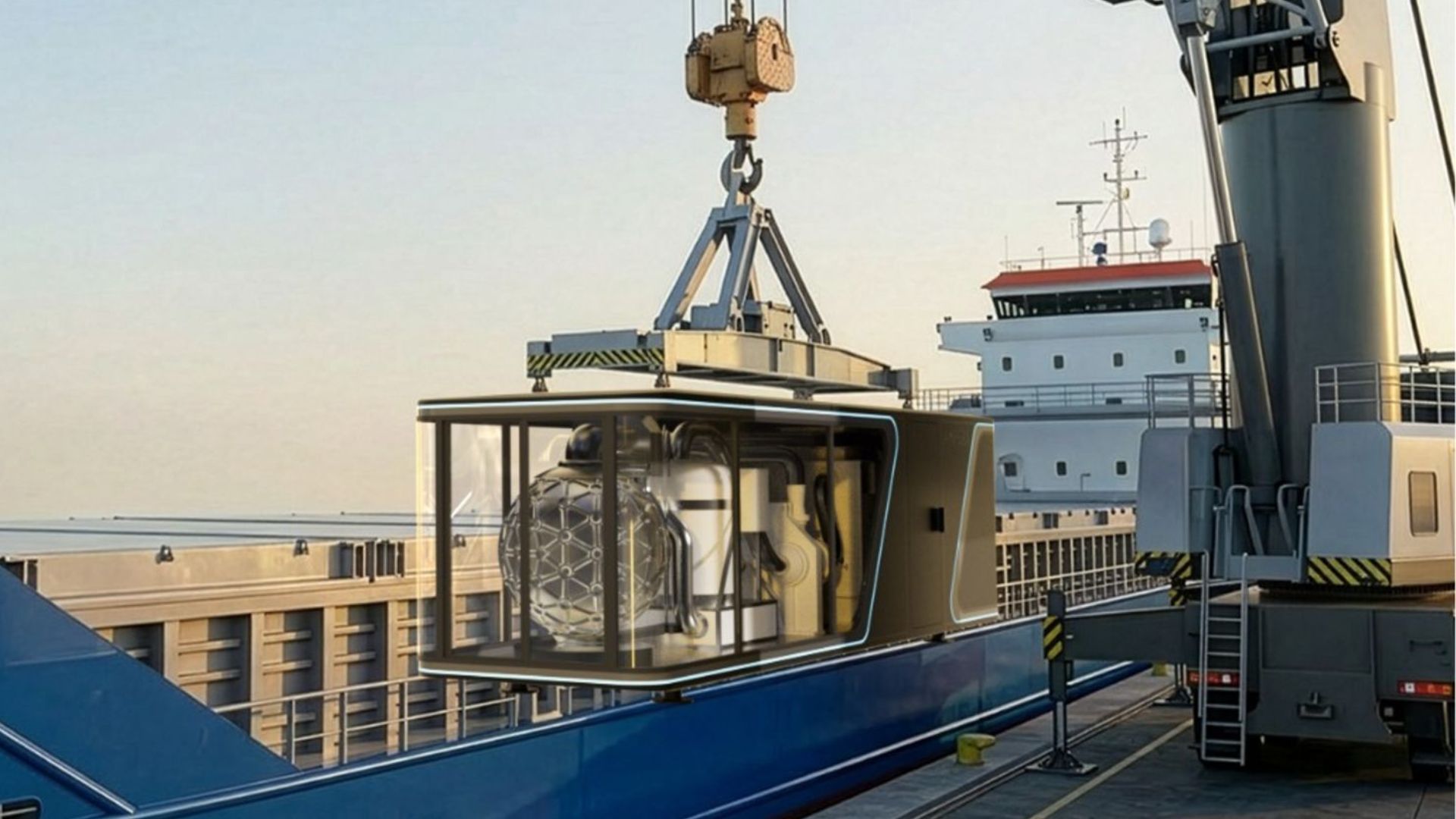
US: 30 MW microreactor to help vessels run without refueling for decades
Scorpio Tankers bets $10 million on AMPERA’s "safeguards-by-design" nuclear reactors to replace traditional fossil fuels.
 interestingengineering.com
It was repeatingly stated thas gas turbines would have a higher peak efficiency than Diesels, this is plainly wrong. Of course, at part load the difference is even bigger, although regeneratice gas turbines are quite efficient at part load.
Gas turbines are king for power density and at peak efficiency are not worse than diesels. I am not sure why you are claiming the gas turbines are less efficient than a diesel. The biggest disadvantage of gas turbines is its inability to burn cheap, dirty, heavy bunker fuel.
Its just a simple fact:

 www.powertraininternationalweb.com

 visualizingenergy.org
Weichai Power breakthrough: Diesel engine efficiency at 54,16%
Weichai Power reaches another efficiency milestone: 53.09% Thermal Efficiency for a Diesel Engine
www.powertraininternationalweb.com
Maximum efficiencies of engines and turbines, 1700-2000
Throughout human history, the development of new machines to replace and enhance human and animal labor has played a major role in the energy sector. Key advancements include combustion engines and turbines, which convert fuels like gasoline and natural gas into useful work.
visualizingenergy.org
Combining gas turbines with gas turbines will not incease peak efficiency.'Combined cycle gas turbine'. COGAG (Combined Gas And Gas), a combined cycle gas turbine system, has been around since before the Ticonderoga class. Why is this so confused for you?
Yoy could combine gas turbines with a steam process like in stationary power plants, but this will end up in a very heavy and bulky mashinery. There is a reason why it hasn't been done on ships.
Scott Kenny
ACCESS: USAP
- Joined
- 15 May 2023
- Messages
- 16,973
- Reaction score
- 24,079
I could see it happening on warships since using the flue gasses to generate power cools them.Yoy could combine gas turbines with a steam process like in stationary power plants, but this will end up in a very heavy and bulky mashinery. There is a reason why it hasn't been done on ships.
What happens when your flue gasses are at ambient temperature? Your longwave IR signature is minimal.
IIRC the shore-side cogeneration setups with diesels and using the exhaust heat to boil a liquid and that steam to spin a turbine can get the exhaust down close to ambient. You need to get exotic with your working fluid, though. IIRC anhydrous ammonia or fluorocarbons, something with a boiling point around room temperature.
Actually, the Emma Maersk class containerships do have an additiinal steam power system which recovers the exhaust heat from the Diesel. This system only works close to max power output of the Diesel, otherwise the exhaust gas will be to cold. With a Ship Diesel engine, this not such a big problem, because you can still have about 50 efficiency in cruise with the Diesel alone.
A gas turbine produces higher exhaust gas temperatures, which helps a lot, but does this also only at very high power output. At part load operation, this system would reley soley on the gas turbine with its very low part load efficiency.
A gas turbine produces higher exhaust gas temperatures, which helps a lot, but does this also only at very high power output. At part load operation, this system would reley soley on the gas turbine with its very low part load efficiency.
Scott Kenny
ACCESS: USAP
- Joined
- 15 May 2023
- Messages
- 16,973
- Reaction score
- 24,079
Which is why we are running the cogeneration setup matched to each individual GT, not one large system sized to the total output of all the GTs installed.Actually, the Emma Maersk class containerships do have an additiinal steam power system which recovers the exhaust heat from the Diesel. This system only works close to max power output of the Diesel, otherwise the exhaust gas will be to cold. With a Ship Diesel engine, this not such a big problem, because you can still have about 50 efficiency in cruise with the Diesel alone.
A gas turbine produces higher exhaust gas temperatures, which helps a lot, but does this also only at very high power output. At part load operation, this system would reley soley on the gas turbine with its very low part load efficiency.
And then you run whatever combinations of GTs are needed to support the electrical power demanded.
Which at least gets any given GT operating at close to design load, so more or less peak exhaust gas temps going into the cogeneration boilers.
The problem is, that such a system isn't compact or light anymore. I also believe, that using just one or two screws out of three will reduce the propulsien efficiency significantly. Sailingboats with inboard motors are usually using folding propellers to reduce drag.
The most useful approach for a fast military vessel is a Diesel for all normal operations plus a gas turbine for peak demand. I do understand, that heaving different propulsion systems is not ideal from a logistic perspective, however, these ships are highly complex anyway
The most useful approach for a fast military vessel is a Diesel for all normal operations plus a gas turbine for peak demand. I do understand, that heaving different propulsion systems is not ideal from a logistic perspective, however, these ships are highly complex anyway
Scott Kenny
ACCESS: USAP
- Joined
- 15 May 2023
- Messages
- 16,973
- Reaction score
- 24,079
Very much so. IIRC even with removing two screws off a Nimitz they're down to ~20 knots.The problem is, that such a system isn't compact or light anymore. I also believe, that using just one or two screws out of three will reduce the propulsien efficiency significantly. Sailingboats with inboard motors are usually using folding propellers to reduce drag.
I'm talking IEP, boss.The most useful approach for a fast military vessel is a Diesel for all normal operations plus a gas turbine for peak demand. I do understand, that heaving different propulsion systems is not ideal from a logistic perspective, however, these ships are highly complex anyway
Electric motors driving all screws equally.
Electric power distribution might be the way to go, even if it adds additional weight. It would enable to keep the Diesels/turbibes with the optimal rpm and keep all propellers evenly loaded. The drive shafts and rudders could also be replaced by electric pods thus enabeling much improved manouveribility.

- Joined
- 16 April 2008
- Messages
- 10,318
- Reaction score
- 17,227
I could see it happening on warships since using the flue gasses to generate power cools them.
The USN looked at -- the Burkes were originally supposed to incorporate RACER, a System that placed a waste heat recovery boiler in the exhaust stream of the LM 2500 turbines.
It sounds ideal, and does seem to kill two birds (improved fuel efficiency and IR signature reduction) with one stone. But the boiler was complex and expensive to maintain, so it never made it to operational use.
maybe useful mainly as visible light/IR stealth?Solar is completely useless for this kind of application.
as the panels convert~20% energy of sun to electric,it should reduce direct reflection/IR radiation obviously.
-----
IEP with battery maybe helpful in shallow habor (EV mode to prevent mud stuck in diesel coolant circut)
Last edited:
CastleBravo
ACCESS: Restricted
- Joined
- 21 January 2026
- Messages
- 34
- Reaction score
- 46
Yoy could combine gas turbines with a steam process like in stationary power plants, but this will end up in a very heavy and bulky mashinery. There is a reason why it hasn't been done on ships.
sCO2 turbine would be much more compact than steam turbine if you want a combined cycle propulsion plant.
Its just a simple fact:
Weichai Power breakthrough: Diesel engine efficiency at 54,16%
Weichai Power reaches another efficiency milestone: 53.09% Thermal Efficiency for a Diesel Engine
Maximum efficiencies of engines and turbines, 1700-2000
Throughout human history, the development of new machines to replace and enhance human and animal labor has played a major role in the energy sector. Key advancements include combustion engines and turbines, which convert fuels like gasoline and natural gas into useful work.
Show me any 1 to 10 MW marine diesel generator that has 50+% efficiency. The ones we see on actual warships are all closer to 40%.
Scott Kenny
ACCESS: USAP
- Joined
- 15 May 2023
- Messages
- 16,973
- Reaction score
- 24,079
It's still gotta run above ~70degC at significant internal pressure. I'd like a colder low end, to get the flue gas temperatures down further.sCO2 turbine would be much more compact than steam turbine if you want a combined cycle propulsion plant.
The panels are also black and absorb a ton of energy vs reflecting more. See ground based installations.maybe useful mainly as visible light/IR stealth?
as the panels convert~20% energy of sun to electric,it should reduce direct reflection/IR radiation obviously.
-----
IEP with battery maybe helpful in shallow habor (EV mode to prevent mud stuck in diesel coolant circut)
I'm getting something saying a token wasn't provided and the link doesn't work.The USN looked at -- the Burkes were originally supposed to incorporate RACER, a System that placed a waste heat recovery boiler in the exhaust stream of the LM 2500 turbines.
It sounds ideal, and does seem to kill two birds (improved fuel efficiency and IR signature reduction) with one stone. But the boiler was complex and expensive to maintain, so it never made it to operational use.
Also notably the suprance/ticos did have waste heat recovery systems and increased power generation from a turbine by 1/3
- Joined
- 16 April 2008
- Messages
- 10,318
- Reaction score
- 17,227
maybe useful mainly as visible light/IR stealth?
as the panels convert~20% energy of sun to electric,it should reduce direct reflection/IR radiation obviously.
Nope. Solar panels run hotter than ambient air temperature (an side-effect of electricity running through them). And if you've ever seen a photo-voltaic array, you'll know that it's actually pretty shiny. I can get some wicked glare off the panels on my roof at the wrong sun angles.
The panels are also black and absorb a ton of energy vs reflecting more. See ground based installations.
I'm getting something saying a token wasn't provided and the link doesn't work.
Ah, I deleted the token because it was a few hundred characters of junk. Usually those are just for tracking.
I'm attaching the report here now.
Attachments
iirc,it still cooler than painted steel roof(somehow like a steel ship) without it during sunny day.Nope. Solar panels run hotter than ambient air temperature (an side-effect of electricity running through them). And if you've ever seen a photo-voltaic array, you'll know that it's actually pretty shiny. I can get some wicked glare off the panels on my roof at the wrong sun angles.
and as it make glare in some angle,seems it works somehow like principle of radar stealth aircraft
(reflect the light in a narrow arcs,then looks darkly form others)
(photo from a FLIR Ad to detect panel failure)
Attachments

Every new 1MW Diesel engine nowadays is above 50 % efficiency (MAN 45/60 : 166 g/kwh =51 ٪ Wärtsilä D31 165 g/kwh) Of course, the generator efficiency is allways lower than the thermodynamic efficiency due to electric losses.sCO2 turbine would be much more compact than steam turbine if you want a combined cycle propulsion plant.
Show me any 1 to 10 MW marine diesel generator that has 50+% efficiency. The ones we see on actual warships are all closer to 40%.
Last edited:
Combined cycle is not just gearing 2 GTs together. Its using waste heat from the GTs to power another engine/turbine for heat recovery. Typically a steam turbine, but potentially you could use a sterling engine. Not a recuperator that uses exhaust to preheat the intake air or other heating. Generally they are assumed to be too bulky/complicated for a ship, but might work if its a good design. With IEP this might be even more feasible since the second engine would be another generator so not directly coupled to propulsion.'Combined cycle gas turbine'. COGAG (Combined Gas And Gas), a combined cycle gas turbine system, has been around since before the Ticonderoga class. Why is this so confused for you?
Last edited:
No, C for "combined" in all marine propulsion acronyms relates only to the combination of the main engines involved. It does not relate to "combined-cycle". For instance CODLAD is a diesel-electric and diesel combination, no energy recovery here. COGAG has existed for 6 decades without energy recovery, before and after RACER failed to be adopted for the Burkes DDGs, and well after the initial FT4-based combined-cycle marine propulsion turbine project put forward by Power Systems in 1966.
Madrad proposed combined (gas?) turbines as a way to improve peak efficiency, which is of course wrong. Since this is so obviously wrong, it was explained that only the combination with steam turbines could help ti imorove peak efficiency, that's what it is about. There is no need to explain that gas turbines can be combined.
insidersource
ACCESS: Secret
- Joined
- 24 March 2025
- Messages
- 332
- Reaction score
- 587
The most efficient gas turbine is 43%.
The most efficient diesel engine is 51%.
I can find lots of diesel engines with efficiency over 45% but only a couple of gas turbines that over 40%.
Combined cycle means using the exhaust heat from the exhaust of the gas turbine to extract a bit more power/efficiency. This technique has been used on older ships with gas turbines. I haven't seen this used on one of the newest high efficiency gas turbines. Theoretically it could exceed 50% overall efficiency.
I have posted hotel electrical loads of warships in the past. Arctic temperatures saw the electrical consumption double or even triple. Ship heating is by far the most power hungry system besides propulsion. Heating can uses far more continuous electricity than the large radar systems.
Instead of trying to extract electricity from the exhaust heat of a gas turbine it would be much easier to just use this heat for ship heating. Like a home gas central heating system. The ships air ventilation system can extract heat from the gas turbine exhaust using a simple radiator system. This would be a perfect compromise. When the ship heating isn't need the extra efficiency would be lost.
The most efficient diesel engine is 51%.
I can find lots of diesel engines with efficiency over 45% but only a couple of gas turbines that over 40%.
Combined cycle means using the exhaust heat from the exhaust of the gas turbine to extract a bit more power/efficiency. This technique has been used on older ships with gas turbines. I haven't seen this used on one of the newest high efficiency gas turbines. Theoretically it could exceed 50% overall efficiency.
I have posted hotel electrical loads of warships in the past. Arctic temperatures saw the electrical consumption double or even triple. Ship heating is by far the most power hungry system besides propulsion. Heating can uses far more continuous electricity than the large radar systems.
Instead of trying to extract electricity from the exhaust heat of a gas turbine it would be much easier to just use this heat for ship heating. Like a home gas central heating system. The ships air ventilation system can extract heat from the gas turbine exhaust using a simple radiator system. This would be a perfect compromise. When the ship heating isn't need the extra efficiency would be lost.
Yes, but we are turning in circles, just because someone stated, that a combination of gas turbines would increase peak efficiency. It is allready well understood, that a combined gas/STEAM turbine can really do that, but no gas/gas combination!The most efficient gas turbine is 43%.
The most efficient diesel engine is 51%.
I can find lots of diesel engines with efficiency over 45% but only a couple of gas turbines that over 40%.
Combined cycle means using the exhaust heat from the exhaust of the gas turbine to extract a bit more power/efficiency. This technique has been used on older ships with gas turbines. I haven't seen this used on one of the newest high efficiency gas turbines. Theoretically it could exceed 50% overall efficiency.
I have posted hotel electrical loads of warships in the past. Arctic temperatures saw the electrical consumption double or even triple. Ship heating is by far the most power hungry system besides propulsion. Heating can uses far more continuous electricity than the large radar systems.
Instead of trying to extract electricity from the exhaust heat of a gas turbine it would be much easier to just use this heat for ship heating. Like a home gas central heating system. The ships air ventilation system can extract heat from the gas turbine exhaust using a simple radiator system. This would be a perfect compromise. When the ship heating isn't need the extra efficiency would be lost.
Combined cycle is not a combined GT. Its not a marine propulsion term and not even an acronym. Its from land based power stations and industrial scale backup generation. Apparently its used on the occasional remaining Tico but not a common marine application. For marine propulsion, I suspect sterling engines would be more practical and compact than steamturbines.No, C for "combined" in all marine propulsion acronyms relates only to the combination of the main engines involved. It does not relate to "combined-cycle". For instance CODLAD is a diesel-electric and diesel combination, no energy recovery here. COGAG has existed for 6 decades without energy recovery, before and after RACER failed to be adopted for the Burkes DDGs, and well after the initial FT4-based combined-cycle marine propulsion turbine project put forward by Power Systems in 1966.
Firefinder
ACCESS: Top Secret
- Joined
- 5 October 2019
- Messages
- 1,223
- Reaction score
- 2,300
It need to be point out that ship design also affects efficiency.
The Burke for Example can kill two turbines bout 50k shp and still hit 18 knots.
Gaining both the max efficiency of Turbines while also saving fuel by not running two.
Enough savings that adding Prime Moving diesels, IE ones that get the 10k plus horsepower is not worth the weight of them.
Cause that something people forget to mention.
Sure you can get diesels that are on average 10 to 15 percent more efficient then Gas Turbine.
But look at the weight of them, those things generally are triple the density of turbines. The LM2500 is all up 12 us tons max for its 25,000 shaft horsepower.
The Fairbanks-Morse/MAN 8L48/60A diesel used wildly on USN ships like the Lewis and Clark and the new San Antonio class, clocks in at 124 US tons for 12,500 shaft horsepower. That size and horsepower seem the common from a quick search so that's my go too for this.
For a Burke you need 4 of the Diesels to make the 50k shp 18 knot cruise needs, which basically 500 tons of weight. Compare to the lm2500 50 tons for all.
That weight is something you need to consider for warships.
Is the 15 percent efficiency increase worth the over 150 percent increase in weight?
The Burke for Example can kill two turbines bout 50k shp and still hit 18 knots.
Gaining both the max efficiency of Turbines while also saving fuel by not running two.
Enough savings that adding Prime Moving diesels, IE ones that get the 10k plus horsepower is not worth the weight of them.
Cause that something people forget to mention.
Sure you can get diesels that are on average 10 to 15 percent more efficient then Gas Turbine.
But look at the weight of them, those things generally are triple the density of turbines. The LM2500 is all up 12 us tons max for its 25,000 shaft horsepower.
The Fairbanks-Morse/MAN 8L48/60A diesel used wildly on USN ships like the Lewis and Clark and the new San Antonio class, clocks in at 124 US tons for 12,500 shaft horsepower. That size and horsepower seem the common from a quick search so that's my go too for this.
For a Burke you need 4 of the Diesels to make the 50k shp 18 knot cruise needs, which basically 500 tons of weight. Compare to the lm2500 50 tons for all.
That weight is something you need to consider for warships.
Is the 15 percent efficiency increase worth the over 150 percent increase in weight?
Good god, this looks like what GURPS does with power plants for vehicles.
GRUPS is probably one of the most realistic (well, as realistic as a tabletop RPG system can get while still being playable, anyway) RPG systems, and 3e has a full-fledged vehicle design system (not one someone kludged together like in 4e, the reason that a Vehicles for 4e hasn't been done is that it'll literally stop everything else, including what keeps the lights on) and the arguments here end up looking like how one goes into the design process of a vehicle.
I've heard arguments that essentially go 'use an Optimized Gas Turbine' (a gas turbine that is optimized for fuel efficiency) while there's arguements for nuclear or solar. I'm surprised that no one has said 'use a fossil fuel cell' (think hydrogen fuel cell, but instead of hydrogen they use things like methane, propane, or high-end petrol like AV Gas) yet.
The big problem is that the 'floor' of naval combat has risen sharply, and that comes with power costs.
So, you're in the position that you need to have head-room for upgrades (which would likely need more power) while allowing things like ammenities and supplies. This... makes anything that burns anything start to lose out and nuclear to be the only viable option.
GRUPS is probably one of the most realistic (well, as realistic as a tabletop RPG system can get while still being playable, anyway) RPG systems, and 3e has a full-fledged vehicle design system (not one someone kludged together like in 4e, the reason that a Vehicles for 4e hasn't been done is that it'll literally stop everything else, including what keeps the lights on) and the arguments here end up looking like how one goes into the design process of a vehicle.
I've heard arguments that essentially go 'use an Optimized Gas Turbine' (a gas turbine that is optimized for fuel efficiency) while there's arguements for nuclear or solar. I'm surprised that no one has said 'use a fossil fuel cell' (think hydrogen fuel cell, but instead of hydrogen they use things like methane, propane, or high-end petrol like AV Gas) yet.
The big problem is that the 'floor' of naval combat has risen sharply, and that comes with power costs.
So, you're in the position that you need to have head-room for upgrades (which would likely need more power) while allowing things like ammenities and supplies. This... makes anything that burns anything start to lose out and nuclear to be the only viable option.
It need to be point out that ship design also affects efficiency.
The Burke for Example can kill two turbines bout 50k shp and still hit 18 knots.
powening both the max efficiency of Turbines while also saving fuel by not running two.
Enough savings that adding Prime Moving diesels, IE ones that get the 10k plus horsepower is not worth the weight of them.
Cause that something people forget to mention.
Sure you can get diesels that are on average 10 to 15 percent more efficient then Gas Turbine.
But look at the weight of them, those things generally are triple the density of turbines. The LM2500 is all up 12 us tons max for its 25,000 shaft horsepower.
The Fairbanks-Morse/MAN 8L48/60A diesel used wildly on USN ships like the Lewis and Clark and the new San Antonio class, clocks in at 124 US tons for 12,500 shaft horsepower. That size and horsepower seem the common from a quick search so that's my go too for this.
For a Burke you need 4 of the Diesels to make the 50k shp 18 knot cruise needs, which basically 500 tons of weight. Compare to the lm2500 50 tons for all.
That weight is something you need to consider for warships.
Is the 15 percent efficiency increase worth the over 150 percent increase in weight?
I did the math, and when cruising with 12500 horsepower, the Diesel safed the weight difference after 12 days.
Firefinder
ACCESS: Top Secret
- Joined
- 5 October 2019
- Messages
- 1,223
- Reaction score
- 2,300
Nice... How fast are you going?I did the math, and when cruising with 12500 horsepower, the Diesel safed the weight difference after 12 days.
How much fuel did you design into the hull?
How big is the Hull in comparison?
Cruise speed is determined by how fast you want to get to the AO and Distance you feel like traveling.
The USN been wanting 20 knots at 8000 miles for the last 30 years for quick deployments and being able to easily stay with the Carriers while maintianing the ability to quickly redeploy from its main anchorages.
If it takes you 100 tons of fuel to go 1000 miles in 10 days... Thats less efficient than using 2/3 of that fuel to go the same distance in in 5 days, since you going faster you going to save fuel by not need as much to go as full. One of those fun things you have to consider, especially with how close Turbines are to Diesel. Even if you go full comparison, a LM2500 puts out 25k hp, and running flat out for a burke that be roughly 14 knots compare to the 9 of the Diesels 12.5k SHP.
With how much fuel you can carry for that is determine by you hull size the purse holders are will to buy.
Which is share by the weapons systems, both mounts and controls, crew needs, and all the other extra stuff. Like a couple gensets to power everything, which is something else you need to add to the fuel needs. Then you need to factor in the growth of stuff on the hull, which is drastically going to cut into speed and range.
All that must fit in the hull and float with enough left over for DAMCON and Upgrades.
So my friend.
Did you add all that together? Is the ship fast enough on 12500 horsepower to get places in decent time and have the range and endurance for said time?
Assuming a Burke like hull that be a No... Even for the FFGX that be below 15 knots, it needs 16k shp for that.
What are you complaining about? I did a small calculation based on your boundary conditions, that's all. If you dislike the result or want more boundary conditions, just add them.
In the end, the conclusion will always be, that a pure gas turbine drive is well suited for coastal defense, but when a cruiser needs to operate over long distances (like USA to straight of Hormus or South China sea) a Diesel will always safe much more fuel weight than it's own mass.
In the end, the conclusion will always be, that a pure gas turbine drive is well suited for coastal defense, but when a cruiser needs to operate over long distances (like USA to straight of Hormus or South China sea) a Diesel will always safe much more fuel weight than it's own mass.
Don't dismiss COGAG. Spruance class uses COGAG for a range of 6,000 nautical miles (11,000 km; 6,900 mi) at 20 knots (37 km/h; 23 mph) and top speed of 32.5 knots. Oliver Hazard Perry class used COGAG for a range of 4,500 nmi (8,300 km; 5,200 mi) at 20 knots (37 km/h; 23 mph) and top speed of 29 knots. Type 055 uses COGAG for a range of 5,000 nmi (9,300 km) at a top speed of 30 knots.
Firefinder
ACCESS: Top Secret
- Joined
- 5 October 2019
- Messages
- 1,223
- Reaction score
- 2,300
I am complaining that you nitpick a VERY small detail and leaving everything else out.What are you complaining about? I did a small calculation based on your boundary conditions, that's all. If you dislike the result or want more boundary conditions, just add them.
In the end, the conclusion will always be, that a pure gas turbine drive is well suited for coastal defense, but when a cruiser needs to operate over long distances (like USA to straight of Hormus or South China sea) a Diesel will always safe much more fuel weight than it's own mass.
Again you did not mention the speed, which changes the boundary conditions, nor hull the hulls size or conditions which add more changes you just said. Didnt mention any factors or any similar designs or details. You just said.
I did the math, and when cruising with 12500 horsepower, the Diesel safed the weight difference after 12 days
Which is an EXTREMELY NARROW VIEW OF THINGS that is borderline Spherical Cow in the Sky type of conditions which is no were near realistic.
So again. What is the factors of the ship you use to do the math?

