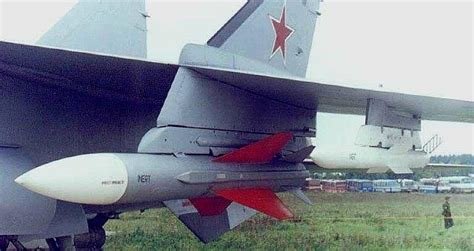
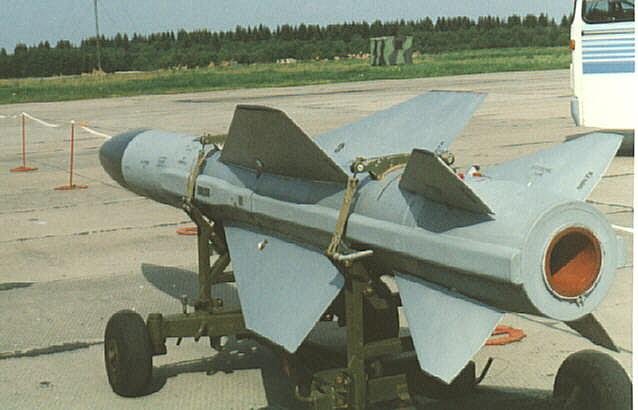
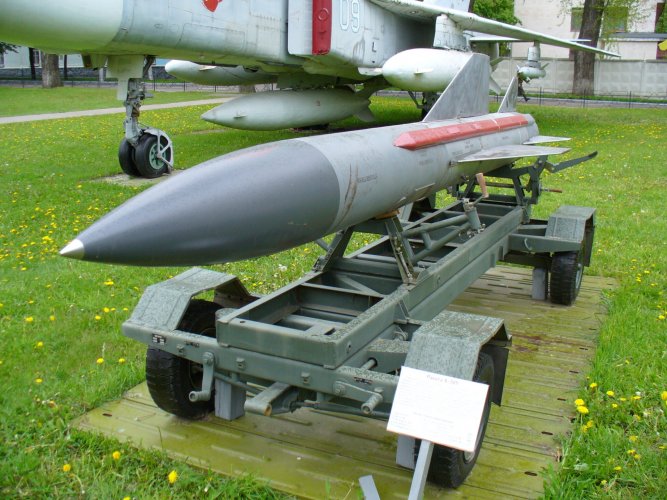
Kh-58/58U

Aeria Gloria

ACCESS: Secret
Joined
8 February 2024
Messages
416
Reaction score
481
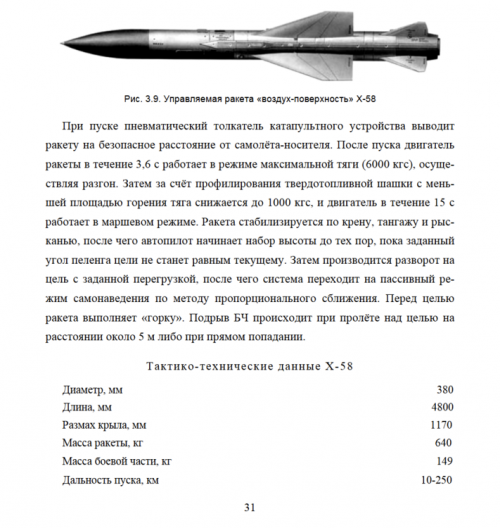
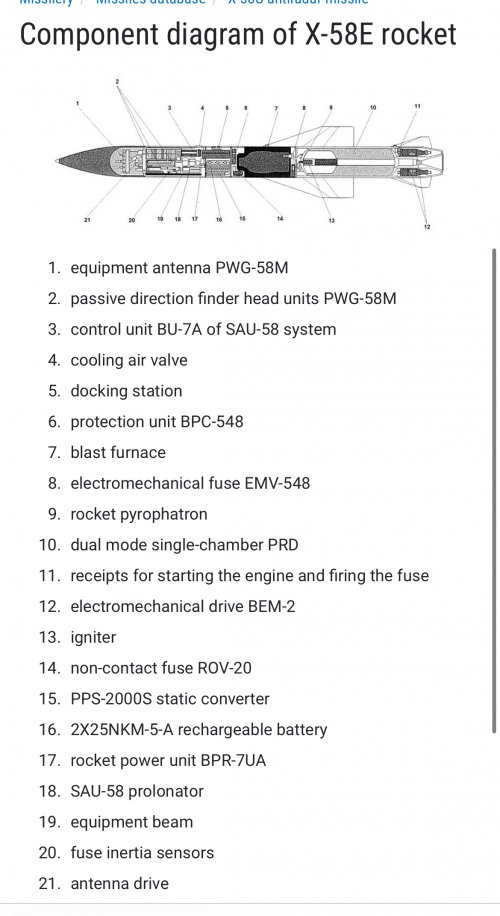
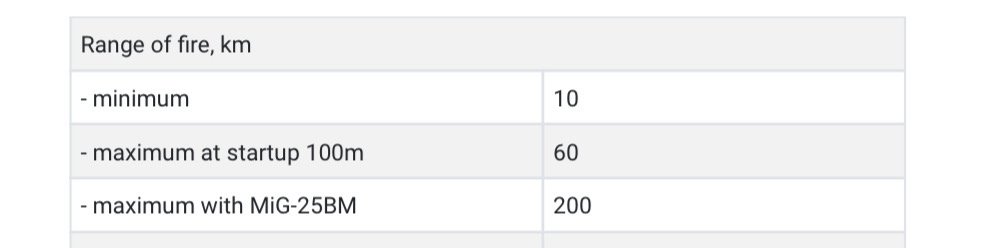
ARM with loft. Long range. Pretty powerful missile especially from MiG-25BM. Multiple head options. Possibly nuclear, which is scary in a ARM that could miss if the emitter is off more then 15 seconds. I started this to not clog up another thread with discussion of it.
No. The Kh-58 has a completely different loft logic
Okay spill the beans don’t keep me hanging. What is the loft logic in reality?

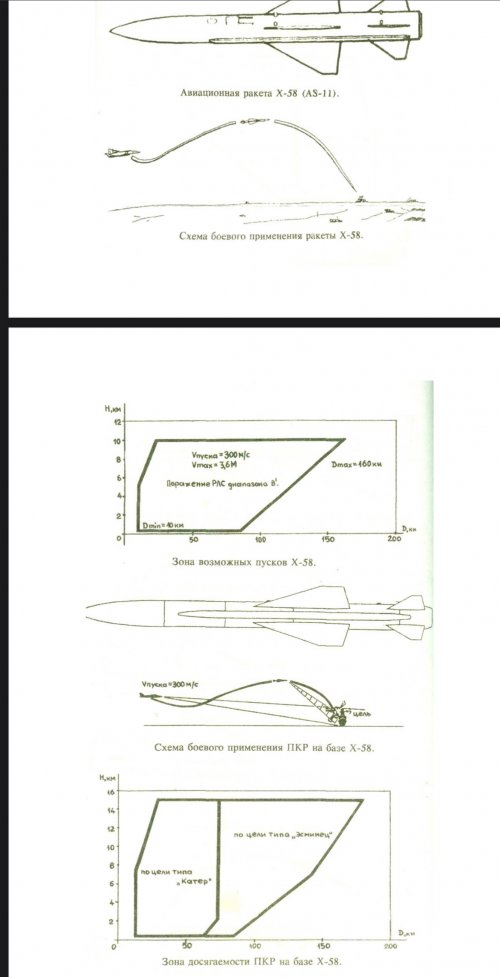
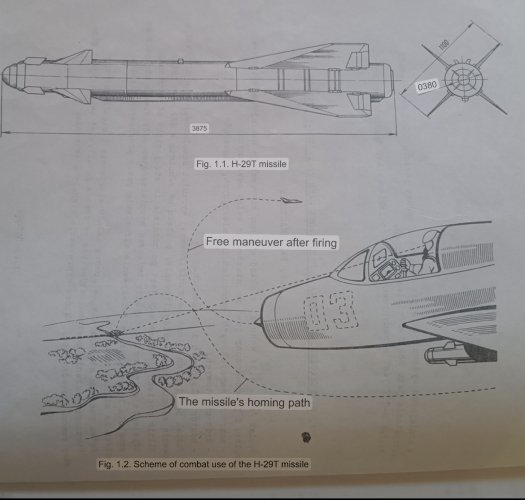
I claimed it was shalllow climb/level flight until target was 6-30 degrees below then proportional navigation onto target becuase this is the profile used by contemporary Soviet missiles like Kh-22/25/29. And the graphic below seems to show it also for an angle of about 30 degrees before the proportional navigation slide.

I don’t have any evidence other than that for Kh-58 sharing the same profile. It would be very interesting if they used a different way of achieving exactly the same trajectory shape!

IMG_0489.png IMG_0488.jpeg IMG_0490.jpeg IMG_0491.jpeg IMG_0493.jpeg IMG_0494.jpeg
 

Attachments

  • IMG_0492.jpeg
    IMG_0492.jpeg
    613.2 KB · Views: 4
Last edited:
ARM with loft. Long range. Pretty powerful missile especially from MiG-25BM. Multiple head options. Possibly nuclear, which is scary in a ARM that could miss if the emitter is off more then 15 seconds. I started this to not clog up another thread with discussion of it.

Okay spill the beans don’t keep me hanging. What is the loft logic in reality?

I claimed it was shalllow climb/level flight until target was 6-30 degrees below then proportional navigation onto target becuase this is the profile used by contemporary Soviet missiles like Kh-22/25/29. And the graphic below seems to show it also for an angle of about 30 degrees before the proportional navigation slide.

I don’t have any evidence other than that for Kh-58 sharing the same profile. It would be very interesting if they used a different way of achieving exactly the same trajectory shape!
I don't know how to explain it accurately. This video (at 7:55) mentions that the Kh-58 climbs using the same method as the SA-5 Gammon, which is similar to a logarithmic spiral (at 5:40). There are no other details provided. However, it is clear that this is a different profile compared to the Kh-22 or Kh-29.

View: https://www.youtube.com/watch?v=aZn9qg0XbSg
 
However, it is clear that this is a different profile compared to the Kh-22 or Kh-29.
Yes but doesn’t say anything about descent stage. I can’t imagine why Soviets would change their technique of proportional navigation once downlook reaches a specific angle.
 
Yes but doesn’t say anything about descent stage. I can’t imagine why Soviets would change their technique of proportional navigation once downlook reaches a specific angle.
My objection was to the logic of the climb to the loft. The Kh-22 has a specific cruise altitude. The Kh-58 does not have a fixed altitude for its flight to the target, and as I understand it, it should not have a horizontal flight segment, and therefore, it should not measure the angle of approach to the target.
 
The Kh-58 does not have a fixed altitude for its flight to the target, and as I understand it, it should not have a horizontal flight segment, and therefore, it should not measure the angle of approach to the target.
Well yes a “logarithmic” climb. But why wouldn’t it still do a proportional navigation dive after the angle to target reaches a certain level?

Yes it is climbing or atleast close to level but the seeker still sees the target at all times below it

My original statement was flying level or climbing until a certain altitude. And yes, perhaps also a logarithmic climb without any altitude in mind.

According to the pictures, it definitely looks logarithmic.

Another place describes the trajectory this way in this case for Kh-25 IMG_0512.jpeg

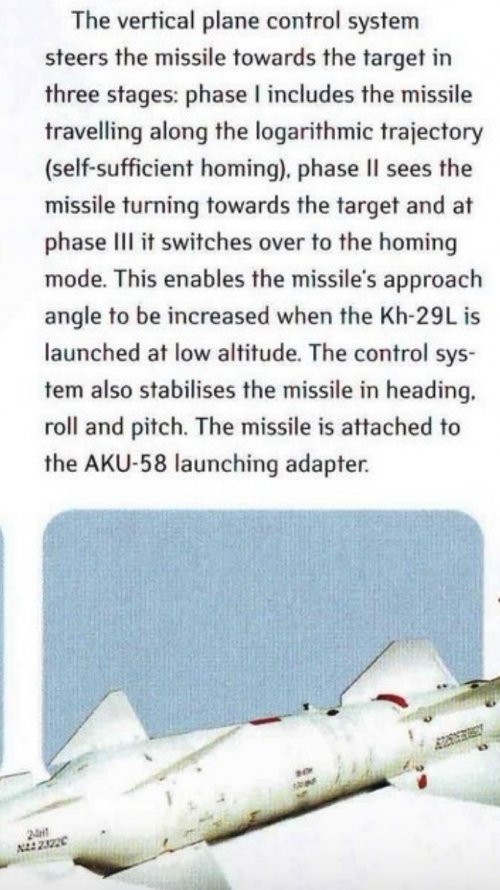
For Kh-29, the guidance has been described like this


1. ⁠At the initial phase, homing is provided with a constant bearing angle, about plus 6 degrees, to increase the approach angle to the target. This is clearly noticeable when launching from low altitudes, less than 500 metres, where the missile will perform a lofting trajectory.
2. ⁠When the required angle of the line of sight inclination to the horizon in the vertical plane is reached (23 degrees max), it switches to an intermediate mode with a constant G.
3. ⁠Once the angle between the missile axis and the target direction becomes less than 8-degrees, a transition to proportional navigation guidance occurs. This is the terminal guidance phase.”

This sounds very similar to what Kh-58 is likely doing. The angle in pictures looks like a shallow 6 degree climb is very probable. The angle of downlook upon the slide is even close to 20-30 degrees. And the seeker itself can look 47 degrees down.

I do not know if this 6 degree climb OR “angle to target + 6 degrees” which would still increase the steepness of the trajectory. If it’s only relation to target there would never be a chance for target angle to reach 23-27 degrees. But if it based on the target that would give a logarithmic curve that slowly levels out and begins to descend.

In this case, it would make sense if it’s just a 6 or xx degree climb (which sounds hardly logarithmic however) until seeker angle is low enough. However this would not produce a logarithmic curve. Which is why I’m sure missiles like Kh-22 are leveling out once they reach a certain altitude.

Perhaps it is doing 6 degrees above target until it is “atleast level” and then maintaining whatever altitude it’s at at that point until seeker angle is 23-27 degrees.

Another source refers to beginning with a “constant” pitch angle which makes it sound like the starting at 6 degrees climb is correct there just must be some logarithmic law that reduces this.
Of course the exact numbers may be different. Like the Kh-25 example earlier gives down look of 27 degrees before slide.

Perhaps it’s the phase 2 portion with constant G that modifies the 6/xx degree climb into a curve after the seeker angle of 23-27 degrees is reached. And this is the origin of “logarithmic.”
IMG_0514.jpeg IMG_0513.jpeg
 
Last edited:

Similar threads

Back
Top Bottom