Hot Suez 1956

What US force? The US wasn't even contemplating military action against the Anglo-French, they were leaning mostly on financial pressure - and by the Brits' own words it would've destroyed the British economy in a matter of weeks.
 
What US force? The US wasn't even contemplating military action against the Anglo-French, they were leaning mostly on financial pressure - and by the Brits' own words it would've destroyed the British economy in a matter of weeks.

IIUC the USN did harrass the British forces at least, with aircraft buzzing British ships and planes.

The US 6th Fleet started with 2 carriers and was reinforced with another 2. These would defeat the Anglo French naval forces, but I don't think it would be cheap or easy.
 
The US 6th Fleet started with 2 carriers and was reinforced with another 2. These would defeat the Anglo French naval forces, but I don't think it would be cheap or easy.
This is exactly what I am thinking about - not as political scenario, but purely on tactical/strategical level.

If the prime minister was to ask for military options, are there any? And what, potentially, could've been done during early 50's to increase those chances?
 
Last edited:
This is exactly what I am thinking about - not as political scenario, but purely on tactical/strategical level.

If the prime minister was to ask for military options, are there any? And what, potentially, could've been done during early 50's to increase those chances?
Britain and France against both USA and USSR? It's absolutely unwinnable scenario.
 
both USA and USSR

Did USSR have any considerable forces in the area or willing to declare war against the coalition? If not, it's only the 6th fleet that has to be dealt with for the moment. I would rather assume they would want to see how NATO crisis plays out first.
 
Did USSR have any considerable forces in the area or willing to declare war against the coalition? If not, it's only the 6th fleet that has to be dealt with for the moment. I would rather assume they would want to see how NATO crisis plays out first.
USSR prepared Tu-4K missile-armed bombers and Tu-16T torpedo bombers to fly to Egypt and Syria, so they could strike against Coalition Navy. Considering that air defense of British and French fleets were essentially the same as during World War 2 - neither side have guided missiles or supersonic deck fighters - the modern bombers with standoff missiles and high-altitude torpedoes could literally obliterate the whole fleet.
 
There were 2 carrier groups in the eastern Med when the party started: Coral Sea (CVA-43) and Randolph (CVA-15). On November 7th, the USN ordered the Forestall (CVA-59) and FDR (CVA-42) carrier groups from Norfolk to the Azores.

So the Anglo-French side would be going from facing an Essex-class and a Midway to facing an Essex, two Midways, and a Forestall. That's just bad news.
Randolph had been refitted with an angled deck by this time, while Coral Sea was still a straight deck. FDR had been refitted with an angled deck, and Forestall was built with an angled deck.​
In fact, that is likely enough firepower to decide the issue if the US decided to start shooting.
 
There were 2 carrier groups in the eastern Med when the party started: Coral Sea (CVA-43) and Randolph (CVA-15). On November 7th, the USN ordered the Forestall (CVA-59) and FDR (CVA-42) carrier groups from Norfolk to the Azores.
American deck fighters flying escort for Soviet missile-carrying bombers against British fleet would be a sight to see.
 
France fleet defense was still F4U Corsairs, indeed. The Aéronavale had procured a hundred of licence-build DH Venoms rebranded Aquilons, but they were marginals on the existing carriers. Lafayette and Bois Belleau were fast enough (30 kt) but decks not long enough, 180 m. And Arromanches was the opposite: 200 m+ but too slow (24 kt). Aquilons could fly trials but not combat missions.

By the way France sent the Jean Bart battleship to Suez, but its 16-inch guns turrets were undermanned. The same Jean Bart already had dueled with a US fleet in the past: Operation Torch, 11/1942.

But obviously, the economic weapon and the nuclear threat ensured there would be no conventional fight.
 
What is that?
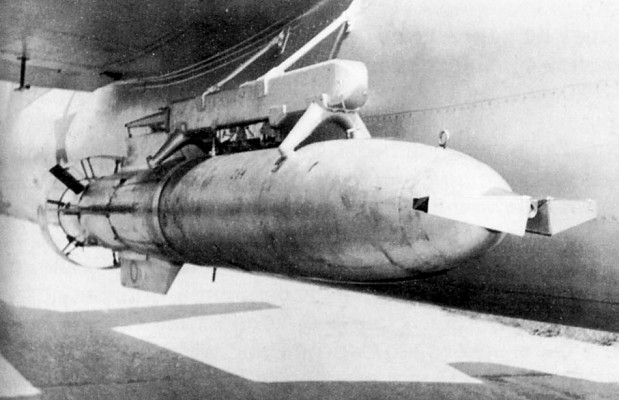
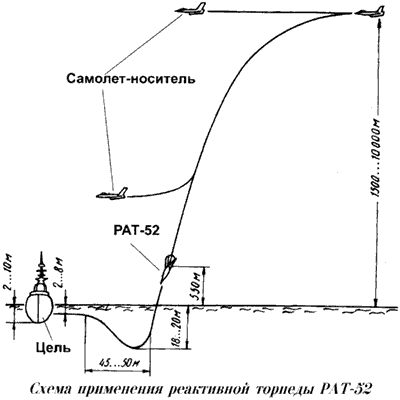
RAT-52 rocket-propelled torpedo.
1770546442950.png

1770546222075.png

It was a small 45-cm topedo fitted with parachute and gyroscopic autopilot for controlled descent. It was designed for high-altitude drop from 1500 to 10000 meters level flight. After being dropped, torpedo descended under autopilot control, opened parachute at 550 meters, splashed into the water, then fired its rocket engine and dashed forward at pre-set depth. Essentially it was designed for high-altitude attacks against enemy ships and convoys.
 
Which returns to my original question - would any of early 50's projects, like the missile cruiser carrier conversions


change the overall situation? Or there was no chance to complete and deploy any of them in time?
No, they're fucked. They can't get them in time and they wouldn't make enough of a difference if they did.

This is exactly what I am thinking about - not as political scenario, but purely on tactical/strategical level.

If the prime minister was to ask for military options, are there any? And what, potentially, could've been done during early 50's to increase those chances?
Bend over, put their heads between their legs, and kiss their asses goodbye.
 
Let's say Britain and France do not back off at US warning and prepare to engage the US forces.

Was there a chance to win? What would be a feasible order of battle? Could possible carrier conversions or any other known projects make a difference?
By 1956 France was rebuilding from WWII devastation , licking its wounds from Indochina while fighting an awful bush war in Algeria. No way we can and would pick a fight with Uncle Sam. Plus, most of the military gear was american, so just cut spares and the french are doomed.
 
A major problem with the Suez crisis was the slow reaction from the Anglo-French. If the British in particular had been able to mount an immediate response like they did in the Falklands the political environment would likely have been more favourable for success. This would have required a different naval strategy from 1948/49 to emphasise carriers etc over ASW escorts.
 
Which returns to my original question - would any of early 50's projects, like the missile cruiser carrier conversions


change the overall situation? Or there was no chance to complete and deploy any of them in time?
No, I don't believe there was anything that the Anglo-French could have done. The US had two bigger carriers already in the area, and sent two more carriers that were even bigger yet. All of them had good jets. Well, jets that were good for the time.
 
This would have required a different naval strategy from 1948/49 to emphasise carriers etc over ASW escorts.

1) This, but do you imagine it in any detail? Like how much carriers, etc, or which jets could've been procured for them at the time?
2) Long range land-based aviation? Strikes from Toulon/Gibraltar? Prevent Forrestal and other reinforcements from entering the Med? Submarine attacks?

A major problem with the Suez crisis was the slow reaction from the Anglo-French. If the British in particular had been able to mount an immediate response
I am driving precisely in this direction. IF they had been able to react, what could they technically do?
 
Last edited:
USSR prepared Tu-4K missile-armed bombers and Tu-16T torpedo bombers to fly to Egypt and Syria, so they could strike against Coalition Navy. Considering that air defense of British and French fleets were essentially the same as during World War 2 - neither side have guided missiles or supersonic deck fighters - the modern bombers with standoff missiles and high-altitude torpedoes could literally obliterate the whole fleet.
Bit harsh there cause all the worlds fleets were still basically WW2 fleets. The US in 1956 only had 1 or 2 ships with SAMs. The US Navy first supersonic fighter F11 wouldnt enter service till the next year 1957.
This would have required a different naval strategy from 1948/49 to emphasise carriers etc over ASW escorts.
I mean the RN could do both using the armoured carriers for the strike role while the light fleets can be used for AS role
 
1) This, but do you imagine it in any detail? Like how much carriers, etc, or which jets could've been procured for them at the time?

IIUC the RN carrier authorised of planned strength in the couple of years before Suez was 6, which included the Centaur class. Of these 4 could be expected to be in commission at any one time, so that's the maximum that would be available for a quick reaction to Suez.

Another problem is the amphibious forces, Britain had LST Mk3 and LCT Mk 8, both slow and small types with no LPDs as they were Lend Lease and returned to the US after WW2. A couple of LPDs, given to the British under MAP would have been very valuable during Suez, especially for a quick reaction operation.
 
Bit harsh there cause all the worlds fleets were still basically WW2 fleets. The US in 1956 only had 1 or 2 ships with SAMs. The US Navy first supersonic fighter F11 wouldnt enter service till the next year 1957.
Dilandu's confidence in the capabilities of Soviet forces and the uselessness of NATO is a useful antidote to most posters confidence in the capabilities of NATO forces and the uselessness of the Soviets.
 
Dilandu's confidence in the capabilities of Soviet forces and the uselessness of NATO is a useful antidote to most posters confidence in the capabilities of NATO forces and the uselessness of the Soviets.
Indeed, but it's the motivation that I think a bit questionable here. Would the Soviets intervene along with Americans if they see things are getting really serious? Or just sit back and enjoy the show? Would Nasser not be persuaded to some kind of arrangement if UK/France showed some kind of resolve and planning?

But getting back to more tactical matters, I incline towards the notion that the minimum requirement would be preventing the US reinforcements joining up with the 6th fleet, to ensure they deal with two carriers at a time and not four. Mediterranean sea is a closed theater, with only two entry points from outside, and one (Suez) is already practically blocked. So -

2) Long range land-based aviation? Strikes from Toulon/Gibraltar? Prevent Forrestal and other reinforcements from entering the Med? Submarine attacks?
 
Last edited:
Another problem is the amphibious forces, Britain had LST Mk3 and LCT Mk 8, both slow and small types with no LPDs as they were Lend Lease and returned to the US after WW2. A couple of LPDs, given to the British under MAP would have been very valuable during Suez, especially for a quick reaction operation.
It is true that Britain's amphibious force at the time of Suez was built around the LST(3) and LCT(8) with max speeds of 12-13 knots. But there were also 11 merchant cargo liners engaged as troopships (the equivalent of many of the wartime LSI(L))

Beyond that I think you are getting a bit muddled. There are two types of ship. The LSD and the LPD.

It was 4 x 16-17 knot LSD that were supplied to Britain in WW2. These were great for carrying smaller craft (e.g. 3 x US built LCT(5) or 14 x LCM(3), DUKW etc) but their troop accommodation was very limited (about 240). The USN laid down another 22 for their own use in WW2.

The successor to the wartime LSD, the Thomaston class laid down from 1954 was faster (22 knots) but still only had accommodation for 320 troops. The USA didn't begin to lay down the first of the 20 knot Raleigh class LPD until 1960. It was them that had troop accommodation for 1,000 men.

In the 1950s the USN amphibious fleet was still very much built around wartime construction. LSD (see above), LST(2) (10-11.5 knots) plus a couple of dozen slightly larger & faster versions buiit around the mid-1950s, LSM (13 knot), the 16 knot AGC, the APD High Speed Transports (24 knots) based on the DE hull with accommodation for about 162 troops, and the Haskell class APA (17-19 knots, troop capacity about 1,560). It took the presence of all these types for the USN to mount a successful amphibious operation.

The WW2 RN equivalent of the APA was the LSI(L). Being converted from requisitioned merchantmen, they had all been returned to their owners in the immediate post war period. The RN equivalent of the AGC at Suez was the LSH(S) Meon, a converted River class frigate (the RN also had a pair of LST(3) converted for the role).

So, even if the RN still had a couple of LSD, I'm really not sure how you see a force of less than 500 men having much of an influence on things at Suez given what is really a marginal difference in speed over the 1,000 miles or so from Malta.

 
Last edited:
Indeed, but it's the motivation that I think a bit questionable here. Would the Soviets intervene along with Americans if they see things are getting really serious? Or just sit back and enjoy the show? Would Nasser not be persuaded to some kind of arrangement if UK/France showed some kind of resolve and planning?
I'd expect that the Soviets would sit back and enjoy watching NATO destroy itself.


But getting back to more tactical matters, I incline towards the notion that the minimum requirement would be preventing the US reinforcements joining up with the 6th fleet, to ensure they deal with two carriers at a time and not four. Mediterranean sea is a closed theater, with only two entry points from outside, and one (Suez) is already practically blocked. So -
Good luck preventing a 2-carrier group from forcing past Gibraltar.
 
Bit harsh there cause all the worlds fleets were still basically WW2 fleets. The US in 1956 only had 1 or 2 ships with SAMs. The US Navy first supersonic fighter F11 wouldnt enter service till the next year 1957.
Maybe so, but USN at least have much more capable deck interceptors in Skyray's and Demon's (and even Cutlasses), which were significantly faster and carried missile armament, not merely guns. Granted, both Sparrow-I and early model Sidewinders were rather primitive; but they were workable against large high-altitude bombers.
 
Good luck preventing a 2-carrier group from forcing past Gibraltar.
Couple of RN submarines waiting for them as they past Gibraltar, like Ark Royal in WW2

I'd expect that the Soviets would sit back and enjoy watching NATO destroy itself
One thing i find quite hypocritical of the whole US reaction to the suez crisis, yes i get the geoplotics aa to why. But if it was opposite and panama was threating to nationalise the panama canal i can only begin to think how the us would react in the 50s
 
Maybe so, but USN at least have much more capable deck interceptors in Skyray's and Demon's (and even Cutlasses), which were significantly faster and carried missile armament, not merely guns. Granted, both Sparrow-I and early model Sidewinders were rather primitive; but they were workable against large high-altitude bombers.
Agian they had only just entered service with the usn that year and the british would have the firestreak enter next year. They could probably rush it into service in 56 if they had too. While Sea Venoms aint the best its better tha what the french were using. Realistically the gun armed DH.110 should have be brought instead of the sea venoms, the DH.116 for the light fleets and navalised P.1081 instead of the later sea hawk variants.
 
Beyond that I think you are getting a bit muddled. There are two types of ship. The LSD and the LPD.

It was 4 x 16-17 knot LSD that were supplied to Britain in WW2.

Yes, I typed P instead of S.

In particular I was thinking of the Casa Grande class, 4 were supplied to the RN via Lend Lease, returned to the US who then transferred 2 to Greece then re-transfered one to France. I was thinking a couple could be transferred to Britain under MAP.

So, even if the RN still had a couple of LSD, I'm really not sure how you see a force of less than 500 men having much of an influence on things at Suez given what is really a marginal difference in speed over the 1,000 miles or so from Malta.

I was thinking less about ship speed and more about readiness. IIUC 7 x LST Mk3 and 10 x LCT Mk8 participated in the Suez amphibious operation, these would have been all over the place, doing routine transport duties for the British military.

I'd think that a single Casa Grande LSD would be worth several LSTs and LCTs, so having one in service ready to go means the British have to herd fewer cats to get the amphibious force underway and can ignore the 3 or so most distant or inconvenient LST/LST.
 
Yes, I typed P instead of S.

In particular I was thinking of the Casa Grande class, 4 were supplied to the RN via Lend Lease, returned to the US who then transferred 2 to Greece then re-transfered one to France. I was thinking a couple could be transferred to Britain under MAP.


I was thinking less about ship speed and more about readiness. IIUC 7 x LST Mk3 and 10 x LCT Mk8 participated in the Suez amphibious operation, these would have been all over the place, doing routine transport duties for the British military.

I'd think that a single Casa Grande LSD would be worth several LSTs and LCTs, so having one in service ready to go means the British have to herd fewer cats to get the amphibious force underway and can ignore the 3 or so most distant or inconvenient LST/LST.
From the list of ships on Wiki I count 12 LST(3).

7x RN vessels - Anzio, Lofoten, Puncher, Ravager, Reggio, Salerno, & Striker.
1x War Dept - Evan Gibb
4x chartered from the Atlantic Steam Navigation Co. - Empires Celtic, Cedric, Doric & Cymric.

LST(3) had been used from early post war by ASN to provide ro-ro services across the North Sea and later across the Irish Sea. Initially acquired on charter from the Admiralty, they had been purchased outright around 1954.

I'm less familiar with names v numbers on the LCT(8).

Edit:- I should have added that some RN LST(3) were equipped to carry 7 (?) LCM on their upper deck or had additional davits to carry LCAs.
 
Last edited:
From the list of ships on Wiki I count 12 LST(3).

7x RN vessels - Anzio, Lofoten, Puncher, Ravager, Reggio, Salerno, & Striker.
1x War Dept - Evan Gibb
4x chartered from the Atlantic Steam Navigation Co. - Empires Celtic, Cedric, Doric & Cymric.

LST(3) had been used from early post war by ASN to provide ro-ro services across the North Sea and later across the Irish Sea. Initially acquired on charter from the Admiralty, they had been purchased outright around 1954.

I'm less familiar with names v numbers on the LCT(8).

I have no doubt you're correct.

My point is that these ships were scattered all over Europe doing jobs and had to be bought back to Britain (or wherever), loaded, then sent to Malta. 1 or 2 LSD could mean that the RN wouldn't have to wait for the (maybe 5?) furthest and least convenient LSTs or LCTs, they could head for Malta as soon as they were loaded, which should speed up the overall operation.

On a side note, I've been slow to appreciate how back in the Cold War so many military assets like landing craft and transport aircraft were engaged in routine administrative transport work that they wouldn't touch with a barge pole these days.
 
I have no doubt you're correct.

My point is that these ships were scattered all over Europe doing jobs and had to be bought back to Britain (or wherever), loaded, then sent to Malta. 1 or 2 LSD could mean that the RN wouldn't have to wait for the (maybe 5?) furthest and least convenient LSTs or LCTs, they could head for Malta as soon as they were loaded, which should speed up the overall operation.

On a side note, I've been slow to appreciate how back in the Cold War so many military assets like landing craft and transport aircraft were engaged in routine administrative transport work that they wouldn't touch with a barge pole these days.
On the other hand why believe any LSD available wouldn't have been otherwise engaged before being required for Musketeer.1956 You also assume that the LST(3) would be "scattered". Do you have details of their employment prior to being called up for Musketeer?

Looking at the list of LST(3) the RN did have others that were not deployed or had been sold in 1956. I dont know the status or location of them in summer 1956 but they did seem to exist.
 
On the other hand why believe any LSD available wouldn't have been otherwise engaged before being required for Musketeer.1956 You also assume that the LST(3) would be "scattered". Do you have details of their employment prior to being called up for Musketeer?

Looking at the list of LST(3) the RN did have others that were not deployed or had been sold in 1956. I dont know the status or location of them in summer 1956 but they did seem to exist.

I am making a lot of assumptions; however, I believe that an LSD or two would be used differently from almost 2 dozen smaller amphibious craft. The former a key, almost 'capital' assets, likely to be used less on routine administrative transport tasks and more for exercises and training.

I don't know the whereabout of LSTs and LCTs in 1956, but I'm aware that back in the Cold War militaries were far more self-contained than they are now and did a lot of their own routine transport. Even as late as 1982 of the 6 LSLs only 4 were in Britain, 1 was in Canada and another in Belize, so presumably in 1956 a number of the LSTs and LCT were in places like Germany and scattered around Britain's various areas of responsibility in 1956. What I do know is that it took 3 months for Britain to organise enough forces to undertake Musketeer, some of which was getting carriers into commission but certainly the large amphibious operation took some time to gather.
 
A couple of 15-knot T-class with Mark 8 torpedoes are not an especially credible threat to two carrier groups.
According to rn organisation and shil deployments 1947 to 2013 https://www.naval-history.net/xGW-RNOrganisation1947-2013.htm , the royal navy had 4x S class and 3x T class boats in the mediterranean bases at malta. While be WW2 vintage they are still are credible threat to the carriers especcially through the straight at gibraltar. It only takes 1 boat to get luckly. Correct me if im wrong but CVA didnt carry an ASW aircraft in there airwings too
 
It was 4 x 16-17 knot LSD that were supplied to Britain in WW2.
It was seriously proposed postwar to hang on to OCEANWAY for amphibious training and development, but this didn't come to pass.
It took the presence of all these types for the USN to mount a successful amphibious operation.
It is also not coincidence that the wartime LSD, APA and AGC have similar speeds: they were designed to function as a 15-16 knot landing force. The LSD was needed not to transport troops, but to transport landing craft preloaded with equipment - the limited troop capacity should be understood as essentially for vehicle crews.
I know it's hypothetical, but France not surrendering is a bit much.
You mean the country that, when it decided to conquer Europe, took the entire continent uniting against it for more than a decade to bring it down? Or the one that fought Germany to a standstill in 1914?
While be WW2 vintage they are still are credible threat to the carriers especcially through the straight at gibraltar.
If the USN is particularly worried, all it has to do is scream through the strait at 30 knots. Unless the submarine is in the exact right place, the only thing it can do is send rude messages on the Aldis lamp.
 
Back
Top Bottom