

You are using an out of date browser. It may not display this or other websites correctly.
You should upgrade or use an alternative browser.
You should upgrade or use an alternative browser.
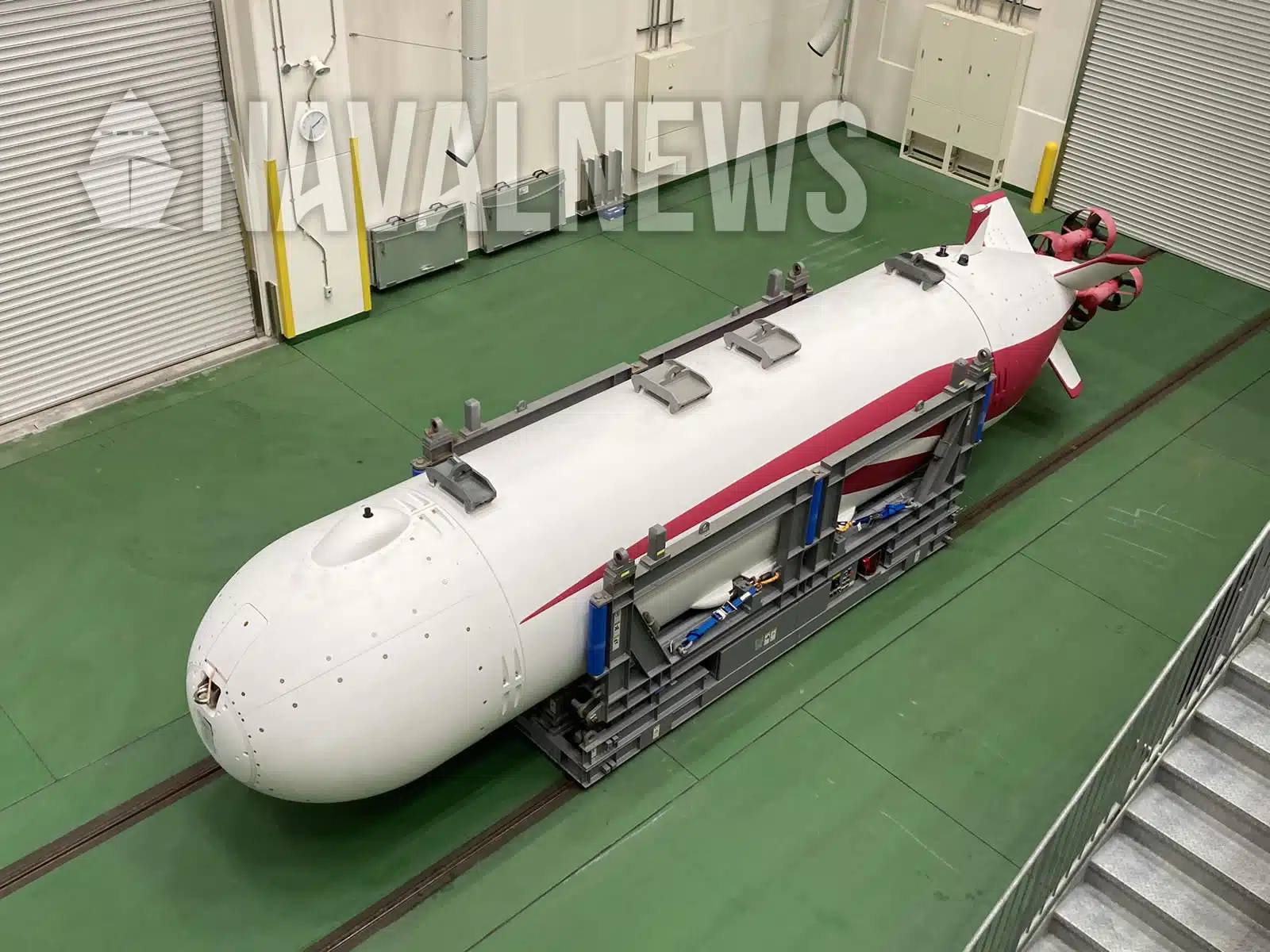
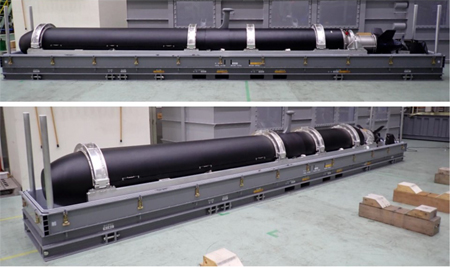
Japanese Extra-large unmanned underwater vehicle (XLUUV)
- Thread starter GTX
- Start date

takacosta
ACCESS: Confidential
- Joined
- 21 January 2025
- Messages
- 88
- Reaction score
- 334
View: https://x.com/JMSDF_PAO/status/2013508946481582260

I don’t know where to post information about Japan’s new UUV, so I’ll just post it here for now.
I don’t know where to post information about Japan’s new UUV, so I’ll just post it here for now.
takacosta
ACCESS: Confidential
- Joined
- 21 January 2025
- Messages
- 88
- Reaction score
- 334
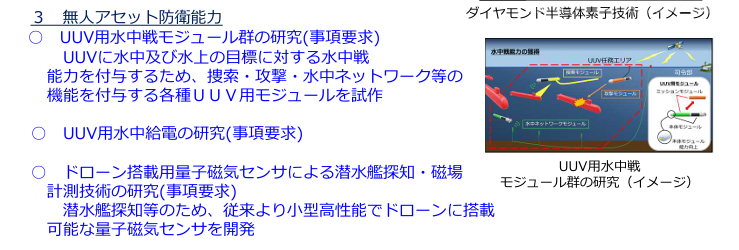
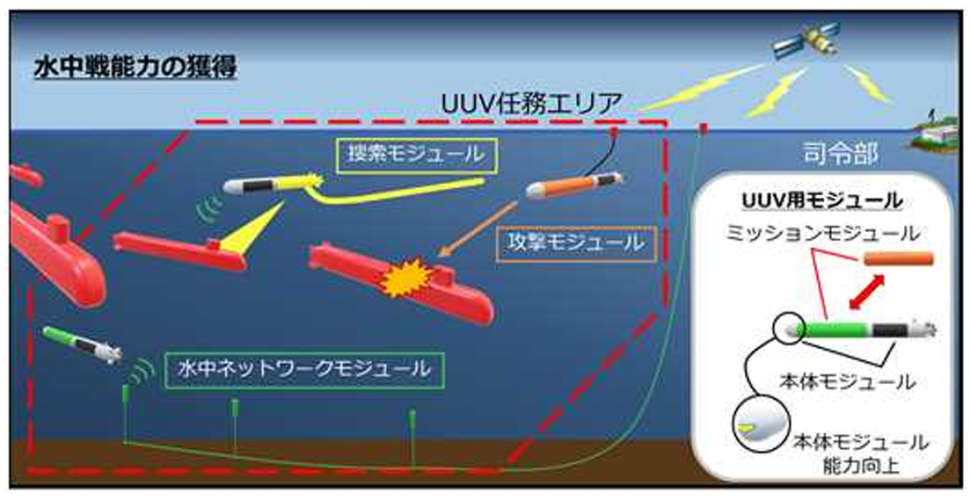
As for the small UUV for underwater defense, it appears to have a different origin from the long-endurance UUV and was not developed with ATLA’s involvement in R&D; the developer is therefore likely either MHI or JMU.View: https://x.com/JMSDF_PAO/status/2013508946481582260
View attachment 799126
I don’t know where to post information about Japan’s new UUV, so I’ll just post it here for now.
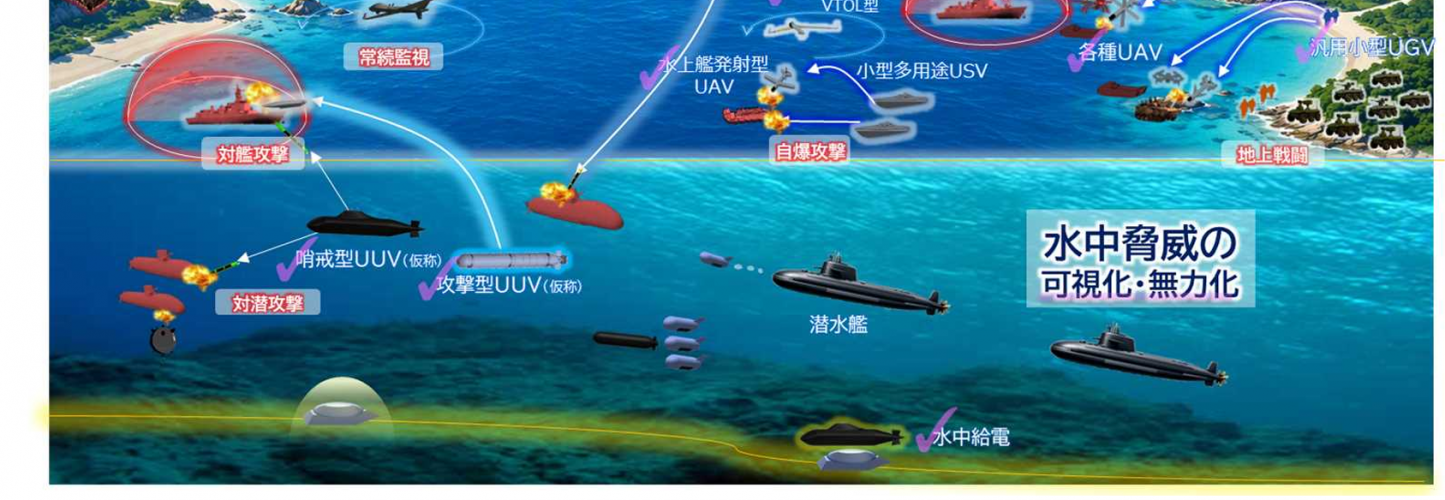
Research funding has been allocated for underwater communication and power transmission.
The underwater communication likely involves short-range visible light communication technology—covering distances of around 1 km—using devices such as GaN lasers; but what about the underwater power transmission? Would it be something similar to the wireless charging used for smartphones?
underwater communication news
https://www.kyocera.co.jp/rd-openinnovation/catalog/underwater_vlc.html
https://www.oki.com/jp/marine/tech/uw_sound_com/
https://www.shimadzu.co.jp/industry/products/underwater/index.html
underwater power transmission news
https://jpn.nec.com/techrep/journal/g21/n01/210126.html
The underwater communication likely involves short-range visible light communication technology—covering distances of around 1 km—using devices such as GaN lasers; but what about the underwater power transmission? Would it be something similar to the wireless charging used for smartphones?
underwater communication news
https://www.kyocera.co.jp/rd-openinnovation/catalog/underwater_vlc.html
https://www.oki.com/jp/marine/tech/uw_sound_com/
https://www.shimadzu.co.jp/industry/products/underwater/index.html
underwater power transmission news
https://jpn.nec.com/techrep/journal/g21/n01/210126.html
Attachments

tychosis
ACCESS: Secret
- Joined
- 16 March 2025
- Messages
- 209
- Reaction score
- 639
Yeah. From the first Kyocera link:Underwater communications is more typically by acoustic modem, though lasers may work for extremely short range but high bandwidth transmission. I think that 1 mike estimate is very generous.
- Long-distance transmission: Maximum communication distance of approximately 1 km (theoretical value on land)
Uh, ok. Admittedly I had Chrome autotranslate the page but uhhh, assuming the translation is accurate... I don't understand how stating the distance on land helps.
You're right; I had overlooked that.Yeah. From the first Kyocera link:
- Long-distance transmission: Maximum communication distance of approximately 1 km (theoretical value on land)
Uh, ok. Admittedly I had Chrome autotranslate the page but uhhh, assuming the translation is accurate... I don't understand how stating the distance on land helps.
I looked into it while I was at it, and it seems the specs are:
32 kbps over 2 km for acoustic communication,
and for laser communication, ? bps over 300 m and 1 Gbps over 100 m.
I was the one who started this topic in the LUUV thread, so I'm partly to blame, but what exactly is the utility of this technology?
tychosis
ACCESS: Secret
- Joined
- 16 March 2025
- Messages
- 209
- Reaction score
- 639
Like I mentioned in a post over in that thread... ( https://www.secretprojects.co.uk/th...tonomous-underwater-vehicle.28859/post-935632 )... I'm honestly not certain anyone knows haha.but what exactly is the utility of this technology?
Everyone is working on UUVs but no one really has a solid plan on CONOPS and the overall "why are we doing this again?" There are plenty of proposed applications but none that UUVs are really fit-for-use for today. (But like I also mentioned in that thread... it's still early.)
Originally, this tech was used as lidar for subs.
Now, it's both comms and steathy optical/IDing for UUV/sensor station for coastal defense/mine search & destroy etc.
Or coordinated UUV swarm action.
A lot of uses but limited by range and frankly bandwidth for livefeed among others etc. Not only is a huge backbone network infrastructure of comms relay stations needed but also the processing across the network.
Now, it's both comms and steathy optical/IDing for UUV/sensor station for coastal defense/mine search & destroy etc.
Or coordinated UUV swarm action.
A lot of uses but limited by range and frankly bandwidth for livefeed among others etc. Not only is a huge backbone network infrastructure of comms relay stations needed but also the processing across the network.
You're right; I had overlooked that.
I looked into it while I was at it, and it seems the specs are:
32 kbps over 2 km for acoustic communication,
and for laser communication, ? bps over 300 m and 1 Gbps over 100 m.
I was the one who started this topic in the LUUV thread, so I'm partly to blame, but what exactly is the utility of this technology?
High bandwidth data offload. Because acoustic data transmission is so slow, sensors forwarding info this way need to have a lot of in node edge processing so that thier data is a small finished product, like a contact report. But there would still be a desire for bulk raw data offload if possible. Example: a persistent sensor node like the USN TRAPS transferring bulk raw data to a glider UUV that functions as a radio gateway on the surface. This would not be super useful for timely tactical reports, but it would be for long term pattern analysis and detection of new signals that current algorithms could not identify.
It is basically the difference between a WiFi hotspot and a mediocre cell signal on a much greater bandwidth scale - both are wireless and need no physical plug in but they handle data in different amounts at different ranges.
Like I mentioned in a post over in that thread... ( https://www.secretprojects.co.uk/th...tonomous-underwater-vehicle.28859/post-935632 )... I'm honestly not certain anyone knows haha.
Everyone is working on UUVs but no one really has a solid plan on CONOPS and the overall "why are we doing this again?" There are plenty of proposed applications but none that UUVs are really fit-for-use for today. (But like I also mentioned in that thread... it's still early.)
I think it is more of a case of those who know do not tell. There was a lot of testing and public information about US rapidly deployable underwater sensors in the late 90s and early 2000s, largely under the project name SeaWeb, but it has all gone dark. But as far back as 2000 there tests with mesh network acoustic modems connected radio gateway buoys using the Iridium satellite network to integrate to IUSS. These included experimental connections via radio equipped glider UUVs and also to actual submarines as well, specifically USS Asheville if I recall (all of the references to this seem to have gone dark so I work from memory). Free floating horizontal arrays with hydrophone position information and deep water vertical arrays for reliable acoustic path were some of the sensors, as well as more conventional sonobuoy type hydrophone and MAD detectors. There were also experiments with remote power generation, including buoys that used wave action and seabed turbines that used currents/tides.
I suspect the USN at least has a wide collection of sensors for various seabed conditions and depths, along with the underwater connection acoustic and radio gateway connections to them, and appropriate CONOPS to integrate them efficiently with IUSS.
Last edited:
Scott Kenny
ACCESS: USAP
- Joined
- 15 May 2023
- Messages
- 19,678
- Reaction score
- 28,164
I honestly thought that the CONOPS for BLQ-11 LMRS was reasonable. Even if it had to go back to the mothersub to offload the data.Like I mentioned in a post over in that thread... ( https://www.secretprojects.co.uk/th...tonomous-underwater-vehicle.28859/post-935632 )... I'm honestly not certain anyone knows haha.
Everyone is working on UUVs but no one really has a solid plan on CONOPS and the overall "why are we doing this again?" There are plenty of proposed applications but none that UUVs are really fit-for-use for today. (But like I also mentioned in that thread... it's still early.)
ACOUSTIC MODEMS ARE NOT COVERT! (shouting intentional)But as far back as 2000 there tests with mesh network acoustic modems connected radio gateway buoys using the Iridium satellite network to integrate to IUSS.
I feel like you are shouting so loud an acoustic modern can hear it!
I’m not a guy with security clearances but I’ve read enough and hung out with enough drunken sailors that I expect there is an under water IP protocol for submarines and remote sensors going back a couple decades.
There was also an old sturgeon guy who told me the emergency radio buoy went 1500 feet, which was either wrong or a huge security breach for that class.
I’m not a guy with security clearances but I’ve read enough and hung out with enough drunken sailors that I expect there is an under water IP protocol for submarines and remote sensors going back a couple decades.
There was also an old sturgeon guy who told me the emergency radio buoy went 1500 feet, which was either wrong or a huge security breach for that class.
Scott Kenny
ACCESS: USAP
- Joined
- 15 May 2023
- Messages
- 19,678
- Reaction score
- 28,164
I feel like you are shouting so loud an acoustic modern can hear it!

I mean, it's an obvious sound/data source, so it's gotta be encrypted or everyone in the ocean knows what you're saying.I’m not a guy with security clearances but I’ve read enough and hung out with enough drunken sailors that I expect there is an under water IP protocol for submarines and remote sensors going back a couple decades.
Remember back in the old dial-up days, when picking up the phone while someone was online would mess things up?
But basic IP with encrypted transmission would be what I expect to be used. I never got to play with any of that stuff while on missile subs.
That may be correct, but Sturgeons have been gone for 25+ years now. IIRC ours were set to pop at test+200, and Ohios had two emergency radio buoys. Get a sufficiently-large depth excursion and you'd better stick up an antenna yourself to say "no, I'm okay just had an oops and popped the buoys!"There was also an old sturgeon guy who told me the emergency radio buoy went 1500 feet, which was either wrong or a huge security breach for that class.
tychosis
ACCESS: Secret
- Joined
- 16 March 2025
- Messages
- 209
- Reaction score
- 639
Most of my work over the past decade or so was in active systems including voice and digital ACOMMS, and not only are they inherently overt but they're extremely bandwidth-limited.I mean, it's an obvious sound/data source, so it's gotta be encrypted or everyone in the ocean knows what you're saying.
You can really only manage reasonable data-rates over relatively short ranges. Beyond that, multipath propagation "smears" your messages and you have to keep things slow. TCP/IP doesn't really work because it's connection-oriented and requires two-way communication for ACKs etc, something that often just isn't viable.
As much as it pains me to say it (as someone who has spent his entire adult life working on sonar...) but radio will always be king.
Wow, there were “oops” buoy incidents? That had to be career ending.That may be correct, but Sturgeons have been gone for 25+ years now. IIRC ours were set to pop at test+200, and Ohios had two emergency radio buoys. Get a sufficiently-large depth excursion and you'd better stick up an antenna yourself to say "no, I'm okay just had an oops and popped the buoys!"
Scott Kenny
ACCESS: USAP
- Joined
- 15 May 2023
- Messages
- 19,678
- Reaction score
- 28,164
I am not aware of any involving a missile boat.Wow, there were “oops” buoy incidents? That had to be career ending.
There were several recorded depth excursions that I saw in the Lessons Learned Binder. Only featuring fast attack boats.
Similar threads
-

-

-
PLAN Extra-Large Uncrewed Underwater Vehicle (XLUUV) program
- Started by Grey Havoc
- Replies: 1
-
-
