It’s a truth most Americans struggle with since it’s been more than 40 years since we’ve truly engaged in a major war against a peer or near peer military, so we as a country have become accustomed to minimal losses.
You have it the other way around. We've been fighting wars that don't matter for >40 years so nobody wants to take losses. It's a very similar time frame to the divide, both in chronology and in the stakes, between the Civil War and the WW2. Lots of nothing wars in between those two made the Japanese question America's mettle.
100% agree. It is a big investment in infrastructure. The biggest drawbacks to nuclear propulsion has been solved in the last decade..
Previously a surface ship needed two reactors for redundancy. They needed to be large enough to provide maximum speed and the steam from the reactors turned the prop shafts directly.
Today we have electric motors on the prop shafts with generators. A single smaller nuclear reactor can then be used to produce electricity for the average consumption of the ship. A gas turbine generator can then provide redundancy and full power of all systems while at maximum sprint speed. The vast majority of the time the ship would be cruising around at 15-20 knots running only off the small nuclear reactor.
It is worth noting that a ship that needs 100mw of power to sprint at 30 knots needs less than 10mw of power to cruise at 15 knots. The reactor could be much smaller (cheaper) than you think.
Such a hybrid nuclear design would save 90+% of the fuel of an all gas turbine powered ship while having a total nuclear reactor size less than 10% of the size of an all nuclear design. The reactor module could be modular and removable so the ship yard doesn't need the same level of nuclear fuel handling.
In terms of designing this hybrid nuclear propulsion layout it would not be that difficult. The latest ship designs such as the UK type 48 Destroyer and even the Australian LHD ships already have electric motors on the prop shafts. They have compact gas turbines generating electricity for maximum speed but also efficient diesels producing enough electricity to allow for the ship to cruise around. The modular nuclear reactor would then replace the diesel engines and connect to the same electric backbone on the ship.
Even a small modular reactor that produced only 5mw continuous electricity would produce massive fuel savings of over 50%. LHD ships would be a perfect use case for hybrid nuclear as they move very slowly during operations so a small nuclear reactor could power all the radar and internal system with a little bit left to cruise around slowly.
Likewise an arsenal ship doesn't need to keep up with the carriers. It can cruise into theatre running on nuclear power at similar speeds to the amphibious ships. Once in theatre the reactor can power all the high power radar/laser systems with enough power left to slowly move around. The gas turbines kick on when the ship needs to move fast.
Given that we're going to need to further nuclearize the fleet due to the sheer energy consumption of all the electronics (and later, energy weapons)? We're going to need to upgrade most, if not all, of our nuclear construction to meet future threats.
ICE (Internal Combustion Engine) ships are being outmoded by the increasingly high floor.
Given that we're going to need to further nuclearize the fleet due to the sheer energy consumption of all the electronics (and later, energy weapons)? We're going to need to upgrade most, if not all, of our nuclear construction to meet future threats.
ICE (Internal Combustion Engine) ships are being outmoded by the increasingly high floor.
That's incorrect. A micro SMR such as the eVinci or SEALER-55 could be dropped in at any shipyard. They are similar size and weight to the large diesel engines. All of the dangerous work is done outside of the shipyard.
The power density of these reactors are surprisingly good.
Gas turbines provide approximately three times as much power in the same engine room volume as the diesels. Yet most ships still fit the large diesels for fuel efficiency.
The same justifications could be done with the micro SMR.
Take the Elizabeth class aircraft carrier for example.
It has two compact 36mw gas turbines and two huge 20mw diesel engines providing a total of 112mw of power. The diesels take up more than twice the volume inside the ship compared to the gas turbines.
By comparison the hybrid nuclear design could have three compact 36mw gas turbines and a relatively huge 5mw micro SMR in the same engine room volume. Maximum power generation is still 113mw. This example would result in a ship cruising below 10 knots when running entirely on nuclear power. This is not ideal for an aircraft carrier but just an example of the concept. This propulsion layout would be perfect for a LHD.
This doesn't take into account the reduction in fuel capacity required. An Arleigh-burke destroyer for example has approx 500 cubic metres of fuel capacity. The 5mwe reactor takes up less volume than this. The overall ship volume would actually reduce when using this hybrid nuclear layout. The fuel capacity could be reduces to say 20% of the original capacity as the fuel is now only needed for sprinting. The vast majority of fuel consumed during a ships life is long range cruising and this would be done entirely on the small nuclear reactor.
The problem is that while you can, it's going to get more and more inefficient than just going nuclear. ICE doesn't scale well at high energy figures; nuclear does. The reactor isn't just powering the engines; it's also powering the various equipment. The IEP is only delaying the inevitable as lasers and more powerful radar (and electronic warfare) systems are fitted to ships in the future.
At least no one is thinking of making hydrogen-powered ships... because that is supremely stupid.
That's incorrect. A micro SMR such as the eVinci or SEALER-55 could be dropped in at any shipyard. They are similar size and weight to the large diesel engines. All of the dangerous work is done outside of the shipyard.
The power density of these reactors are surprisingly good.
Gas turbines provide approximately three times as much power in the same engine room volume as the diesels. Yet most ships still fit the large diesels for fuel efficiency.
The same justifications could be done with the micro SMR.
Take the Elizabeth class aircraft carrier for example.
It has two compact 36mw gas turbines and two huge 20mw diesel engines providing a total of 112mw of power. The diesels take up more than twice the volume inside the ship compared to the gas turbines.
By comparison the hybrid nuclear design could have three compact 36mw gas turbines and a relatively huge 5mw micro SMR in the same engine room volume. Maximum power generation is still 113mw. This example would result in a ship cruising below 10 knots when running entirely on nuclear power. This is not ideal for an aircraft carrier but just an example of the concept. This propulsion layout would be perfect for a LHD.
This doesn't take into account the reduction in fuel capacity required. An Arleigh-burke destroyer for example has approx 500 cubic metres of fuel capacity. The 5mwe reactor takes up less volume than this. The overall ship volume would actually reduce when using this hybrid nuclear layout. The fuel capacity could be reduces to say 20% of the original capacity as the fuel is now only needed for sprinting. The vast majority of fuel consumed during a ships life is long range cruising and this would be done entirely on the small nuclear reactor.
The problem with that reactors also power all the equipment, meaning that a 5MW reactor isn't going to cut it with high-powered radars and lasers (double-digit megawatt lasers are going to be deployed in the near-future, and I wouldn't be surprised if we start going with pulse lasers soon enough as the weaknesses of continuous wave lasers rear their ugly heads). You're going to see something more like a 25MW or more, minimum, depending on the loadout.
A study could easily be performed to determine the ideal reactor size. I estimate that it should be somewhere between 10-20% of the maximum power output of the ship.
Such a situation where the ship is on high alert with the radar on full blast and the lasers charged would also have the gas turbine running. The vast majority of a warships fuel consumption will be basic transit during peace time. This can be done entirely with the small nuclear reactor. Massive fuel savings.
A large destroyer that has 100MW of total power generation I doubt would need a reactor producing above 20MW of electricity. If 100MW allows a 35 knot sprint speed then a 20MW reactor easily allows it to sustain 20 knots to keep up with the long ocean transition of a CBG. A 10MW reactor would see the transit speed drop below 15 knots which I think is acceptable. A 5MW reactor would see cruise below 10 knots which I agree is too slow. The gas turbines would be running on a regular basis if the reactor is too small. A small reactor is good for a slow ice breaker which is why Russia is building nuclear ice breakers with tiny nuclear reactors.
The problem is once the reactor hits a certain large size it can no longer be dropped in as a module and it needs a proper nuclear rated shipyard.
The French Rubis-Class submarines have one of the smallest reactors as it only has a displacement of 2,600 ton. That reactor could produce 15MW of electricity. The volume of that reactor and turbine is similar to the fuel volume of an Arleigh-burke destroyer. That reactor combined with two large gas turbine generators should be perfect for a large destroyer.
The goal of these micro Small Modular Reactors is that they will be mass produced in the dozens per year. Military bases in Alaska and Greenland can run everything off this one reactor. The cost then massively reduces so a large ship could run two and still be cheaper than running diesels.
The US Navy actually fitted a 1.9MW electric motor to one shaft of the Arleigh-burke destroyer USS Truxtun. It allows the ship to travel at 11 knots. 4 MW using the cube role would provide a speed of approaching 15 knots.
It is the air conditioning and water generation that consume the most power. 1MW is reasonable so a 5MW micro reactor should be able to have an Arleigh-burke sized ship cruise at 15 knots with most systems running.
While the AEGIS radar system is rated at 6MW peak it only has a duty cycle of 1%. The average draw is only 58kw. For the large bursts of energy it uses capacitors and then they recharge between bursts. The average draw is surprisingly low. The computers also don't use that mch electricity.
A 25MW reactor would allow an Arleigh-burke destroyer to cruise around 24-25 knots. This is extremely fast. A reactor this size would be produced approximately 27% of the max power of the current Arleigh-burke. The gas turbines would rarely be used with a reactor this large. The gas turbines would add 5-8 knots to the speed and provide redundancy when the reactor is off.
I would stick to sizing the reactor between 10-20% of the ships maximum power. This comes down to what the long range cruising speed you want when running entirely off nuclear power.
Using the Arleigh-burke data.
10% gives a ~16 knot cruising speed.
20% gives a ~22 knot cruising speed.
That is a pretty good range.
The Virginia class nuclear powered cruisers which is a similar in size to the Arleigh-Burke had two reactors each producing around 50 MW of shaft power. A hybrid nuclear electric ship would have a single reactor approximately a quarter of the size.
The US Navy actually fitted a 1.9MW electric motor to one shaft of the Arleigh-burke destroyer USS Truxtun. It allows the ship to travel at 11 knots. 4 MW using the cube role would provide a speed of approaching 15 knots.
It is the air conditioning and water generation that consume the most power. 1MW is reasonable so a 5MW micro reactor should be able to have an Arleigh-burke sized ship cruise at 15 knots with most systems running.
No, it's not. The data is online in the reports for the Hybrid Electric Drive where they put the 1.9MW electric motor in the Arleigh-burke destroyer.
They were cruising around with the 1.9MW electric motor and the ship systems running off a single 3MW AG9140 generator.
The Navy said the 11 knot speed limit of the small 1.9MW electric motor covers about one-third of a typical DDGs operating profile.
99% of the time Arleigh-burke destroyers has all their electrical systems running off a single generator. The loads are closer to 1MW than 10MW. The extra generators are for redundancy. It is an extremely rare occurrence when two generators are running. The ship with the micro nuclear reactor would have its gas turbine generator switched on in these rare occasions.
My estimate is a reactor size between 10% and 20% of the ships maximum power. In the case of the Arleigh-burke this means a reactor size between 8MW and 16MW electrical generator.
The 5MW example is because that's the size of the westinghouse eVinci Microreactor that fits in a few shipping containers.
Note, nuclear reactors can't be completely shuttdown. There's always a minimum amount of heat being produced. I expect these containerized modular mini reactors to be better at this but still. Powering up again isn't a quick thing either batteries have to bridge the gap. Power generation at minimum idle mode can either charge batteries or be set for constant direct power to certain systems. It's a compromise.
Today's batteries don't last forever, though, naval liquid batteries can be regenerated almost "indefinitely".
Unlike fuel or ammo that can be spent and reduce system mass batteries remain a constant mass component of the system. That's the downside of energy weapons.
Note, nuclear reactors can't be completely shuttdown. There's always a minimum amount of heat being produced. I expect these containerized modular mini reactors to be better at this but still. Powering up again isn't a quick thing either batteries have to bridge the gap. Power generation at minimum idle mode can either charge batteries or be set for constant direct power to certain systems. It's a compromise.
Today's batteries don't last forever, though, naval liquid batteries can be regenerated almost "indefinitely".
Unlike fuel or ammo that can be spent and reduce system mass batteries remain a constant mass component of the system. That's the downside of energy weapons.
However, that's with currently available energy storage and distribution tech. We've been investing in super capacitors (energy storage that works as both batteries and capacitors, fascinating stuff, really), we've been looking into improving our energy distribution systems to directly charge energy weapons, that sort of thing.
For defense, kinetic weapons are practically useless; hence, the USN has been going all in on RAM and lasers.
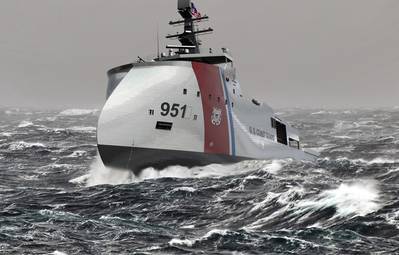
I am surprised the x-bow shape hasn't been explored more as a sea giraffe shape. Everyone keeps moving the bridge back to put in guns up front, giving them a more conventional shape. Seems like a large-caliber forward gun turret would be less of a priority, while gun calibers continue to shrink to decrease necessary space. (If you really need a big forward gun, seems you can poke it out a portal and keep it sealed up most of the time.) Keeping the mass that sits high in one central tower-citadel seems ideal for stability and should be pretty ideal for mounting sensors with a full spherical view. CIWS can sit on higher posts around the citadel. The x-bows are not optimal for 33+ knots but operate very well into the mid-twenties. And they handle rough seas well. And no waves over the foredeck. And lots of trailing deck space for VLS, a helicopter pad, a hangar, and perhaps a well deck for launching smaller craft.
Note, nuclear reactors can't be completely shuttdown. There's always a minimum amount of heat being produced. I expect these containerized modular mini reactors to be better at this but still. Powering up again isn't a quick thing either batteries have to bridge the gap.
Thats the whole point of sizing the reactor fairly small. The reactor then runs at constant power. The gas turbine generators bridge any gap for peak loads. During combat the gas turbine would be running. It can throttle up and down in seconds to handle any loads.
The Arleigh-burke destroyers has all of its electricity coming from gas turbine generators. When the radar and electronic warfare systems suddenly go to maximum power they have been able to handle fluctuations. Minimal batteries are required.
Caps, Gas turbines and a micro reactor all compliment each other perfectly. Any spike in power demand that is too fast for the gas turbine to throttle up will be handled by the caps.
I am surprised the x-bow shape hasn't been explored more as a sea giraffe shape. Everyone keeps moving the bridge back to put in guns up front, giving them a more conventional shape. Seems like a large-caliber forward gun turret would be less of a priority, while gun calibers continue to shrink to decrease necessary space. (If you really need a big forward gun, seems you can poke it out a portal and keep it sealed up most of the time.) Keeping the mass that sits high in one central tower-citadel seems ideal for stability and should be pretty ideal for mounting sensors with a full spherical view. CIWS can sit on higher posts around the citadel. The x-bows are not optimal for 33+ knots but operate very well into the mid-twenties. And they handle rough seas well. And no waves over the foredeck. And lots of trailing deck space for VLS, a helicopter pad, a hangar, and perhaps a well deck for launching smaller craft.
The stability offered is key point that matters for launching heavy missiles like those CPS cells etc. Imho the main reason it's not chosen yet is because it's designed for rough sea states, and therefore, the minimum size of the bow has to be a certain large size. If it were smaller then it wouldn't work. It looks like 4x more than current USV plans in size. And the volume to available to deck space is just worse, hence, more costly for less space.
I find that very hard to believe, because I've watched an Ohio putting around at <10 knots and needing most of 10MW electrical power generation for ship's systems.
I find that very hard to believe, because I've watched an Ohio putting around at <10 knots and needing most of 10MW electrical power generation for ship's systems.
18,750 tons Ohio versus a 8,300-9,000 tons on the Arleigh-Burke destroyer. That 1.9MW is actually pretty realistic when you consider the mass of the Ohio versus an Arleigh-Burke.
18,750 tons Ohio versus a 8,300-9,000 tons on the Arleigh-Burke destroyer. That 1.9MW is actually pretty realistic when you consider the mass of the Ohio versus an Arleigh-Burke.
The stability offered is key point that matters for launching heavy missiles like those CPS cells etc. Imho the main reason it's not chosen yet is because it's designed for rough sea states, and therefore, the minimum size of the bow has to be a certain large size. If it were smaller then it wouldn't work. It looks like 4x more than current USV plans in size. And the volume to available to deck space is just worse, hence, more costly for less space.
I believe he said 3MW, actually. insidersource said, "They were cruising around with the 1.9MW electric motor and the ship systems running off a single 3MW AG9140 generator."
I believe he said 3MW, actually. insidersource said, "They were cruising around with the 1.9MW electric motor and the ship systems running off a single 3MW AG9140 generator."
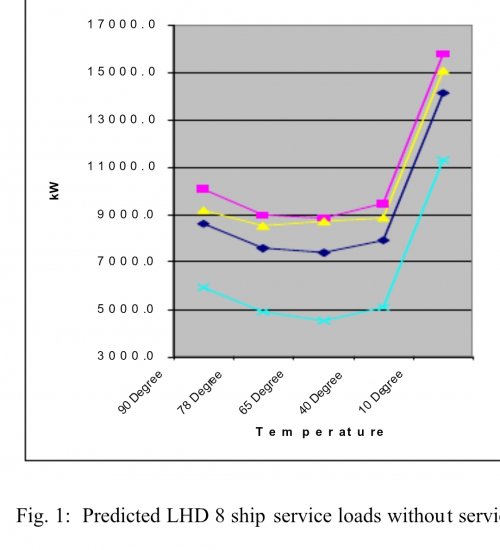
Here is the power consumption of the Maikin island LHD that is 5 times the displacement of an destroyer and 10 times the number of people onboard.
More than 50% of the service life of the ship it is sitting in the state of the aqua line. This is approximately 5 MW of consumption for a ship 5 times the displacement of an Arleigh-burke. 1MW for an Arleigh-burke is then reasonable service load when operating in peace time.
The higher lines are when most systems are running and LHD average between 8-10MW. I would then expect the Arleigh-burke to be between 2-3 MW.
Notice the huge spike in power consumption in Arctic conditions. The heating draws a fair bit of power. A destroyer with a micro nuclear reactor would have the gas turbine running when operating in Arctic conditions. This is a rare occurrence.
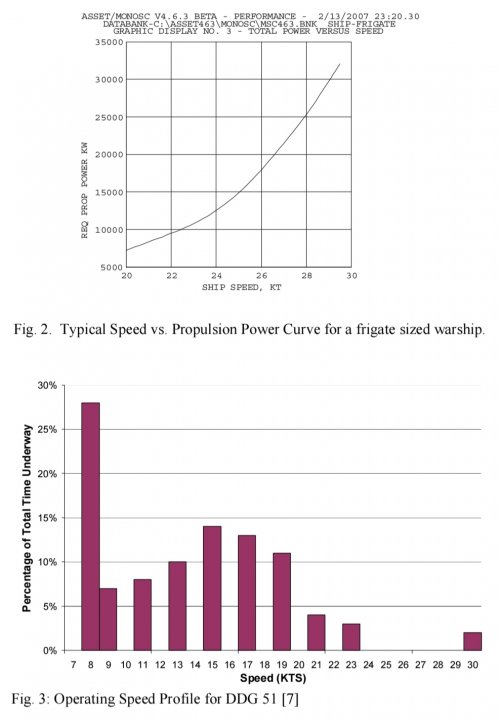
Figure 2 and 3 add to the discussion regarding power and speed. DDG 51 spends less than 10% of its deployments sitting above 20 knots.
Figure 2 shows a frigate half of the displacement of Arleigh-burke that needs 35MW needs for 30 knots but only 7.5MW to cruise at 20 knots. This gives an idea of the power versus speed.
I think this is fairly accurate with the added data.
During deployment n normal temperatures this means a 8MW reactor would handle 60% of the mission by itself.
The 16W reactor which is 20% of the ships max power would handle 95+% of the deployments with a gas turbine running. This pretty amazing data point. Compared to the old virginia class cruisers this is a reactor capacity only 16% of the size yet can handle 95+% of the deployments.
Even if you double the service loads of the systems to satisfy Scott Kenny it still works out that this small reactor can handle 90+% of the deployments.
It is only a matter of time until this hybrid nuclear propulsion is standard on every US Navy destroyer. Zero negatives. Cheaper, smaller, less tankers.
The x-bows are not optimal for 33+ knots but operate very well into the mid-twenties. And they handle rough seas well. And no waves over the foredeck. And lots of trailing deck space for VLS, a helicopter pad, a hangar, and perhaps a well deck for launching smaller craft.
I imagine it's not viewed as suitable for survivability reasons. While on most military vessels many systems and compartments are distributed across the entire axis of the ship, with large structures usually somewhere in the center, but propulsion in the rear, armaments up front and in the middle and aviation facilities in the aft as well. On this design you'd have most vital components and compartments directly up front. I could see this as a reason against such and design for a surface combatant, even a smaller one. But generally speaking one could move the super structure further forward on modern military vessels and have "VLS fields" in the back. But possibly not to such an extreme degree. Ultimately military vessels look how they look for good reasons and the military is always experimenting and testing new technologies, if something is viable (also meaning financially viable) then it gets adopted in some form at some point.
I imagine it's not viewed as suitable for survivability reasons. While on most military vessels many systems and compartments are distributed across the entire axis of the ship, with large structures usually somewhere in the center, but propulsion in the rear, armaments up front and in the middle and aviation facilities in the aft as well. On this design you'd have most vital components and compartments directly up front. I could see this as a reason against such and design for a surface combatant, even a smaller one. But generally speaking one could move the super structure further forward on modern military vessels and have "VLS fields" in the back. But possibly not to such an extreme degree. Ultimately military vessels look how they look for good reasons and the military is always experimenting and testing new technologies, if something is viable (also meaning financially viable) then it gets adopted in some form at some point.
Perhaps not on purpose, but let's say you're recovering a helo that came back from an ASW sortie, but you're right then you're being engaged by a threat and the missiles need to be launched. What's the probability of this happening? I'm not sure, but it would have to be considered and thus may be one of many hurdles which add up to the whole thing not being feasible.
Perhaps not on purpose, but let's say you're recovering a helo that came back from an ASW sortie, but you're right then you're being engaged by a threat and the missiles need to be launched. What's the probability of this happening? I'm not sure, but it would have to be considered and thus may be one of many hurdles which add up to the whole thing not being feasible.
The issue is that you'd basically have to send it back when it's already on approach. And also not being able to launch the missiles until the cells are cleared with nothing above them. All of this takes time away and there is ultimately still a non-zero chance of a helicopter getting speared by a Standard Missile while it's on approach. Stranger things and bigger fuck ups have happened. And a wreckage on top of the VLS cells is...not optimal. Again, how likely is this? Who knows, but the possibility exists when it really should not and can easily be avoided with a different layout, like the conventional layout ships have been going with for decades.
If anything it may be more viable to move flight deck, hangar, super structure and propulsion further back and have the entirety of the weapons load out up front, similar in layout to how cargo ships look. Because then your helicopter ops and missile engagements would take part in two seperate peripheries of the vessel and virtually never cross with each other.
I imagine it's not viewed as suitable for survivability reasons. While on most military vessels many systems and compartments are distributed across the entire axis of the ship, with large structures usually somewhere in the center, but propulsion in the rear, armaments up front and in the middle and aviation facilities in the aft as well. On this design you'd have most vital components and compartments directly up front. I could see this as a reason against such and design for a surface combatant, even a smaller one. But generally speaking one could move the super structure further forward on modern military vessels and have "VLS fields" in the back. But possibly not to such an extreme degree. Ultimately military vessels look how they look for good reasons and the military is always experimenting and testing new technologies, if something is viable (also meaning financially viable) then it gets adopted in some form at some point.
The X-Bow and the forward supertructure are actually independent. It happens that most ships with X-Bow hullforms also have forward superstructures, but there's no inherent reason (as far as I know) why you couldn't have one with a deckhouse amidships or even aft. There are certainly X-Bow ships that have deckhouses further aft than the one shown, and yachts with the form have been proposed.
By way of example, Ulstein offers an X-bow on an 88-metre deep sea trawler with superstructure well aft: https://ulstein.com/vessels/vessels/trawler-vessel/fx102-1
What defines the X-Bow is the volume distribution and sectional angles, which in principle could be applied to any ship. The most likely reason you don't see it on warships are (a) it's proprietary and nobody's felt like paying Ulstein's licence fee, or (b) it may not have the right resistance and seakeeping characteristics for some reason.
Xbow seems inspired by water fowl as much as whales. Nose cuts through waves and half of the weight is distributed across a wider hull. Notice the curvature mid-hull how it flares out. Sort of trimaran stability without outriggers.
I was thinking the VLS would sit forward of a helicopter deck/hangar. Deeper cells closer to height of the bridge, smaller cells could sit alongside the hangar but still forward of a helicopter deck. The hull length should leave room in the stern for either a stern ramp or a crane like the Twin Boom Extensible Crane (TBEC). CCMs as a weight and volume limit goal are prerable over RHIBs. Radar can sit significantly higher above the bridge.
Zumwalt shares the inverted bow features but I believe uses more of a wave-piercing tumblehome above its bulbouse nose.
That's incorrect. A micro SMR such as the eVinci or SEALER-55 could be dropped in at any shipyard. They are similar size and weight to the large diesel engines. All of the dangerous work is done outside of the shipyard.
I don't think that would be a valid assumption. In general any system that impacts the reactor (especially cooling, monitoring, and control, etc) would likely have numerous special construction, quality control and testing requirements during construction that would have to be implemented to support the reactor onboard.
I don't think that would be a valid assumption. In general any system that impacts the reactor (especially cooling, monitoring, and control, etc) would likely have numerous special construction, quality control and testing requirements during construction that would have to be implemented to support the reactor onboard.
If anything it may be more viable to move flight deck, hangar, super structure and propulsion further back and have the entirety of the weapons load out up front, similar in layout to how cargo ships look. Because then your helicopter ops and missile engagements would take part in two seperate peripheries of the vessel and virtually never cross with each other.
Yes, putting the helo deck at the fantail and bride/superstructure directly forward of that, with the entire missile battery forward. KGV layout, if you want to picture it that way.
No reactor refuelling would be done at the shipyard like the current nuclear ships. A freshly fueled reactor module would be waiting at shipyard and it will be removed and replaced in a fraction of the time.
I don't think that would be a valid assumption. In general any system that impacts the reactor (especially cooling, monitoring, and control, etc) would likely have numerous special construction, quality control and testing requirements during construction that would have to be implemented to support the reactor onboard.
A ship with a micro reactor would definitely take additional construction steps compared to a ship powered with only gas turbines. However it would be a tiny fraction of the effort compared to the current large reactors.
The production limiting factor is there are only two shipyards that can fuel a large reactor on site. Other shipyards need to be made nuclear capable. It will be much quicker and cheaper to make a shipyard that is approved for installing micro reactors instead of full size reactors.
No reactor refuelling would be done at the shipyard like the current nuclear ships. A freshly fueled reactor module would be waiting at shipyard and it will be removed and replaced in a fraction of the time.
A ship with a micro reactor would definitely take additional construction steps compared to a ship powered with only gas turbines. However it would be a tiny fraction of the effort compared to the current large reactors.
The production limiting factor is there are only two shipyards that can fuel a large reactor on site. Other shipyards need to be made nuclear capable. It will be much quicker and cheaper to make a shipyard that is approved for installing micro reactors instead of full size reactors.
Hi,
As noted in this document there are many issues related to the potential transportation of Microreactors. Some of these potential issues include the likely need for "the microreactor to "be stored for some period of time to reduce radiation and heat levels prior to its transport."
As such, if there is an intent to remove and replace a microreactor at a shipyard then there would likely need to be a fully certified and well regulated storage facility at the shipyard to safely house an old microreactor that has been removed from an existing ship once those microreactors are removed from a ship prior to shipping to a disposal facility. In addition, there will likely also be a need to safely store a new microreator arriving at the shipyard while it awaits installation on a ship, regardless of whether these transports are done by rail, road, or sea/barge etc, among other issues.
That is an excellent document. It shows just how much effort is being done to get micro reactors operational. A dozen reactors between 5mw and 17mw under development. All perfect of a ship.
Some of these potential issues include the likely need for "the microreactor to "be stored for some period of time to reduce radiation and heat levels prior to its transport."
As such, if there is an intent to remove and replace a microreactor at a shipyard then there would likely need to be a fully certified and well regulated storage facility
No it wouldn't. It wont need to store raw nuclear fuel that is used with full size reactors. It is not even remotely close to being the same.
A microreactor would require a tiny fraction of the staff and facilities of a shipyard installing full size reactors. If a shipyard needs to start producing nuclear ships then it will be a fraction of the effort to convert the yard to use microreactors.
In addition, there will likely also be a need to safely store a new microreator arriving at the shipyard while it awaits installation on a ship, regardless of whether these transports are done by rail, road, or sea/barge etc, among other issues.
There is also a need to safely store the gas turbines and diesel engines at the shipyard while they await installation. All the shipyards have heavy rail and all of the microreactors core modules I have seen are designed to fit on a rail carriage.
We are not talking about storing a 2,000+ ton full size reactors. A fresh microreactor can arrive on the week of installation and be stored pretty much anywhere.
That is an excellent document. It shows just how much effort is being done to get micro reactors operational. A dozen reactors between 5mw and 17mw under development. All perfect of a ship.
The replacement of the microreactor would line up with major maintenance of the ship. The reactor would be off for many months before removal.
No it wouldn't. It wont need to store raw nuclear fuel that is used with full size reactors. It is not even remotely close to being the same.
A microreactor would require a tiny fraction of the staff and facilities of a shipyard installing full size reactors. If a shipyard needs to start producing nuclear ships then it will be a fraction of the effort to convert the yard to use microreactors.
There is also a need to safely store the gas turbines and diesel engines at the shipyard while they await installation. All the shipyards have heavy rail and all of the microreactors core modules I have seen are designed to fit on a rail carriage.
We are not talking about storing a 2,000+ ton full size reactors. A fresh microreactor can arrive on the week of installation and be stored pretty much anywhere.
I believe that you are underestimating many of the issues a fair bit. Most everything that I have read has suggested a minimal period of several days to possibly even a few weeks to install or remove an SMR. As such, any yard storing, handling, lifting, installing, or removing a modular SMR will require nuclear monitoring and emergency response capabilities to ensure safety in the event of an accident when lifting, storing or moving an SMR unit. In addition all yard workers would need some degree of minimum training in the event of an accident (such as an inadvertent drop during handling, flooding, earthquake, fire on site, or even terrorism, etc) during the period when the SMR(s) are onsite.
Yes the amount of additional staff will likely be less than for a fully nuclear capable yard, but it will be an increase in staffing, training, and security (etc) than for a yard not handling nuclear materials.
In addition the level of enrichment for SMRs appears to be a bit higher than that for conventional large commercial reactors likely making them a potentially greater target for terrorism, and/or theft etc, likely leading to a greater need for security at the yard in comparison to a yard not involved in the transport or storage of equipment containing enriched nuclear materials.
I believe that you are underestimating many of the issues a fair bit. Most everything that I have read has suggested a minimal period of several days to possibly even a few weeks to install or remove an SMR.
A few weeks you say? Refueling an aircraft carrier takes over 4 years. The aircraft carrier effectively has to be cut in half. You are the one overestimating the issues.
Yes the amount of additional staff will likely be less than for a fully nuclear capable yard, but it will be an increase in staffing, training, and security (etc) than for a yard not handling nuclear materials.
The increase will be negligible. Lets say 1,000 extra staff and $1 billion in infrastructure is need to make a shipyard capable of fitting a full size reactor. I estimate a microreactor ship design would require only 100 extra staff and $100 million in infrastructure. 10% of the effort. Massive capability gains and reduction in fuel usage for minimal changes to the shipyard.
The key is the shipyard will be able to be made microreactor ready before a ship design could be finalised.
likely making them a potentially greater target for terrorism, and/or theft etc, likely leading to a greater need for security at the yard in comparison to a yard not involved in the transport or storage of equipment containing enriched nuclear materials.
That sounds like a good fast and furious movie. Stealing a 100 ton reactor module from a shipyard that already has extremely high security because the ships have extremely advanced sensors being fitted.
Good luck cutting open a factory sealed module to get to the fuel.
This site uses cookies to help personalise content, tailor your experience and to keep you logged in if you register.
By continuing to use this site, you are consenting to our use of cookies.