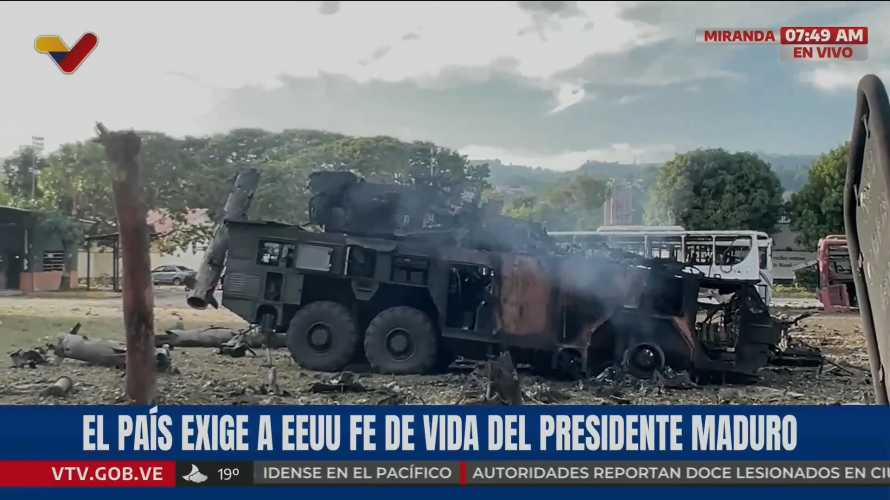
US Special Ops Activity in Venezuela

Status
Not open for further replies.
You do realise that this could be a justification for the abduction of a wide array of U.S. politicians for having supported policies which indirectly violated the domestic laws of other countries? Without having to do something like bother to make a case under International law for these abductions.

For instance, a lot of U.S. politicians have supported firearms regulations which undermined efforts to stem the flow of illegal firearms into Canada (including ones used by organised crime and for murder). Does that mean we're allowed to abduct and try politicians for policies they enacted within the United States on the grounds that these policies led to violation of Canadian domestic law?

The argument would seem to be identical.

At least with regard to International law (e.g. Geneva Conventions) there is an agreed upon treaty to which States are signatories, which can provide a justification for a trial at the Hague... but if we're talking about prosecution of foreign actors in foreign countries based on domestic laws... then it is utter chaos - there is no agreed upon standard.
Political assassinations are something that's routinely done including by nations considered very hostile to the US.
This isn't some closed pandora's box we're talking about.
 
If the rules based international order supports keeping commie drug lord dictators in power then why should anyone care about it?

Successful countries are those who are proactive about their interests. Those who let things develop without their input usually regress.
 
Political assassinations are something that's routinely done including by nations considered very hostile to the US.
This isn't some closed pandora's box we're talking about.
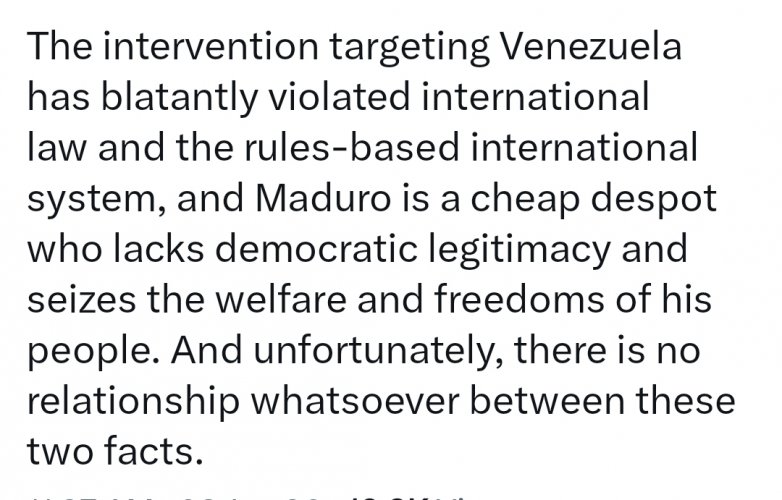
And they're done with materials banned even in war, like Novichok and Polonium-210 for instance, and occasionally affect random members of the public as well as the intended target.

You see - that would make sense to me. At least there is a common standard of law that could be referred to.
Hope it now makes sense then:

Venezuela: Harsh repression and crimes against humanity ongoing Fact-Finding Mission says​

https://www.ohchr.org/en/press-rele...-crimes-against-humanity-ongoing-fact-finding

Venezuela: UN investigators accuse authorities of crimes against humanity​

https://www.bbc.co.uk/news/world-latin-america-54176927
United Nations (UN) investigators say Venezuela's government has "committed egregious violations" amounting to crimes against humanity.

Cases of killings, torture, violence and disappearances were investigated in a fact-finding mission for the UN Human Rights Council.

The UN team said President Nicolás Maduro and other top officials were implicated.

Venezuela’s National Guard linked to killings, torture and repression, UN probe finds​

https://news.un.org/en/story/2025/12/1166565
 
Last edited:
Trafficking narcotics is against international law, and when you have boats carrying fentanyl leaving regularly and you're head of state, you're in on it. Unless you're seriously claiming that other countries know what's going on under your nose better than you do, even when you're a strict authoritarian regime.

FWIW - This means we could charge U.S. leaders for smuggling fentanyl into the Canada. Certainly there is sufficient surveillance capacity in the U.S. for the accountability to be as great or greater.
 
It is different here though
The context was conducting a blitz raid in another country, yes the ramifications are different. But even if it was about that, the American government has always disregarded law and order and preferred aggressive foreign intervention. So different but still kinda the same though, no?
 
If the rules based international order supports keeping commie drug lord dictators in power then why should anyone care about it?
You mean the same rules based order that props up despots like the Saudi royal family, genocidal maniacs like Netanyahu, the same order that had no issues propping up drug trafficking during the cold war (and most likely still now) and other South American dictators?

Arguing for this type of actions from a moral POV is inherently flawed because geopolitics are inherently immoral. The US is hot for Venezuelas resources and sought an opportunity to get rid of a government unfriendly to them and now hopes to get at least someone into power who's corrupt enough to sell said resources to them.

It's not that deep and we shouldn't pretend otherwise.
 
Political assassinations are something that's routinely done including by nations considered very hostile to the US.
This isn't some closed pandora's box we're talking about.
It kind-of is though. In a context where the U.S. has threatened to annex both Canada and parts of Denmark, and has announced a desire for regime change (including changing the electoral systems) within several European allies... these things take on a different, and altogether more alienating, effect in the eyes of long term allies.

It used to be much clearer who was vulnerable to this type of violation of State Sovereignty and who the Americans considered allies (and thus above this kind-of heavy handed intervention).

You might not see it from where you're standing, but the alliance systems are breaking down.

P.S. The stated desire for regime change in Brazil is similar as well - Brazilians may not like Maduro, but they may feel threatened within that broader context... same goes for many other countries...
 
FWIW - This means we could charge U.S. leaders for smuggling fentanyl into the Canada. Certainly there is sufficient surveillance capacity in the U.S. for the accountability to be as great or greater.
The US makes lots of arrests in relation to drug trafficking and dealing, they also have an entire federal agency dedicated to it on top of the regular police force and FBI. That is the difference. Maduro was just sitting back and living off the revenue.

https://www.state.gov/nicolas-maduro-moros
Maduro helped manage and ultimately lead the Cartel of the Suns, a Venezuelan drug-trafficking organization comprised of high-ranking Venezuelan officials. As he gained power in Venezuela, Maduro participated in a corrupt and violent narco-terrorism conspiracy with the Revolutionary Armed Forces of Colombia (FARC), a designated Foreign Terrorist Organization. Maduro negotiated multi-ton shipments of FARC-produced cocaine; directed the Cartel of the Suns to provide military-grade weapons to the FARC; coordinated with narcotics traffickers in Honduras and other countries to facilitate large-scale drug trafficking; and solicited assistance from FARC leadership in training an unsanctioned militia group that functioned, in essence, as an armed forces unit for the Cartel of the Suns.
In March 2020, Maduro was charged in the Southern District of New York for narco-terrorism, conspiracy to import cocaine, possession of machine guns and destructive devices, and conspiracy to possess machine guns and destructive devices.

https://www.justice.gov/archives/op...-venezuelan-officials-charged-narco-terrorism
“Today we announce criminal charges against Nicolás Maduro Moros for running, together with his top lieutenants, a narco-terrorism partnership with the FARC for the past 20 years,” said U.S. Attorney Geoffrey S. Berman. “The scope and magnitude of the drug trafficking alleged was made possible only because Maduro and others corrupted the institutions of Venezuela and provided political and military protection for the rampant narco-terrorism crimes described in our charges. As alleged, Maduro and the other defendants expressly intended to flood the United States with cocaine in order to undermine the health and wellbeing of our nation. Maduro very deliberately deployed cocaine as a weapon. While Maduro and other cartel members held lofty titles in Venezuela’s political and military leadership, the conduct described in the Indictment wasn’t statecraft or service to the Venezuelan people. As alleged, the defendants betrayed the Venezuelan people and corrupted Venezuelan institutions to line their pockets with drug money.”
 
The stated desire for regime change in Brazil is similar as well - Brazilians may not like Maduro, but they may feel threatened within that broader context... same goes for many other countries...
They better purchase some J-35s or Su-57s, new SAM systems and plenty of modern AShMs then.

Although quite frankly, the Americans will invade Canada or Greenland before that.
 
It kind-of is though. In a context where the U.S. has threatened to annex both Canada and parts of Denmark, and has announced a desire for regime change (including changing the electoral systems) within several European allies... these things take on a different, and altogether more alienating, effect in the eyes of long term allies.
It used to be much clearer who was vulnerable to this type of violation of State Sovereignty and who the Americans considered allies (and thus above this kind-of heavy handed intervention).

You might not see it from where you're standing, but the alliance systems are breaking down.

P.S. The stated desire for regime change in Brazil is similar as well - Brazilians may not like Maduro, but they may feel threatened within that broader context... same goes for many other countries...
Let's keep Trump saying a whole bunch of really stupid crap to a separate thread please. In the context of this thread, it's a strawman. I'm certainly not going to defend the stupid crap he has said, quite the opposite, but it has nothing to do with this.
 
If we allow politics in here, I'd want to remind people of the Iraq WMD salt jar. Or Noriega.

There's no real "international rule of law". It's written to give mutual benefits. If governments need legitimacy for action they rewrite the law as is. So why do we bother with meaningless stuff?

In anyway, I give my greatest hope to any future Venezuelan president, that they think of the best for their people, and that the Venezuelan people shall not be harmed, at least to any possible extent, during the execution of this operation. Whatever blame to be shifted onto Trump or the CIA it's obvious that Maduro is not well liked. Here in Vietnam we call him with derogatory names like "bastard taxi driver". Pretty much a scapegoat meeting his end.
 
Confirmation of some casualties among US troops:

Zoom in: Trump told Fox that Maduro and his wife were transferred by U.S. military helicopters to the Navy ship Iwo Jima, and will be making their way to New York.

  • Trump said Maduro and his wife were arrested in a house that had a fortified safe room with steel doors, but were snatched before they managed to reach this room.
  • He added that one of the helicopters was hit during the operation and several U.S. troops wounded, but none were killed.

https://www.axios.com/2026/01/03/trump-maduro-venezuela-strikes
 
It kind-of is though. In a context where the U.S. has threatened to annex both Canada and parts of Denmark, and has announced a desire for regime change (including changing the electoral systems) within several European allies... these things take on a different, and altogether more alienating, effect in the eyes of long term allies
Sad face emoji.

You might not see it from where you're standing, but the alliance systems are breaking down.
I do not see how removing a long time threat to western security hurts alliances.

All I have to say is if I were Denmark, I would be taking the threat to Greenland very seriously from now on.
If the cue for Denmark to arm up and take security seriously is when the US suggests a land swap and not when a nearby former superpower wants to regain its glory via a war that killed over 1 million people in 3 years, then its priorities are objectively wrong.

You mean the same rules based order that props up despots like the Saudi royal family, genocidal maniacs like Netanyahu, the same order that had no issues propping up drug trafficking during the cold war (and most likely still now) and other South American dictators?
I'm guessing you're not taking very lightly the recent developments in Iran. I'm sorry.
 
Returning to the topic of aviation, I have not yet encountered any credible information indicating that the stealthy Blackhawk helicopter from the UBL raid was utilized in this operation.
Actually, had anything been made public on this design in all these years? In terms of current events, an absence of proof isn’t a proof of absence.
 
Let's keep Trump saying a whole bunch of really stupid crap to a separate thread please. In the context of this thread, it's a strawman. I'm certainly not going to defend the stupid crap he has said, quite the opposite, but it has nothing to do with this.
I find the international law talks kinda pointless in 2026, we have seen time and time again that if you are strong enough you can do whatever you want.

Well, I think it is important to recognise that claiming to follow International Law (or a shared legal or defence logic) provides predictability.

In terms of the International implications for geopolitics and potential strategic fallout - whether Maduro is prosecuted under International Law, Venezuelan Law, U.S. anti-terrorism laws, or U.S. anti-drug trafficking laws is significant.

The context is also significant, in terms of potentially openly abandoning the idea of International Law or State Sovereignty, and the deteriorating relationship with allies... that shapes the impact of any decisions regarding which laws to use.

This is likely the most strategically impactful outcome outside of Venezuela itself. So, I don't see how it can be separated.
 
I do not see how removing a long time threat to western security hurts alliances.
It morally justifies Russian aggression against countries it dislikes - 'America did the same', and makes US double standards more blatant, undermining the US's ability to say 'This is wrong' and claim to be a force for good. That weakens NATO as a whole.
 
Bondi: "Nicolás Maduro and his wife, Cilia Flores, have been indicted in the Southern District of New York.

Nicolás Maduro has been charged with narco-terrorism conspiracy, cocaine importation conspiracy, possession of machine guns and destructive devices, and conspiracy to possess machine guns and destructive devices against the United States."

So that's every head of state in the world liable to be snatched up by US forces at the president's whim. That's somewhat problematical.
 
It morally justifies Russian aggression against countries it dislikes - 'America did the same', and makes US double standards more blatant, undermining the US's ability to say 'This is wrong' and claim to be a force for good. That weakens NATO as a whole.
The US has been invading countries for a little while if you haven’t payed attention and pretty much nothing happened to NATO.
 
Stop with that "rules-based international order" nonsense. You're fired!

And stop criticizing Russia, our ally in values.

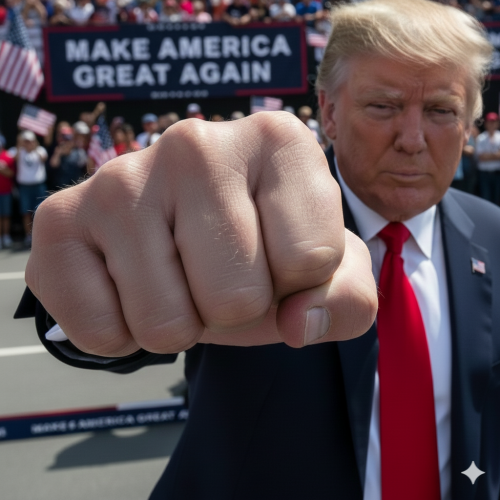
Fist First. Baby.
Gemini_Generated_Image_nxi0qnnxi0qnnxi0.png
 
Last edited:
Bondi: "Nicolás Maduro and his wife, Cilia Flores, have been indicted in the Southern District of New York.

Nicolás Maduro has been charged with narco-terrorism conspiracy, cocaine importation conspiracy, possession of machine guns and destructive devices, and conspiracy to possess machine guns and destructive devices against the United States."

So that's every head of state in the world liable to be snatched up by US forces at the president's whim. That's somewhat problematical.
www.justice.gov/opa/media/1422326/dl

If anyone wants to read the full indictment.
 
I find the international law talks kinda pointless in 2026, we have seen time and time again that if you are strong enough you can do whatever you want.
Right… Let trash all that bs about international laws. Who needs that ? Lets invade any country you don’t like, lets starve any population you don’t like, lets remove any cheap dictator to distract from problems at home, lets drill for oil or else anywhere, and let the stronger win. I mean, it’s always been like that since we lived in caves right ? Why the hell should we try to make things fairer with some kind of justice and order more complicated ? yeepee...
 
Right… Let trash all that bs about international laws. Who needs that ? Lets invade any country you don’t like, lets starve any population you don’t like, lets remove any cheap dictator to distract from problems at home, lets drill for oil or else anywhere, and let the stronger win, I mean, it’s always been like that since we lived in caves right ? Why the hell should we try to make things fairer with some kind of justice and order more complicated ? yeepee...
And when did international law ever saved anyone from anything?
 
It morally justifies Russian aggression against countries it dislikes - 'America did the same', and makes US double standards more blatant, undermining the US's ability to say 'This is wrong' and claim to be a force for good. That weakens NATO as a whole.
If your first reaction to seeing this is a moral outrage about some arbitrary violation of sovereignty and comparison to Russia, instead of being happy for the tens of millions of liberated Venezuelans, then maybe that's not actually a moral argument/reaction.

And if any allied country sees this and changes policy to support Russia, then maybe they weren't really an ally to begin with.
 
And if any allied country sees this and changes policy to support Russia, then maybe they weren't really an ally to begin with.
This is the biggest part of it,international law opposed Russia’s invasion but only the NATO block cut ties with Russia and the rest of the world went on with their lives.International law isn’t going to weaken the US or NATO more than it already is, who ever was a ally will stay a ally and whoever wasn’t are going to oppose it.
 
We solemnly promise to abide by any international treaty or agreement we signed on for until they no longer suit us.
About those trade agreements we hammered out recently...
 
In my opinion, the military and intelligence part have been perfect and the political part a real septic tank that is going to splash many important people who thought they were safe from all kinds of investigations.

Some highly respected analysts in my country are also considering the possibility of an agreed delivery to save the most important part of the business, I don't think so, but we will have to wait and see.

Trump's enemies have made the mistake of unifying his chaotic negotiating style on economic issues with his relentless determination on military issues.
 
This is the biggest part of it,international law opposed Russia’s invasion but only the NATO block cut ties with Russia and the rest of the world went on with their lives.International law isn’t going to weaken the US or NATO more than it already is, who ever was a ally will stay a ally and whoever wasn’t are going to oppose it.
International law is less than nothing. And more importantly, people actually wrongfully think it's something binding or important when literally no country, not even the so called "enlightened west", have any positive interaction with it.

NATO countries reacted to Russia's invasion in Ukraine because they knew they were next in line and that about half of them were on Russia's target list.
They also reacted very mildly because Ukraine held out.
Most other nations outside Europe didn't do much because it's not their conflict. NATO was more than a match to Russia and they had their own problems to begin with.
China in Asia, Iran in the middle east, and general instability and insurgency in Africa.

International law played no part in any of this. In fact, arguably if countries would actually reject international law entirely, the recent wars' results would be objectively better. For example the bans on land mines. Very bad decision.
 
And when did international law ever saved anyone from anything?

I had someone once say to me, about the League of Nations: "What about the Anglo-American naval war of 1931?"
My response: "What Anglo-American naval war of 1931?"
Their response: "Exactly."

It is difficult to see wars which didn't happen.

As someone from a mid-sized country, the idea that larger countries are not supposed to violate our sovereignty is something valued. We feel much safer if major powers at least have to make up a lie prior to interfering... it actually does provide a bit of protection and predictability... this predictability allows us to act as allies to nearby major powers (rather than having to amass our own weapons aimed at whichever country happens to be nearest to us).
 
“William Roper: “So, now you give the Devil the benefit of law!”

Sir Thomas More: “Yes! What would you do? Cut a great road through the law to get after the Devil?”

William Roper: “Yes, I'd cut down every law in England to do that!”

Sir Thomas More: “Oh? And when the last law was down, and the Devil turned 'round on you, where would you hide, Roper, the laws all being flat? This country is planted thick with laws, from coast to coast, Man's laws, not God's! And if you cut them down, and you're just the man to do it, do you really think you could stand upright in the winds that would blow then? Yes, I'd give the Devil benefit of law, for my own safety's sake!”

― Robert Bolt, A Man for All Seasons: A Play in Two Acts
 
And when did international law ever saved anyone from anything?
International law or justice can't save people because it has no police force. But it still helps peoples. But can only do when a powerful enough party chooses to enforce it.
It exist because atrocities would still exist, but with zero accountability. Victims would have no historical records or legal records.
Power would be completely naked, without need to justify itself.
So you can ask to victims of atrocities like what happened in ex-yougoslavia, or Rwanda if they feel like international laws never helped at all prosecuting the perpetrators, or you could ask victims of the apartheid regime in South Africa if they felt like international laws and the international pressures that brought it to an end was useless.
That is why, when a powerful party chooses to ignore it (very often) or even goes against it, it only bring us back to cave men style politics and justice. Now if one prefers that, be my guest.
 
Most other nations outside Europe didn't do much because it's not their conflict. NATO was more than a match to Russia and they had their own problems to begin with.
China in Asia, Iran in the middle east, and general instability and insurgency in Africa.

International law played no part in any of this.

This may not actually be true. If one looks at popular opinion in countries around the world, there is evidence to suggest that things like willingness to support their governments bypassing sanctions on Russia is shaped partly by a belief that the U.S. (and allies) don't interfere in the affairs of smaller countries, and perceived hypocrisy over interventions in Kosovo and the Middle East.

The fact is that popular opinion can shape the political options of leaders, and in countries like India (for example), the shape of that popular opinion does have consequences for International alliance structures.

So claiming to uphold a rules based International order, predictability, and restraint - defending sovereignty of smaller states rather than interfering with it - can actually make it harder for political leaders to take actions which undermine NATO interests.

This is apparent in quite a bit of the political science data. It is important not only to focus on the professionals, but also how they are shaped by politicians and the public sentiments limiting those politicians' positions. With more the 'third world' being educated and/or democratic, the implications for power politics of such sentiments are greater - as are the risks of losing the propaganda war.
 
Status
Not open for further replies.

Similar threads

Back
Top Bottom