Alternate Australian Defence Force 1970s Procurements?

I partially agree as I can’t see replacing HMAS Melbourne & Sydney. But how about replacing the 3rd Perth class DDG ordered in 1963 and delivered in 1968?

Perhaps the increase in crew (~200 men) could have been absorbed by retiring the last obsolete Battle class DD (HMAS Anzac) and taking over her training role.

I see the JdA as a 'capital ship' in the Australian context, so getting a 2nd capital ship in a Navy that already has one (Melbourne) but only ~9 fleet escorts.

Decision making at the time was geared towards more escorts. In 1964 the recommendation to get a 4th DDG was rejected, and the DD Voyager (accidentally sunk) was replaced by 2 River DEs. Similarly what became the DDL initially was for 10 escorts with a 5" gun.

I imagine a big ship such as the JdA, even though it would provide the 3rd SAM ship, would suck a lot of the effort away from trying to boost RAN escort numbers.

Additionally, what would she do in Vietnam? All 3 DDGs served multiple tours on the gun line, as did 1 Daring class DD, but you can't have a helicopter cruiser with 100mm guns slugging it out with shore guns on a daily basis. Perhaps the RAN could send her as an ASW asset, the USN requested Melbourne in 1966 and 1967, perhaps Melbourne and JdA could rotate as ASW assets. However with 9 escorts this would likely put too great a strain on the RAN.
 
Last edited:
Additionally, what would she do in Vietnam? All 3 DDGs served multiple tours on the gun line, as did 1 Daring class DD, but you can't have a helicopter cruiser with 100mm guns slugging it out with shore guns on a daily basis.
I would think a helicopter cruiser would have been an extremely valuable asset for the USMC’s Special Landing force in their numerous amphibious operations along the South Vietnam coast. The USN’s Iwo Jima LPHs were frequent participants in these operations alongside older LPDs and attack transports.

Did the Vietcong units south of the DMZ have shore guns or heavy artillery? I would think that 3-4x 100mm guns could be put to good use without too much risk, especially when doing combined landings with LCVPs and helicopters.

More here on US amphibious ops in Vietnam… I’ll have to give it a read:
An Analysis of the Special Landing Force during the Vietnam War from 1965 to 1969
https://apps.dtic.mil/sti/tr/pdf/ADA491580.pdf
 
Last edited:
I would think a helicopter cruiser would have been an extremely valuable asset for the USMC’s Shore Landing force in their numerous amphibious operations along the South Vietnam coast. The USN’s Iwo Jima LPHs were frequent participants in these operations alongside older LPDs and attack transports.

Did the Vietcong units south of the DMZ have shore guns or heavy artillery? I would think that 3-4x 100mm guns could be put to good use without too much risk, especially when doing combined landings with LCVPs and helicopters.

More here on US amphibious ops in Vietnam… I’ll have to give it a read:
An Analysis of the Special Landing Force during the Vietnam War from 1965 to 1969
https://apps.dtic.mil/sti/tr/pdf/ADA491580.pdf

You've encapsulated why I'm not a fan of the JdA for the early 60s RAN.

It acquisition was justified on the basis of being a fleet asset, one that could be a major compliment to the carrier group or be able to lead it's own powerful task group. Yet is being proposed to be used as as an amphibious asset for the USN/USMC, as the RAN has literally no amphibious capability, something that a WW2 escort carrier could do.

I could imagine it being used as an ASW asset on Yankee Station, that's what the USN asked Melbourne to do in 1966 & 67, as that is a fleet task. But that would be a one-off deployment, not a sustained commitment that the 3 DDGs & 1 DD provided for years. Such a deployment would be gold for the Melbourne, but likely less significant for a JdA.

Australian defence is so much harder to think about than the US or UK as it's so much smaller and more limited, it like trying to fit a rat through a mouse-sized hole!
 
The pre-WWII RAN was meant to have been a cruiser and sloop force, even the order of a flotilla of Tribal class destroyers fit this, as these large destroyers were capable of filling many light or scout cruiser roles, it was the same for the following Battle and Daring classes.

The Q class destroyers were converted to Type 15 frigates as the River and Bay Class frigates were no longer fast enough for ASW work, so there were, for all intents, modern sloops. The same could be said for the USN FRAM destroyers; they were no longer destroyers, but rather high-end ASW escorts.

Additionally, light fleet carriers and potentially escort carriers (plus escorts) were seen by the RN as replacements for cruiser squadrons in trade protection and presence missions in their proposed post-war structure.

The RANs carriers were never meant to be capital ships; they were meant to be the core of the replacement for the cruiser / trade protection squadrons. This is not to say the RAN didn't desire capital ships, i.e. a strike carrier, just that what they had wasn't. This is just as the prewar cruisers weren't seen as capital ships.

The Battle Cruiser Australia was the only capital ship the RAN ever had. Even in the Henderson Plan with eight Armoured Cruisers or Battle Cruisers, the RAN was meant to be a regional presence and trade protection force, based around cruiser squadrons with destroyer and submarine flotillas providing local defence.

A balanced fleet has never been on the cards for the RAN.

Post WWII, the RAN was meant to be built around a new structure of squadrons, each ideally to consist of a carrier, two cruisers and six destroyers. What was unclear was the number of squadrons intended. There were plans for the RN to transfer the ships for one such squadron before the end of the war. There were also plans to build new cruisers in Australia for the post-war navy, in addition to much larger numbers of large destroyers and ASW frigates.

Admiral Shackleton's thesis on the impact of acquiring the Adams Class DDG on RAN engineering mentioned that Australia looked closely at asking the US for surplus USN destroyers, as many allied navies had.

Synthesising all of this, perhaps going back to the end of WWII, provides a very different RAN in the 60s and 70s, a navy in which cruisers, large destroyers and light carriers, or helicopter carriers would be a very good fit. Quite literally a squadron with a carrier or helicopter carrier, a cruiser or helicopter command cruiser and a destroyer, with flotillas of destroyer escorts/frigates/sloops to assign ships to support the squadrons as required.

Assuming two squadrons with carriers and three with helicopter carriers or cruisers, with a flotilla of escorts on each coast. That's two carriers, three helicopter carriers (potentially escort carriers) or helicopter cruisers, five cruisers (later DLGs), five large destroyers (later DDGs), and sixteen to twenty escorts, a total combat fleet size of 31 to 35 ships. Not impossible if half the escorts are surplus USN vessels and the other half are something like the Type 15 conversions, new build modified Type 14s with their low cost and smaller crews. Use as many good enough, cheap or free surplus ships and use the majority of available cash for the smaller number of high-end ships.
 
To clarify, by the 60s Melbourne had become a capital ship in the Australian context, not in the global context. It was the key platform, the flagship with command facilities that enabled the RAN to operate independently if required.

Immediate postwar plans, the ones under which Melbourne and Sydney were acquired for, only lasted for about 10 years at most; 1947 to 1957. That's not a very long time to develop a Navy, by the time Melbourne was delivered the strategy was changing and Australia was re-orienting its defence strategy to limited wars in S.E.A. Granted many of the ships were suitable for both strategies, but a navy built for WW3 might not be entirely suited to limited war in S.E.A.
 
1948 Australia had in service and reserve,
  • one light fleet carrier capable of strike, air defence and ASW, with a second one on order.
  • two twenty year old heavy cruisers
  • one ten year old light cruiser
  • three younger than five year old large destroyers
  • five younger than five year old war emergency destroyers
  • twelve less than five year old frigates
Post-war plans existed for,
  • six new large destroyers
  • twelve new ASW frigates
  • possible new build cruisers
  • guided missile conversions of existing cruisers
Interestingly, Admiral John Collins was apparently taken aback and angry when he discovered the carriers we had been sold, on the assumption there would be multiple generations of aircraft developed to keep them relevant, were already obsolescent. They had been bought on the understanding that there would possibly be two replacement generations of fighter, strike, and ASW aircraft developed for the class, as the RN had been planning to continue using them throughout the 50s and into the 60s.

The cruisers intended for transfer to Australia, as part of the various options proposed by the RN & RAN, were Tiger Class, as in the original configuration, of the Minotaur, Swiftsure and Superb. The local construction cruisers were speculated to be modified Dido's, whether they would be a Dido hull or the proposed modified Crown Colony hull with the updated 5.25" mounts developed for Vanguard, I don't know.

Carriers discussed for transfer late WWII included specific Colossus class ships, completed during the war, as well as one or both Indefatigable class fleet carriers.

Furthermore, the transfer of the ships was underpinned by the assumption that Australia was not charging for services provided to support the BPF. Australia, during the late war years, built a substantial lend-lease credit for support provided to UK and US forces, and there were, in addition, vast quantities of war materiel left in Australia post-war.

Australia was in a unique position of being able to cherry-pick what to build and buy through to the mid-50s or even the early 60s. Arguably, this opportunity was squandered.

I wonder if this would be worth a separate topic?
 
I wonder if this would be worth a separate topic?

I'd suggest it would be. This thread started abut the 70s and 80s and despite the drift well into the 60s it hasn't really ventured back much past the mid-late 50s as that's the kit that served for most of the Cold War.
 
Interestingly, Admiral John Collins was apparently taken aback and angry when he discovered the carriers we had been sold, on the assumption there would be multiple generations of aircraft developed to keep them relevant, were already obsolescent. They had been bought on the understanding that there would possibly be two replacement generations of fighter, strike, and ASW aircraft developed for the class, as the RN had been planning to continue using them throughout the 50s and into the 60s.

On this particular point between them the carriers did operate 3 generations of aircraft up to 1980, indeed with the Sydney being a fast troop transport with ASW and assault helicopters and the it could be argued that they operated more than 3 generations of aircraft between them. These carriers seemed to be continuously undersold and run down by various people in important positions.
 
You've encapsulated why I'm not a fan of the JdA for the early 60s RAN.

It acquisition was justified on the basis of being a fleet asset, one that could be a major compliment to the carrier group or be able to lead it's own powerful task group. Yet is being proposed to be used as as an amphibious asset for the USN/USMC, as the RAN has literally no amphibious capability, something that a WW2 escort carrier could do.
The value of a Terrier + helicopter + command platform is precisely that it could flex across multiple roles.

The kernel of this idea already existed in the RAN, in the shape of the County class destroyers that were desired, but Sea Slug’s less than stellar performance put paid to that. The 2 Perth class DDGs with Tartar were a partial answer to the AAW problem but they lacked the command and helicopter capabilities to lead task forces when Melbourne was unavailable. Also the increasing Indonesian bomber and missile threat in the 60s might have made Terrier desirable (especially as there were doubts about the air defence capability of the new Skyhawks for Melbourne).

There was a strong pressure for standardization on fewer weapons systems so that led to the 3rd DDG purchase. But arguably the fleet would have been more balanced with a more capable helicopter cruiser so as to have an alternative task force leader aside from Melbourne, and this ship could also have played many roles depending on the need.
 
I don't disagree with the overall reasoning, but it reminds of the the objections raised against the RAN Essex strike carrier proposal. The RAN had a long list of stuff it needed it needed in May 1963:
  1. Escort Maintenance ship
  2. Fast fleet replenishment ship
  3. Ikara to complete fitting for 3 DDGs & 4 Type 12 Frigates
  4. A 4th DDG
  5. 4 new escorts of a type to be decided
  6. 4 extra Oberons
  7. Modernisation of Darings
  8. Modernisation of Melbourne
  9. Ikara operational evaluation
  10. 6 new minesweepers
  11. 3 oceanographic ships
  12. Mine countermeasures support ship
  13. 10 extra Wessex heicopters
  14. Reserves for Wessex
  15. Reserves of ammunition
  16. Modernisation of Type 12 Frigates
  17. Sycamore replacement
  18. Attack transport ship (to replace Sydney)
  19. New works
  20. Commonwealth state housing
A year later significant extra expenditure had been authorised, mainly in support areas and a major increase in cost of Ikara, but the main shortfalls apart from a lack of offensive and air defence capability (attack carrier) were:
  1. Additional Escorts
  2. Additional submarines
  3. A fast fleet replenishment ship
  4. Mine countermeasures support ship and additional minesweepers
  5. Patrol craft and support facilities for PNG
  6. Amphibious capability (to increase Army mobility)
The Navy recommendation to get an Essex class was rejected at least in part because of the long list of other stuff the Navy needed that the carrier recommendation didn't address. The same situation would apply to a JdA being ordered instead of the 3rd DDG, it would be a huge increase in cost that would have large negative knock-on effects to this long list of requirements.

If the RAN was bigger and had plenty of escorts and other stuff then a JdA would make sense, but it was trying to get off the very bottom rung of the ladder, so getting another major warship at the expense of a bunch of other stuff doesn't make sense.
 
On this particular point between them the carriers did operate 3 generations of aircraft up to 1980, indeed with the Sydney being a fast troop transport with ASW and assault helicopters and the it could be argued that they operated more than 3 generations of aircraft between them. These carriers seemed to be continuously undersold and run down by various people in important positions.
The issue was that the next generation of RN FAA aircraft, the Scimitar and Sea Vixen, were too large for the light fleet carriers, even when modernised to the extent Melbourne had been. This is probably what killed Sydney's modernisation; the government wasn't keen on the expenditure anyway, but the knowledge that the next generation of British aircraft were too large and heavy for the ships confirmed that modernisation was a waste of resources, and the choice was new ships or do without the capability.

Ironically, had the RN not been working under the assumption that they were getting new carriers, capable of operating the larger new aircraft, there were multiple designs that could have operated from the light fleets in useful numbers and from the larger ships in even greater numbers. This could have provided the RAN with a plan for their carriers through to the 80s.

Instead of two light fleets suitable for fleet and ASW, then one suitable for ASW and local air defence, with interspersed plans for ASW helo conversions, before switching back to an enhanced CVS, the RAN could have planned to maintain two full light fleet carriers, capable of ASW, air defence and strike.

Imagine a navalised Gnat, followed by a Mach 1.28 F2 with AI.23 radar, followed in turn with the FO.148 swing-wing strike fighter, which may have been capable of operating from such small carriers and still be carried in reasonable numbers.

This is where Implacable and Indefatigable would have been ideal for the RAN; they could have, with quite austere modernisations (including an angled deck but original 14' hangar height), operated types such as the Grumman Tiger, and the various NA Furies, including the FJ-4. The Gannet would have fit, too.
 
The value of a Terrier + helicopter + command platform is precisely that it could flex across multiple roles.

The kernel of this idea already existed in the RAN, in the shape of the County class destroyers that were desired, but Sea Slug’s less than stellar performance put paid to that. The 2 Perth class DDGs with Tartar were a partial answer to the AAW problem but they lacked the command and helicopter capabilities to lead task forces when Melbourne was unavailable. Also the increasing Indonesian bomber and missile threat in the 60s might have made Terrier desirable (especially as there were doubts about the air defence capability of the new Skyhawks for Melbourne).

There was a strong pressure for standardization on fewer weapons systems so that led to the 3rd DDG purchase. But arguably the fleet would have been more balanced with a more capable helicopter cruiser so as to have an alternative task force leader aside from Melbourne, and this ship could also have played many roles depending on the need.
When the RAN approached the RN with their requirements for a DDG, the RN told them they weren't realistic or achievable, and that they would be better off with a minimum change County or to wait for the Escort Cruiser.

Basically, a 3-4000 ton, steam-powered, County with Tartar, and two Wessex was impossible, too much on too small a hull. It maybe was achievable on the full-sized County, but some of the sketches for the Escort Cruiser would easily exceed the RAN requirements and be much more versatile.
 
The issue was that the next generation of RN FAA aircraft, the Scimitar and Sea Vixen, were too large for the light fleet carriers, even when modernised to the extent Melbourne had been. This is probably what killed Sydney's modernisation; the government wasn't keen on the expenditure anyway, but the knowledge that the next generation of British aircraft were too large and heavy for the ships confirmed that modernisation was a waste of resources, and the choice was new ships or do without the capability.

Ironically, had the RN not been working under the assumption that they were getting new carriers, capable of operating the larger new aircraft, there were multiple designs that could have operated from the light fleets in useful numbers and from the larger ships in even greater numbers. This could have provided the RAN with a plan for their carriers through to the 80s.

Instead of two light fleets suitable for fleet and ASW, then one suitable for ASW and local air defence, with interspersed plans for ASW helo conversions, before switching back to an enhanced CVS, the RAN could have planned to maintain two full light fleet carriers, capable of ASW, air defence and strike.

Imagine a navalised Gnat, followed by a Mach 1.28 F2 with AI.23 radar, followed in turn with the FO.148 swing-wing strike fighter, which may have been capable of operating from such small carriers and still be carried in reasonable numbers.

This is where Implacable and Indefatigable would have been ideal for the RAN; they could have, with quite austere modernisations (including an angled deck but original 14' hangar height), operated types such as the Grumman Tiger, and the various NA Furies, including the FJ-4. The Gannet would have fit, too.

The RAN appears to be very myopic when it comes to carrier aviation and the RANs prospects, to the point they were were stating the Melbourne was obsolescent within 3 years of it's delivery. Either they weren't aware of, or ignored hoping to get a bigger carrier, things like Karel Doorman's rebuild, Canada operating the 21,000lb F2H Banshee and the entry into service of the A4 Skyhawk.

I wonder if Menzies' had elevated the Minister of Defence over the Service Ministers in 1958, like the British did in 1947, the Navy would have been bought back to earth and made better use of the carrier it had. As it appears that the biggest impediment to the RAN FAA is the RAN Brass itself, either aiming too high or too low.
 
I don't disagree with the overall reasoning, but it reminds of the the objections raised against the RAN Essex strike carrier proposal. The RAN had a long list of stuff it needed it needed in May 1963:
  1. Escort Maintenance ship
  2. Fast fleet replenishment ship
  3. Ikara to complete fitting for 3 DDGs & 4 Type 12 Frigates
  4. A 4th DDG
  5. 4 new escorts of a type to be decided
  6. 4 extra Oberons
  7. Modernisation of Darings
  8. Modernisation of Melbourne
  9. Ikara operational evaluation
  10. 6 new minesweepers
  11. 3 oceanographic ships
  12. Mine countermeasures support ship
  13. 10 extra Wessex heicopters
  14. Reserves for Wessex
  15. Reserves of ammunition
  16. Modernisation of Type 12 Frigates
  17. Sycamore replacement
  18. Attack transport ship (to replace Sydney)
  19. New works
  20. Commonwealth state housing
A year later significant extra expenditure had been authorised, mainly in support areas and a major increase in cost of Ikara, but the main shortfalls apart from a lack of offensive and air defence capability (attack carrier) were:
  1. Additional Escorts
  2. Additional submarines
  3. A fast fleet replenishment ship
  4. Mine countermeasures support ship and additional minesweepers
  5. Patrol craft and support facilities for PNG
  6. Amphibious capability (to increase Army mobility)
The Navy recommendation to get an Essex class was rejected at least in part because of the long list of other stuff the Navy needed that the carrier recommendation didn't address. The same situation would apply to a JdA being ordered instead of the 3rd DDG, it would be a huge increase in cost that would have large negative knock-on effects to this long list of requirements.

If the RAN was bigger and had plenty of escorts and other stuff then a JdA would make sense, but it was trying to get off the very bottom rung of the ladder, so getting another major warship at the expense of a bunch of other stuff doesn't make sense.

The RAN appears to be very myopic when it comes to carrier aviation and the RANs prospects, to the point they were were stating the Melbourne was obsolescent within 3 years of it's delivery. Either they weren't aware of, or ignored hoping to get a bigger carrier, things like Karel Doorman's rebuild, Canada operating the 21,000lb F2H Banshee and the entry into service of the A4 Skyhawk.

I wonder if Menzies' had elevated the Minister of Defence over the Service Ministers in 1958, like the British did in 1947, the Navy would have been bought back to earth and made better use of the carrier it had. As it appears that the biggest impediment to the RAN FAA is the RAN Brass itself, either aiming too high or too low.
There were some "interesting" characters advising the government through PM&C with very firm beliefs in regard to missiles, nuclear weapons and airpower, who would have put Duncan Sandys to shame. Having a unified defence department wouldn't have helped as the PM was going to his PM&C advisors who were on a very different page.

The mindset came through in the advice from the "scientific" advice in regard to the superiority of US systems to UK, the uselessness of subsonic combat aircraft, the superiority of land-based ASW versus sea/carrier-based, the adoption of the Pentotopic division structure (without the required increase in manpower and equipment) to name a few. During the carrier replacement debate, the scientific advice was so skewed it made the RAAF sound like full-blown proponents of naval airpower in comparison.

I am an engineer and believe in science but these clowns were opinionated f-wits, irrespective of their job titles. They were meant to be Australia's greatest scientific minds, but they were more like Sir Humphry Appleby, if he were an alcoholic stoner. Opinionated bureaucrats whose job was to witness and report on the work of others, not actually do anything practical themselves. They were the equivalent to the non-technical PMs we see on the government side of defence procurement these days.

Throw in the DFAT aligned types, who saw that everything could be dealt with by aligning with the US and outsourcing our defence to them, as well as the economic and industry wonks who seemed intent on dragging Australia back to a pre WWII agrarian society reliant on primary industry exports, and the scene was set.

The RN retained cruisers into the late 70s, then replaced them with the Invicibles. They also went for much larger, more capable destroyers, in the form of the Counties and Bristol. Australia retired our cruisers much earlier and then tried to employ large destroyers as cruisers.

Our destroyers and frigates, since the sixties, have always been compromised by the fact that they have had to have additional capability crammed in, capability that the USN and RN didn't need to bother with in destroyers and frigates, because they had cruisers and DLGs. Shackleton covered this in his thesis; had Australia acquired DLGs instead of DDGs, they would have been delivered with the C3I and other systems the navy needed and had to fit at great expense later. While larger and more expensive to crew and by, there would have been no need for the multiple, indigenous upgrade programs the ships went through in the first half of their lives to retrofit.

Spending more on the high-end platforms, i.e. larger, more capable, possibly on bespoke modified hulls, would have permitted the acquisition of cheaper, individually less capable lower-end platforms. Ships with a peacetime border protection and presence role, and a wartime ASW role. Think Type 15 conversions, FRAM destroyers, new build modified (a single WWII-style 4" mount) Type 14 ASW frigates, serving as modern-day sloops. Instead of new build Oberons, initially have an increasing number of Australian crew, then take over Australian-based upgraded RN S and A class submarines before buying some as surplus.

Aim for "perfectly good enough", surplus or commercially derived, instead of "perfect" for everything except for cruisers.

Steal is cheap, air is free. For the high-end, go big, ensure you have the margin to install at least two generations of everything you know you will need. If this requires a bespoke platform, so what? If it needs to be a modified cruiser design, again, so what? It is much better value for money to have something that can actually do the job required, is survivable, and is sufficiently large and flexible enough to to remain relevant for a couple of decades.

That way, everything else can be cheap and cheerful.
 
The issue was that the next generation of RN FAA aircraft, the Scimitar and Sea Vixen, were too large for the light fleet carriers, even when modernised to the extent Melbourne had been. This is probably what killed Sydney's modernisation; the government wasn't keen on the expenditure anyway, but the knowledge that the next generation of British aircraft were too large and heavy for the ships confirmed that modernisation was a waste of resources, and the choice was new ships or do without the capability.

Imagine a navalised Gnat, followed by a Mach 1.28 F2 with AI.23 radar, followed in turn with the FO.148 swing-wing strike fighter, which may have been capable of operating from such small carriers and still be carried in reasonable numbers.

Not sure about a navalised Gnat, but the closest anyone came to filling the fighter gap on the light fleet carriers was Dassault with their Avon Etendard IVB.

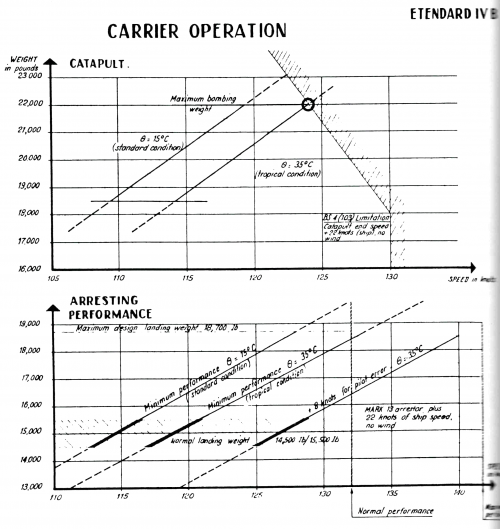
The RAN was keen to evaluate the Etendard, considering it the "most likely contender to replace the Sea Venom" (DCNS memo dated Feb 1959), as this was the only late 50s/early 60s fighter that might work with the 103ft BS4 catapult and MK13 arrestor wires. Their interest was further confirmed when Dassault informed the RAN that a blown wing was being tested to reduce take off & approach speeds by 10 knots. A visit to Dassault in France was planned mid-1959, but it's not clear if the evaluation was ever carried out as there were only 2 pilots in the RAN with the qualifications to fly the Etendard.

Fleet Air Arm re-equipment - aircraft evaluation team [Etendard IV aircraft]
https://recordsearch.naa.gov.au/SearchNRetrieve/Interface/ViewImage.aspx?B=749913
With all that said, the Etendard was still a day fighter only (although with higher transonic and climb performance than the Skyhawk). What it really would have needed was a mini/partial reheat with a ~20% thrust boost, like on Concorde... with an Avon delivering ~11,000lb dry thrust and ~13,000lb reheat it could have easily accelerated past Mach 1.0 in level flight. Also ideally a better radar, perhaps something like the Crusader's APQ-84 with Aim-9D missiles (though day fighters typically relied more on ground controlled intercept and the Mk 1 eyeball). And lastly the weight limits were still a pretty big constraint so most likely Melbourne's catapult and arrestor gear would still need to be upgraded (similar to Karel Doorman).
 

Attachments

  • Etendard IVB Carrier performance.png
    Etendard IVB Carrier performance.png
    1.1 MB · Views: 13
Last edited:
There were some "interesting" characters advising the government through PM&C with very firm beliefs in regard to missiles, nuclear weapons and airpower, who would have put Duncan Sandys to shame. Having a unified defence department wouldn't have helped as the PM was going to his PM&C advisors who were on a very different page.

The mindset came through in the advice from the "scientific" advice in regard to the superiority of US systems to UK, the uselessness of subsonic combat aircraft, the superiority of land-based ASW versus sea/carrier-based, the adoption of the Pentotopic division structure (without the required increase in manpower and equipment) to name a few. During the carrier replacement debate, the scientific advice was so skewed it made the RAAF sound like full-blown proponents of naval airpower in comparison.

What came of this advice, Australia didn't acquire anything too weird or wacky? There was extensive reasoning behind the Pentropic structure, even if there were some ulterior motives and the 1957 order for 30 F104 was cancelled in favour of another 40 Avon Sabres.

Listening to scientific advisors is all well and good, but they can't vote against you in a leadership challenge like a Cabinet Minister can, or even a back-bencher for that matter.
 
Not sure about a navalised Gnat, but the closest anyone came to filling the fighter gap on the light fleet carriers was Dassault with their Avon Etendard IVB.

The RAN was keen to evaluate the Etendard, considering it the "most likely contender to replace the Sea Venom" (DCNS memo dated Feb 1959), as this was the only late 50s/early 60s fighter that might work with the 103ft BS4 catapult and MK13 arrestor wires. Their interest was further confirmed when Dassault informed the RAN that a blown wing was being tested to reduce take off & approach speeds by 10 knots. A visit to Dassault in France was planned mid-1959, but it's not clear if the evaluation was ever carried out as there were only 2 pilots in the RAN with the qualifications to fly the Etendard.

Fleet Air Arm re-equipment - aircraft evaluation team [Etendard IV aircraft]
https://recordsearch.naa.gov.au/SearchNRetrieve/Interface/ViewImage.aspx?B=749913
With all that said, the Etendard was still a day fighter only (although with higher transonic and climb performance than the Skyhawk). What it really would have needed was a mini/partial reheat with a ~20% thrust boost, like on Concorde, to help it accelerate past Mach 1.0 in level flight (it could dive to M1.3). Also ideally a better radar, perhaps something like the Crusader's APQ-84 with Aim-9D missiles (though day fighters typically relied more on ground controlled intercept and the Mk 1 eyeball). And lastly the weight limits were still a pretty big constraint so most likely Melbourne's catapult and arrestor gear would still need to be upgraded (similar to Karel Doorman).

That looks good on paper, however only 90 Etendard IVs were built compared to 2960 A4s. Are the performance gains worth the risk of buying into such a small fleet and shouldering the developments suggested?
 
That looks good on paper, however only 90 Etendard IVs were built compared to 2960 A4s. Are the performance gains worth the risk of buying into such a small fleet and shouldering the developments suggested?
The Skyhawk wasn't much good as a fighter until a few years later, with the A-4F first flying in late 1966 with the uprated 9,300lb thrust P8A engine... this is what the RAN received in 1967.

So it would depend on timing... if a decision was being made 5-6 years earlier in 1959 or 1960, Etendard was the only suitable option as a fighter, with flight testing in full swing in 1959, land based carrier trials in 1960 at RAE Bedford for both Atar and Avon variants (without/with wing blowing respectively), followed by carrier trials in late 1960 aboard Clemenceau (for the Atar variant only).

In the end the RAN got somewhat lucky IMHO that the USN continued developing the A-4 in the right direction, first by re-engining it with the J52 (A-4E) which increased range by ~20%, and then by uprating the engine thrust by 10% in the A-4F.
 
Last edited:
The RN retained cruisers into the late 70s, then replaced them with the Invicibles. They also went for much larger, more capable destroyers, in the form of the Counties and Bristol. Australia retired our cruisers much earlier and then tried to employ large destroyers as cruisers.

I wouldn't be using the RN in the 60s as an example of what to do.

In the early 60s they wanted to get rid of the three new 6" cruisers, but couldn't for political reasons as they were just completed at great expense. The RN wanted 6 County DLGs (it's a misnomer to call them destroyers) and 4 Escort Cruisers, but had to park the Escort cruiser until CVA01 was safely in the water. The RN then want to experiment with the Escort Cruiser by converting the 3 6" cruiser into helicopter cruisers, thereby dealing with the political problem as well as the operational problem. At the same time they added another 2 County class DLGs to the programme, as the Type 82 wasn't ready.

Then this all fell over in 1966.

The RN had multiple carrier groups and a naval presence in several areas of the world in the early 60s, so needed all of those cruisers and DLGs with command facilities. In contrast the RAN was tiny, and fully integrated into the FESR command structure so had less need for the sort of facilities required to command a flotilla of frigates, or the air or ASW defence of a carrier group. Instead it only needed to command 1 or 2 extra ships other than the designated leader of such a Task Group/Element, which is why the RAN made use of the Commodore rank compared to the RN which made more use of Rear Admirals.
 
Last edited:
The Skyhawk wasn't much good as a fighter until a few years later, with the A-4F first flying in late 1966 with the uprated 9,300lb thrust P8A engine... this is what the RAN received in 1967.

So it would depend on timing... if a decision was being made 5-6 years earlier in 1959 or 1960, Etendard was the only suitable option as a fighter, with flight testing in full swing in 1959, land based carrier trials in 1960 at RAE Bedford for both Atar and Avon variants (without/with wing blowing respectively), followed by carrier trials in late 1960 aboard Clemenceau (for the Atar variant only).

In 1959 it was known that the Melbourne would need a 'mid-life' refit from about 1963, when it was assumed the Sea Venoms and Gannets would reach the end of their lives. This refit would take at least a year, perhaps 2. Thus the RAN could order the A4E when was entering service in 1962 and it would be ready for delivery in 1964-65 when the Melbourne came out of refit.

In practice this refit was pushed out to 1967, and then undertaken in 2 parts in 1967 and 1971.
 
The RAN appears to be very myopic when it comes to carrier aviation and the RANs prospects, to the point they were were stating the Melbourne was obsolescent within 3 years of it's delivery. Either they weren't aware of, or ignored hoping to get a bigger carrier, things like Karel Doorman's rebuild, Canada operating the 21,000lb F2H Banshee and the entry into service of the A4 Skyhawk.
I strongly suspect that they were trying to get a bigger carrier.


Steal is cheap, air is free. For the high-end, go big, ensure you have the margin to install at least two generations of everything you know you will need. If this requires a bespoke platform, so what? If it needs to be a modified cruiser design, again, so what? It is much better value for money to have something that can actually do the job required, is survivable, and is sufficiently large and flexible enough to to remain relevant for a couple of decades.
I don't believe this was recognized at all until the mid-late 1970s.

And it's still not recognized in US Congress.
 
Not sure about a navalised Gnat, but the closest anyone came to filling the fighter gap on the light fleet carriers was Dassault with their Avon Etendard IVB.

The RAN was keen to evaluate the Etendard, considering it the "most likely contender to replace the Sea Venom" (DCNS memo dated Feb 1959), as this was the only late 50s/early 60s fighter that might work with the 103ft BS4 catapult and MK13 arrestor wires. Their interest was further confirmed when Dassault informed the RAN that a blown wing was being tested to reduce take off & approach speeds by 10 knots. A visit to Dassault in France was planned mid-1959, but it's not clear if the evaluation was ever carried out as there were only 2 pilots in the RAN with the qualifications to fly the Etendard.

Fleet Air Arm re-equipment - aircraft evaluation team [Etendard IV aircraft]
https://recordsearch.naa.gov.au/SearchNRetrieve/Interface/ViewImage.aspx?B=749913
With all that said, the Etendard was still a day fighter only (although with higher transonic and climb performance than the Skyhawk). What it really would have needed was a mini/partial reheat with a ~20% thrust boost, like on Concorde... with an Avon delivering ~11,000lb dry thrust and ~13,000lb reheat it could have easily accelerated past Mach 1.0 in level flight. Also ideally a better radar, perhaps something like the Crusader's APQ-84 with Aim-9D missiles (though day fighters typically relied more on ground controlled intercept and the Mk 1 eyeball). And lastly the weight limits were still a pretty big constraint so most likely Melbourne's catapult and arrestor gear would still need to be upgraded (similar to Karel Doorman).
I really like the Avon powered Etendard with a better radar, especially in the Scenario where Sydney gets upgraded to handle jet powered aircraft (hopefully to Karel doorman standard), than Melbourne gets rebuilt in 63 as well. I think Australia wanted 50ish Sea Venoms before Sydney Modernisation was canned, so say 50 Entenard are brought (most likely liecened produced by CAC or GAF) Increases numbers of Entenard to 140 propbably more as i wouldnt be suprised if some Light Fleet Carrier operators might by Entendards in this scenario
 
I strongly suspect that they were trying to get a bigger carrier.


I don't believe this was recognized at all until the mid-late 1970s.

And it's still not recognized in US Congress.
I first heard it years ago when it was attributed to Gibbs & Cox, but my google foo, indicates "Steel is cheap and air is free" was first used by British Naval Architects and planners in the 50s and 60s around carrier design.
 
The RN then want to experiment with the Escort Cruiser by converting the 3 6" cruiser into helicopter cruisers, thereby dealing with the political problem as well as the operational problem. At the same time they added another 2 County class DLGs to the programme, as the Type 82 wasn't ready.
My recollection of what was written by Friedman and Brown is that it was more a case that they needed more ASW helicopters at sea to meet their treaty obligations but hadn't ordered any escort cruisers at that point.

The seventh and eighth Counties were delayed as the Sea Slug systems for them were needed for the first two escort cruisers. Sea Slug was a bottleneck, or the directors were, as it was always a case of how many they could build. The assumption was eight, meaning they could have four cruisers, or eight DLGs or six DLGs and two Escort Cruisers.

This wouldn't be an issue with the Escort Cruiser sketches with Tartar or the later helicopter/command cruiser sketches with Sea Dart.
 
My recollection of what was written by Friedman and Brown is that it was more a case that they needed more ASW helicopters at sea to meet their treaty obligations but hadn't ordered any escort cruisers at that point.

The seventh and eighth Counties were delayed as the Sea Slug systems for them were needed for the first two escort cruisers. Sea Slug was a bottleneck, or the directors were, as it was always a case of how many they could build. The assumption was eight, meaning they could have four cruisers, or eight DLGs or six DLGs and two Escort Cruisers.

This wouldn't be an issue with the Escort Cruiser sketches with Tartar or the later helicopter/command cruiser sketches with Sea Dart.

In any case the RN had dozens of Destroyers and Frigates which were organised in 1963 into 8 Destroyer and 7 Frigate squadrons, each of these had a similar number of escorts as the entire RAN could put to sea in the 60s. This comparatively huge number of escorts required command at sea, hence the RN needed cruisers and DLGs with command facilities.

The RAN in practice slotted it's two deployed/stationed escorts into these squadrons when in the FESR and commanded independent Task Group/Elements from the Melbourne when 'surging' for annual FESR/SEATO exercises. If required to operate independently the Melbourne would still command ~4 RAN escorts as part of it's Task Group and any escorts left over to form a Task Element wouldn't be big enough to require a ship with command facilities.
 
In any case the RN had dozens of Destroyers and Frigates which were organised in 1963 into 8 Destroyer and 7 Frigate squadrons, each of these had a similar number of escorts as the entire RAN could put to sea in the 60s. This comparatively huge number of escorts required command at sea, hence the RN needed cruisers and DLGs with command facilities.

The RAN in practice slotted it's two deployed/stationed escorts into these squadrons when in the FESR and commanded independent Task Group/Elements from the Melbourne when 'surging' for annual FESR/SEATO exercises. If required to operate independently the Melbourne would still command ~4 RAN escorts as part of it's Task Group and any escorts left over to form a Task Element wouldn't be big enough to require a ship with command facilities.
The planned RN combat fleet heading to the 60s was four carriers, five cruisers, forty-seven destroyers and frigates and thirty submarines.

The number of escort cruisers initially required was eight, one to escort each carrier and four to provide two for independent operations. This dropped to six, once the decision had been made to get out of the conventional carrier game, and eventually dropped to the three Invincibles finally built.

There were meant to be ten Counties, four were deferred to permit the construction of the initial escort cruisers, with two of the four eventually being built later. The Tiger helicopter conversions were an interim while waiting for the Invincibles, with Hermes, as well as Bulwark, also used as ASW helicopter carriers in the 70s.

The Bristols were not designed as DLGs, they grew from a missile-armed GP frigate concept, hence Type 82 following the Type 81 Tribal Class GP frigates (initial concepts for the Tribals included Tartar but this was dropped for cost reasons). The starting point was a Type 12 Leander hull form, optimised for sea keeping in the North Atlantic, but enlarged to fit the required systems, they were not an evolution of the Counties.

I need to dig out my dad's old photos from one of the SEATO exercises, he was on an RAN escort at the time. The carrier was Centaur; I can't recall which cruiser it was.

The RAN was never large enough to have a balanced fleet capable of generating more than one task group and then only some of the time. Post-war RN plans relied on the RAN providing (from memory) two escort groups and one amphibious group. This never eventuated, but I don't think the Australian government ever planned to do it, but considering the RN never achieved the force levels they required either, it is irrelevant for anything other than to show what they were thinking.

Realistically, the most the RAN would have been capable of sustaining in the 60s and into the 80s, was a small number of high-end platforms and maybe a dozen escorts. Malcom Fraser, when Defence Minister in the late 60s, stated the need for 23 destroyers and frigates and three carriers, which, of course, was never achieved.

The DDL program, for ten light destroyers, was part of this, as supplements for the existing six destroyers and six DEs (frigates).

With the failure of the various carrier replacement and supplementation programs of the 1960s, it was clear that a replacement CTOL carrier was never going to get up, making a helicopter carrier with the ability to operate Harriers as well as Sea Kings, the only option. The various refits and upgrades to Melbourne were only delaying the inevitable and led directly to Australia's loss of sea-based airpower.

A more realistic option would have been to accept this reality earlier and recast the RAN, again, as a cruiser and sloop fleet in the 1960s.

Instead of Melbourne upgrades, convert her (and Sydney) to helicopter carriers, and order Escort Cruisers instead of the three DDGs (or DLGs for that matter). They could be modified JdA or one of the UK designs; the Tartar versions were particularly interesting, with a through deck, Tartar, Seacat and a Mk 6 twin 4.5" mount, in addition to up to a dozen large ASW helicopters.

For each of these, have a GP destroyer and an ASW frigate. Spend the rest of the budget on modern day sloops.

 
The planned RN combat fleet heading to the 60s was four carriers, five cruisers, forty-seven destroyers and frigates and thirty submarines.

Whan was that, and to what extent was it funded?

The Bristols were not designed as DLGs, they grew from a missile-armed GP frigate concept, hence Type 82 following the Type 81 Tribal Class GP frigates (initial concepts for the Tribals included Tartar but this was dropped for cost reasons). The starting point was a Type 12 Leander hull form, optimised for sea keeping in the North Atlantic, but enlarged to fit the required systems, they were not an evolution of the Counties.

They may have started out as a GP frigate and not an evolution of the County, but by the mid 60s Type 82 were certainly a DLG with command facilities.
The RAN was never large enough to have a balanced fleet capable of generating more than one task group and then only some of the time.

I agree, a Task Group and a Task Element from whatever else could be spared from the TG.

Instead of Melbourne upgrades, convert her (and Sydney) to helicopter carriers, and order Escort Cruisers instead of the three DDGs (or DLGs for that matter). They could be modified JdA or one of the UK designs; the Tartar versions were particularly interesting, with a through deck, Tartar, Seacat and a Mk 6 twin 4.5" mount, in addition to up to a dozen large ASW helicopters.

That strikes me as far too innovative for the conservative RAN and ADF in general. In any case a well upgraded Melbourne was within Australia's capabilities and provides far more power than any ASW force.

A more realistic option would have been to accept this reality earlier and recast the RAN, again, as a cruiser and sloop fleet in the 1960s.

How would that fare against the early 60s Indonesia and its influx of Soviet gear? I'd see that as a purely defensive force, not able to skirt into any real danger areas.
 
That was the structure under the 1957 Defense Review and not great, respectively.

Post 1957 DWP there was probably a few years where there were 5 cruisers in and out of commission but by 1960 or so the RN was playing with 3 cruisers with little prospect of increasing those numbers, since only 3 cruisers had been built after the war.
 
In my opinion with every thing that was been stated, i believe the best OB for the RAN in a scenario with slightly larger budget and manpower would have been
  • HMS Albion in brough in 1960/61 when she was offered to replace HMAS Melbourne and Sydney
  • HMAS Australia (Albion) Operating Entenard IVB or A-4 Skyhawk, Turbo Prop S-2s & E-1s and Wessex Helos
  • HMAS Melbourne is kept as a FTT/TS while HMAS Australia (Albion) is in commission, while in Australia is in refit Melbourne becomes a Helicopter Carrier
  • 8x Oberon Class
  • 4 of the proposed modified country class instead of the OTL Adams class, only change is the RAN expects the COSAG propulsion
  • 4 Darings and 2 Battles (Waterhen not canceled & Tobruk Repaired)
  • 12 River Class (6 Type 12M and 6 Type 12I, Type 12I replacing Type 15 conversations)
  • 30x Corvette/Sloops instead of the Attack Class PBs
 
Last edited:
  • HMS Albion bought in 1960/61 when she was offered to replace HMAS Melbourne and Sydney
  • HMAS Australia (Albion) Operating Etendard IVB or A-4 Skyhawk, Turbo Prop S-2s & E-1s and Wessex Helos
  • HMAS Melbourne is kept as a FTT/TS while HMAS Australia (Albion) is in commission, while in Australia is in refit Melbourne becomes a Helicopter Carrier
  • 4 of the proposed modified country class instead of the OTL Adams class, only change is the RAN expects the COSAG propulsion
  • 4 Darings and 2 Battles (Waterhen not canceled & Tobruk Repaired)
  • 12 River Class (6 Type 12M and 6 Type 12I, Type 12I replacing Type 15 conversations)
A Centaur class carrier would make an excellent upgrade over Melbourne, though it would likely require its own expensive upgrade to quasi-Hermes standard. Perhaps F-8 Crusaders would be bought instead of A-4 Skyhawks or Etendards, though the F-8's attack capability was more limited.

Scratch the modified Counties... the OTL Adams/Perth class DDGs were better choices. Only question would be whether to buy 2, 3 or 4 Adams. Buying fewer might help make room for a larger & more capable Terrier helicopter cruiser similar to JdA or Vittorio Veneto.

The Darings and Battles were obsolescent... I'd argue 3 Darings + 1 training ship was plenty sufficient.
 
It would have been nice of Waterhen had been completed and Tobruk repaired, only because it pads out the numbers. Tobruk would only have been useful for another few years until replaced by the 3rd or 4th DDG and the Darings until the early-mid 70s. However both were cancelled for understandable reasons in the circumstances.

I hadn't heard Albion being offered to the RAN, given that unlike a Majestic it could carry a full 750 man Commando so was very useful to the RN. As much as it would have been a great hull to get hold of, it would need a major rebuild as IIUC it had hydraulic catapults and even then is sill too small and slow for F8s. Further it has an opportunity cost as it sidelines the Melbourne after 1/3 of it's useful life, meaning the RAN doesn't get the best use out of existing and already paid for investments.
 
A Centaur class carrier would make an excellent upgrade over Melbourne, though it would likely require its own expensive upgrade to quasi-Hermes standard. Perhaps F-8 Crusaders would be bought instead of A-4 Skyhawks or Etendards, though the F-8's attack capability was more limited.
AFAIK some of the modifications to Hermes could not be done without starting in Hermes' incomplete state. The strengthening of the hangar deck in particular would more sharply limit the Crusader's strike capability - with the 30,000-lb weight limit the Crusader can be fueled and armed in the hangar in a fighter configuration, but not a strike configuration.
 
AFAIK some of the modifications to Hermes could not be done without starting in Hermes' incomplete state. The strengthening of the hangar deck in particular would more sharply limit the Crusader's strike capability - with the 30,000-lb weight limit the Crusader can be fueled and armed in the hangar in a fighter configuration, but not a strike configuration.
You wouldn't be loading bombs in the hangar deck anyway, for safety reasons, So the 30,000lb hangar deck limit shouldn't be a problem.
 
It would have been nice of Waterhen had been completed and Tobruk repaired, only because it pads out the numbers. Tobruk would only have been useful for another few years until replaced by the 3rd or 4th DDG and the Darings until the early-mid 70s. However both were cancelled for understandable reasons in the circumstances.

I hadn't heard Albion being offered to the RAN, given that unlike a Majestic it could carry a full 750 man Commando so was very useful to the RN. As much as it would have been a great hull to get hold of, it would need a major rebuild as IIUC it had hydraulic catapults and even then is sill too small and slow for F8s. Further it has an opportunity cost as it sidelines the Melbourne after 1/3 of it's useful life, meaning the RAN doesn't get the best use out of existing and already paid for investments.
Agreed it would have been nice if waterhen was completed and tobruk repaired to bad out numbers, which i dont think is unrealistic with a slight increase in budjet and manpower. I think the Battles and darins could have been used untill the 70s when they get replaced by the DDL in my mind.
Yeah Albion got offered to the RAN as is in 1960/61 before she sailed home to the UK for conversion into a commando carrier, so she would need a rebuild but would offer bit more capabilty for the RAN.
That's why i say keep Melbourne in reserve as a FTT and Training Ship as well using her as a helicopter carrier when albion is in refit so the RAN still gets there money worth out of her.
 
Agreed it would have been nice if waterhen was completed and tobruk repaired to bad out numbers, which i dont think is unrealistic with a slight increase in budjet and manpower. I think the Battles and darins could have been used untill the 70s when they get replaced by the DDL in my mind.

The Battles are obsolescent by the late 50s and Tobruk had done a couple of war cruises in Korea so had done her work. However, keeping her in service would keep an active crew and hull on strength when the decision for a 4th DDG needed to be made. The people could point to the Tobruk and say it needed to be replaced.

Upgrading Darings with Tartar and Ikara proved to be too difficult, so they'll need to be replaced in the 70s.
Yeah Albion got offered to the RAN as is in 1960/61 before she sailed home to the UK for conversion into a commando carrier, so she would need a rebuild but would offer bit more capabilty for the RAN.

Albion could be upgraded along the lines of Centaur, with a 6+ degree angled deck and a pair of 139' BS4 catapults. This would be better than the Melbourne; 2 catapults, another 4 knots of speed and a 50% larger CAG at the cost of much greater operating cost, larger crew and much larger rebuild cost compared to Melbourne's looming refit/rebuild.

That's why i say keep Melbourne in reserve as a FTT and Training Ship as well using her as a helicopter carrier when albion is in refit so the RAN still gets there money worth out of her.

It seems to be an expensive way of getting a carrier and FTT/training ship, although the carrier will be better.

What was the RN going to do for the 2nd Commando carrier, keep the Centaur?
 
I wonder how necessary was the full 145' BS4A catapult of the Karel Doorman, with it's attendant major internal changes and moving the forward lift over to make room, compared to adding 9' to the Melbourne's 103' BS4 to make the 112' BS4M? The 103' BS4 could launch A4s and S2s at full weights and the 9' extension made each launch 9% less stressful on the aircraft and crews rather than allowing an increase in launch weights.

I'd still like a major refit on the Melbourne to have an increase in the landing deck angle to 7-8 degrees, to give S2 wing clearance for the Island and more deck space.
 
This is probably a rubbish idea, but here goes.

ITOL the RAAF bought Bloodhound Mk 1, which was operated by No. 30 Squadron from its reformation on 11th January 1961 until its third disbandment on 30th November 1968.

It was suggested, earlier in the thread, that the squadron would have survived into the 1980s had it re-equipped with the Bloodhound Mk 2. It was then speculated that the squadron would have re-equipped with the Improved Hawk in the 1980s because Patriot would have been prohibitively expensive.

AFAIK the plan was for 2 Bloodhound squadrons, with the second planned to defend Melbourne.

So, what if the second squadron was formed and both were re-equipped with Bloodhound Mk 2, but rather than being replaced by Hawk, they were replaced by Land Dart, the land SAM version of Sea Dart, which AFIAK was intended to replace Bloodhound Mk 2 in the RAF and Thunderbird Mk 2 in the British Army, but it was cancelled in the Mason Defence Review. IOTL the British Army withdrew Thunderbird from service in 1977 but Bloodhound remained in service with the RAF until 1991.

The trick ITTL was that Land Dart was a joint UK-Australia project between Hawker Siddeley Dynamics and Hawker de Havilland so the British don’t cancel it in the middle 1970s because the Australian Government is paying some of the R&D cost and the larger number of missiles reduces the production cost. Meanwhile, the Australian Government doesn't cancel it because some of it's being built in Australia and the loss of jobs if it was cancelled would lead to a loss of votes.

That’s probably wishful thinking by me. However, if it isn’t, would it increase the chances of the RAN buying Type 42 destroyers after the Light Destroyer was cancelled? AFAIK the RAN wanted to buy Type 42s but the Government made them buy American Oliver Hazard Perry class frigates.
 
I wonder how necessary was the full 145' BS4A catapult of the Karel Doorman, with it's attendant major internal changes and moving the forward lift over to make room, compared to adding 9' to the Melbourne's 103' BS4 to make the 112' BS4M?

Karel Doorman’s forward lift wasn’t moved. It’s the catapult track that was angled slightly outward to clear the lift. It was Minas Gerais that had its fwd lift moved to stbd.
 
Karel Doorman’s forward lift wasn’t moved. It’s the catapult track that was angled slightly outward to clear the lift. It was Minas Gerais that had its fwd lift moved to stbd.

And the catapult gear that was installed east-west on the Melbourne was installed longitudinally in the KD.

The question remains, is a 112' catapult good enough? The 103' was launching A4s and S2s for a few years until it was lengthened and produced enough power. It seems like a lot of work to get a 145' catapult when 112' is available easily enough.

What about cranking the landing deck angle out to 7.5 degrees, how hard is that? Obviously the arrestor wires need to be realigned, but how hard is that? A bit of extra sponsoon overhang shouldn't be difficult for a shipyard that replaced the bow twice.
 
Back
Top Bottom