To coordinate strikes from space, US needs space JTACs, experts argue​

https://www.defensenews.com/news/yo...twitter&utm_medium=social&utm_campaign=tw_dfn
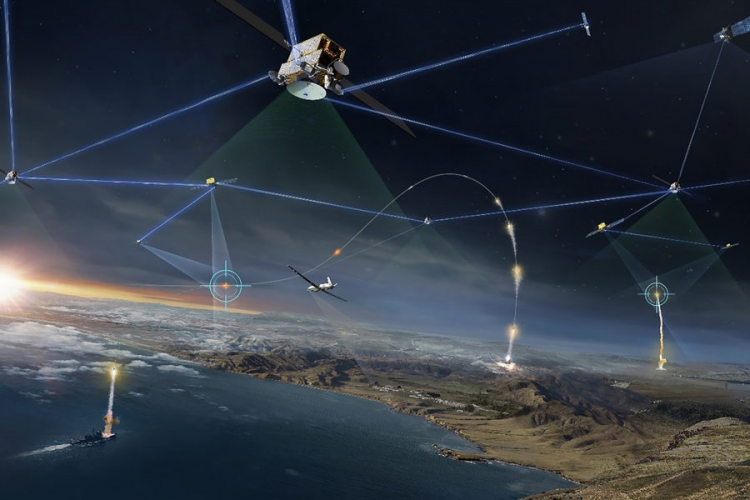
SJTACs are needed to coordinate the advent of space-based weapons that paint a future where orbital bombardment of ground targets is the norm, the pair argues.
“As space capabilities develop from science fiction to reality, the SJTAC could access future space weaponry ranging from lasers, electromagnetic pulse (EMP) weapons, to the currently theoretical ‘Rods from God’ kinetic bombardment concept,” Stringer and Kristiansen wrote.
Just as JTACs are needed to target airstrikes and avoid hitting friendly forces, SJTACs would perform the same role for space.
 
Last edited:
Last edited:

AMTI ASAP: Space Force readying multi-source acquisition for satellites to track aircraft​

https://breakingdefense.com/2025/12...acquisition-for-satellites-to-track-aircraft/
The Space Force and the National Reconnaissance Office (NRO) are working to craft an acquisition strategy based on multiple contract awards for developing and fielding satellites that can track aircraft and drones, Air Force Secretary Troy Meink said today.

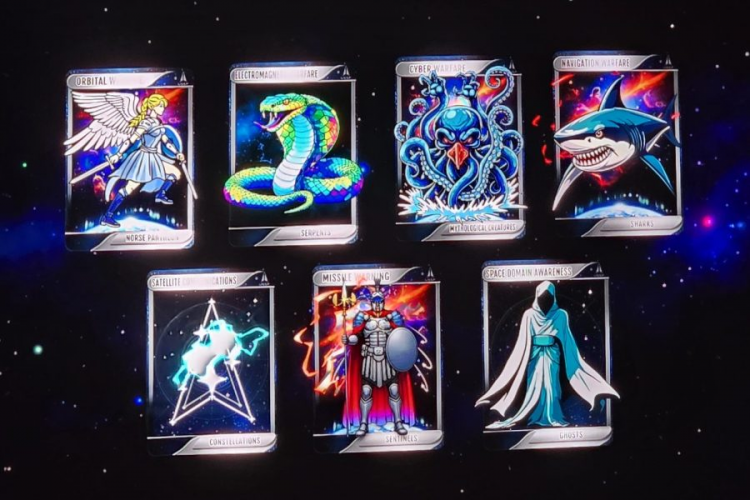
Snakes, Sharks, and Ghosts: Space Force Reveals Themes for Naming Platforms​

https://www.airandspaceforces.com/snakes-sharks-ghosts-space-force-names-themes-platforms/
Those categories, chosen by Guardians over the last year, are:

  • Orbital warfare: Norse pantheon
  • Cyber warfare: Mythological creatures
  • Satellite communications: Constellations
  • Space domain awareness: Ghosts
  • Electromagnetic warfare: Snakes
  • Missile warning: Sentinels
  • Navigation warfare: Sharks
1765531796781.png

China, Russia experiment with stealthy satellites, Space Force official says​

https://breakingdefense.com/2025/12...tealthy-satellites-space-force-official-says/
 
Last edited:
Last edited:

France, US practice up-close satellite maneuvers under joint space war plan​

https://breakingdefense.com/2025/12/france-us-military-space-satellites-operation-olympic-defender/

Space Force to focus training on ‘orbital warfare,’ joint integration​

https://breakingdefense.com/2025/12...raining-on-orbital-warfare-joint-integration/

Space Force Wants Lower-Cost, Commercial Capabilities for Silent Barker Replacement​

https://www.airandspaceforces.com/s...rcial-capabilities-silent-barker-replacement/
 
Last edited:
Space Force Wants Lower-Cost, Commercial Capabilities for Silent Barker Replacement

ORLANDO, Fla.—The Space Force wants to emphasize small, low-cost systems and commercial capabilities in the next generation of Silent Barker surveillance satellites, drawing lessons from its work to replace the Geosynchronous Space Situational Awareness program.

The service issued a notice to industry in late November seeking input on its plans to field a fleet of small, wide-field-of-view surveillance satellites in geosynchronous orbit, and Col. Brendan Hochstein, commander of Space Systems Command’s Delta 89, told reporters Dec. 12 that those surveillance satellites will form the follow-on to today’s Silent Barker program.

Silent Barker’s surveillance capabilities, which became operational earlier this year, complement the Geosynchronous Space Situational Awareness Program’s reconnaissance mission. The satellites coordinate target tracking and data sharing amongst themselves using complementary sensors. Both programs have, thus far, been developed and fielded largely in secret.

The Space Force has been publicly discussing a replacement for GSSAP since early 2024, and released a draft solicitation for the effort, RG-XX, in October, seeking commercial sensor technology that can be integrated onto small satellites—a departure from GSSAP, which featured larger spacecraft with more exquisite sensors. Its Nov. 26 notice requesting industry input on the Silent Barker follow-on effort indicates the service plans to take a similar approach to that program, and Hochstein confirmed those efforts in a briefing with reporters at the Spacepower Conference here.

“RG-XX will be the first, but we’ll leverage what we’re doing there: more commercial vehicles, a broader base to bring on some of the newer technologies,” he said. “For the surveillance mission—think wide-field-of-view, scanning the environment—the advancements there, what we’re seeing in industry, should enable many more entrants on that acquisition.”

The capability difference between Silent Barker and its follow-on satellites likely won’t be significant, Hochstein said. Instead, the major change will be in the acquisition approach and force design.

“I wouldn’t necessarily say it’s a jump in capability, but it’s using the capability differently,” he said. “[We’re] opening it up to industry to say, ‘Hey, how can we do this differently? Can we use a multitude of sensors, hopefully lower cost, that could satisfy the same requirements, the same mission for the combatant command? We really want to invite industry feedback on that.”

The Space Force is also interested in industry proposals to make future Silent Barker and GSSAP-like satellites refuelable. Acting Space Force acquisition executive Maj. Gen. Stephen Purdy said in September that the service is asking industry to propose refueling port designs in their GSSAP responses. Hochstein said the capability is less pertinent for the Silent Barker follow-on than it is for RG-XX and its reconnaissance mission, which could be enhanced if satellites can freely maneuver without fear of using too much fuel.

For both programs, the service is seriously considering whether asking companies to design satellites for that sort of life extension is worth the cost—and if simply replacing spacecraft as they reach end of life or run out of fuel is a more economical approach.

“There’s a trade space between having refueling versus having less expensive vehicles,” Hochstein said. “That’s where we are leveraging industry to give us proposals that cover that spectrum, to give them that trade space. Because if you overspecify, say, refueling, that may eliminate certain vendors.”

Beyond the move to a more distributed constellation, another key difference in the acquisition approach for the follow-on effort is that the Space Force will take the lead on development, rather than partner with the National Reconnaissance Office as it did for Silent Barker.

“The partnership with the NRO is great and strong,” Hochstein said. “We’re working to fully transition that to the Space Force for the future acquisition.”

https://www.airandspaceforces.com/s...rcial-capabilities-silent-barker-replacement/
 

US Bets on On-Orbit Satellite Servicing with 4 Missions in 2026​

https://www.airandspaceforces.com/us-on-obit-satellite-servicing-4-missions-2026/
The four planned operations will all be in GEO, more than 22,000 miles above the earth’s surface. Operating from a fixed point in the sky relative to the ground, GEO offers consistent communications and coverage, with more than 500 high-end, large satellites performing crucial telecommunications and broadcasting functions. These highly engineered spacecraft, developed at great expense and intended to have a useful life measured in decades for both government and commercial customers, are prime opportunities for life-extending services.
SpaceLogstics has developed its own Mission Recovery Vehicle to bridge service satellites in GEO. Equipped with an autonomous robot arm developed by the Naval Research Laboratory, and funded with DARPA money, Space Logistics will launch an MRV next year to demonstrate Robotic Servicing of Geosynchronous Satellites (RSGS). Under that program, MRV will recover a satellite and reposition it in orbit, and then, using its robotic arm, capture and install a Mission Extension Pod, attaching it to the existing satellite and giving the satellite a new lease on life, with freedom to maneuver.
 
Last edited:

Vandenberg Explores More Launch Pads, Including One for Super Heavy Rockets​

https://www.airandspaceforces.com/vandenberg-launch-pads-super-heavy-expansion/
At least one of those sites could host large rockets like SpaceX’s behemoth Starship, according to a Dec. 30 notice to industry. According to the notice, Vandenberg is considering leasing land for a new launch complex, dubbed Space Launch Complex 14, that could support heavy and super heavy rockets. Heavy-class rockets can carry between 20,000 to 50,000 kilograms to low Earth orbit, while super heavy vehicles can lift more than 50,000 kilograms.
 
Last edited:
Last edited:
No one is raising the defense budget to that level, not even if the GOP miraculously retains the House. The ‘Freedom Caucus’ would nuke it even if the democrats could not.
 
But that's what is needed to makeup for the loss/disolution of NATO at least in terms of military material/manpower not reach as in access to locations/bases.
 
But that's what is needed to makeup for the loss/disolution of NATO at least in terms of military material/manpower not reach as in access to locations/bases.

I do not think NATO is dead yet, and if it ever is, it means the US is dumping all responsibilities with regards to Russia on Europe.

But in any case, the 1.5 trillion statement is just as much a fantasy as Mexico paying for a border wall: the administration has no power to achieve that even now, and will have even less within a year. Neither party would support such a thing in the legislature. It is the political equivalent of saying the US will bring back the draft.
 
STP-S30 was launched under OSP-4.

Space Force delivers experimental capabilities to orbit under the DoW Space Test Program [Dec. 18]

The U.S. Space Force’s (USSF) Space Systems Command (SSC) successfully launched the Department of War’s (DoW) Space Test Program (STP) S30 mission to deliver four Research and Development (R&D) satellites to low-Earth orbit (LEO) aboard a Rocket Lab Electron rocket at ≈ 12:00 AM EDT from Launch Complex 2 (LC-2) at the Virginia Spaceport Authority’s Mid-Atlantic Regional Spaceport (MARS), at Wallops Island.

In the coming days, satellite operators will make initial contact with the deployed satellites to ensure they are functioning nominally.

The DoW STP is managed by SSC System Delta 89’s (SYD 89) Innovation and Prototyping Program Office with support of USSF’s Space Combat Power (SCP) Program Executive Office (PEO).

The successful launch and deployment of the DoW STP-S30 mission is due to the partnership and coordination between the SYD 89 Innovation and Prototyping Program Office, the System Delta 80 (SYD 80) Small Launch and Targets Division, National Aeronautics and Space Administration (NASA), the Aerospace Corporation (Aerospace), and Rocket Lab.

"We are immensely proud of this collaboration with Rocket Lab, NASA, Aerospace, and SYD 80’s Rocket Systems Launch Program (RSLP). Their exceptional teamwork and dedication have made this achievement possible," said USSF Lt. Col. Brian Shimek, Director, Department of War, Space Test Program. "Proving these advanced technologies in the space environment is a critical step towards their integration into future operational Space Force systems, ensuring our nation maintains its edge in space," said Shimek.

Originally planned for Spring 2026 launch, the combined team worked through a myriad of technical and program management matters to shift STP-S30 five months ahead of the original scheduled date.

"Accelerating this launch by five months underscores our commitment to rapidly delivering innovative capabilities to the Space Force. This achievement is a testament to the dedication and expertise of the entire STP-S30 team," said Shimek.

The launch service, contracted to Rocket Lab, was executed using the Rocket Systems Launch Program (RSLP), the USSF's dedicated program for small, experimental, test and responsive launch, and was procured by SSC SYD 80’s Small Launch and Targets Division as part of the RSLP using the Orbital Services Program (OSP-4) contract with Category-1 mission assurance. RSLP is managed by SSC System Delta 80's (SYD 80) Small Launch and Targets Division. Both the DoW STP and RSLP programs are headquartered in Kirtland Air Force Base, New Mexico.

The STP-S30 mission illustrates the flexibility and responsiveness of commercially available launch solutions for placing ground-breaking military space capabilities.

“This mission showcased flexibility. It’s one of the things we do best in RSLP. In eight months, we locked-down the payload manifest, solidified the flight requirements, tailored the mission assurance, had the rocket ready to go, and executed a flawless launch,” said USSF Lt. Col. Steve Hendershot, SYD 80’s Small Launch and Targets Division system program manager.

The flexibility and coordination across partners and industry leveraged speed and best practices not only ensured a successful mission, but also a reduction in cost and schedule.

“We led a fast-moving campaign, leveraged our provider’s industry processes and had a great launch of this unique spacecraft into an atypical orbit. Pulling the launch to the left saved time and money for all our mission partners,” said USSF Maj. Mike Wirges, SYD 80’s RSLP STP-S30 mission manager.

The USSF SCP PEO leads acquisition for advanced warfighting capabilities in the space domain, including orbital, electromagnetic, and cyberspace warfare. The office also oversees acquisition of space-based space domain awareness capabilities and a resilient space data network to rapidly provide battlespace data into a larger architecture through all phases of conflict. The portfolio maintains a critical focus on next-generation technology development through innovation and prototyping efforts, leveraging international, commercial, and interagency partnerships.

SSC is the U.S. Space Force field command responsible for acquiring, developing, and delivering resilient capabilities to outpace emerging threats and protect our Nation’s strategic advantage in, from, and to space. SSC manages a $15.6 billion annual space acquisition budget for the Department of War (DoW) working with joint forces, industry partners, government agencies, academia, and allied nations. For more information, visit ssc.spaceforce.mil and follow @USSF-SSC on LinkedIn.

 

Similar threads

Back
Top Bottom