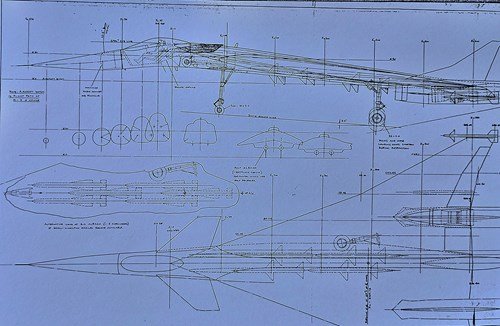
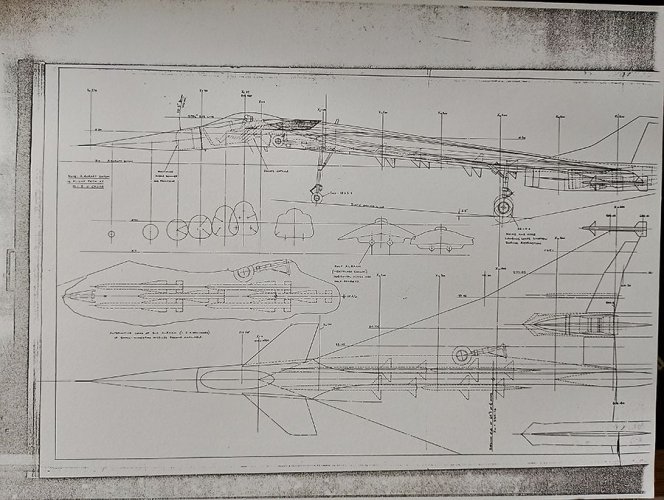
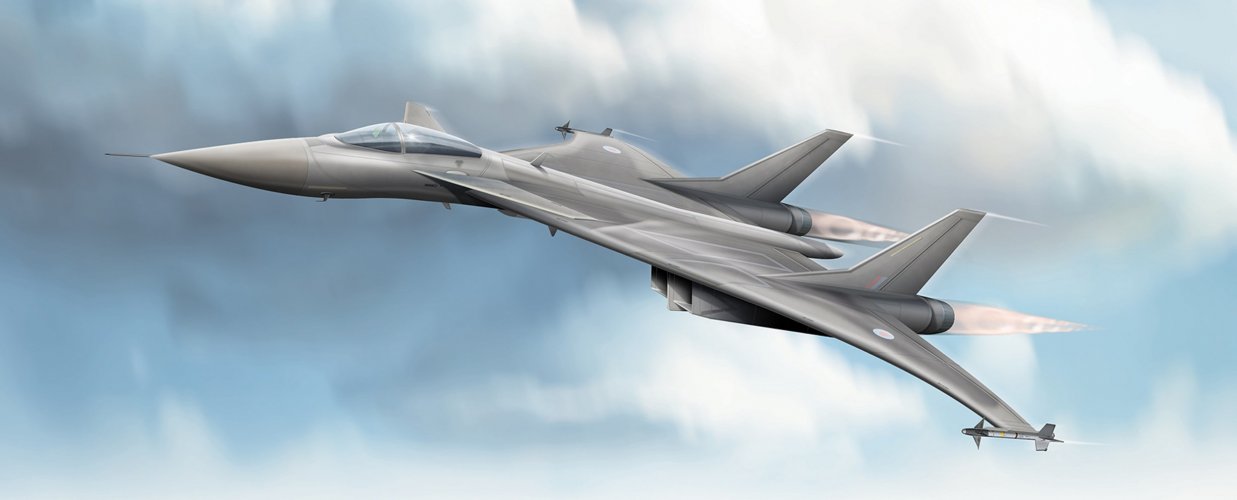
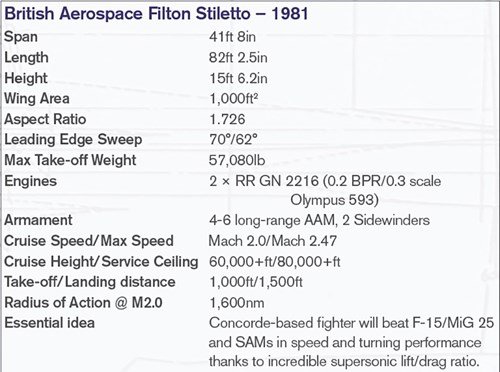
British Aerospace Filton Stiletto - A 1981 British proposal for a Mach 2 interceptor based on Concorde technology

fightingirish

ACCESS: Top Secret
Senior Member
Joined
3 June 2006
Messages
3,406
Reaction score
5,620
Hello everyone,
as most of you already know, our forum member @Mike Pryce has published an article about his discoveries while exploring the aviation archives in the latest issue of AEROSPACE – December 2025.
The British Aerospace Filton Stiletto was a 1981 British concept for a Mach 2 interceptor, inspired by and utilizing Concorde technology. :cool:
You can find more details about this concept in his article or through the link below.
Link / Source:
Edit:
A big shoutout to Andy Hay at www.flyingart.co.uk for creating this magnificent piece of artwork. :D
 

Attachments

  • 20251212_stilletto_001.jpg
    20251212_stilletto_001.jpg
    46.1 KB · Views: 258
  • 20251212_stilletto_001a.jpg
    20251212_stilletto_001a.jpg
    131.6 KB · Views: 241
  • 20251212_stilletto_002.jpg
    20251212_stilletto_002.jpg
    587 KB · Views: 263
  • 20251212_stilletto_003.jpg
    20251212_stilletto_003.jpg
    164.5 KB · Views: 260
  • 20251212_stilletto-stats-web.jpg
    20251212_stilletto-stats-web.jpg
    49.2 KB · Views: 251
Last edited:
O.3 scale Olympus 593?
....
So 9,390lb dry thrust?

So 18,780lb dry to power a 57,000lb aircraft?
 
O.3 scale Olympus 593?
....
So 9,390lb dry thrust?

So 18,780lb dry to power a 57,000lb aircraft?
I was also looking at that. It's fine enough for supersonic cruise, but with minimal specific excess power for climb/acceleration or sustaining turns at above 1g. It's quite different to the US companies' pre-stealth ATF concepts.
 
I was also looking at that. It's fine enough for supersonic cruise, but with minimal specific excess power for climb/acceleration or sustaining turns at above 1g. It's quite different to the US companies' pre-stealth ATF concepts.
Maybe we're misreading this and this is about scaling yhe Olympus 593 down, but not to that low a power output.
After all application of modern technologies to a proven design. Even in the early 80's
 
Improved versions of the 593 were proposed, from Supersonic Transport (SST) Engines by Mr. Daniel T. Jensen (RRHT), Mr. Gerald L. Brines (P&W) and
Dr. John C. Blanton (GE Energy) for the American Institute of Aeronautics and Astronautics. Available here (Link):

Further improvements were proposed but never realized. The Olympus 593-621 was to be rated at 38,275lb with afterburner and was planned to be incorporated beginning with the 41st aircraft. The Olympus 593-631 would have been rated at 41,360lb with afterburner by adding a zero-stage to the compressor and redesigning the HP spool.

There was also the 610+25% for the proposed Concorde B. The 610 presumably referring to the production 593-610 and the +25% to increased efficiency rather than thrust. That said, I guess greater dry thrust would have been needed alongside the additional lift provided by the larger wing and leading edge droop. Olympus 610+25% diagram here (Link).

I have asked @Mike Pryce in the other thread if there is any chance of getting a higher resolution version of the diagram, it would be great to see the details. I don't see any evidence on what we have seen so far of leading edge lift devices? Would be good to know the diameter of the radar too.
 
Last edited:
It's a real beauty.
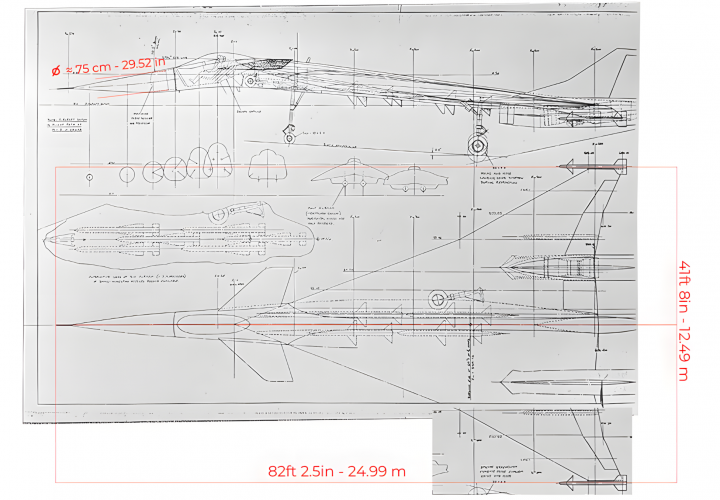
I tried upscaling and straightening the image. Using the dimensions on the specs, length ref starting from the pitot tip got something like this.
British Aerospace Filton Stiletto_upscayl_2x_upscayl-standard-4x.png

Funny how the tail would end quite far back, maybe that tail spike (cut on the drawing) or the engines exhausts ?
the 4 semi recessed Missiles look like Skyflashes, but no ideas what would be the other.

Edit: updated the image, radar at approx 75 cm diameter is more believable now :p Had messed up the scale on the previous one...
 
Last edited:
Maybe we're misreading this and this is about scaling yhe Olympus 593 down, but not to that low a power output.
0.3 scale in this sort of concept design literally means 0.3 scale of the 593. Now what variant of the 593 is unclear - probably not a standard one as it also gives a bypass ratio of 0.2 so I'd guess the fan is slightly larger for slightly higher mass flow rate. I'd also assume the reheat system was changed.

At the same point then this also shows that this is just a low maturity concept. It's not actually possible to scale an engine by that much and expect to get the same performance. 0.8 scale is the rule of thumb and this is way below that.

There are some more specifics available, but I won't steal Mike's sandwiches. They seemed to be assuming a crazy thrust boost in reheat way beyond was appears feasible from other engines. Who knows? There were also many other assumptions. At least this one is prettier than Filton's previous flying pig.

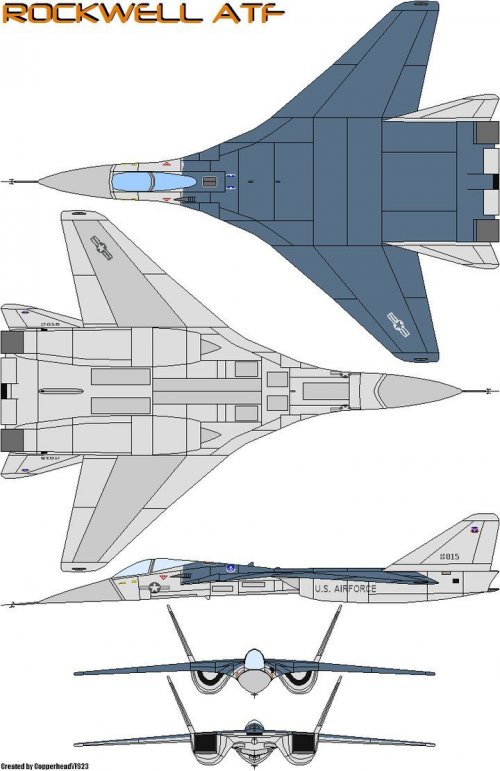
Resembles Rockwell's ATF:
In my mind it's much closer to the various Grumman supercruise ATF concepts here
 
Last edited:
Back
Top Bottom